





Teotihuacan.

If you are up on your ancient cities or UNESCO World Heritage Sites, you’re probably already familiar with the pre-Columbian city on the outskirts of Mexico City.
If you aren’t, you are in for a treat.
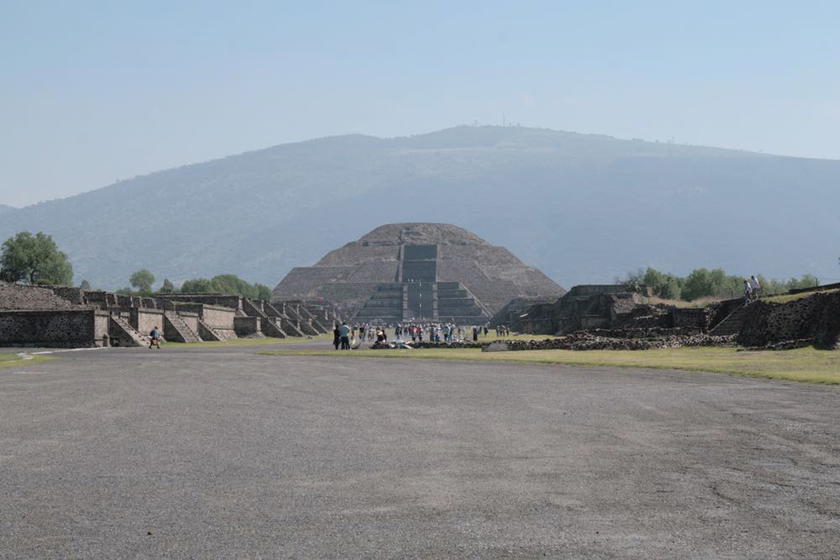
Looking down the Avenue of the Dead
Words can’t convey the true majesty of the ancient city of Teotihuacan. The scale is unique. The structures reflect a moment in time in a way that many other historical sites can’t.
And that’s part of what makes Teotihuacan so interesting.
For a bit of context for the unfamiliar, Teotihuacan is old. Very, very old. Exact timelines vary, but the city is thought to have been founded around 100 BC, reaching a peak population of 150,000 – 200,000 somewhere around 450 AD. Due to either famine, invasion, or civil war (or a combination — no one really knows, apparently), the city began to decline after that, culminating in a large series of systematic fires somewhere around 550 AD.
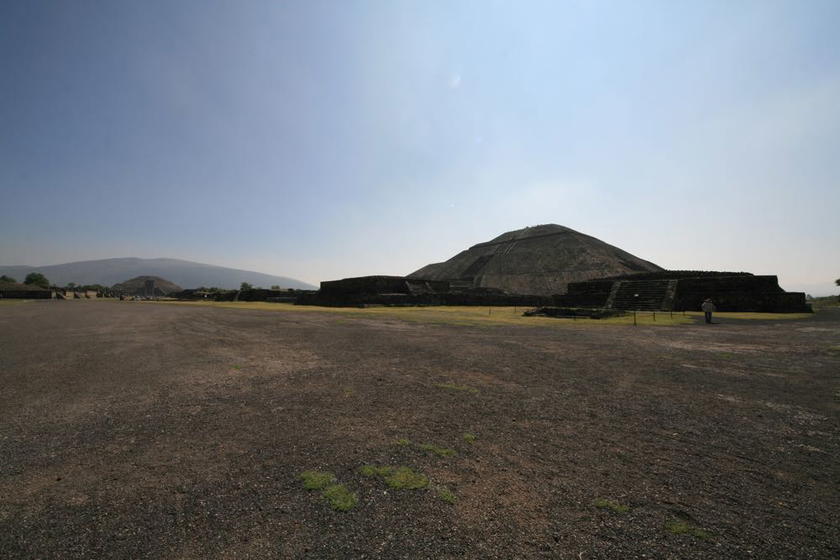
Pyramid of the Sun
The city never recovered.
Unlike other population centers, Teotihuacan wasn’t conquered and rebuilt repeatedly — you don’t see the layers upon layers of culture and history like you would in say, Rome. The city was effectively abandoned, to the point of being in ruins by the time of the Aztecs, who claimed the city as one of the sacred locations of their creation stories.
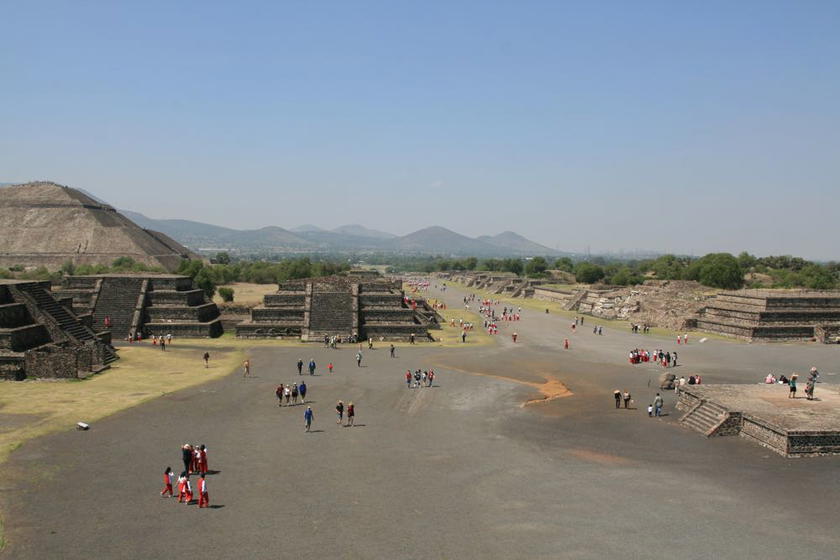
Temple of the Sun and some of the surrounding city from the Temple of the Moon
The feeling of personal insignificance is tremendous — and not because of the size of the pyramids, although they’re impressively large. Unlike say, the Pyramids of Giza, or the Greek temples in the Mediterranean, Teotihuacan wasn’t only a religious shrine (although there were and are many spiritual elements). It was a city, and a large one. About 45 times the land area of Pompeii, as a general comparison to a place many of you are familiar with.
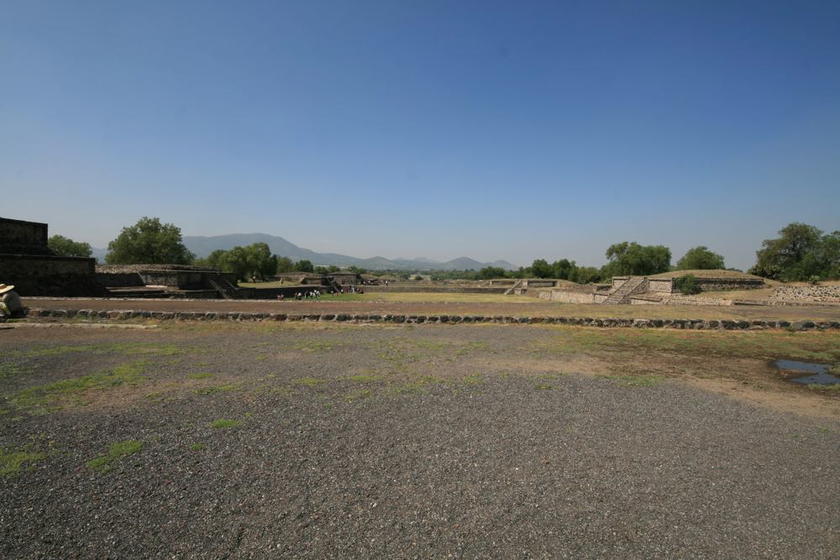
View down the Avenue of the Dead
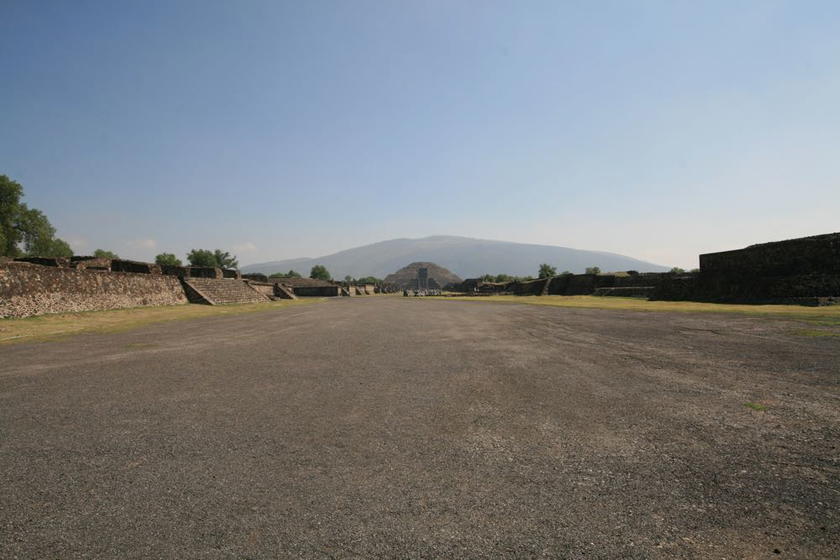
View down the Avenue of the Dead
Although development is encroaching on the archaeological zone, enough of Teotihuacan is preserved so as to suggest the thriving, bustling, center of commerce that it once was. There are grand boulevards and narrower streets, and a diversity of architecture — a mix of the mystical and mundane.
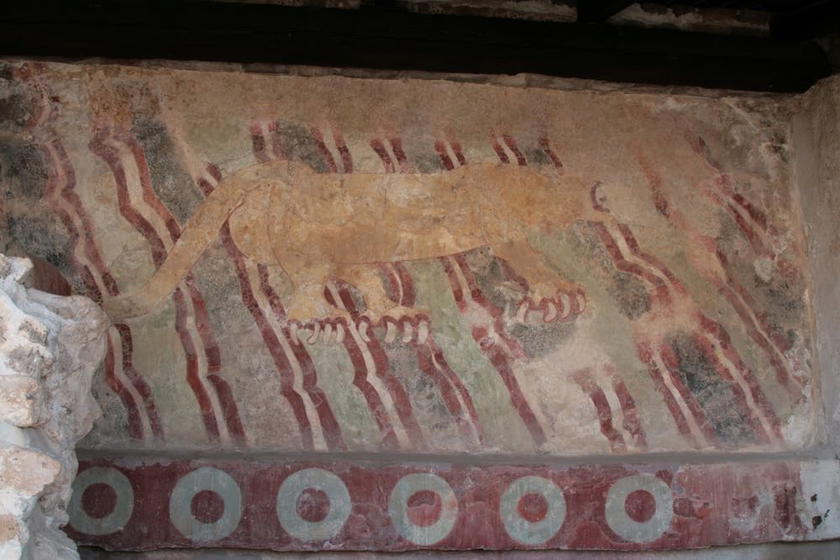
Jaguar fresco
The on-site museum has a scale model of the ancient city, which gives a fascinating perspective on how Teotihuacan was oriented with the valley, and just how much was going on in the city at its zenith. There’s a decent map here as well.
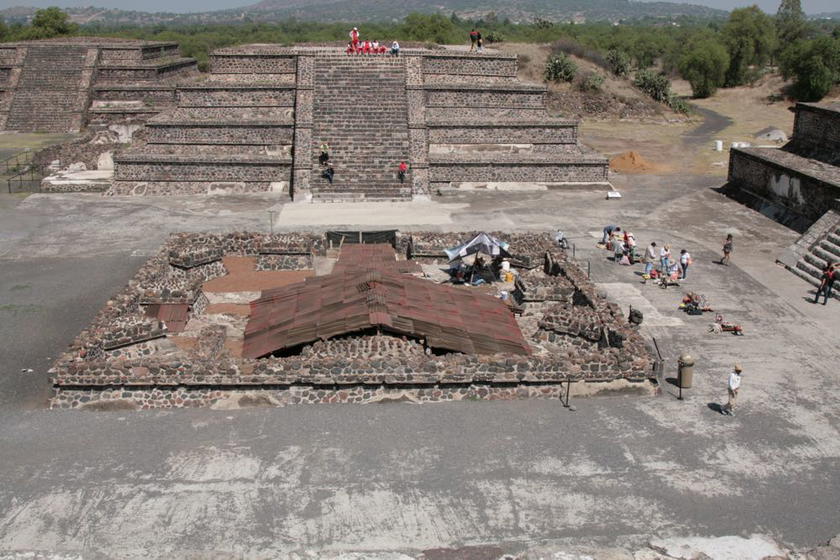
Plaza of the Moon
I’m neither an art historian nor an anthropologist, so I won’t dwell on the history lesson. If you’re interested in reading more about the theories and excavation progress, the Smithsonian magazine has an interesting story on the current efforts. The guesstimate is that the city once covered nearly 12 square miles, and with only a fraction of the site excavated, there is potentially much more to discover.
Suffice it to say, Teotihuacan is a special place.
Logistics of visiting Teotihuacan
There are several ways to visit Teotihuacan as a day trip from Mexico City, but there are two that I think make sense.
- Use a combination of public trains and buses (at a cost of about $5 USD)
- Hire a private driver (and maybe guide) for the day
Many, many hotels and tour companies offer excursions to Teotihuacan, but these are often 7+ hour tours that only allow for an hour or two at the park. The rest of the time is eaten up by transportation and mandatory shopping stops. We visited Teotihuacan as part of our balloon trip, but as I mentioned in previous installment I don’t really recommend the ballooning as a method of visiting Teotihuacan if you want to fully discover the latter.
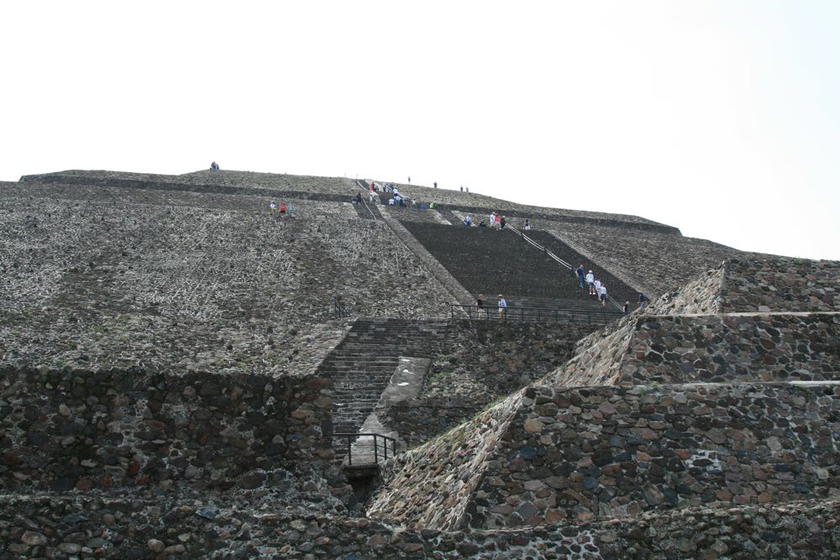
Climbing the Pyramid of the Sun
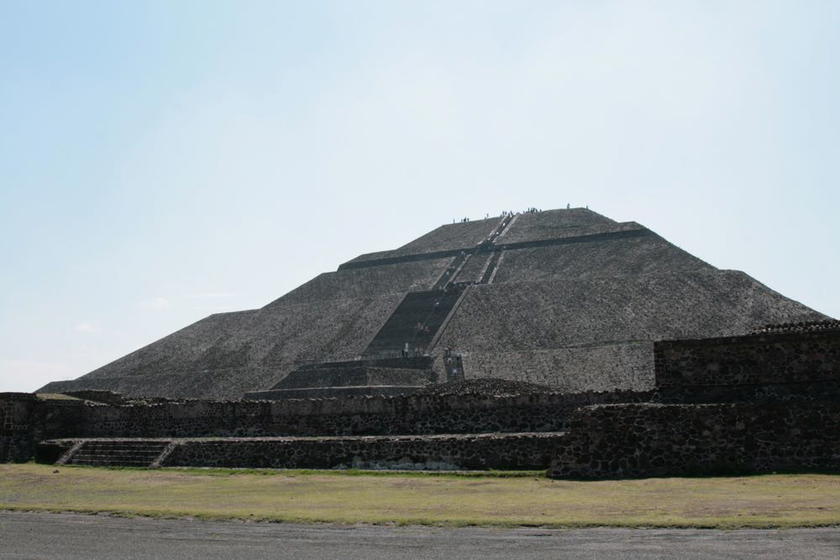
Massive Pyramid of the Sun
I could have spent the entire day exploring Teotihuacan — between the ruins and the museum there was a ton to see — so I think my recommendation would be to get there as efficiently as possible. Arriving first thing in the morning would be ideal, as there is almost zero shade, and it definitely gets warm fast.
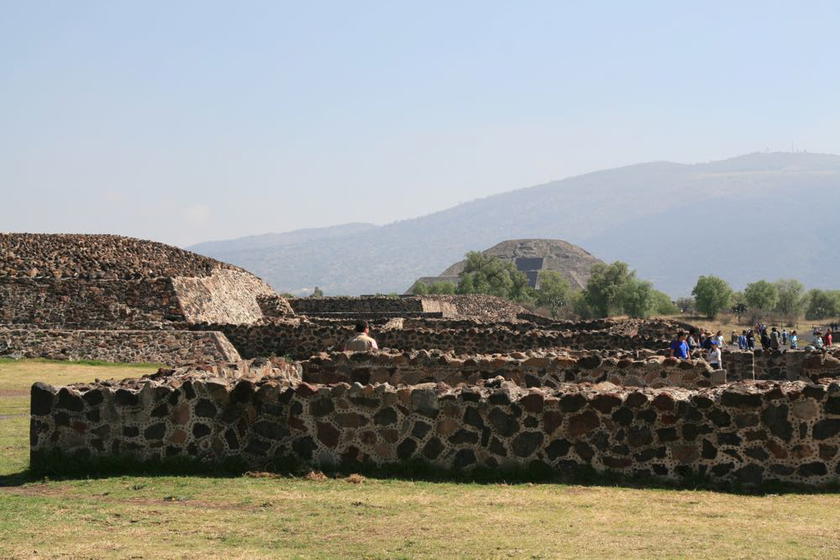
Smaller structures and the Pyramid of the Moon
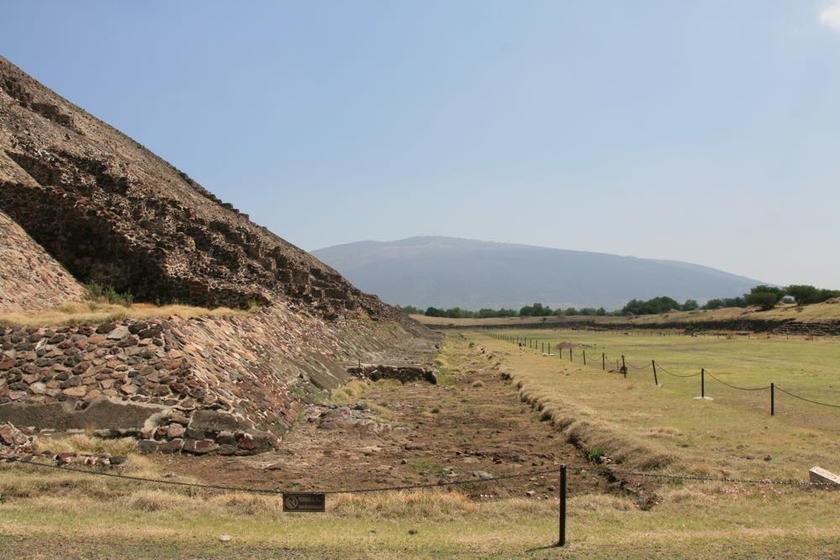
Beautiful vistas, very little cover
We lucked out with a day that wasn’t too crowded, but apparently most of the tour buses arrive around 11AM – 12PM, so if you can finish your hike and escape to the museum before the mid-day rush that will almost certainly be a better experience.
If you’re someone that likes having a guide, this would maybe be a good place to research and source a reliable one. The only audio guide I could find was in Italian, which is probably not useful to most. There were also local guides hawking their services at the park entrances, so that’s another option.
Either way, you’ll want to bring plenty of water, sunscreen, and maybe even snacks. There is a restaurant on site, and various food options around the perimeter, but again — this is a massive complex, so getting anywhere takes quite a bit of time, and leaving for lunch might not be practical.
Overall
I’m fortunate to have been to many ancient cities and World Heritage Sites (I’ve even lived in one for a time). They’re all stupendous in their own way.
But there is something different here. Walking down the Avenue of the Dead and seeing the alignment of the boulevard with the surrounding mountains — this place is about much more than the main pyramids, which made it feel very human to me.
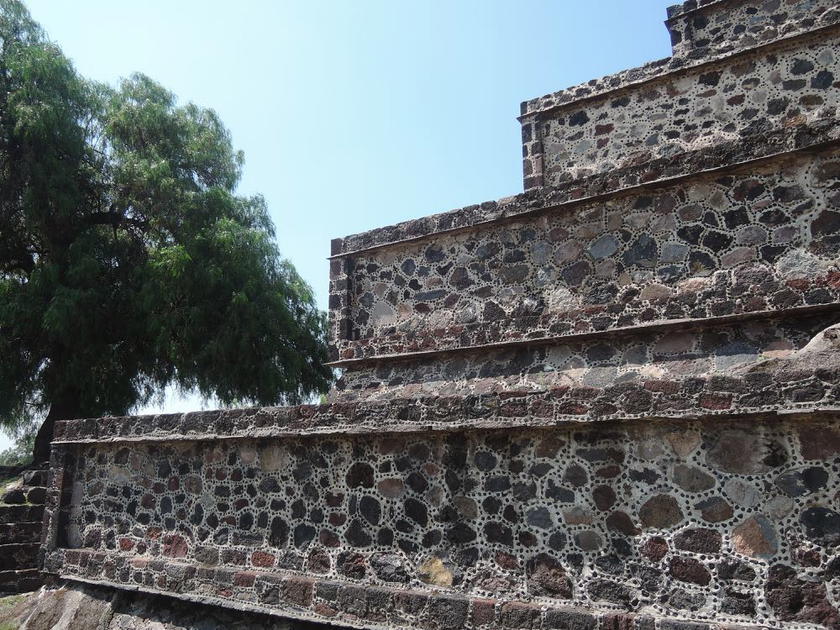
Details on one of the smaller structures
Teotihuacan is more than a thousand years older than Angkor, or Machu Picchu, but even though we know next to nothing about the population in comparison to those more recent civilizations it was easier to picture the city the way it might have once been. At least for me.
Have you been to Teotihuacan? Any tips for others?


Membership is free and takes no more information than commenting as a guest. Earn status points for good contributions, and see fewer ads as your status grows.