

The Chase Sapphire Preferred® Card (learn more) and Capital One Venture Rewards Credit Card (learn more) are two of the most popular mid-range travel rewards credit cards. While the cards have similar annual fees, most other aspects of the cards differ. And as of June 2026, the Sapphire Preferred has been significantly refreshed, with a bigger welcome offer, new bonus categories, new credits, and one transfer ratio change, so this matchup looks different than it used to.
I think both cards can make sense for certain consumers, but given how different they are, it’s worth understanding which card is better for your situation. In this post, I’d like to compare the two cards across a variety of factors.
For context, I carry the Sapphire Reserve rather than the Sapphire Preferred, and I carry the Venture X rather than the Venture, so I’m in both of the card ecosystems, and understand the perks. In the past, I also had the Sapphire Preferred and Venture, but found it worthwhile to upgrade to the more premium cards over time.
Chase Sapphire Preferred vs. Capital One Venture at a glance
Here’s the quick version before we get into the details. Both cards charge the same annual fee, so the real differences are the welcome offer, how you earn, and the credits you’ll actually use.
Chase Sapphire Preferred | Capital One Venture | |
|---|---|---|
Welcome offer | 75K points after spending $5K in three months (~$1,275 at my valuation) | 75K miles + $300 travel credit after spending $4K in three months (~$1,575 at my valuation) |
Annual fee | $95 | $95 |
Earning | 5x points on Chase Travel, 3x points on dining, online groceries, streaming, gas, EV charging, and vacation rentals, 2x points on travel, 1x points on everything else | 2x miles on everything |
Transfer partners | Yes | Yes |
Standout perks | $100 hotel credit, primary rental car coverage, Global Entry/TSA PreCheck/NEXUS credit, a year of Apple TV | Global Entry/TSA PreCheck credit, no foreign transaction fees |
Best for | Bigger dining and travel spenders who’ll stack Chase cards | People who want one simple flat-rate card |
Welcome bonuses: Chase Sapphire Preferred vs. Capital One Venture
Chase Sapphire Preferred: The card offers a welcome bonus of 75,000 bonus Ultimate Rewards points after spending $5,000 within the first three months.
At a minimum, Ultimate Rewards points can be redeemed for one cent each toward the cost of a travel purchase (potentially way more), giving the 75,000 points a minimum value of $750. However, I value them significantly more than that, at 1.7 cents each, meaning the bonus is worth $1,275 to me.
Capital One Venture: The card offers a limited-time welcome bonus of 75,000 bonus miles + $300 to use on hotel and vacation rental bookings through Capital One Travel in your first cardholder year after spending $4,000 within the first three months. Personally, I value Capital One miles at 1.7 cents each, so to me those miles are worth a massive $1,275. Add in a further $300 in value with the Capital One Travel credit.
Winner: Both cards offer strong bonuses, but the Venture eeks out a win with the travel credit. The Venture’s lower $4,000 spending requirement is worth noting if the Sapphire Preferred’s $5,000 would be a stretch.

Approval odds: Chase Sapphire Preferred vs. Capital One Venture
Chase Sapphire Preferred: For those very involved in miles & points, getting approved for the Sapphire Preferred can be challenging. It’s subjected to the 5/24 rule, meaning you may not be approved if you’ve opened five or more new card accounts in the past 24 months, though anecdotally this rule is no longer consistently enforced. Beyond that, the welcome bonus is once per lifetime on this exact card, and you can’t be approved if you currently have it open.
Capital One Venture: The Capital One Venture bonus isn’t available to those who have or have had the card, though you are eligible if you’ve had any other Capital One card, including the Capital One Venture X Rewards Credit Card (learn more).
Winner: It depends on your exact situation, but I think more people will be locked out by the Sapphire Preferred rules than the Venture Card rules. See here for a full comparison of credit card application rules.
Annual fee: Chase Sapphire Preferred vs. Capital One Venture
Chase Sapphire Preferred: The card has a $95 annual fee.
Capital One Venture: The card has a $95 annual fee.
Winner: This is a tie, as both cards have the same annual fee. That said, the Sapphire Preferred’s $100 annual Chase Travel hotel credit can more than offset its fee on its own, which effectively tips the ongoing cost math in its favor if you’d use that credit.
Value of points: Chase Sapphire Preferred vs. Capital One Venture
Chase Sapphire Preferred: Points earned on this card can be redeemed in two primary ways:
- They can be redeemed for at least one cent each toward the cost of a travel purchase through Chase Travel℠, or up to 1.75 cents with Points Boost
- They can be transferred to Ultimate Rewards airline and hotel partners, most at a 1:1 ratio (World of Hyatt transfers at 4:3 on this card as of June 2026, while the Sapphire Reserve keeps 1:1), which can get you outsized value
Ultimate Rewards partners include the below (along with transfer ratios and times).
Ultimate Rewards Transfer Partner | Transfer Ratio | Transfer Time |
|---|---|---|
1000 : 1000 | Instant | |
1000 : 1000 | Instant | |
1000 : 1000 | Instant | |
1000 : 1000 | Instant | |
1000 : 1000 | Instant | |
1000 : 1000 | Instant | |
1000 : 1000 | Instant | |
1000 : 1000 | ~ 1 to 7 days | |
1000 : 1000 | Instant | |
1000 : 1000 | Instant | |
1000 : 1000 | Instant | |
1000 : 1000 | Instant | |
1000 : 1000 | ~ 1 to 2 days | |
1000 : 750 (1000:1000 with Sapphire Reserve) | Instant |
Capital One Venture: Miles earned on this card can be redeemed in two primary ways:
- They can be redeemed for one cent each toward the cost of a travel purchase, either by having a purchase reimbursed, or by booking through the Capital One Travel Portal
- They can be transferred to Capital One airline and hotel partners, generally at a ratio of 1:1
Capital One partners include the below (along with transfer ratios and times).
Capital One Transfer Partner | Transfer Ratio | Transfer Time |
|---|---|---|
1000 : 500 | ~ 24 to 48 hours | |
Aeromexico Club Premier | 1000 : 1000 | Instant |
1000 : 1000 | Instant | |
1000 : 1000 | Instant | |
1000 : 1000 | Instant | |
1000 : 1000 | Instant | |
1000 : 1000 | ~ 3 to 5 days | |
1000 : 1000 | Instant | |
1000 : 1000 | Instant | |
1000 : 1000 | ~ 12 to 24 hours | |
1000 : 750 | ~ 24 to 48 hours | |
1000 : 1000 | Instant | |
1000 : 750 | Instant | |
1000 : 600 | Instant | |
1000 : 1000 | ~ 24 to 48 hours | |
1000 : 1000 | ~ 24 to 48 hours | |
1000 : 1000 | Instant | |
1000 : 1000 | ~ 24 to 48 hours | |
1000 : 1000 | Instant | |
1000 : 1000 | Instant |
Winner: Nowadays I value both Chase Ultimate Rewards points and Capital One miles equally. Both programs have excellent transfer partners. Each side also has its non-1:1 exceptions, like Hyatt at 4:3 on the Chase side for this card, and a few partners, such as EVA Air, JetBlue, and Accor on the Capital One side.

Ability to earn points: Chase Sapphire Preferred vs. Capital One Venture
Chase Sapphire Preferred: The card offers 5x points on travel booked through Chase Travel, 3x points on dining, online groceries, select streaming services, gas stations, EV charging, and vacation rentals, 2x points on travel, and 1x Ultimate Rewards points on all other purchases.
At a minimum, this means that long-term the card is earning a return of at least 3% on dining, online groceries, select streaming services, gas stations, EV charging, and vacation rentals, a return of 2% on travel, and a return of 1% on other purchases (based on the ability to redeem points for one cent each).
You can potentially get a lot more value than that, though. For example, I value Ultimate Rewards points at 1.7 cents each (thanks to the transfer ratio for travel partners), so based on my valuation you’re getting a return of 5.1% on dining, online groceries, select streaming services, gas stations, EV charging, and vacation rentals, 3.4% on travel, and 1.7% on everything else. However, not everyone should value points the way I do, especially if you just plan to redeem them as cash toward the cost of a travel purchase.
Capital One Venture: The card offers 2x miles on all purchases.
At a minimum, this means the card is earning a return of 2% on all purchases (based on the ability to redeem miles for one cent each toward travel purchases). But you also have the opportunity to earn 2x airline miles per dollar spent, and based on my valuation of 1.7 cents per Capital One mile, that’s like a ~3.4% return on everyday spending, which is excellent.
Winner: It very much depends on how much you spend on dining, online groceries, and travel, and how you plan on redeeming your points. The Venture Card offers 2x miles per dollar spent, while the Sapphire Preferred offers 3x points on dining (and more), 2x points on travel, and 1x points on other purchases. For everyday spending, the Venture Card is no doubt better, especially if you want to transfer rewards to an airline or hotel partner. That said, the Sapphire Preferred’s June 2026 additions (gas stations, EV charging, and vacation rentals) meaningfully widen its 3x points footprint, so the gap closes quite a bit if those are big categories for you.

Perks: Chase Sapphire Preferred vs. Capital One Venture
Chase Sapphire Preferred: The card has no foreign transaction fees, great travel and purchase protection, primary rental car coverage, a $100 hotel credit every cardmember year (doubled in June 2026), an up to $120 Global Entry, TSA PreCheck, or NEXUS credit once every four years, a complimentary year of Apple TV (activation required by December 31, 2026), and more.
Capital One Venture: The card has no foreign transaction fees, great travel and purchase protection, rental car coverage, and a Global Entry or TSA PreCheck credit every four years, which can be used to cover anyone’s membership fee as long as it’s charged to the card.
Winner: Personally I think the Chase Sapphire Preferred has the edge for the car rental coverage and superior travel protection, and now also for the bigger stack of credits. With the Sapphire Preferred adding its own Global Entry and TSA PreCheck credit in June 2026, that perk is no longer a point of differentiation for the Venture. Thankfully, both cards have no foreign transaction fees.

The potential Chase Sapphire Preferred “X-factor”
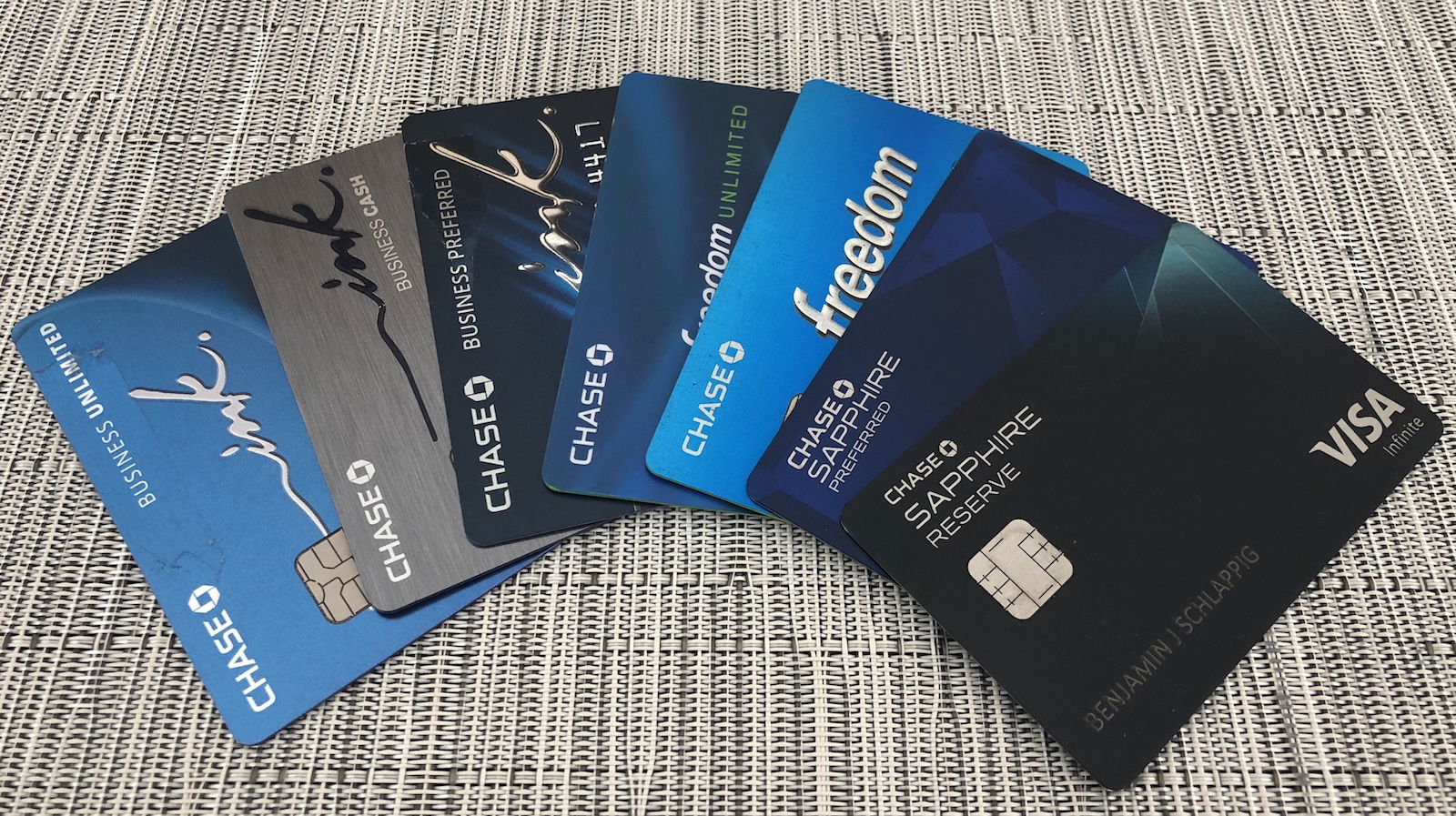
Before getting to my conclusion, it’s important to call out one thing that makes the Chase Sapphire Preferred unique. There are many ways to use the Sapphire Preferred to maximize the value you get out of your Ultimate Rewards points. That’s because you can pool points you earn on the Chase Sapphire Preferred with some other awesome Chase cards:
- The Chase Freedom Flex® (learn more) has no annual fee and offers 5x points in rotating quarterly categories, for up to $1,500 of spending per quarter, plus 3x points on dining and drugstores
- The Chase Freedom Unlimited® (learn more) has no annual fee and offers 1.5x points on all purchases, plus 3x points on dining and drugstores
- The Ink Business Cash® Credit Card (learn more) has no annual fee and offers 5x points on the first $25,000 of combined purchases per cardmember year on office supply stores, internet, cable TV, mobile phones, and landlines, and 2x points on the first $25,000 of combined purchases per cardmember year on restaurants and gas stations
- The Ink Business Unlimited® Credit Card (learn more) has no annual fee and offers a flat 1.5x points on all business purchases
- The Ink Business Preferred® Credit Card (learn more) has a $95 annual fee and offers 3x points on the first $150,000 spent each cardmember year on travel, shipping purchases, internet, cable, phone services, and advertising purchases made with social media sites and search engines
As you can see, these cards are all great complements that can greatly increase the pace at which you earn Ultimate Rewards points. For example, if you pair the Chase Sapphire Preferred with the no annual fee Chase Freedom Unlimited you’d earn 3x points on dining, online groceries, streaming services, gas stations, EV charging, vacation rentals, and drugstores, 2x points on travel, and 1.5x points on all other purchases, which is an incredible rewards structure with a single $95 annual fee.
Of course, this assumes that you’re willing to get multiple cards, which some people aren’t.
The Capital One Venture has a straightforward points structure without many bonus categories, and there are some limited opportunities to pair it with other cards. For example, the Capital One Savor Cash Rewards Credit Card (learn more) is a rewarding cash back card that offers 3% cash back on dining, grocery stores (excluding superstores like Walmart® and Target®), entertainment, and popular streaming services.
If you have both the Venture and Savor, then you can combine rewards between the two accounts, and each cent will get you one Capital One mile. So this is a good opportunity, but as you can see, the opportunities aren’t as robust as with Chase cards.
One quick note if you’re actually shopping the premium Capital One card. This comparison is about the standard Venture. If you’re weighing the lounge-and-credits version instead, see my dedicated Capital One Venture X vs. Chase Sapphire Preferred comparison.
So, which card is better?
The Capital One Venture is a well-rounded card for anyone who doesn’t spend a lot in categories that are otherwise eligible for bonuses. The card offers a generous welcome bonus, no foreign transaction fees, Global Entry fee credit, and more. The card also offers an excellent return for those who are looking for cash back toward travel, and Capital One also has great airline and hotel transfer partners.
The Chase Sapphire Preferred, on the other hand, offers bonus points on dining, travel, gas, and more, and best of all, the ability to combine points with some other great cards that have excellent bonus categories as well.
Between these two cards, I’d say that if you just want to use one card for everything and don’t spend that much on dining and travel, the Venture Card is a solid option. The card is straightforward and flexible, and that’s awesome.
Meanwhile, if you do spend a lot on dining and travel, and if you’re willing to combine the card with some other excellent ones, the Sapphire Preferred would be my first choice.
Personally, I think the combination of the Chase Sapphire Preferred and the Chase Freedom Unlimited is tough to beat if you’re willing to get two cards.
Bottom line
The Chase Sapphire Preferred and Capital One Venture have the same annual fee, but they’re designed for different consumer patterns.
The Venture keeps it simple with a flat 2x miles on everything, which is great if you don’t want to think about categories. The Sapphire Preferred earns more on dining and travel, comes with a bigger credit stack after its June 2026 refresh, and lets you pool points with other Chase cards to really run up your balance. If you’ll use one card and forget about it, the Venture makes sense. If you’ll lean into categories and stack a couple of Chase cards, the Sapphire Preferred is the stronger long-term pick.
Which do you prefer, the Capital One Venture Card or Chase Sapphire Preferred Card?
For Capital One products listed on this page, some of the above benefits are provided by Visa® or Mastercard® and may vary by product. See the respective Guide to Benefits for details, as terms and exclusions apply.



