

One of the most popular travel rewards cards is the $95 annual fee Chase Sapphire Preferred® Card… and for good reason! The card consistently offers excellent welcome bonuses, with spending categories matching how many of us spend anyway. The perks are awesome without requiring a spreadsheet to track the benefits. Plus, Chase Ultimate Rewards is a super lucrative rewards currency. The card also got a major refresh in June 2026, and this review reflects the updated terms.
This card changed the rewards game when it debuted over a decade ago, and it’s still one of the few cards that’s ideal for someone just getting started in miles and points. Many experienced points nerds consider this a wallet fixture as well.

Chase Sapphire Preferred summary & key details for October 2026
Before diving into my full Chase Sapphire Preferred review, I want to highlight some of the top-level details of the card.
| Annual fee | $95 |
| Welcome offer | 75,000 Ultimate Rewards points after spending $5,000 within three months — worth $1,275 at my 1.7 cent valuation |
| Top earning rates | 5x points on Chase Travel℠ bookings; 3x points on dining, select streaming, online groceries, gas stations and EV charging, and select vacation rentals; 2x points on all other travel |
| Key credits | $100 annual Chase Travel hotel credit; up to $120 Global Entry, TSA PreCheck, or NEXUS credit once every four years |
| Key terms | No foreign transaction fees; free authorized users; welcome bonus is once per lifetime on this exact card |
| Best for | Travelers who want transferable points and serious travel protections without paying a premium annual fee |
Here are what I consider to be the pros and cons of the Chase Sapphire Preferred:
- Chase Sapphire Preferred Card pros include a great welcome bonus, an amazing rewards structure with great bonus categories, and very strong travel protections including primary rental car insurance
- Chase Sapphire Preferred Card cons include a recently reduced transfer ratio to World of Hyatt and no lounge access (though that’s expected for a card at this annual fee level)
Chase Sapphire Preferred card changes
Whether you’re a new applicant or an existing cardholder, it’s worth knowing exactly what changed with the Chase Sapphire Preferred with its update in June 2026. First, here are the positive additions:
- New 3x bonus categories: gas stations, EV charging, and vacation home rentals with Airbnb, HomeAway, Homestay.com, Plum Guide, Vrbo, and Vacasa
- $50 Chase Travel hotel credit increased to $100
- A one-year complimentary Apple TV subscription
- Global Entry, TSA PreCheck, or NEXUS credit
- Expanded travel protection, including emergency evacuation coverage
These changes took effect immediately for both new and existing cardholders.
On the other hand, these were the negative Chase Sapphire Preferred card updates:
- The Chase Sapphire Preferred now has a reduced transfer ratio for World of Hyatt, dropping from 1:1 to 4:3
- The Chase Sapphire Preferred dropped its 10% anniversary points bonus
Existing cardholders had a grace period before these changes kicked in, but that ended at the beginning of October 2026.
Chase Sapphire Preferred bonus, eligibility, & fees
Chase Sapphire Preferred welcome bonus
The Chase Sapphire Preferred bonus is currently for 75,000 Ultimate Rewards points after spending $5,000 within three months.
At a minimum, you can redeem Ultimate Rewards points for one cent each. That would give 75,000 points a minimum value of $750. But transfer points to partners like Singapore KrisFlyer and you can easily get far more than that. I personally value Ultimate Rewards points at 1.7 cents each, though that’s a conservative valuation compared to the potential. So to me, the welcome offer is worth $1,275. That’s a huge bonus on a rewarding card.
Chase Sapphire Preferred eligibility rules & application restrictions
Before you apply, there are a few eligibility rules to be aware of with the Chase Sapphire Preferred.
Officially, here are the current restrictions when it comes to applying for the Chase Sapphire Preferred:
This credit card is unavailable to you if you currently have one open. The new cardmember bonus may not be available to you if you previously held this card or received a new cardmember bonus for this card. We may also consider the number of cards you have opened and closed in determining your bonus eligibility.
As it currently stands, the Chase Sapphire Preferred, Chase Sapphire Reserve® Card (learn more), and Sapphire Reserve for Business℠ (learn more) are considered totally independently when it comes to eligibility, including for the bonus.
Note that if you’re the authorized user on someone else’s Sapphire credit card, you’re still eligible to get it for yourself. Eligibility is determined based on whether you’re the primary cardmember.
Beyond these card-specific rules, the other general Chase application restrictions apply to the Chase Sapphire Preferred. This includes the 2/30 rule, whereby you can be approved for at most two Chase cards every 30 days. Beyond that, Chase typically won’t approve a new card if you’ve opened five or more new card accounts in the past 24 months, which is what’s known as the 5/24 rule. Results vary, with lots of reports of Chase approving people who exceed that limit. If you’re under 5/24, you’re in good shape. If you’re over, it’s worth trying anyway.
Chase Sapphire Preferred credit score requirement
There’s not a consistent rule as to what credit score you need, as credit score is one of many considerations. In general, aim for a credit score in the “good” to “excellent” category. I wouldn’t apply with a score under 700, and ideally would hope for 740 or higher. These aren’t hard and fast rules though. Approvals can happen with a lower score, and rejections with a higher one.
Chase Sapphire Preferred annual fee
The Sapphire Preferred has an annual fee of $95, which is not waived for the first year. Considering the value you get from this card’s benefits, including monthly $10 DoorDash credits and a complimentary year-long Apple TV subscription, you can easily come out ahead with this card.
You can also add authorized users at no extra cost, and they’re eligible for the card’s primary rental car coverage benefit as well.
Chase Sapphire Preferred foreign transaction fee
The Sapphire Preferred has no foreign transaction fees, so this is an excellent card to use for purchases globally.
Chase Sapphire Preferred rewards
For any travel rewards card, one big question is what the rewards are like, both on the earning and redemption side. So let’s look at those details for the Chase Sapphire Preferred, as it’s an area where the card got both better and worse with its last refresh.
Chase Sapphire Preferred earning rates
The Chase Sapphire Preferred is an industry-leading card with an amazing rewards structure. You’ll earn:
- 5x points on travel booked through Chase Travel (and Lyft rides through September 30, 2027)
- 5x points on eligible Peloton equipment and accessory purchases through December 31, 2027
- 3x points on dining, streaming services, and online grocery store purchases (excluding Target, Walmart, and wholesale clubs)
- 3x points on gas stations and EV charging
- 3x points on vacation home rentals with Airbnb, HomeAway, Homestay.com, Plum Guide, Vrbo, and Vacasa
- 2x points on all other travel purchases, including everything from airfare to highway tolls
- 1x points on everything else
The gas and EV charging category is worth calling out, since it’s especially nice to have a personal Chase Ultimate Rewards card offering bonus points on gas station purchases.
People ask me all the time what credit card to choose. I always recommend getting one that has bonus categories that match up with your spending patterns. The categories on the Sapphire Preferred will prove useful to a lot of consumers.

How to redeem Chase Sapphire Preferred rewards for the best value
The Chase Sapphire Preferred earns Ultimate Rewards points. I find Ultimate Rewards to be one of the most valuable flexible points currencies. Personally, my favorite use is transferring them to one of Chase’s 14 airline and hotel partners:
Most of these partners transfer at a 1:1 ratio, with one big exception as of June 2026 (and this is a major downside to the card): the transfer ratio from Chase to World of Hyatt is 4:3 on this card. This applies to all Chase Ultimate Rewards cards except the Chase Sapphire Reserve (both personal and business). This change took effect for existing cardholders on October 1, 2026, and new applicants got the reduced transfer ratio as soon as the change was announced back in June 2026. As before, points can be pooled between cards, and you can use the highest transfer ratio available.
Still, there are big opportunities to get outsized value. Take the Park Hyatt Maldives, where free nights start at 25,000 World of Hyatt points — about 33,400 Ultimate Rewards points at the 4:3 transfer ratio. That could be a great deal, compared to the cash rates here, which are typically $1,000+ per night.

Or you could transfer 72,500 points to Virgin Atlantic Flying Club. Why? A redemption in All Nippon Airways first class between the west coast of the United States and Japan costs that much, assuming you can find availability.

However, that’s not the only way you can redeem Ultimate Rewards points. Chase Travel℠ offers redemptions for everything from gift cards to Apple products, to flight and hotel redemptions. The standard redemption rate through the portal is one cent per point, but values do vary.
Alternatively, you can redeem through Chase Travel using the Points Boost feature. Points Boost gives 1.25-2.0 cents of value per point depending on the booking. Sapphire Preferred cardholders can get 1.5 cents per point for bookings with The Edit by Chase Travel, for example, or 1.25-1.75 cents of value toward select flights based on airline and class of service.
This is an important distinction that sites like NerdWallet and TPG sometimes gloss over: your points are worth what you redeem them for. And that varies significantly based on how you use them, so you should decide how much your points are worth.
Chase Sapphire Preferred benefits
The Sapphire Preferred packs serious value into its $95 annual fee. I’ll run through the main perks below. For a deeper dive, check out the full guide on why the Chase Sapphire Preferred is worth it.
Travel insurance
The Chase Sapphire Preferred offers quite a bit of valuable travel protection. If you, your flight, or your luggage are lost or delayed, this card has you covered.
| Sapphire Preferred Travel Protections | Details |
|---|---|
| Trip Cancellation/Interruption Insurance | • You can be reimbursed up to $10,000 per covered traveler and $20,000 per trip for your pre-paid, non-refundable travel expenses • The cancellation or interruption must be caused by death, accidental injury, disease, or physical illness of the passenger or immediate family member |
| Trip Delay Reimbursement | • Receive up to $500 per traveler if your trip is delayed for more than 12 hours • The trip has to be delayed by an equipment failure, inclement weather, labor strikes, or hijacking |
| Baggage Delay Benefit | • You can be reimbursed up to $500 when some or all of the cost of a common carrier ticket is charged to your card (therefore award tickets should be eligible if the taxes are charged to the card) • You can be reimbursed a maximum of $100 per day for emergency purchases of essential items at a destination other than your current residence |
| Lost Luggage Reimbursement | • Receive reimbursement for lost or damaged checked or carry-on bags and personal property • Maximum reimbursement is $3,000 |
| Emergency Evacuation Coverage | • Be covered when you become injured or sick during a trip 100 miles or more from home that results in an emergency evacuation • Maximum reimbursement is $100,000 |
As of the June 2026 refresh, the card also added emergency evacuation coverage. This makes the card’s travel coverage more well rounded, and puts it closer to being in line with that of the Chase Sapphire Reserve.
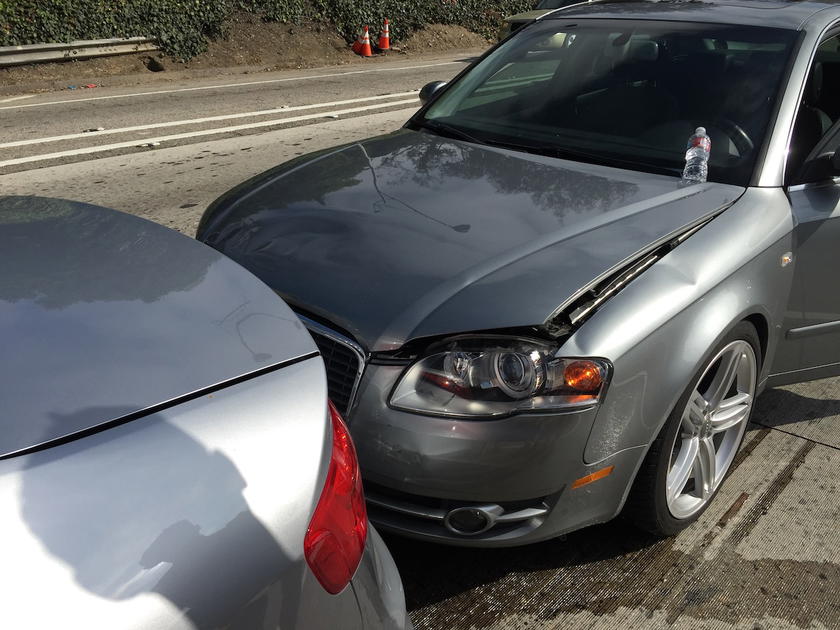
The card also includes primary collision damage waiver coverage on rental cars, both in the United States and abroad. This means you can decline the rental company’s expensive CDW and rely on the card’s coverage instead. To me, this is one of the most important perks a card can offer. The rental car protection literally saved me over $10,000 when I was rear-ended in a rental car once.
Long story short, even though it wasn’t my fault, this would have been a massive pain if it weren’t for having used a card with primary coverage. Perhaps the best endorsement is that I don’t even know what ended up happening between the various insurance companies and the rental agency. I didn’t have to deal with anything other than filing the initial claim.
I’ve saved a ton with this card from not paying CDW premiums over the years. Not to mention the thousands of dollars in travel protection reimbursements.
$100 annual hotel credit
The Sapphire Preferred offers a $100 annual Chase Travel℠ hotel credit, doubled from $50 as part of the June 2026 refresh. Just book a hotel through the Chase Travel portal, pay with your card, and automatically receive a statement credit of up to $100.
There’s no minimum stay required, so as long as you book a hotel through Chase Travel that costs at least $100, you should be able to get full value out of that, and basically more than offset the annual fee. That’s great. I appreciate that this is just a single credit, so this isn’t a semi-annual $50 credit, or anything like that.
This benefit is based on your account anniversary year, and includes the first year you have the card.

Global Entry, TSA PreCheck, or NEXUS credit
As of June 2026, the Sapphire Preferred offers an up to $120 statement credit that can be used toward Global Entry, TSA PreCheck, or NEXUS, valid once every four years. This is a pretty common perk on premium cards, so it’s cool to also see this on a card with an annual fee of under $100.
One-year complimentary Apple TV subscription
The Chase Sapphire Preferred now comes with a complimentary Apple TV subscription for one year, with activation required by December 31, 2026. It’s another perk that adds a lot of short term value.
This would ordinarily cost $119 per year, so in the short term, that could even get you more value than the annual fee. That’s tough to beat, if you ask me. Just remember that the subscription could auto-renew, so if you don’t want to keep it, be sure to cancel.
Other benefits
The Sapphire Preferred card includes a DoorDash DashPass membership, for a minimum of one year, when enrolled by December 31, 2029. As a DashPass member, you’ll get a $10 promo credit each month, which you can use to get a discount on non-restaurant orders.
Plus, you get access to Chase Offers, which provides discounts with all kinds of retailers. Both of these benefits have saved me a significant amount of money on purchases I’d be making anyway.
Is the Chase Sapphire Preferred worth it?
Unequivocally, yes. When the card first launched it was so good it basically became a meme. I’d argue the value prop has only improved over the years.
If you don’t have the Chase Sapphire Preferred and are eligible, then yes, the card is a no-brainer. This is one of the best mid-range travel credit cards on the market, period.
Who the Chase Sapphire Preferred card is good for
The card is ideal for people who want to earn transferable points without paying a premium annual fee. It’s perfect for someone just getting started in miles and points, as well as experienced travelers who want a solid “hub” card for Ultimate Rewards.
If Ultimate Rewards points are your rewards currency of choice, the Chase Sapphire Preferred can be the cornerstone of your “Chase Trifecta.” Pairing it with two other no annual fee Chase cards earns you a minimum of 1.5x points on all your spending.
First, there’s the Chase Freedom Flex® (learn more), which earns up to 5x points (or 5% cash back) in rotating quarterly spending categories that often include groceries and Amazon. The second card is the Chase Freedom Unlimited® (learn more), which earns 3% cash back (or 3x points) on dining and 1.5% cash back (or 1.5x points) on everyday spending. Between these two cards and the Chase Sapphire Preferred, the bonus categories — and your points — can add up quickly.

If you spend heavily on dining, streaming, and travel, the bonus categories will serve you well. Same goes for anyone with a regular commute, now that gas and EV charging earn 3x points. And if you occasionally rent cars or experience flight delays, the travel protections are genuinely valuable.
Who shouldn’t consider the Chase Sapphire Preferred
If you want lounge access, you’ll need to look at the Sapphire Reserve or other premium cards. If you’re primarily focusing on a single airline or hotel program, a co-branded card might earn you points faster in that specific currency. And if you prefer cash back to travel rewards, you’ll want to stick with a simpler card.
And if World of Hyatt is the main reason you collect Ultimate Rewards, keep in mind that this card now transfers to Hyatt at 4:3, while the Sapphire Reserve keeps the 1:1 ratio.
Chase Sapphire Preferred vs. Chase Sapphire Reserve card comparison
This is one of the most common questions I get. The short answer: the Sapphire Preferred is the better value for most people. Meanwhile, the Reserve makes sense if you’ll use the lounge access and travel credits. For a complete breakdown, check out our Chase Sapphire Preferred vs. Reserve comparison.
The key advantages of the Sapphire Preferred include:
- The significantly lower annual fee ($95 vs $795)
- The ability to add authorized users at no extra cost
- The 3x points on streaming services and online grocery purchases
- The 3x points on gas stations, EV charging, and select vacation rentals
- The 2x points on all travel purchases (as opposed to just airfare and hotels)
- The $100 annual hotel credit
The Reserve’s main advantages? Priority Pass lounge access, Chase Sapphire Lounges, the higher Points Boost redemption rates, and the $300 annual travel credit. The Reserve also keeps 1:1 transfers to World of Hyatt, while the Preferred now transfers at 4:3, so that becomes a point of differentiation between the cards.
Long term, I think the Sapphire Reserve is worth it if you can maximize all the credits and lounge access. However, outside of those circumstances, the Preferred offers a better value.
Chase Sapphire Preferred vs. Citi Strata Premier card comparison
At the ~$100 annual fee level, one of the Sapphire Preferred’s main competitors is the Citi Strata Premier® Card.
The Strata Premier offers 3x points on dining, gas, groceries, air travel, and hotels, which arguably makes it the other best mid-range card purely in terms of bonus categories. However, the Chase Sapphire Preferred wins by a long shot on travel coverage, particularly primary rental car CDW both in the US and abroad. The Strata Premier’s travel protection pales in comparison.
For more details, see our Citi Strata Premier vs Chase Sapphire Preferred comparison.
Chase Sapphire Preferred vs. Capital One Venture Rewards card comparison
The Capital One Venture Rewards Credit Card is the Chase Sapphire Preferred card’s other main competitor at this annual fee level. It offers a competitive welcome bonus and straightforward 2x miles on everything. Both cards offer excellent bonuses, and the Venture may edge out the Sapphire Preferred on welcome bonus depending on current offers. However, the Sapphire Preferred’s transfer partners are generally more valuable, and the travel protections are more robust.
See our full Chase Sapphire Preferred vs. Capital One Venture breakdown.
Bottom line: if travel protection is important to you and you value the flexibility of Ultimate Rewards transfer partners, the Sapphire Preferred is the winner at this price point.
Chase Sapphire Preferred FAQs
Bottom line
The Chase Sapphire Preferred is one of the best value mid-range cards out there, when you factor in points earning, travel protection, perks, and the rewards structure. The card recently underwent a refresh that was a mixed bag, but the good news is that the earnings rates improved, and we also saw some new perks added. At the same time, the 10% anniversary bonus points perk was eliminated, and the Hyatt transfer ratio was devalued.
In general, if the bonus categories fit your spending profile, and if you can use the $100 annual hotel credit, I’d seriously consider this card. The current welcome bonus is a particularly compelling reason to apply, since you don’t often see bonuses this good.
What’s your take on the Chase Sapphire Preferred?


Absolutely, use Ben's link. Absolutely, get the signup bonus. After that, there are better cards and better ecosystems for your ongoing spending.
I actually feel bad for Ben.
I'm not a churning person so I couldn't give Ben any more referrals after I have all the cards I wanted to apply.
I just hope his referrals are still going strong.
And I denounce free riders using ad blockers here.
The $100 hotel credit is a great bonus over the $50. Perfect for cheap layovers.
Some positive changes for once. The change of the hotel credit to $100 and bring able to use it all at once is an improvement. This assumes that the chase travel portal isn't marking up the hotel rate though. The Appletv benefit while only good for a year is definitely worth it to me because I subscribe anyway. Changes are enough to get me to hold the card for another year, especially after the devastating...
Some positive changes for once. The change of the hotel credit to $100 and bring able to use it all at once is an improvement. This assumes that the chase travel portal isn't marking up the hotel rate though. The Appletv benefit while only good for a year is definitely worth it to me because I subscribe anyway. Changes are enough to get me to hold the card for another year, especially after the devastating devals when it comes to Hyatt which really was a kick in the teeth.
Double-dip the $100 hotel credit by making a hotel reservation when you’re flight is delayed, then claim on the included insurance.