United Airlines Orders 50 Airbus A321XLRs

It looks like United Airlines is about to spend billions of dollars on new planes.

United Orders The Airbus A321XLR

United Airlines has placed an order for 50 Airbus A321XLR aircraft. At list prices this order is worth seven billion dollars, though airlines always get significant discounts on aircraft orders.
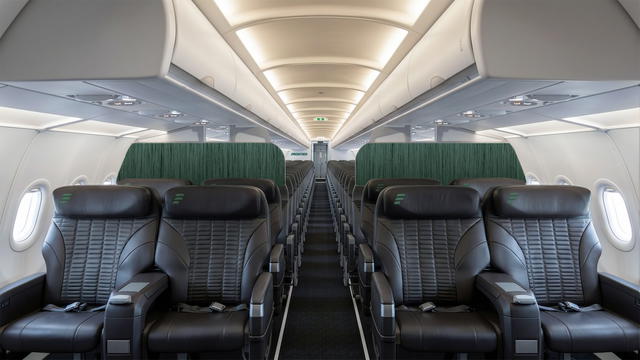
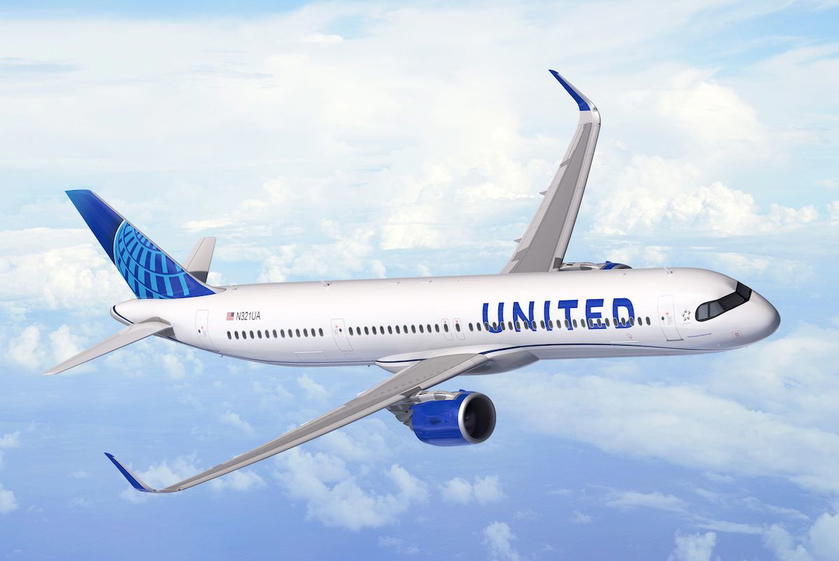
Rendering of United A321XLR

The plan is for United to start taking delivery of A321XLRs in 2024, and for them to replace the Boeing 757-200. United has almost exactly the same number of 757-200s in their fleet, so it will more or less be a one-to-one replacement.

This makes United the fourth US airline to order the A321XLR, after American (which also ordered 50), JetBlue (which ordered 13), and Frontier (which ordered 18).
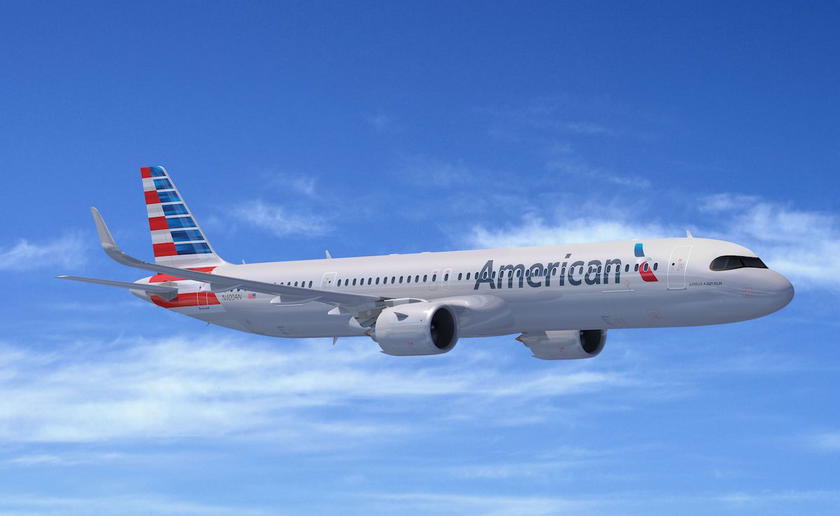
Rendering of American A321XLR

United Defers Delivery Of Airbus A350s

As part of this announcement (and presumably as part of these negotiations), United has also revealed that they plan to defer delivery of their Airbus A350s until 2027, “to better align with the carrier’s operational needs.”

The airline has a total of 45 A350-900s on order, which are intended to eventually replace 777-200s.

What Is The Airbus A321XLR?

For those of you not familiar with the A321XLR, it’s Airbus’ latest narrow body aircraft that was announced earlier this year, and that will enter service in 2023. It’s the longest range narrow body plane out there, and it’s incredibly fuel efficient.

The A321XLR has a longer range than the 757-200, and is significantly more fuel efficient.

This really opens up all kinds of markets that otherwise weren’t possible.
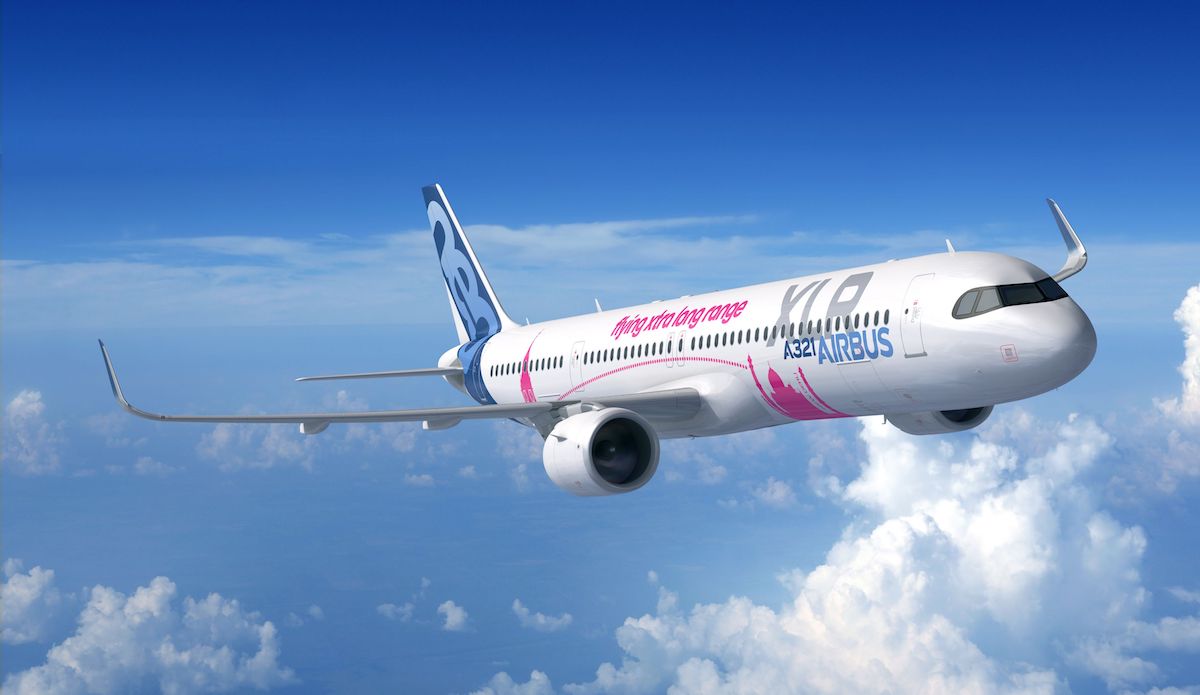
A321XLR

What Will United Use A321XLRs For?

Many of us expected that United would order the A321XLR, because it’s a one-of-a-kind airplane. United’s 757 fleet is aging (their 757s are an average of 22 years old), and they need to replace them.

United notes that they plan to use the A321XLR largely for transatlantic flights out of Washington and Newark, with the possibility of serving additional destinations in Europe.

As United’s EVP and Chief Commercial Officer, Andrew Nocella, explains:

“The new Airbus A321XLR aircraft is an ideal one-for-one replacement for the older, less-efficient aircraft currently operating between some of the most vital cities in our intercontinental network. In addition to strengthening our ability to fly more efficiently, the A321XLR’s range capabilities open potential new destinations to further develop our route network and provide customers with more options to travel the globe.”

How Does The 737 MAX 10 Fit Into This?

There’s something that makes this order especially interesting. Currently United primarily uses their 757-200s both for transatlantic flights from the East Coast, as well as for premium transcontinental flights.

While the A321XLR is a logical replacement for the 757-200, note that United also has 100 Boeing 737 MAX 10 aircraft on order. The 737 MAX 10 is roughly the same size as the A321XLR, but it doesn’t have as much range.

Currently it’s believed that United plans to configure some of their 737 MAX 10 aircraft in premium layouts, so that they can be used to replace the 757s flying from Newark to Los Angeles & San Francisco. That’s logical enough, and a good use of the planes.

If that’s the case, there will be no need to “waste” A321XLRs on transcons.

If that plan sticks, then it does in fact seem like United plans to significantly expand transatlantic operations with narrow body aircraft. That’s because they don’t need 50 A321XLRs to replace their current transatlantic 757 operations.

Bottom Line

It’s logical enough that United is ordering A321XLRs, as there’s no other plane like it on the market, and it’s a natural replacement for the 757-200.

The interesting thing to watch will be how United uses the 737 MAX 10 vs. the A321XLR. The A321XLR is much longer range, so I’ll be curious to see if United still moves forward with putting flat beds on some 737 MAX 10s, or if they backtrack on that.

Regardless, it seems that we can expect some transatlantic expansion from the East Coast resulting from this order.

What do you make of United’s A321XLR order?

Conversations (28)
The comments on this page have not been provided, reviewed, approved or otherwise endorsed by any advertiser, and it is not an advertiser's responsibility to ensure posts and/or questions are answered.
Comment as a member

Membership is free and takes no more information than commenting as a guest. Earn status points for good contributions, and see fewer ads as your status grows.

Type your response here.

If you'd like to participate in the discussion, please adhere to our commenting guidelines. Anyone can comment, and your email address will not be published. Register to save your unique username and earn special OMAAT reputation perks!

  1. Loading comments…
Recent Comments
The latest from the OMAAT community.

The comments on this page have not been provided, reviewed, approved or otherwise endorsed by any advertiser, and it is not an advertiser's responsibility to ensure posts and/or questions are answered.

Aaron Member

I can not imagine flatbeds in the 737. I knoe Copa does it on their new planes, but I believe that the extra few inches of width on the 320s does wonders for such seat. How would you move around in an already tight cabin with wide seats? Would they stagger them so you would have to walk in a zig zag to go back?

0
‼ 0
Michael Guest

I find the Airbus planes to be cheap and noisy on average. Boeing’s run the gamut lol. Ultimately United is a badly run airline (believe I know, I fly them out of EWR to LAX monthly) with little customer service and maddening procedures (seriously their on boarding is the longest most disorganized mess I’ve ever dealt with)and their going with these A321s isn’t surprising. Pretty on brand. Their best flights are on 787s and 777s. Both those planes are a little upmarket for United. Whatever plane they will design the interior poorly so it matters little. This just edges me closer to leaving Star Alliance for good.

0
‼ 0
BillC Gold

@Chris -- "Between the A220, A320 series, A330neo, A350-900 and A350-1000 they offer the market the best designed and executed aircraft at a time when the Max is on life support and the 777X pops doors and rips its fuselage in testing. I don’t hate Boeing but there is no question who produces the better planes at this moment." -- Well ... here's the thing about that "popping doors and ripping fuselage" -- we know that Boeing pays extra special attention to safety in designing/building its aircraft because of the ways that they do safety and tolerance stress testing of their hardware (aircraft bodies, wings, etc). This stress test failure occurred during the last 1% of stress levels that are mandated in order to pass (50% above and beyond all conceivable in-flight stresses that any "normal" flight operations will ever experience) ... but Boeing does even more (as presented by Seattle Times news from November 27, 2019) -- --------------------------------------------------------------------------------------------------------------------------- "As the test neared its climax, weighted pulleys had bent the jet’s giant carbon composite wings upward more than 28 feet from their resting position. That’s far beyond the expected maximum deflection in normal flight of about 9 feet, according to a person familiar with the details. At the same time, the fuselage was bent downward at the extreme front and aft ends with millions of pounds of force. And the interior of the plane was pressurized beyond normal levels to about 10 pounds per square inch — not typically a requirement for this test, but something Boeing chose to do. All this simulated the loads in a flight maneuver where a pilot would experience a force of 3.75 G, compared to the maximum of 1.3 G in normal flight." --------------------------------------------------------------------------------------------------------------------------- Despite this "failure," which is not abnormal and is why such extreme stress tests are done, everything was still very much within pragmatic safety boundaries and is nothing to get paranoid over -- nevertheless, rest assured that Boeing will absolutely remedy this issue before formal certification gets underway! In comparison, Airbus tested its A350 air frame integrity with a wing displacement up to 17-feet vs. Boeing with 28-feet for its 777-X ... admittedly the materials used to build the wings are different, but both are still more than safe to fly without any qualms! Blanket indictments against Boeing, because of one totally screwed up 737-MAX MCAS <i>implementation</i> of a totally valid <i>concept</i> that has been used for decades, are grossly unjustified!

0
‼ 0
02nz Guest

@Sam - The A321's width helps. A 7-hour flight in Economy Plus and 18-inch wide seats won't be so bad. These flights between the East Coast and Europe are not much longer than the transcons or West Coast-Hawaii flights that are flown with 757s and 737s now.

0
‼ 0
02nz Guest

This move makes a lot of sense. For one United can cut out those fuel stops that become frequent in winter with the westbound 757 flights. And Airlines have been adding routes to secondary/tertiary destinations in Europe, esp. Eastern Europe, rather than big hubs. There's potential for some interesting routes from Dulles and Newark with the addition of the A321XLR. IAD-TXL (or BER if it actually opens in 2020 ... hahaha) is an obvious one, for starters. Warsaw would be another. And probably some routes that have been seasonal (like Madrid and Lisbon) could go year-round.

0
‼ 0

Save posts to read later

Saving posts is a member feature. Become an OMAAT member to build a reading list you can come back to from any device.

Become a member
Meet Ben Schlappig, OMAAT Founder
5,883,136 Miles Traveled

43,914,800 Words Written

47,187 Posts Published