
United Airlines is finding itself in an interesting situation. While premium airline demand is all the rage these days, the Chicago-based carrier has reportedly had hundreds of business class seats in storage for years, but no longer has a use for them. What exactly is going on here?
United’s spare Boeing 737 MAX 10 flat bed seats
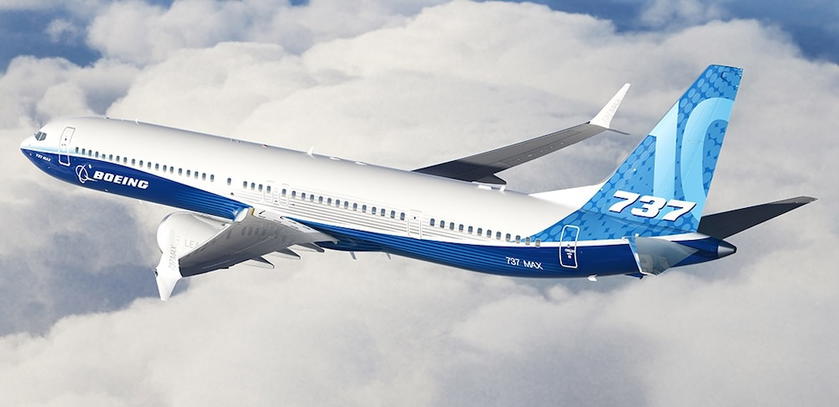
United currently has 167 Boeing 737 MAX 10 aircraft on order. This is the largest variant of the 737 MAX, and the plane has faced massive certification delays. While the initial plan was for the plane to enter service in 2020, United now expects to take delivery of its first 737 MAX 10 in 2027, so that’s around seven years behind schedule.
When United first ordered the 737 MAX 10, the plan was for a subfleet of these aircraft to be used as the new primary aircraft for premium, transcontinental flights. The plane has amazing per-seat economics, but doesn’t have the range of something like the Airbus A321XLR, so this is the perfect plane for operating a premium configuration on transcontinental routes.
However, with massive certification delays on these planes, United stopped waiting around, and went with what was a sure bet. The airline started taking delivery of Airbus A321neos. While most of these are in a standard configuration, United plans to equip a subfleet of these planes in a three cabin layout, with flat bed business class, premium economy, and economy, and they’ll be known as “Coastliners.” These are separate from the A321XLRs that will be used for long haul flights.
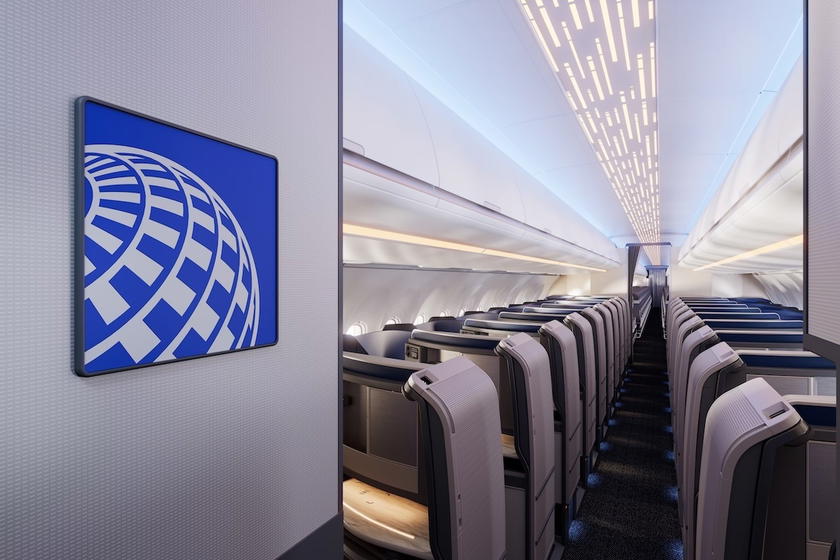
These Coastliner A321neos are taking over the routes that the 737 MAX 10 was supposed to serve, so what’s the plan now? The 737 MAX 10 still has great economics, so will be an ideal plane for high demand domestic routes.
But that gets us to an issue United has, as reported by CNBC’s Leslie Josephs. United reportedly has hundreds of flat bed business class seats in storage, which were intended for the 737 MAX 10. Seats are typically ordered separately from aircraft, and the airline sourced those based on the initial 737 MAX 10 entry into service timeline, which obviously was way off.
As United CEO Scott Kirby reportedly explained, “we got a bunch of lie-flat seats that we don’t know what to do with,” and “they don’t fit on other airplanes.” The airline reportedly hasn’t reached a final decision as to what to actually do with these seats.
What could United do with these spare business class seats?
Flat bed business class seats are shockingly expensive to manufacture, so I imagine United has eight figures worth of these seats ready to go. Realistically, what could United actually do with these seats, since they’re not going on the A321neo? As I see it, there are only two ways this could play out — either United uses the seats, or it doesn’t.
If United isn’t going to use the seats, can it at least sell them to another airline, sell them back to the manufacturer, get some sort of a claim against Boeing, or something along those lines? I dunno. I imagine the airline would rather not just dump them in the trash and get nothing for them.
But I think the bigger question is if there’s a creative way that United could use these seats to achieve a competitive advantage. United has in general done a great job getting creative with its products and services, and it’s something the airline prides itself in.
Could United find value in having premium configured 737 MAX 10s for anything other than premium transcontinental flights, since it has the seats anyway? Some of these ideas are really farfetched, though a few concepts come to mind:
- Could United start regularly operating 737 MAX 10s with flat beds in some domestic markets that haven’t historically been premium transconinental ones, especially where there’s a lot of competition? We’re talking flights like Chicago to Los Angeles and San Francisco (where the airline is competing against American), maybe flights between Atlanta and San Francisco (just to mess with Delta), etc.
- Could United use 737 MAX 10s to operate some short haul international flights where the range of the A321XLR isn’t needed, but where there could still be value to having flat beds, like some routes from Houston to Latin America?
- Could United use these seats to create some all-business class 737 MAX 10s, and then use them for charters, for certain routes where premium cabin demand is through the roof, etc.? It seems unlikely, but I’m just throwing otu all the possible scenarios…
As I see it, the biggest issue is that there’s value in scaling a fleet, so if United did want more narrow body planes with flat beds, it would be smart to just expand the A321neo Coastliner fleet, and use that as needed. Essentially having a subfleet of three kinds of narrow body planes with flat beds isn’t terribly efficient.
Then again, I have to imagine that United executives hate the thought of just “wasting” a bunch of premium seats that they could in theory do something with…
Bottom line
United Airlines has a unique problem, as it has hundreds of flat bed business class seats in storage, which were intended for the Boeing 737 MAX 10. The plan was initially for this plane to be used for premium transcontinental flights, but with certification of the plane delayed by around seven years, United pivoted.
The airline now plans to use Airbus A321neos for its premium transcontinental flights, as they’ll have a special “Coastliner” configuration. It seems like United plans to just use these 737 MAX 10s in high capacity domestic markets with a standard layout, but that doesn’t change that the airline has a lot of seats in storage that it’s trying to figure out what to do with. Could United get creative somehow? We’ll see…
How do you see this playing out for United?




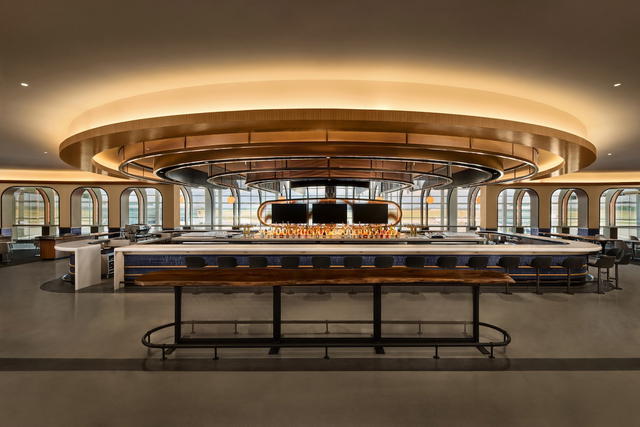
Put them in lounges as relaxation areas!
I share the same idea of flying them on hub-to-hub routes like ORD-LAX, EWR-DEN, IAH-SFO etc, especially since these markets have redeyes.
I'm assuming they won't work on the older 757s, even as a temporary upgrade to those 2-2 cabins.
I'll take one
Eventually UA will realize that they made a mistake purchasing inferior Airbuses and roll out the superior American-made product.
Eh, truthfully for flat bed seats the slightly wider and taller Airbus makes a really good case for itself.
Airbus has no case to make. It manufactures nothing but flaming dumpsters filled with dog waste.
You're have some very odd takes, ORD
One other possibility is to put the flat beds in some of the 737-700s. There are rumors they were planning on turning those planes into heavy premium aircraft for SNA/EYW/EGE with 24 standard first class seats and a total of just around 110, so maybe there's a chance for some of these seats to be put to use in those.
However, thruthfully, I've heard rumors that executives were dissapointed with how tight the seats...
One other possibility is to put the flat beds in some of the 737-700s. There are rumors they were planning on turning those planes into heavy premium aircraft for SNA/EYW/EGE with 24 standard first class seats and a total of just around 110, so maybe there's a chance for some of these seats to be put to use in those.
However, thruthfully, I've heard rumors that executives were dissapointed with how tight the seats turned out on the 737 and how tight the aisles were as well, and I think these seats are now half a generation behind, thanks to likely a slightly smaller screen size, no wireless charging, possibly USB A instead of C, etc. So unfortunately they may have no choice but to recycle them. I'm sure Boeing would pay back some of the expense, United has a lot of sway with them. I would be thrilled if they maybe wanted to auction off a few modules of seats...
Surely with Boeing self-certifying planes again, the Max10 will be delivered to UA (and everyone else) on Thursday?
I guess those seats would at least work in any 737 MAX, even the smaller versions.
So they could just add 1-2 rows of these on every plane and sell them as "First Plus" (or be revolutionary and rename the current First to Business, so those flatbeds will then be First... but I guess that would be too much to ask from marketing...).
Adding only those very few seats on each plane would allow...
I guess those seats would at least work in any 737 MAX, even the smaller versions.
So they could just add 1-2 rows of these on every plane and sell them as "First Plus" (or be revolutionary and rename the current First to Business, so those flatbeds will then be First... but I guess that would be too much to ask from marketing...).
Adding only those very few seats on each plane would allow to equip a large fleet using those seats from storage, making this product widely available even for connecting flights.
What's not clear is why United is even taking the MAX 10s at all instead of converting them all to more -8s or -9s when it became clear that Boeing wasn't going to get them certified and delivered within an acceptable timeframe. It seems like they're trying to force added complexity of an aircraft that is no longer really needed into the fleet plan because of sunk costs.
The MAX 10 has been made...
What's not clear is why United is even taking the MAX 10s at all instead of converting them all to more -8s or -9s when it became clear that Boeing wasn't going to get them certified and delivered within an acceptable timeframe. It seems like they're trying to force added complexity of an aircraft that is no longer really needed into the fleet plan because of sunk costs.
The MAX 10 has been made redundant in United's fleet plan even with its revised role. The A321neo (non-XLR) in the standard domestic configuration seats 200 (as opposed to the 189-seat configuration planned for the MAX 10, which is only 10 additional economy seats and zero additional first class seats from the MAX 9), and is already on the property taking over high-capacity domestic routes like ORD-SFO from the 757-300. Yes, the neo has GTF engine issues, but United already has plenty of experience mitigating the issues of the NEOs and smaller Max's opposed to whatever unknown teething problems the MAX 10 may bring. The NEO is also capable of handling short-field runways like LGA and DCA, unlike the MAX 9 and 10.
It's also likely that UA is ready to retire old 737-8s, A319s, A320s, and 757s, and the 737-10 offers an easy to grow capacity, become more efficient, and use a model that aligns with the 737-9max. Remember, UA because of CO never ordered the 8 max, they only have the 9 max. With the desire to have the largest most efficient planes, the 10 makes sense.
My understanding is the operating economics of the 10Max blows the A321 out of the water. But I can’t confirm where I read that. And despite having a similar seating count as the A321, United still planned to put flatbeds in those Maxs, so clearly there is some real value for United to operate these frames in the high premium configuration. It was only the indefinite delay with certification that caused the switch to Airbus’
Flat beds to Greenland incoming?
Honestly, I don't think they need premium catering, but anything over 4 hours is a candidate for a premium configuration.
Would also be really nice to copy some of B6's work flying from the Northeast to premium leisure destinations in the Caribbean (like Aruba and St. Lucia).
Or something like EWR-SNA, LAX-LIH, IAH-LIM where United could get a competitive advantage. Carribbean isn't high yielding for Premium traffic but tons of premium leisure demand.
How about using lie flat equipped 737 max planes to expand their premium transcon network with transcon routes that sometimes use lie flat equipped planes like LAX-IAD, BOS-LAX and SFO, as well as Hawaii flights to/from CA like Continental did for all Hawaii flights; they even had BusinessFirst service on Hawaii flights using 737’s. And they could use such planes on some longer Central America flights like Copa does with their Max 9s. It’s a...
How about using lie flat equipped 737 max planes to expand their premium transcon network with transcon routes that sometimes use lie flat equipped planes like LAX-IAD, BOS-LAX and SFO, as well as Hawaii flights to/from CA like Continental did for all Hawaii flights; they even had BusinessFirst service on Hawaii flights using 737’s. And they could use such planes on some longer Central America flights like Copa does with their Max 9s. It’s a good way to keep the lie flats intended for these plane from going to waste.
About 1000 lie-flat seats? Identify your most important passengers, highest loyalty level, and start a lottery where they have a chance to win one of these seats.
"Win your private lie-flat business class seat with United". Invitation only.
Tell them about the 1099-MISC before you ship them the seats.
Why wouldn't these seats fit in A321Neo ? The cabin is wider in A321Neo compared to 737 so they should have been able to work with the manufacturer. Of course the isle would be a few inches wider and they lose a bit of space.
The seat tracks are different
The aircraft walls are curved differently
It will take an expensive changes to be able to make it A321 worthy and possibly that might still not be certifiable at the end, not worth the effort.
Seats are not certified for A321, this is a long and costly process.
Collins Aurora already got certified in A321neo (UA,AA,UA). I understand that there are some changes in the same seat for different plane but considering A321 is wider, it shouldn't have been too difficult and/or costly. Definitely cheaper than throwing away tens of millions $ worth of seats.
Iceland? Hawaii?
I wonder how many marketing executives are reading OMAAT.
I have the perfect solution. Ticks all the boxes. Why hasn't Kirby thought of it.
For all the wives who have been left behind for all these years the husbands have been flying non stop.
The one final gift of love to their deceased husbands. One final flight on lay flat bed. The ultimate flying coffin. No catering requiredl
Projection, much?
I wonder how many marketing executives are reading OMAAT.
I have the perfect solution. Ticks all the boxes. Why hasn't Kirby thought of it.
For all the wives who have been left behind for all these years the husbands have been flying non stop.
The one final gift of love to their deceased husbands. One final flight on lay flat bed. The ultimate flying coffin. No catering required.
And as an option for all...
I wonder how many marketing executives are reading OMAAT.
I have the perfect solution. Ticks all the boxes. Why hasn't Kirby thought of it.
For all the wives who have been left behind for all these years the husbands have been flying non stop.
The one final gift of love to their deceased husbands. One final flight on lay flat bed. The ultimate flying coffin. No catering required.
And as an option for all deceased AA flyers, the voice of an AA FA will hound you to eternity.