
The Air Show is a relatively new podcast hosted by three industry titans — Jon Ostrower (The Air Current), Brian Sumers (The Airline Observer), and Brett Snyder (Cranky Flier) — and is absolutely worth listening to.
This week, they had their first episode with a guest, and they started off with a bang, as United Airlines CEO Scott Kirby joined them. They had a 45-minute interview with Kirby, and it was absolutely fascinating. While I highly recommend listening to the podcast, I wanted to share some of the things that I took away from this. Some are random observations, while others are more important points.
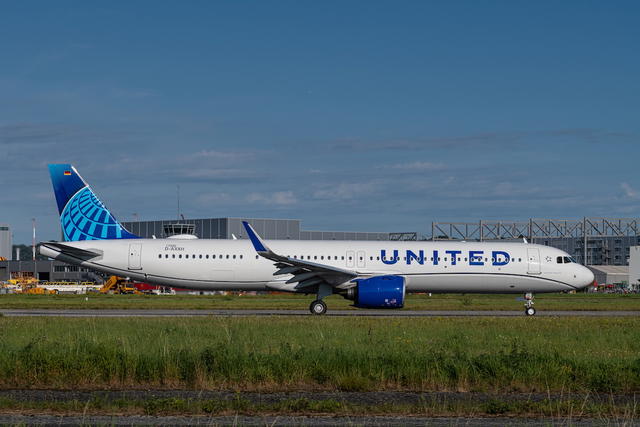
Let me say upfront that I want to be as balanced as possible, and I’ll point out both some positives and negatives, as I see it. While I have a lot of respect for the direction United has taken under Kirby’s leadership, I’m not here to brown-nose airline executives…
With that out of the way, below are some of the points I found most interesting, in the order in which they appeared in the podcast. Jon and Brian did a great job with the questions they asked, as so many different topics were covered. I’ll keep my commentary on each point brief, and then feel free to chime in with your thoughts in the comments section.
Kirby reads for three hours per day
Kirby says he has a really unusual schedule compared to most people, and that he reads for around three hours per day. It’s not entirely clear to me what that means — is he actually reading books for three hours per day, or “reading” spreadsheets and reports? Because that’s quite some time management, especially when you also have seven kids…
Kirby loves the “top two” US airline reference
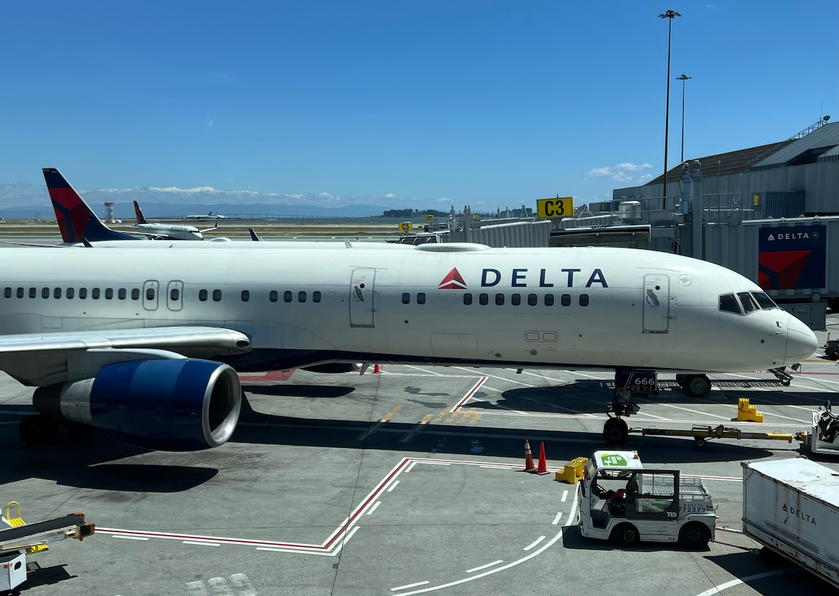
This is nothing new for Kirby, but I think it’s pretty noteworthy that basically whatever topic Kirby talks about, he references the “top two” airlines in the United States, referring to Delta and United. Historically Delta has been thought of as the best US carrier (definitely in terms of profitability, but perhaps also in terms of service), and Kirby sees United as being in the same league, and no other airlines really being competition.
He talks about how the gap between the most profitable and least profitable airlines in the United States has increased considerably in recent years, and how United has “leaped to the front” and is “head and shoulders” above competitors.
Kirby thinks United has amazing service
There’s no denying that historically Delta has been known for having by far the friendliest frontline employees, who are most invested in the company’s success (probably also due to profit sharing). What’s so odd about listening to Kirby speak is that he seems to suggest that United is now in Delta’s league when it comes to service, and that just doesn’t match my experience.
United has some great employees, but the airline also has some not great employees… service is consistently inconsistent. Kirby talks about how his one job is to “create an airline that our employees are proud of,” because they’ll then take care of customers, and “the financials take care of themselves.”
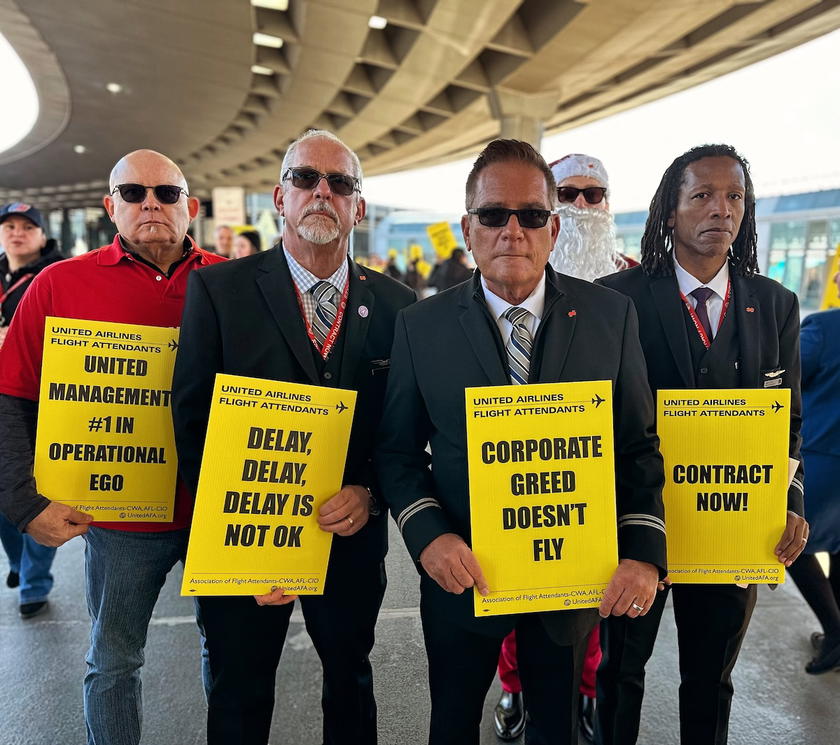
He talks about how United flight attendants are the single most important part of United’s product, and how they greet passengers with smiles. The airline has even kept around sanitizing wipes upon boarding at the cost of millions of dollars per year, because it creates an interaction between passengers and flight attendants.
It’s interesting how Kirby is willing to invest billions in things like new planes and technology, yet the single most important part of United’s product is still waiting for an “investment” (a new contract).
Kirby explains why he now cares about service & product
Kirby first worked at America West, then US Airways, and then American Airlines, before becoming CEO of United Airlines. He has historically been known for being a spreadsheet guy who is all about costs, rather than a product guy. So, what has changed?
According to Kirby, the network has changed. United’s network is so big that the airline can actually compete for everyone’s business. Meanwhile when he worked for the smaller airlines, that wasn’t an option. He explains that throughout the mergers, the goal all along was to get bigger, so that you could then start competing on product and service.
He also says that when he was at American, that’s something he was working toward. Hmmm…
Kirby thinks the ultra low cost carrier business model is over
Kirby states that he thinks the ultra low cost carrier business model no longer works in the United States, and that these kinds of airlines will go out of business. In fairness, this is a narrative he has had for quite some time.
His argument is that their business model has been based around taking advantage of unhappy passengers, and the airlines have grown to the size where they’re running out of people to screw over. Now with the airlines transitioning business models to not have fees, he seems to think that’s equally silly, so I’m not sure what to make of that.
Kirby thinks United basically can’t fail
Remember when former American CEO Doug Parker said that the airline would never lose money again? Or when he said that American’s stock is so low that “it defies logic?” Or when he made a bet that American’s stock would be at $60 as of a certain date, when it ended up being at $34?
Well, I don’t want to say Kirby went quite that far, but Kirby seems to have a similarly positive outlook for United’s future. He talks about how some investors might say that United is doing well right now financially, but that it’s not sustainable. Kirby claims that changes at United and in the industry are “structural, permanent, and irreversible,” that United will “stay in the lead.”
He says that United has long had “a moat around the business,” and the two things that have changed to secure United’s long term success are no change fees and a more competitive basic economy product, to compete with ultra low cost carriers.
Of course airline CEOs are always going to express a lot of confidence, but the delusion of executives pretending that the only way is up has been debunked over and over. And while airlines are doing a much better job at monetizing products and generating revenue, their costs are also way up (particularly labor costs, and those are very hard to negotiate down).
Yes, I understand Kirby thinks there’s upside for United because business travel hasn’t fully recovered. But there’s also a ton of downside. If there’s any sort of a significant recession, United will be in a tough spot, given the carrier’s massive wide body fleet which is heavily premium focused. If you ask me, we’re basically at the best of times on that front. But I guess we’ll see…
He does eventually acknowledge that “when I say it’s irreversible, it’s irreversible unless we screw up.” Which… is quite an asterisk.
Kirby has the right idea with technology
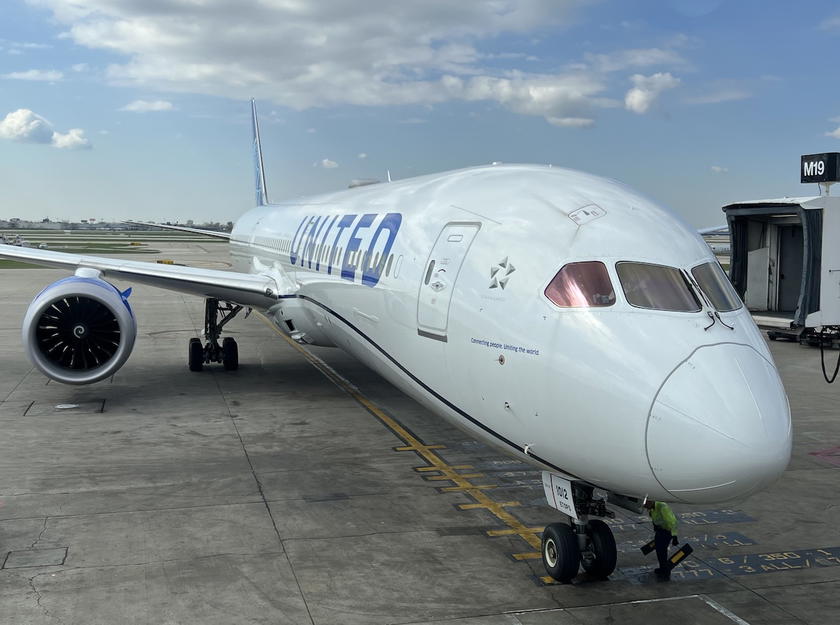
United does an amazing job with technology, and also invests a lot more in this than other airlines. It was refreshing to hear Kirby talk about this, and share how important he thinks technology is for the customer experience.
Between United’s Connection Saver tool (which holds flights in some cases for connecting passengers), to United’s amazing delay updates, United beats American and Delta in that regard by a long shot. Kirby acknowledges that he’s amazed other airlines haven’t followed United’s lead.
Bottom line
United Airlines CEO Scott Kirby had a great interview with The Air Show, which I enjoyed listening to. Given how savvy the hosts are, the questions were excellent. I always like hearing smart, in-the-know airline executives speak, and this was no exception. All too often, airline executives are scared to do unscripted interviews, or give non-answers, but that’s not what Kirby did.
I didn’t agree with everything Kirby said, but I wasn’t expecting to. After all, CEOs of major companies trying to express overconfidence for the future is nothing new…
What do you make of Scott Kirby’s perspective on things?


Membership is free and takes no more information than commenting as a guest. Earn status points for good contributions, and see fewer ads as your status grows.