
United Airlines CEO Scott Kirby is probably the most outspoken person in the US airline industry, and he’s not afraid to share how he feels (or in the case of government affairs, say what he has to say to get ahead).
I’d say that Kirby has also become the single most important figure in the US airline industry, in terms of the impact he has on his airline. He’s really, really ambitious, and he knows how to tell a great narrative about his company (I mean, he has gone so far as to call United the best airline in the history of aviation).
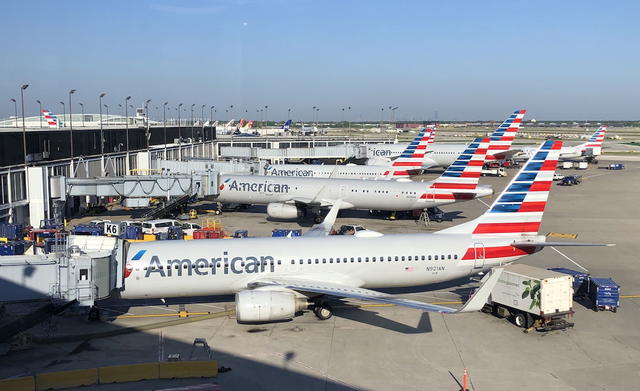
He’s quite a contrast to Delta CEO Ed Bastian and American CEO Robert Isom, both of whom I’d argue have just continued the legacy of their predecessors (I’d rather be continuing Richard Anderson’s legacy than Doug Parker’s legacy, but I digress).
Anyway, Kirby appeared on the Airlines Confidential Podcast, hosted by Scott McCartney (which is worth listening to, by the way). As usual, he wasn’t afraid to speak out about his competitors, and his comments were quite something.
United’s CEO thinks American is absolutely doomed
In recent years, we’ve of course seen United greatly improve its financial performance, while American’s financial performance has continued to worsen. It feels like a zero sum game, where United’s gains have been at American’s expense (though I don’t think it has to be that way).
Over time, Kirby hasn’t had issues kicking American while it’s down, arguing that this is a fundamental shift in the industry, and that there’s only room for two “premium” airlines in the United States. That brings us to this interview.
Kirby’s narrative nowadays is that the airline industry is no longer a commodities business, and that it’s about winning brand loyal customers. I’d agree with that, given that nowadays airlines earn much of their profits from their loyalty programs. But in some ways, he took that narrative a step further.
McCartney asked Kirby about where he sees the industry in five or 10 years, and he said there will be “two large, revenue diverse, full service, brand loyal airlines.” McCartney stopped him, to confirm he meant two and not three, and he said “there’s two today, and there will only be two,” and that “everyone else is sort of competing for spill traffic.” He went on to say that “other airlines are going to be competing on price, and I think collectively, they’ll be smaller than they are today.”
He also had some direct comments about American’s struggles in Chicago, as United has continued to gain market share there. He said he “wouldn’t want to play American’s hand” in Chicago, and he “knows when to hold ’em, and knows when to fold ’em.”
As usual, Kirby had nice things to say about Delta, and claimed that by most metrics, United has already overtaken Delta. He also stated that United is already on Delta’s financial level, if you take out the Newark situation plus Delta’s oil refinery business (which is a bit of a stretch, but okay).
Kirby of course started his career at America West, which became US Airways, which became American. He claims that he was the architect of the strategy through all of those deals, and that the goal with those mergers was to create a business that wins brand loyal customers, and that he used exactly the same playbook at United.
Kirby also made some interesting comments about loving the spotlight. He claimed that all airline CEOs love the spotlight, but unlike others, he’s willing to admit it. On the topic of airline CEOs and their public narrative, McCartney said the following, which I think is particularly relevant, given American’s struggles:
“I always think of an airline CEO as sort of the football coach. Your first job is motivating employees, right, and the CEOs I’ve seen over the years who lose labor, once you lose labor, it’s over. It may take a couple of years or whatever, but it’s over. So that public profile is really important to your employees and to your customers.”
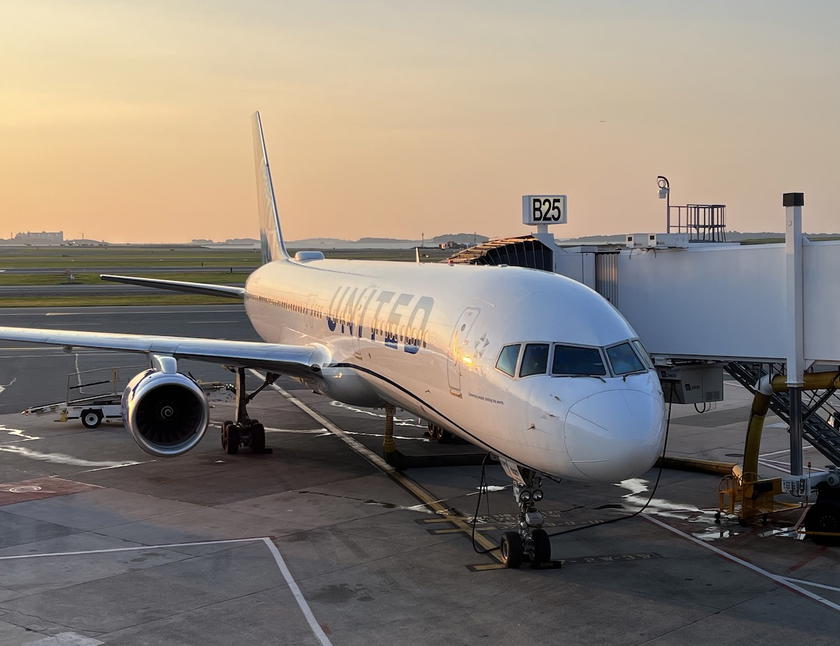
Kirby talks a big game, but American is proving him right
I have huge respect for Scott Kirby, and I think he has done an incredible job at United, for shareholders, for customers, and for employees (minus the fact that they need to figure out their labor contracts, which is a major detail).
I think Kirby’s narrative around the permanence of the Delta and United advantage is more optimism rather than reality. It’s what he wants the narrative to be, just like he wants people to believe that United is the greatest airline in history. Kirby projects a lot of confidence and certainty when he communicates, and I think that’s one of his biggest strengths, even if I find it off-putting, at times.
Anyone who thinks that anything in the airline industry is permanent either has really bad memory, or just isn’t being honest (it’s just like Parker’s claim that American would never lose money again, and would always earn at least $3 billion in a bad year). A lot can change in the industry, and no airline has a permanent advantage.
A few days ago, I posed the question of who is going to save American, and when they’ll replace CEO Robert Isom. What’s so sad in all of this is that Kirby just keeps attacking American, pointing out how the airline has no strategy and is becoming increasingly irrelevant… and American just keeps proving him right.
The problem with Isom at American is that he’s neither some brilliant strategy guy, nor is he a football coach type, like McCartney references. McCartney is exactly right — “once you lose labor, it’s over,” and “it may take a couple of years or whatever, but it’s over.” Isom isn’t a football coach, he’s the captain of a lost ship with no navigation that’s just going deeper into the ocean. And maybe that sounds harsh, but c’mon, American lost money in Q3 2025, which is supposed to be one of the better quarters.
It doesn’t have to be this way. American has so many advantages that Kirby tries to pretend don’t exist. The airline has amazing joint venture partner hubs (in London, Sydney, and Tokyo), efficient hubs in places like Charlotte and Dallas, an amazing Latin America advantage via the Miami hub, etc.
American. Doesn’t. Have. To. Fail. I just wish we’d finally see American actually try to prove Kirby wrong, rather than just continuing to prove him right. These incremental improvements that American is making for the passenger experience are great, but American needs a much bigger reboot.
The current narrative among American executives is that everything they’re doing right now is to “focus on the customer.” The problem is, that’s not enough. American’s Chief Customer Officer has said that a reliable schedule is just “table stakes” at this point. But the reality is that even customer experience improvements are just “table stakes,” when you’re competing against Delta and United. What else ya got? There needs to be a bigger strategy, and employees need to be excited about it.
Anyway, Scott Kirby is right about American because American is letting him be right, and not because he’s actually right. I’ll get off my soap box now, and little would make me happier than for American to prove Kirby wrong.
Bottom line
During a recent interview on Airlines Confidential, United CEO Scott Kirby didn’t hold back with his take on the industry, as usual. Kirby attacking American is nothing new — he thinks there are “two large, revenue diverse, full service, brand loyal airlines” in the United States, and that American is too far gone, and that everyone other than Delta and United will just keep shrinking over time.
The way I see it, it doesn’t have to be this way, and I don’t think anything in the industry is as permanent as Kirby suggests, as much as he’d like for that to be the case. But based on how American is currently being run, it certainly doesn’t seem like American wants to prove Kirby wrong.
What do you make of Kirby’s comments on the industry?


Membership is free and takes no more information than commenting as a guest. Earn status points for good contributions, and see fewer ads as your status grows.