Whoa: US Airline Face Mask Mandate Ends Early

This isn’t how I saw the federal transportation mask mandate in the United States ending…

Government makes masks at airports and on airplanes optional

Since early 2021, the United States has had a federal transportation mask mandate, which has been extended several times. Most recently this was supposed to apply through April 18, 2022, but then it was extended through May 3, 2022, “out of an abundance of caution.”
On Monday, US District Judge Kathryn Kimball Mizelle ruled that the federal transportation mask mandate exceeded the authority of the Centers for Disease Control and Prevention (CDC), claiming that the CDC failed to justify the order and didn’t follow proper rule making procedures.

As a result, the Biden administration has stated that the Transportation Security Administration (TSA) will no longer enforce the transportation mask mandate. It remains to be seen if the Biden administration will appeal this ruling:

  • Doing so seems unlikely to me, given that this was only as of now extended by roughly two more weeks
  • The mandate has become less popular over time
  • From a political standpoint, this is probably the best case scenario for Biden (which isn’t saying a whole lot), since many people will be happy about not having to wear masks, but Biden won’t be blamed for any negative impacts as a result of this; I’m not saying that’s how it should be, but that’s my view
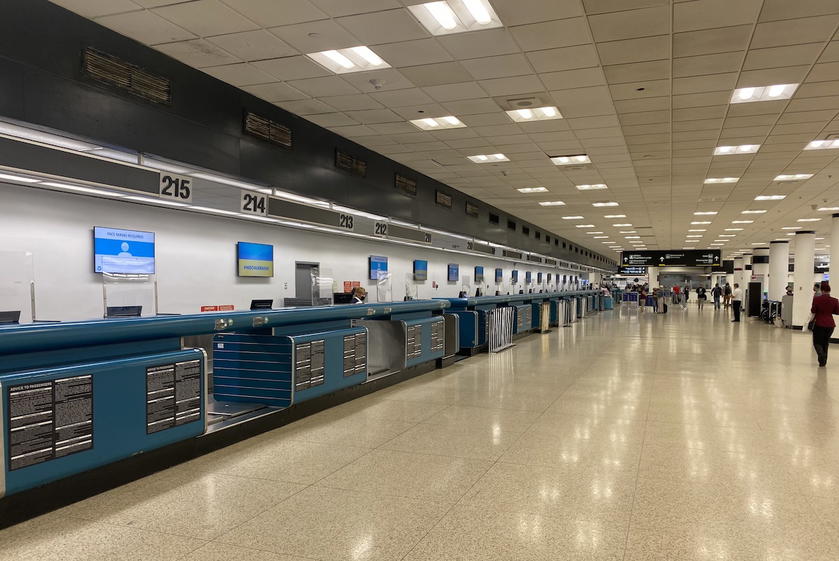
Masks are no longer required at US airports

US airlines now making face masks optional

While there’s no longer a federal regulation requiring masks be worn on airplanes, individual airlines can of course make their own policies. After all, for most of 2020 there wasn’t a federal regulation requiring masks on planes, but rather each individual airline required this.

With this latest update, virtually all major airlines in the United States have announced that they’ll no longer enforce mask compliance on planes. Among other airlines, this includes:

  • Alaska Airlines
  • American Airlines
  • Delta Air Lines
  • Frontier Airlines
  • JetBlue Airways
  • Spirit Airlines
  • United Airlines

Keep in mind that masks will still be required for flights to certain international destinations, since many countries still require masks. In some cases masks will just be required upon arrival in another country, while in other cases they’ll continue to be required for the entire flight.

There are interesting stories from passengers today, with some reporting that pilots made announcements while inflight telling passengers masks were no longer required.

If anyone is flying in the coming hours and days, I’d love to hear about how many people are wearing masks at airports and on planes. I had my first mask-optional experience at Frankfurt Airport a couple of weeks ago, yet 95%+ of people were still wearing masks.

I think it’s going to be a different story in the United States, with of course some variance depending on the place. For example, I suspect the number of passengers wearing masks at Miami Airport will be very different than the number of passengers wearing masks at San Francisco Airport.
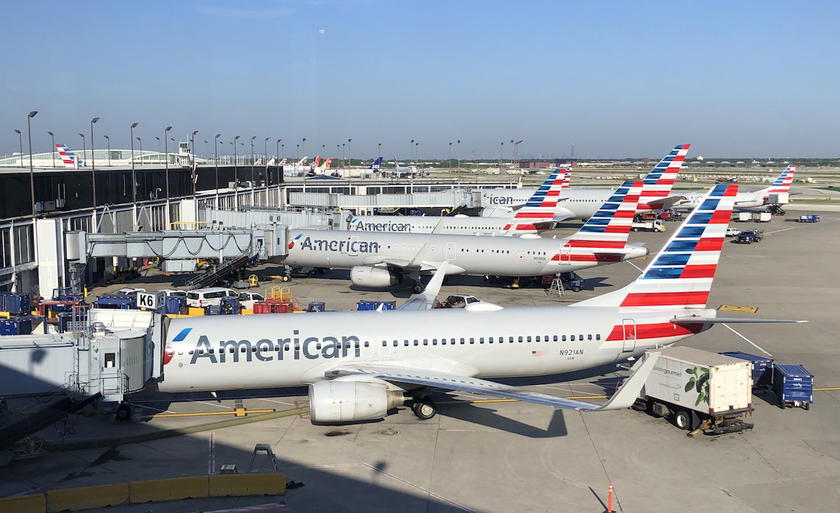
Major US airlines are no longer requiring masks

What about all the people airlines banned?

During the pandemic we saw airlines ban thousands of people over mask compliance issues. This didn’t come in the form of a federal no-fly list, but rather individual airlines created their own lists.

Most airlines stated that these people would remain banned until the federal mask mandate is eliminated. It now remains to be seen if these people can once again fly on those airlines, as I haven’t heard anything official one way or another yet.

What about pre-departure testing for international travel?

International travelers bound for the United States need to present proof of a negative coronavirus test taken within one calendar day of travel. This rule is independent of the mask mandate, and remains in place. As recently as a couple of weeks ago, the White House shared that there were no plans to change this requirement.

While I’m very much in favor of this being lifted, it doesn’t seem we should expect that anytime soon.

Testing is still required for international travel

Delta labels COVID-19 “ordinary seasonal virus”

It’s interesting to see how different airlines are communicating about their mask policy changes. I can’t help but point out Delta’s press release about masks now being optional:

We are relieved to see the U.S. mask mandate lift to facilitate global travel as COVID-19 has transitioned to an ordinary seasonal virus.

This seems like a bit of a stretch, no? And I’m not sure what exactly Delta is trying to accomplish by phrasing this in such a way? You can be in favor of the mask mandate being lifted while not thinking that COVID-19 has become an “ordinary seasonal virus,” because, well, it’s not.

I’m also not sure what exactly the “season” is for coronavirus? Because if it’s being suggested that it’s seasonal to winter, I’d like to present to you Florida in the summer of 2021…

Yes, we’ve come a long way when it comes to mitigating risk associated with coronavirus, but coronavirus is still a bigger threat than your “ordinary seasonal virus.” Ultimately I suppose this shouldn’t come as much of a surprise, since recently Delta dropped the healthcare surcharge for unvaccinated employees, also arguing that coronavirus has become a seasonal disease.
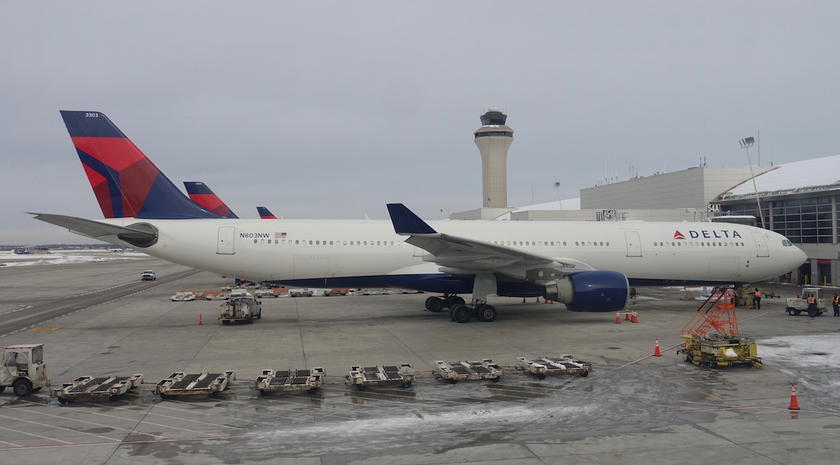
Delta is labeling COVID-19 as an “ordinary seasonal flu”

Bottom line

A judge has ruled against the federal transportation mask mandate, and as a result the Biden administration has instructed the TSA to no longer enforce mask wearing. As a result, we’re seeing airlines start to make mask wearing optional. Only time will tell if the Biden administration appeals this, but it seems unlikely given that the days for the mandate were numbered anyway.

What do you make of this latest mask mandate update? And if you’re flying in the coming days, please report back on your experience!

Conversations (193)
The comments on this page have not been provided, reviewed, approved or otherwise endorsed by any advertiser, and it is not an advertiser's responsibility to ensure posts and/or questions are answered.
Comment as a member

Membership is free and takes no more information than commenting as a guest. Earn status points for good contributions, and see fewer ads as your status grows.

Type your response here.

If you'd like to participate in the discussion, please adhere to our commenting guidelines. Anyone can comment, and your email address will not be published. Register to save your unique username and earn special OMAAT reputation perks!

  1. Loading comments…
Recent Comments
The latest from the OMAAT community.

The comments on this page have not been provided, reviewed, approved or otherwise endorsed by any advertiser, and it is not an advertiser's responsibility to ensure posts and/or questions are answered.

Alex Guest

Mask-optional public transit alarms immunocompromised people and their families https://www.latimes.com/california/story/2022-04-20/mask-optional-public-transit-alarms-immunocompromised?_amp=true

0
‼ 0
Ben Guest

I flew on Monday night, from Phoenix to New York. I personally hadn't heard the mandate was lifted at that point, but I did notice that about 85% of the people in the airport were not wearing masks. Frankly, I assumed that was just Arizona being Arizona. I was in Texas a few days earlier and I would say about 20%-30% of people were actively not wearing masks, so while it was a big increase, I was not surprised. I would say about 80% of people on my flight were not wearing a mask either.

0
‼ 0
DCS Diamond

In the "information age", information is <b>free</b>. There is no reason for people who can apparently use a computer to continue to be so misinformed, fully 2 years in the single most transformative event in since WWII. Want to know whether masks (cloth or surgical) have played a significant role as a mitigation measure against the SARS-CoV-2 various? Follow the link below. https://www.cdc.gov/coronavirus/2019-ncov/science/science-briefs/masking-science-sars-cov2.html <b>Here's the short of it:</b> <blockquote> At least ten studies have confirmed the benefit of universal masking in community level analyses: in a unified hospital system,47 a German city,48 two U.S. states,49, 50 a panel of 15 U.S. states and Washington, D.C.,51, 52 as well as both Canada53 and the U.S.54-56 nationally. Each analysis demonstrated that, following directives from organizational and political leadership for universal masking, new infections fell significantly. Two of these studies51, 52 and an additional analysis of data from 200 countries that included the U.S.56 also demonstrated reductions in mortality. Another 10-site study showed reductions in hospitalization growth rates following mask mandate implementation.54 A separate series of cross-sectional surveys in the U.S. suggested that a 10% increase in self-reported mask wearing tripled the likelihood of stopping community transmission.57 An economic analysis using U.S. data found that, given these effects, increasing universal masking by 15% could prevent the need for lockdowns and reduce associated losses of up to $1 trillion or about 5% of gross domestic product.52 Two studies have been improperly characterized by some sources as showing that surgical or cloth masks offer no benefit.58,59 A community-based randomized control trial in Denmark during 2020 assessed whether the use of surgical masks reduced the SARS-CoV-2 infection rate among wearers (personal protection) by more than 50%.58 Findings were inconclusive,58 most likely because the actual reduction in infections was lower. The study was too small (i.e., enrolled about 0.1% of the population) to assess whether masks could decrease transmission from wearers to others (source control). A second study of 14 hospitals in Vietnam during 2015 found that cloth masks were inferior to surgical masks for protection against clinical upper respiratory illness or laboratory-confirmed viral infection.59 The study had a number of limitations including the lack of a true control (no mask) group for comparison, limited source control as hospitalized patients and staff were not masked, unblinded study arm assignments potentially biasing self-reporting of illness, and the washing and re-use of cloth masks by users introducing the risk of infection from self-washing. <b>A follow up study in 2020 found that healthcare workers whose cloth masks were laundered by the hospital were protected equally as well as those that wore medical masks.</b>60</blockquote>

1
‼ 0
DCS Diamond

Background SARS-CoV-2 infection is transmitted predominantly by inhalation of respiratory droplets generated when people cough, sneeze, sing, talk, or breathe. CDC recommends community use of masks to prevent transmission of SARS-CoV-2. Masks are primarily intended to reduce the emission of virus-laden droplets by the wearer (“source control”), which is especially relevant for asymptomatic or presymptomatic infected wearers who feel well and may be unaware of their infectiousness to others (estimated to account for more than 50% of SARS-CoV-2 transmissions).1, 2 Masks also help reduce inhalation of these droplets by the wearer (“filtration for wearer protection”). The community benefit of masking for SARS-CoV-2 control is due to the combination of these two effects (source control and filtration for wearer protection); individual prevention benefit increases with increasing numbers of people using masks consistently and correctly. Source Control to Block Exhaled Virus Multi-layer cloth masks block release of exhaled respiratory particles into the environment,3-6 along with any microorganisms associated with these particles.7, 8 Cloth masks not only effectively block most large droplets (i.e., 20-30 microns and larger),9 but they can also block the exhalation of fine droplets and particles (also often referred to as aerosols) smaller than 10 microns3, 5 which increase in number with the volume of speech10-12 and specific types of phonation.13 Multi-layer cloth masks can both block 50-70% of these fine droplets and particles3, 14 and limit the forward spread of those that are not captured.5, 6, 15, 16 Upwards of 80% blockage has been achieved in human experiments,4 with cloth masks in some studies performing on par with surgical masks as barriers for source control.3, 9, 14, 17 In one study, conducted prior to widespread circulation of the Delta variant, masks worked equally well for blocking aerosolized particles containing both “wild-type” virus and the Alpha variant (a more infectious variant).17 Filtration for Wearer Protection Studies demonstrate that cloth mask materials can also reduce wearers’ exposure to infectious droplets through filtration, including filtration of fine droplets and particles less than 10 microns. The relative filtration effectiveness of various masks has varied widely across studies, in large part due to variation in experimental design and particle sizes analyzed. Multiple layers of cloth with higher thread counts have demonstrated superior performance compared to single layers of cloth with lower thread counts, in some cases filtering nearly 50% of fine particles less than 1 micron.14, 18-30 Some materials (e.g., polypropylene) may enhance filtering effectiveness by generating triboelectric charge (a form of static electricity) that enhances capture of charged particles20 while others (e.g., silk) may help repel moist droplets31 and reduce fabric wetting and thus maintain breathability and comfort. In addition to the number of layers and choice of materials, other techniques can improve wearer protection by improving fit and thereby filtration capacity. Examples include but are not limited to mask fitters, knotting-and-tucking the ear loops of medical procedures masks, using a cloth mask placed over a medical procedure mask, and nylon hosiery sleeves.32-36

1
‼ 0
Greg Guest

I just don't get it. The single non-evasive, proven to reduce transmission, low cost thing on airplanes to reduce transmission is removed and yet mandatory testing for entry into the US is still in place.

0
‼ 0

Save posts to read later

Saving posts is a member feature. Become an OMAAT member to build a reading list you can come back to from any device.

Become a member
Meet Ben Schlappig, OMAAT Founder
5,883,136 Miles Traveled

43,914,800 Words Written

47,187 Posts Published

Keep Exploring OMAAT