Airline credit cards are worth it in a way that is fundamentally different from hotel credit cards. With hotel cards, a free night certificate can clearly pay for the annual fee on its own, regardless of how often you stay with that brand. Airline cards work differently. In most cases, they justify themselves through a bundle of travel perks: free checked bags, priority boarding, lounge access, and companion certificates. Those perks only deliver value when you are actually flying the relevant airline, which is why I always come back to the same point: airline credit cards are most valuable when you have at least some loyalty to a carrier.
There are two separate questions worth answering here. First, which co-branded airline card is the best fit for the airlines you actually fly? Second, which card is best for airfare spending in general, regardless of airline? For that second question, transferable points cards often beat co-branded cards on pure return, since they earn at competitive rates and give you the flexibility to transfer points wherever the best redemption opportunity happens to be.
This post covers both angles. I will start with my top co-branded picks for each major US airline, then cover the best cards for earning points on airfare spending, and then round out with the most valuable ongoing travel perks across the category: free checked bags, lounge access, and companion certificates.
Compare airline credit cards

Citi® / AAdvantage® Executive World Legend Mastercard®
Limited Time: Earn 125,000 miles after qualifying purchases
- Earn 1 Loyalty Point for every 1 eligible AAdvantage® mile earned from purchases
- Admirals Club Membership
- No Foreign Transaction Fees
Earn 4 AAdvantage® miles for every $1 spent on eligible American Airlines purchases. After you spend $150,000 in purchases in a calendar year, earn a total of 5 AAdvantage® miles for every $1 spent on eligible American Airlines purchases for the remainder of the year
Earn 12 AAdvantage® miles for every $1 spent on eligible AAdvantage Hotels® bookings and eligible AAdvantage Cars® bookings
Earn 1 AAdvantage® mile for every $1 spent on all other purchases
- For a limited time, earn 125,000 American Airlines AAdvantage® bonus miles after $15,000 in purchases in the first 5 months of account opening.
- The only card with Admirals Club® membership. Membership includes access for you and up to two guests or immediate family members traveling with you.
- Global Entry® or TSA PreCheck® application fee credit of up to $120 every 4 years.
- Earn a 10,000 Loyalty Point bonus after reaching 50,000, 90,000, 165,000 and 240,000 Loyalty Points in the same status qualification year.
- First checked bag is free on domestic American Airlines itineraries for you and up to 8 companions traveling with you on the same reservation.
For a limited time, earn 125,000 American Airlines AAdvantage® bonus miles after $15,000 in purchases in the first 5 months of account opening.

Chase Sapphire Reserve®
Earn 100,000 bonus points
- 4x points on flights and hotels booked direct
- 3x points on Dining
- $300 Annual Travel Credit
Earn 8x points on all purchases through Chase Travel℠, including The Edit℠ and 4x points on flights and hotels booked direct. Plus, earn 3x points on dining worldwide & 1x points on all other purchases
- Earn 100,000 bonus points after you spend $6,000 on purchases in the first 3 months from account opening.
- Get $3,000 in annual value with Sapphire Reserve.
- Earn 8x points on all purchases through Chase Travel℠, including The Edit℠ and 4x points on flights and hotels booked direct. Plus, earn 3x points on dining worldwide & 1x points on all other purchases
- $300 annual travel credit as reimbursement for travel purchases charged to your card each account anniversary year.
- Access over 1,300 airport lounges worldwide with a complimentary Priority Pass™ Select membership, plus every Chase Sapphire Lounge® by The Club with two guests. Plus, up to $120 towards Global Entry, NEXUS, or TSA PreCheck® every 4 years
- Get up to $150 in statement credits every six months for a maximum of $300 annually for dining at restaurants that are part of Sapphire Reserve Exclusive Tables.
- Count on Trip Cancellation/Interruption Insurance, Auto Rental Coverage, Lost Luggage Insurance, no foreign transaction fees, and more.
- Get complimentary subscriptions to Apple TV and Apple Music for a minimum of one year when activated by June 22, 2027, a value of $288 annually.
- Member FDIC
Earn 100,000 bonus points after you spend $6,000 on purchases in the first 3 months from account opening.

Chase Sapphire Preferred® Card
Earn 75,000 bonus points
- 5x total points on travel purchased through Chase Travel℠
- 3x points on dining
- 2x points on travel purchases
- 5x on travel purchased through Chase Travel℠
- 3x on dining
- 3x on vacation homes
- 3x on gas & EV charging
- 3x on top streaming services
- 3x on online groceries (excluding Walmart, Target, and wholesale clubs)
- 2x on all other travel purchases
- 1x on all other purchases
- Earn 75,000 bonus points after you spend $5,000 on purchases in the first 3 months from account opening.
- Enjoy benefits such as 5x on travel purchased through Chase Travel℠, 3x on dining, 3x on vacation homes, 3x on gas & EV charging, 3x on top streaming services and online groceries (excluding Walmart, Target, and wholesale clubs), 2x on all other travel purchases, 1x on all other purchases
- Earn up to $100 in statement credits each account anniversary year for hotel stays through Chase Travel
- Count on Trip Cancellation/Interruption Insurance, Auto Rental Collision Damage Waiver, Emergency Evacuation and Transportation and more
- Get a year of complimentary Apple TV when activated by December 31, 2026 - a value of $156.
- Complimentary DashPass which unlocks $0 delivery fees & lower service fees for 12 months when you activate by 12/31/27. Plus, a $10 promo each month on non-restaurant orders.
- Receive one statement credit of up to $120 every four years as reimbursement for the application fee charged to your card for a Global Entry, TSA Precheck® or NEXUS application.
- Transfer points to leading airline and hotel loyalty programs
- Member FDIC
Earn 75,000 bonus points after you spend $5,000 on purchases in the first 3 months from account opening.

Delta SkyMiles® Reserve American Express Card
- Annual Companion Certificate
- First Checked Bag Free
- Priority Boarding
Earn 3X Miles on Delta purchases and earn 1X Miles on all other eligible purchases.
Learn more from these OMAAT posts:
- Earn two round-trip Delta Comfort Flight Certificates valid for travel to the U.S. 48, Puerto Rico, or the U.S. Virgin Islands, along with 50,000 Bonus Miles after you spend $10,000 in purchases on your new Card in the first 6 months. A 21+ day advance purchase is required. Taxes and fees up to $80 per person apply. Terms and other restrictions apply. Offer ends 11/4/2026.
- Delta SkyMiles® Reserve American Express Card Members receive 15 Visits each Medallion® Year to the Delta Sky Club® when flying Delta and can unlock Unlimited Delta Sky Club Access after spending $75,000 in purchases on your Card during a calendar year. Reserve Card Members can also enjoy complimentary access to The Centurion® Lounge and Escape Lounges when you book your Delta flight with your Delta SkyMiles® Reserve American Express Card.
- Receive $2,500 Medallion® Qualification Dollars with MQD Headstart each Medallion Qualification Year and earn $1 MQD for each $10 in purchases on your Delta SkyMiles® Reserve American Express Card with MQD Boost to get closer to Status next Medallion Year.
- Enjoy a Companion Certificate on a Delta First, Delta Comfort, or Delta Main domestic, Caribbean, or Central American round-trip flight each year after renewal of your Card. The Companion Certificate requires payment of government-imposed taxes and fees of between $22 and $250 (for itineraries with up to four flight segments). Baggage charges and other restrictions apply. Delta Basic experiences are not eligible for this benefit.
- $240 Resy Credit: Get up to $20 in statement credits each month at over 10,000 qualifying U.S. Resy restaurants after you pay with your enrolled Delta SkyMiles® Reserve American Express Card for eligible purchases.
- Global Dining Access by Resy gives you special access to sought-after U.S. Resy restaurants when you add your Delta SkyMiles® Reserve American Express Card to your Resy profile. Access to exclusive reservations, premium dining experiences, Priority Notify, and more, all from Resy.com or the Resy app.
- $120 Rideshare Credit: With your $120 Rideshare Credit, earn up to $10 back in statement credits each month after you use your Delta SkyMiles® Reserve American Express Card for U.S. rideshare purchases with select providers. Enrollment Required.
- Check your first bag for free on Delta flights worldwide and get a second bag free when flying domestically.
- Delta SkyMiles® Reserve American Express Card Members get 15% off when using miles to book Award Travel on Delta flights through delta.com and the Fly Delta app. Discount not applicable to partner-operated flights or to taxes and fees.
- With your Delta SkyMiles® Reserve American Express Card, receive upgrade priority over others with the same Medallion tier, product and fare experience purchased, and Million Miler milestone when you fly with Delta.
- No Foreign Transaction Fees. Enjoy international travel without additional fees on purchases made abroad.
- $650 Annual Fee.
- Terms Apply.
Earn two round-trip Delta Comfort Flight Certificates valid for travel to the U.S. 48, Puerto Rico, or the U.S. Virgin Islands, along with 50,000 Bonus Miles after you spend $10,000 in purchases on your new Card in the first 6 months. A 21+ day advance purchase is required. Taxes and fees up to $80 per person apply. Terms and other restrictions apply. Offer ends 11/4/2026.

United Club℠ Card
Earn up to 100,000 bonus miles
- Earn 11x total miles on eligible United flights
- United Club℠ Access
- Earn PQPs Towards Status
11x total miles on eligible United flights and 5x miles on all other eligible United® purchases.
2x miles on dining and all other travel.
1x mile on all other purchases.
Learn more from these OMAAT posts:
- Earn up to 100,000 bonus miles
- 11x total miles on eligible United flights and 5x miles on all other eligible United® purchases
- 2x miles on dining and all other travel
- 1x mile on all other purchases
- Unlimited United Club℠ access for you and a guest - a $750+ value per year
- Free first and second checked bags - a savings of up to $440 per roundtrip (terms apply) - and Premier Access® travel services.
- Earn up to 20,000-miles in award flight discounts annually
- Save 10% or more when booking flights with miles. Premier members save even more.
- Member FDIC
Earn up to 100,000 bonus miles
Earn 90,000 bonus miles after you spend $5,000 on purchases in the first 3 months from account opening.
Earn an additional 10,000 bonus miles when you add an authorized user within the first 3 months your account is open.

Citi Strata Premier® Card
Earn 60,000 bonus ThankYou® Points after qualifying purchases
- Earn 3x Points on Airfare
- Earn 3x Points on Hotels
- Earn 3x Points at Restaurants
Earn 10 Points per $1 spent on Hotels, Car Rentals, and Attractions booked on CitiTravel.com.
Earn 3 Points per $1 on Air Travel and Other Hotel Purchases, at Restaurants, Supermarkets, Gas and EV Charging Stations.
Earn 1 Point per $1 spent on all other purchases.
- Earn 60,000 bonus ThankYou® Points after spending $4,000 in the first 3 months of account opening, redeemable for $600 in gift cards or travel rewards at thankyou.com.
- Earn 10 Points per $1 spent on Hotels, Car Rentals, and Attractions booked on CitiTravel.com.
- Earn 3 Points per $1 on Air Travel and Other Hotel Purchases, at Restaurants, Supermarkets, Gas and EV Charging Stations.
- Earn 1 Point per $1 spent on all other purchases
- $100 Annual Hotel Benefit: Once per calendar year, enjoy $100 off a single hotel stay of $500 or more (excluding taxes and fees) when booked through CitiTravel.com. Benefit applied instantly at time of booking.
- No expiration and no limit to the amount of points you can earn with this card
- No Foreign Transaction Fees on purchases
Earn 60,000 bonus ThankYou® Points after spending $4,000 in the first 3 months of account opening, redeemable for $600 in gift cards or travel rewards at thankyou.com.

United Quest℠ Card
Earn up to 90,000 bonus miles + 500 PQP
- 10x total miles on eligible United flights
- 2x miles on dining
- Free first and second checked bags
NEW! 10x total miles on eligible United flights and 4x miles on all other eligible United® purchases
1x mile on all other purchases
Learn more from these OMAAT posts:
- Earn up to 90,000 bonus miles after qualifying activities and 500 PQP after first purchase
- 10x total miles on eligible United flights and 4x miles on all other eligible United® purchases
- 2x miles on dining, select streaming services, and all other travel
- 1x mile on all other purchases
- Get a jump start on earning Premier status with 1,000 Card Bonus PQP each year, awarded within 8 weeks of February 1, starting in the calendar year following your account open date.
- Free first and second checked bags--a savings of up to $440 per roundtrip (terms apply)
- Receive a $200 United® travel credit and 10,000-mile award flight discount on each account anniversary
- Save 10% or more when booking flights with miles. Premier members save even more.
- Member FDIC
Earn up to 90,000 bonus miles and 500 PQP
Earn 500 Premier qualifying points after your first purchase and 80,000 bonus miles and after you spend $4,000 on purchases in the first 3 months your account is open.
Plus 10,000 bonus miles when you add an authorized user in the first 3 months your account is open.

Delta SkyMiles® Platinum American Express Card
Limited Time: As High As 90,000 Bonus Miles + Earn a $300 Statement Credit. Offer ends 11/04/2026.
- Earn 3x SkyMiles for purchases directly with Delta
- Annual Companion Certificate
- First Checked Bag Free
Earn 3X Miles on Delta purchases and purchases made directly with hotels.
Earn 2X Miles at restaurants worldwide including takeout and delivery in the U.S., and at U.S. supermarkets.
Earn 1X Miles on all other eligible purchases.
Learn more from these OMAAT posts:
- Apply and find out your welcome offer: As High As 90,000 Bonus Miles + Earn a $300 Statement Credit after you spend $4,000 in purchases on your new Card within the first 6 months of Card Membership. You may not be eligible for the maximum welcome offer amount. Offer ends 11/04/2026.
- Receive a Companion Certificate on a Delta Main round-trip flight within the U.S. and to Mexico, the Caribbean, or Central America each year after renewal of your Card. The Companion Certificate requires payment of government-imposed taxes and fees of between $22 and $250 (for itineraries with up to four flight segments). Baggage charges and other restrictions apply. Delta Basic experiences are not eligible for this benefit.
- Receive $2,500 Medallion® Qualification Dollars with MQD Headstart each Medallion Qualification Year and earn $1 MQD for each $20 in purchases on your Delta SkyMiles® Platinum American Express Card with MQD Boost to get closer to Status next Medallion Year.
- Delta SkyMiles® Platinum American Express Card Members get 15% off when using miles to book Award Travel on Delta flights through delta.com and the Fly Delta app. Discount not applicable to partner-operated flights or to taxes and fees.
- Earn 3X Miles on Delta purchases and purchases made directly with hotels.
- Earn 2X Miles at restaurants worldwide including takeout and delivery in the U.S., and at U.S. supermarkets.
- Earn 1X Miles on all other eligible purchases.
- $120 Resy Credit: Earn up to $10 in statement credits each month at over 10,000 qualifying U.S. Resy restaurants after you pay with your enrolled Delta SkyMiles® Platinum American Express Card for eligible purchases.
- $120 Rideshare Credit: With your $120 Rideshare Credit, earn up to $10 back in statement credits each month after you use your Delta SkyMiles® Platinum American Express Card for U.S. rideshare purchases with select providers. Enrollment Required.
- Check your first bag for free on Delta flights worldwide and get your second bag free when flying domestically.
- Receive either a $120 statement credit for a Global Entry application fee or a statement credit up to $85 for a TSA PreCheck® (through a TSA official enrollment provider) application fee every 4 years, when charged to your Delta SkyMiles® Platinum American Express Card. Card Members approved for Global Entry will also receive access to TSA PreCheck at no additional cost.§
- Delta SkyMiles® Platinum American Express Card Members with an eligible ticket will be added to the Complimentary Upgrade list, after Delta SkyMiles Medallion Members and Reserve Card Members.
- No Foreign Transaction Fees.
- $350 Annual Fee.
- Terms Apply.
Apply and find out your welcome offer: As High As 90,000 Bonus Miles + Earn a $300 Statement Credit after you spend $4,000 in purchases on your new Card within the first 6 months of Card Membership. You may not be eligible for the maximum welcome offer amount. Offer ends 11/04/2026.
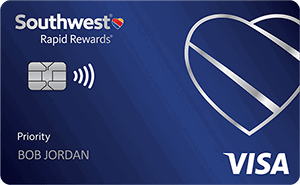
Southwest Rapid Rewards® Priority Credit Card
Earn 60,000 bonus points
- Earn 4x points on Southwest Airlines purchases
- Earning Southwest Companion Pass
- Anniversary Bonus Points
Earn 4 points per $1 spent on Southwest Airlines® purchases, including flights, inflight, and Southwest gift cards.
Earn 2 points for every $1 you spend at gas stations and restaurants
Learn more from these OMAAT posts:
- Earn 60,000 bonus points after spending $2,000 on purchases in the first 3 months from account opening.
- 7,500 anniversary points each year.
- Earn 4 points per $1 spent on Southwest Airlines® purchases, including flights, inflight, and Southwest gift cards.
- Earn 2 points for every $1 you spend at gas stations and restaurants
- First checked bag free for Cardmembers and up to 8 additional passengers in the same reservation.
- Select a Preferred seat at booking, at no additional charge, when available.
- Cardmembers and up to 8 passengers in the same reservation will board with Group 5 giving them earlier access to overhead bins.
- No foreign transaction fees.
- Member FDIC
Earn 60,000 bonus points after spending $2,000 on purchases in the first 3 months from account opening.

Atmos™ Rewards Summit Visa Infinite® credit card
Limited-time online offer – 70,000 bonus points
- 3 points per dollar spent on eligible Alaska Airlines & Hawaiian Airlines purchases
- Earn a Companion Award
- Free Checked Bag Benefit
Earn unlimited 3 points for every $1 spent on eligible dining, foreign transaction, Alaska Airlines and Hawaiian Airlines purchases and unlimited 1 point per $1 spent on all other purchases. Plus, earn a 10% rewards bonus on all points earned from card purchases if you have an eligible Bank of America® account.
Learn more from these OMAAT posts:
- Limited-time online offer – 70,000 bonus points.
- Get 70,000 bonus points and a 25,000-point Global Companion Award with this offer. To qualify, spend $3,000 or more on purchases within the first 90 days of opening your account.
- Each account anniversary, get a 25,000-point Global Companion Award for a travel companion on the same itinerary, when booking travel using your Atmos™ Rewards points.
- Additionally, receive a 100,000-point Global Companion Award annually after spending $60,000 or more on purchases each anniversary year.
- Receive 8 Alaska Lounge passes and 8 Wi-Fi passes every year (2 of each per calendar quarter).
- Earn unlimited 3 points for every $1 spent on eligible dining, foreign transaction, Alaska Airlines and Hawaiian Airlines purchases and unlimited 1 point for every $1 spent on all other purchases. Plus, earn a 10% rewards bonus on all points earned from card purchases if you have an eligible Bank of America® account.
- Get 10,000 status points every year on your account anniversary and earn 1 status point for every $2 spent on purchases.
- Save up to $90 per person round-trip with a free checked bag and preferred boarding for you and up to six guests on the same reservation when you pay for your flight with your card.
- Receive an airport security statement credit up to $120 every four years in connection with the TSA PreCheck® or Global Entry trusted traveler programs.
- Receive a $50 voucher for Alaska Airlines flight cancellations or departure delays of 2 hours+.
- Plus, no foreign transaction fees and a competitive $395 annual fee.
- This offer may not be available elsewhere if you leave this page. You can take advantage of this offer when you apply now.
Limited-time online offer – 70,000 bonus points.
Get 70,000 bonus points and a 25,000-point Global Companion Award with this offer. To qualify, spend $3,000 or more on purchases within the first 90 days of opening your account.

Atmos™ Rewards Ascent Visa Signature® credit card
Limited-time online offer – 50,000 bonus points
- 3 points per dollar spent on eligible Alaska Airlines & Hawaiian Airlines purchases
- Earn a Companion Fare
- Free Checked Bag Benefit
Earn unlimited 3 points for every $1 spent on eligible Alaska Airlines and Hawaiian Airlines purchases.
Earn unlimited 2 points for every $1 spent on eligible gas, EV charging station, cable, streaming services and local transit (including ride share) purchases.
Earn unlimited 1 point per $1 spent on all other purchases.
- Limited-time online offer – 50,000 bonus points.
- Get 50,000 bonus points and a $99 Companion Fare (plus taxes and fees from $23) with this offer. To qualify, spend $1,500 or more on purchases within the first 90 days of opening your account.
- Get a $99 Companion Fare (plus taxes and fees from $23) each account anniversary after you spend $6,000 or more on purchases within the prior anniversary year. Valid on all Alaska Airlines and Hawaiian Airlines flights within North America booked on alaskaair.com.
- Earn unlimited 3 points for every $1 spent on eligible Alaska Airlines and Hawaiian Airlines purchases. Earn unlimited 2 points for every $1 spent on eligible gas, EV charging station, cable, streaming services and local transit (including ride share) purchases. And earn unlimited 1 point per $1 spent on all other purchases. Points don’t expire on active accounts.
- Earn a 10% rewards bonus on all points earned from card purchases if you have an eligible Bank of America® account.
- Save up to $90 per person round-trip with a free checked bag and preferred boarding for you and up to six guests on the same reservation when you pay for your flight with your card.
- Earn and redeem across 1,000+ destinations worldwide with oneworld® Alliance member airlines and 30+ global air partners.
- Plus, no foreign transaction fees and a low $95 annual fee.
- This offer may not be available elsewhere if you leave this page. You can take advantage of this offer when you apply now.
Limited-time online offer – 50,000 bonus points.
Get 50,000 bonus points and a $99 Companion Fare (plus taxes and fees from $23) with this offer. To qualify, spend $1,500 or more on purchases within the first 90 days of opening your account.

Bilt Palladium Card
50,000 Bilt Points + Gold Status offer
- 2X points on everyday purchases
- Earn up to 1.25X points on rent and mortgage payments
- $400 Bilt Travel Hotel credit
Earn up to 1.25X points on rent and mortgage payments with no transaction fee, and 2X points on everyday spend.
Learn more from these OMAAT posts:
- Earn up to 1.25X points on rent and mortgage payments with no transaction fee.
- 2X points on everyday spend
- $400 Bilt Travel Hotel credit. Applied twice a year, as $200 statement credits, for qualifying Bilt Travel Portal hotel bookings.
- $200 Bilt Cash (awarded annually). At the end of each calendar year, any Bilt Cash balance over $100 will expire.
- Welcome bonus (subject to approval): 50,000 Bilt Points + Gold Status after spending $4,000 on everyday purchases in the first 90 days + $300 of Bilt Cash.
- Priority Pass ($469/year value). See Guide to Benefits.
- Bilt Point redemptions include airlines, hotels, future rent and mortgage payments, Lyft rides, statement credits, student loan balances, a down payment on a home, and more.
- Earn additional points through Bilt Neighborhood Benefits™ when you use your card at Bilt's network of 50,000+ merchant partners.
Welcome bonus (subject to approval): 50,000 Bilt Points + Gold Status after spending $4,000 on everyday purchases in the first 90 days + $300 of Bilt Cash. Up to $100 of Bilt Cash earned rolls over to the next year.
Top co-branded pick per airline
Here is my top pick for each major US airline or loyalty program:
Best for Alaska Atmos Rewards: Atmos™ Rewards Summit Visa Infinite® Credit Card
The Atmos Rewards Summit Card is one of the best-designed premium airline cards I have seen, and I think it is a no-brainer for anyone who flies Alaska or Hawaiian with any frequency, redeems Atmos Rewards points regularly, or pursues Atmos Rewards elite status. The $395 annual fee is meaningfully offset by perks that kick in just for holding the card.
Welcome bonus
The Summit Card is currently offering a two-part limited-time welcome bonus: Get 70,000 bonus points and a 25,000-point Global Companion Award with this offer. To qualify, spend $3,000 or more on purchases within the first 90 days of opening your account.
Rewards structure
The card earns 3x points on Alaska and Hawaiian purchases, 3x on all foreign purchases (a standout category that covers any purchase processed outside the US), 3x on dining globally, and 1x on everything else. It also earns 1 status point per $2 spent, which is the fastest card-based path to Atmos elite status. Cardmembers who spend $60,000 in an anniversary year earn an additional 100,000-point Global Companion Award on top of the standard anniversary award.
Perks
The Summit Card delivers an annual 25,000-point Global Companion Award every anniversary year just for holding the card, no spending required. That award alone is worth approximately $375 at my valuation, making it nearly enough to cover the annual fee by itself. Additional perks include eight Alaska Lounge passes and eight inflight Wi-Fi passes annually (two of each per quarter), an annual 10,000-status-point anniversary boost, upgrade priority within your elite tier, waived partner award booking fees, a same-day flight change fee waiver, first checked bag free for up to six companions, preferred boarding, 20% inflight savings, a $50 instant travel delay credit, a Global Entry or TSA PreCheck credit every four years, and primary rental car coverage. No foreign transaction fees apply.
The Summit Card is the standout in the Atmos Rewards lineup by a wide margin. The annual Global Companion Award nearly justifies the fee on its own, and the 3x on foreign purchases makes it useful well beyond Alaska and Hawaiian flights. I would recommend this to any Alaska loyalist, and it is worth considering even for frequent international travelers who fly Alaska or Hawaiian only occasionally.
Link: Learn more about the Atmos™ Rewards Summit Visa Infinite® Credit Card
Runner-up for Alaska: Atmos™ Rewards Ascent Visa Signature® credit card
The Ascent Card is the right choice for casual Alaska and Hawaiian flyers who want a low annual fee and solid perks. It is also a strong complement to the Summit Card for travelers who want both cards.
Welcome bonus
The Ascent Card is currently offering a welcome bonus of 50,000 bonus points and a $99 Companion Fare (plus taxes and fees from $23) with this offer. To qualify, spend $1,500 or more on purchases within the first 90 days of opening your account.
Rewards structure
The card earns 3x points on Alaska and Hawaiian purchases, 2x on gas, EV charging, local transit, cable, and select streaming services, and 1x everywhere else. It earns 1 status point per $3 spent toward Atmos elite status.
Perks
After spending $6,000 in an anniversary year, the Ascent Card issues a $99 Companion Fare valid for flights within North America on Alaska and Hawaiian. First checked bag is free for up to six travelers, preferred boarding applies for up to six companions, and authorized users are added at no extra cost and receive the same boarding and bag benefits even when traveling separately. There are no foreign transaction fees.
The Ascent Card is the best low-fee option for Alaska and Hawaiian flyers, and there is a strong case for holding it alongside the Summit Card. The Summit Card does not offer a $99 Companion Fare, so if you value that benefit, pairing both cards gives you the Global Companion Award from the Summit and the $99 fare from the Ascent. Holding the Ascent alongside the Atmos Business Card can yield two $99 Companion Fares per year.
Link: Learn more about the Atmos™ Rewards Ascent Visa Signature® credit card
Best for American AAdvantage: Citi® / AAdvantage® Executive World Legend Mastercard®
The AAdvantage Executive Card is the right card for frequent American flyers who want lounge access and are serious about elite status. The Admirals Club membership is the centerpiece, but there are plenty of other benefits that make this worth the premium fee.
Welcome bonus
The Executive Card offers limited-time 125,000 AAdvantage® bonus miles after $15,000 in purchases in the first 5 months. At my valuation of 1.5 cents per AAdvantage mile, that is worth $1,875. Citigold customers receive a $145 annual fee rebate.
Rewards structure
The card earns 4x miles on eligible American Airlines purchases, 12x on hotels and rentals booked through aa.com, and 1x on everything else. Every dollar spent earns one Loyalty Point toward AAdvantage elite status. The card also provides up to 40,000 bonus Loyalty Points per membership year: 10,000 when you reach 50,000 Loyalty Points in a status year, and another 10,000 at each of 90,000, 165,000, and 240,000 Loyalty Points.
Perks
Full Admirals Club membership is the headline perk, linked to your AAdvantage account and valid when flying American or a oneworld partner. Standalone memberships cost $750 per year, so the card saves you $55 before accounting for anything else. Authorized users can be added for $175 total for up to three users, each receiving Admirals Club access. Additional perks include first checked bags free for up to eight companions, priority check-in, priority screening, early boarding, up to $120 back on Avis and Budget rentals, up to $180 in Lyft credits annually, and a Global Entry or TSA PreCheck credit every four years.
The best card for frequent American flyers, full stop. The Admirals Club membership essentially pays for itself compared to a standalone membership, and the up to 40,000 annual bonus Loyalty Points are genuinely meaningful for status chasers. For someone newer to American or not ready to commit to the $695 annual fee, the Citi AAdvantage Platinum Select Card is the better starting point with its first-year fee waiver and 50,000-mile bonus.
Link: Learn more about the Citi® / AAdvantage® Executive World Legend Mastercard®
Best for Delta: Delta SkyMiles® Reserve American Express Card
The Delta Reserve is the premium personal Delta card, and for frequent Delta flyers who value lounge access, it is genuinely hard to beat. The perks are among the most comprehensive of any co-branded airline card. The perks do come with a high annual fee (Rates & Fees).
Welcome bonus
The Delta Reserve is currently offering a unique limited-time bonus that combines flight certificates and bonus miles:
Earn two round-trip Delta Comfort Flight Certificates valid for travel to the U.S. 48, Puerto Rico, or the U.S. Virgin Islands, along with 50,000 Bonus Miles after you spend $10,000 in purchases on your new Card in the first 6 months. A 21+ day advance purchase is required. Taxes and fees up to $80 per person apply. Terms and other restrictions apply. Offer ends 11/4/2026.
If we value each certificate at 50,000 SkyMiles, at my valuation of 1.1 cents per SkyMile, that bonus is worth $1,650. All Delta cards are issued exclusively by Amex, and the once-in-a-lifetime bonus rule applies, so eligibility depends on your history with this specific card.
Rewards structure
The card earns 3x SkyMiles on Delta purchases and 1x on other eligible purchases. It earns 1 Medallion Qualifying Dollar per $10 spent on the card, plus a 2,500 MQD head start each year. Delta’s status system is based entirely on MQDs now, so card spending is a direct lever for earning status.
Perks
The Delta Reserve offers 15 Sky Club visits per year, four guest passes, and access to Amex Centurion Lounges when flying Delta. An annual companion certificate is included at renewal, valid for domestic travel from main cabin through first class. Additional credits include up to $200 in Delta Stays credits, up to $240 in Resy credits, and up to $120 in rideshare credits annually. The card also provides Hertz President’s Circle status and a Global Entry or TSA PreCheck credit every four or four and a half years respectively.
The Delta Reserve is the right card for Delta loyalists who fly enough to use the Sky Club visits and lounge access. The companion certificate and MQD earnings toward Medallion status make ongoing holding easy to justify. For Delta flyers who want a lower annual fee, the Delta SkyMiles® Platinum American Express Card at (Rates & Fees) offers a main cabin companion certificate and solid MQD earning at a more accessible price point.
Link: Learn more about the Delta SkyMiles® Reserve American Express Card
Best for United MileagePlus: United Quest℠ Card
The United Quest Card strikes the best balance between perks and cost in the United co-branded lineup. With its $350 annual fee it is not the most premium option, but it delivers strong ongoing value for most United flyers.
Welcome bonus
The United Quest Card offers a welcome bonus of up to 70,000 MileagePlus bonus miles plus 500 PQPs after spending $4,000 within the first three months. The bonus comes as 60,000 miles + 10,000 additional after you add an authorized user in the first 3 months your account is open.
Rewards structure
The card earns 10x total miles on eligible United flights, 2x on dining, select streaming services, and hotel stays, and 1x on everything else. Cardmembers earn one PQP for every $20 spent on purchases, up to a maximum of 18,000 PQPs per year, which contributes toward United elite status.
Perks
The Quest Card includes up to $200 in annual United travel credits, first and second checked bags free for the primary cardmember and one companion, 25% back on United inflight purchases, and a Global Entry or TSA PreCheck credit every four years.
The Quest Card is the sweet spot in the United lineup for most flyers. The $200 United travel credit goes a long way toward offsetting the $350 annual fee, and the free checked bags and club passes deliver immediate, easy-to-quantify value.
Link: Learn more about the United Quest℠ Card
Best for Southwest Rapid Rewards: Southwest Rapid Rewards® Priority Credit Card
The Southwest Priority Card is the best personal Southwest card.
Welcome bonus
The Priority Card is currently offering a bonus of 60,000 bonus points after spending $2,000 on purchases in the first 3 months from account opening. I value Rapid Rewards points at 1.2 cents each, so the points are worth $720.
Rewards structure
The card earns 4x points on Southwest purchases, 2x at gas stations and restaurants, and 1x on everything else. It earns 2,500 Tier Qualifying Points toward A-List status for every $5,000 spent.
Perks
The Priority Card delivers a 7,500-point anniversary bonus each year, worth approximately $90 in airfare. It also offers 25% savings on inflight Wi-Fi and drink purchases as a statement credit, no foreign transaction fees, and a solid set of travel protections. First checked bag is free for the primary cardmember and up to eight companions.
Link: Learn more about the Southwest Rapid Rewards® Priority Card
Best non-branded credit cards for airfare spending
One of the more counterintuitive things about airline credit cards is that they are often not the best cards to use for airfare purchases. Transferable points cards frequently beat co-branded cards on pure return, and they give you the flexibility to route points to whichever program offers the best value for a given trip. Below are my top picks for airfare spending, ranked by the return on that spending based on my point valuations.
Best for Airfare Spending: American Express Platinum Card®
The Amex Platinum earns 5x Amex Membership Rewards points on flights booked directly with airlines or through Amex Travel, on up to $500,000 of flight purchases per calendar year and then 1x, along with 1x on other eligible purchases. I value Membership Rewards points at 1.7 cents each, making that a return of approximately 8.5% on airfare. No other card comes close to that rate on flight purchases. The annual fee is steep at (Rates & Fees), but the card offers a wide range of credits and benefits that can justify much of that cost for the right traveler.
Link: Learn more about American Express Platinum Card®
Runner-Up: Chase Sapphire Reserve®
The Sapphire Reserve earns 4x Ultimate Rewards points on direct flight bookings, which I value at a 6.8% return. If you book through Chase Travel℠, that increases to 8x points, or a 13.6% return. The card also comes with a $300 annual travel credit that effectively reduces the annual fee for most people, a Priority Pass Select membership, Chase Sapphire Lounge access, and strong travel protections including primary rental car coverage and trip delay insurance.
Link: Learn more about the Chase Sapphire Reserve® Card
Best flexible option for paying for housing: Bilt Palladium Card ($495 annual fee)
The Bilt Palladium Card earns 2x Bilt Rewards points on all eligible purchases, including airfare, and the option to earn 4% back in Bilt Cash (Up to $100 of Bilt Cash earned rolls over to the next year). Bilt rewards transfer to a range of airline partners, including Alaska Atmos Rewards, United MileagePlus, and others at a 1:1 ratio, which makes the card a useful complement to any co-branded airline card. The spending accelerator allows cardmembers to earn 3x on up to $25,000 in non-housing spending per year by redeeming $200 in Bilt Cash per activation, up to five times annually. The card is most compelling for renters and homeowners who can turn housing payments into transferable points, a category where no other card competes.
Link: Apply for a Bilt credit card (Rates & Fees)
Best for beginners: Chase Sapphire Preferred® Card
The Sapphire Preferred earns 2x Ultimate Rewards points on all travel purchases, which I value at a 3.4% return. If you book through Chase Travel℠, that jumps to 5x, or 8.5%. The card also earns 3x on dining, streaming, gas & EV charging, select vacation rentals (through Airbnb, VRBO, and more), and online grocery purchases, and comes with primary rental car coverage and solid trip delay insurance. At $95, it is one of the best-value mid-range travel cards available, and its transfer partners include Southwest Rapid Rewards, United MileagePlus, and Air Canada Aeroplan, among others.
Link: Learn more about the Chase Sapphire Preferred® Card
Best Citi option: Citi Strata Premier® Card
The Citi Strata Premier earns 3x ThankYou points on airfare, which I value at a 5.1% return. It also earns 3x on dining, gas, groceries, and hotels. ThankYou points transfer to American AAdvantage at 1:1, making this the most natural card for building AAdvantage miles through everyday spending. The $100 annual hotel credit, applicable to a single stay of $500 or more booked through Citi Travel, helps justify the $95 annual fee. The card also serves as the key that unlocks full transfer access for any rewards earned through the Citi Double Cash.
Link: Learn more about the Citi Strata Premier® Card
Things to know about airline credit cards
Airline cards are best when you are loyal to a carrier
Almost every meaningful perk on a co-branded airline card: free checked bags, priority boarding, lounge access, and companion certificates, only applies when you are flying that specific airline. If you split your flying across multiple carriers based on whoever has the best price or schedule, you will get inconsistent value from any single co-branded card. The more concentrated your flying, the more these perks compound. A traveler who flies one airline a dozen times a year, checks bags, and travels with a companion will get far more value out of a co-branded card than someone who flies that same airline twice a year. Honest self-assessment of your travel patterns is the most important step before applying.
Transferable points cards often beat co-branded cards for airfare spending
For the actual purchase of airline tickets, co-branded cards usually are not the best tool. You can transfer them to whichever partner program offers the best award availability for a given trip, rather than being locked into one currency. The ideal setup for most frequent travelers is a transferable points card as the primary spending card and a co-branded card for the ancillary travel perks.
Co-branded airline cards do not pay for themselves the same way hotel cards do
Hotel credit cards often have clean math: a free night certificate either covers the annual fee or it does not. Airline cards work differently. Their value is spread across multiple smaller benefits: free bags, boarding perks, lounge passes, and companion fares. Whether those benefits justify the annual fee depends almost entirely on how often you use them. A traveler who flies their preferred airline six times per year, checks a bag on every trip, and uses the companion fare will find the math extremely favorable. A traveler who does those things twice a year will not. The calculus is more personal with airline cards, which is why evaluating your own travel patterns matters more than comparing annual fee numbers.
Welcome bonuses can be worth it
Regardless of whether an airline credit card makes long-term sense for your wallet, the welcome bonuses are often substantial enough to justify applying for a year even if you end up canceling afterward. Many airline cards waive the annual fee in the first year, and even those that do not can deliver welcome bonuses worth significantly more than the fee. Just make sure you have a concrete plan for using those miles before you earn them. A large balance in a program you never redeem from is worth nothing.
Cards within the same program are often not mutually exclusive
This varies by issuer and program, but several airline card portfolios allow you to hold multiple cards simultaneously and earn welcome bonuses on each.
Bottom line
Airline credit cards deliver their best value when you have at least some loyalty to a carrier and you are actually using the perks. Free checked bags, lounge access, and companion certificates add up quickly for a frequent flyer, but they deliver nothing if you are not flying that airline.
For co-branded picks, you should consider your home airport and what makes the most sense for your preferred airline if you are loyal to a brand or want to build status.
For airfare spending specifically, the Amex Platinum and Chase Sapphire Reserve lead on pure return, and a transferable points card as your primary spending vehicle with a co-branded card as a supplement for travel perks is the dominant strategy for most serious travelers.
The following links will direct you to the rates and fees for mentioned American Express Cards. These include: American Express Platinum Card® (Rates & Fees), Delta SkyMiles® Reserve American Express Card (Rates & Fees), and Delta SkyMiles® Platinum American Express Card (Rates & Fees).



Membership is free and takes no more information than commenting as a guest. Earn status points for good contributions, and see fewer ads as your status grows.
There are currently no responses to this story.
Be the first to respond.