

I spend a lot of time on the blog talking about applying for credit cards, though that’s potentially not the only way that you can acquire a credit card that might be on your radar.
In this post, I’d like to talk about another method for doing so, which is product changing your credit card. More specifically, I’d like to focus on “downgrading” to another credit card, which can be a way to reduce the annual fees you’re paying on cards.
Credit card downgrade & product change basics
The concept is pretty simple. Sometimes you may find yourself in a situation where you have a credit card that you no longer want. In those cases, you can either cancel that card, or you could try to product change it to another card.
“Downgrading” a card typically refers to trading in a card with an annual fee for a card with a lower (or no) annual fee. Similarly, you could also “upgrade” a card from a lower (or no) annual fee card to a premium card, though there are fewer situations where that makes sense.
Product changing a credit card is a win-win, as it lets you maintain a credit card, along with your credit line, without having to apply for a new card.
Over time the concept of downgrading credit cards has become increasingly more valuable, as card issuers have added restrictions to getting approved for cards, like Chase’s 5/24 rule. This means that it might be tough to directly get approved for a card, while product changing may be much more practical.
Credit card downgrade & product change FAQs
With a basic explanation out of the way, let’s talk about some of the logistics and frequently asked questions associated with downgrading and product changing credit cards. In no particular order…
Do you get the welcome bonus if you product change a credit card?
You typically don’t get the welcome bonus on a credit card if you’re getting it through a product change. By doing a product change you’re forgoing the welcome bonus on a card.
However, credit card companies do often have upgrade offers on cards, so if you wanted to switch from a basic card to a premium card, there is sometimes a bonus.
Typically it’s not as good as the bonus would be if you’re applying for a card without a product change (though at the same time there’s also no credit inquiry this way). Everyone has to decide for themselves which offer makes more sense.
To see what kind of offers are available for a product change, you can either log into your credit card online account and see if there are any offers, or you can phone up the credit card company.

When can you product change a credit card?
You can usually product change a card if you’ve had it for at least 12 months. Typically you’re not allowed to product change a card within the first 12 months of being a cardmember.
What happens to credit history and credit line if you downgrade a credit card?
When you downgrade your credit card, you typically maintain your credit line and credit history, which is good for your credit score. This can be useful for a variety of reasons:
- Having available credit can be key to minimizing your credit utilization, which is good for your credit score
- A major factor in your credit score is your average age of accounts, and that’s positively impacted by keeping credit cards for a long time; downgrading a credit card wouldn’t count as “closing” it for these purposes
What credit cards can you downgrade to?
This isn’t always so straightforward. In other words, you can’t just product change a card to any other card from the same issuer. Typically:
- You can often only downgrade to another card in the same “family” of cards
- You can only downgrade a personal card to another personal card, and a business card to another business card
- You can only downgrade a credit card to a credit card, and a charge card to a charge card
The only way to know for sure which cards you can product change to is by calling the issuer and asking what’s available for your account, or by looking in your account online (though that ordinarily shows upgrade offers, rather than downgrade offers).
You can often expect that if you’ve had a card for at least a year you can downgrade to another card in the same “family” of cards.

What happens to your credit card rewards when you downgrade a credit card?
This is something you’ll want to ask your card issuer about when you downgrade, because the answer varies based on the situation. You typically maintain your rewards when you downgrade a card. That being said, the value of the points could change. For example:
- Generally if you have an airline or hotel credit card, you’d maintain your rewards as usual, even if you downgrade the card; that’s because the points are stored directly with the airline or hotel loyalty program, rather than with the credit card company
- If you’re earning a transferable points currency you’d often also keep your points, though the redemption value of them may change; many transferable points give you more redemption options the more premium your card is, so see my posts that cover this about Amex Membership Rewards, Capital One, Chase Ultimate Rewards, and Citi ThankYou

When does it make sense to downgrade a credit card?
If you don’t want a card anymore, I don’t always recommend downgrading. Sometimes it makes more sense to just cancel a card. There’s no reason to have “dead weight” in your wallet.
To me there are a few main circumstances under which you should downgrade a card rather than canceling it outright:
- If you’ve had a card for a really long time it might make sense to downgrade it rather than canceling it, since average age of accounts is an important factor in your credit score, and you can preserve that history by downgrading rather than canceling a card
- If there’s a card you can downgrade to that offers you actual perks you’d get value out of, it could make sense to downgrade to it; however, you’re best off doing this when you don’t think it’s worth applying for the card directly, either because you’re not eligible for the card, or because you don’t think it’s worth the inquiry
- If you’re still fairly new to credit cards and have a limited credit history, it could be worth trying to preserve your available credit for a while, and therefore might be worth holding onto a no annual fee card
How should you time a credit card downgrade?
If you’re considering downgrading a credit card, I’d recommend being strategic about the timing. I tend to think it makes the most sense to do this around the time that the annual fee on a card is due, as that’s the ideal time to consider whether a card is still a good fit for you.
If you’re downgrading a premium credit card, I also recommend making sure you’ve used as many benefits as possible before downgrading the card. In other words, if a card offers a number of annual credits, try to maximize those before moving to a different card.

What are some examples of credit card downgrades?
If the above is too complicated or doesn’t fully make sense, let me give some examples of when it could make sense to downgrade a credit card.
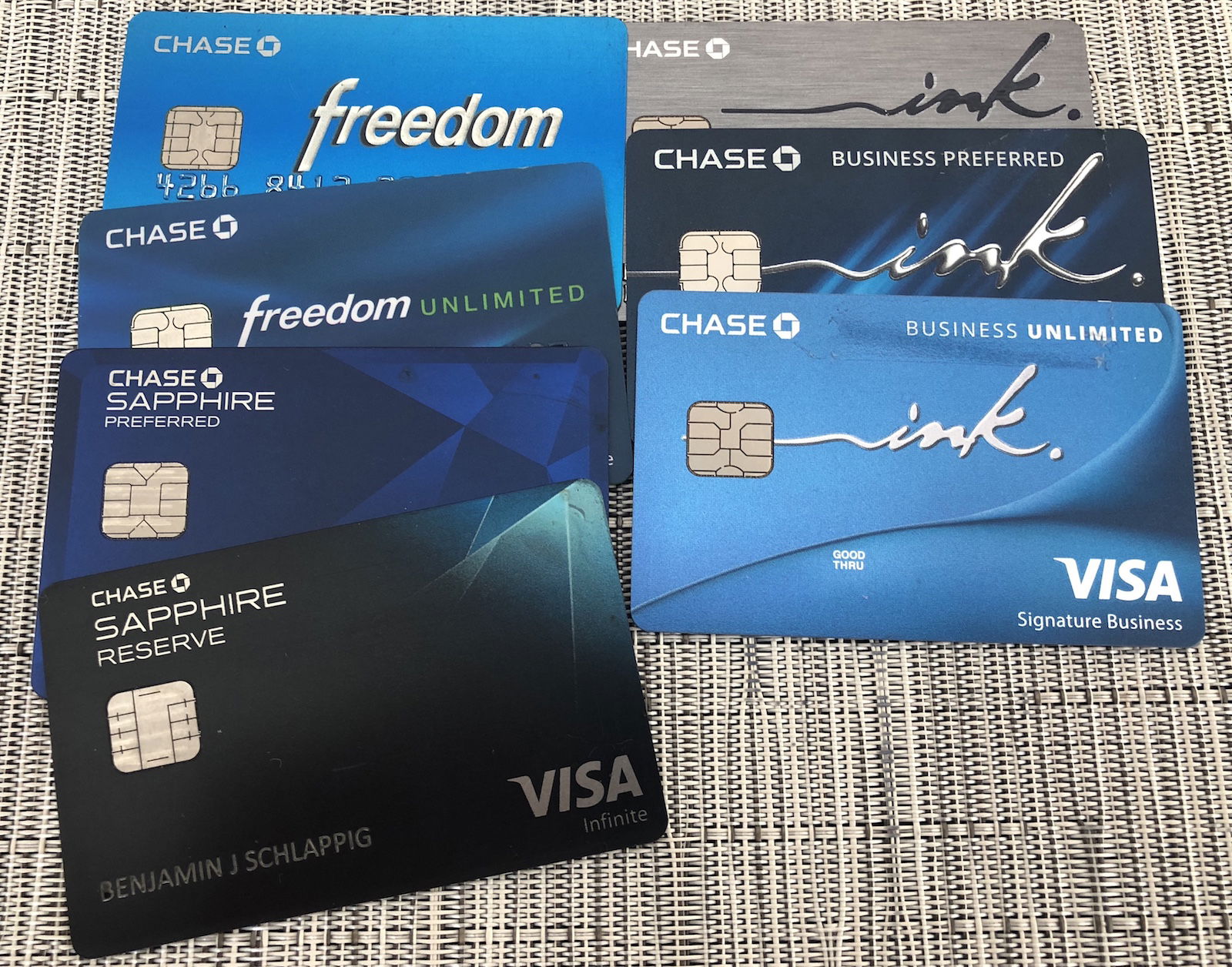
For example, say you have the Chase Sapphire Preferred® Card (review) and Ink Business Preferred® Credit Card (review), and decide you no longer want one of those cards, because both carry annual fees. Rather than canceling one of the cards outright you could potentially:
- Downgrade the Sapphire Preferred to either the Chase Freedom Flex® (review) or Chase Freedom Unlimited® (review), both of which have no annual fees and potentially offer 1.5-5x points per dollar spent
- Downgrade the Ink Preferred to either the Ink Business Cash® Credit Card (review) or Ink Business Unlimited® Credit Card (review), which also both have no annual fees and potentially offer 1.5-5x points per dollar spent
This would be an excellent option since the cards have no annual fees, have great bonus categories, and this would allow you to get the cards even if you’re over the 5/24 limit.
That’s just one example where something like this could make sense.
Bottom line
If you’re not happy with a card you have and are considering canceling it, always make sure you first figure out the product change options available for you. It’s not always worth doing, though there are circumstances where it’s a great option.
If you’ve had a credit card for a long time it could make sense to downgrade it rather than canceling it, so you can maintain the credit history. But beyond that, it can also help you maximize your rewards by product changing to cards that add value to your portfolio, but that you may not otherwise apply for directly.
If you’ve product changed or downgraded a credit card, what was your experience like?




I think the timing is also important here. When changes first come out there is likely to be less rules regarding the downgrade compared to later as we have recently seen with the CSR card for example. I think that this article refers to an upgrade or downgrade but there are other ways to do it as well.
I have the Marriott Brilliant AMEX and just reached lifetime platinum status. What card do you recommend switching to?
Unfortunately it looks like the only card you can downgrade to is the Bonvoy Bevy for $250. Feel free to take a look but otherwise you're looking at cancelation.
I recently downgraded from AMEX Gold since I rarely eat out and the increase cost would not be recouped from groccery purchases. I've had an AMEX card for 40 years and knew if canceled it would stay on my credit file for ten years and having many other cards the lost would not make a big difference. However - I have a lot of points I did not want to lose and only flying 2-3...
I recently downgraded from AMEX Gold since I rarely eat out and the increase cost would not be recouped from groccery purchases. I've had an AMEX card for 40 years and knew if canceled it would stay on my credit file for ten years and having many other cards the lost would not make a big difference. However - I have a lot of points I did not want to lose and only flying 2-3 times a year there was no place I wanted to transfer those points to right now without further review. So - I downgraded to green - the only option. It was easy - the associate was understanding and only took five minutes. I will retain until I decided the best route for my points.
See if you can use the Clear credit on the Green if that makes sense for you when traveling. More than recoups the cost of the Green annual fee, if you value the credit that much.
And also on the same topic, those of us with Barclay's Aviator cards will soon have to make this decision. Any update on what Citi card Aviator members will transition to? If we let accounts transition, I guess that makes us ineligible for bonus miles on the new Citi Card, correct?
I was looking at product change options with Barclay's, but nothing sounds great. They are mostly co-brands with no general rewards or cashback option...
And also on the same topic, those of us with Barclay's Aviator cards will soon have to make this decision. Any update on what Citi card Aviator members will transition to? If we let accounts transition, I guess that makes us ineligible for bonus miles on the new Citi Card, correct?
I was looking at product change options with Barclay's, but nothing sounds great. They are mostly co-brands with no general rewards or cashback option any more. I am thinking to just cxl and reapply for a Citi Card when they offer a good SUB. Thoughts?
Ben,
I'm going to down grade my CSR to the CSP. Will I lose my ability to transfer my points to my spouses account?
They have Ink cards if that matters.
What cards are needed to keep the transfer capabilities alive?
Thanks
Since we're talking about product changes, I figured I ask for advice here.
I currently have an American Express Blue Sky card which is obsolete and has been long discontinued. I've racked up almost 90K points since I've first had it around 2009 or so. My question is what do I do with those points and what card should I product change it?
Thanks!