
In recent weeks, the Boeing 737 MAX has been back in the spotlight, following an incident with an Alaska 737 MAX 9 at the beginning of the year. Regulators have made it clear that they’re now investigating Boeing, and this will fundamentally change the relationship between the aircraft manufacturer and regulators.
It’s worth keeping in mind that the Boeing 737 MAX 7 and 737 MAX 10 haven’t yet been certified. Up until recently, the goal was for these jets to be certified in the coming months, though at this point that no longer seems realistic. This has the biggest implications for Southwest and United, since the two airlines are relying on the 737 MAX 7 and 737 MAX 10 (respectively) for fleet renewal and growth.
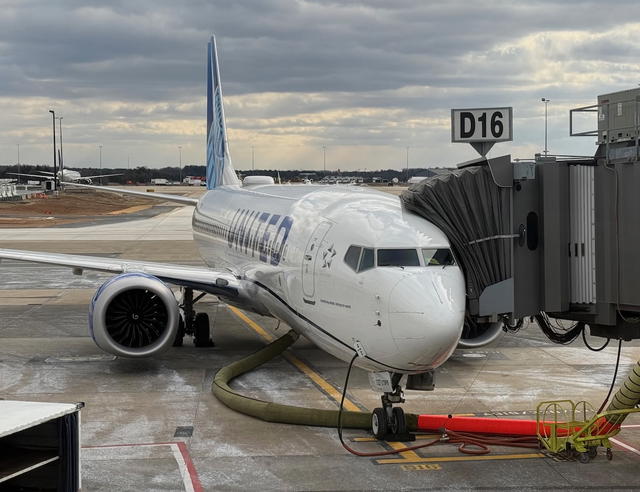
With this latest reality, United’s management is preparing for a fleet strategy that doesn’t include the 737 MAX 10. United hinted at this some time back, but has now made more concrete plans.
United Airlines building plan without 737 MAX 10
United Airlines is Boeing’s biggest customer, and the airline has hundreds of Boeing 737 MAXs on order. In addition to the 737 MAX 8 and 737 MAX 9 (which are already in service), the airline also has 150 737 MAX 10s on order. This is the largest variant of the aircraft, and is a key part of United’s plan to increase capacity in many markets.
During a Squawk Box interview in late January 2024, United CEO Scott Kirby made some interesting comments about Boeing, and in particular about the 737 MAX 10. Among other things, he said:
- “I have a lot of confidence in the people of Boeing, but they’ve been having these consistent manufacturing challenges, and they need to take action”
- “We’re now best case five years behind on the original delivery of the MAX 10, and as we’ve gone through the last year, internally at United, we’ve grown increasingly to believe that best case, the MAX 10 just gets pushed further and further to the right, so we’ve already started working on alternative plans”
- “I think the MAX 9 grounding is probably the straw that broke the camel’s back for us, we’re gonna at least build a plan that doesn’t have the MAX 10 in it”
The 737 MAX 10 has been delayed by years, and up until recently, it seemed like certification was imminent. At this point it’s pretty clear that there’s no timeline for the 737 MAX 10 entering service.
For United, the 737 MAX 10 was going to have the best per-seat costs of any narrow body jet. On top of that, United was planning on installing flat beds on some 737 MAX 10s, using them as the new aircraft for premium transcontinental routes (in the same way American will use A321XLRs, and Delta will use A321neos).

United tells Boeing to stop building 737 MAX 10s
United CEO Scott Kirby has taken his stance on the 737 MAX 10 a step further. Yesterday, he stated that United has asked Boeing to stop building the 737 MAX 10 for the carrier, and to instead focus on building 737 MAX 9s. At this point the 737 MAX 10 isn’t in United’s fleet plan in the coming years, and the airline is no longer counting on the jet.
Now, I don’t think this development will come as much of a surprise. It’s not like United could even take delivery of the 737 MAX 10 until it’s certified, so the situation has been fairly low risk for the airline. But it is interesting that United is basically just telling Boeing to build more 737 MAX 9s for the carrier, since those are certified and can actually enter service.
If the 737 MAX 10 is out of the picture for United (at least in the coming years), where does that leave the airline? Aircraft manufacturing is essentially a duopoly, so United’s options are limited:
- United could keep flying its existing aircraft for longer, and this would likely spell a longer life for the Boeing 757, among other aircraft
- United could order even more Airbus A321neos, which are the best direct replacement for the 737 MAX 10, and United already has 130 of these on order; the airline is currently in negotiations with Airbus for more of these jets
- United could simply swap Boeing 737 MAX 10 orders for more 737 MAX 9s and 737 MAX 8s, as those planes are already certified
I suspect that we’re probably going to see a combination of these strategies — United will probably order more A321neos, and will focus on continuing to take delivery of 737 MAX 9s. Once United gets to the end of its 737 MAX 9 order book, the airline may convert some 737 MAX 10 orders to 737 MAX 9s, or may just continue to focus on the A321neo.
I think one big question now is when United will make plans for its new premium transcon plane. Some 737 MAX 10s were supposed to feature flat beds and be used on routes like Newark to Los Angeles. I have to imagine that United may now instead create a premium A321neo configuration for these kinds of routes, since the airline needs a concrete plan there, and can’t wait forever.
Bottom line
United Airlines’ management is no longer counting on the Boeing 737 MAX 10 being certified any time soon, given Boeing’s latest 737 MAX issues. At this point, United is telling Boeing to just work on delivering the existing 737 MAX 9 order to the airline, rather than building any 737 MAX 10s.
Ultimately United has some flexibility here — I imagine we’re going to see more Airbus A321neos ordered, and for the next couple of years United can also focus on its existing 737 MAX 9 order with Boeing. If the 737 MAX 10 is certified in that timeline, we might still see the jet join United’s fleet. But I also wouldn’t be surprised if that doesn’t happen.
What do you make of United’s Boeing 737 MAX 10 situation?


Membership is free and takes no more information than commenting as a guest. Earn status points for good contributions, and see fewer ads as your status grows.