
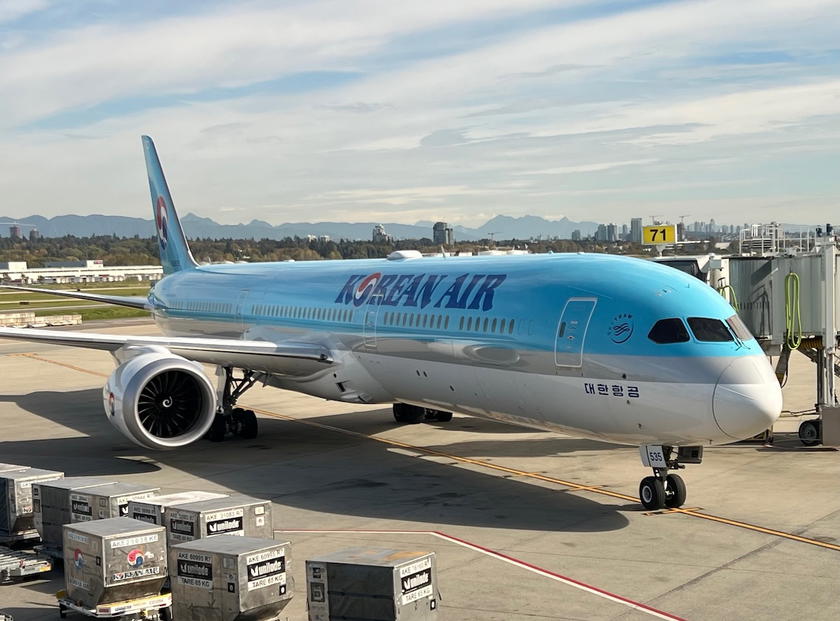
Hello from Asia, as I’m now well into my review trip to South Korea and Japan! I just flew Korean Air’s Boeing 787-10 business class, on the 11 hour flight from Vancouver (YVR) to Seoul Incheon (ICN).
I was incredibly excited about this flight. Not only is the 787-10 a new jet for Korean Air, but it also features the carrier’s brand new business class, known as Prestige Suites 2.0. My hope was that this new business class would take Korean Air to the next level, and I wondered if this might just be one of the world’s best business class products.
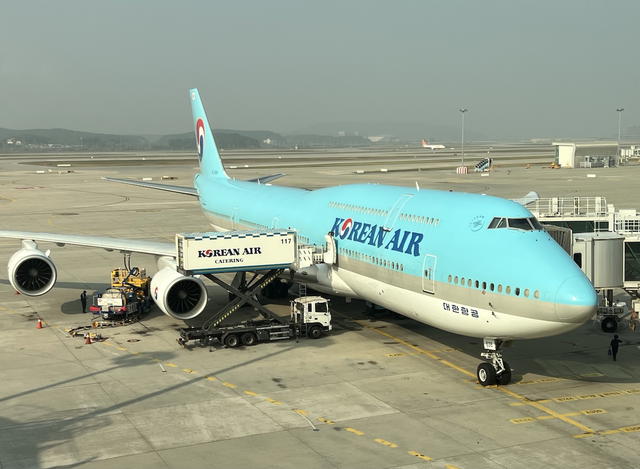
While the flight was solid, unfortunately the experience didn’t really “wow” in the way I was hoping (for Korean Air’s sake). There’s a lot to like about this product, and a lot of incremental improvements, but it’s still not quite there. With that in mind, I wanted to share some initial thoughts on the experience, and then soon I’ll have a full trip report.
Korean Air’s 787-10 business class is sleek, but…
Korean Air’s 787-10 business class product takes up the entire space between doors one and two. The cabin boasts 36 seats, spread across nine rows, in a 1-2-1 staggered configuration.
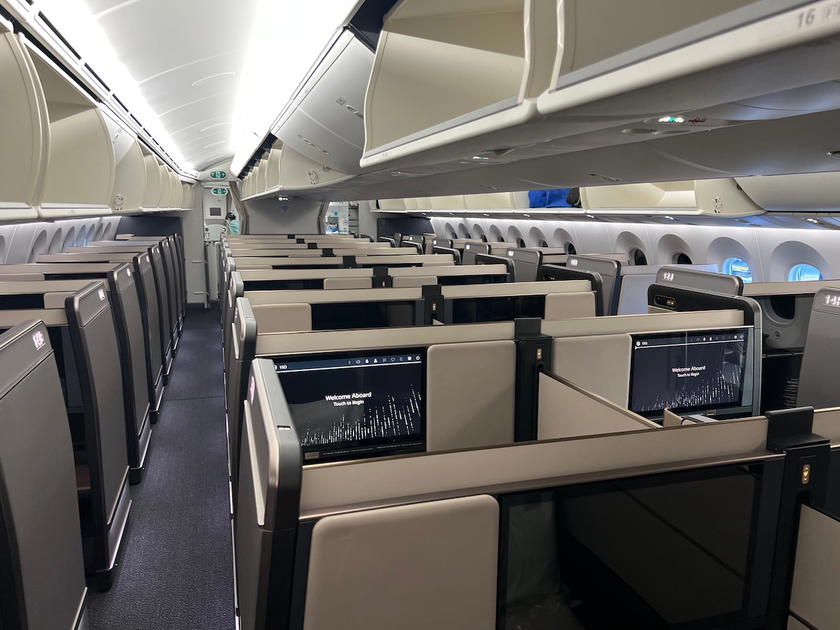
Korean Air’s new business class is the Collins Aerospace Horizon seat. Aeroflot was the launch customer for this product. However, due to trade embargoes, these planes now fly for Turkish Airlines and Air India as well. So Korean Air is only the second airline to purpose-order this product, and it’s the first airline to install this on a Boeing jet.
There’s a lot to love about this cabin. It’s sleek, and features updated branding, which is much less offensive than Korean Air’s old obsession with powder blue, in my opinion.
Even beyond the more neutral tones, I loved the finishes, which are unique. I was in one of the “true” window seats, which I find to be coziest, in terms of being able to get comfortable close to the fuselage. The seat transforms into a 78″ bed, with walls that are 52″ high.
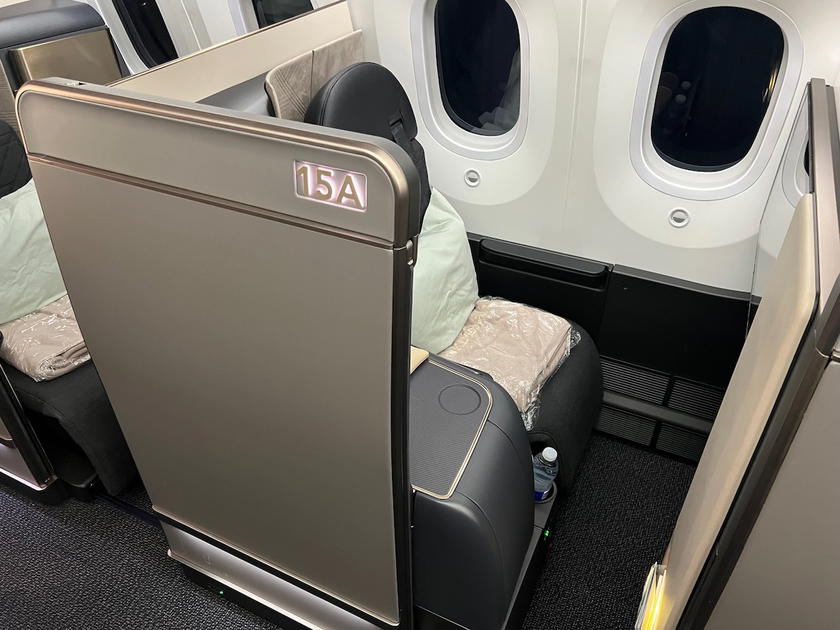
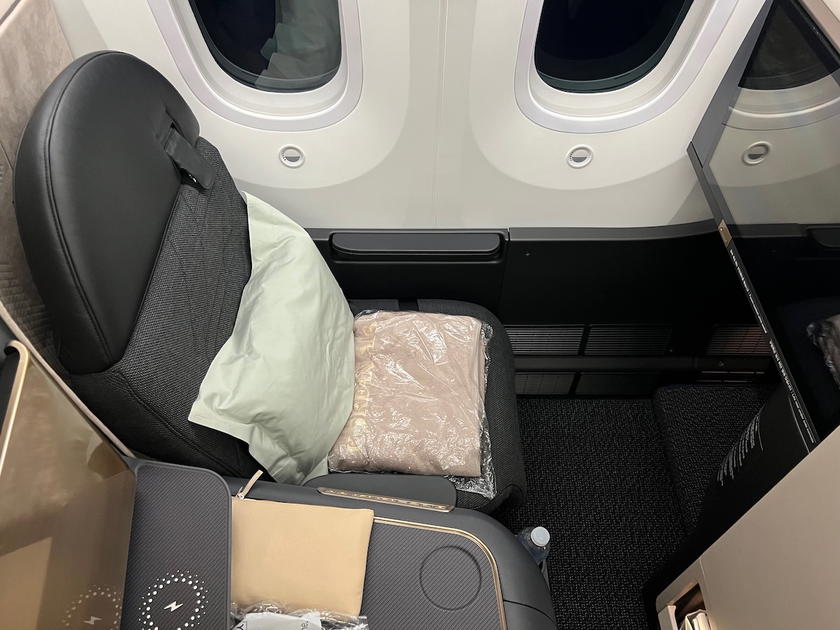
The seat’s tech is phenomenal, from wireless charging, to 60W USB-C outlets, to bluetooth audio. Yes, this seat has all the modern bells and whistles.
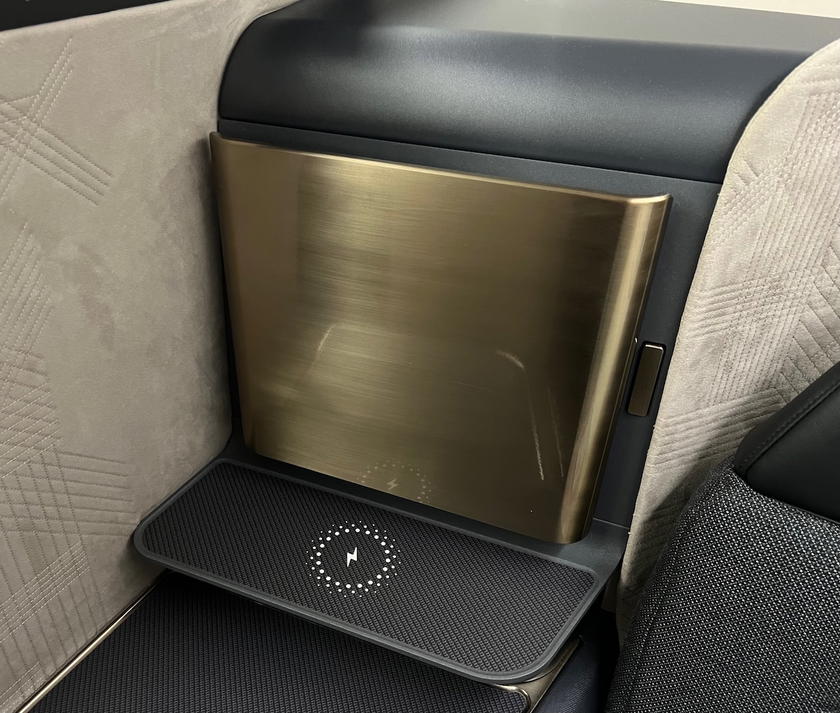
You know what the seat doesn’t have, though? A door. Well, I mean, the seat does have a door, but for some reason the doors can’t be used. After takeoff, the suite doors remained locked, so I asked the flight attendant when they’d be unlocked. Her response? “It’s not available, but maybe next year.”
Sorry, but huh? Has the airline just not gotten the doors certified by regulators in South Korea, or…? I suppose this is the first purpose-built business class product to have doors in the country, so I wonder if that’s what’s going on? Regardless, for the time being, Korean Air’s new business class has doors, but you can’t use them. That’s very JetBlue of them.
Korean Air also doesn’t have individual air nozzles on its wide body jets, which is far too common on Asian carriers. The cabin was kept at a warm temperature, and the high partitions around the seat (even without the doors) didn’t help with airflow while trying to sleep.
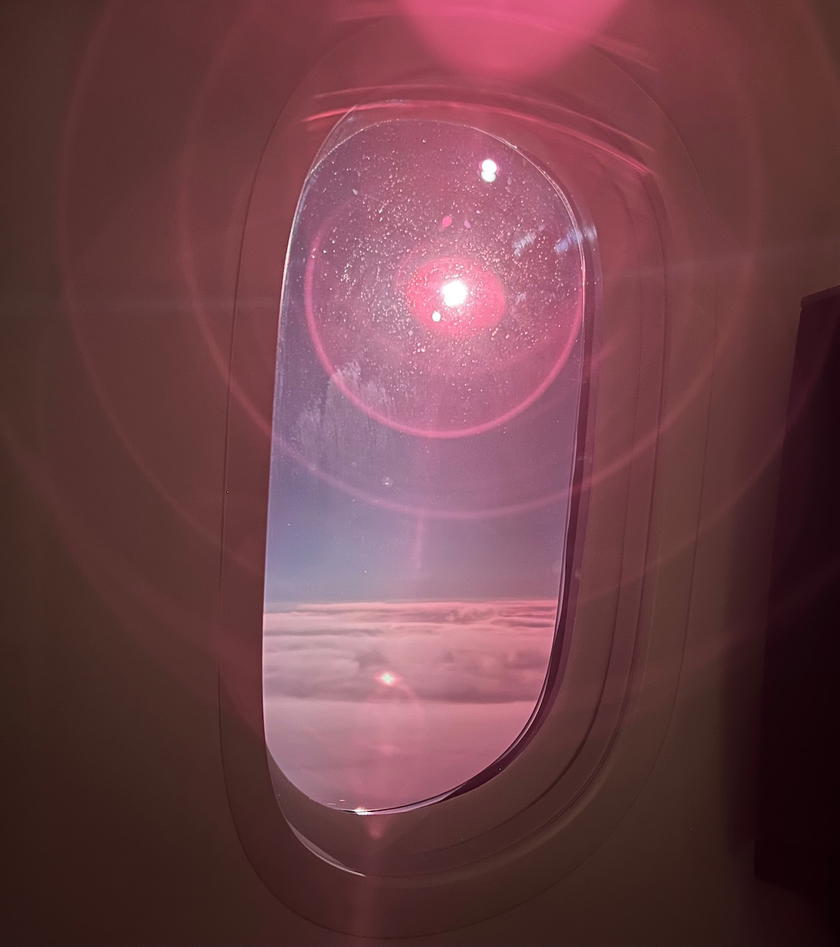
I’m also not a fan of the 787 in general, at least compared to the A350, and in particular, the dimming windows. For example, below is a picture of what my view was for most of the flight, even with the windows fully dimmed. That certainly didn’t help with the warmth situation.
Speaking of sleeping (and the bed), I found the footwell to be a good size, as I could move my (size 12) feet in every direction without bumping into anything, so that was better than expected.
However, the seat as such felt rather narrow in bed mode. That’s probably in part because there are armrests on each side that can’t be lowered, and it really makes the sleeping surface quite narrow. While turning around while trying to sleep, I kept bumping into the armrests.
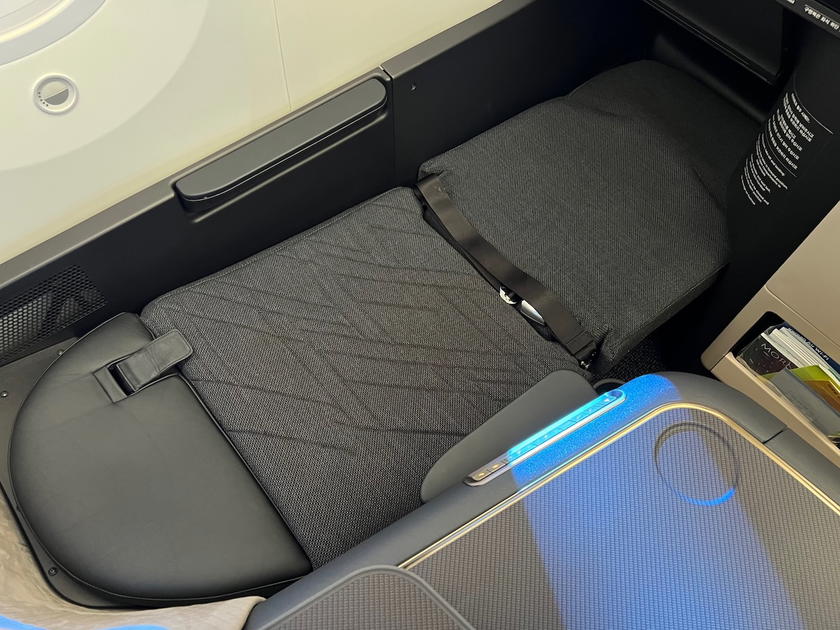
Unfortunately Korean Air’s bedding doesn’t help much either. The airline doesn’t have any mattress pads, but instead has a decent pillow, plus a thick, almost wool-like blanket (which is super warm). I feel like the airline could do much better there, with a minimal investment.
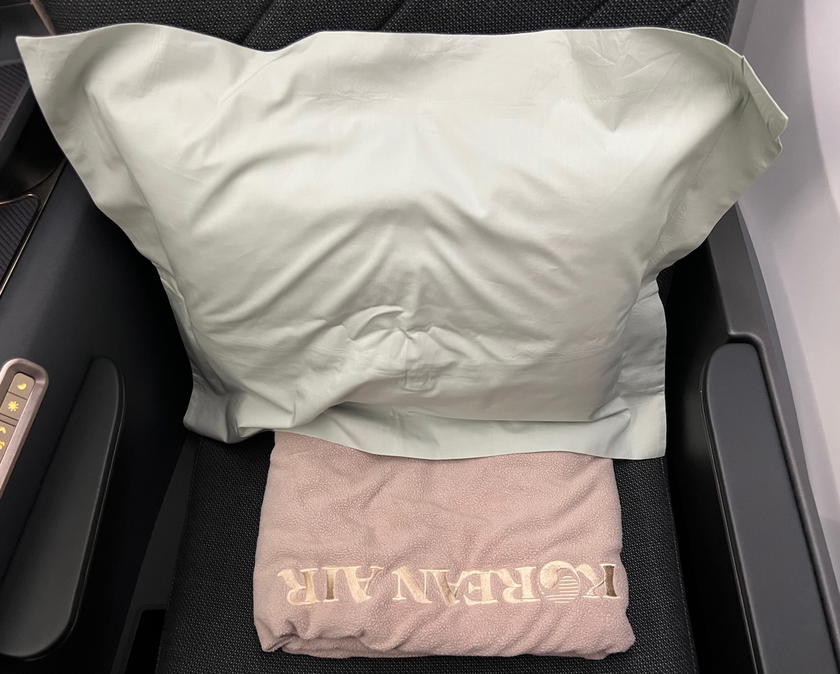
I’m not trying to give the airline a hard time here, but when we’re talking about a brand new business class product, the details matter.
Korean Air’s entertainment & Wi-Fi improved greatly
I have to give Korean Air credit for the huge improvements it has made to its inflight entertainment. For one, the 787-10 business class seats have gorgeous 23.8″ ultra high definition entertainment monitors. These are among the best resolution screens you’ll find in business class, so that’s great.
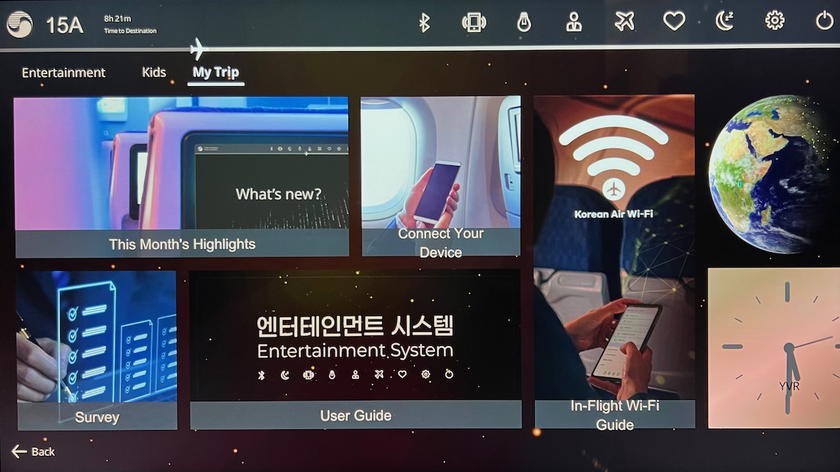
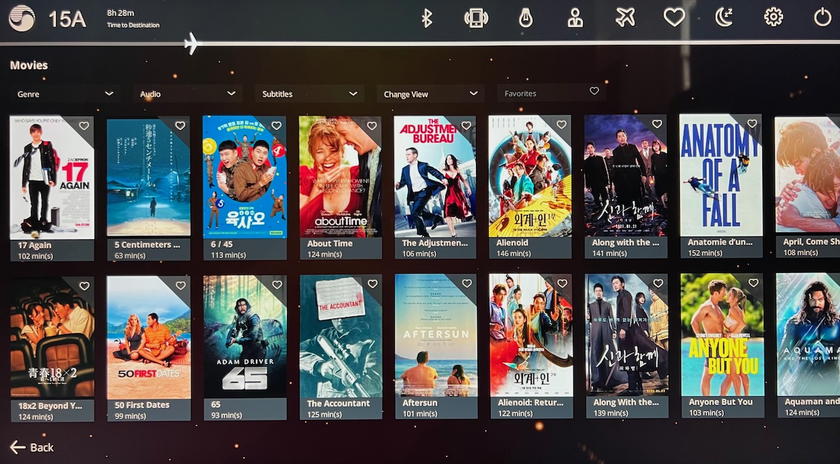
Also, admittedly I haven’t flown Korean Air in a long time, but I feel like the entertainment selection has been greatly expanded. There was a solid selection of movies and TV shows, so you should find something to entertain you for a long haul flight, without getting bored. That’s quite a contrast to my memories from past Korean Air flights.
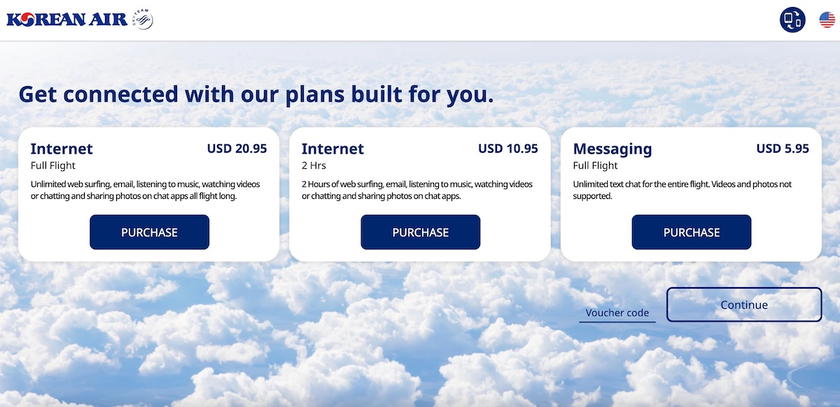
Speaking of staying entertained, Korean Air finally has introduced Wi-Fi, which is long overdue. A plan for the entire flight cost $20.95, which I found to be quite reasonable, given the lack of data caps. The issue, though, was that the Wi-Fi was excruciatingly slow, to the point that it barely functioned.
Korean Air offers Viasat Wi-Fi, which is ordinarily great. The catch is that Viasat doesn’t yet have Ku-band Wi-Fi over the Pacific. That should change eventually, but for the time being, expect slow Wi-Fi.
Korean Air’s business class food is reasonably good
On this Korean Air flight (departing in the afternoon and arriving the following evening), dinner was served after takeoff, and then another dinner-like meal was served before landing. If you ask me, Korean Air’s food is decent, but isn’t going to win any awards.
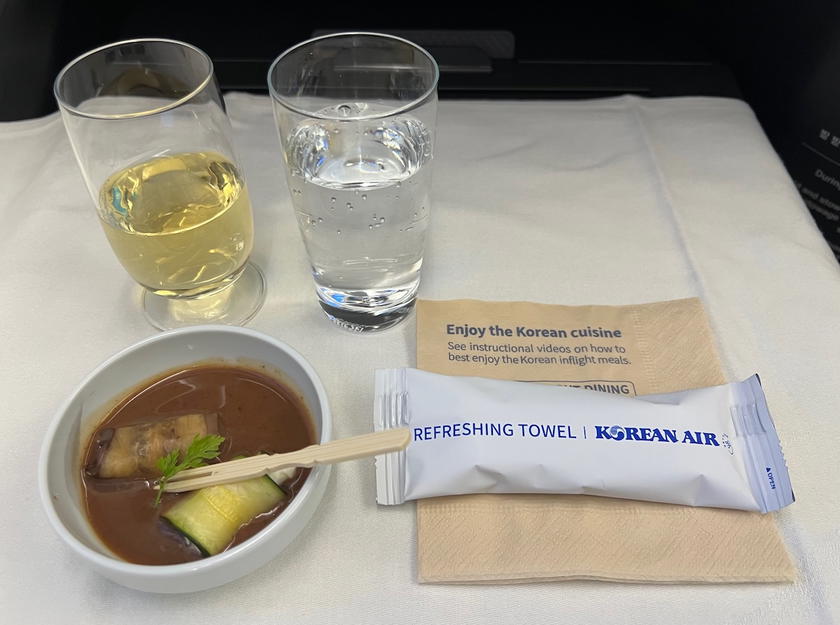
Service began with drinks and a canapé comprised of cream cheese rolled in zucchini and eggplant. I had a glass of champagne (not a particularly generous pour!), and currently Korean Air is serving Duval Leroy Blanc de Blancs Brut.
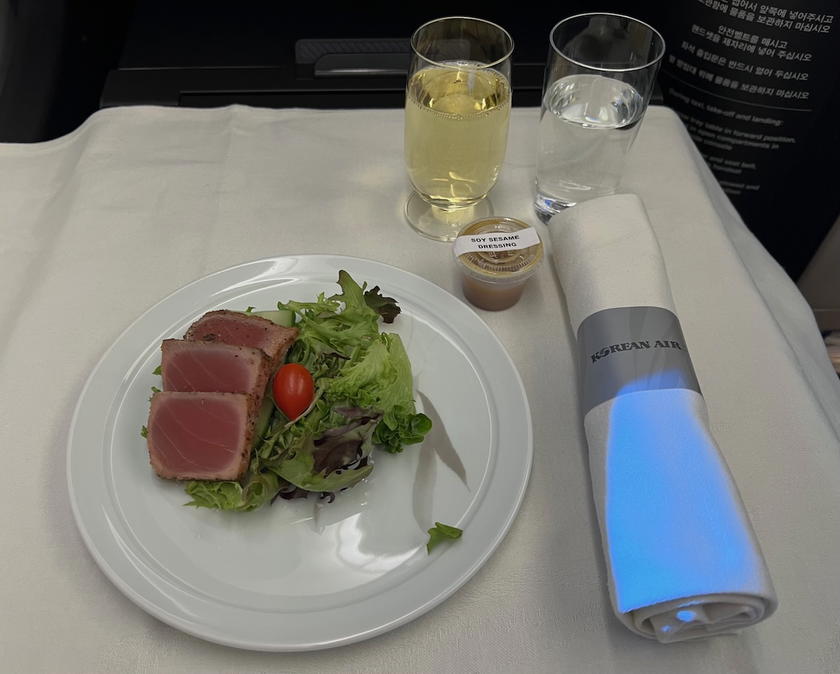
The starter consisted of seared tuna with sesame dressing, regardless of whether one chose the Western or Korean option. This was delicious, but then again, I’m a tuna fan. I switched to a glass of riesling, in hopes of the lack of bubbles making for a more generous pour. It was a great success. 😉
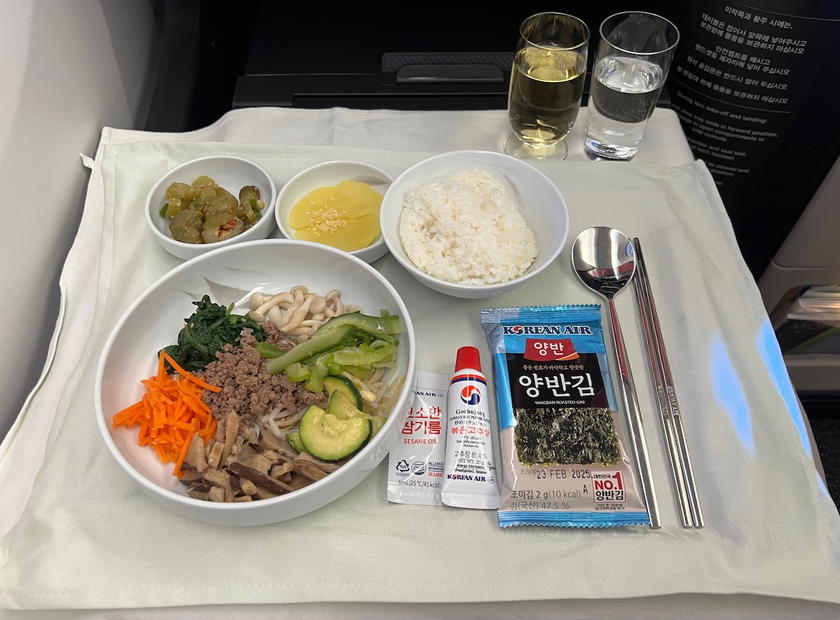
For the main course I selected the bibimbap, which was delicious. For better or worse, this seems to always be the Korean option on long haul Korean Air flight, and I feel like it hasn’t changed in a very long time.
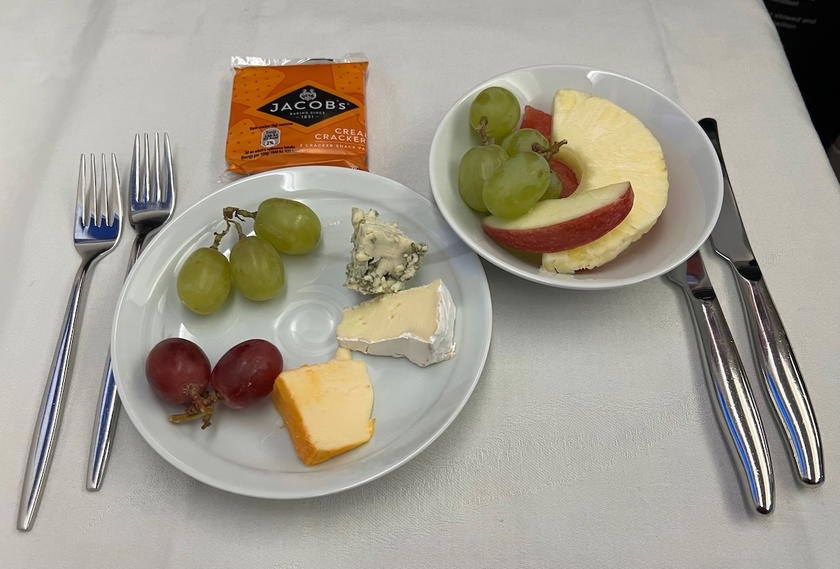
Next up there was a trolley with fruit and cheese, and I was offered one or both. I selected both, for the pictures, of course. 😉
Lastly, there was the choice of raspberry mousse cake or ice cream, and I selected the latter.
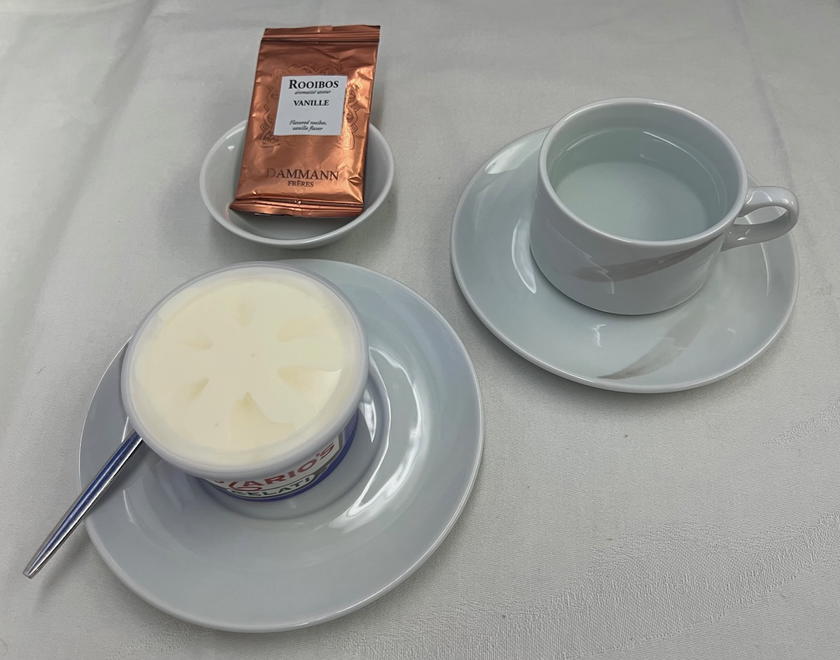
It was a pretty solid meal, all things considered…
Korean’s business class service is assembly line-esque
The crew on this flight was friendly, though I’ve gotta say, I’m not at all a fan of Korean Air’s service flow. Airlines take all kinds of different approaches to delivering business class service, and I don’t think there’s one right or wrong approach to take.
However, in the case of Korean Air, I’ve always felt like I was just part of an assembly line during the business class service. Every service interaction happens with the crew rolling a cart down the aisle, and with them having a specific objective.
The service just feels really reactive rather than proactive. Let me be very clear, that wasn’t specific to this crew, but rather that’s just Korean Air’s service flow, and it matches all of my past experiences as well. So whether it’s a drink refill, or them removing plastic wrapping from your seat, or removing all the dishes you’ve finished, stuff only happens if you specifically ask for it, or if it’s where they are in their service flow.
For a region known for airlines with incredible service (with world class airlines both to the north and south), I just feel like Korean Air falls short a bit. It’s such a contrast to Singapore Airlines, where the crews ooze with personality, anticipate every need, memorize the names of passengers, etc.
Where I rank Korean Air business class
Let me of course acknowledge that I’m lucky to fly business class at all, so I’m not meaning to nitpick. However, I (in part) review airlines for a living, and that includes sharing the positives and negatives. I can’t simply review every airline and say “OMG I HAD A FLAT BED IT WAS AMAZING!”
With that in mind, I was wondering if Korean Air’s new business class would put the carrier in the same league as the top airlines in the region. While I very much like the positive changes at Korean Air, from the Wi-Fi, to the improved entertainment, to the branding modernization, I personally still rank it as a (high) second tier Asian carrier.
In business class, I’d still choose carriers like All Nippon Airways, EVA Air, Japan Airlines, Singapore Airlines, Starlux Airlines, etc., over Korean Air. Now, that’s not to say you shouldn’t fly the airline — if the schedule or value is good, it’s a great experience, and I’d gladly fly with the airline again. I’m just saying that this doesn’t suddenly rank in my list of the top 10 business class products in the world.
Honestly, then again, most Asian carriers have the same issues with cabin temperature, so maybe the moral of the story is that if we care about cabin temperature, we should just fly US airlines and suffer through the service? I dunno!
Bottom line
I had the chance to fly Korean Air’s new Boeing 787-10 business class. This is a new jet for the airline, and it also has a new business class seat, along with updated branding, Wi-Fi, and expanded entertainment.
There’s a lot I liked about the Korean Air business class experience, though there were also a few areas where the flight fell short. Some things are easy enough to fix (like better bedding), while other things are harder to fix (warm cabins and a lack of individual air nozzles).
I’d say Korean Air’s new business class is solid, though come in with reasonable expectations, as there are some areas for improvement.
What do you make of Korean Air’s new 787-10 business class?


Membership is free and takes no more information than commenting as a guest. Earn status points for good contributions, and see fewer ads as your status grows.