Korean Air & Asiana Merger Finalized, Shaking Up Aviation in Asia

In November 2020, plans were announced for a massive airline merger, between Korea’s two largest airlines. This has been one of the most drawn out airline mergers ever, though there’s finally a major update. Over four years after the deal was first announced, the transaction has been finalized, and it has major implications for aviation in Asia and beyond.

Basics of Korean Air’s acquisition of Asiana Airlines

Shortly after the start of the pandemic, SkyTeam’s Korean Air announced plans to acquire Star Alliance’s Asiana Airlines, in a deal that’s valued at $1.6 billion. At the time, Korean Air was the world’s 18th largest airline, and the plan was for the combined airline to become the 10th largest in the world.
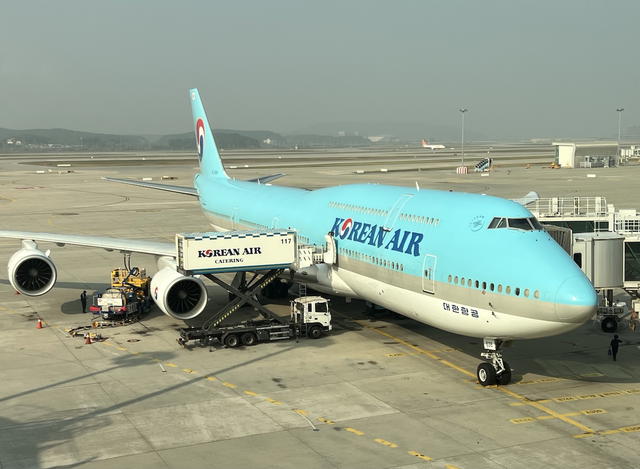
Here are the financial terms of the takeover that were announced at the time, which were complicated due to the ownership structures of the two companies:

  • Korean Air planned to raise ~$2.25 billion via rights offerings
  • Of that money, ~$1.35 billion would be spent to buy new shares to be sold to Asiana, and the balance would be spent on Asiana perpetual bonds
  • Korean Development Bank, the main creditor of Asiana Airlines, would inject ~$722 million into Hanjin KAL, through a rights offering and convertible bonds; in other words, both former parent companies would still have a stake in the combined airline

In many ways, the merger at the time was inevitable due to the impacts of the pandemic. However, arguably there was long term merit to it beyond that.

The truth is that the financial situation at Korean Air and Asiana Airlines was problematic since long before the pandemic. South Korea has a population of around 50 million people, and the country has two full service airlines, making it one of the few countries of its size with two full service airlines.

That doesn’t even begin to address all the competition in South Korea from both foreign airlines and low cost carriers. The deal was probably particularly beneficial for Asiana, which had been on the brink of collapse following the start of the pandemic. In September 2020, the airline received a cash injection from creditors, after the previous largest shareholder pulled out of a sale.
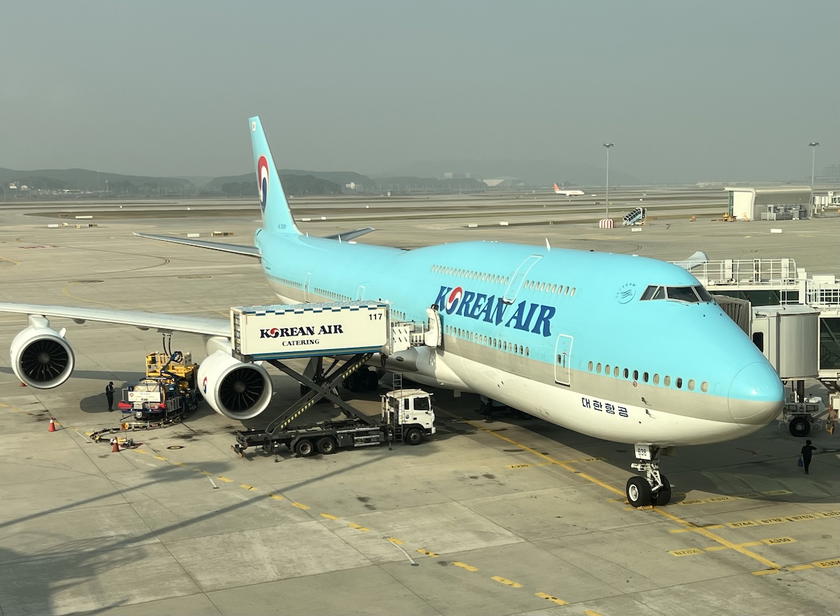
Korean Air is becoming a much larger airline

This delayed merger now has regulatory approval

As you’d expect, airline mergers don’t get approved overnight. When the merger was first announced, the plan was for the deal to be finalized by the second half of 2021, so the expectation was that it would take around a year.

Everything ended up being way more drawn out than that. The reason is because the deal needed approval from 14 different regulatory authorities, and this was really slow to happen. In recent weeks there was finally some major progress on that front, as all 14 regulators have now signed off on the deal, allowing it to close. For what it’s worth, the United States was the last country that signed off on the deal.

In the process of getting approval from so many regulators, Korean Air and Asiana have had to make quite some concessions. This ranges from selling Asiana’s cargo business, to transferring routes to Europe to domestic competitor T’Way Air, and much more.
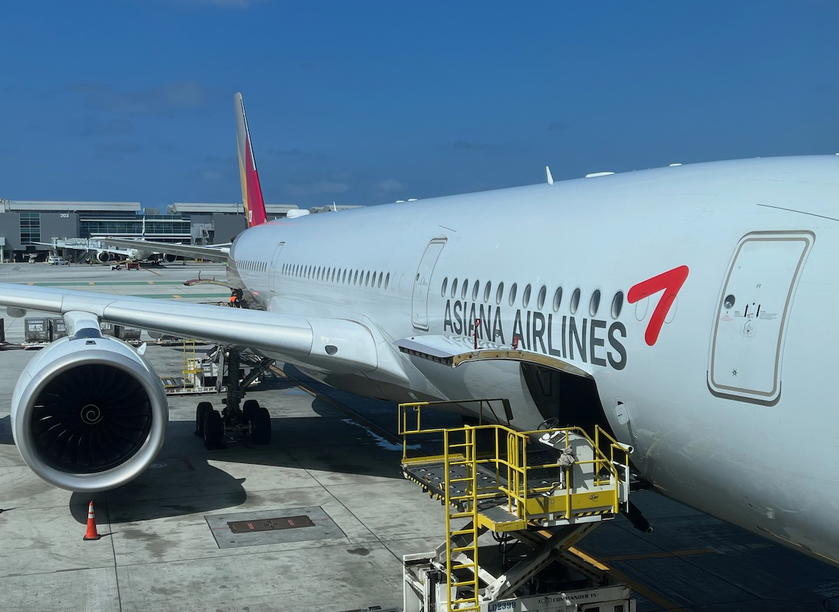
This merger has faced serious delays

What to expect from the new Korean Air

With this merger now being complete, what should we expect from the combined airline? First of all, while the two brands will continue to operate separately for the time being, the long term plan is for Korean Air to be the surviving brand, and for Asiana to disappear.

For that matter, the two carriers also have low cost subsidiaries — Korean Air has Jin Air, while Asiana has Air Busan and Air Seoul. The plan is for Jin Air to absorb both Air Busan and Air Seoul, making that quite a large carrier. Jin Air will likely then be bigger than Korea’s two other major low cost carriers, Jeju Air and T’Way Air.

When it comes to commercial arrangements, Korean Air’s partnerships are expected to survive, and not Asiana’s. This means that the combined airline will be part of SkyTeam, and Asiana will leave Star Alliance. Keep in mind that Korean Air and Delta have a joint venture, and cooperate very closely.

So this merger is great news for Delta, given that Korean Air’s network out of Seoul Incheon will get even bigger, and Delta is big in funneling its Asia traffic through that airport.

The airlines will also form a single loyalty program, though that could take some time.
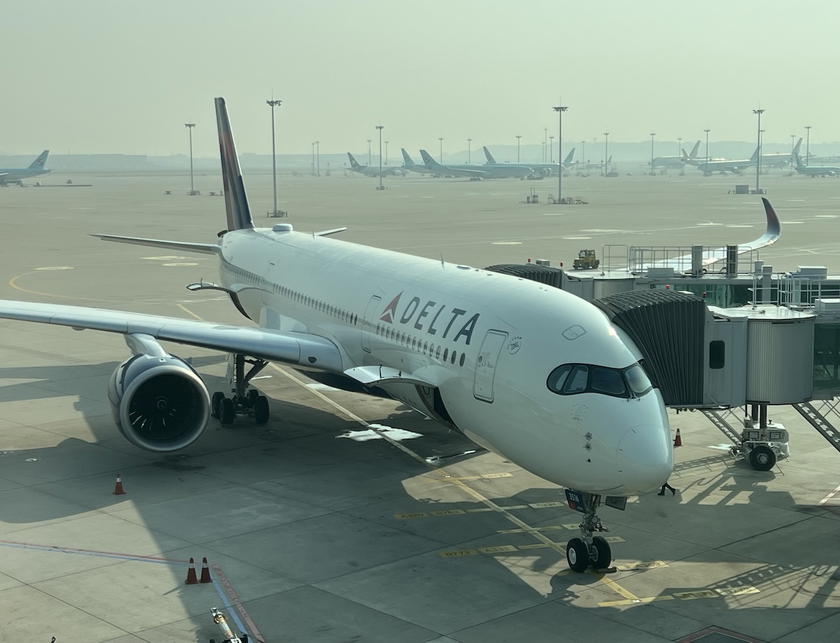
This merger is good news for Delta

When it comes to passenger fleets, Korean Air currently has a fleet of 135 aircraft, while Asiana has a fleet of 69 aircraft. Between the mainline fleets of the two airlines, there are currently A220-300s, A321s, A321neos, A330-300s, A350-900s, A380s, 737 MAX 8s, 737-800s, 737-900s, 747-8s, 777-200s, 777-300s, 787-9s, and 787-10s.

As you can see, there’s a lot of complexity there. A couple of thoughts:

  • Korean Air is undergoing quite the fleet modernization, as it’s currently taking delivery of A321neos, 737 MAX 8s, and 787-10s, and has A350-900s, A350-1000s, and 777-9s, on order
  • For those of us who are fans of A380s and 747-8s, Korean Air’s plan is to retire A380s in the coming years, and keep the 747-8s until the early 2030s
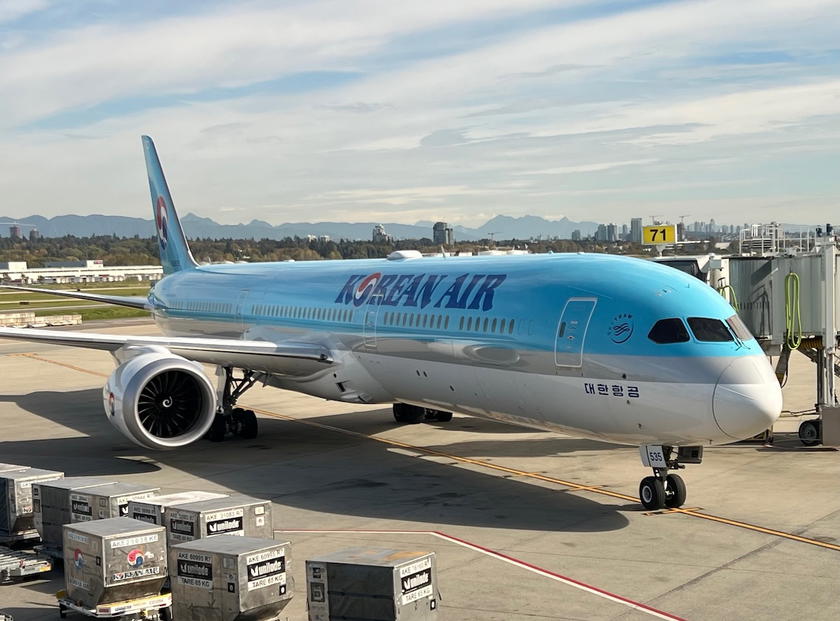
Korean Air is modernizing its fleet

Bottom line

Over four years ago, Korean Air and Asiana Airlines announced plans to merge, creating a new mega-airline. While this was initially supposed to happen within a year, there were major delays due to regulatory approval. Fortunately progress was made in recent times, and the deal has now been finalized.

This is good news for SkyTeam and bad news for Star Alliance, and probably bad news for consumers on the whole, given that a competitor is being eliminated. Then again, for a country of Korea’s size, two full service airlines may be a bit of an overkill.

The plan is for the full integration between airlines to happen over the next two years. It’s going to be really interesting to see how that works out, as it’s quite a project. Since Korean Air has a major fleet modernization planned, I imagine we’ll see older aircraft retired pretty aggressively in the coming years.

What do you make of Korean Air’s acquisition of Asiana?

Conversations (131)
The comments on this page have not been provided, reviewed, approved or otherwise endorsed by any advertiser, and it is not an advertiser's responsibility to ensure posts and/or questions are answered.
Comment as a member

Membership is free and takes no more information than commenting as a guest. Earn status points for good contributions, and see fewer ads as your status grows.

Type your response here.

If you'd like to participate in the discussion, please adhere to our commenting guidelines. Anyone can comment, and your email address will not be published. Register to save your unique username and earn special OMAAT reputation perks!

  1. Loading comments…
Recent Comments
The latest from the OMAAT community.

The comments on this page have not been provided, reviewed, approved or otherwise endorsed by any advertiser, and it is not an advertiser's responsibility to ensure posts and/or questions are answered.

ZEPHYR Guest

I see alot of people comparing South Korea to Taiwan. Korean Air has 137 passenger fleet Asiana have 70 China Airlines with 65 Eva Air with 75 Starlux with 24 Taiwan might have more FSC but they are small and more comparable in size to Asiana than Korean. That's about 249.7k people per plane for South Korea. And 142.7k per plane for Taiwan. Know that South Korea has a higher number of low cost carriers with bigger fleet sizes than Taiwan's low cost carriers, that balances out.

0
‼ 0
Kyalo Member

Meanwhile Taiwan has 3 airlines

0
‼ 0
yoloswag420 Guest

Are these the 40 seat D1 configurations?

0
‼ 0
Tim Dunn Diamond

As usual, there is more interest in the incessant DL vs UA comparisons that anything else on OMAAT. As for the discussions about ITA joining Star w/ LH’s acquisition, the appropriate comparison is with SK being partially acquired by AF/KL. CPH is simply a far better location as a secondary JV hub than Italy ever could be. Further, UA, like DL, is larger than ITA in Italy during the summer at least so there is much less incentive to share that revenue while the opposite dynamic is true with SK which needs to have a year round US partner which DL has been to AZ. And given that carriers on the Iberian peninsula remain in flux, AF/KL/DL/VS could end up with an even larger portion of European aviation if the Air Europa acquisition moves forward by AF/KL. The AF/DL/KL/VS JV is the largest TATL JV and that will likely be maintained regardless of what the other two JVs do. As for the Pacific, Ben is absolutely right that the KE/OZ merger is a gamechanger that will shake up Asian aviation. As for the whole discussion about DL vs UA 1. There are far too many people that assume that DL is content to remain at its current size which has been about half the size of UA. DL was the largest carrier across the Pacific, a region which has been very difficult for US carriers for years, at the time of the NW merger. Shortly after DL acquired NW’s heavily Tokyo based Asian network, DL quickly started to try to turn the inconsistently profitable operation around. DL was thrown a curve ball w/ Japan’s decision to re-open HND to longhaul international flights again, a result of the inability to fully grow NRT because of the decision of a single farmer not to sell his property which was right where NRT needed to put another runway. 2. DL refocused HND on the local Tokyo market and shifted its connecting focus to ICN w/ KE which is a founding member of SkyTeam w/ DL. 3. OZ was not strong going into covid and with many things, covid doomed OZ. KE was essentially asked to take over OZ by the Korean development board and waited for years for the whole approval process, all of which required DL to move very slowly in regrowing the Pacific by adding very little to ICN that could disrupt the approval process as well as any markets that can be a part of the DL-KE JV; just as with the AA/JL and UA/NH JVs, there are some markets outside of the home countries that are part of the JVs. 4. Whether DL grows becomes larger than UA is not the point – and I’m not sure anyone has stated that will happen with certainty. DL/KE does have enormous growth potential at ICN but also in other markets along the Pacific Rim, as well as in a lot of cities that will best work w/ connections, including S. Asia which can’t be served nonstop from the west coast as long as Russian airspace restrictions remain in place. Removing all of the duplicate KE/OZ flights will allow aircraft to be deployed for new banks of flights as well as new flights on existing banks. 5. Continually touting the size of UA’s SFO hub doesn’t prove one thing about the growth rate of DL or UA’s network. The simple fact is that UA’s Pacific network is far more heavily centered in one state – and one city – than DL’s is over the Pacific and either DL or UA is across the Atlantic. UA doesn’t concentrate so much of its TATL network in one city as much as it does over the Pacific and the reason is clearly Russian airspace restrictions and the 787’s capabilities. UA had a far more geographically disbursed network pre-covid than it does now. DL has 4 gateways that have access to two or more cities in E. Asia out of 6 total hubs and that will grow to 5 as soon as LAX gets a DL operated ICN flight while SLC and JFK will make DL’s 7th and 8th and those two cities will come as gateways to Asia. UA has TWO gateways with two or more destinations in E. Asia. And before someone jumps in and tries to include S. Asia and the Middle East, DL will return to both of those regions and likely with more gateways than UA or any other US carrier. 6. Fleet is a big part of the reason why DL’s GROWTH RATE over the Pacific will be higher than UA’s. UA still flies 777-200ERs and -300ERs while nearly DL’s entire TPAC network is operated on new generation aircraft. It doesn’t take a rocket scientist to realize that DL has a profit advantage given that it uses a much higher percentage of new generation aircraft on flights where the different in engine technology amounts to a $15,000 to $30,000 difference in costs. And the A350 in either version is longer range with the -1000 promising to do flights which no other US carrier can do. The larger size and efficiency of the A350 will simply provide greater profitability; UA knows full well that it cannot. add capacity which isn’t profitable and that is very much tied to costs. 7. DL/KE’s growth RATE will simply be higher than UA’s and the depth of DL’s JV network will be more extensive than UA/NH’s. People love to argue about JVs when it works in their favor but the KE JV IS what will make the difference in DL’s size across the Pacific.

0
‼ 0
Jay Lee Guest

Two thoughts: (1) Now the Delta-KAL JV dominates travel between the US and ROK. Our primary hope to keep fares low appears to be ROK, whose government blocked the planned devaluation of its frequent flyer program. The US was last to approve, dithered only to not ask for anything? (2) Korean aviation industry has deep ties to Boeing and now Airbus; they ate their dog food even when it made fleets complex.

0
‼ 0

Save posts to read later

Saving posts is a member feature. Become an OMAAT member to build a reading list you can come back to from any device.

Become a member
Meet Ben Schlappig, OMAAT Founder
5,883,136 Miles Traveled

43,914,800 Words Written

47,187 Posts Published