
In March Etihad reported their awful financial results from last year, as the airline lost $870 million, bringing their losses over the past four years to nearly $5.6 billion.
Now Emirates has reported financial results for the past financial year (April 1, 2019, through March 31, 2020), and they’re pretty good, as the airline has reported 32 straight years of profits.

Emirates reports $288 million profit
I’m going to be sticking solely to Emirates results here, rather than results from Emirates Group, which includes dnata (their airport services provider). Emirates reported a $288 million profit this past year:
- Emirates profits are up 21% compared to the previous year (though down compared to two years ago)
- The $288 million profit represents a 1.1% profit margin (the airline industry sure is low margin)
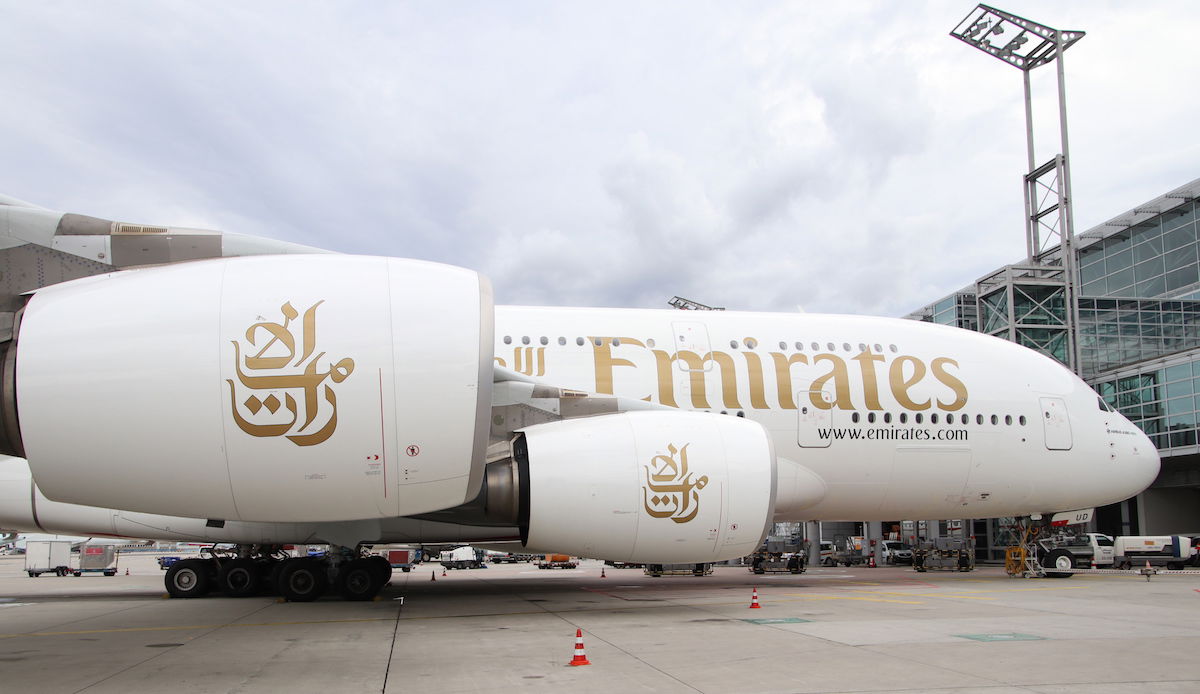 Emirates A380
Key figures of Emirates’ performance
Let’s look at a few key figures for Emirates for this past year:
- Revenue declined by 6%, to $25.1 billion
- Seat capacity decreased by 6%
- Emirates’ fleet stayed consistent at 270 aircraft; the airline took delivery of six A380s, but retired six 777s
- The average fleet age of Emirates’ 270 planes is 6.8 years
- Emirates carried 56.2 million passengers (down 4%)
- The average load factor was 78.5%, up by 1.7% from the previous year
- The average passenger yield remained the same, at 7.1 US cents per revenue passenger kilometer
- Operating costs decreased by 10%, with the price of jet fuel decreasing by 9%
It’s also interesting to note how different regions contributed towards Emirates’ revenue, with no region contributing more than 30%:
- Europe generated $7.1 billion in revenue (down 8%)
- East Asia and Australasia generated $6.6 billion in revenue (down 9%)
- The Americas generated $4 billon (up 1%)
- Africa generated $2.4 billion (down 8%)
- Gulf and Middle East revenue generated $2.1 billion (down 3%)
- West Asia and Indian Ocean revenue generated $2.7 billion (up 4%)
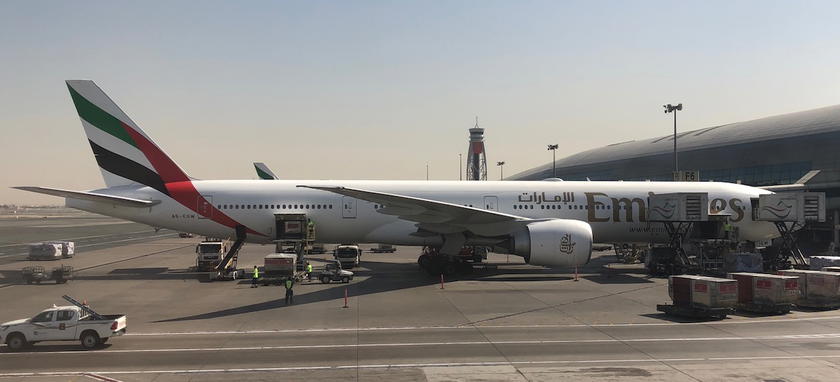 Emirates took delivery of their last 777-300ER this past year
Challenges that Emirates faced
While Emirates’ financial performance is better than the previous year, the airline faced some challenges over the course of the financial year:
- Starting in mid-February Emirates was hit hard by the current pandemic
- Dubai International Airport had a 45 day runway closure in the second and third quarter of 2019, limiting Emirates’ operations
- The strengthening of the USD compared to currencies in other key Emirates markets is estimated to have cost the airline $262 million
- Bad fuel hedging cost the airline $299 million as well
 Emirates’ new 777-300ER first class
Is this all just fake math?
When I write about the financial performance of the Gulf carriers, there are always questions about whether this is all just imaginary math, given that the Gulf carriers are state owned.
After all, US airlines spent millions of dollars over many years trying to convince us that these are heavily subsidized airlines that are losing billions of dollars (though they’re changing their tune on this, and American and Qatar have even announced an expanded partnership).
My personal take is that these results are mostly accurate. After all, Emirates results are independently audited per international financial reporting standards.
However, there’s no denying that airlines like Emirates have benefited from some things over the years:
- They’ve had easier access to financing on account of being government owned, which has allowed them to grow as much and as quickly as they have
- They largely have lower operating costs than other airlines, given that they essentially have the same owner as the airport, ground handlers, catering company, etc.
I do think Emirates is “legitimately” profitable. The problem with the A380 for most airlines is that they haven’t been able to scale their operations in a way that works. Emirates has been able to scale their route network unlike any other airline. Of course COVID-19 might change that, but that was at least the case until a few months ago.
Obviously Etihad and Qatar don’t have similar success, as both airlines were losing a lot of money even before the current pandemic.
Bottom line
All things considered, Emirates’ performance for the past year is pretty impressive, especially in contrast to the results of Etihad and Qatar (Etihad is a basket case, while Qatar is dealing with the Gulf blockade).
Emirates’ profits would have been bigger if it weren’t for bad fuel hedging and currency fluctuation, not to mention the current pandemic that impacted the last several weeks of the financial year, but that’s a cost of doing business as a global airline.
Suffice to say that the next financial year is unlikely to be as good…


Membership is free and takes no more information than commenting as a guest. Earn status points for good contributions, and see fewer ads as your status grows.