Delta Extends Seat Blocking Policy Through April 2021

Update: Delta has announced that it will stop blocking seats as of May 1, 2021.

Delta has just announced an extension to its industry-leading seat blocking policy.
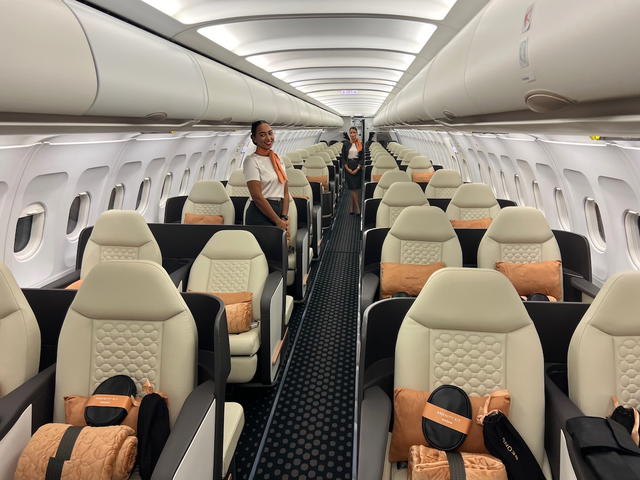
How does Delta’s seat blocking policy work?

Delta Air Lines’ seat blocking policy is now valid through April 30, 2021, which is a one month extension beyond the previous date of March 30, 2021. Delta’s seat blocking policy includes the following restrictions:

  • Delta will block adjacent seats in first class on domestic US flights
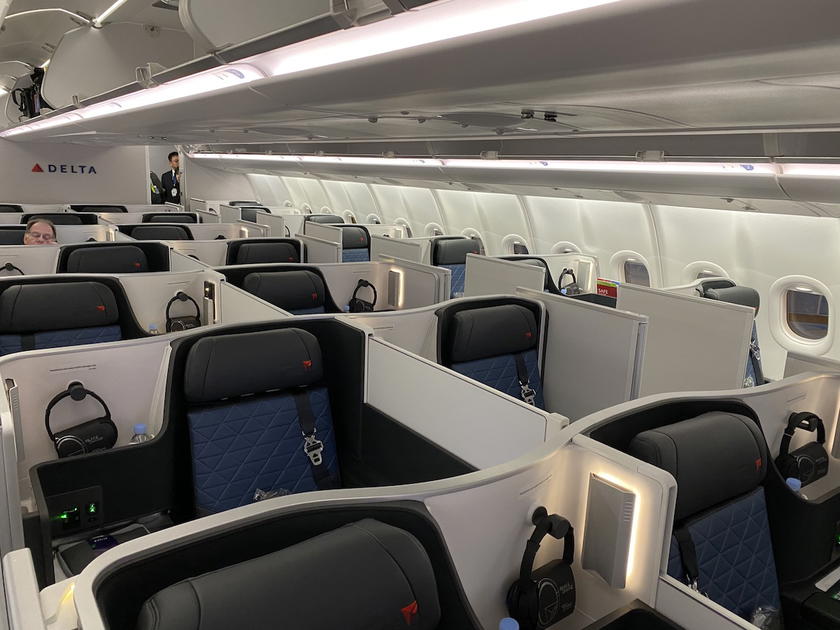
  • Delta will block middle seats on all flights in economy, Comfort+ (extra legroom economy), and Premium Select (premium economy)
  • Delta will block one aisle of seats on regional jets (which have a 2-2 configuration in economy, meaning that 25% of seats are blocked)
  • Delta is capping the maximum capacity in economy at 75% (this assumes that a lot of groups are traveling together, which won’t be the case on many flights)
  • When parties of three or more are traveling together in economy, an entire row can be selected
  • When parties of two or more are traveling in first class, adjacent seats can be selected
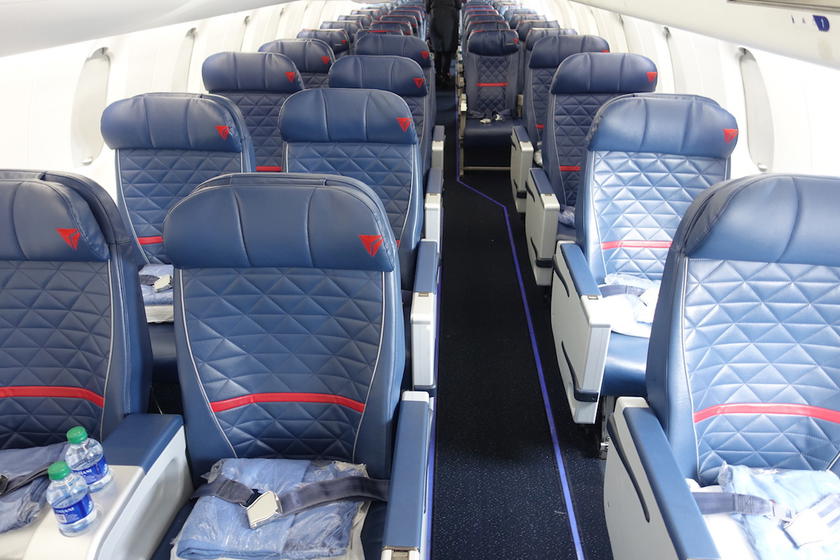
Select seats will continue to be blocked on Delta regional jets

Delta’s seat blocking policy is the best in the industry, though it’s worth noting that the current policy is scaled back a bit compared to what it was at the beginning of the pandemic:

  • Delta One used to be limited to at most 60% of capacity, but for planes with two aisles, there are no more capacity restrictions
  • Regional jets in a 2-2 configuration used to be capped at 50% of capacity at most (as the aisle or window seats were blocked), while they’re now capped at 75% of capacity
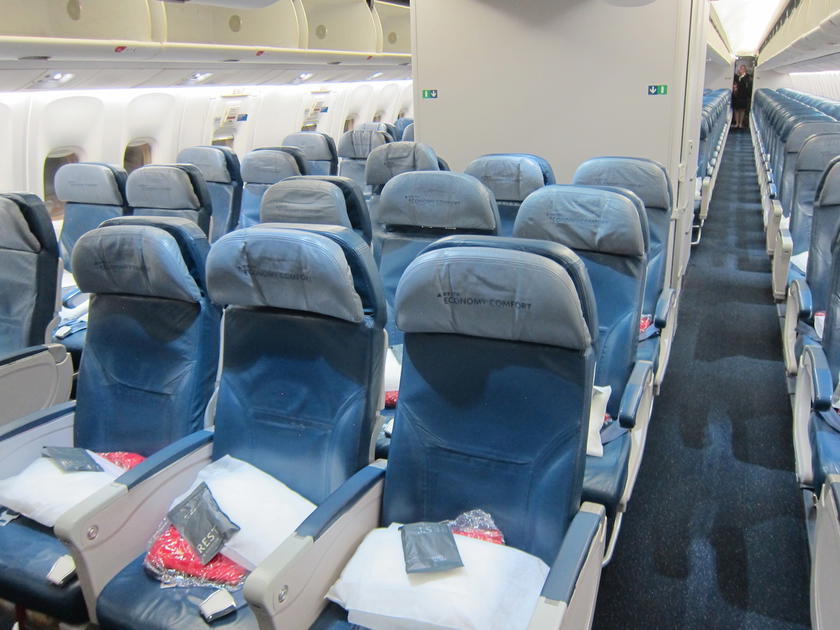
Delta will keep blocking middle seats

Delta is outdoing competitors here

Most airlines around the globe dismissed the concept of blocking seats since the start of the pandemic. While that wouldn’t offer “true” social distancing, it would at least offer some amount of personal space, and give people some peace of mind.

Among US airlines, four airlines have blocked seats in a significant way — Alaska, Delta, JetBlue, and Southwest. It’s worth acknowledging that Delta has kept this benefit around significantly longer than competitors:

At this point Delta is the only major US airline to be blocking seats.
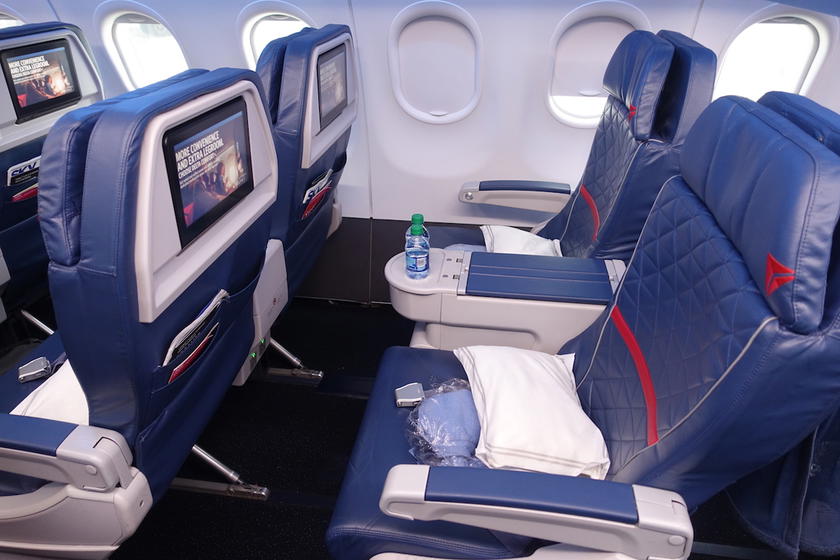
Delta will continue to block seats through at least March 2021

Seat blocking is getting costly for Delta

When the pandemic first started, seat blocking probably wasn’t too costly for Delta to offer, given how few people were flying. However, at this point airlines have drastically reduced capacity while the number of people traveling has generally increased, meaning that many of the flights still operating are fairly full.

It’s clearly costing Delta quite a bit to offer this benefit. While the airline has long tried to differentiate itself from American and United (which aren’t blocking seats), I’m not sure Delta is getting the short-term payoff it was expecting.

For what it’s worth, Delta’s financial results haven’t been great in the past few quarters, and don’t really suggest that the airline is getting a revenue premium that reflects people valuing this policy.

Personally I think it’s likely that this is the last extension of Delta’s generous seat blocking policy. In the past the seat blocking was extended by at least a couple of months at a time, while we’re now seeing a one month extension.
Has Delta’s seat blocking policy paid off?

Bottom line

Delta Air Lines will continue blocking seats through April 30, 2021. While there were initially four major US airlines blocking seats, at this point Delta is the only airline to have such a policy.

This is a fantastic development, and I’d absolutely go out of my way to choose Delta over a competitor because of this. If nothing else, it sure is more comfortable to fly with an empty seat next to you.

Unfortunately I suspect this might be the last extension of this benefit.

Would you go out of your way to fly an airline that’s blocking seats? And do you think Delta will extend seat blocking beyond April 30?

Conversations (39)
The comments on this page have not been provided, reviewed, approved or otherwise endorsed by any advertiser, and it is not an advertiser's responsibility to ensure posts and/or questions are answered.
Comment as a member

Membership is free and takes no more information than commenting as a guest. Earn status points for good contributions, and see fewer ads as your status grows.

Type your response here.

If you'd like to participate in the discussion, please adhere to our commenting guidelines. Anyone can comment, and your email address will not be published. Register to save your unique username and earn special OMAAT reputation perks!

  1. Loading comments…
Recent Comments
The latest from the OMAAT community.

The comments on this page have not been provided, reviewed, approved or otherwise endorsed by any advertiser, and it is not an advertiser's responsibility to ensure posts and/or questions are answered.

venusflighttrap Guest

I've had to fly several times during covid, and I absolutely chose Delta because of their seat blocking policy. Whether the small bit of distance between travelers is a false sense of security or not, the extra space around me is very welcome and makes traveling during a stressful time significantly more pleasant. In fact, the only reason I agreed to the trips I took was DL's policy. I will miss it when it is discontinued and will likely wait a good bit of time before air traveling again when that time comes. The only reason I bought those tickets was because of the policy they have in place. I don't think I am alone in that.

0
‼ 0
Dean Guest

What's the deal with seat blocking for Delta One on the 757? It lets me select a seat next to one that is occupied -- are they blocking adjacent seats in single-aisle Delta One?

0
‼ 0
Tim Dunn Diamond

You are the one that jumped into this conversation which I replied to. You are the one that can't stand the message that Delta figured out how to navigate the covid environment better and are running from site to site to argue against that. It clearly seems like it matters to you. Can you tell us why? You simply don't want to believe any data that acknowledges that Delta figured it out including that it is getting a large enough yield advantage to more than offset what it is losing in blocked seats - which are being sold at other carriers at deep discounts. Delta also got costs out. It doesn't matter whether you like it, agree with it or anything else. Those the financials that Delta delivered and which can be compared side by side with every other airline. Delta didn't take charges to lower its CASM. It took charges to restructure its business; all companies did it. Delta has taken the most since covid - because Delta understands that the airline industry is fundamentally changed. Other airlines have and will take large charges to restructure as well. You are throwing stones in glass houses by trying to argue against what Delta is doing because other airlines will do the exact same thing - esp. AAL and UAL. If you want to continue the conversation, let Ben know that you would like to meet me and I will be happy to do so. Continuing to argue online accomplishes nothing. oh, and why don't you add your real full name if you are so determined that you should be heard. Grow up yourself and accept industry realities whether you like them or not.

0
‼ 0
Julie Guest

Tim, If it doesn’t matter what anyone else writes or thinks, then why do you respond to everyone? Grow up. Yield means nothing and delta did special charges to lower their casm in case you don’t know how it works. The bottom line is what it is: biggest loss in the history of aviation: delta air lines 2020.

0
‼ 0
Tim Dunn Diamond

Julie, Delta did have a yield, casm and bottom line advantage to its competitors. It doesn't really matter whether you want to see it or you want to argue what they didn't have. And, yes, they "bought" the advantage by taking massive charges in the 2nd and 3rd quarters for fleet and personnel. And, AA and UA will be taking massive charges to the same thing over the next few quarters -because they know full well they didn't get their costs down enough. American flew its last MD80 flight less than a year before Delta; let's not get the least bit uppity about how they were forward looking in getting rid of older aircraft. John R is right on both of his points. People are not near as focused on onboard service - or they sure aren't paying for more of it - than they are concerned about a safe space. You can argue but the actual data doesn't lie. Delta says they are carrying a higher percent of industry business traffic than ever. It is no surprise that they see optimism in the recovery that UA's exec team dashed when they reported just days later. Same market, same industry - two very different views based on two very different levels of service and money being received for both. You need only look at stock charts for both carriers for the week following their 4th quarter financial reports to see how investors thought about what Delta and United said. You clearly have a problem accepting not only the data but also the messenger. before you write another word, how about you take a deep breath and recognize that Delta was voted the most admired airline in the world by Forbes for yet another year AND Delta's market cap is worth more than AA and UA's combined - with room to spare. Ben has a realistic assessment of DL's seat blocking in this article. He thinks DL is leaving money on the table but he didn't argue the point and he didn't even try to throw data around to make his point. If he disagrees with what I wrote, he can certainly respond as he often does to his readers. It doesn't matter what anyone on any other site thinks or writes.

0
‼ 0

Save posts to read later

Saving posts is a member feature. Become an OMAAT member to build a reading list you can come back to from any device.

Become a member
Meet Ben Schlappig, OMAAT Founder
5,883,136 Miles Traveled

43,914,800 Words Written

47,187 Posts Published