


I wrote previously about how I booked a day-long panda “volunteer” program for Ben and me. Now I’ll tell you about the experience itself. In short, it was awesome.
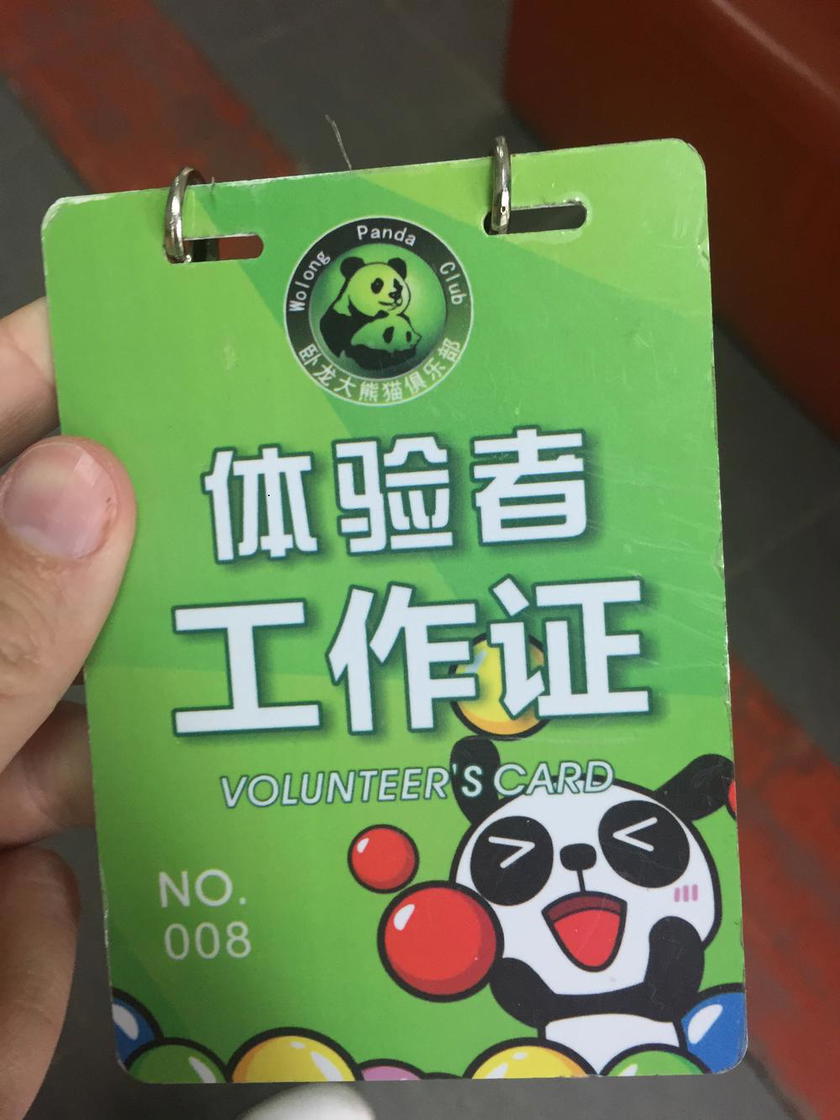
We arrived at the China Conservation and Research Centre for the Giant Panda – Dujiangyan Base around 8:30 in the morning. We checked in and received t-shirts to wear throughout the day (and to keep!) and ID badges. We met the six other people in our group of “volunteers:” a family of four French expatriates living in Shanghai and their two house staff.
It was clear that the program “pand-ers” to Westerners, since it was conducted in English. Our guide for the day, whose Western name was Elsa (she insists she chose it before Frozen came out) introduced herself and gave us a few rules (i.e., don’t get too close to the pandas without supervision and always wear your ID badges), and collected the 700 RMB (~$100) fee per person for the program (and yes, they do accept credit cards).
By the way, Elsa was an excellent guide. She couldn’t have been friendlier, and her encyclopedic knowledge of everything panda-related had me convinced that she’s every bit as proficient in her field as Ben is in miles and points.
At this point Elsa asked if we’d like to “donate” an additional 1,800 RMB (each!) for the opportunity to hold and take a photo with a baby panda. We politely refused, figuring that 275 bucks for 20 seconds with a bear was a bit too steep. If these pandas are able to “bamboozle” people out of that much cash, I’m in the wrong business!
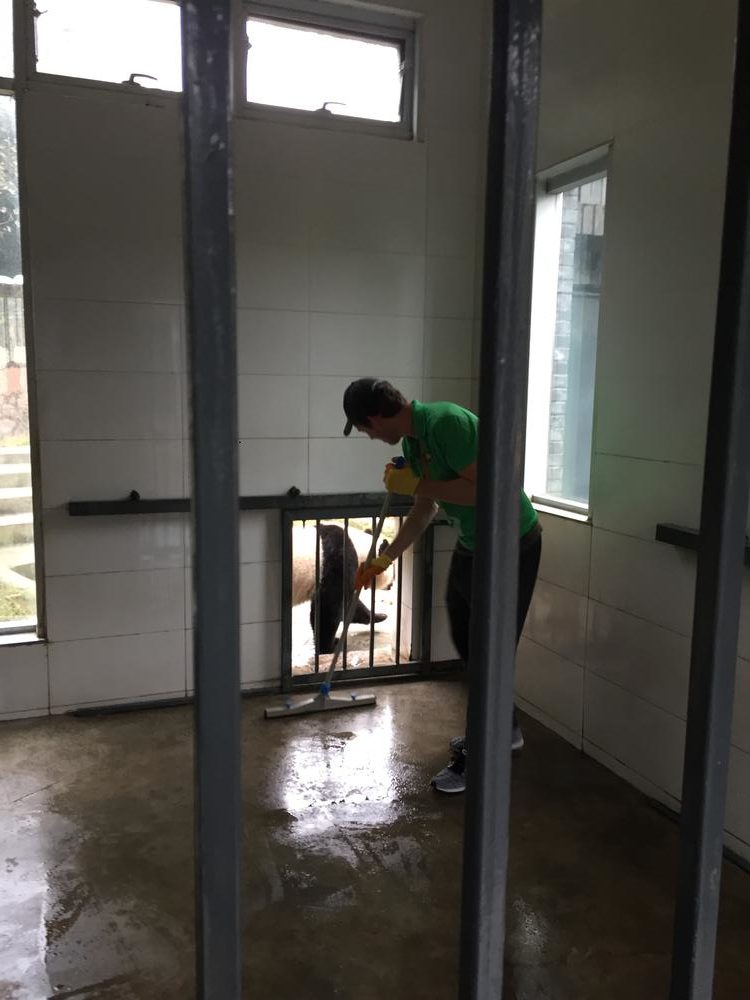
Then we walked to the first panda habitat area where we were put to work. The French family got to gather bamboo, while Ben and I were entrusted with the “duty” of cleaning up poop.
What an honor it was to clean up the excrement of these noble creatures. And let me tell you, since panda diets consist almost entirely of roughage, they poop a lot. It actually wasn’t as gross as it sounds (some might describe it as “bearable”), and we finished in a few minutes. I also learned that Ben is surprisingly good at cleaning up poop. Always good to have a backup career plan!
The pandas seemed to like supervising us, as they would come by every couple minutes to check on our work.
After Elsa was satisfied with the job we’d done, she took us on a walk around the base to see the 20 or so pandas who live there. The adult pandas each have their own individual habitats, since they tend to prefer being solitary (as a fellow introvert, I can relate). The base is home to several “celebrity” pandas, including Gongzai, the panda who served as the model for Po, the main character in the animated movie Kung Fu Panda.
We had a little over an hour to check out all the pandas at the base. They have pandas of all ages, and while they seem to spend most of their time either eating or sleeping, they also do some crazy stuff, like climb trees!
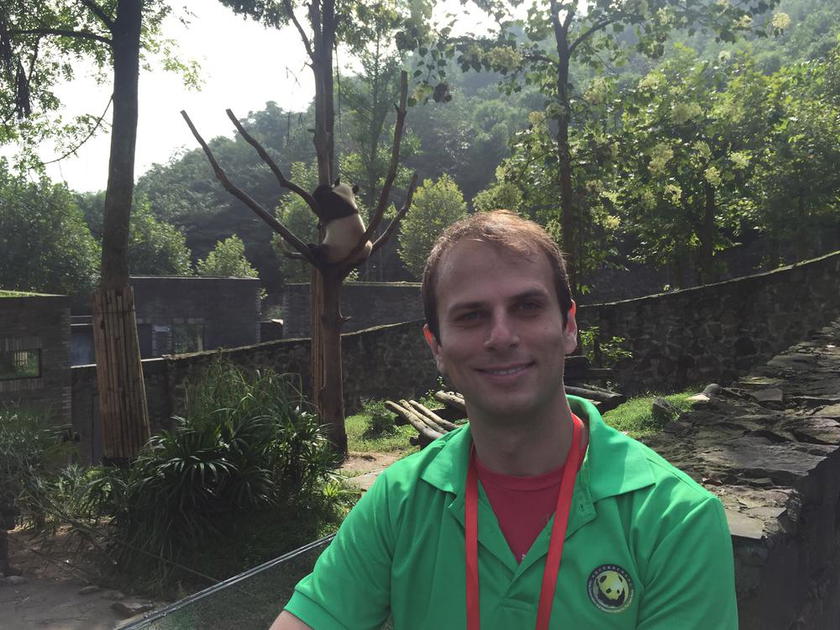
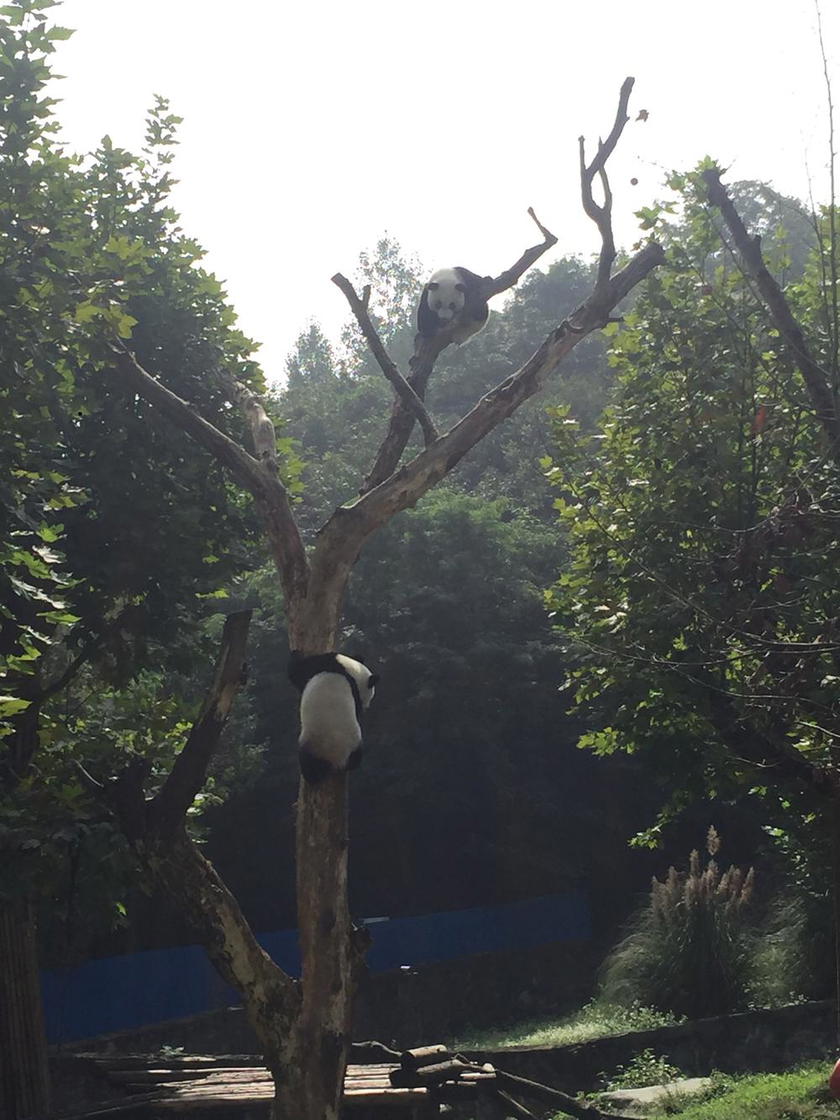
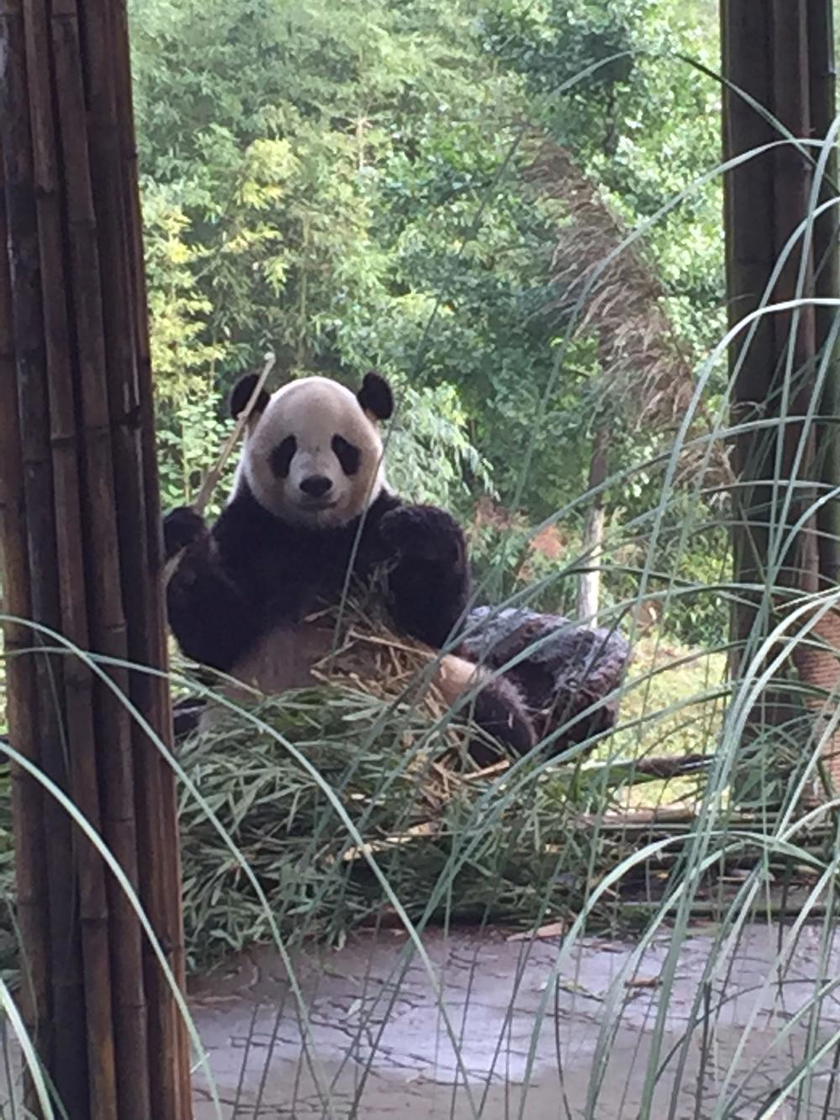
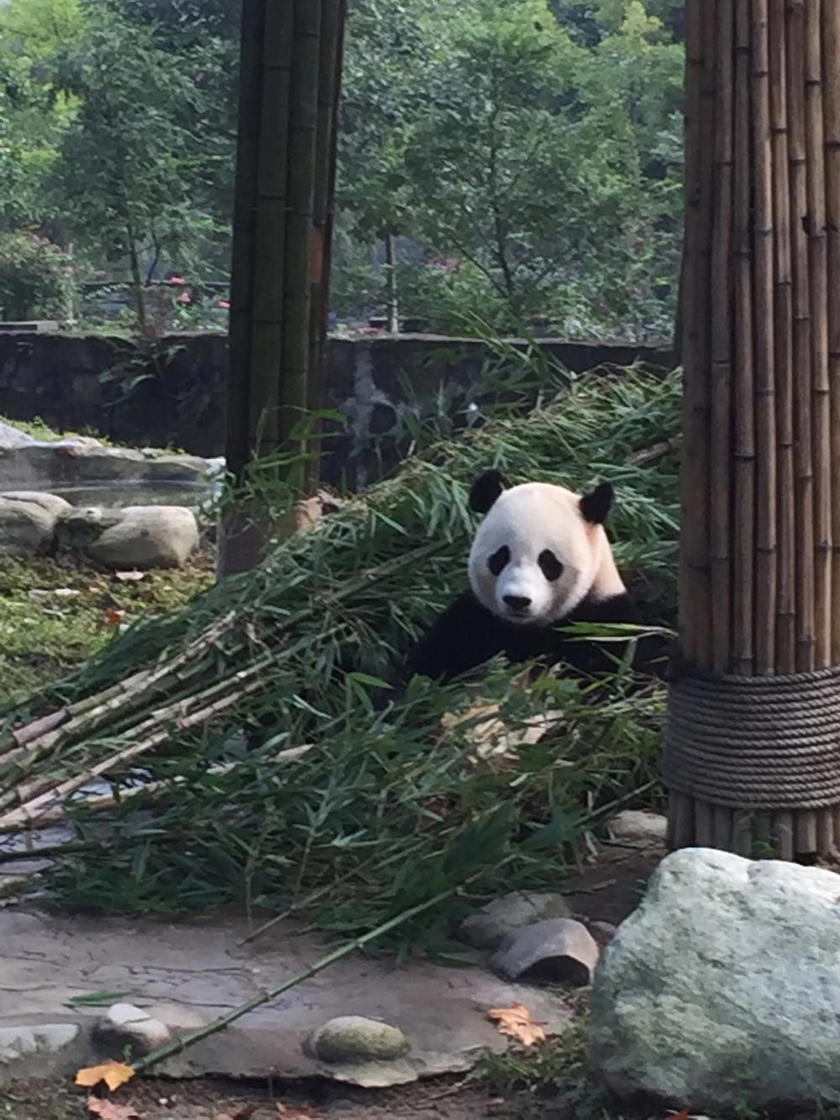
Next came one of the big highlights of the day: feeding the pandas. Here I am feeding carrots to Bao Bao:
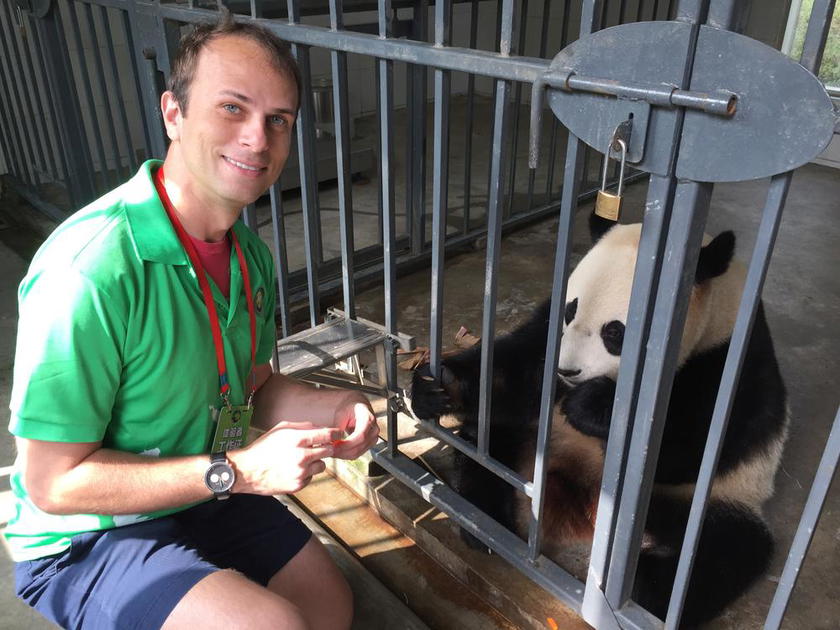
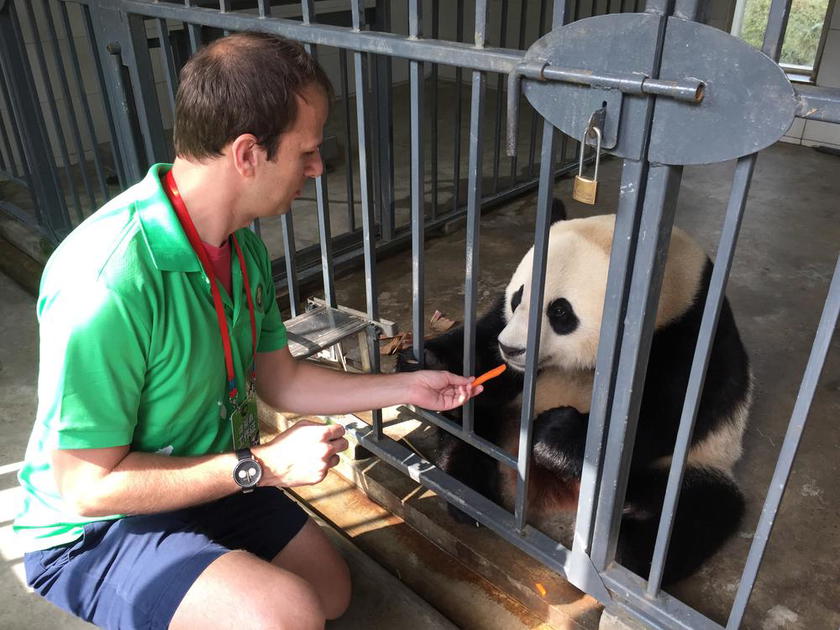
Bao Bao is special to me, because she was actually born at my local zoo in Washington, D.C., and was something of a local celebrity before being transported earlier this year to Dujiangyan.
This was the best part of the day. The pandas seemed to really enjoy it too.
After that, it was lunchtime. Lunch at the employee cafeteria is included. Unfortunately for me, as the world’s least adventurous eater, there wasn’t much. I had white rice and a banana. Other options included kidney (hopefully not from pandas), some kind of chicken thing, and some kind of tofu thing. Thankfully I was able to buy a box of Oreos in the gift shop for dessert.
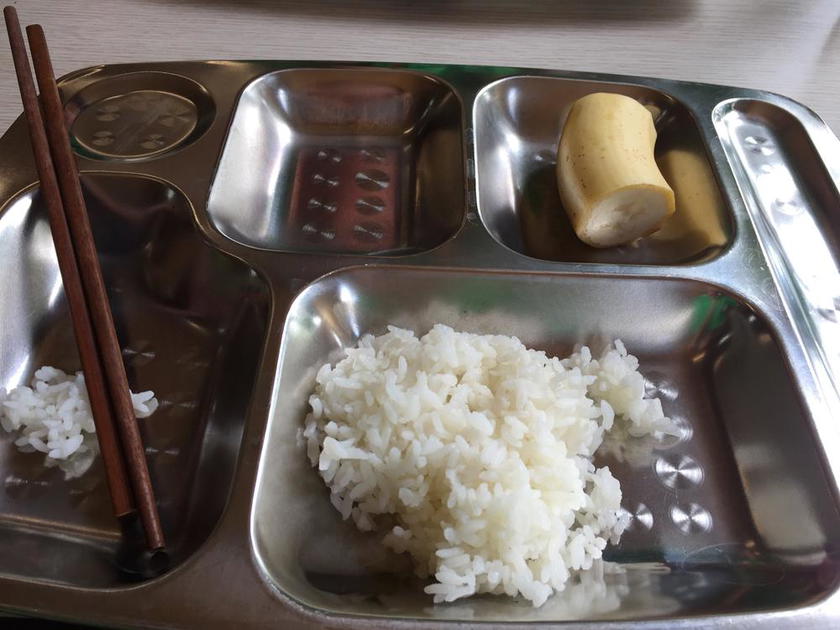
After lunch, there was some downtime. We waited around for about an hour. Then we watched a 45-minute video (in English) about efforts in China to breed pandas and to return some of them to the wild. I enjoyed it, and learned some interesting things:
- Before they try to get two pandas to mate, they show them videos of other pandas mating to get them in the mood.
- When they bring two pandas together to mate, since it’s such a big deal, dozens of people gather around to watch them (which led me to think that maybe pandas just aren’t breeding because they’d prefer a little more privacy).
- If captive pandas are to have any hope of surviving in the wild, they can’t have any contact with humans – so when humans have to handle bears that are slated for reintroduction to the wild, they dress up in panda suits that have been sprayed with panda urine. #dreamjob
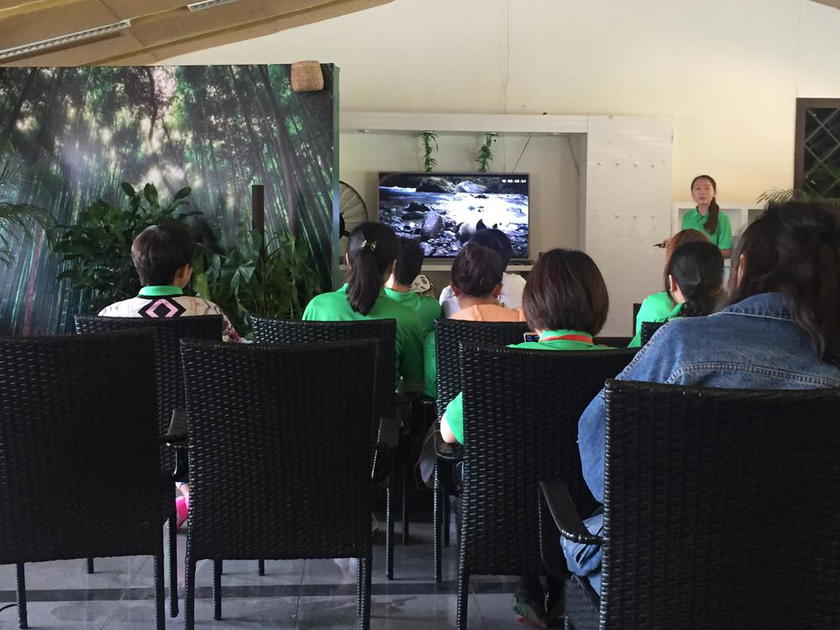
Then we got to feed the pandas some more carrots. It was around this time that I realized the pandas had a better lunch than I did.
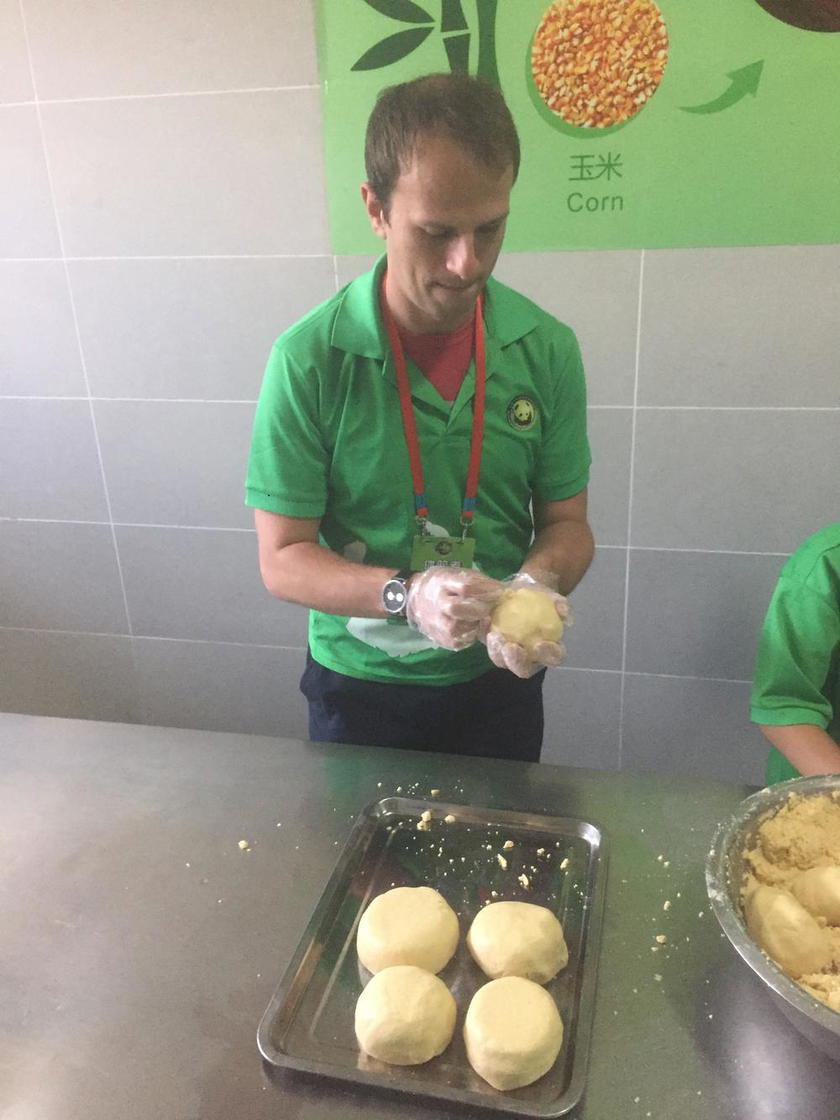
Finally, we received a brief lesson about the “panda cakes” that they feed to the bears, made of soybeans, corn, and a few other ingredients. We had the chance to shape the dough into cakes, which would then be baked, allowed to sit overnight, and delivered to Bao Bao and friends for consumption. (Apparently they still prefer bamboo.)
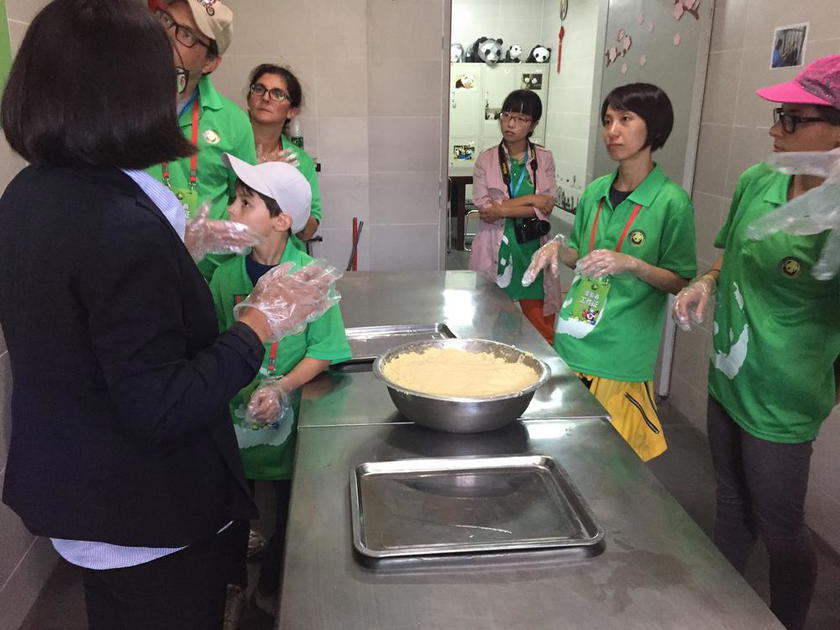
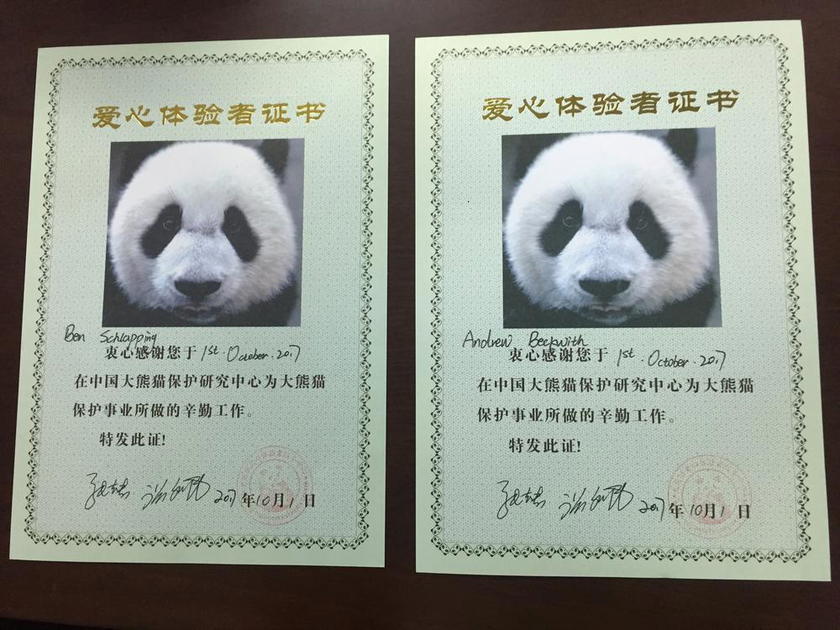
At the end of the program, we received certificates, as well as a pin and some postcards with adorable panda photos on them. We were finished around 2:30 and headed back to Chengdu.
Bottom Line
This program was so much fun, and well worth the cost. It definitely “ex-pand-ed” my knowledge of these amazing creatures. The one drawback was that there was a lot of downtime. Overall I’d say we spent about half of the day waiting around. So I would suggest either bringing something else to do (maybe a book to read), or asking if you can do an abbreviated version of the program (just make sure you don’t miss the part where you get to feed them!).


Membership is free and takes no more information than commenting as a guest. Earn status points for good contributions, and see fewer ads as your status grows.