
It’s an exciting time for Etihad Airways, as the airline has just taken delivery of its first Airbus A321LR aircraft, which offers an all-new passenger experience for the company. This plane will be a game changer for Etihad in terms of the routes that it opens up. The interior of the plane looks awesome, with some quirks.
Let’s start with some background on the aircraft, where it will fly, and then talk about the passenger experience.
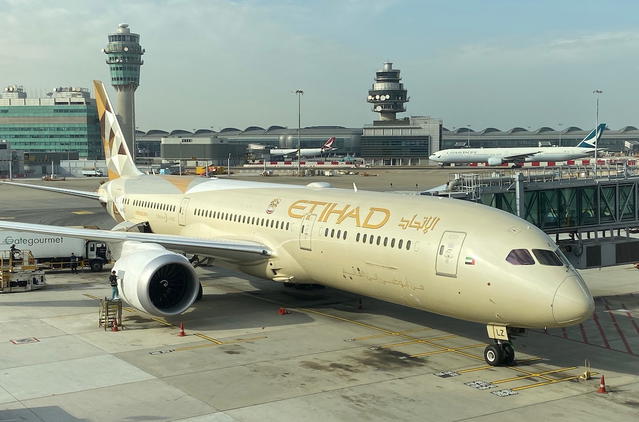
Etihad has 30 Airbus A321LRs on order
Etihad Airways has 30 Airbus A321LRs on order (the order was recently increased from 20), and the first of these aircraft has just been delivered. The plane with the registration code A6-LRA will be flying from Hamburg (XFW) to Abu Dhabi (AUH) shortly.
Etihad is also taking delivery of these planes pretty quickly, as the airline plans to have 10 of these planes in its fleet by the end of 2025, another 10 by the end of 2026, another five by the end of 2027, and another five by the end of 2028.
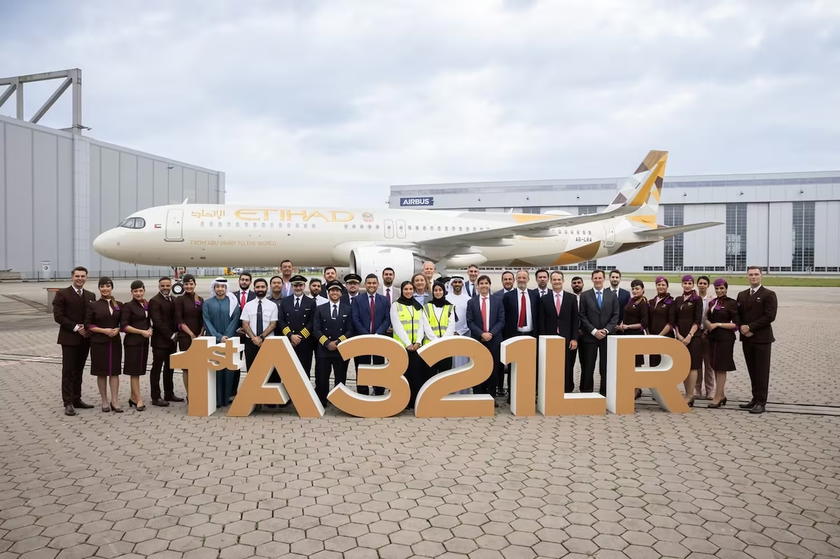
These are the only factory fresh narrow body aircraft that the Abu Dhabi-based carrier has on order. For those not familiar, the A321 is the largest variant of the A320-family of aircraft. And the “LR” version offers extra range. There’s the standard A321ceo, then there’s the A321neo (with more range), then there’s the A321LR (with even more range), and then there’s the A321XLR (with the most range). As you can tell, Etihad chose the second longest range version of the jet, so we’ll talk more about why in a bit.
For some background, Etihad’s fleet strategy has completely changed over time. A decade ago, Etihad wanted to become the size of Emirates, and ordered basically every type of plane on planet earth. After losing many billions of dollars, the airline changed course, and tried to shrink into profitability. Now that this has been accomplished, the airline is once again trying to grow, but in a more sustainable way.
My point is simply to say that it can be hard to keep track of Etihad’s fleet plans. For example, according to Boeing, Etihad still has 25 Boeing 777Xs on order, while according to Etihad’s CEO, these contracts have been restructured, and that’s no longer the case.
Similarly, in 2013, Etihad placed an order for 26 Airbus A321neos, but the airline didn’t end up taking delivery of any of those jets, at least not new. Instead, Etihad recently acquired six used A321neos, which briefly flew for Bamboo Airways. So it would appear that the A321neo order was ultimately restructured to instead be for A321LRs.
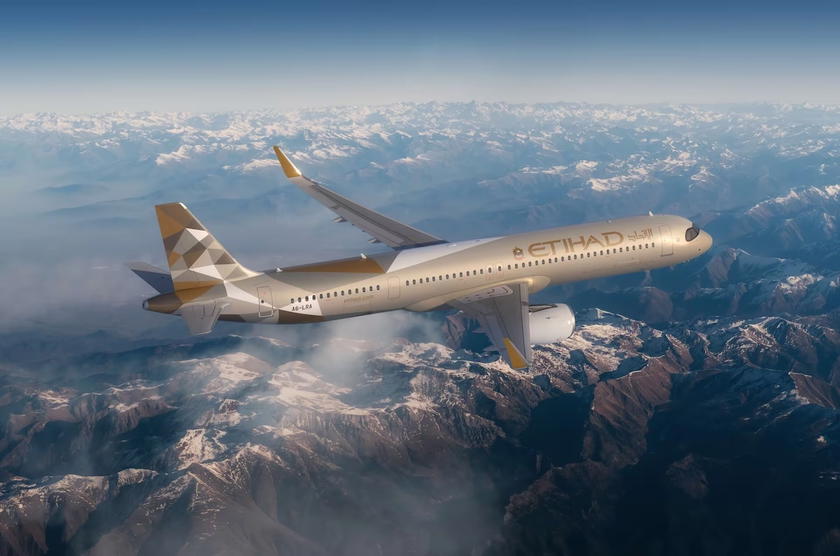
Where Etihad will fly its Airbus A321LRs
As mentioned above, it’s interesting how Etihad chose the Airbus A321LR over the longer range A321XLR variant. This decision was ultimately for good reason. The A321LR has roughly 4,000 nautical miles of range, and that’s more than sufficient for the destinations that Etihad wants to serve with this aircraft, given the Middle East’s central location for such large population centers.
For example, below is the 4,000 nautical mile range from Abu Dhabi. This covers virtually all of Europe, Asia, and Africa, which is where the airline intends to fly these aircraft. Admittedly the range is a bit less than shown below, since you need to factor in headwinds, fuel reserves, etc.

Etihad’s strategy with the Airbus A321LR seems to be as follows:
- For one, Etihad wants to fly the A321LR in “thinner” markets, where the demand might not be there for a wide body aircraft to offer daily service, but where a narrow body aircraft could make sense
- Second, the airline plans to use this to add second or third daily flights to some destinations, in order to beef up its schedule, and offer more connectivity
The Airbus A321LR will enter service as of August 2025, with the first route being from Abu Dhabi to Phuket (HKT). Beyond that, Etihad plans to open up new routes with the aircraft, adding service to places like Algiers (ALG), Chiang Mai (CNX), Copenhagen (CPH), Hanoi (HAN), Krabi (KBV), Phnom Penh (PNH), Tunis (TUN), and more. On top of that, the airline plans to increase frequencies to destinations like Athens (ATH), Bangkok (BKK), Milan (MXP), Paris (CDG), and Zurich (ZRH).
What to expect onboard Etihad’s Airbus A321LRs
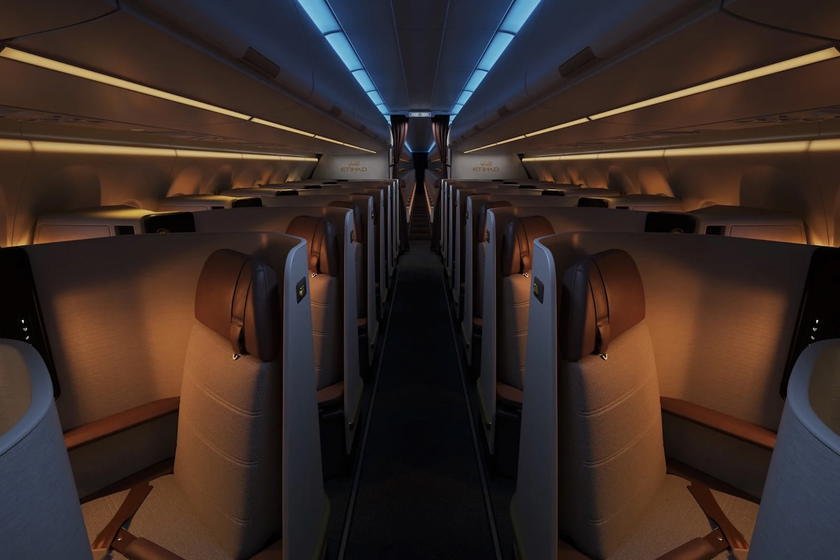
What should passengers expect onboard Etihad’s factory fresh Airbus A321LRs? For the first time ever, Etihad is installing a long haul-style product onboard its narrow body aircraft. Etihad’s A321LRs are configured with a total of 160 seats, comprised of:
- Two fully flat first class seats, in a 1-1 configuration
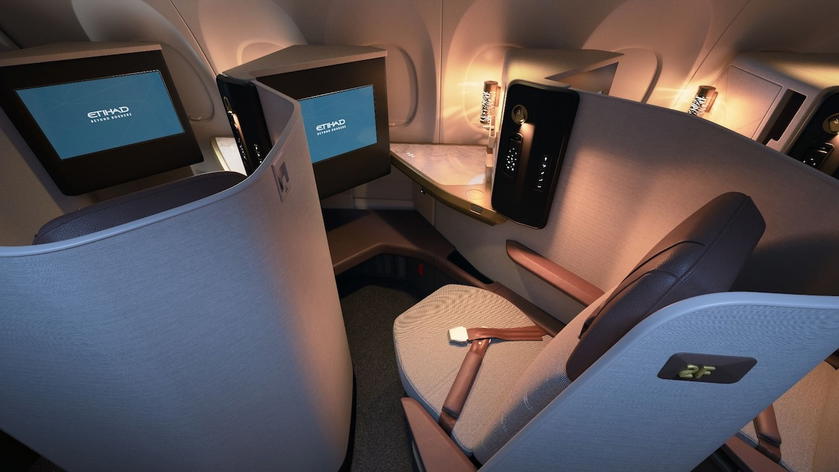
- 14 fully flat business class seats, in a 1-1 configuration
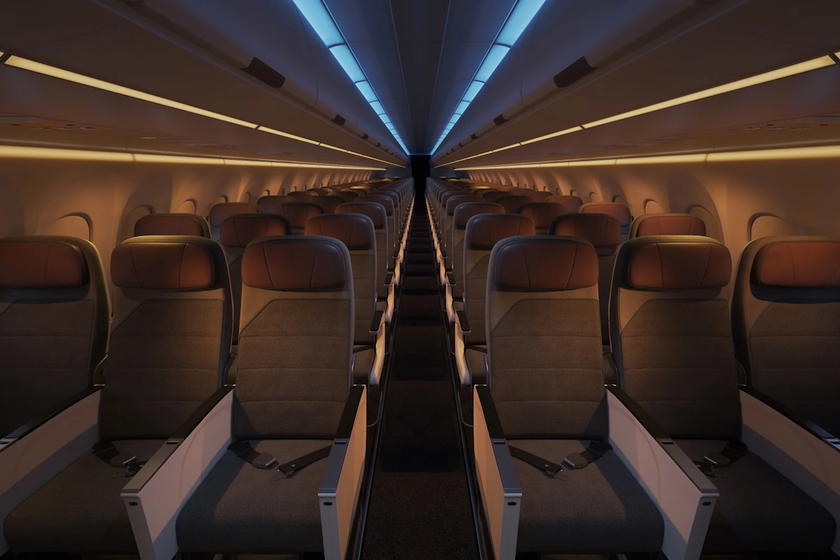
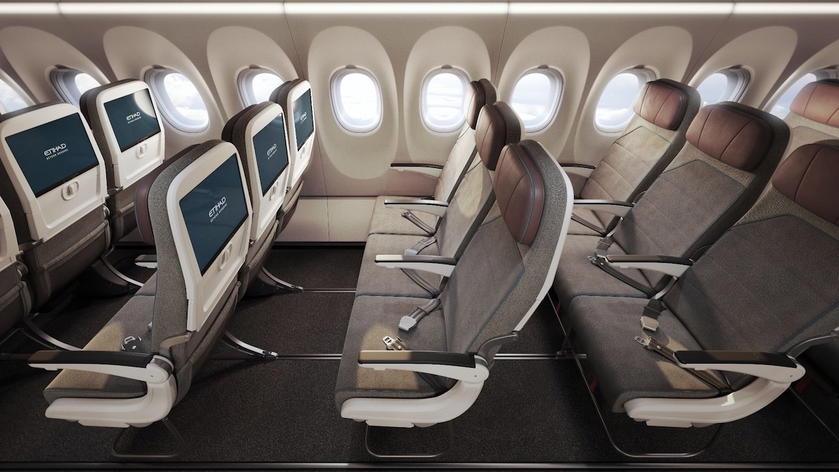
- 144 economy class seats, in a 3-3 configuration
First and business class consists of reverse herringbone seats, which is a nice contrast to the herringbone seats that you’ll find on many other narrow body operators, like in JetBlue Mint. These seats are based on the STELIA Aerospace OPERA seating platform, the same you’ll find on ITA Airways’ A321neos.
First class looks a whole lot like “business class plus” on other airlines. It’s not a separate cabin, and doesn’t have a dedicated lavatory (though it does have a dedicated flight attendant), but instead just consists of the two seats at the bulkhead. The first class suites have doors, 20″ 4K screens for entertainment, bluetooth audio pairing, wireless charging, and a space for a companion to sit.
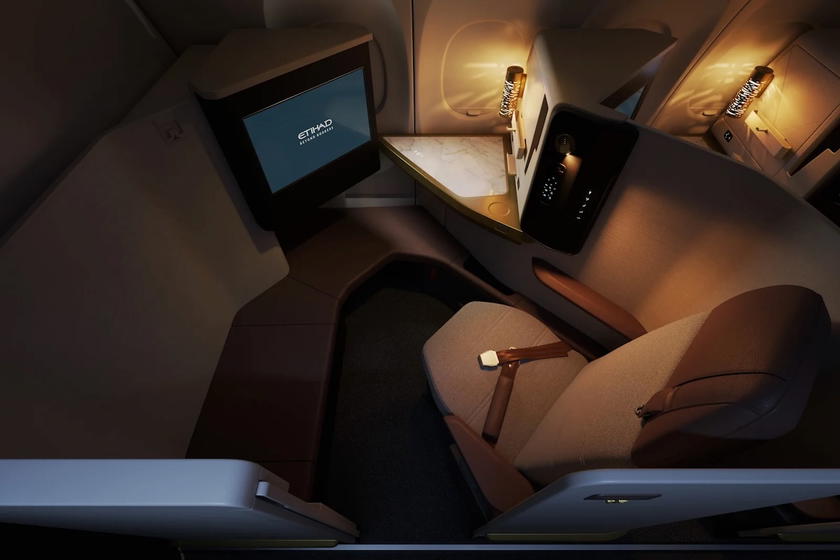
Business class seats are pretty standard reverse herringbone seats, but don’t have doors. Seats convert into 78″ fully flat beds, and have 17.3″ 4K screens, bluetooth audio pairing, and wireless charging. The decision not to install doors was deliberate, to keep down the weight of the aircraft, and maximize range. That’s an interesting decision, given the competitive landscape.
Economy class offers personal entertainment at each seat, in the form of 13.3″ 4K screens, and USB charging.
Throughout the aircraft, Etihad offers Viasat Wi-Fi for connectivity, which offers good speeds (though isn’t complimentary, except in first class).
All-in-all, this looks like a nice jet that will serve an important purpose for Etihad. I find some of the decisions a bit puzzling, like calling the front row seats first class (especially since most Etihad wide body aircraft don’t have first class), and not having doors in business class, but those are minor in the scheme of things.
Etihad getting narrow body jets with flat beds is a fantastic development, if you ask me. Up until now, Etihad’s narrow body aircraft have operated almost exclusively on shorter flights, and really have quite an uncompetitive product in both cabins. On some routes, Etihad operates both narrow body and wide body aircraft, and the difference is night and day. So I’m happy to see the airline is offering more of a long haul experience on these jets.
Bottom line
Etihad is nicely elevating its narrow body passenger experience, as Airbus A321LRs start to join the fleet. Etihad is installing 160 seats on these planes, including two first class seats, 14 business class seats, and 144 economy seats.
The airplane has reverse herringbone seats in first and business class, with first class seats having doors. The plane offers improved tech, from Viasat Wi-Fi throughout the jet, to bluetooth audio and wireless charging in premium cabins. I look forward to giving this jet a try in the near future!
What do you make of Etihad’s Airbus A321LRs?


Membership is free and takes no more information than commenting as a guest. Earn status points for good contributions, and see fewer ads as your status grows.