
As I see it, there are several big trends among the “big three” US carriers that I think will be interesting to watch over the coming months and years.
For me, the most interesting of those is whether American will be able to achieve any sort of a financial turnaround. But what I also think is interesting is how Delta is finally trying to grow its long haul network, particularly to Asia, and seeing how successful that is. While the airline is still early in this journey, we’re starting to get some data…

Delta’s Pacific capacity growth outpaces yield growth
Historically, Delta has routed so much of its Asia traffic through Seoul Incheon (ICN), which is the hub of its joint venture partner, Korean Air. Now the airline is increasingly trying to serve more destinations nonstop. The airline has launched flights to Hong Kong (HKG), and we’ll see Manila (MNL) flights as of 2027, and Singapore (SIN) flights are also coming.
Delta executives have indicated that they want to beat United across the Pacific, and this also plays into Delta’s goals of trying to dominate Los Angeles (LAX), and become a bigger player there.
While we’re early in this journey, how are things going so far? Well, there’s some interesting data. In Q2 2026, US carriers generally saw huge revenue growth, given that they’ve been able to increase fares, passing on much of the increases in jet fuel cost.
So in Q2 2026, how did capacity growth and yield growth across the Pacific compare year-over-year?
- United saw 10.9% yield growth on 4.1% capacity growth
- Delta saw 7% yield growth on 8% capacity growth
- American saw 17.3% yield growth on 8.2% capacity growth
As you can see, there’s a negative outlier here, and it’s not American, for once. At American and United, yield growth greatly exceeded capacity growth in the Pacific region (more than double, in both cases), while at Delta, capacity growth exceeded yield growth.
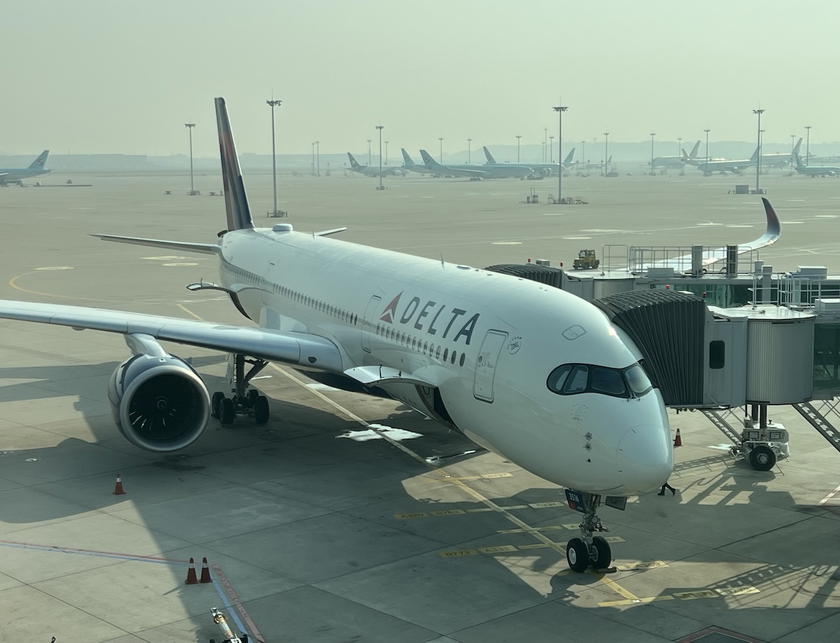
In the coming quarters, one of the details I’m going to be most interested in seeing is how the relative Pacific performance shakes out, in terms of yield growth vs. capacity growth.
JonNYC reports how United Chief Commercial Officer Andrew Nocella reportedly said the following in an internal meeting for employees:
“The [UA] LA-HKG route is quite successful now as a result of [the BKK/SGN tags]. We face new competition now from another airline based in ATL, and I know they’re not going to do very well there. I can already tell from their pricing. They’re unable to fill up their airplanes.”
I think that’s especially interesting, because I know some people were suggesting that United would hemorrhage money flying to Bangkok (BKK) and Ho Chi Minh City (SGN), and that the airline was just obsessed with adding “sexy” dots to the map, rather than actually focusing on sustainable growth. However, year-over-year numbers seem to suggest that these “sexy” route additions are actually performing quite well.
I imagine these numbers will get worse before they get better
To Delta’s credit, I don’t think anyone expected that Delta adding new ultra long haul flying would be profitable overnight. Demand on new routes can take quite some time to build up, and on top of that, there’s always the loyalty element to trying to build a global route network, which isn’t directly reflected in yield growth. I can appreciate the concept of investing in the long term.
But I do think the fundamental question remains of whether Delta will have luck across the Pacific in the way that it’s hoping in the long run. We all know that Delta is the most profitable US carrier, but that doesn’t mean the airline is the best at everything, no matter what narrative some people may try to have.
Delta obviously faces some challenges across the Pacific:
- It doesn’t have a fortress hub on the West Coast, as operations are split between Los Angeles (LAX) and Seattle (SEA), vs. United’s San Francisco (SFO) hub
- Say what you will, but United has a very strong history of serving Asia, and is established in many markets; United flies four times per day to Hong Kong, twice per day to Singapore, etc., and Delta operating one daily flight out of one hub isn’t offering a competitive schedule
- Yes, we all know that Northwest was strong across the Pacific back in the day, but in terms of consumer sentiment and brand recognition, the average consumer in Asia isn’t going to associate those two brands with one another
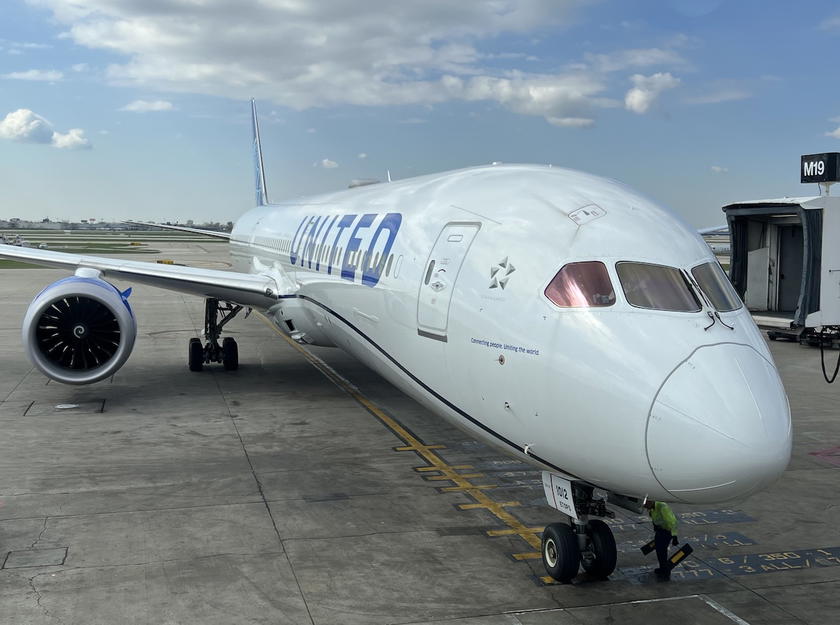
Bottom line
Delta has lofty goals across the Pacific, as it wants to take on United, and even beat the carrier. It takes time to build up a network and make it profitable, so I’m not suggesting that anything here is terribly surprising.
However, in Q2 2026, Delta had by far the worst capacity growth vs. yield growth setup among the “big three” US carriers. American and United had capacity growth that was more than double yield growth, while Delta saw higher capacity growth than yield growth.
I’m not drawing any conclusions based on this one quarter, but this is what I’m excited to see in the results for Q3, Q4, etc.
What do you make of Delta’s Pacific performance numbers?


Membership is free and takes no more information than commenting as a guest. Earn status points for good contributions, and see fewer ads as your status grows.