


It seems like most people who visit Kanchanaburi are either Thai, backpackers, or on a day trip from elsewhere in the region (generally in a tour bus). The region is beautiful though, and if you enjoy nature and history I think it’s well worth taking a couple of days to explore the area.

Kanchanaburi is infamous for being the nexus of the Thailand-Burma Railway during World War II (if you’ve seen Bridge on the River Kwai this is the setting). Along those lines, and given the short shrift given to the Pacific Theater in the American educational system, we all read The Railway Man on the trip, which provided some useful historical context and interesting discussion topics. I understand the movie of the same name is a bit graphic, but the book was appropriate enough for teens.
We had four nights, which was perfect for us as we were traveling with a toddler wanted to spend some time relaxing, but you could probably hit the highlights in a day or two if you wanted to move at a faster pace.
So, in no particular order, here are a few of the things we enjoyed:
Hellfire Pass & Museum
The Hellfire Pass Memorial Museum was just up the road from our guest house, which was quite convenient.
While the museum itself was well done (nicely signed, interesting exhibits, quality audio tours, etc.), the emphasis truly seemed to be on the memorial aspect. For example, everyone removed their footwear prior to entering the museum itself, which established a very solemn and reverent tone.
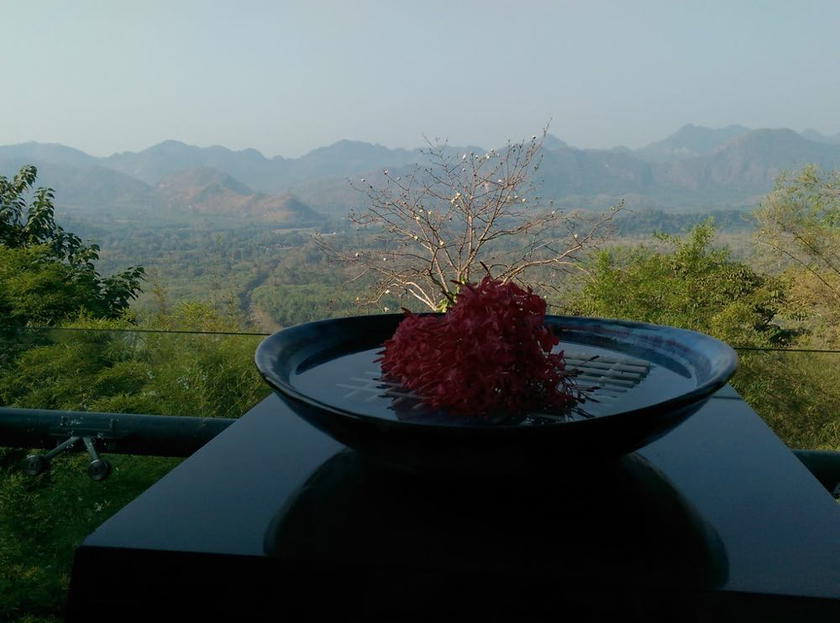
Memorial overlooking the Khwae River valley
In the valley below the museum, the former roadbed had been cleared (or partially cleared in places) to create a walking trail.
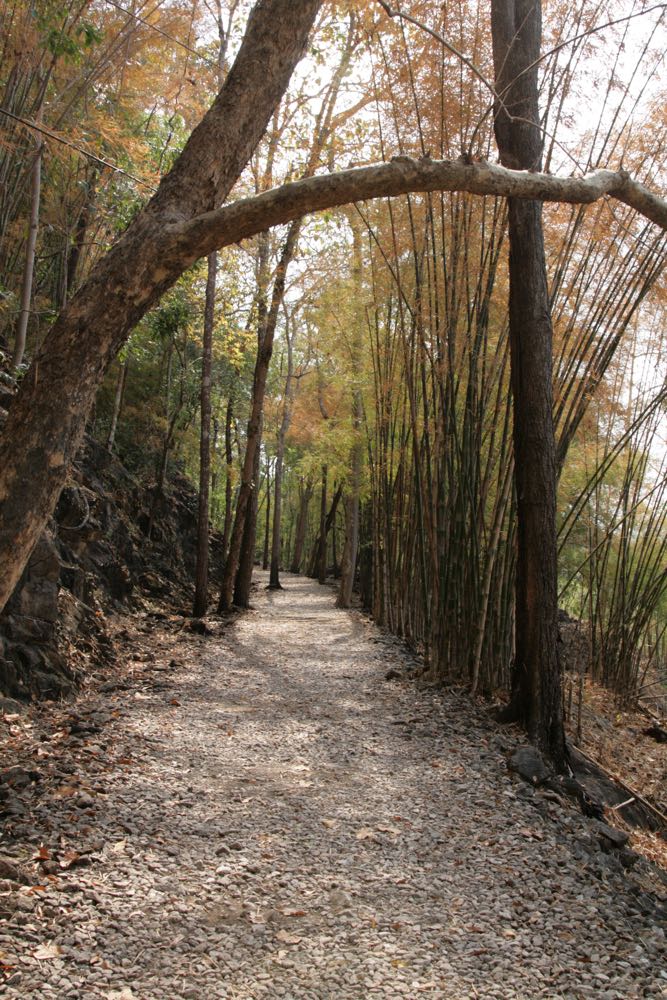
Cleared portion of the railbed
Audio guides were available at the museum, so as you walked you could listen to accounts from the POWs who worked on the railroad. This was very well done, and added valuable context to the walk.
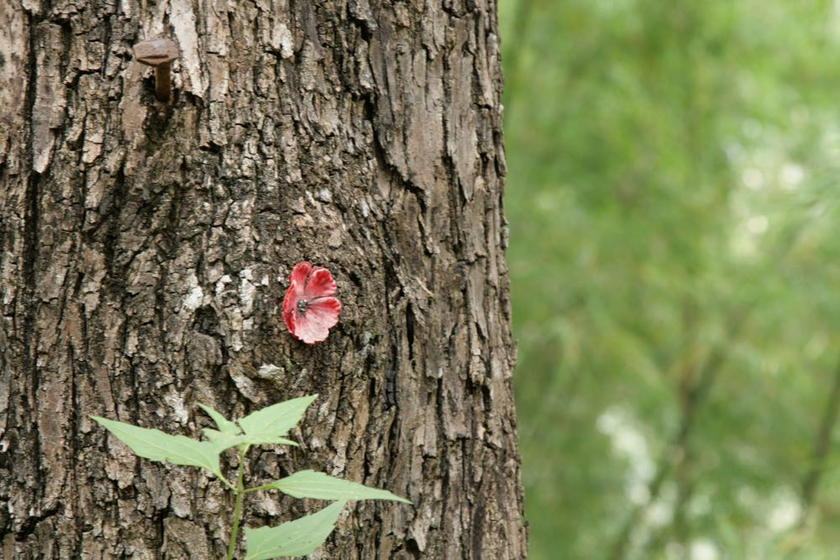
Poppies and Australian flags were abundant
The eponymous Hellfire Pass is about a 15-minute walk down the trail, and even if you’re not a competent hiker you should be fine for this portion. This area was fully cleared, and the most difficult part of the trek was the climb back up the stairs to the museum.
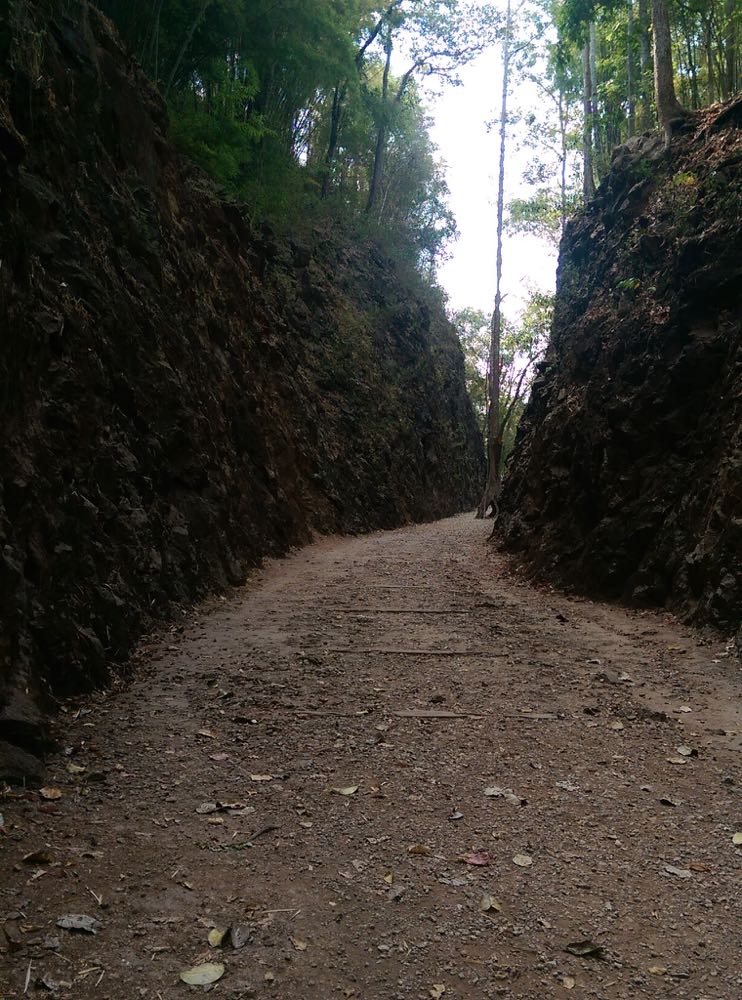
I can’t imagine what it would be like to cut through this rock by hand
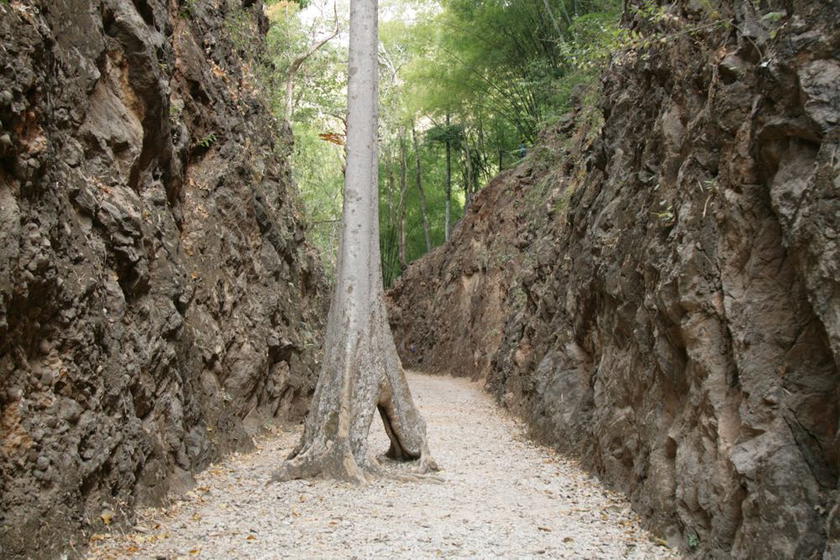
Konyu Cutting/Hellfire Pass
In addition to the markers and memorials, there were an assortment of rusted equipment, old trestles, and what I’m going to refer to as “train parts” unless anyone knows the technical terms.
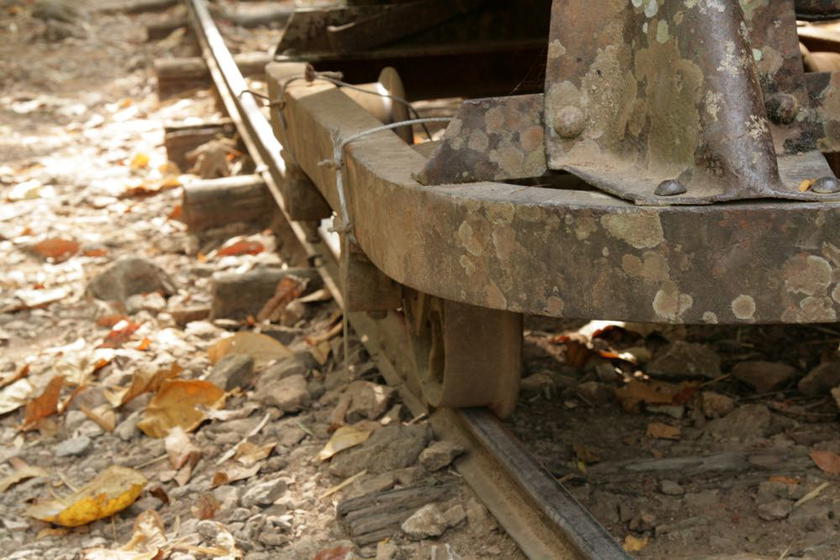
Very narrow-gauge track
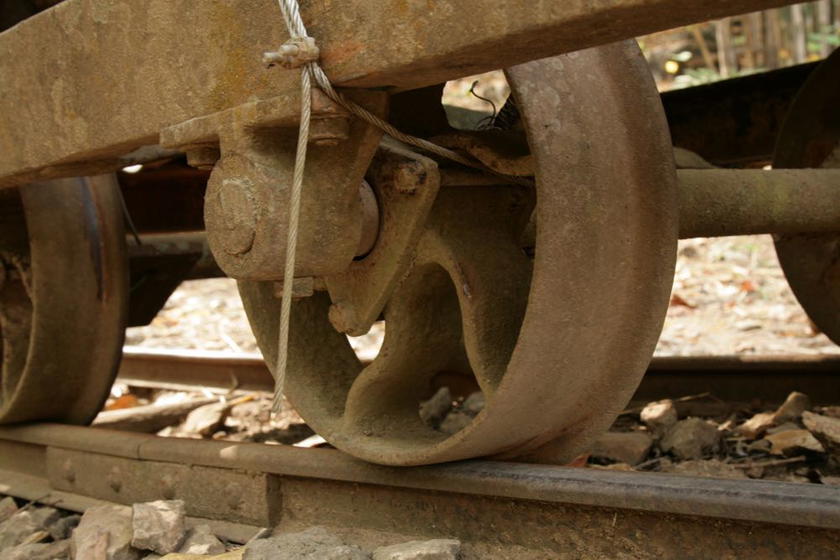
I guess these were like glorified wheelbarrows? I’m sure they have an actual name…
The full hike is about 4 miles, and a bit gnarly in places. You don’t need to be an experienced mountain climber or anything, but you definitely wouldn’t want to tackle this trail without the right shoes, extra water, and so on.
“Death” Railway
About 20 minutes down the river from Hellfire Pass is Nam Tok, the last functional station on the Thailand-Burma railway.
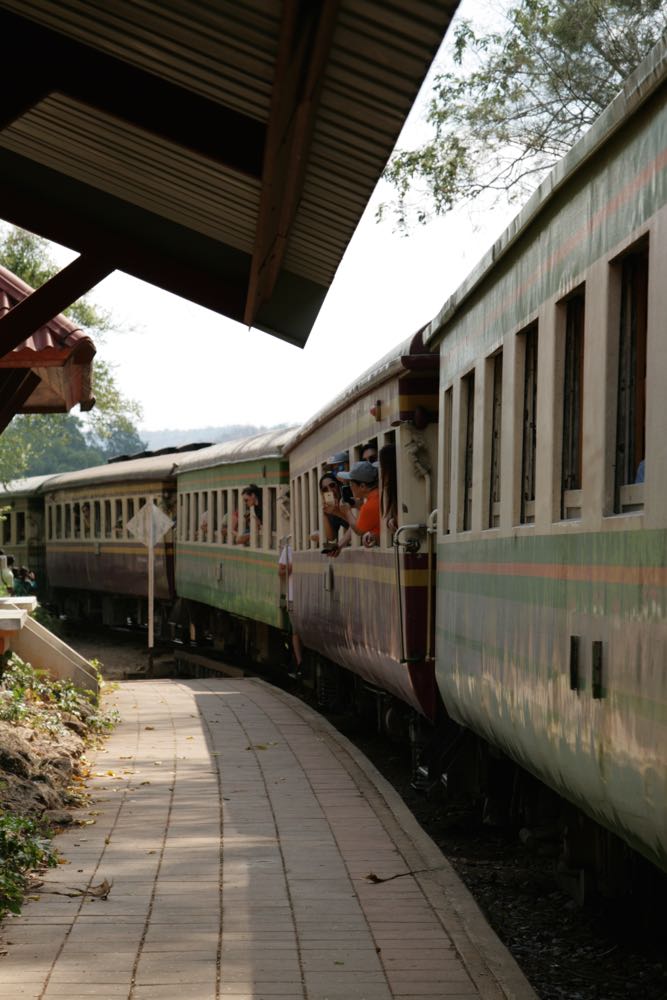
Train approaching the station
There’s a special “tourist train” that runs from here all the way to Bangkok, and foreigners can purchase tickets for 100 Baht in either direction.
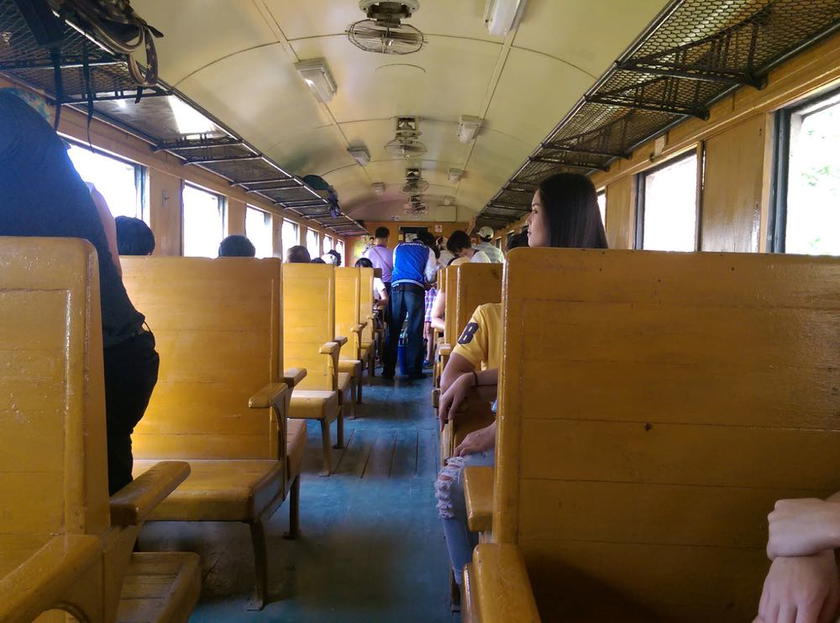
How fun is this train car?!
Ticketing was loosely enforced, and unlimited stopovers seemed to be allowed. 😉
If I had it to do over again, I would probably have taken this train from Bangkok all the way up to Nam Tok (or at least to Kanchanaburi), as we really enjoyed the journey.
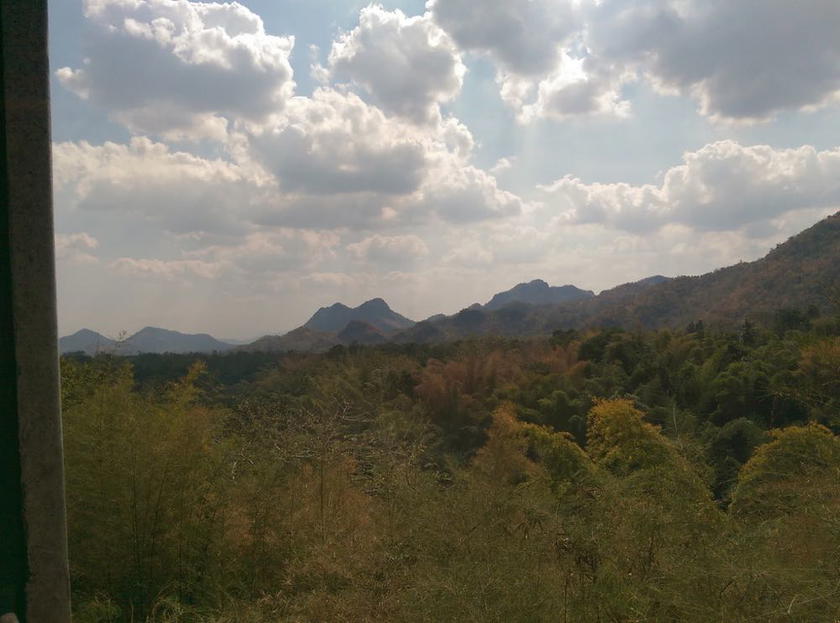
Views from the Death Railway
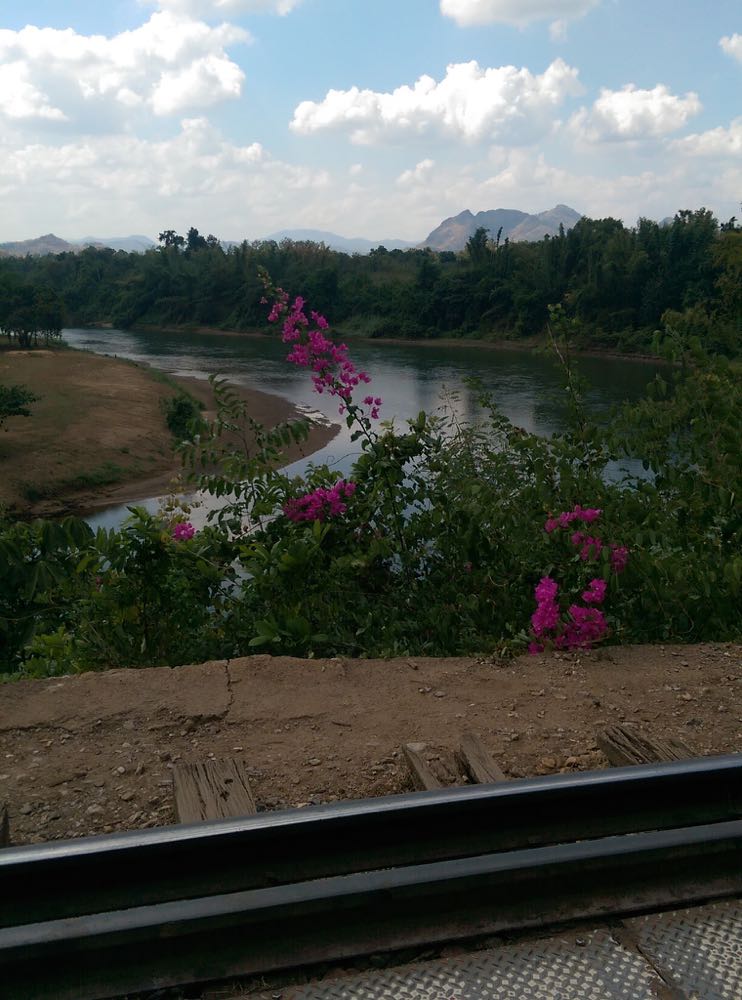
Views from the Death Railway
The scenery was stunning, and it was fun being on an old train trundling through pretty remote areas.
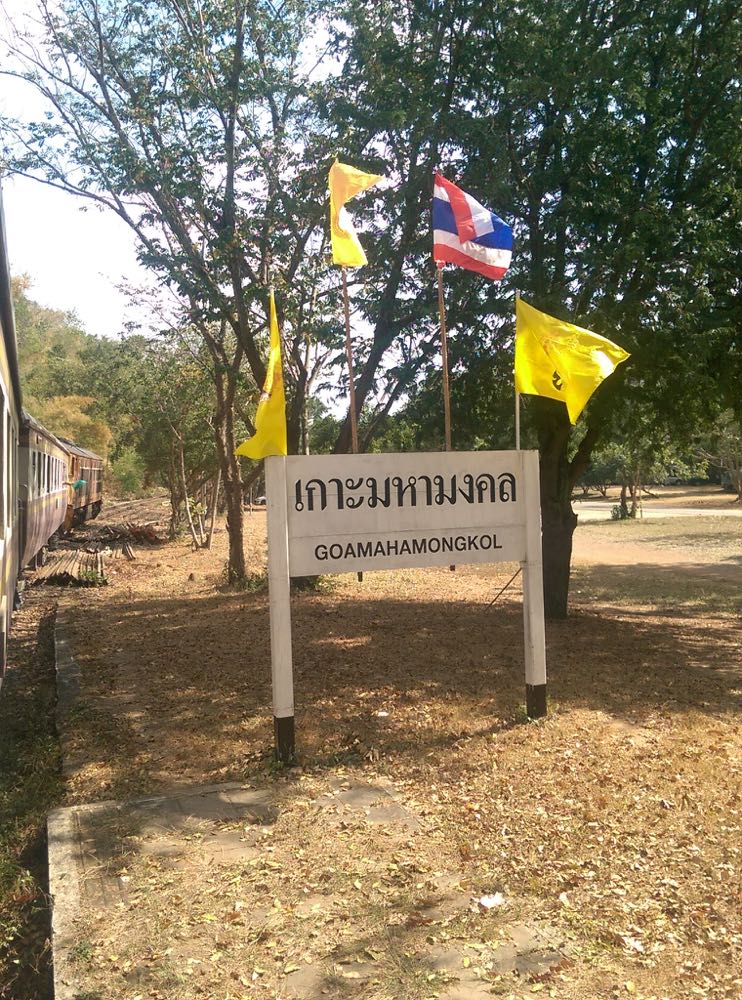
Passing through a small station
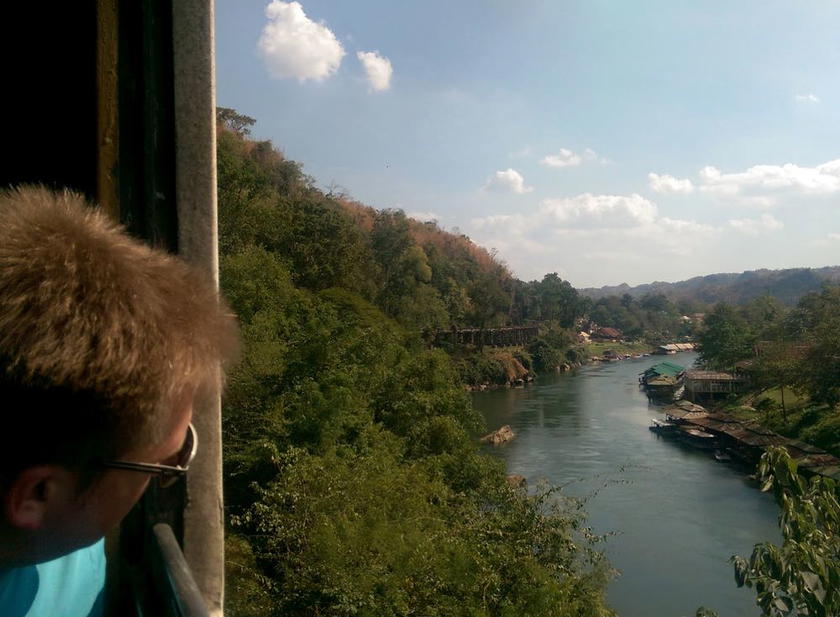
Views from the Death Railway
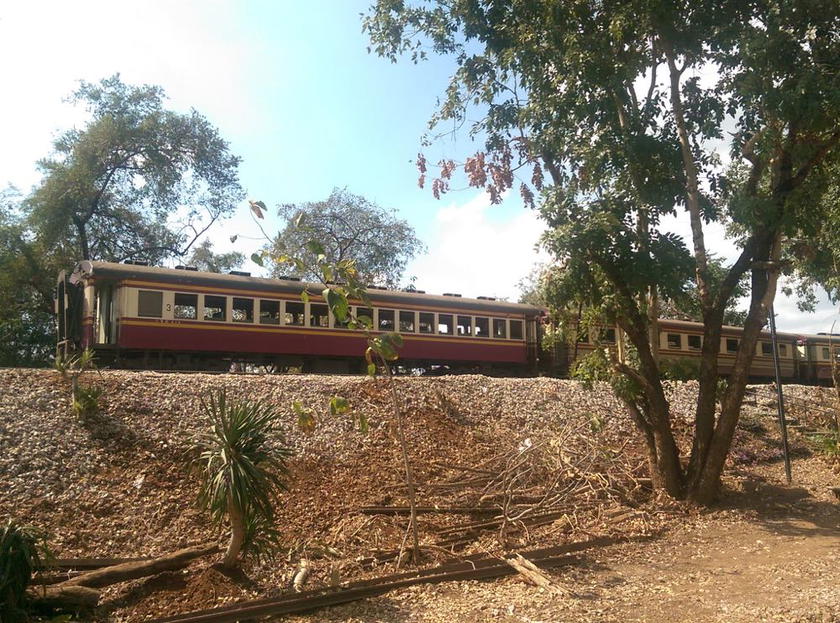
Extra train cars on a siding
The “vintage” aspect to the train was fun as well. There was something charming about the wooden seats and windows, the rattly metal fans hanging from the ceilings, and local vendors hawking snacks and drinks up and down the aisle.
We had a really nice time trying new-to-us foods (no idea what any of it was, but it was all good and cheap), and just enjoying time together.
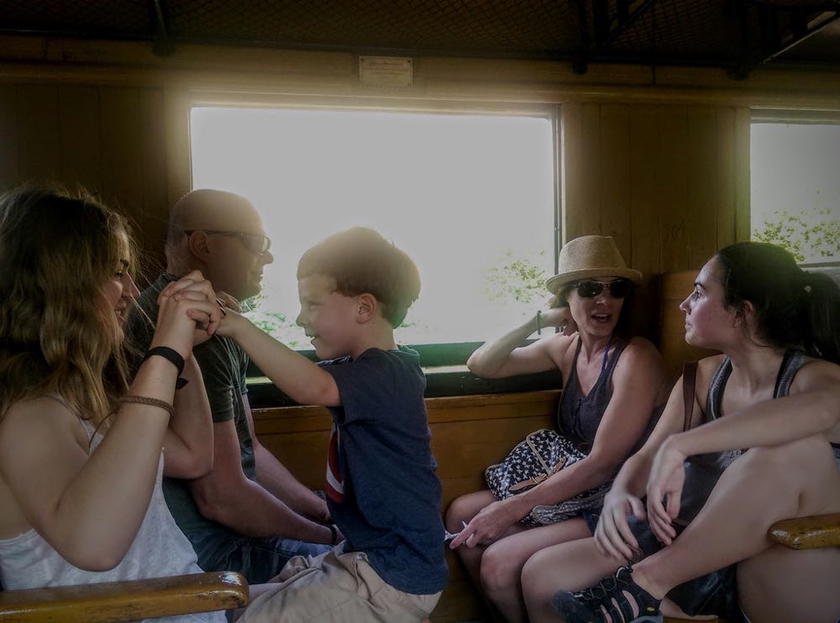
See anyone absorbed in their electronics? I didn’t think so.
The train cars (obviously) aren’t air conditioned though, so it was very warm in the afternoon sun. We took a break from the train at Tham Kra Sae to get some ice cream see the caves and the shrine there.
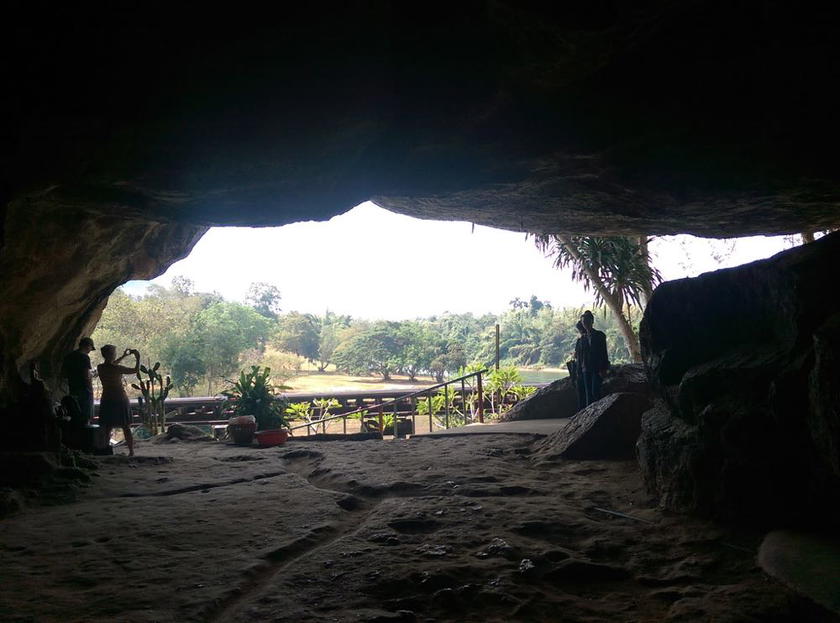
Looking out of the cave towards the railway
I loved that the “established” path to the caves involved walking on the railway trestles.
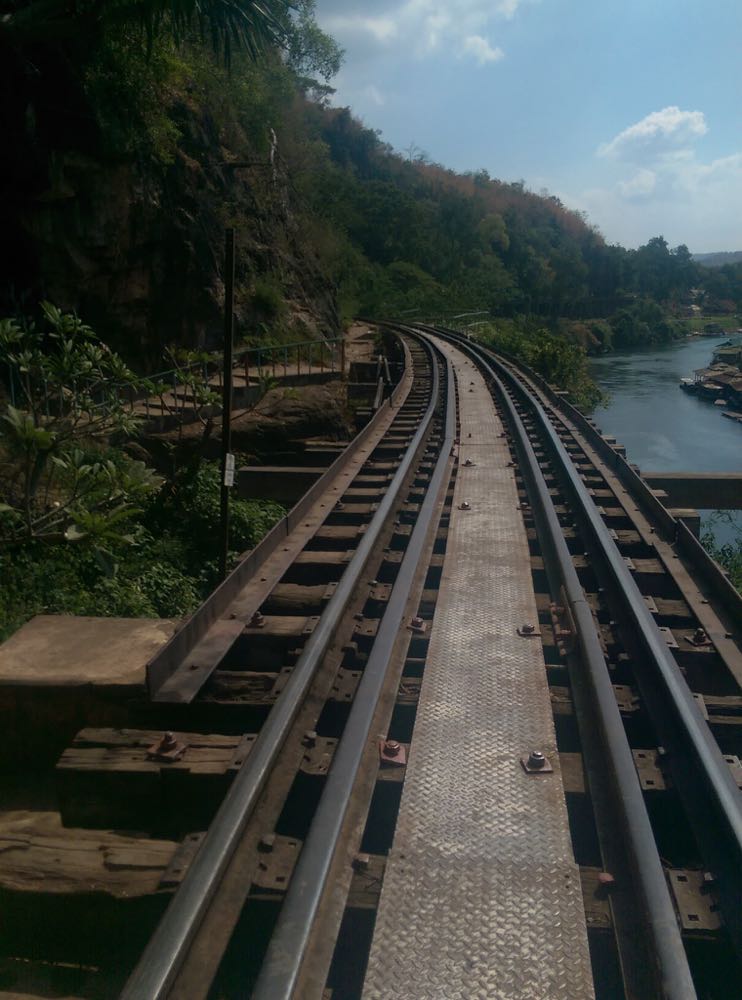
My older niece did not approve of intentionally walking on train tracks
Fortunately the train doesn’t move very quickly through this area, or really at all.
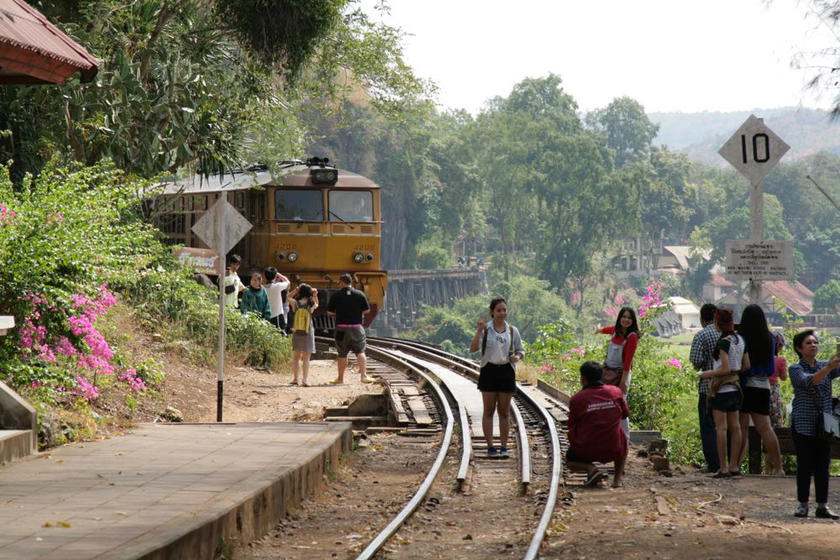
Train approaching Tham Kra Sae station
Given the slow speed of the train, you can probably drive to/from Bangkok more quickly, but there was something quaint about the train journey. If time allows, I think structuring your trip such that you could arrive in Kanchanaburi by train would set a nice tone for the visit.
JEATH War Museum
Not gonna lie, I didn’t like this museum. It was hot, the staff was rude, and there were mosquitos everywhere.
It did, however, offer nice views of the bridge over the River Khwae (or Kwai). Though I understand that’s not actually the name of the river? Or it only is called that in this spot?
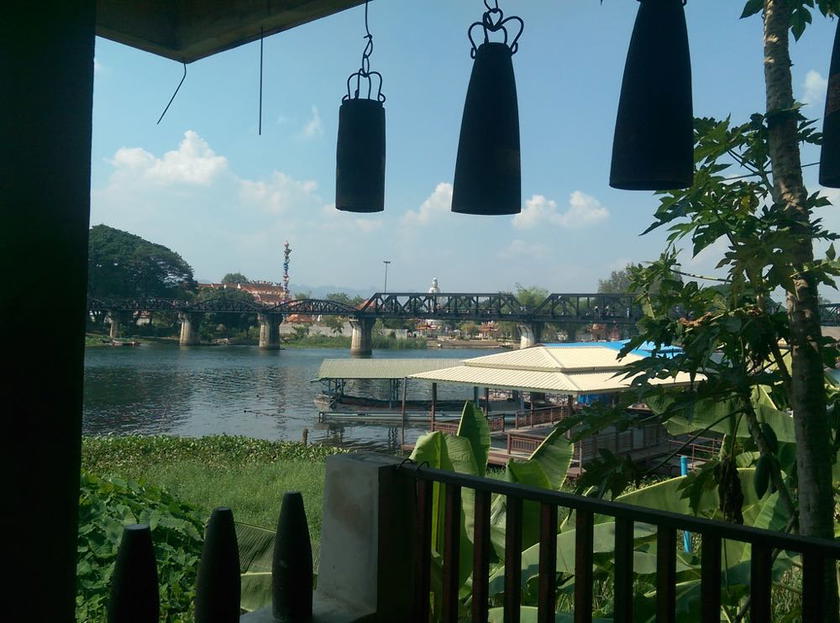
It’s a bridge on some river, and this is the famous one, so…
The museum also had reconstructions of the bamboo huts lived in by the POWs as they constructed the railway, and a ton of artifacts (including unexploded bombs, which seemed odd, but whatever), but there was just no descriptive information anywhere.
There were rows and rows of photographs, but nothing explaining who the people were, or why they were important, and it just seemed chaotic and poorly maintained.
Death Railway Museum/ Thailand-Burma Railway Centre
This is probably the better museum of the two, and is adjacent to the War Cemetery. Pictures aren’t allowed in the museum, but there wasn’t really anything I would have wanted to document anyway.
As opposed to the JEATH museum, there was an incredible amount of text here, to the point where it was information overload. There weren’t as many artifacts, and I still didn’t feel the story was well told, despite the improved signage.
Really, it’s a shame that they don’t have one combined and well-curated museum. This is an interesting part of history, with a tremendous human toll — an estimated 100,000 people died during construction of the railway — and it could be presented in a more impactful way, in my opinion.
So personally, I think both of these museums can be given a pass — and I say that as someone who loves museums. If you have a family connection to the Death Railway, then the scraps of journals and such might be more poignant, but we didn’t feel the curation of the exhibits did much to enable that otherwise.
I’d spend the time reading first-hand POW accounts instead, I think, combined with a visit to the Hellfire Pass museum.
Erawan Falls
So I had a very unrealistic vision of Erawan National Park. In my imagination it was this secluded series of pools, with an undeveloped trail winding through the jungle, with the occasional monkey. Maybe even some snakes.
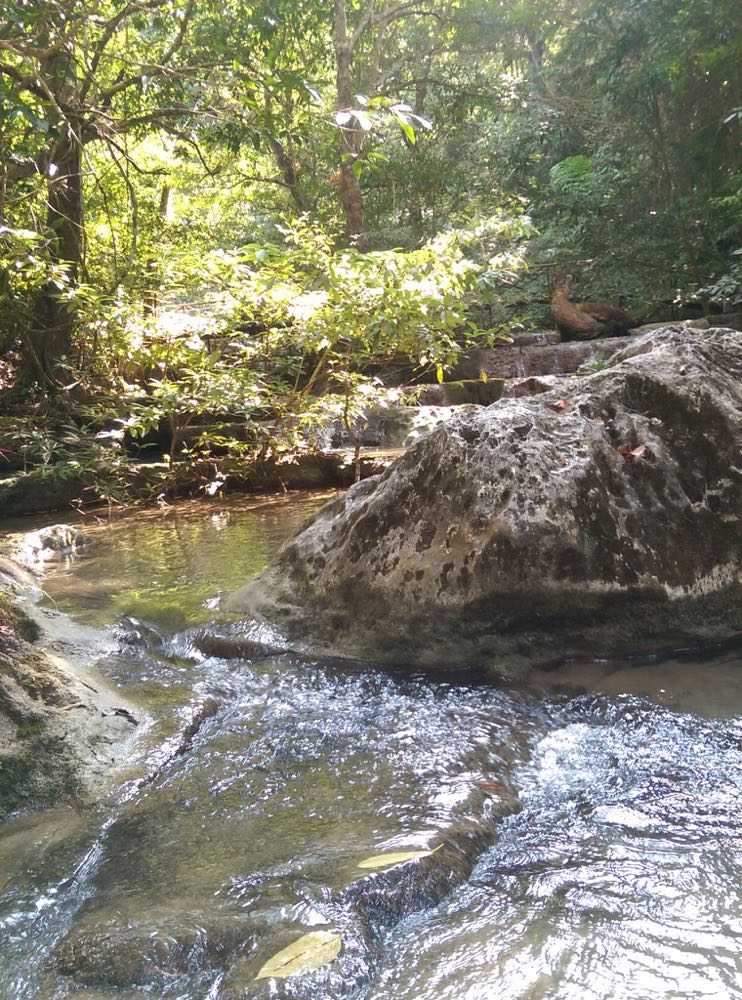
I was picturing tranquil and peaceful, basically
It’s not really like that.
I mean, maybe it is if you go on a weekday, or just some day other than when we were there, but holy cow it was crowded. School groups, tour groups, family groups.
There were a lot of people.
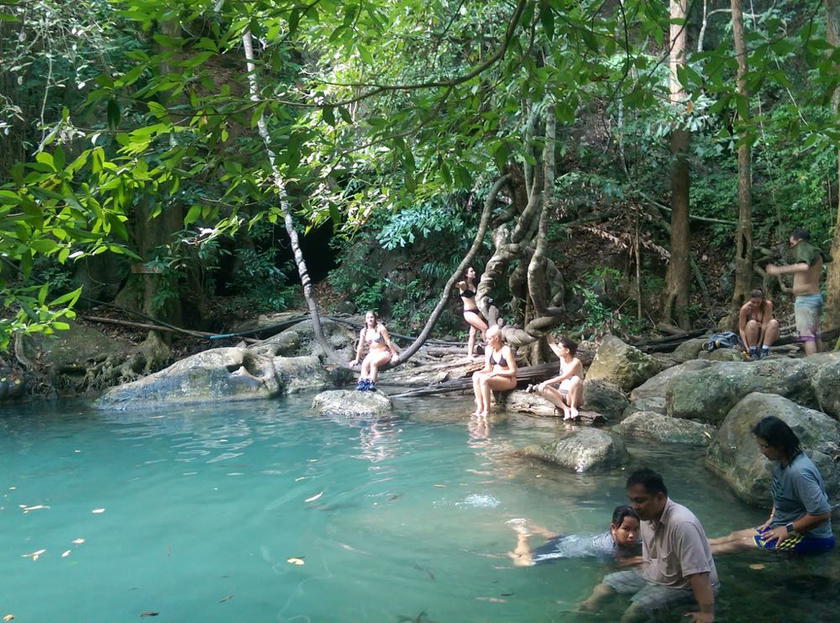
And this was at one of the upper pools, where you could actually get to the water
Most of the people (who seemed to be Thai), were content to hang out around the first two waterfalls. Many had either brought picnics, or purchased food from the various vendors at the entrance, and as you aren’t allowed to bring food past the second waterfall, that helped to thin the crowds out a bit.
The third waterfall had a rock slide, which was great fun!
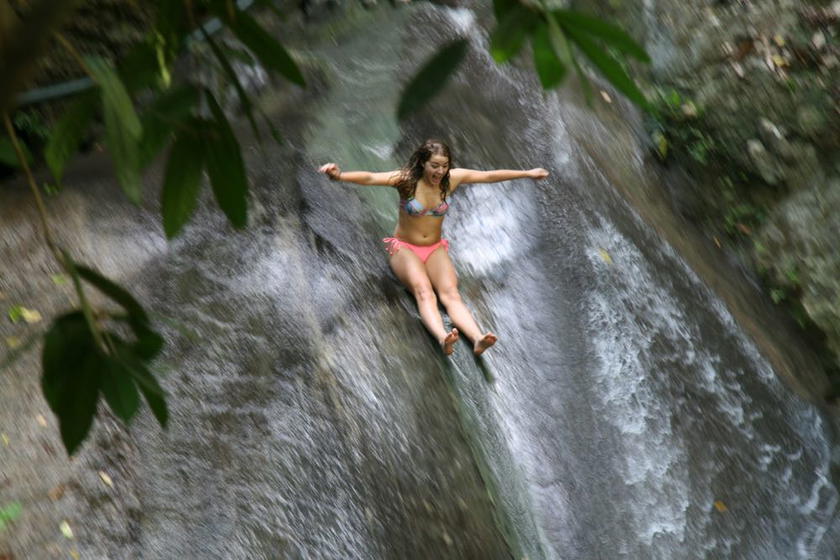
Waaaay better than a waterpark
And all the pools had “pedicure fish” which were both awesome and terrifying. You know those shops you see from time to time with the little tiny fish that nibble dead skin off feet?
These were like those, only much bigger.
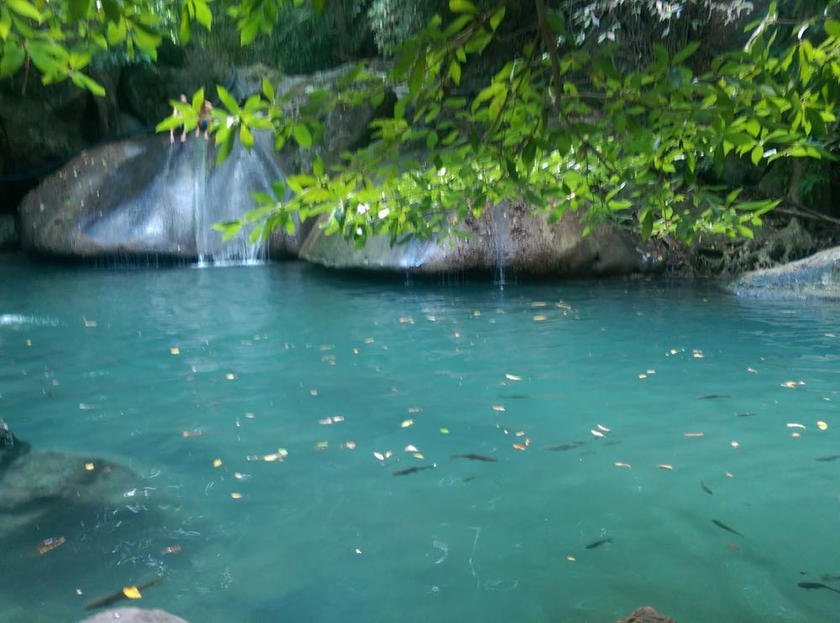
Do those look like a reasonable size of creature for toe-nibbling? Nope.
My comfort level with carnivorous marine life is apparently somewhere below “let them intentionally latch on to my skin,” especially given the size of some of these fish. They got smaller as we climbed higher, which was a relief.
The 7th tier of the waterfall is about a mile from the trailhead, but it’s worth noting this is a surprisingly demanding hike. Because of the improvements done to the trail, and the high volume of traffic (at least when we were there), you basically felt like you were climbing a mile up stairs, and then a mile down. In some places we had to scramble over rocks and tree roots as well, which was okay on the way up, but a little treacherous on the way down (especially with what felt like 5000 teenagers in their school uniforms going the other direction).
We had a great time though, and I’d definitely recommend a visit to Erawan Falls. Just be sure to go on a weekday, and give yourself plenty of time if you want to hike to the top.
Overall
I really enjoyed the time we spent in Kanchanaburi.
The whole area seemed to move at a pretty languid pace, and being able to hike and swim every day was perfect for us. I didn’t ever feel like we were on the “typical tourist track” even when we did more touristy things, which was so refreshing.
The best thing we did though was visiting the elephants, which was so awesome it gets its own post tomorrow.
For those who have spent time in Kanchanaburi, anything great we missed?


Membership is free and takes no more information than commenting as a guest. Earn status points for good contributions, and see fewer ads as your status grows.