
As we’ve recently learned, there seems to be quite a bit of internal dialogue among American management regarding what the airline should look like going forward.
American’s identity crisis
After the merger between American and US Airways, American adopted the “Going for Great” slogan, and they were trying to become a premium airline. But seemingly that has fallen by the wayside, both as they’ve eliminated that slogan, and as they’ve gradually deteriorated the product they offer on domestic flights.
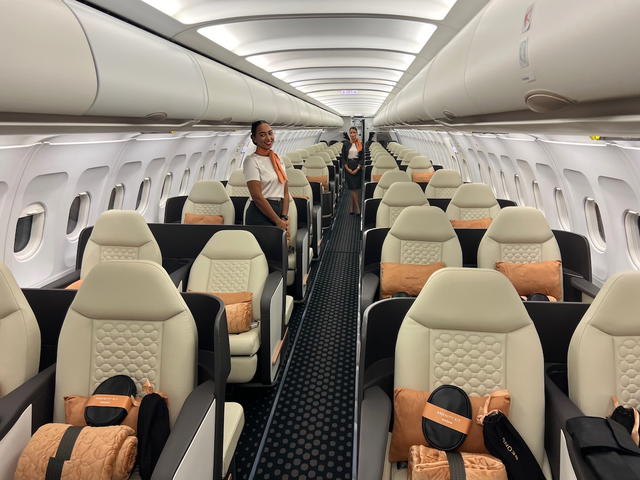
Usually new planes are something to get excited about — just look at Delta’s A220s.
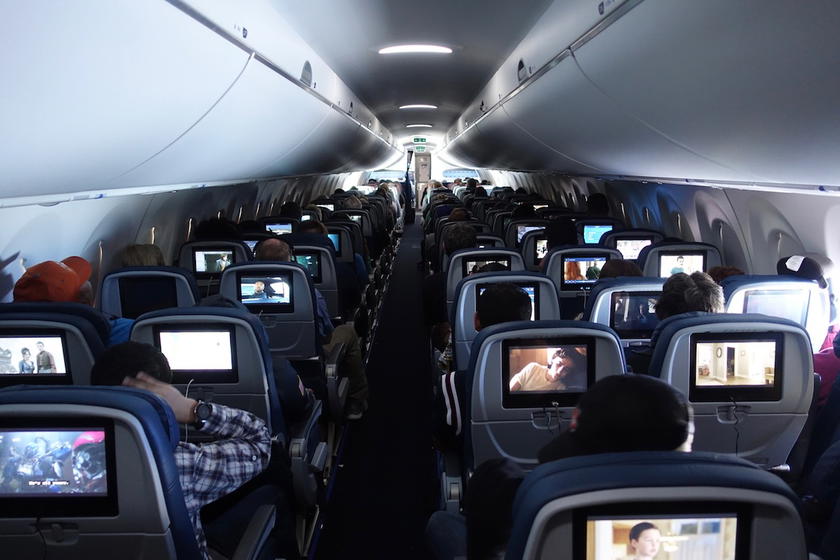 Delta A220 cabin
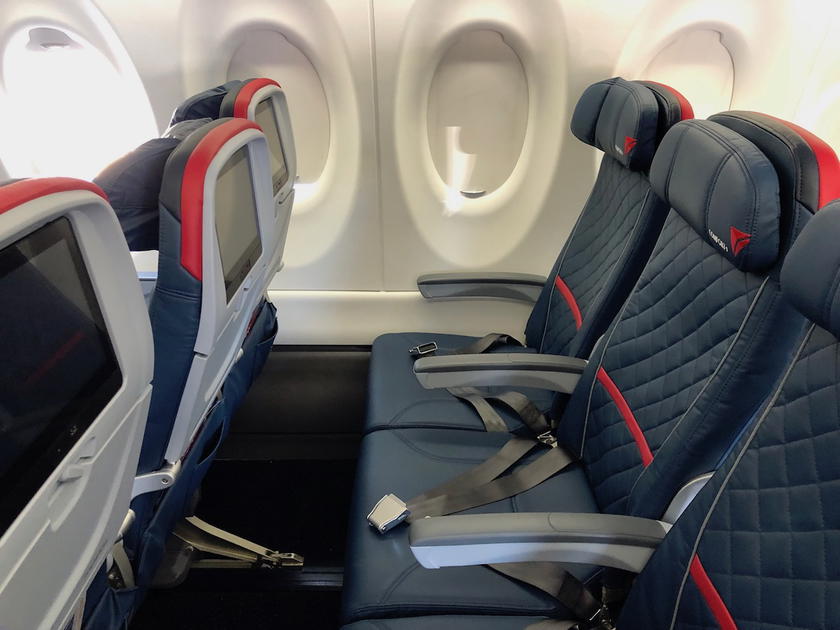
Delta A220 cabin
Meanwhile at American, their 737 MAX planes represent their worst product offered on a domestic flight yet. So they want customers to be excited about new planes, even though old planes offer a better experience than new planes.
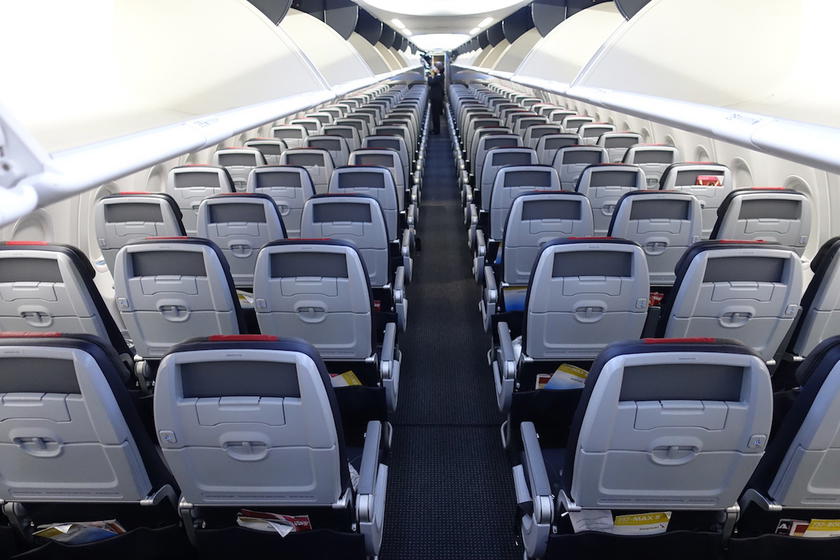
American 737 MAX cabin
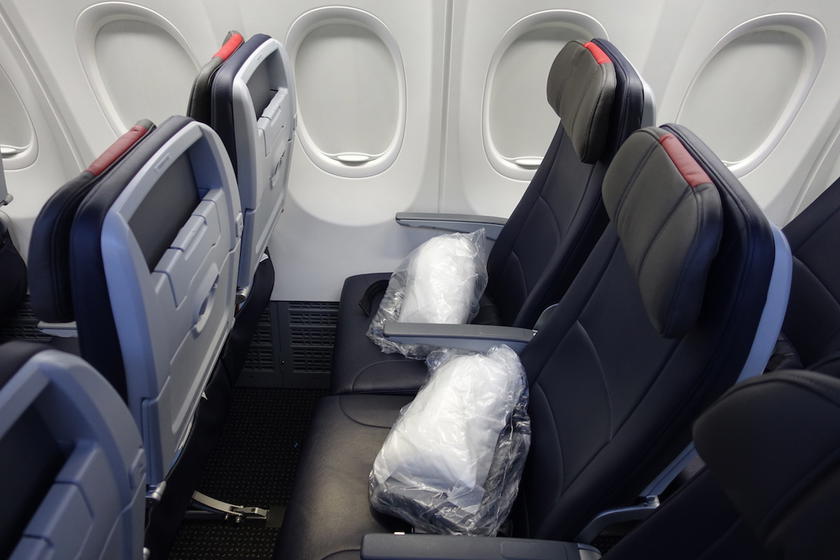
American 737 MAX cabin
Not only do American’s 737 MAX planes (and other planes in the “Oasis” configuration) have less legroom than previous planes, but American also made the decision to eliminate personal televisions on these planes. Here’s how to tell if you’re on an Oasis 737.
How American got to this point
I actually completely understand the decision making process that led to this. Most consumers are price conscious, and won’t choose an airline based on whether or not they have a personal television on domestic flights.
At the same time, American management can’t make sense of why they have a problem in terms of the revenue they’re achieving per seat per mile.
This gets at the very core of the problem. The debate over inflight entertainment on American has little to do with whether you personally use inflight entertainment on narrow body planes. Rather it has to do with the impression American is creating of the brand.
Why American inflight entertainment matters
@xJonNYC points to a FlyerTalk post by user jamesinclair that I think perfectly sums up this situation. I’m sharing the post here (with permission), because to me there’s no reason to rewrite something that explains the topic so well:
A lot of the conversation about IFE tends to revolve around personal use.
Person 1: I dont use IFE so AA is right in removing it.
Person 2: I use IFE so AA is wrong in removing it.Im Person 2. However, I think IFE also plays a larger role in perception of the brand at large.
Imagine you check into a nice hotel and the TV offered is a 30 inch CRT from 1998. Straight off the bat, that will leave you with a negative impression of the hotel, even if you dont ever plan on turning it on.
Why? It sends the message that the hotel is cheap.
And lets be real. Nobody likes when things feel cheap. Yes, we all like paying less, but people expect a certain level of luxury.
IFE is the same thing. You walk onto a Delta or Jetblue plane and it feels modern and high tech and dare I say it, fancy. That leaves a good impression. Again, doesnt matter if you dont use IFE, the fact that it exists means the company is doing things to make your trip better.
On the other hand, a plane without IFE feels old and cheap. Doesnt matter if the plane is brand new, it looks more like a Greyhound than a jet.
We are in a capitalist society that essentially runs on perception. Brands spend billions on marketing in order to ensure that people associate their brand with positive feelings. They do it because it works.
AA management was clearly hungover the day they taught those case studies in business school.
“But look at Spirit”. Yeah, their whole business model is cheap. Thats fine. You CAN run a successful business on being cheap as possible. Walmart intentionally uses ugly shelving and harsh lighting to send the message that theyre cheap because they want people to associate the brand with low prices. But Walmart sells 79 cent sodas, not $9,000 business class seats to Japan. You cant have it both ways.
This this this this this!!!
This is just so spot on. For example, look at former Virgin America planes. Every time I was seated in first class I’d hear people walking by and saying “wow, this plane is awesome” or “this plane must be brand new.”
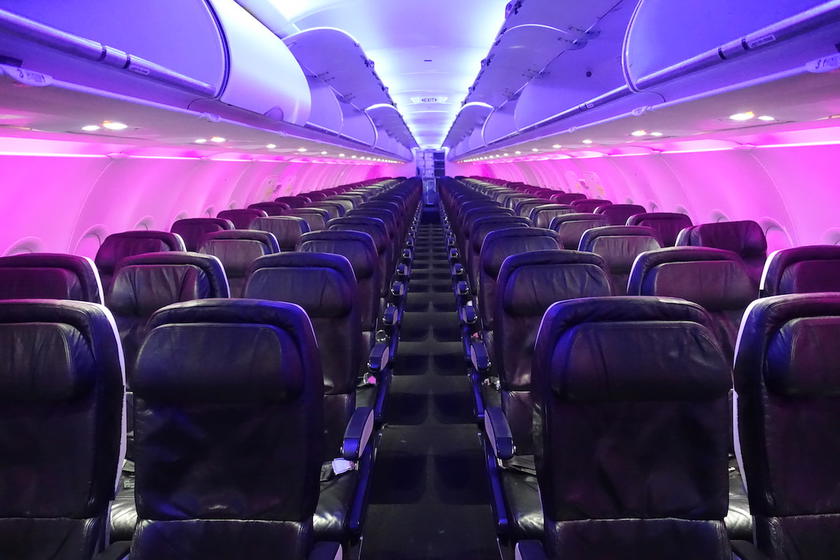 Virgin America cabin
Meanwhile not once have I heard anyone board an Oasis plane (even though they’re largely new) and say “boy this is nice.”
Companies like American spend tens of millions of dollars on marketing, whether we’re talking about online ads or the American Airlines Arena in Miami. Why? They want people to have positive associations with the brand.
At some point inflight entertainment isn’t about actually watching TV, but rather it’s about an identity crisis. If American Airlines is trying to be Spirit Airlines, then they’re doing great.
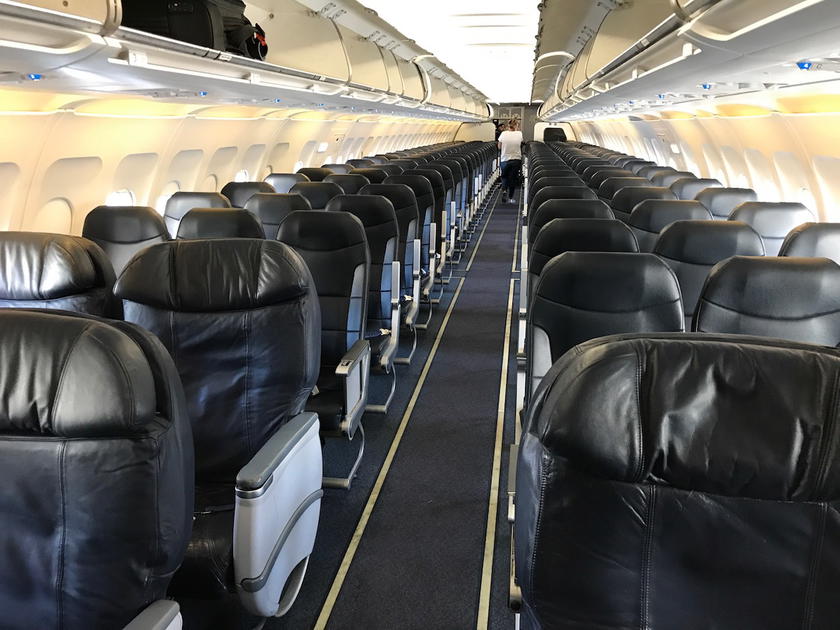 Spirit Airlines cabin
But otherwise…


Membership is free and takes no more information than commenting as a guest. Earn status points for good contributions, and see fewer ads as your status grows.