The US & China Aviation Battle Continues

Update: An agreement was finally reached, and US airlines can offer 4x weekly flights between the US and China.

The US Department of Transportation (DOT) and Civil Aviation Authority of China (CAAC) are engaged in quite the battle, which is progressing at a fast pace.
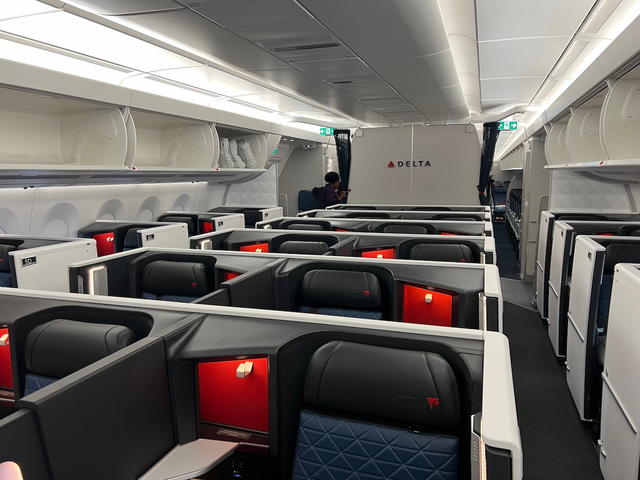
What happened so far this week

If you’re not caught up on what has happened until now, see these two posts:

To briefly summarize:

  • The CAAC is only allowing each Chinese airline to operate a single roundtrip flight each week to the US, and in theory is only allowing each US airline to operate a single roundtrip flight each week to China; four Chinese airlines are operating flights, so there are four roundtrips per week
  • The CAAC argued that US airlines couldn’t fly to China because they didn’t have any service to China as of mid-March, and the CAAC rather arbitrarily argued that only airlines flying to China in mid-March could resume flights
  • The DOT threatened to ban Chinese airlines from flying to the US, and within hours the CAAC backtracked, and allowed each US airline to restart once weekly service to China

The problem at this point is that US airlines want to be able to operate more than a single weekly flight to China, given that the economics of once weekly service aren’t great. The DOT has just issued a ruling that will perhaps cause the CAAC to reconsider their stance.

Chinese airlines will need to reduce service to the US

With the latest negotiating tactic from the DOT, Chinese airlines will only be able to operate two weekly flights to the US total:

  • The DOT argues that only two US airlines (Delta and United) want to fly to China right now, and China is restricting them each to one roundtrip per week, for a total of two roundtrips per week
  • China has four airlines flying to the US, each able to operate one roundtrip flight, for a total of four roundtrips
  • The DOT is making the argument that it’s unfair that Chinese airlines operate four roundtrips while US airlines only operate two roundtrips, given that the agreement is supposed to offer balance
  • Therefore the DOT is limiting Chinese airlines to a total of two roundtrip flights per week to the US, and the CAAC can decide which airline(s) will get permission to operate those services

Bottom line

This is quite a negotiation process between aviation authorities in the US and China. Essentially this comes down to US airlines wanting more access to China, and the DOT essentially petitioning on their behalf.

I do think the DOT is in the right here for at least trying to argue this, given the policies we’ve seen the CAAC try to implement.

Conversations (48)
The comments on this page have not been provided, reviewed, approved or otherwise endorsed by any advertiser, and it is not an advertiser's responsibility to ensure posts and/or questions are answered.
Comment as a member

Membership is free and takes no more information than commenting as a guest. Earn status points for good contributions, and see fewer ads as your status grows.

Type your response here.

If you'd like to participate in the discussion, please adhere to our commenting guidelines. Anyone can comment, and your email address will not be published. Register to save your unique username and earn special OMAAT reputation perks!

  1. Loading comments…
Recent Comments
The latest from the OMAAT community.

The comments on this page have not been provided, reviewed, approved or otherwise endorsed by any advertiser, and it is not an advertiser's responsibility to ensure posts and/or questions are answered.

Ron Guest

@MKLDH, Agree that the bottleneck is the quarantine facility on the Chinese side. But it is THEIR problem, not the DOT's, not UA's not DL's. To completely block US (or any other foreign) airlines while still allowing Chinese carriers to service the same route(s) just because you have an inbound processing problem is just untenable. So in this case, the DOT is absolutely correct in stepping in to stop this commercial imbalance that runs counter to the agreed upon bilateral agreement.

0
‼ 0
Saibal Chatterjee Guest

I can see the anger and the agony as well as the willing suspension of believing American history. Can we please for a moment look at what history tells us, and then say that Ben is wrong in what he is saying? Come on folks, let us admit the truth and not get unduly agitated. In no way what so ever can I endorse the looting and the arson. At the same time, let us not lose our focus, as the politicians would like us to do. The whole world is aghast to witness what has started it, and Ben is justified in what he is saying. Let us not take his comment out of context please.

0
‼ 0
George Guest

As pointed out already, it's mainly returning Chinese nationals (and US nationals and residents flying the other way- remember these flights do not fly 1 way empty). There are a few foreign workpass holders getting into China as well- my friend flew back there a few weeks ago. The demand seems to be more than 4 flights a week, as they are going out packed at $5K an economy seat. So that indicates that the CAAC might compromise on 4 flights for US carriers, 4 for Chinese carriers. But if the projections are to drop off as this is basically a one way trip, maybe they'll settle on 2 and 2. Bottom line, this is another diplomatic spat that really isn't going to effect the bottom line of any carrier involved...

0
‼ 0
MKLDH Guest

Rather disappointing to see so many pointless comments. Contact Lucky directly if you are unhappy with that link and leave the comment section to discussions that actually relate to the article. @Ron - The problem CAAC sees is the shortage of quarantine facilities and personnel, as all passengers coming off from an international flight to China are required to go through a 14-day quarantine in designated facilities. Apparently they believe even the short-term surge of passengers will exceed their capacity. This, of course, is very cruel to all the Chinese expats that are desperate to go home.

0
‼ 0
Ray Guest

Those that are struggling with the banner/link must really struggle with the argument and discussion on racism. I see nothing wrong with the article. Open your minds and think about what it says. If you feel it is too close to home, then you need to consider you are part of the problem. Become part of the solution. If it really bothers you, don't read it in full. Nobody is forcing you.

0
‼ 0

Save posts to read later

Saving posts is a member feature. Become an OMAAT member to build a reading list you can come back to from any device.

Become a member
Meet Ben Schlappig, OMAAT Founder
5,883,136 Miles Traveled

43,914,800 Words Written

47,187 Posts Published