
An interesting topic came up in the comments section of a recent post about Lufthansa’s India flights all stopping in Dubai, and I figured I’d address it in this post, because it gets at just how logistically complicated flights to China are nowadays.
Lufthansa’s Shenyang & Beijing triangle flight
Through the end of October 2021, Lufthansa is operating an unusual triangle flight to China. The German flag carrier is operating a once weekly flight to both Shenyang and Beijing using an Airbus A340-300, as follows:
- Lufthansa flies from Frankfurt to Shenyang on Tuesdays, departing at 9:50PM and landing at 1:55PM the following day
- Lufthansa flies from Shenyang to Beijing on Thursdays, departing at 9:00PM and arriving at 10:50PM
- Lufthansa flies from Beijing to Frankfurt on Saturdays, departing at 12:40AM and arriving at 5:25AM
 Lufthansa’s triangle flight to Beijing
This is Lufthansa’s only service to the two cities at the moment (the airline also operates a once weekly roundtrip flight between Frankfurt and Shanghai, and a once weekly roundtrip flight between Frankfurt and Nanjing, which are Lufthansa’s two other routes to mainland China right now).
Passengers can book the Frankfurt to Shenyang flight and the Beijing to Frankfurt flight, but as you’d expect the flight between Shenyang and Beijing isn’t bookable, but rather the airline flies that leg empty.
Why on earth would Lufthansa operate a route like this?
China’s challenging Beijing flight caps
As mentioned above, this China triangle flight represents Lufthansa’s only service to both Beijing and Shenyang at the moment. In other words:
- You can fly Lufthansa from Frankfurt to Shenyang, but not from Shenyang to Frankfurt
- You can fly Lufthansa from Beijing to Frankfurt, but not from Frankfurt to Beijing
Logically you’re probably wondering how this route is economically viable, and why Lufthansa would operate such a complex routing. Wouldn’t it make more sense to operate a single roundtrip flight from Frankfurt to Shenyang, or from Frankfurt to Beijing?
Well, the answer comes down to China’s complicated aviation policies. Not only has China put a low cap on how many weekly flights foreign carriers can operate to China (Lufthansa is capped at two roundtrip weekly flights), but the country has also placed restrictions on where airlines can fly to. Specifically, with few exceptions, airlines aren’t allowed to operate long haul flights to Beijing.
China has a mandatory quarantine on arrival for international travelers, and China wants to “protect” Beijing, and limit the number of international travelers arriving there at the moment.
Lufthansa is simply trying to make the best of the situation:
- The airline can fly passengers from Beijing (just not to Beijing), meaning that a Beijing to Frankfurt flight is totally fine
- But if the airline wants to carry passengers to China, it needs to fly to an airport other than Beijing; Lufthansa decided Shenyang was the best option, and it’s pointed out that BMW Brilliance Automotive is based in Shenyang, so perhaps the cargo makes this more advantageous than other cities in China
Lufthansa isn’t the only major airline to operate a routing like this to China:
- Air France flies from Paris to Tianjin to Beijing to Paris
- KLM flies from Amsterdam to Chengdu to Beijing to Amsterdam
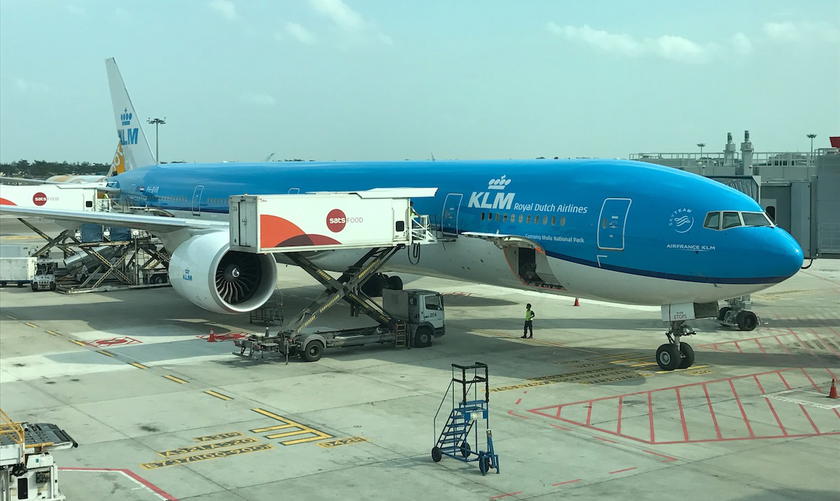 KLM also operates a triangle flight to Beijing
Many airlines have chosen to just cut service to Beijing altogether for the time being, while other airlines (like Ethiopian Airlines) choose to fly roundtrip to Beijing, but simply operate the outbound flight without passengers (I’m guessing most of the revenue from these flights comes from cargo anyway).
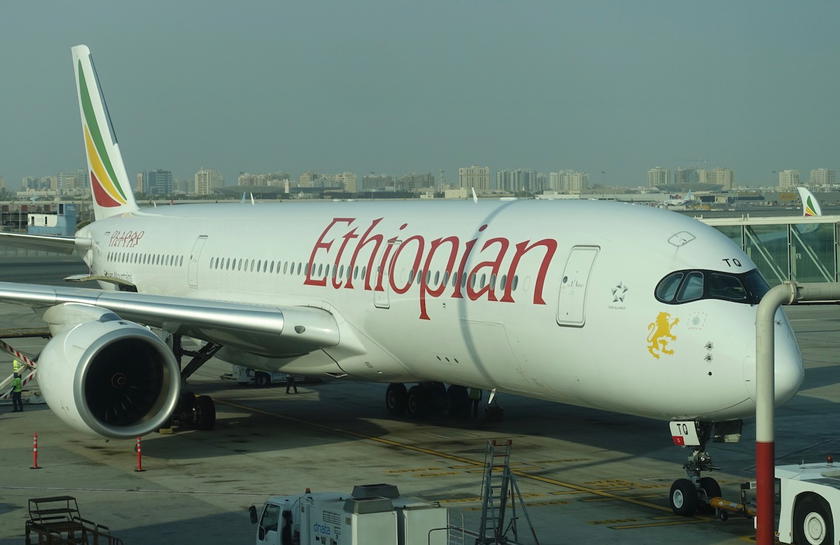 Ethiopian simply flies to Beijing without passengers
Bottom line
Currently Lufthansa is operating a once weekly triangle flight from Frankfurt to Shenyang to Beijing to Frankfurt. This is Lufthansa’s only service to the two cities, and due to the way the flight is structured, this is really only for people traveling one-way.
The reason for this strange flight is that most long haul airlines are restricted from flying passengers to Beijing, due to China’s aviation restrictions. As a result, airlines can either cancel their Beijing flights altogether, operate the flight to Beijing empty, or route via another city where they drop off passengers. Lufthansa chose that last option.
I’d be fascinated to know the economics of this. Are airlines actually making money with these triangle flights due to the high fares some passengers are paying, plus the cargo, or are airlines simply maintaining China flights because they don’t want to lose rights to operate these flights, and/or consider these links to be essential?


Membership is free and takes no more information than commenting as a guest. Earn status points for good contributions, and see fewer ads as your status grows.