United Airlines CEO Paints Grim Picture Of Future

United Airlines yesterday published a letter that they’re sending to employees. There’s nothing terribly surprising in there, it’s just a reminder of how bad things are going to get, and that job cuts should be expected as of October 1.

I can’t help but be a bit confused by the different messaging we’re seeing from American and United during these tough times…
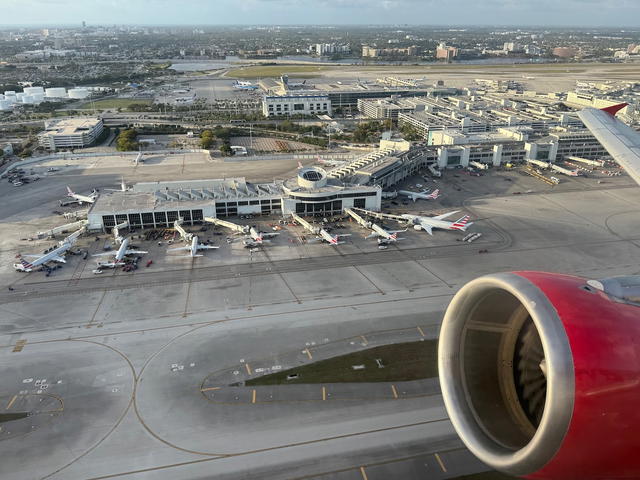
American Airlines: we’ll be fine

Before we talk about United Airlines’ note to employees, it’s interesting to look at American’s messaging. American Airlines CEO Doug Parker was interviewed on CNBC yesterday, and painted a rather rosy picture of the current situation, at least in contrast to some other industry executives.

According to Parker:

  • They expect demand to stay where it is now through the second quarter, and then expect a very gradual recovery through the third and fourth quarter
  • The government aid that the airline has received “will be more than sufficient” to get through this situation
  • Parker notes that we definitely are at “the bottom” (because planes can’t get emptier than they are now), the question is just how long the industry will stay there
  • He notes that “our team will be here when the flying public is ready to return”

Here’s the interview, if you’d like to watch it:

It’s not surprising, but Parker’s answer to 90% of the questions is basically “we don’t know.” This clearly reflects how unprecedented the current situation is, and that really no one knows what’s going on anymore.

To be clear, I’m not suggesting Parker is saying everything is fine. But his commentary has definitely been less alarming than what we’ve seen at other airlines.
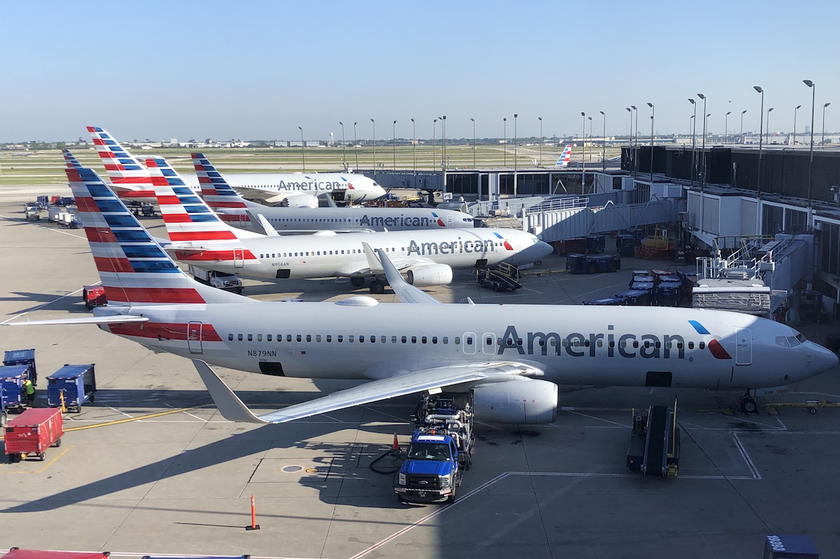
Parker seems confident the airline will make it through this situation

United Airlines: the sky is falling

United Airlines CEO Oscar Munoz and United Airlines President Scott Kirby published a letter to employees yesterday.

I wanted to cover some of the highlights here:

  • The challenge that lies ahead for United is bigger than any challenge they’ve faced in 94 years
  • This weekend United will load a schedule change that will see a total of a 90% reduction in capacity for May and June; they’ve redesigned their network to reduce capacity this much while still maintaining service to all markets, in accordance with the CARES Act
  • United saw a 97% drop in passengers in the first two weeks of April — last year they had over six million travelers during that period, while this year they had under 200,000 travelers
  • United expects to fly fewer people in all of May 2020 than they fly in one day in May 2019

Then there’s this part of the letter, which I think is worth sharing in full:

The historically severe economic impact of this crisis means even when travel demand starts to inch back, it likely will not bounce back quickly. We believe that the health concerns about COVID-19 are likely to linger which means even when social distancing measures are relaxed, and businesses and schools start to reopen, life won’t necessarily return to normal. For example, not all states and cities are expected to re-open at the same time. Some international travel restrictions will remain in place. Meeting planners and tour operators will do their best to accommodate people looking to avoid large crowds. So, while we have not yet finalized changes to our schedule for July and August, we expect demand to remain suppressed for the remainder of 2020 and likely into next year.

So, let us end where we began, the government funding we expect to receive soon is helpful in the near-term because we can protect our employees in the U.S. from involuntary furloughs and pay rate cuts through the end of September. But the challenging economic outlook means we have some tough decisions ahead as we plan for our airline, and our overall workforce, to be smaller than it is today, starting as early as October 1.

Again, there’s nothing surprising here, as we are hearing the same thing as in the past:

United Airlines warned of layoffs the same day that CARES Act funding was approved, which leaves me with a lot of questions about the direct payroll funding.

Most suggest that the point of government aid is so that airlines will be ready to bounce back once demand recovers. After all, if demand recovers but many airline workers have been laid off, it will take a while until capacity can be added back.

However, the way United seems to view it, the company is just putting off layoffs by several months, so it doesn’t accomplish much with helping the industry recover.
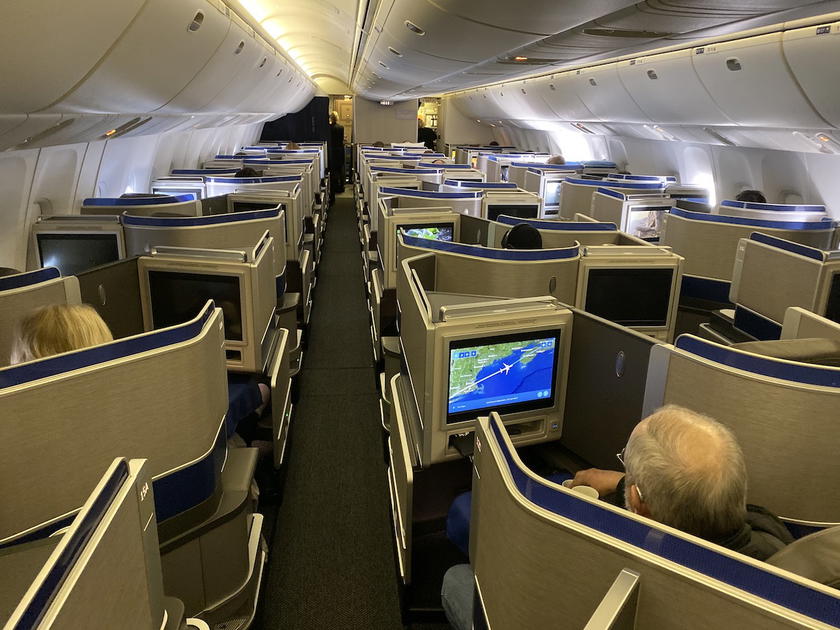
United is skeptical about what a recovery looks like

Bottom line

The contrast in messaging between American and United is puzzling. Even though American is arguably in the most vulnerable state of the “big three” US carriers, they’re suggesting that current government aid is “more than sufficient” to get through this situation.

Meanwhile United is saying that layoffs will definitely be coming in October, and that demand won’t be recovering this year. I think United is probably right to be skeptical, though I continue to scratch my head about how anyone wins by simply putting off inevitable layoffs by a few months…

Conversations (49)
The comments on this page have not been provided, reviewed, approved or otherwise endorsed by any advertiser, and it is not an advertiser's responsibility to ensure posts and/or questions are answered.
Comment as a member

Membership is free and takes no more information than commenting as a guest. Earn status points for good contributions, and see fewer ads as your status grows.

Type your response here.

If you'd like to participate in the discussion, please adhere to our commenting guidelines. Anyone can comment, and your email address will not be published. Register to save your unique username and earn special OMAAT reputation perks!

  1. Loading comments…
Recent Comments
The latest from the OMAAT community.

The comments on this page have not been provided, reviewed, approved or otherwise endorsed by any advertiser, and it is not an advertiser's responsibility to ensure posts and/or questions are answered.

RHV Guest

Munoz & Kirby "not that bright"? Wishful thinking but somebody. Parker (AA) is the guy that most analysts considered to be in over his head. Check it out.

0
‼ 0
Miguel Guest

F***k them all, Airlines are some of the lousiest businesses around. Let them all go out of business. Private equity money will pour in, and give birth to a new batch of Airlines in a New York minute.

0
‼ 0
Josh Guest

But UAL went ahead and sold and leased planes back from a Chinese bank! Smart move on their part to lose even more passengers! Good riddance United! Will NEVER fly this airline again!

0
‼ 0
Angie S Guest

It is obvious that we all have our "opinions" about how CEOs and leadership of the airlines should be responding and reacting to the decline in flying due to the COVID-19 pandemic. It is also obvious that opinions are just opinions, unless there are facts that support the claim and/or there is at least some level of expertise to back up the claim. It is no secret that there are many different leadership styles, and it is also not a secret that more than one has potential to be successful. It is akin to parenting; what the model looks like depends on how the issues are mitigated. I would like to give all leadership, with the major carriers in conversation, the benefit of the doubt. Based on the dynamics of each carrier, I believe each is doing his best to protect and serve the employees and legacy of that carrier. What I do admire the most, though, is a positive outlook and prudent, creative ways to mitigate the circumstances, i.e., boosting morale AND getting to the heart of the matters at hand. On another note, I encourage everyone that is only looking at UA pilot pay to look also at the entire industry. It is obvious that pilot salaries at other legacy carriers are the same, and some even higher. For those that believe pilot pay is inflated, when you fly, I ask you to consider that you entrust them with your life. They deserve to be compensated for the responsibility they bear every time they get in the cockpit. My husband is a pilot for one of the major airlines; the minimum flight hours to become an ATP (air transport pilot), airline pilot, is 1500 hours (training for these costs, estimated at a relatively low cost, is approximately 1500 X $100/hr = $150,00). But, and fortunately for passengers' and crews' sake, he had approximately 4,000 hours when he was hired (and some of this was military flying where he spent much of his time upside down and out of control with combat flying...not a requirement to be an ATP pilot...but a plus for the safety aspect of the job). This is just one component that is required, and for which accounts for training at a high cost. Other requirements are as follows: Bachelor's degree, physically fit, expert hand-eye coordination, coachable/teachable spirit, ability to think on the fly due to a dynamic, rapidly changing environment (because a pilot's office moves 600 MPH!!!), strong communication skills, weather expert (because this DOES affect flying...and, at times, mid flight), aerodynamics expert, and mechanical expert (because when something goes wrong, it is necessary to know mechanics in order to mitigate issues). In addition, just 90 days of not landing an airplane, the FAA requires a pilot complete training just to be able to fly again; every 9 months, the FAA requires emergency training (engine failures, hydraulic system failures, pressurization failures, and the like) and security threat training. Depending on the company a pilot works for, yes, there is immense earning potential. And, while some pilots are paid well, their level of expertise also comes at a high price, literally and figuratively. And, to the average individual, a pilot's job is mundane and relatively easy. After all, he/she can just engage auto pilot, to sit back and enjoy the flight...NOT!!!!!!! Pilots don't get paid for what they DO; they get paid for what they CAN DO!!! For just a couple examples, because there are too many to mention, research of UA Flight 232 and more recently, US Airways Flight 1549, supports this. The rigor of a pilot's job is inconceivable to most, and for those that see it as these individuals are overpaid and not really earning their paycheck, I say, go try it.

0
‼ 0
mg Guest

They’re just pandering to different audiences - and at the moment neither is very focused on customers (who aren’t there today to help them survive). American has a lot more balance sheet debt, with a significantly larger amount coming due in the near term. They are worried about immediate access to the financial markets and are attempting to say reassuring things to keep investor confidence so they can borrow. United has less of an immediate bankruptcy concern, so they’re attempting to send a message to Congress and to various other governments about the need to extend aid beyond October in order to avoid (politically costly) job losses.

0
‼ 0

Save posts to read later

Saving posts is a member feature. Become an OMAAT member to build a reading list you can come back to from any device.

Become a member
Meet Ben Schlappig, OMAAT Founder
5,883,136 Miles Traveled

43,914,800 Words Written

47,187 Posts Published