


For my quick trip to Japan & Korea, it’s safe to say that I saved the best for last. For the final segment, I flew Japan Airlines’ Airbus A350-1000 business class on the 11hr40min flight from Tokyo (HND) to New York (JFK).
I’m happy to report that this flight was simply superb, and this is easily one of the world’s best business class experiences. Japan Airlines is the launch customer for the Safran Unity seat, and suffice it to say that we’re in for a treat, as more airlines introduce this product. The great experience goes beyond the seat, as there was also warm and attentive service, delicious food and drinks, great amenities and tech, free Wi-Fi, and much more.
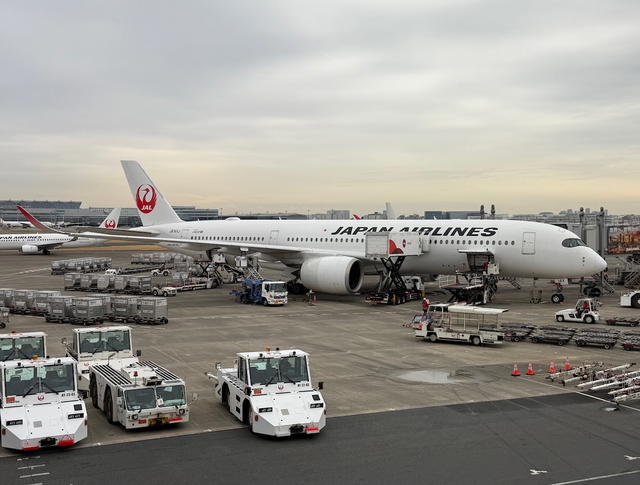
I flew Japan Airlines’ Airbus A350-1000 first class several months back, and it’s also one of the world’s best first class experiences. I’d argue that the carrier’s A350-1000 may just be the all-around sexiest passenger plane in service. What a delight…
How I booked my Japan Airlines business class ticket
I booked my Japan Airlines business class ticket using American AAdvantage miles. Specifically, I booked the following award in business class for 60,000 miles plus $45.41 in taxes and fees:
10/08 JL526 Sapporo to Tokyo Haneda departing 8:05PM arriving 9:45PM
10/09 JL6 Tokyo Haneda to New York departing 11:05AM arriving 11:00AM
I’d say that’s an incredible use of American miles! For what it’s worth, award availability here followed married segment logic. There was no award availability when booking exclusively between Tokyo and New York, while there was award availability when originating in Sapporo — score!
In the previous installment, I reviewed Japan Airlines’ domestic A350-900 first class, which I flew from Sapporo to Tokyo. I managed to score a first class seat by upgrading with cash at an attractive cost.
Japan Airlines business class lounge & boarding
When flying Japan Airlines business class, you’re spoiled with choice when it comes to lounges, as there’s the Japan Airlines Sakura Lounge, Japan Airlines Sakura Sky View Lounge, and Cathay Pacific Lounge, all of which you have access to as a business class passenger. On top of that, oneworld Emerald members can use the Japan Airlines First Lounge, even when in business class.
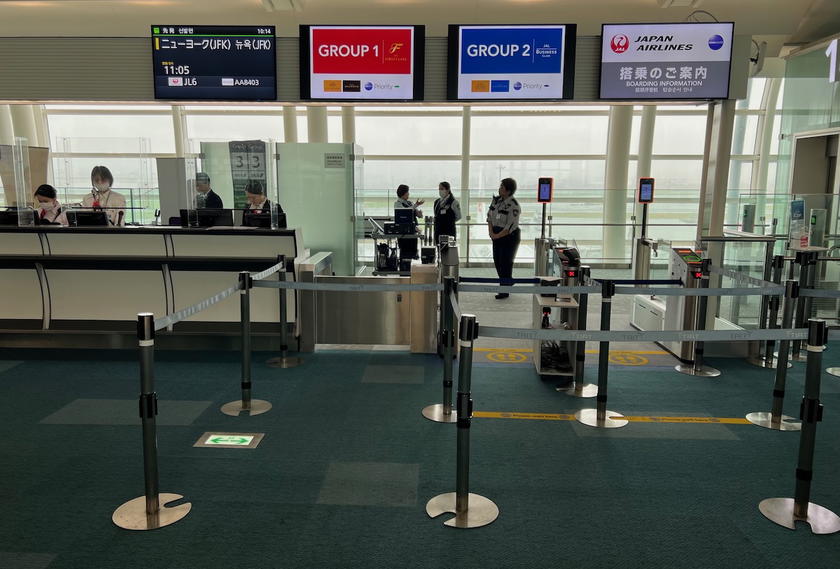
My flight to New York was departing from gate 146, with boarding scheduled for 10:35AM, 30 minutes before departure. As you’d expect in Japan, boarding started exactly on-time. Group 1 was invited to board first, which includes first class passengers and oneworld Emerald members (so that’s when I was able to board). Business class can otherwise board with Group 2.
Japan Airlines A350 business class cabin & seats
Japan Airlines’ A350 business class footprint is massive, with a total of 54 seats across two cabins, in a 1-2-1 configuration. There’s a forward cabin with 20 seats spread across five rows. This is located between the first and second set of doors, behind first class.
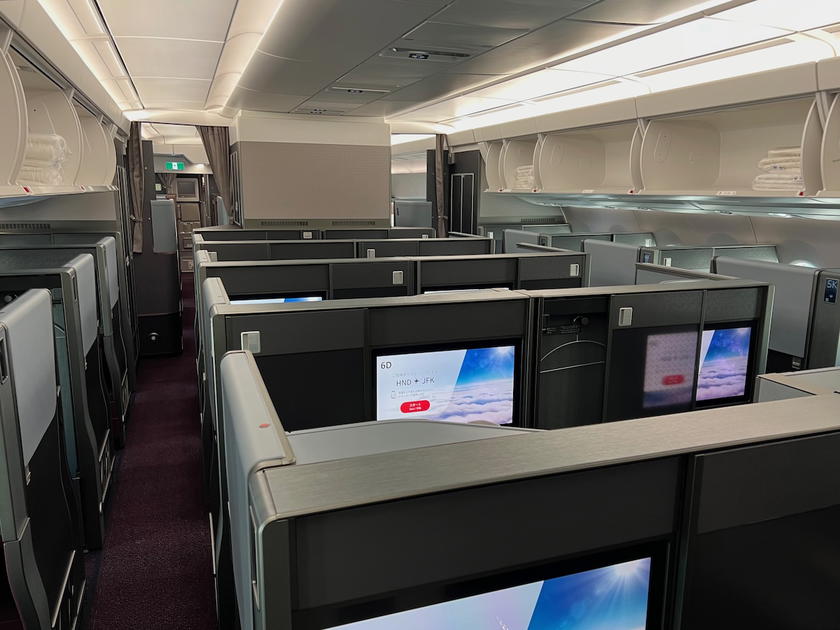
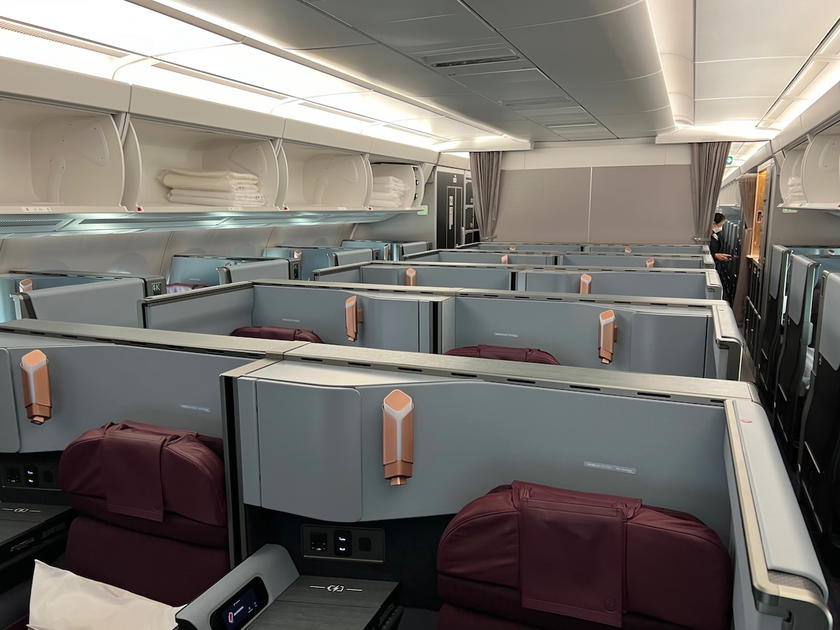
Then there’s a rear cabin with 34 seats spread across nine rows, between the second and third set of doors.
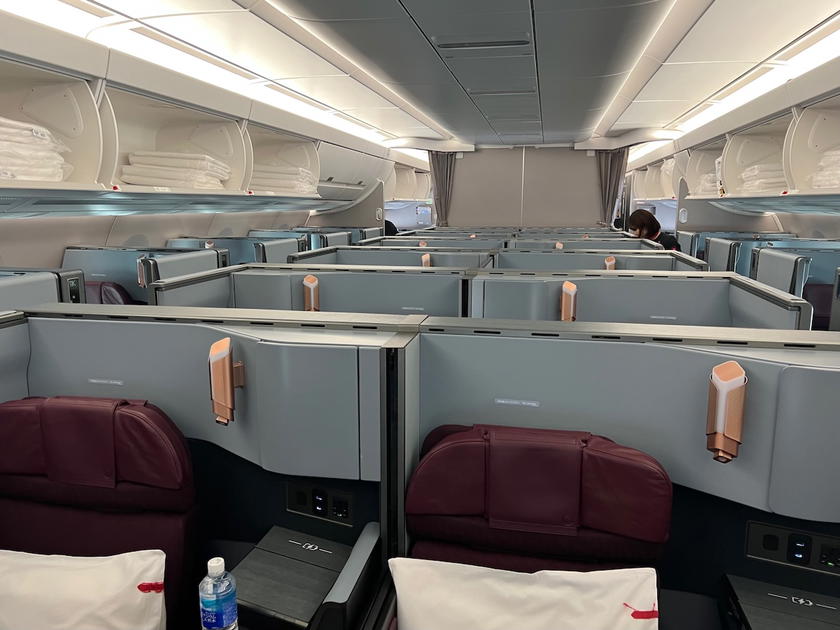
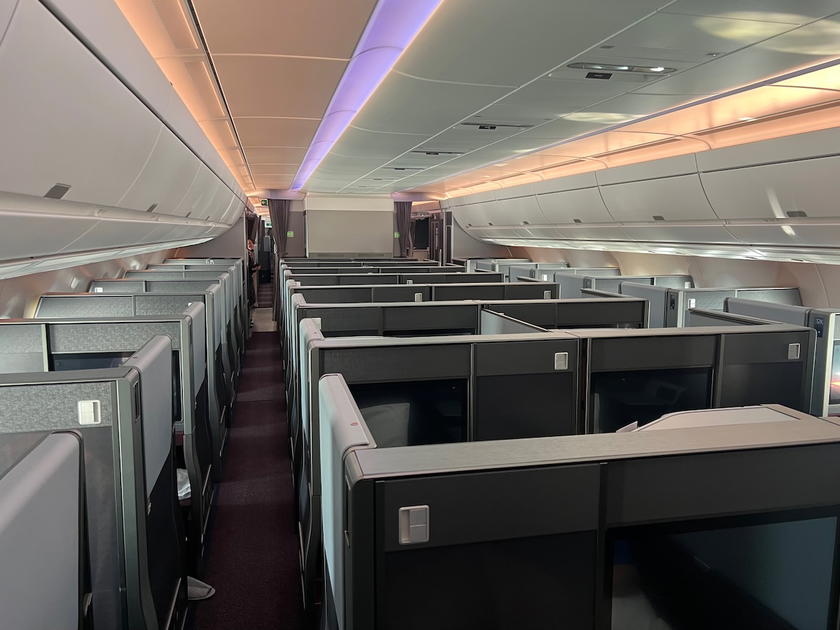
Japan Airlines is the global launch customer for the Safran Unity seat, which we’ll also soon see on carriers like Air India and Qantas. This is a staggered product with doors, but it’s incredibly spacious, more so than any other staggered configuration I’ve ever flown in. I’d argue that this is the latest and greatest “generic” business class seat, so I’m thrilled at the prospect of this becoming a widespread business class product.
When it comes to the configuration, some people traveling as pairs may prefer to select the center seats. Note that in this configuration there are no center “honeymoon” seats (where the seats are really close to one another), but instead the center pair of seats are always the same distance from one another. What alternates between each row is which seat is closer to the aisle, and which is closer to the center.
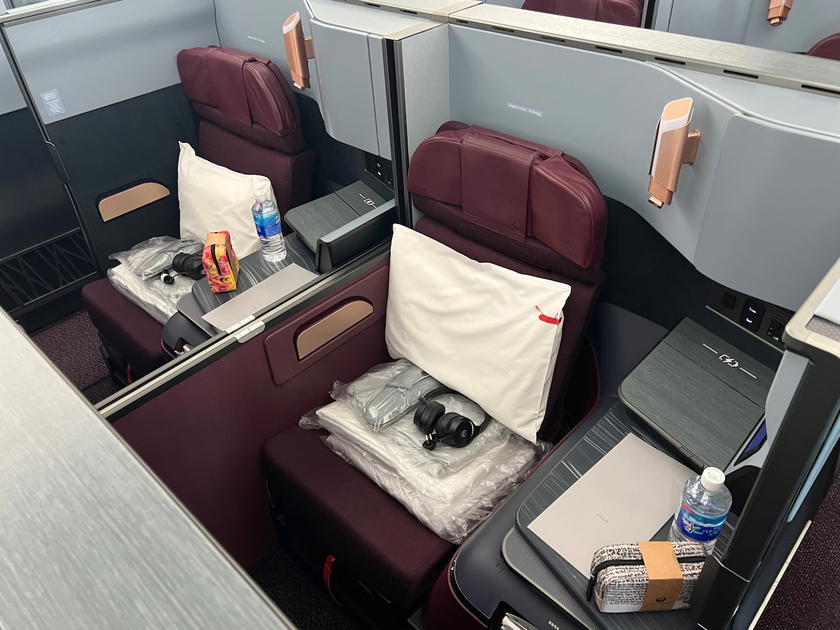
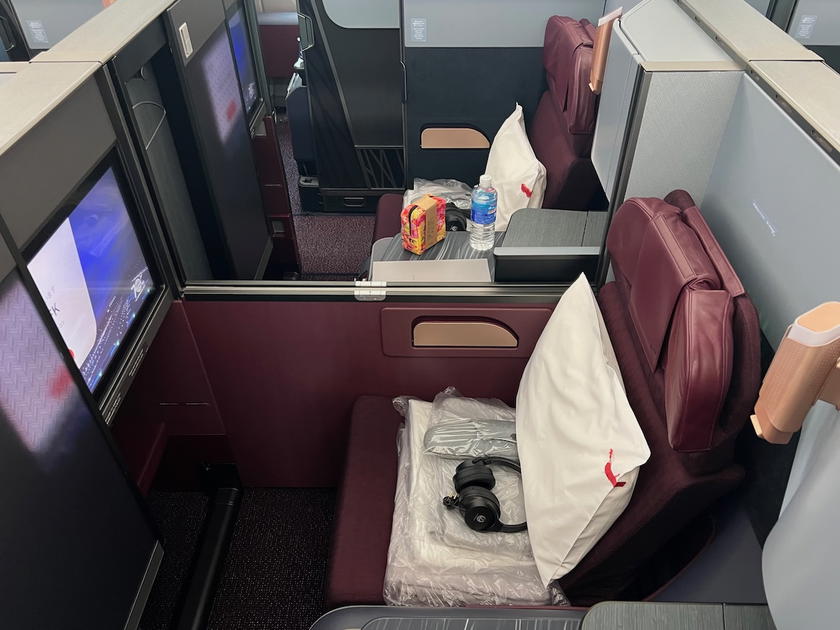
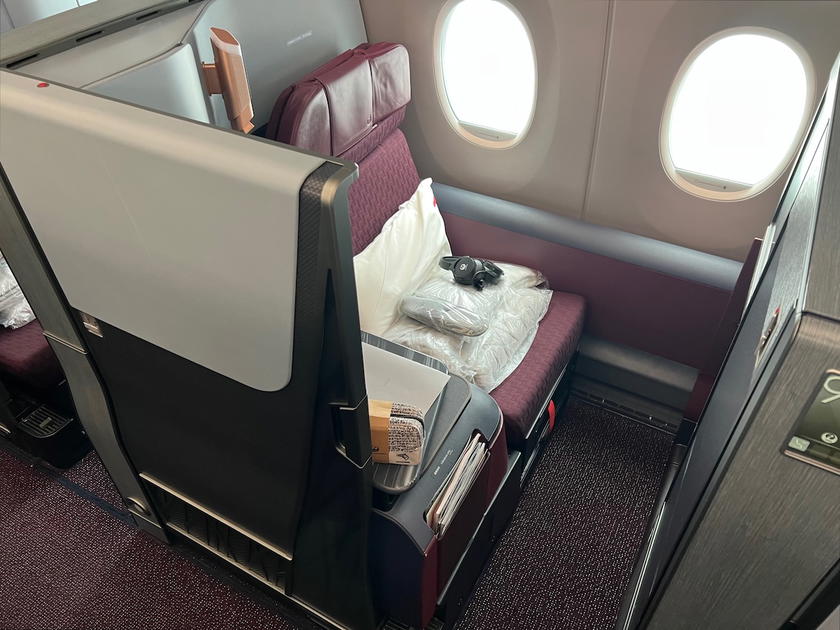
The window seats are similarly staggered, with seats alternating between being closer to the aisle and being closer to the windows.
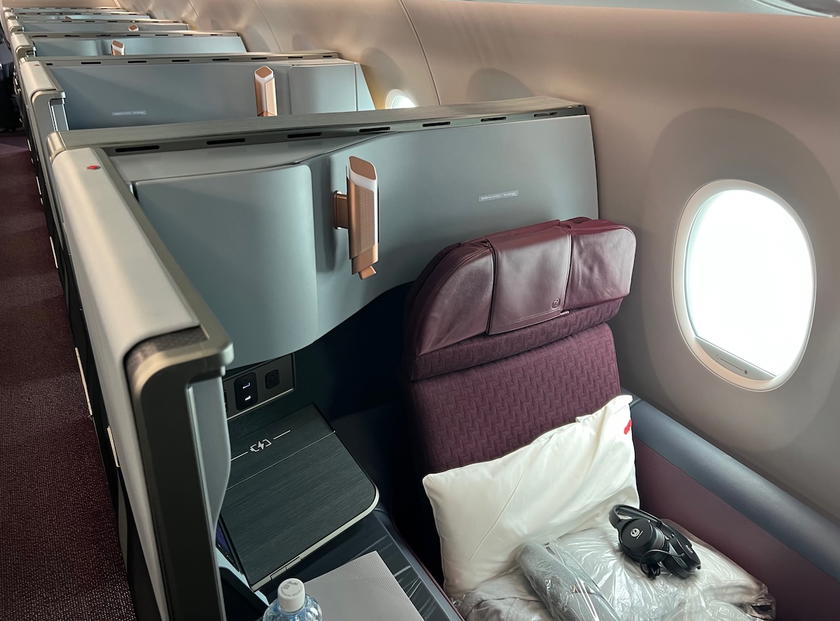
In every other row you’ll find seats that are closer to the aisle and further from the windows. While I’d choose this over one of the center seats if traveling solo, it’s not my preferred seat in this configuration.
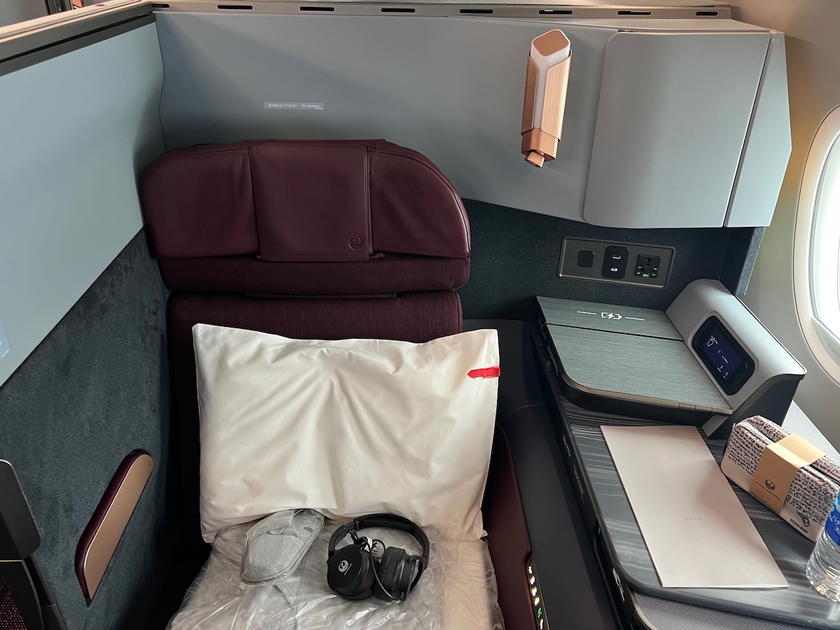
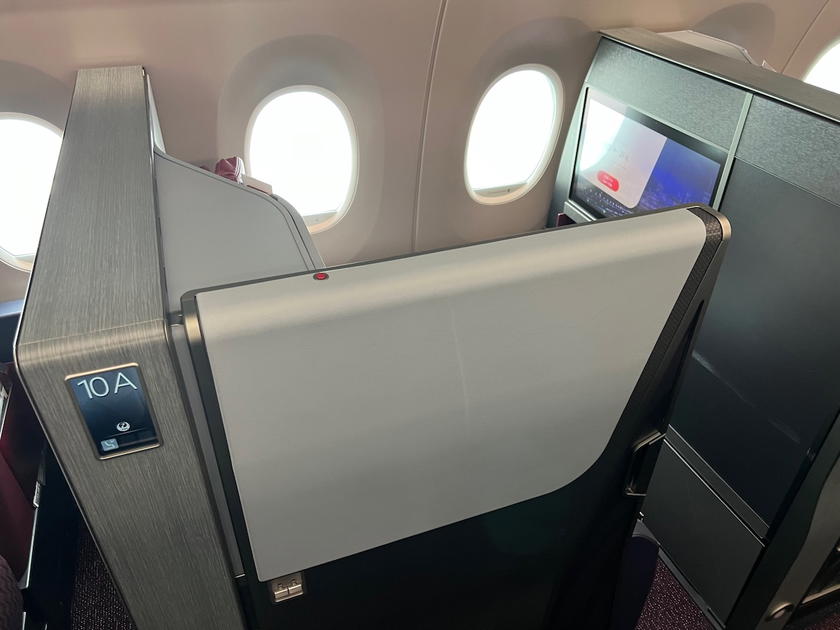
Instead, I’d consider the best option to be the “true” window seats, which are closer to the windows and further from the aisle. I selected seat 10A, the window seat on the left side in the third row of the rear cabin (it was the last real window seat left when I booked). I can’t emphasize enough how much more spacious I found this to be than the typical staggered product, as it’s materially more comfortable.
I feel like so much business class seat innovation in recent years has been about tech upgrades and privacy, rather than just allocating a bit more space to each passenger. So Japan Airlines (and Safran) deserve credit for this product.
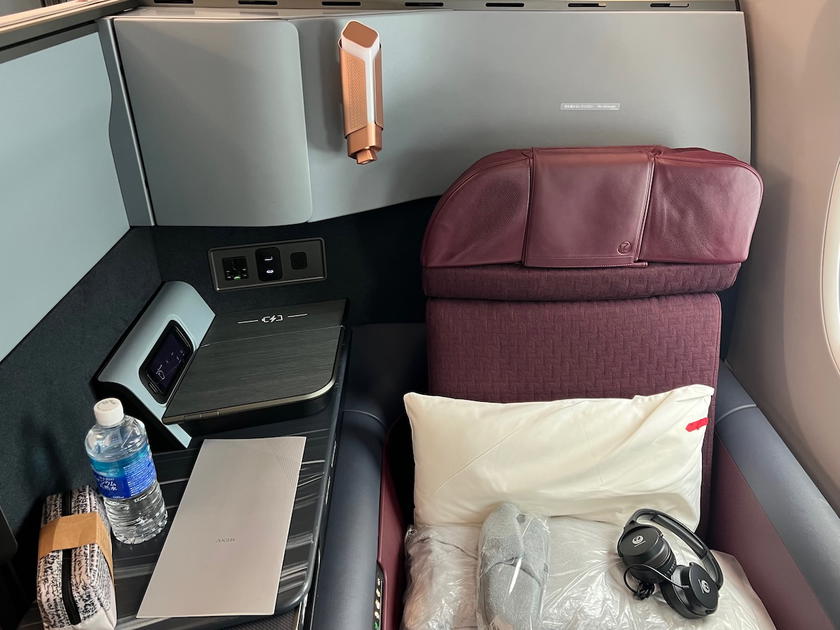
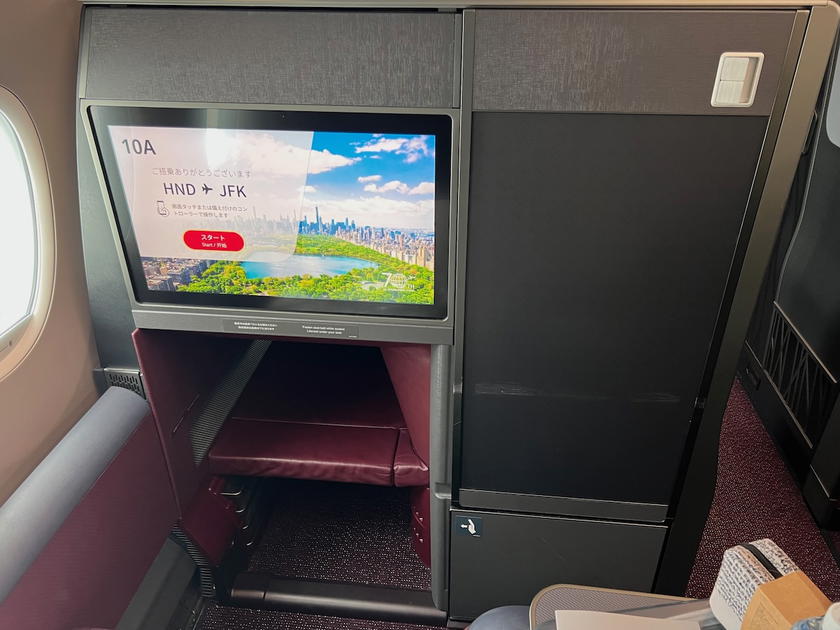
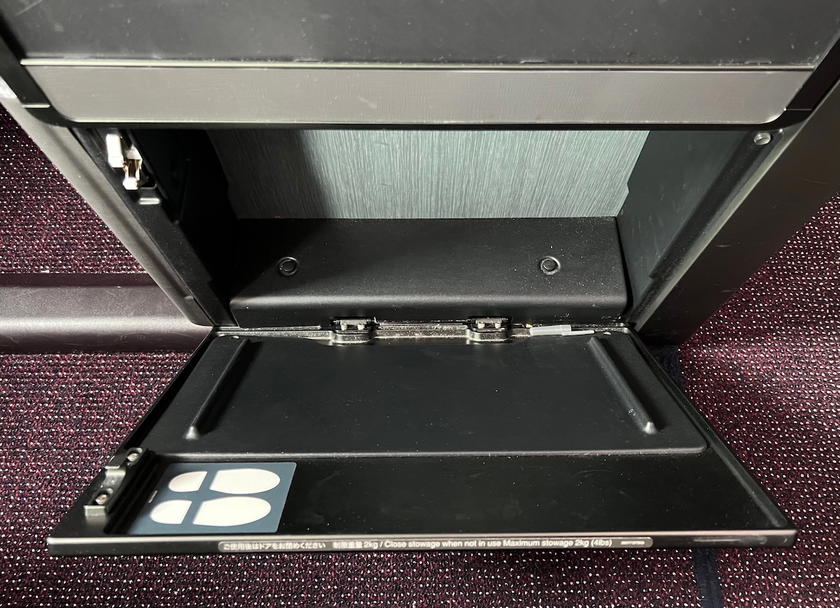
It’s not just that the seat is spacious, but there’s also an impressive amount of storage, and the tech is top notch. There’s a large counter area to the side of the seat, where you can place things during the flight. Part of that even lifts up, to expose a shallow, enclosed storage area, big enough for a phone or passport.
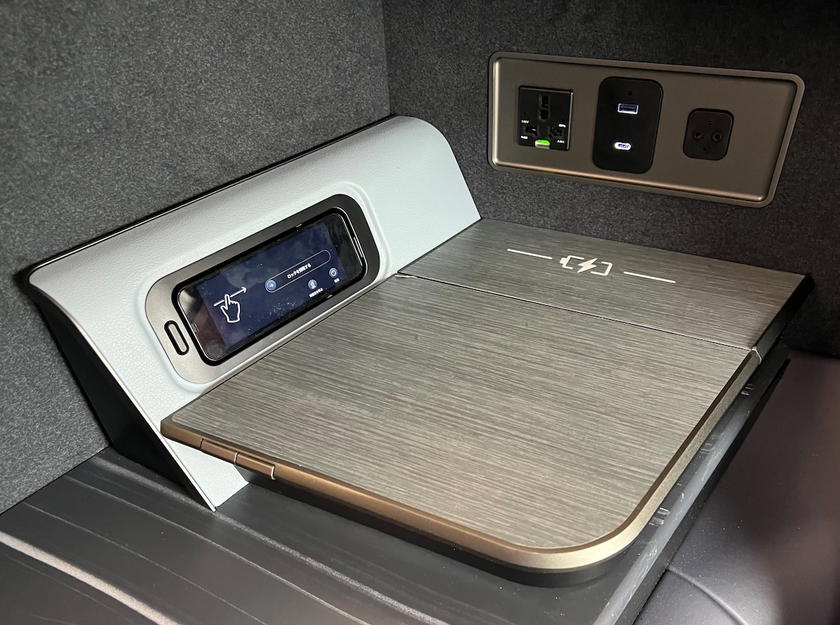
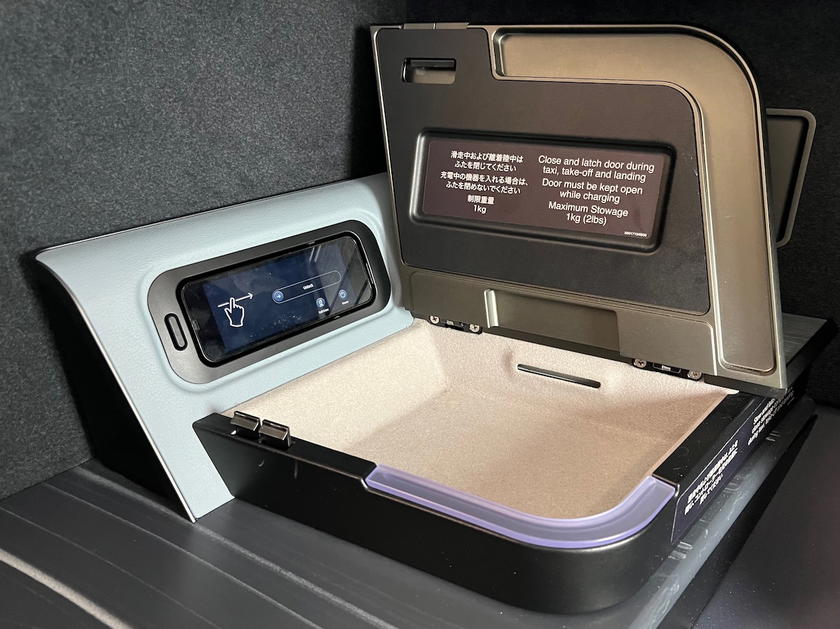
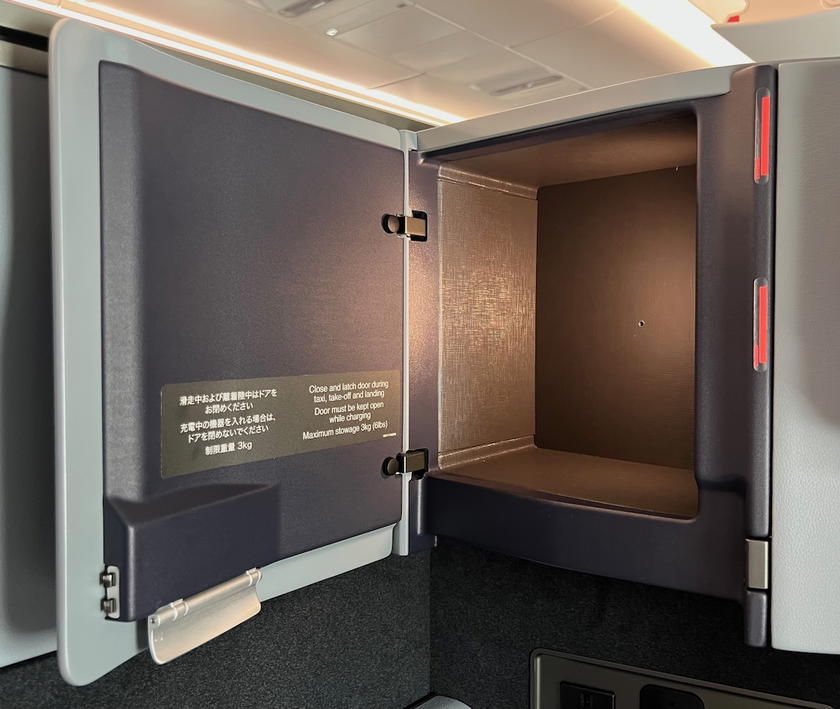
Above that storage area is a larger, enclosed storage compartment, where you can place things like headphones or a bottle of water.
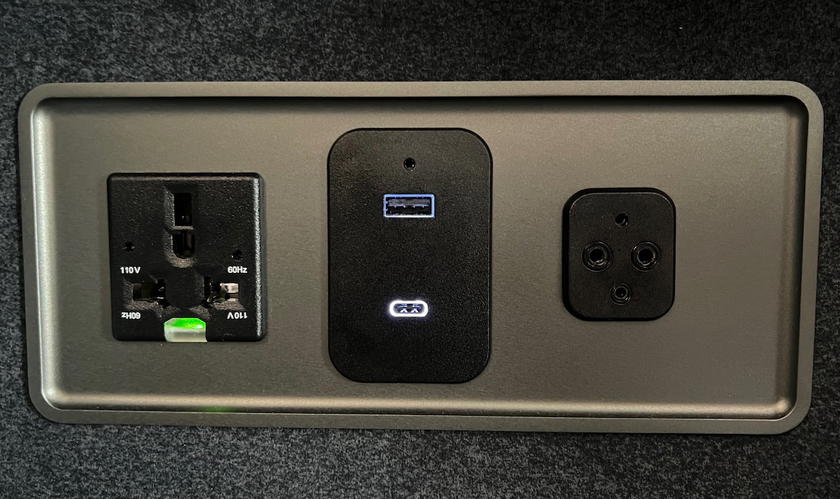
In addition to wireless charging on the counter, there’s also a panel with AC, USB-A, and USB-C outlets, plus a headphone jack.
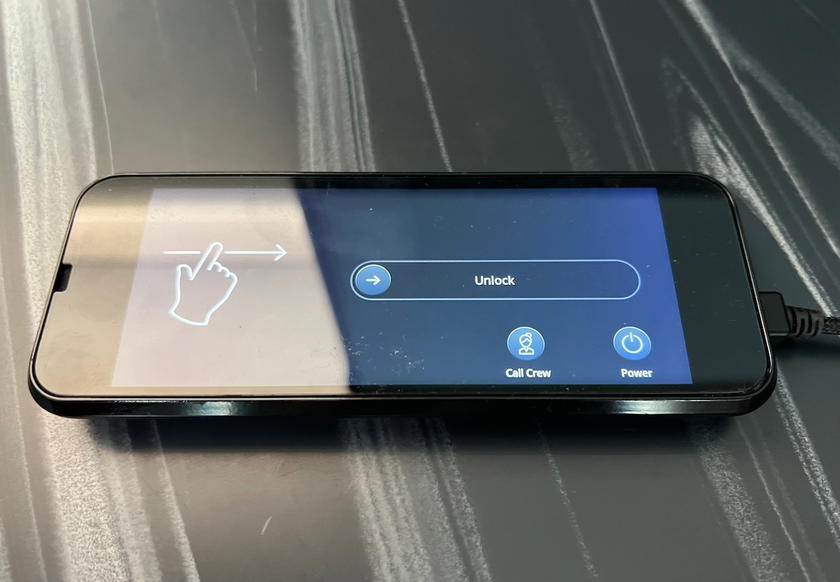
Then there’s an entertainment controller, but since the entertainment monitor is touchscreen, that’s not necessarily needed.
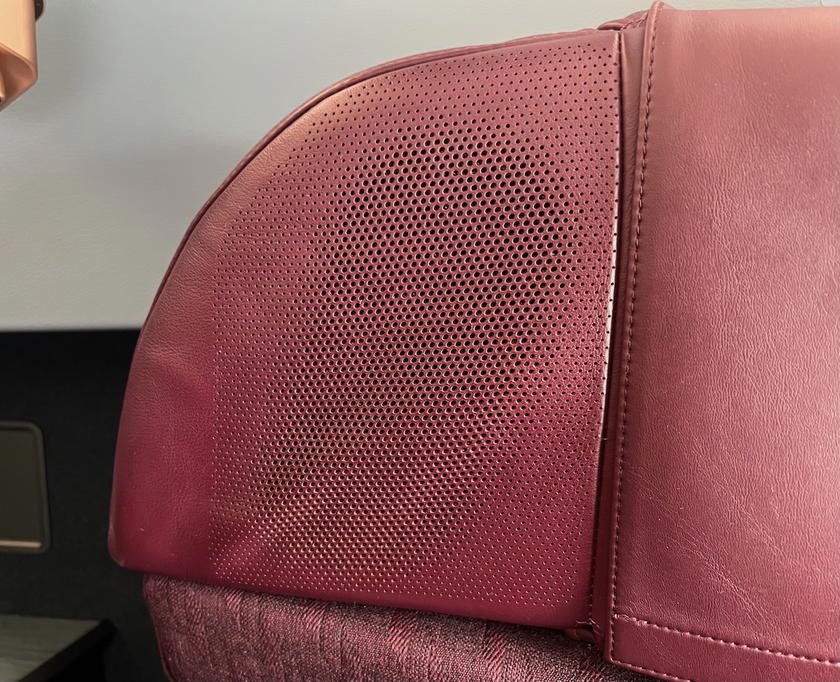
Speaking of entertainment and tech, Japan Airlines offers headrest speakers in business class on the A350, so you can watch entertainment without even putting on headphones.
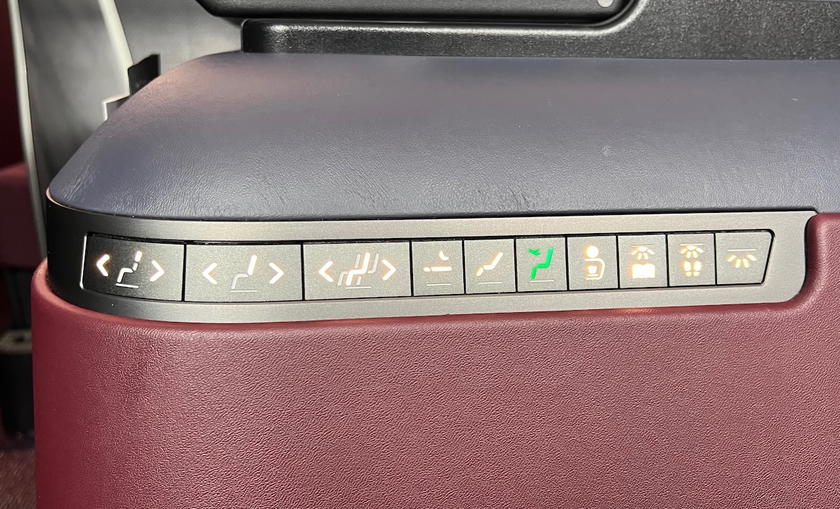
All seat functions (including lighting) can be controlled from a panel to the side of the seat, which is easy to use.
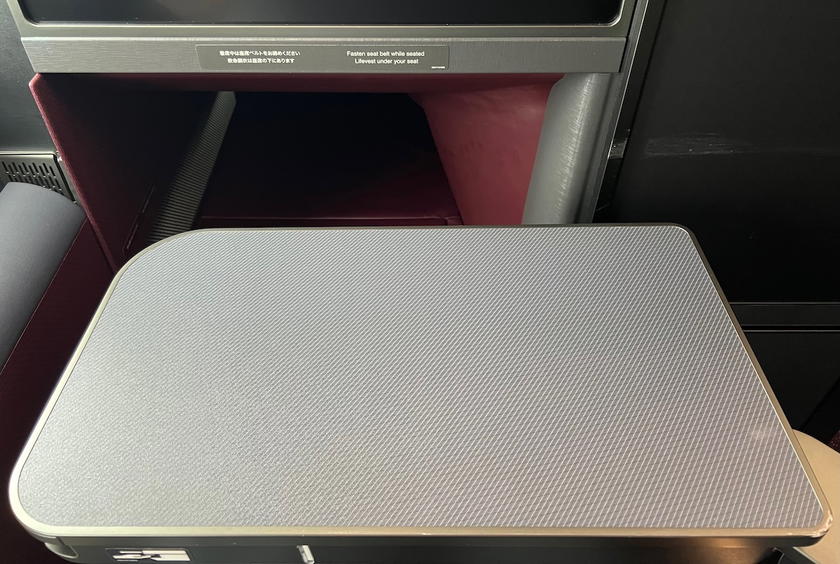
The tray table folds out from the side of the seat, and is a single, large tray. This can’t easily be moved around that much, so make sure you go to the bathroom before a meal, since you won’t otherwise be able to easily get up.
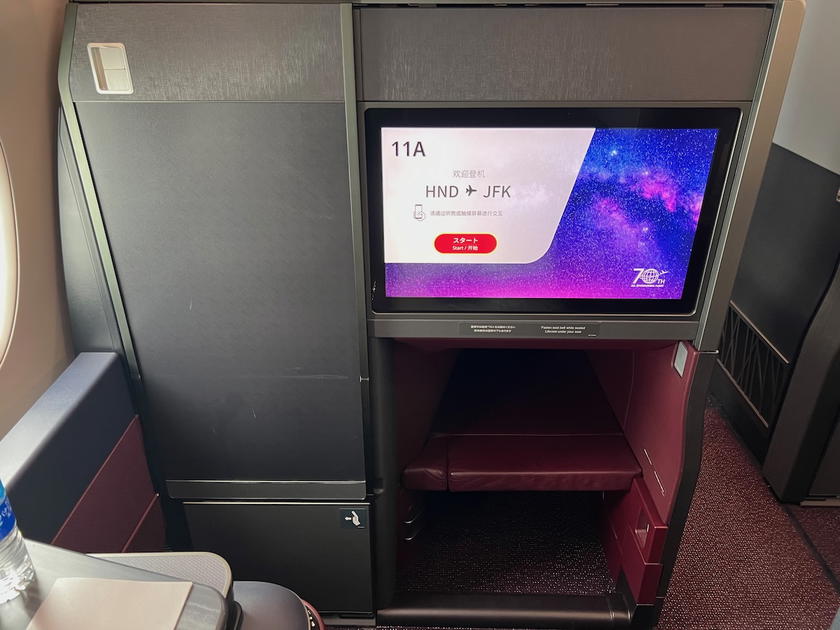
One of the issues with staggered configurations is that the footwells can often be pretty tight, making it hard to get comfortable. I found this seat to have one of the most spacious footwells out there. Best of all, you can even store stuff underneath the footwell.
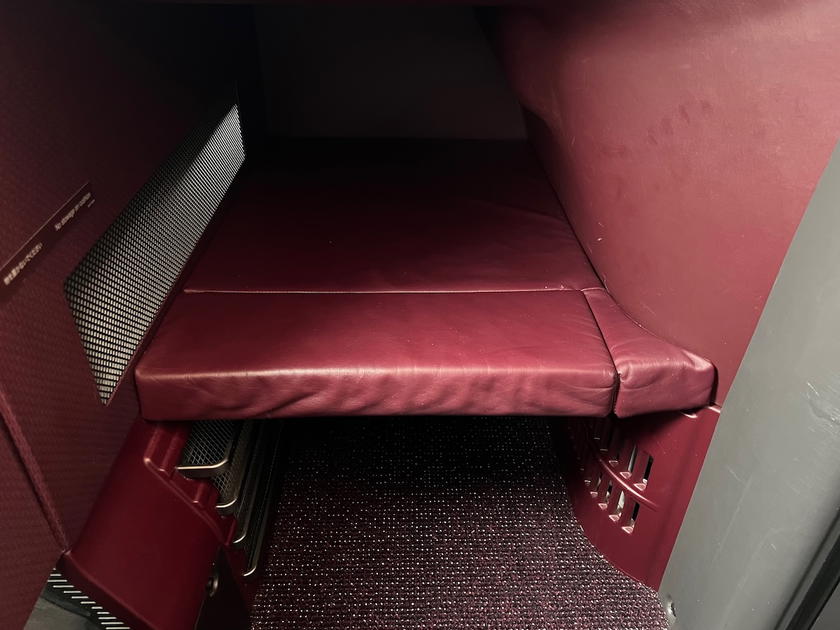
Speaking of storage, there’s yet another storage compartment to the side of the footwell, intended for storing shoes during the flight. That’s a really innovative storage option that we don’t see often enough on airlines.
Next to the gorgeous 24″ entertainment monitor there’s also a wardrobe, where you can hang clothes. There’s essentially a translucent, sliding door that can be used to close the wardrobe, which slides over the entertainment screen.
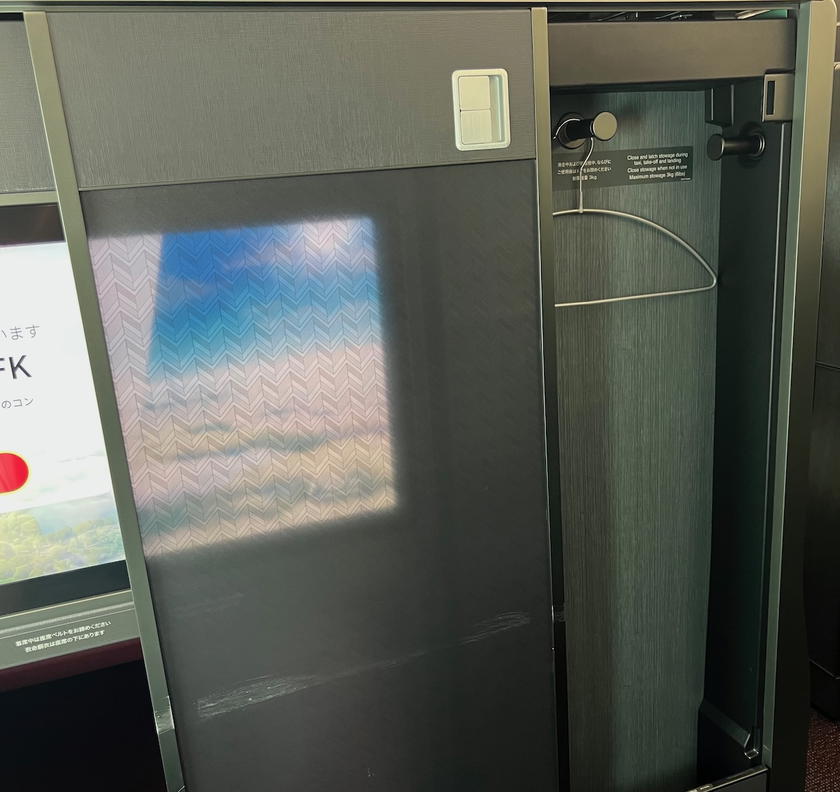
This product also has a door, which extends to a height of 52″. The door can easily be opened and closed manually, and provides a significant amount of privacy.
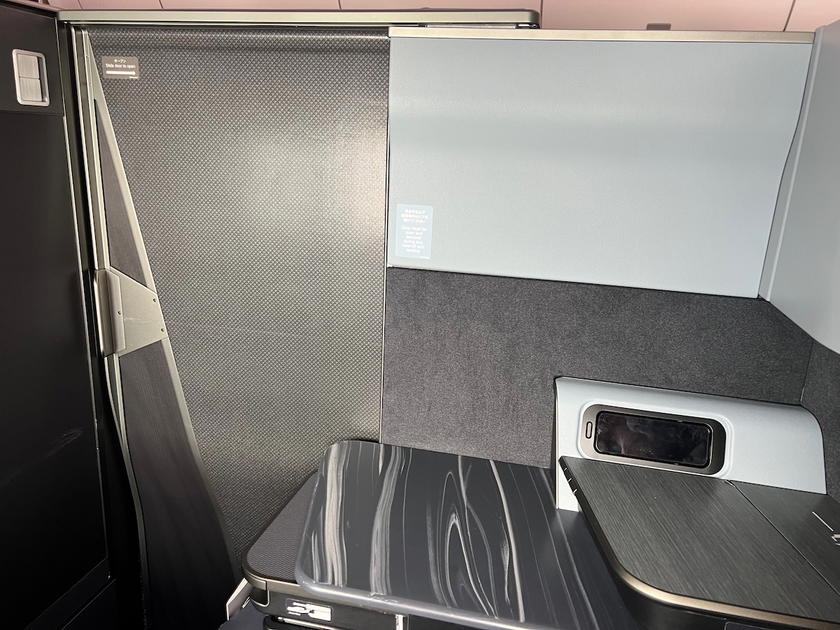
As I see it, there were only two downsides to the seat. First of all, Japan Airlines doesn’t have individual air nozzles on its A350s, which can make it hard to regulate airflow.

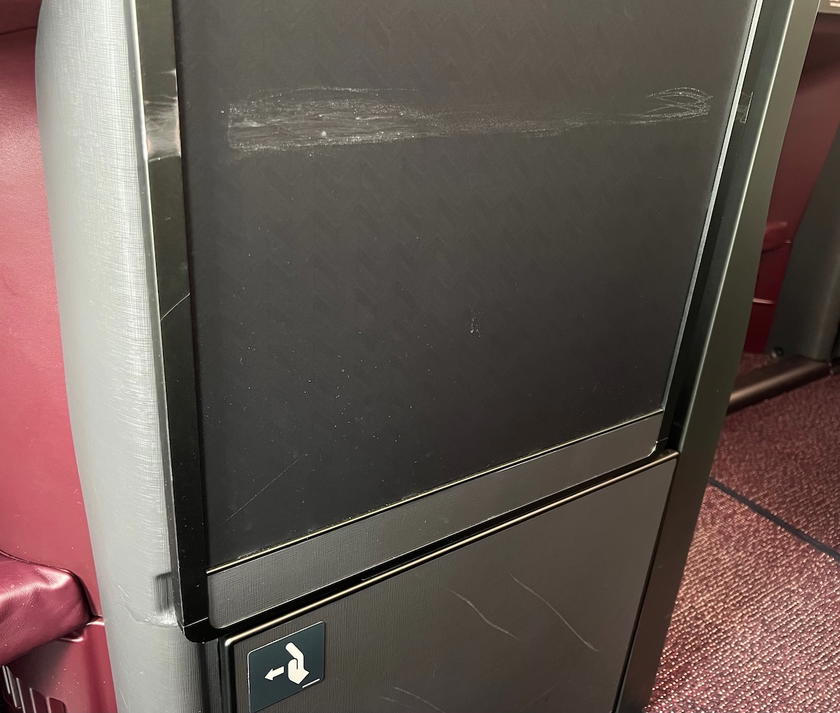
Second of all, for a new plane, there was an extraordinary amount of wear and tear. For example, the tray table extends in a way where it automatically hits the wardrobe area, unless you specifically try to prevent this. So there were a bunch of scratches there.
Given that the Safran Unity seat is a new product, I suspect some kinks are still being worked out, so that this doesn’t happen in the future.
But honestly, I can’t emphasize what a phenomenal product this is. The seat is super spacious, there’s a ton of storage, the tech is impressive, and the seat is (mostly) very well designed. I don’t want to say this seat is revolutionary, but it’s a significant evolution over the other staggered configurations out there, if you ask me.
Japan Airlines business class amenities
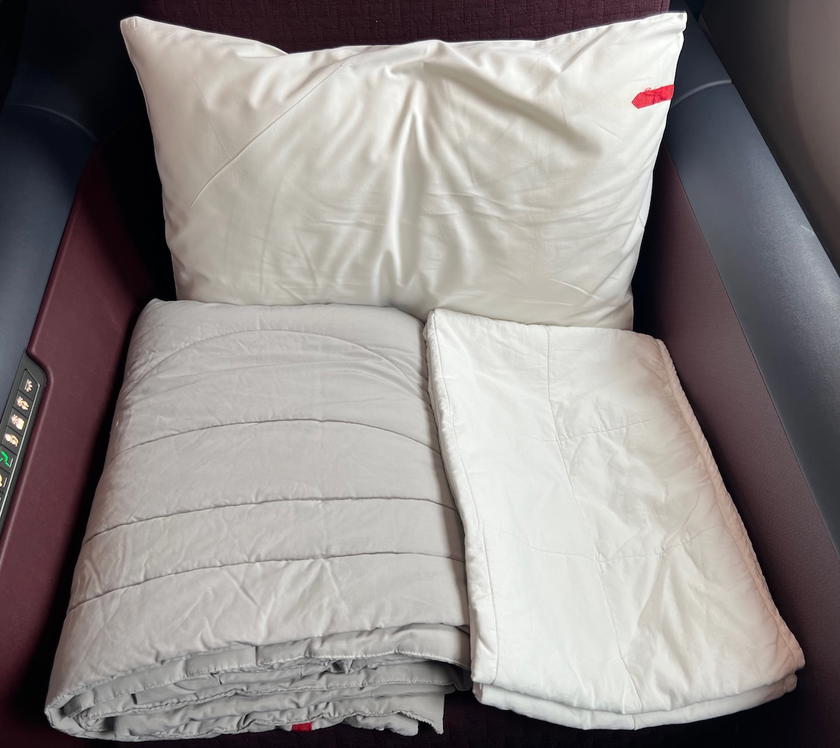
Japan Airlines offers an impressive array of amenities in business class on long haul flights. Waiting at each seat were a pillow and blanket, both of which were cozy. That was in addition to a mattress pad that was offered later on in the flight, when it was time to sleep.
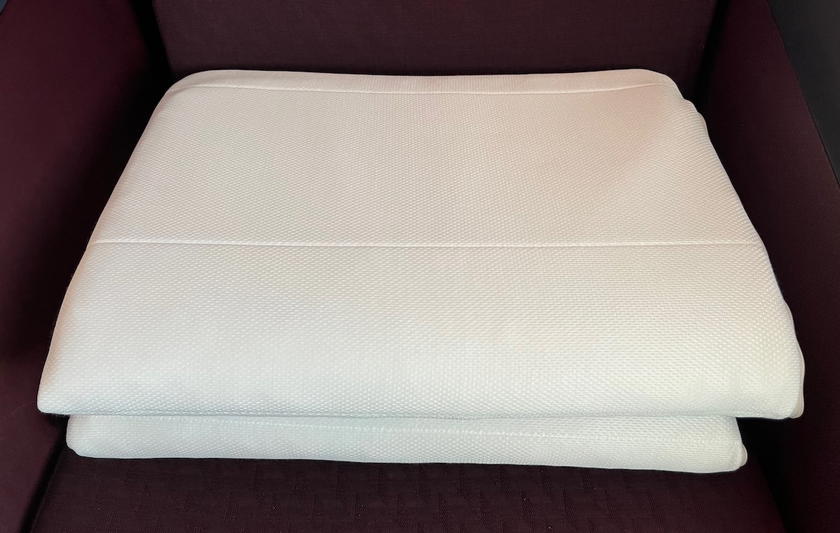
On top of that, each passenger was given a cardigan that they could use during the flight. These are supposed to be left onboard, and can’t be taken home (unlike the pajamas that some airlines offer).
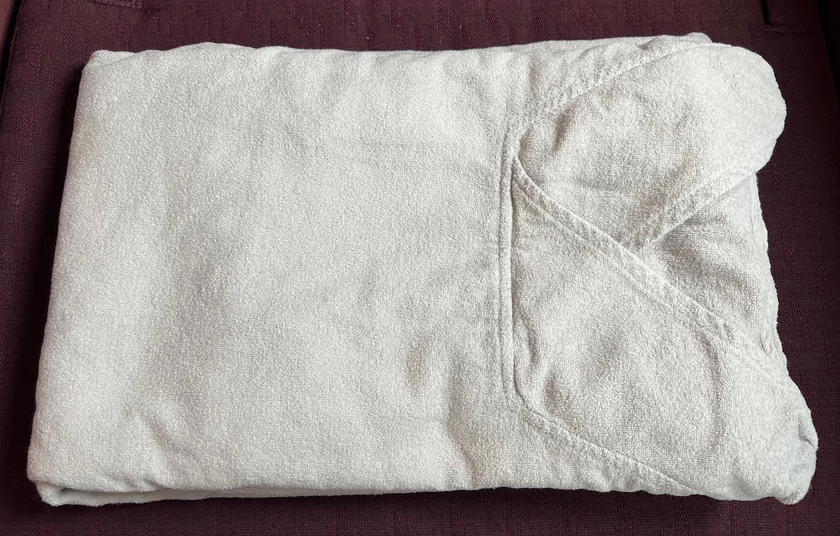
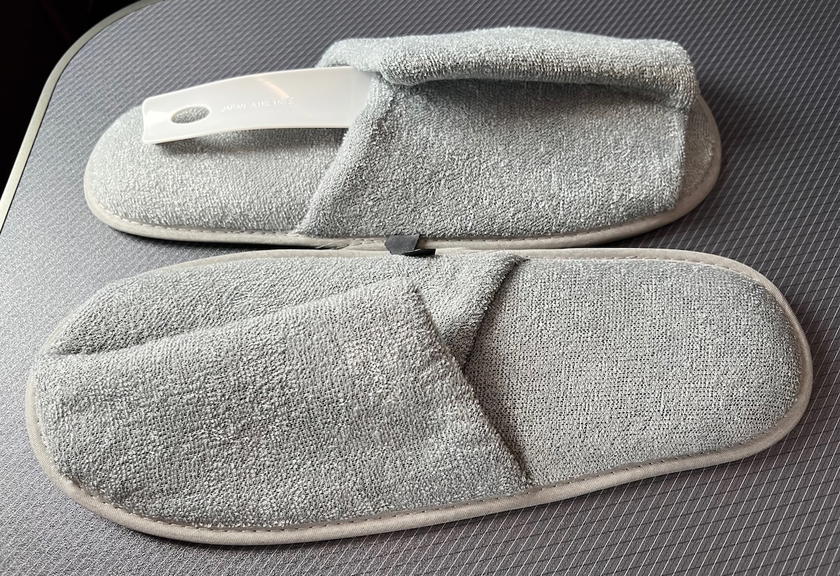
There were also slippers, allowing you to store your shoes for the entire flight, and then use these to move around the cabin.
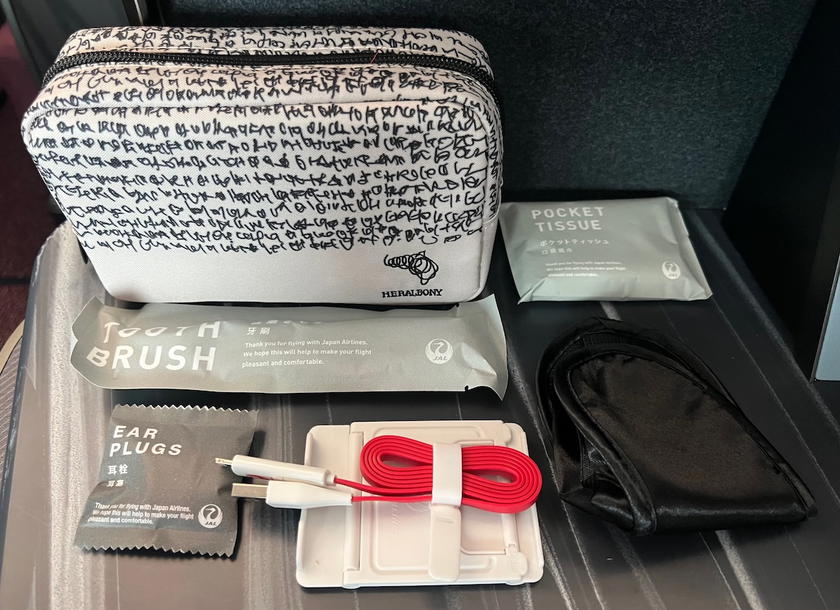
There was also a pretty amenity kit, with a dental kit, earplugs, eyeshades, tissues, and a charging cable (which you don’t often see in amenity kits). As you can see, the kit is on the basic side, and doesn’t have any skincare products.
There were also a pair of noise canceling headphones, though between bluetooth audio and headrest speakers, I found those to be kind of unnecessary.

The menu and drink list for the flight were also placed at each seat.
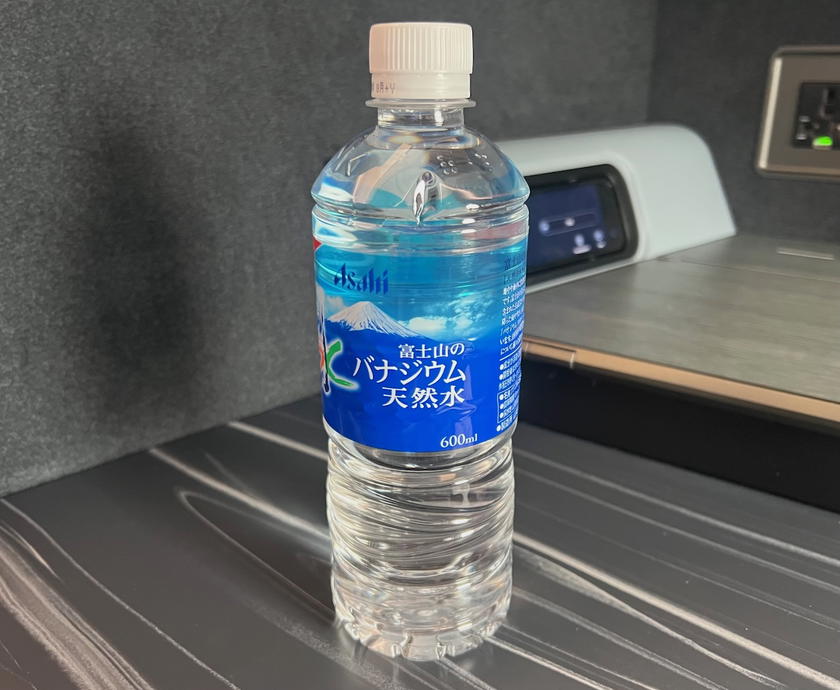
Lastly, there was a large (600ml) bottle of water.
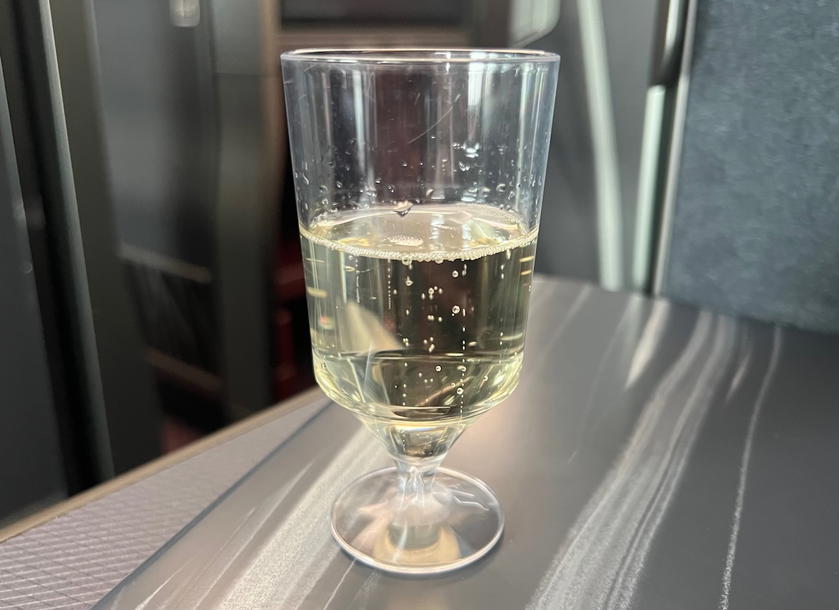
Toward the end of boarding, the crew came around with pre-departure drinks, offering the choice of orange juice or champagne. Japanese airlines are super lame with pre-departure drinks, but I remember back in the day when they weren’t even allowed to serve them, so I guess this is progress.
Japan Airlines A350 business class entertainment & Wi-Fi
Japan Airlines’ A350 business class has 24″ high definition entertainment monitors. The tech and interface are great, though unfortunately the selection of movies and TV shows isn’t huge. It’s okay, and collectively there are a couple of hundred options. However, it pales in comparison to the entertainment you’ll find on some other airlines.
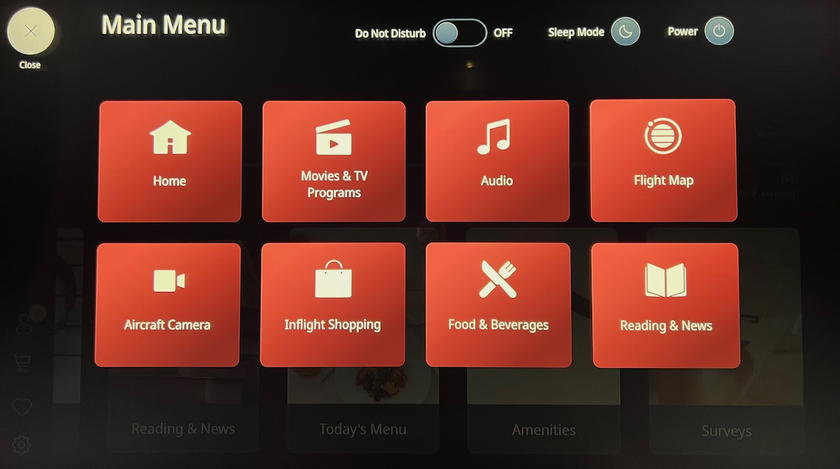
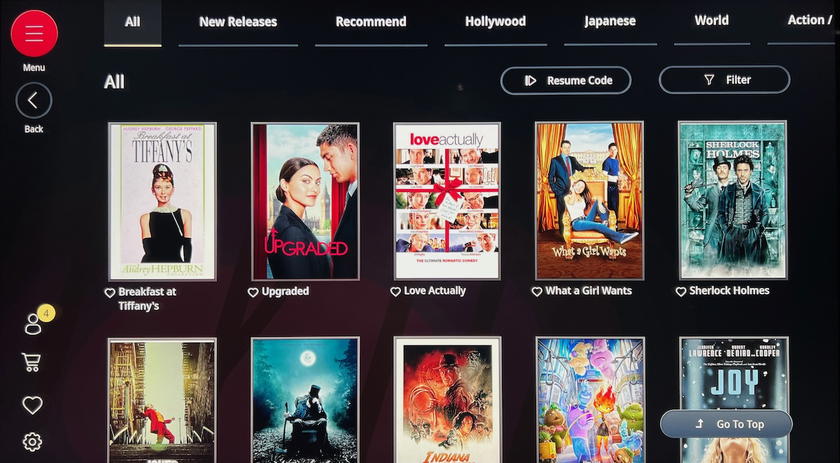
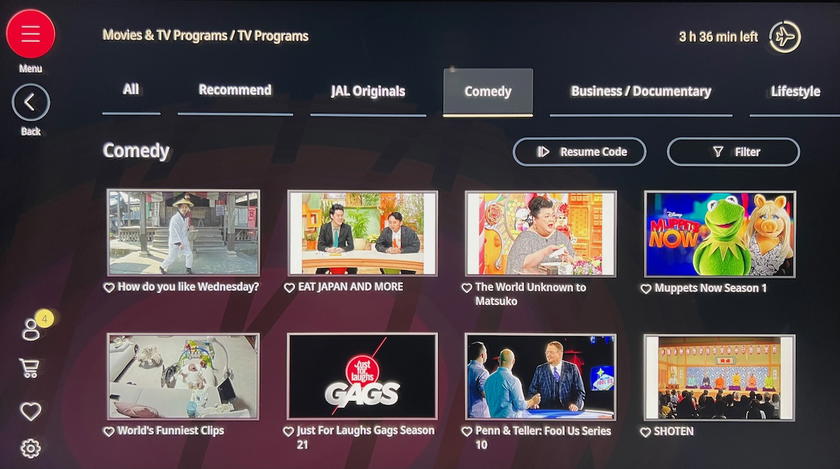
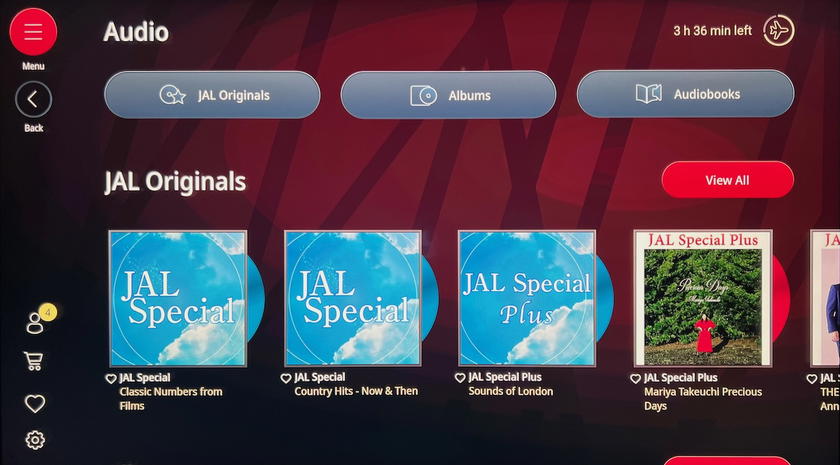
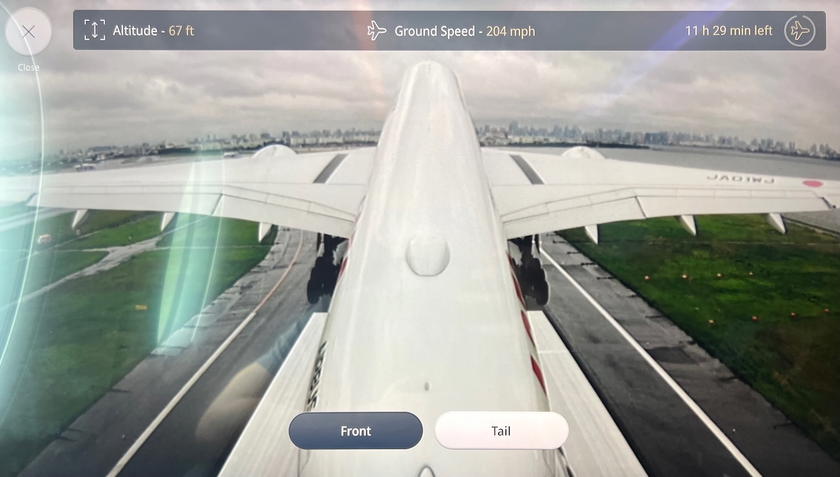
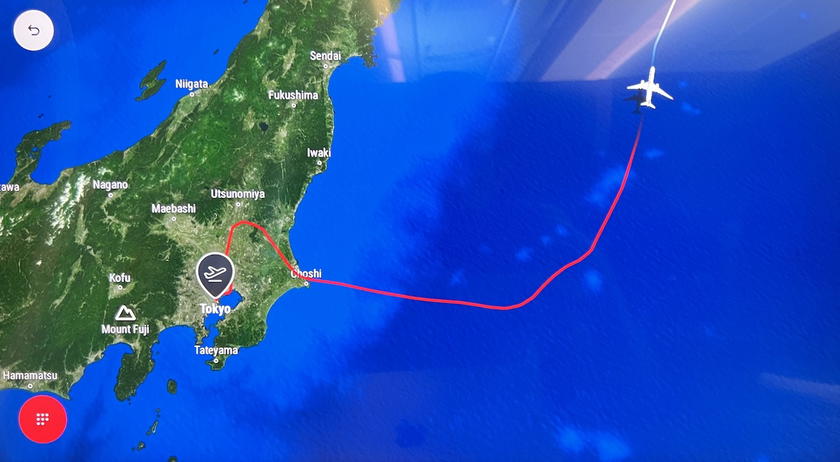
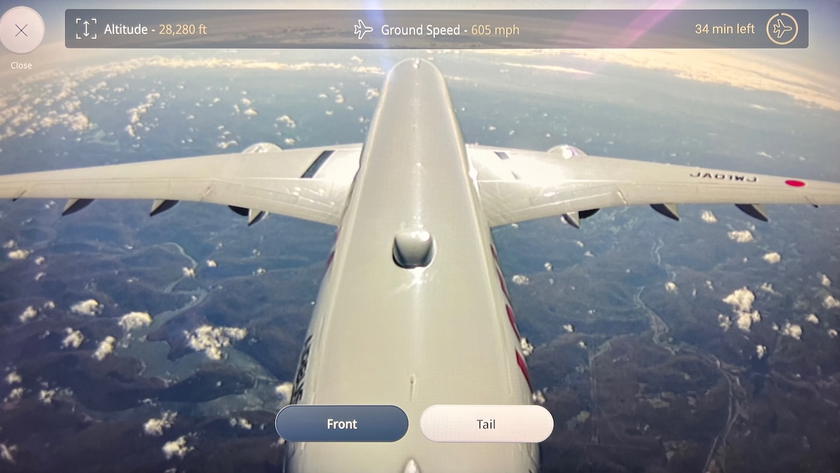
Fortunately the A350 has a lovely map feature, plus a glorious tail camera, which is just about my favorite entertainment on any aircraft.
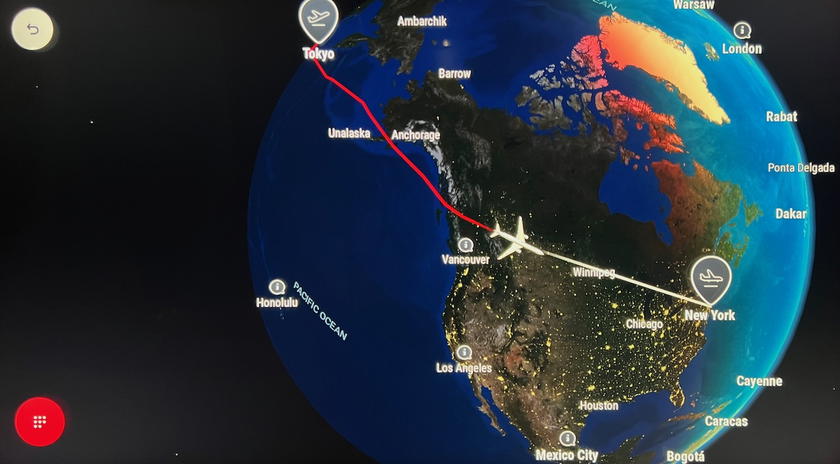
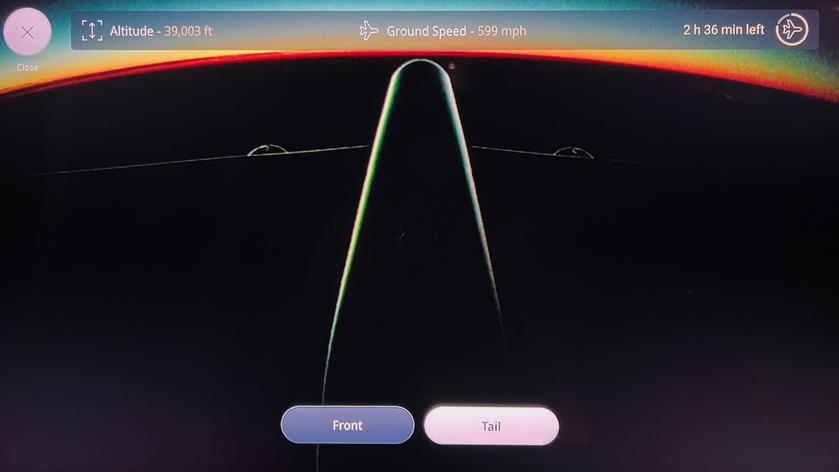
I also love the audio options for the entertainment, as Japan Airlines is the first carrier to give you three ways to connect to the entertainment system. You can use the headphones provided, the bluetooth audio, or the in-seat speakers.
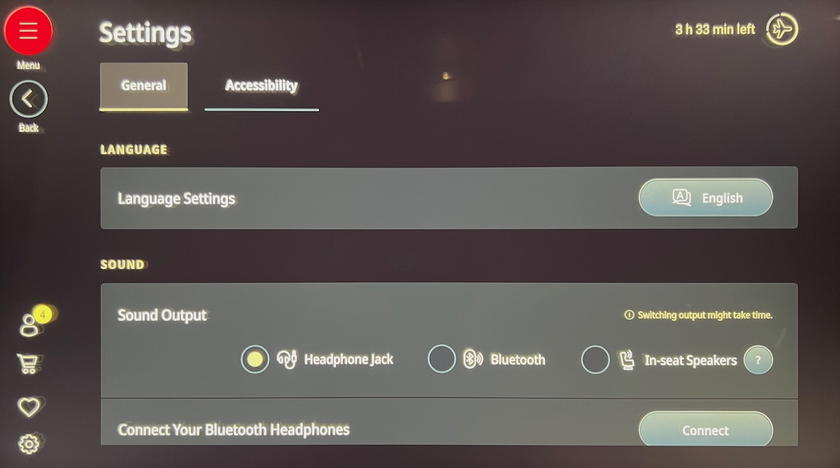
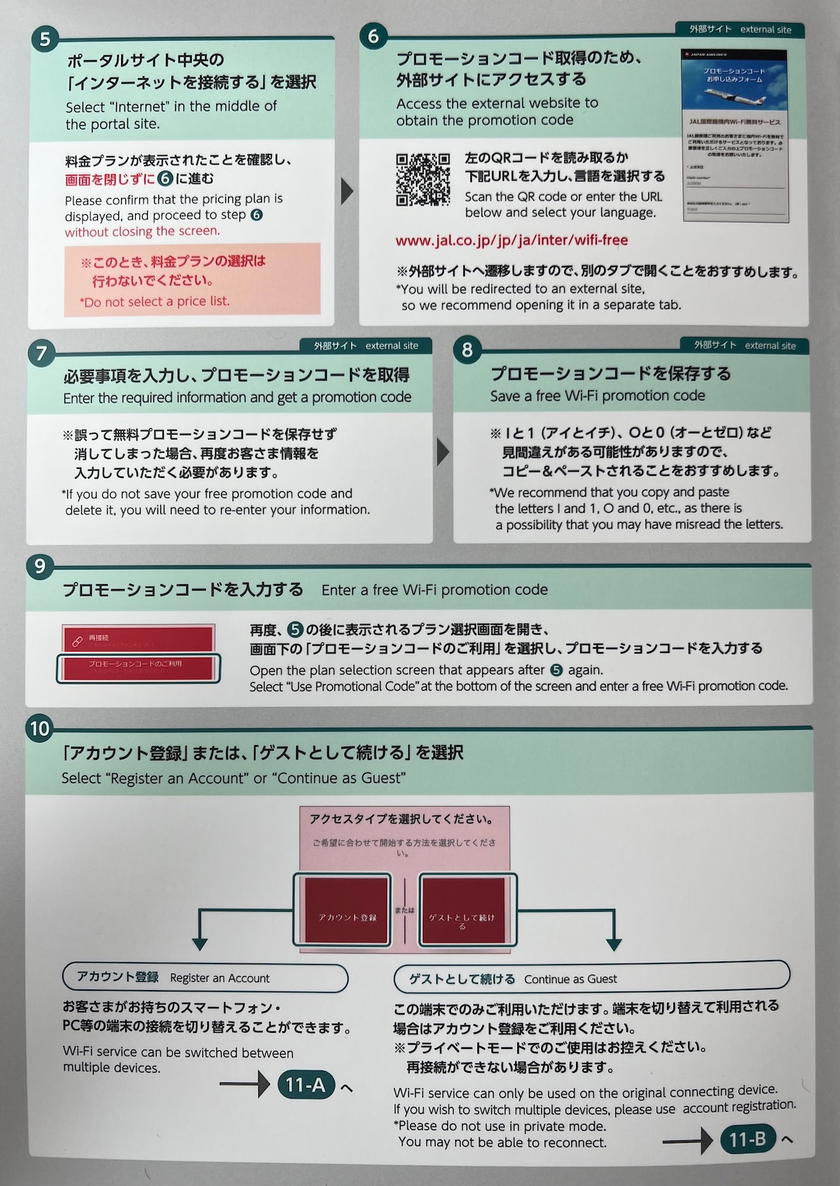
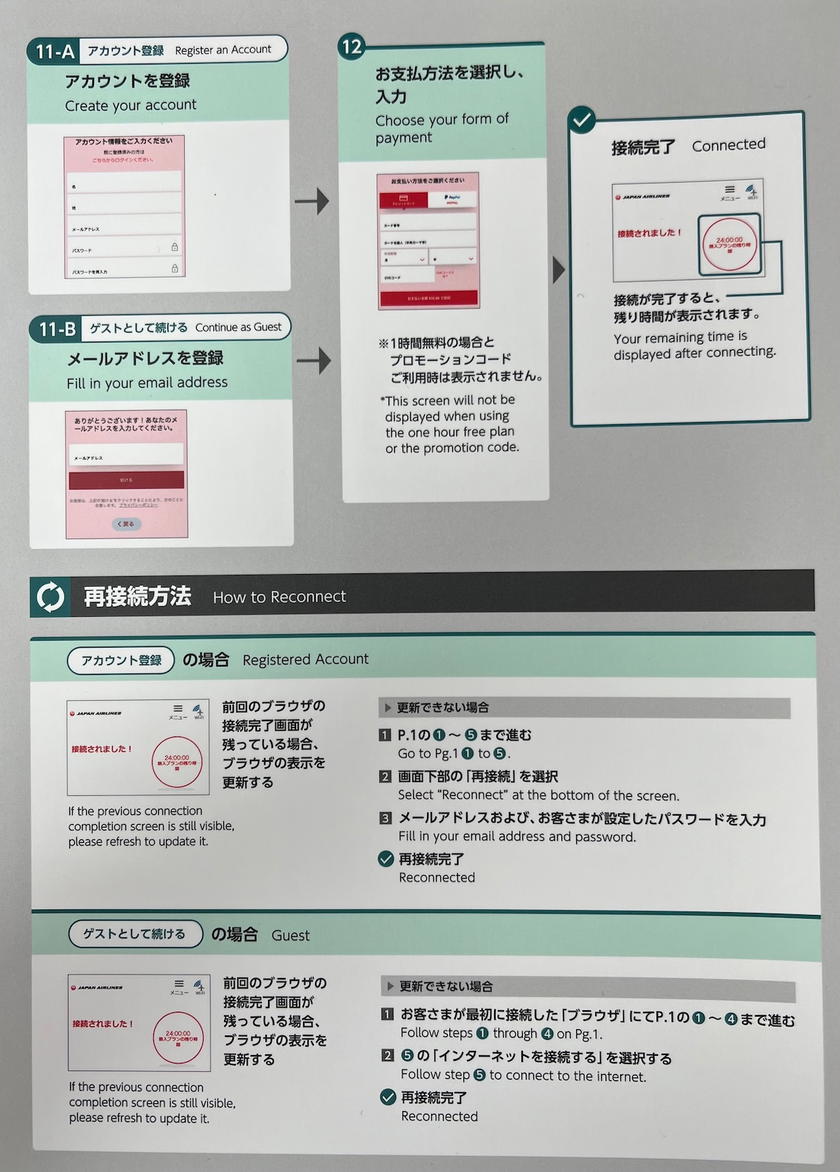
Japan Airlines also offers free Wi-Fi in business class with no data caps, with the carrier using Panasonic’s platform.
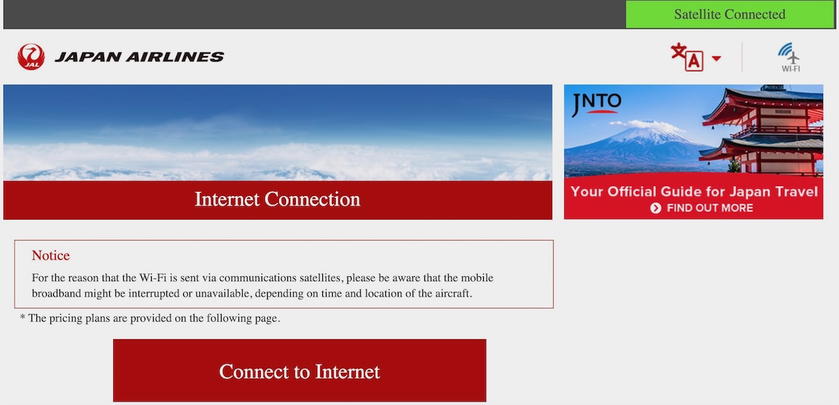
For what it’s worth, ordinarily the airline offers all passengers a free one-hour Wi-Fi pass, while a 24-hour Wi-Fi pass costs $18.80.
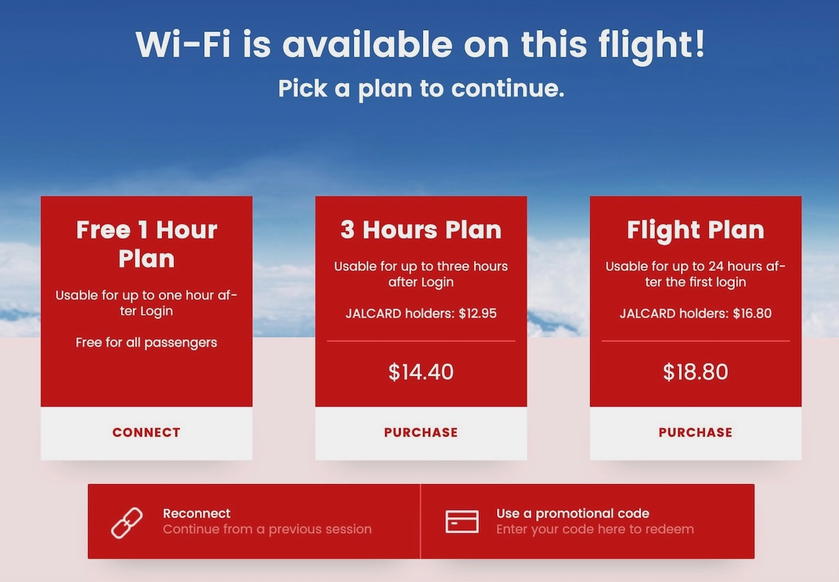
Now, the process of actually getting the free Wi-Fi is amusingly complicated. This isn’t as straightforward as just entering your name and seat number, but instead you have to generate a promotion code.
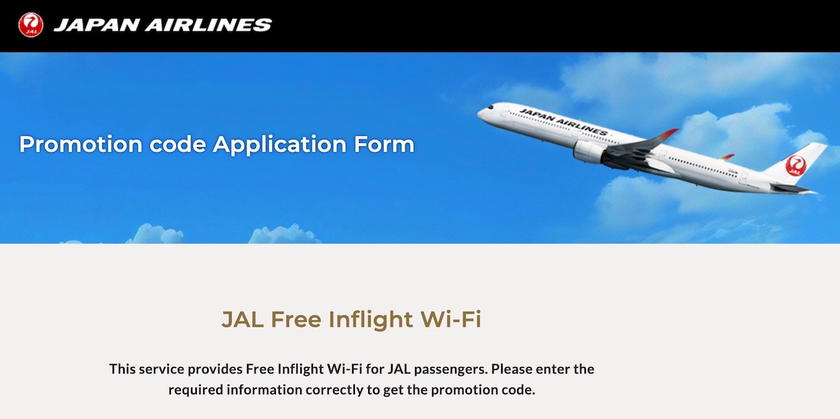
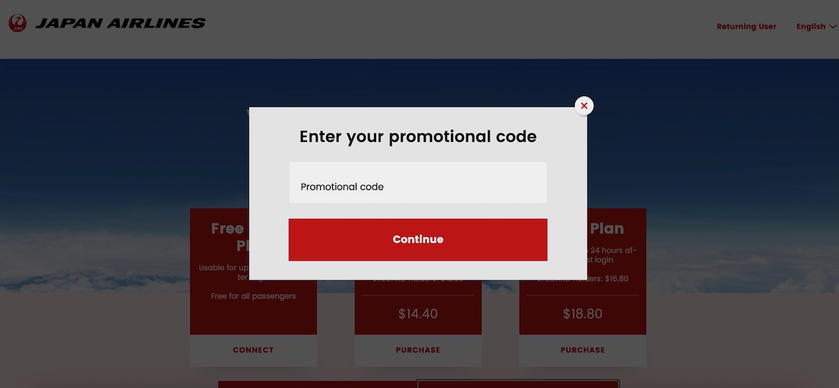
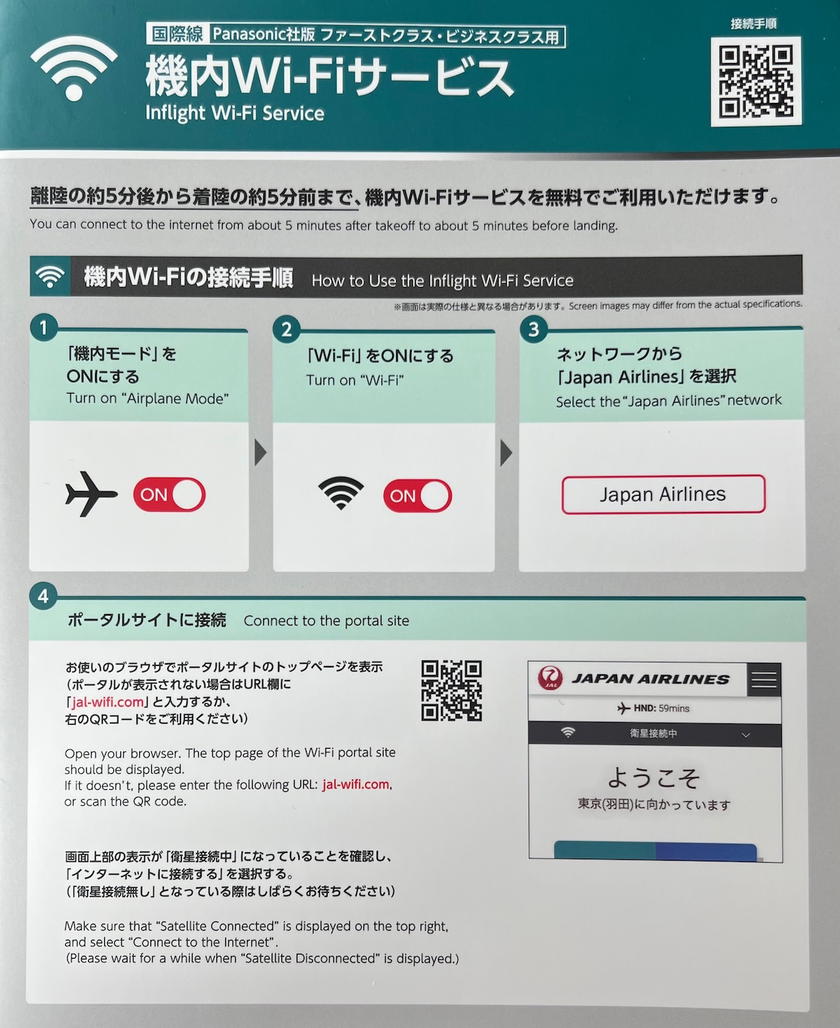
There’s a pamphlet in the literature pocket explaining the process, and it’s 12 steps. They really make you work for it!
Japan Airlines A350 departure from Tokyo
Boarding was super efficient, and wrapped up by 11AM, just 25 minutes after it started. Even though the A350-1000 is a big beast, Japan Airlines has the least dense configuration of any airline, with just 239 seats.
Once the door closed, the cabin chief announced our flight time of 11hr40min, and then screened the safety video. At 11:10AM we started our pushback, and then we started our taxi five minutes after that. Unfortunately it was a rainy day in Tokyo, making it hard to take pictures out the window.
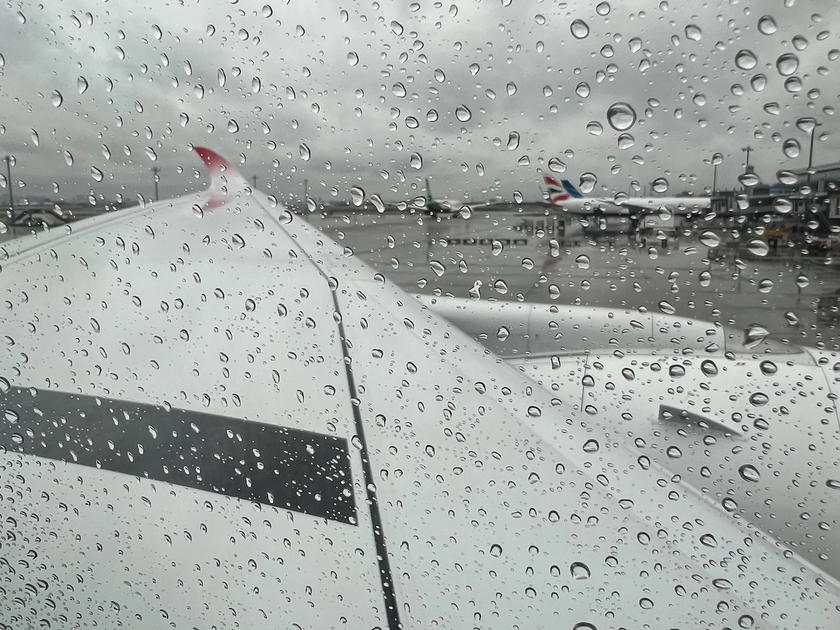
We taxied out to runway 34R, which took around 10 minutes. Between the incredible wing and engine view out my window, plus the tail camera on the entertainment system, I really struggled with deciding which direction to look.
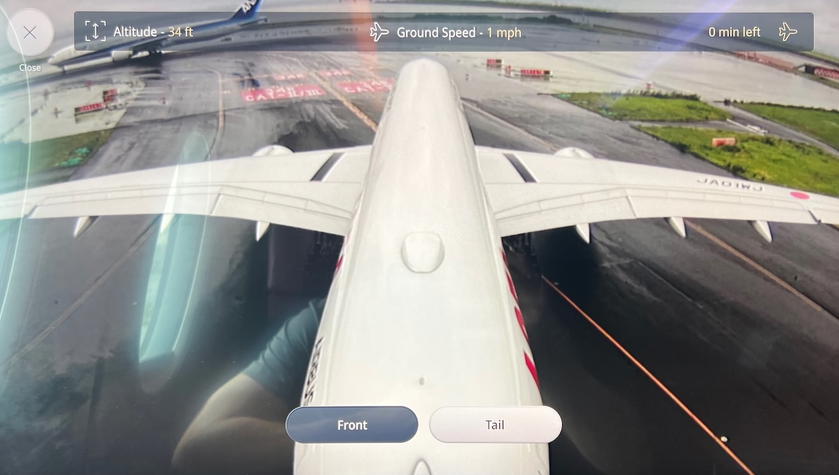
There was a bit of a queue for takeoff, and at 11:35AM it was finally our turn, and we rocketed down the runway.
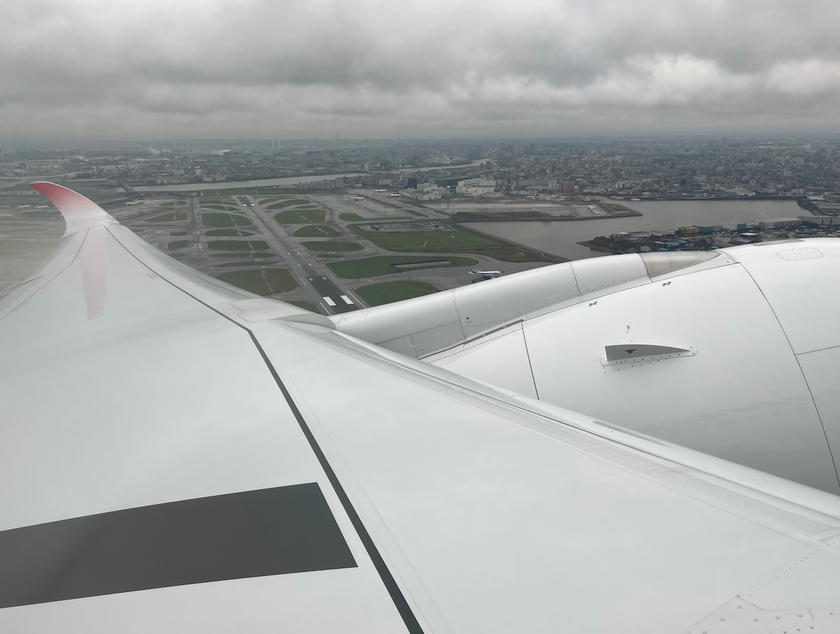
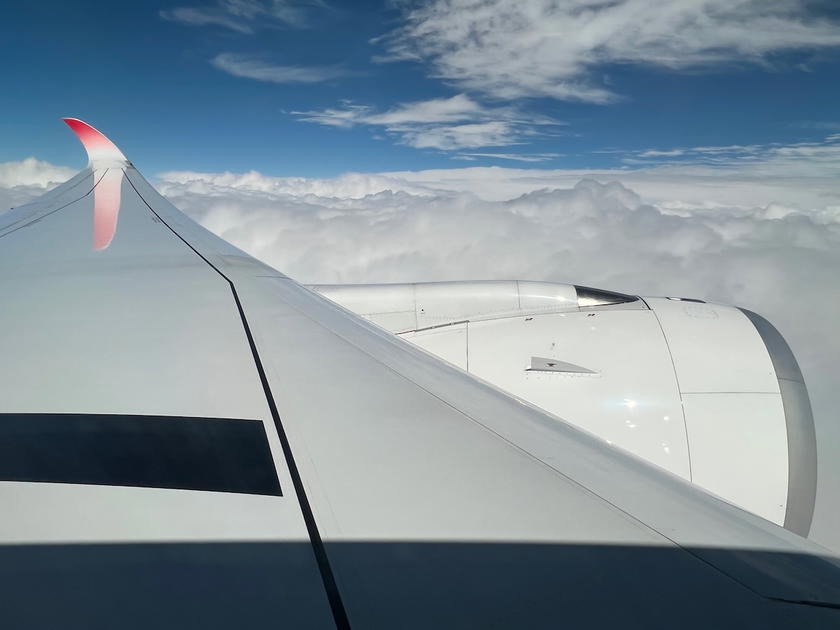
It was a rather bumpy climb out, with some high level clouds. Even when we reached our initial cruising altitude of 35,000 feet, we had to deviate our path a bit to avoid weather, as there were thick clouds at our altitude. The seatbelt sign stayed on for around 30 minutes, which is rare on a Japanese airline (where it’s usually turned off minutes after takeoff).
Japan Airlines business class lunch service
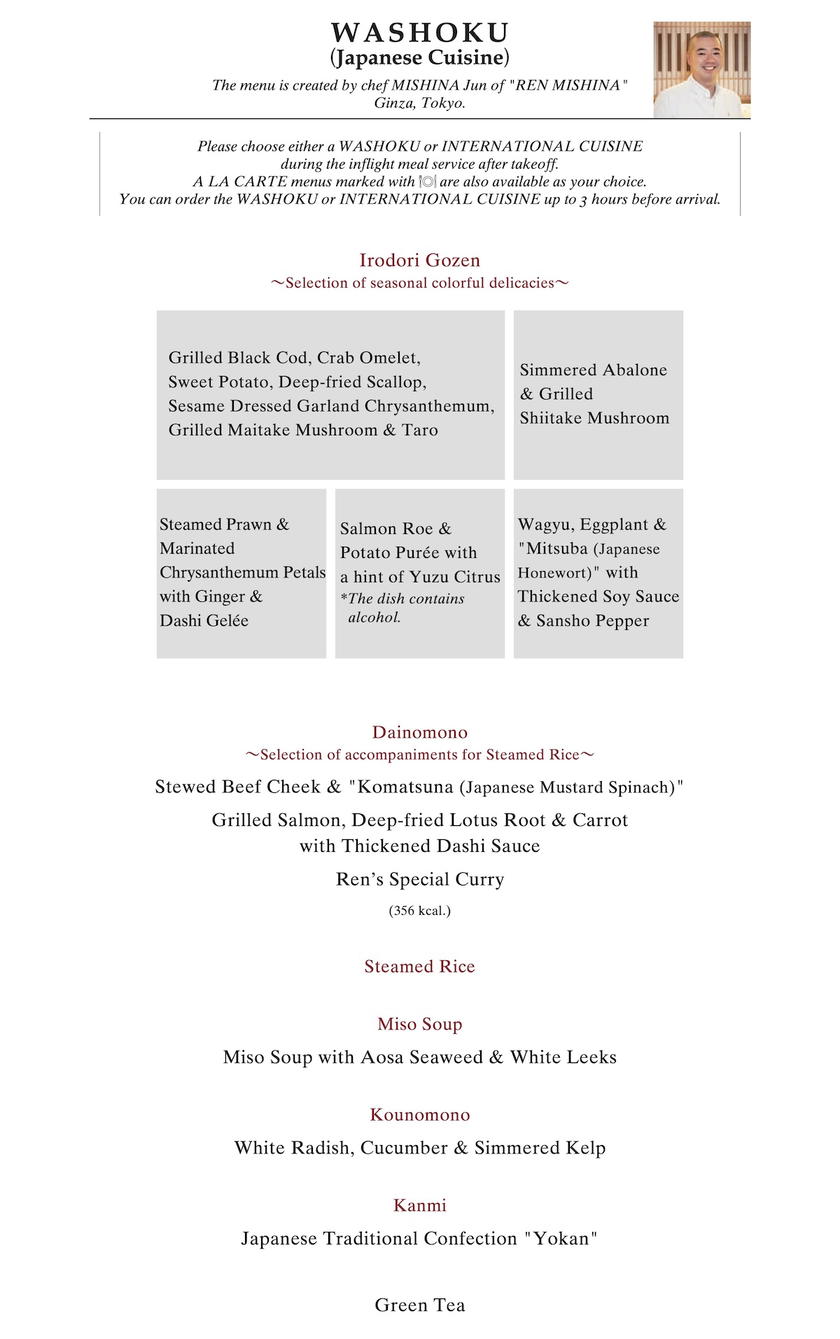
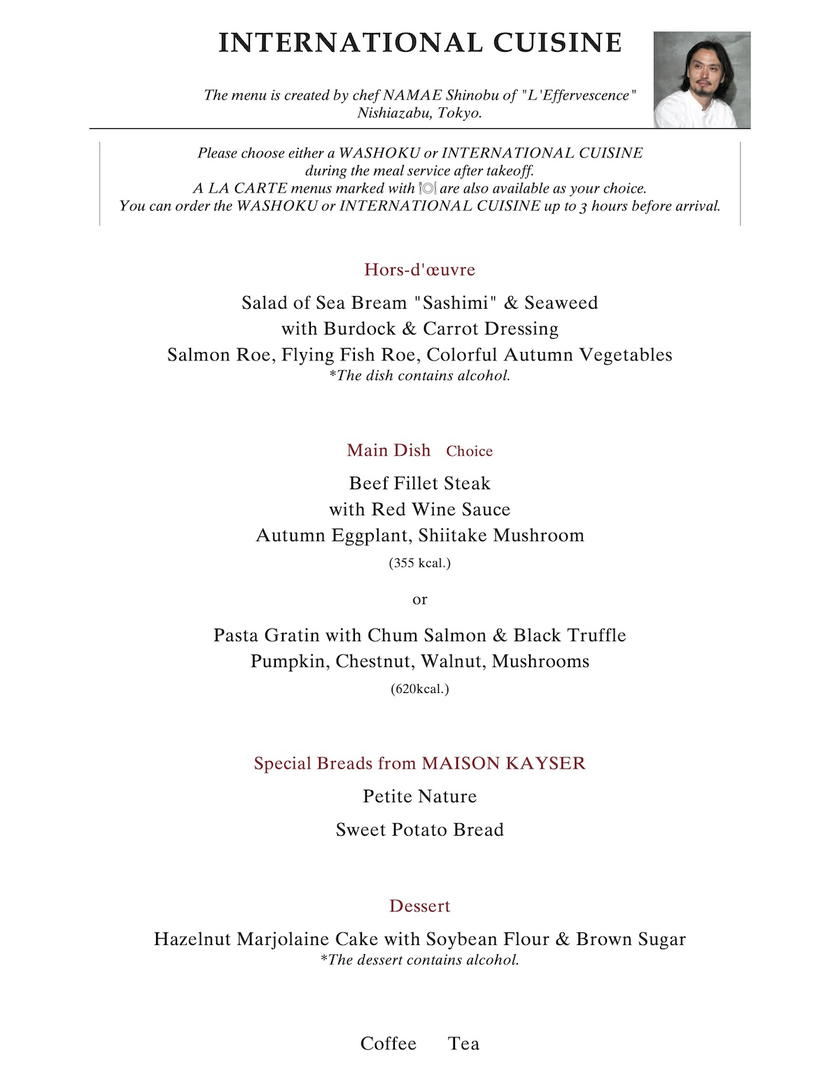
On this flight, Japan Airlines served a main meal after takeoff, and then had a dine on demand concept for the rest of the flight. You can find the primary meal menu below, which included both a Japanese and Western option.
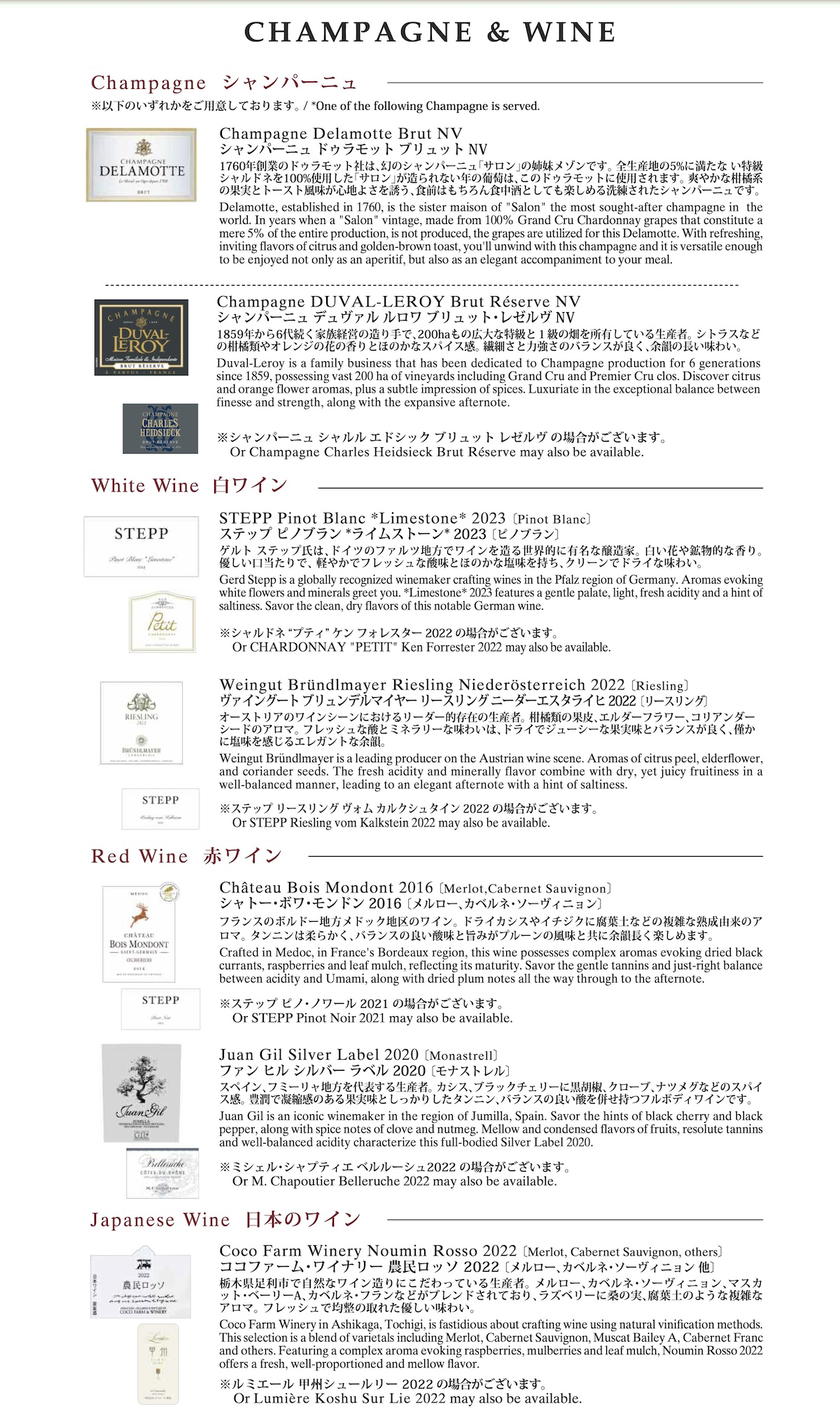
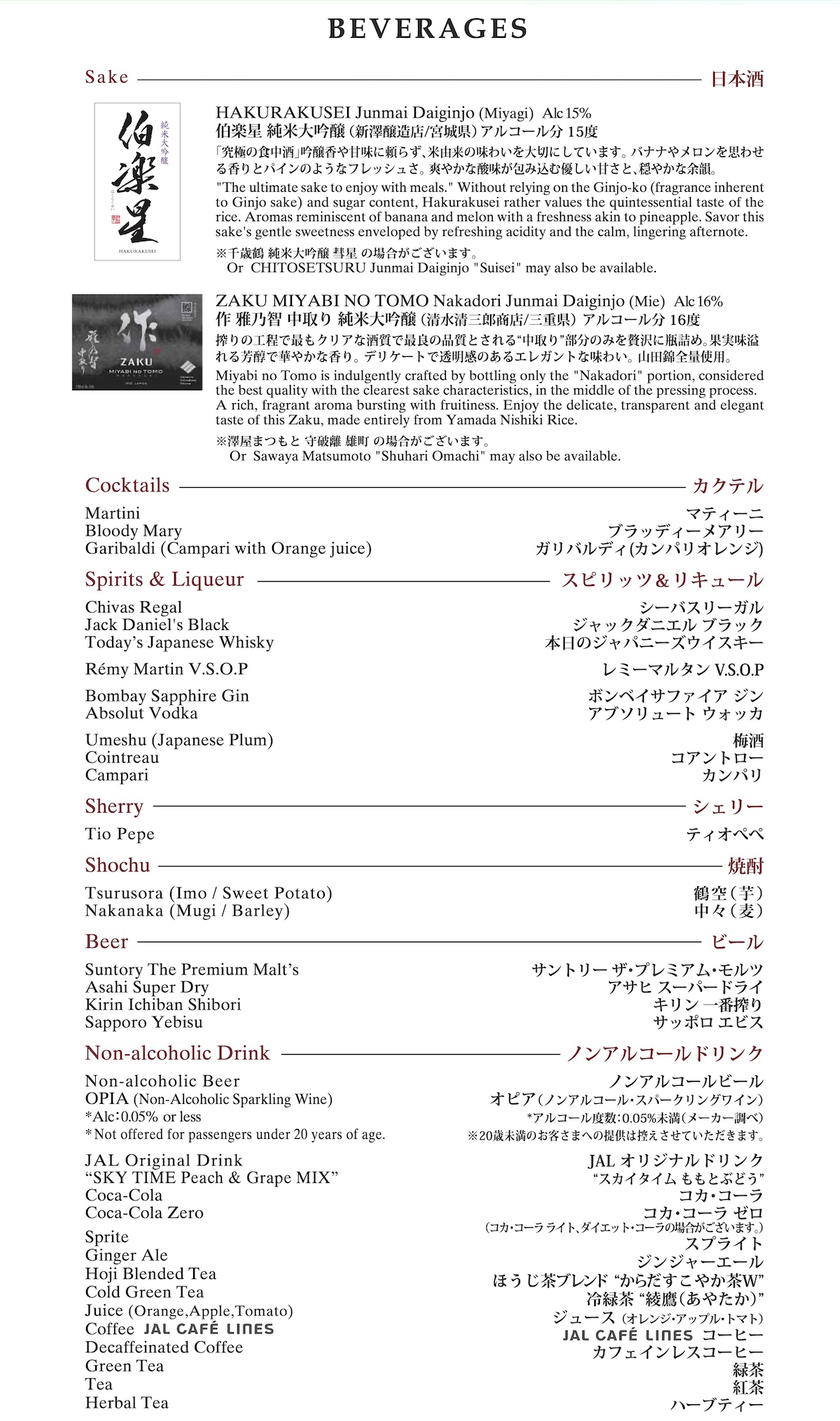
Then you can find the drink list below.
Service started a little under an hour after takeoff (this was delayed due to turbulence), with warm towels being distributed first, followed by tablecloths.
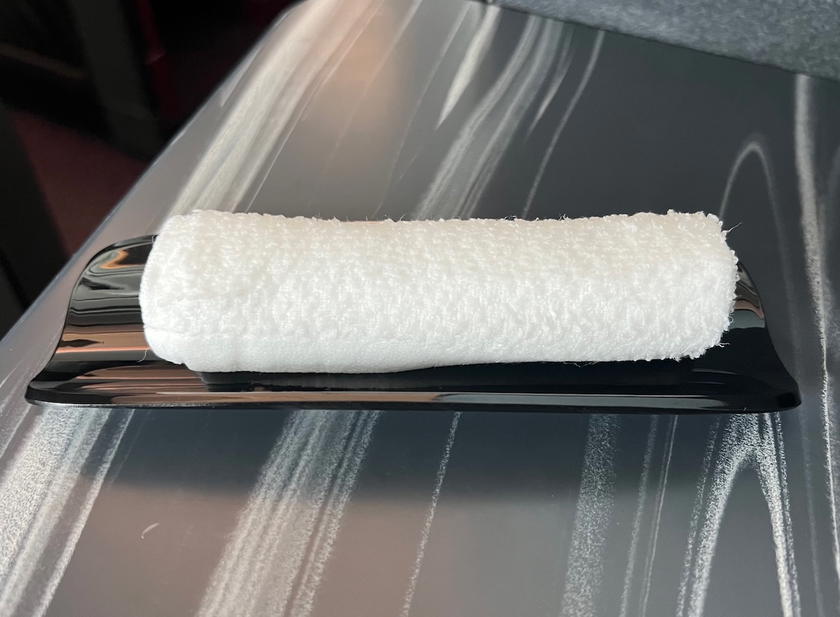
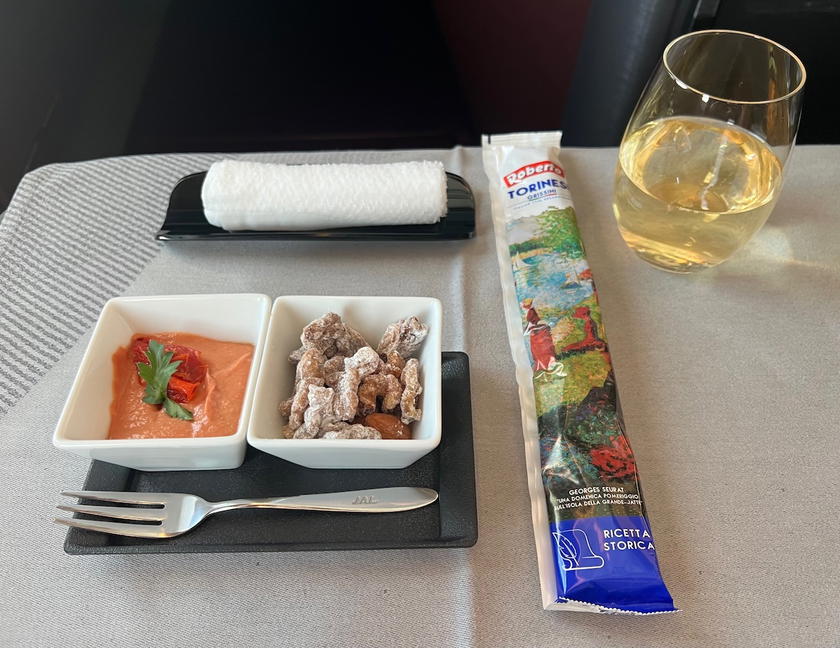
At that point drinks and canapés were offered. I had a glass of champagne — Japan Airlines currently serves Champagne Delamotte Brut in business class. The canapés consisted of candied walnuts plus some breadsticks with dip, which I found to be an interesting combination.
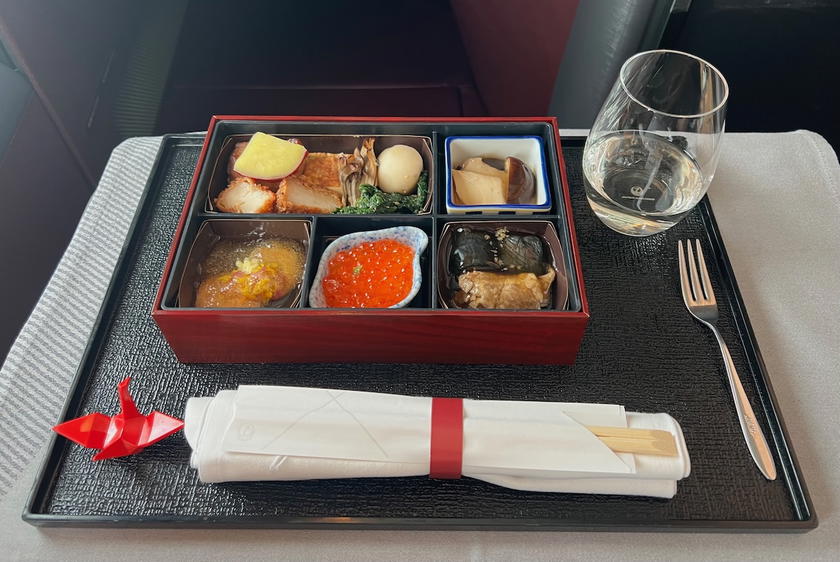
For the meal, I selected the Japanese option. So a little under 90 minutes after takeoff, I was brought the first course. You can see the menu above to see the details of each item. I found this to be excellent, and had some sake to accompany the meal.
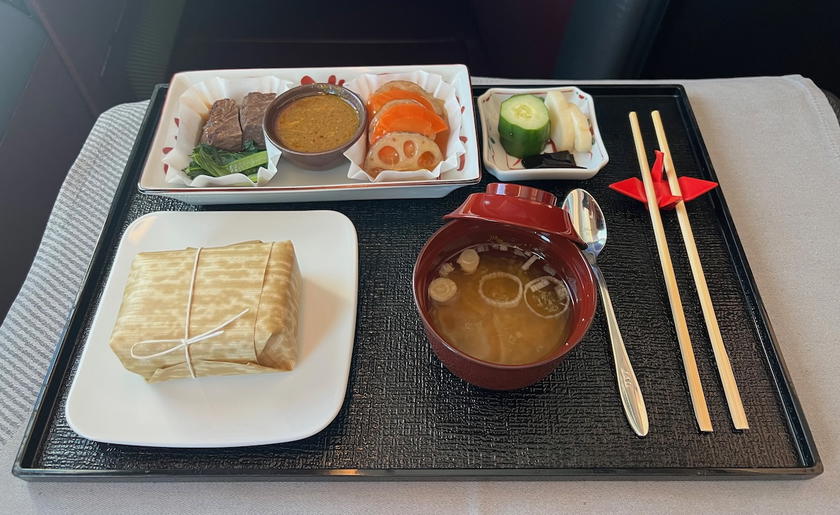
Once that was cleared, the main course was served, which consisted of stewed beef cheek with Japanese mustard spinach, grilled salmon, deep fried lotus root, miso soup, rice, and more.
Dessert consisted of the Japanese confection “yokan,” and green tea.
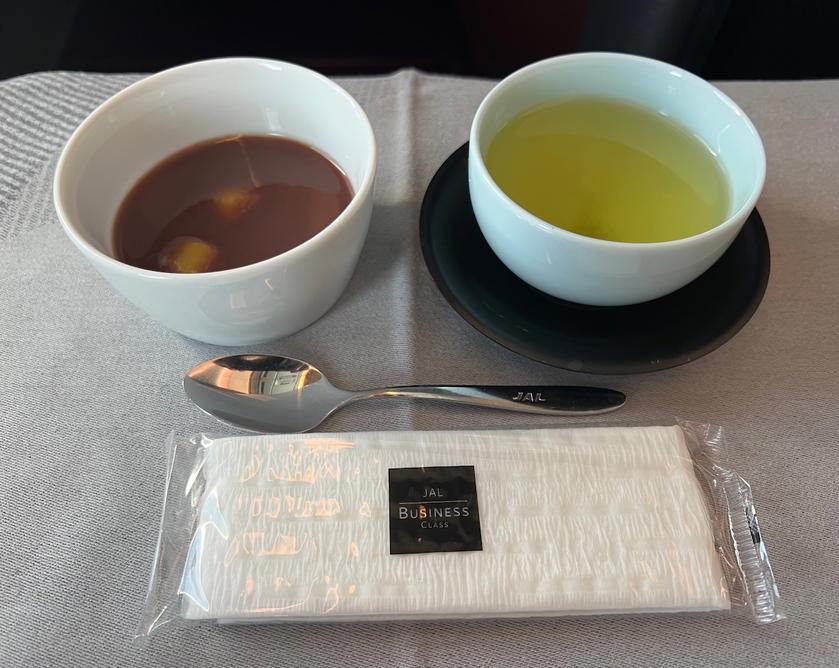
What a fabulous meal. The food and drinks were tasty, and service was attentive, with the crew constantly checking if they could provide anything else.
Japan Airlines A350 business class lavatories
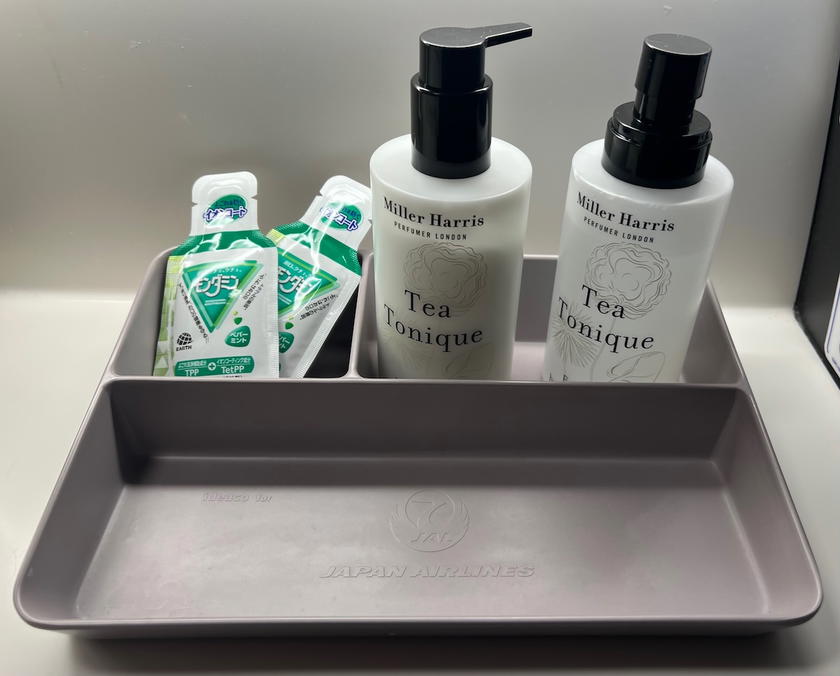
Japan Airlines’ A350 business class has three lavatories, all located in the center galley between the two business class cabins. There’s one lavatory on the left side and two on the right side, and they’re all roughly the same size. They’re not terribly spacious, but were modern and spotlessly clean. I love how when you fly with a Japanese airline, the lavatory is as clean when you land as it is when you takeoff.
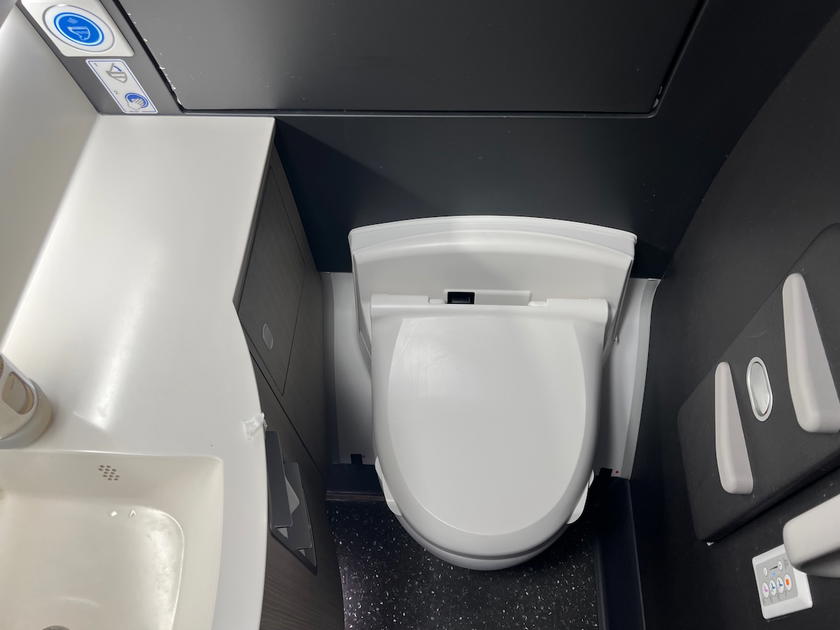
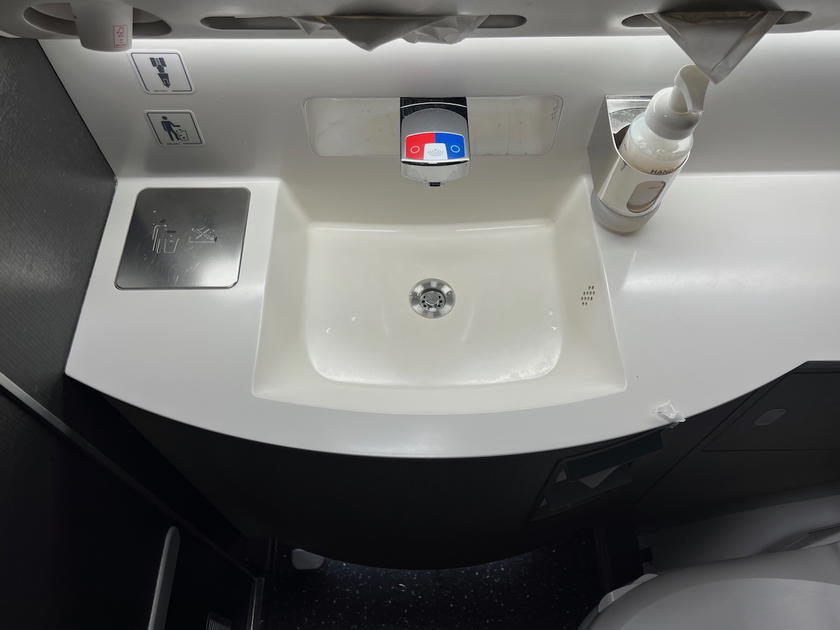
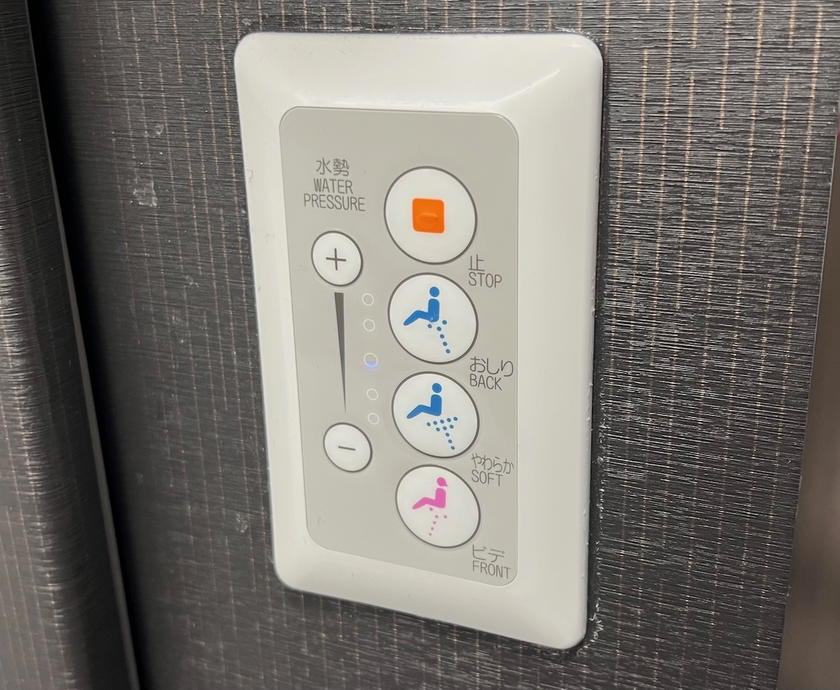
I also appreciate how they have a bidet function, and the lavatories are also stocked with some extra amenities.
Japan Airlines A350 business class bed
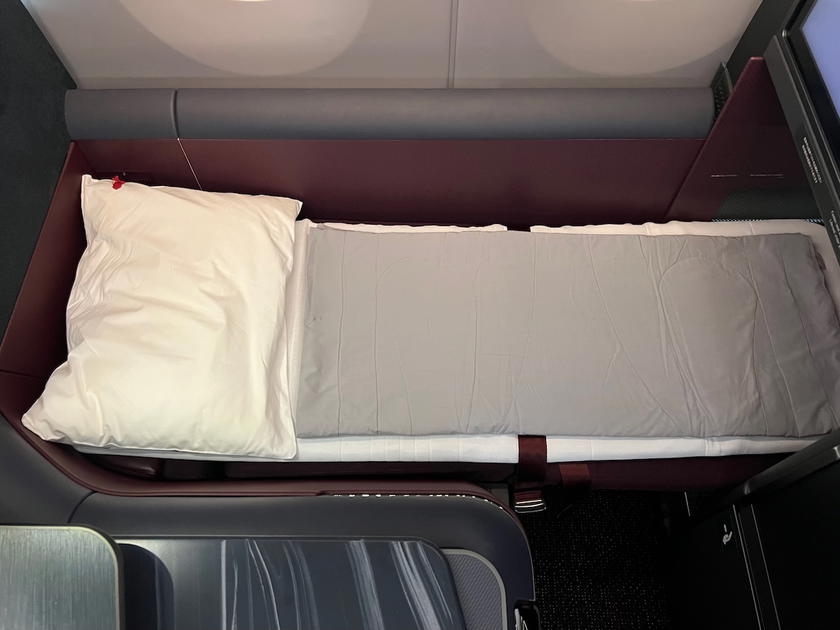
At the conclusion of the meal I decided it was time to get some rest, as I didn’t get much sleep the night before, at the First Cabin Haneda. So I made my bed, which I found to be comfortable — it was spacious, and the seat was soft thanks to the mattress pad. I also found the bedding to be cozy without being overly warm.
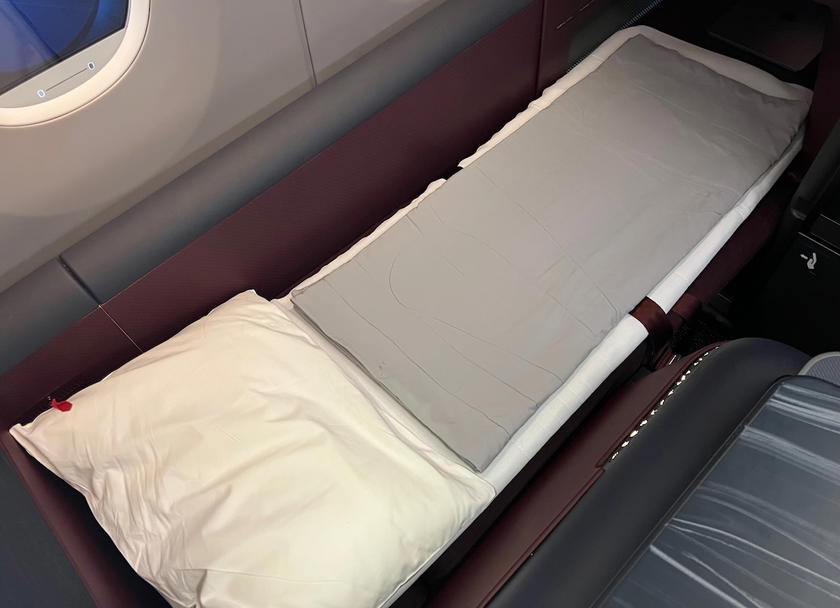
While I don’t like how Japan Airlines doesn’t have individual air nozzles, I have to give the crew credit for keeping the cabin at a reasonable temperature, as I didn’t find myself warm at any point.
I ended up falling asleep with around nine hours remaining to New York, as we were off the coast of Russia’s Kamchatka Peninsula.
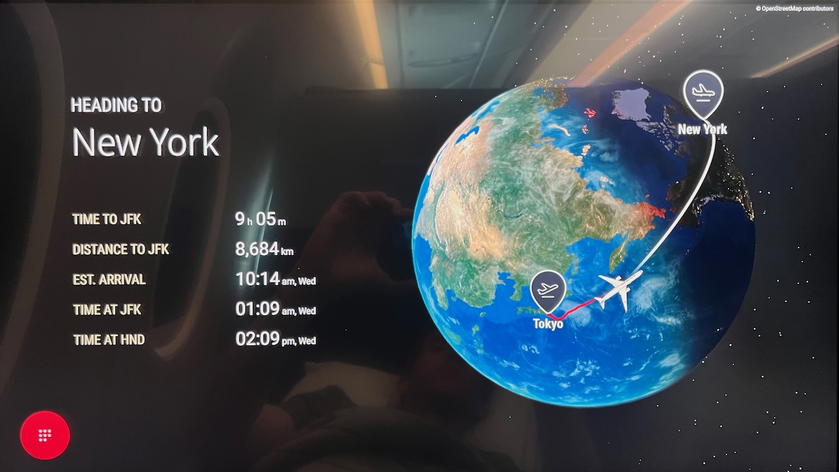
I woke up a little over five hours later, with around 3.5 hours remaining to New York, as we made landfall over North America, near the United States and Canada border.
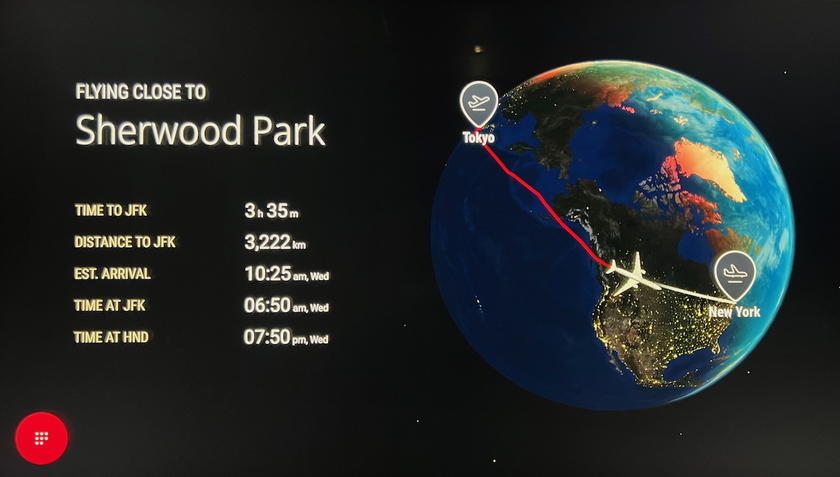
I’m not a great airplane sleeper, so over five hours of interrupted sleep is excellent, by my standards.
Japan Airlines business class breakfast
The crew was constantly passing through the cabin, so within minutes of waking up, one of the flight attendants stopped by my seat to see if I wanted anything. I ordered a cup of coffee with some milk, which was promptly served.
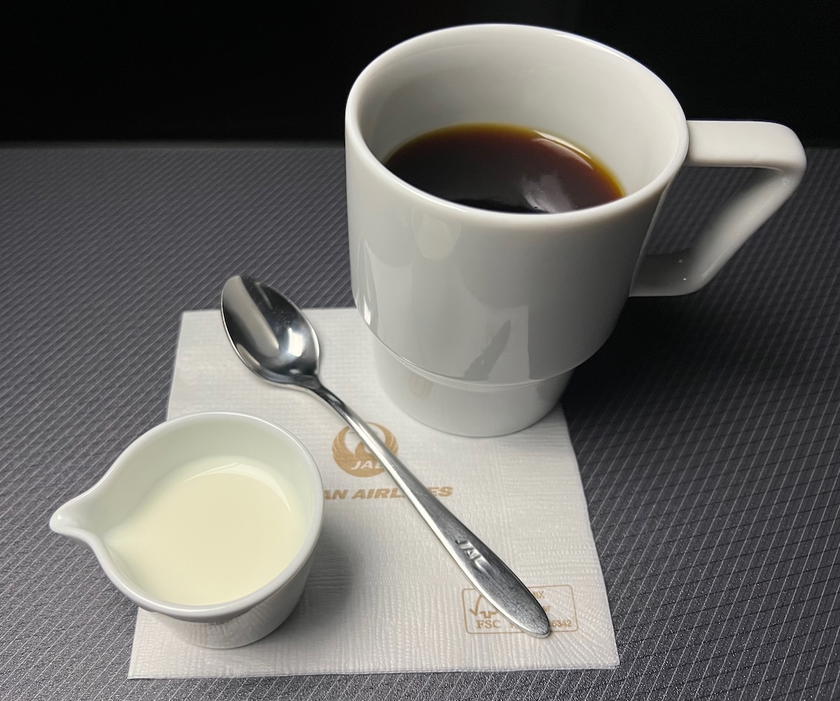
I popped open my laptop and got some work done, and then around two hours before landing, I decided it was time to have my second meal. You can find the dine on demand menu below.
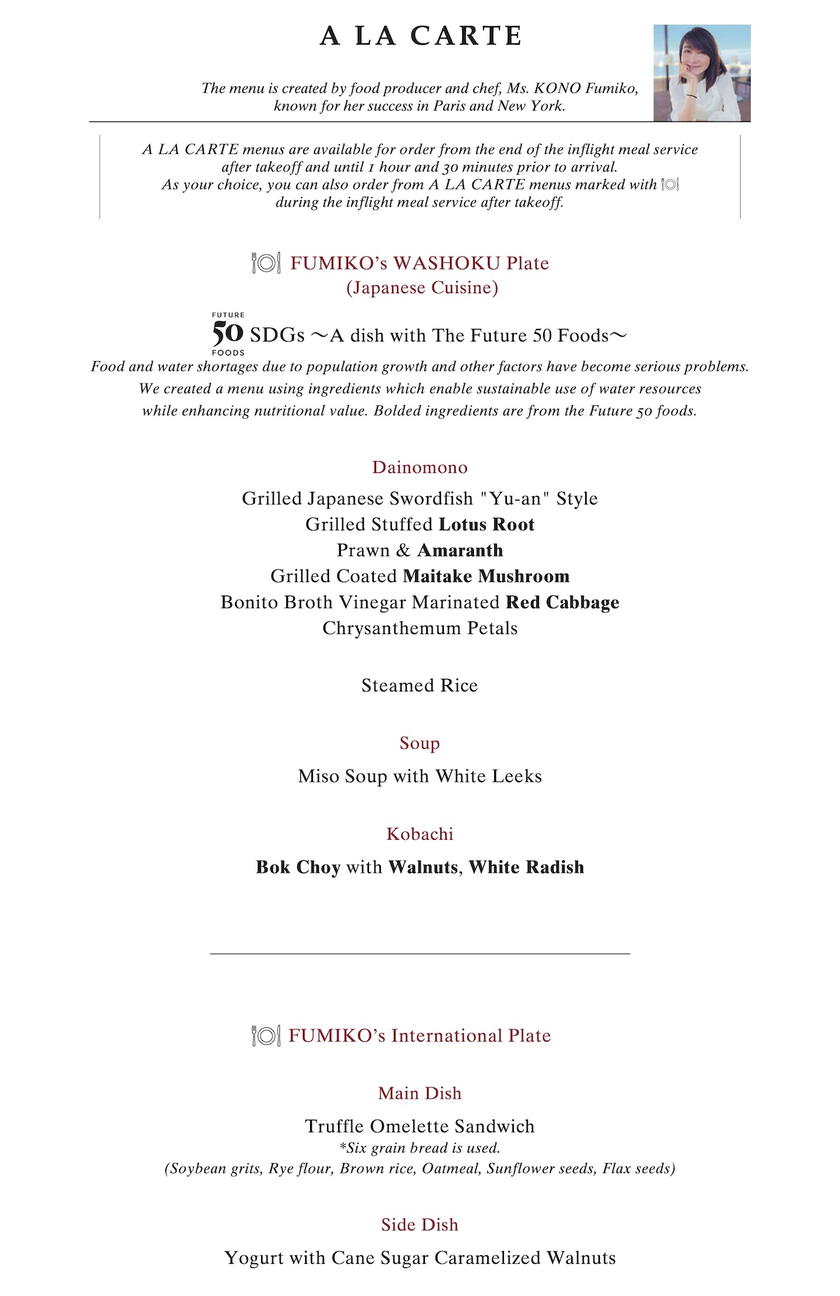
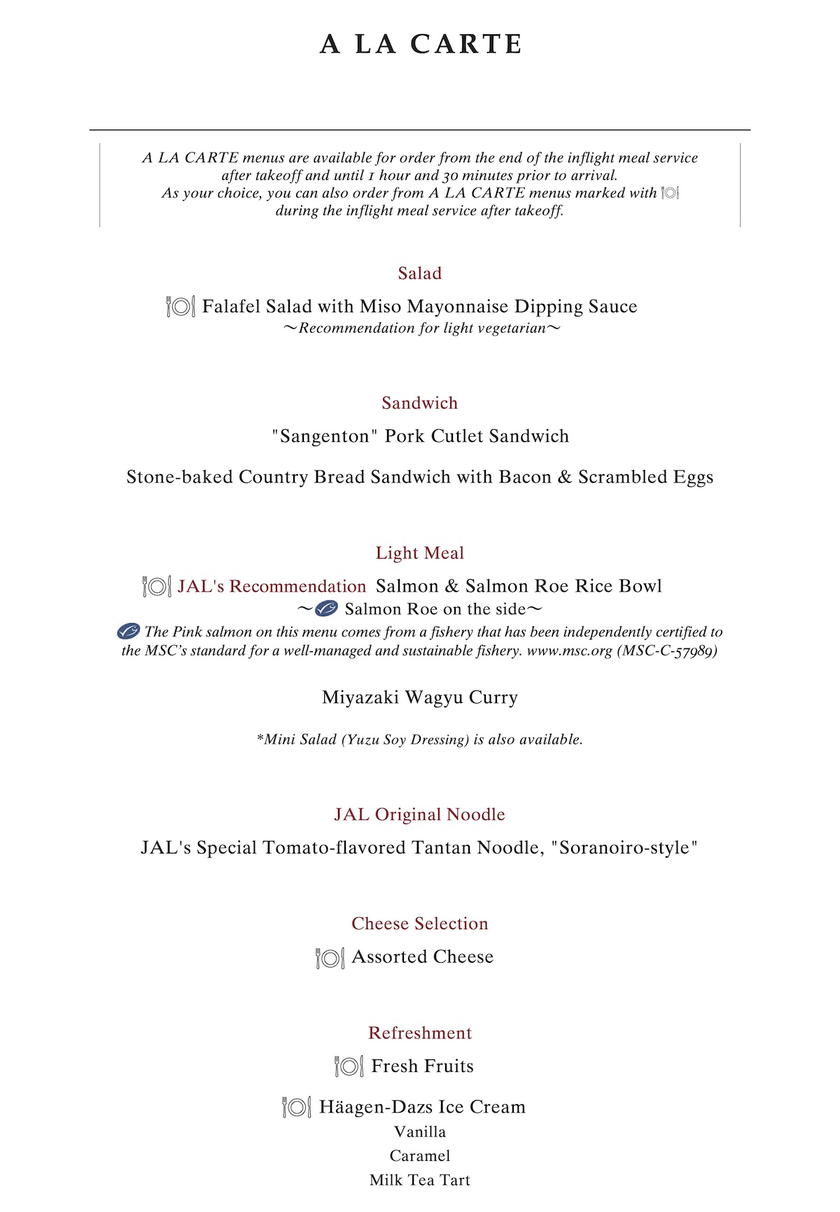
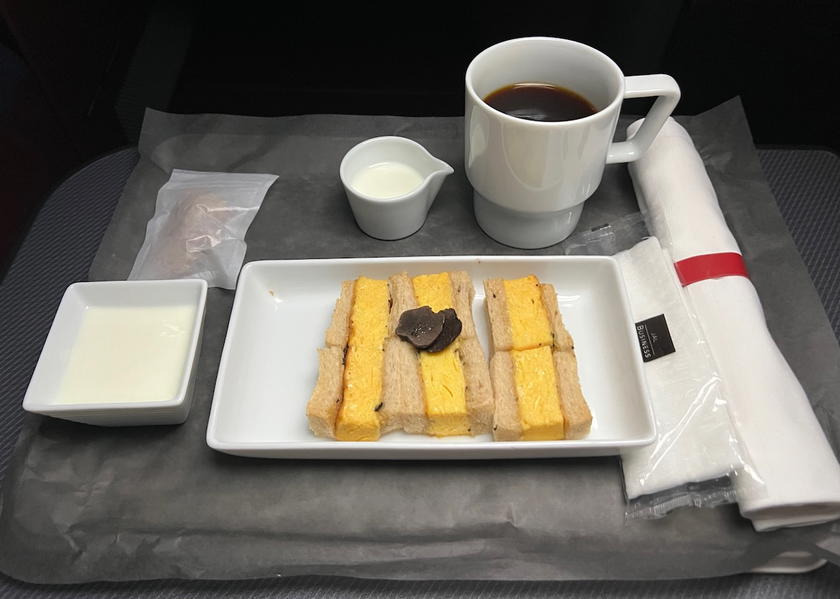
For breakfast, I decided to order the truffle omelet sandwich. This was ridiculously decadent and delicious, possibly the best egg dish I’ve ever had on a plane.
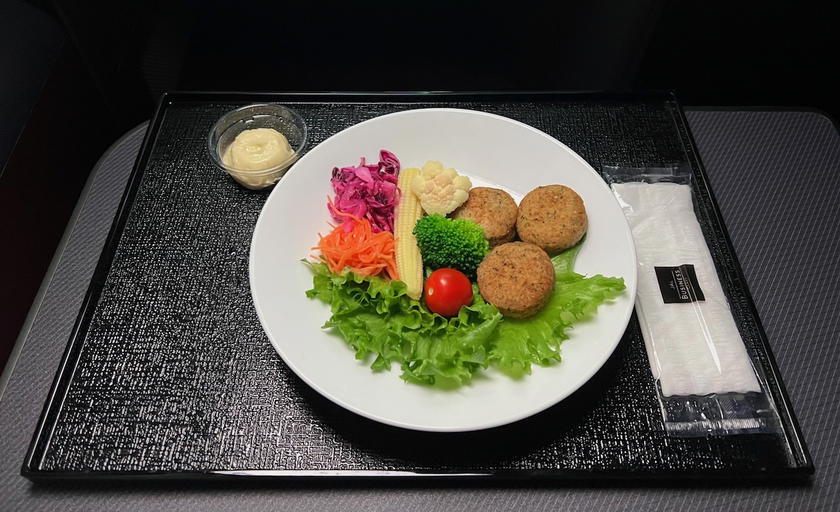
I was still a bit hungry, so decided to order the falafel salad with miso mayonnaise dipping sauce, which was also very good.
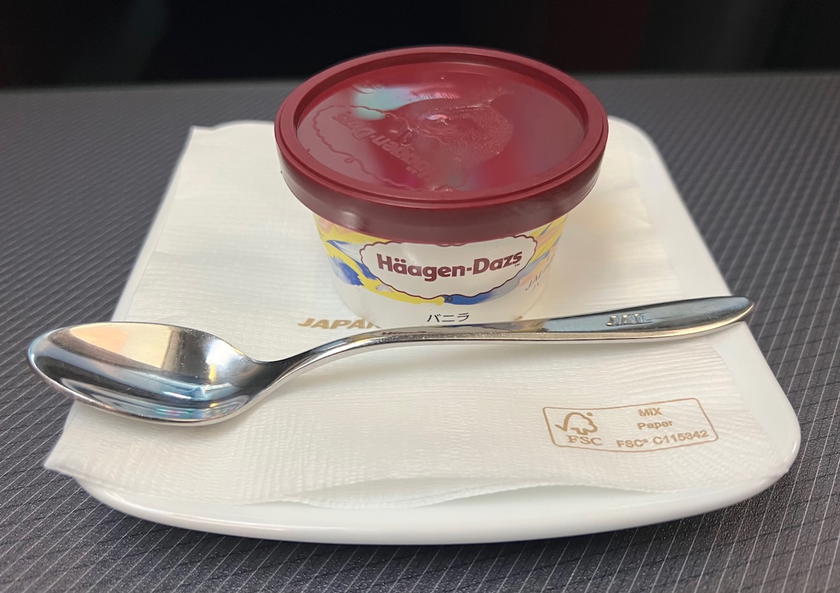
At the conclusion of the meal I was asked if I wanted dessert, so I figured I should get some Haagen-Dazs, for the picture, if nothing else. 😉
Japan Airlines business class service
Service in Japan Airlines business class was simply flawless. When talking about Japan, of course you can count on service being friendly and well intentioned, and that was the case here. But even beyond that, the entire crew had an eye for detail, and went above and beyond to constantly check on passengers.
Japan Airlines A350 arrival in New York
Before I knew it, we were already preparing for our approach to New York. At 10AM the captain announced that we’d be landing in around 30 minutes, and advised the flight attendants to prepare the cabin for landing.
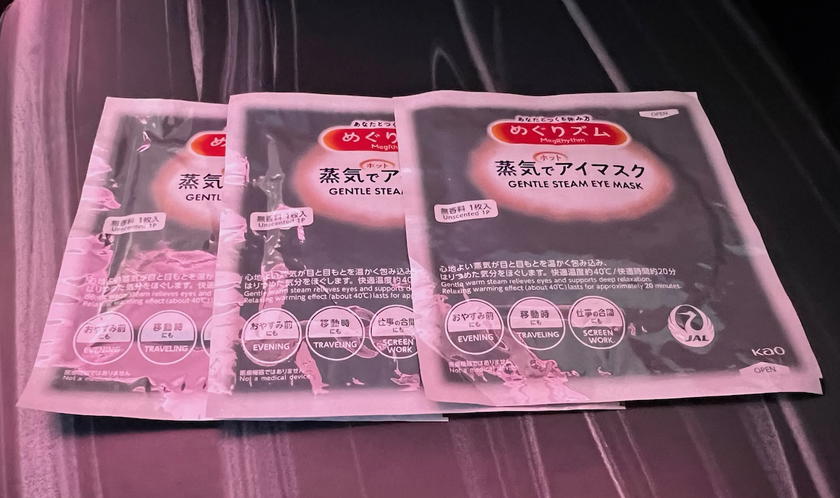
On the descent, the crew distributed a variety of amenities that passengers could take with them. I was very excited when I saw the steam eye masks, which I really enjoyed on my last Japan Airlines flight in first class. When the flight attendant saw my enthusiasm, she handed me a few. Ford makes fun of me for how much I like these… and he’s probably justified.
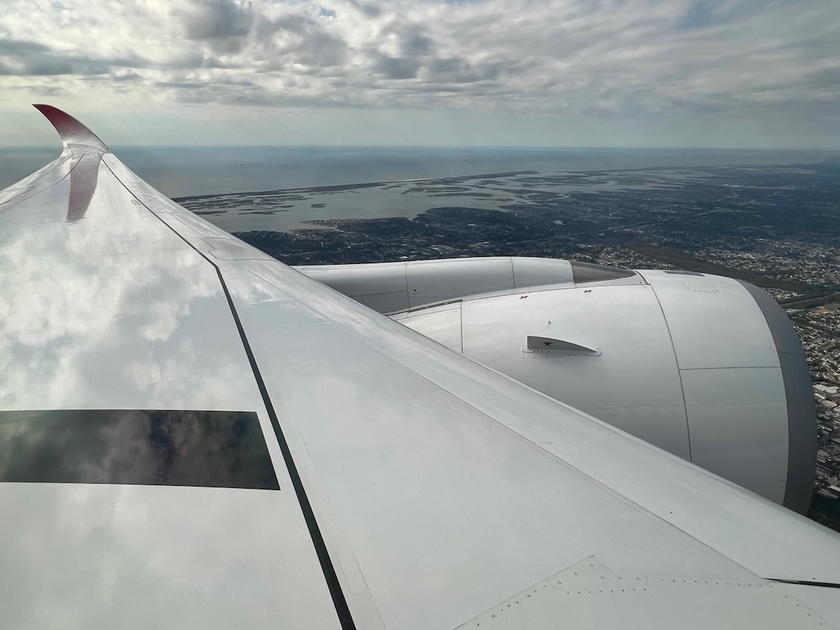
The seatbelt sign was turned on around 10:15AM, and I loved the views of the coast as we approached JFK.
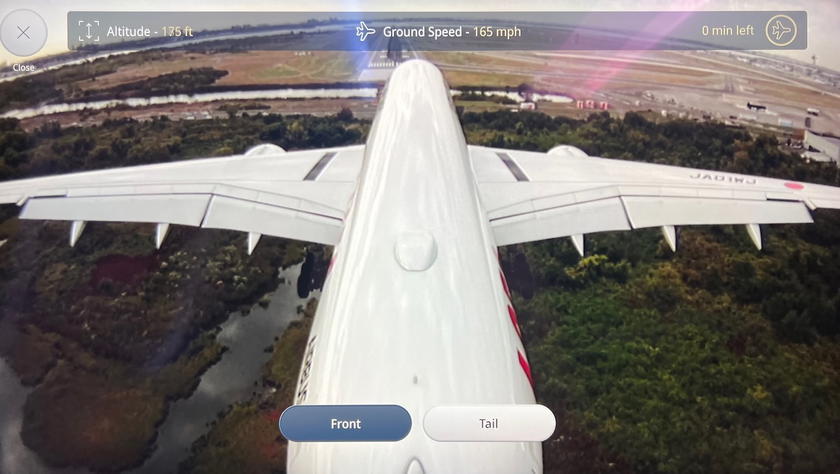
We had a smooth touchdown at 10:30AM…

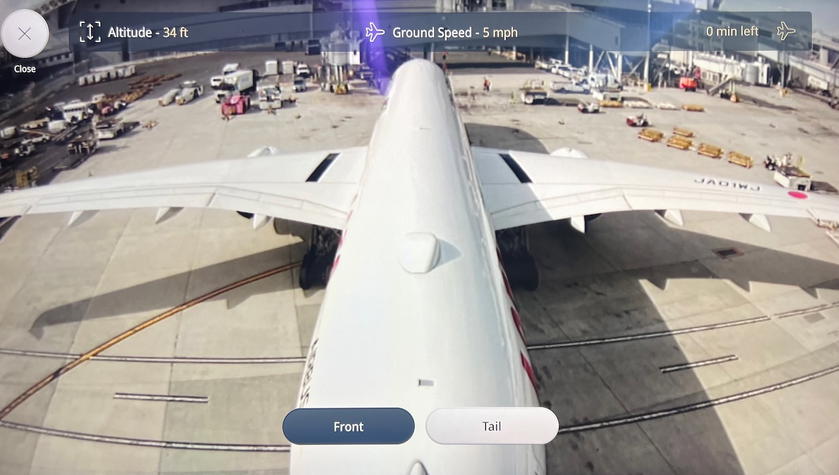
…and from there had a roughly 15-minute taxi to our arrival gate, where we pulled in at 10:45AM, 15 minutes ahead of schedule.
Bottom line
Japan Airlines’ Airbus A350-1000 business class is a winner in every way, and is among the best in the world. There’s so much to love about this experience. The Safran Unity seat is spacious, and has plenty of storage, all while offering lots of privacy. Japan Airlines also offers excellent tech, from bluetooth audio, to in-seat speakers, to wireless charging.
That excellent hard product and tech combines beautifully with a top notch soft product, including tasty food and drinks, friendly service, and impressive amenities. This is easily one of my favorite business class products in the world, and I can’t wait to fly it again.
Thanks for following along with this trip report series, and stay tuned for the next one, which will be published shortly.
What’s your take on Japan Airlines’ A350 business class?


Membership is free and takes no more information than commenting as a guest. Earn status points for good contributions, and see fewer ads as your status grows.