Malaysia Airlines Has A Creative Plan For Their A380s

For quite a while now, Malaysia Airlines has been trying to get rid of their A380s. The airline has six A380s, though only really needs them for their London Heathrow route, which doesn’t require all six of them.
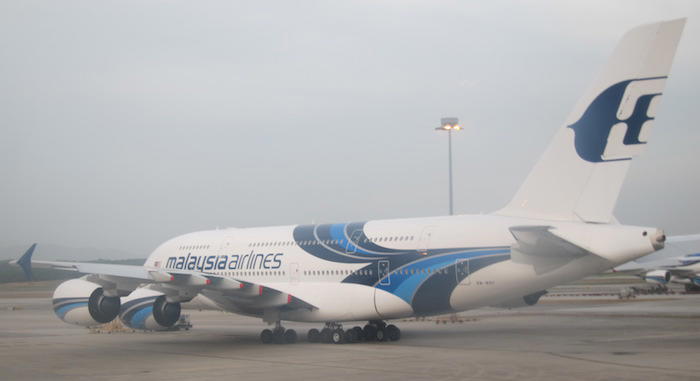
Malaysia-A380

Despite their best offers, unfortunately they haven’t found an interested party to buy or lease the plane. While the A380 has worked out extremely well for Emirates, otherwise the plane has been a bust, as airlines would much rather buy fuel efficient lower capacity planes, like the 787 or A350.

So without some creativity, Malaysia Airlines basically has the option between flying the planes at a loss, or parking them in the desert or at Kuala Lumpur Airport; none of those options is ideal.

However, Malaysia Airlines’ new CEO (the previous CEO left for Emirates), Peter Bellew, seems to have an interesting solution for the troubled plane. He wants to create a sister business for Malaysia Airlines where they wet lease the A380 to other carriers on a short term basis. He could also see value in using A380s for more Hajj and Umrah flying (Malaysia Airlines already does those charters, but can expand them further).

Per RoutesOnline:

“What we will have to do is be imaginative,” he said. “There is a clear opportunity for the aircraft from markets such as China, but airlines don’t want to buy the aircraft and are nervous of such an investment, yet they have routes that can clearly support the operation of the type on a wet-lease basis.”

The tentative plan will see the formation of such a wet-lease operator that will be a sister business to Malaysia Airlines that could see the aircraft remain flying for charter work and third party contracts.

“We have all the infrastructure for the aircraft from training through operations to maintenance so can provide a one stop shop to any operator,” explained Bellew. “I really do think there is a business out there for such an offer.”

Bellew acknowledged that the aircraft will likely remain in Malaysia Airlines operation through to late 2018 to support Hajj and Umrah flying and could continue to play a role in this market. “The Hajj and Umrah is now a 9-10 month business and the Boeing 747-400s are getting towards end of cycle.  The A380, perhaps in a higher density arrangement to how we fly it, will be an ideal aircraft to support this market. I see a future for the aircraft doing this.  I think it could ultimately absorb 6 to 12 aircraft,” he said.

Interesting stuff! So not only does Bellew see value in wet leasing their existing planes, but it seems that he sees this as a business that could be expanded further, with 6-12 planes.

I’m curious to see if Malaysia Airlines follows through with this. While I think there’s a business case for short term wet leases in general, I question whether that demand exists for the A380. Aside from pilgrimage flights, I have to wonder how many markets are big enough to support that on a temporary basis.

What do you make of Malaysia Airlines’ plan to offer short term wet leases on their A380s?

Conversations (27)
The comments on this page have not been provided, reviewed, approved or otherwise endorsed by any advertiser, and it is not an advertiser's responsibility to ensure posts and/or questions are answered.
Comment as a member

Membership is free and takes no more information than commenting as a guest. Earn status points for good contributions, and see fewer ads as your status grows.

Type your response here.

If you'd like to participate in the discussion, please adhere to our commenting guidelines. Anyone can comment, and your email address will not be published. Register to save your unique username and earn special OMAAT reputation perks!

  1. Loading comments…
Recent Comments
The latest from the OMAAT community.

The comments on this page have not been provided, reviewed, approved or otherwise endorsed by any advertiser, and it is not an advertiser's responsibility to ensure posts and/or questions are answered.

William Guest

@Zach @Shankar You two racists do realise that MAS during its renaissance and glory was run by mostly Malays right? MH had continued to strive as among the best until 2010 including bagging multiple international accolades. No one had the cheek to say the success then was because it was ran by Malays, but rather because it was driven by people with expertise, passion and professionalism. Therefore the receding performance by MH financially cannot be linked to only a race. MH pride itself as a flag carrier and its multi-ethnic cabin crew, and so do most airlines. If you wish to be racist and intolerant, kindly excuse yourself from commercial aviation world, you are irrelevant and disrespectful to one of the most harmonious and undiscriminating industries in the world.

0
‼ 0
M.Danial Guest

I sincerely believe that rebranding is not really necessary here. KE used to have quite a damaged reputation after some fatal crashes in the past but they never went on any rebranding exercise. Now they are regarded as one of the most highly regarded and respected airlines in the industry in terms of service, brand and safety records. A truly world-class to say the least. All MH needs now is not to waste money on rebranding but instead focus on improving both their ground and on-board services, enhance their reliability in terms of reducing delays and have a better management team in place which could spearhead the company and restore it to its former glory. The two disasters were freak accidents and most well-informed people will not judge the carrier solely based on this as it could have happened to any airline.

0
‼ 0
Kok Chwee SIM Guest

The devil is always in the details ... and unless MAS goes beyond merely stating a wish to wet-lease them to other airlines, it is going nowhere with its redundant A380 fleet. The present MAS brand with the wau-bulan logo is a seriously-damaged brand. Every time the media reports on MH370 and MH17, that logo is flashed. Why hasn't a re-branding been a part of the change that is taking place. Reducing staff count has not in any way change the laid-back attitude and service short-comings at the airline. The departure gate holdrooms of their flights at KUL International Airport is supposed to open an hour ahead of scheduled departure time. Routinely, this happens only 40 minutes ahead of the departure time and recently, I was on a flight whose gate opened more than half an hour late. The B777-300ER is an airplane that would have been available more quickly and represents a better match for the longhaul routes that MAS operates. Frankly, the A350s that are coming in the next few years might just be a little too small for the KUL-LHR and other key longhaul routes.

0
‼ 0
Harsiddh Amin Guest

How about using these aircrafts on routes of LAX / SFO and SYD / MEL during peak of the year as an additional frequencies on select days of week to lure good revenue and also to run aircrafts. This will be over and above the charter use during pilgimage time i.e : India, Indonesia etc besides leveraging Chinese New Year traffic within the region. You may take aid from Malaysia Tourism too to throw in some value adds for these flights take up. It will not be a bad idea to start new hubs in India which can support potential of traffic. A recent case of TZ starting MAA, ATQ and JAI with capacity of 335 with 787. Wish you a grand success and all the best.

0
‼ 0
Seattle Eric Guest

Can you edit the post to include a definition/description of what is a wet lease? I've never heard the term before, and was disappointed that no brief explanation was included. Does that mean they lease it out, but keep the Malaysia Livery intact? Eric

0
‼ 0

Save posts to read later

Saving posts is a member feature. Become an OMAAT member to build a reading list you can come back to from any device.

Become a member
Meet Ben Schlappig, OMAAT Founder
5,883,136 Miles Traveled

43,914,800 Words Written

47,187 Posts Published

Keep Exploring OMAAT