Constant Loyalty Program Changes Erode Loyalty

Airline loyalty programs are incredibly profitable enterprises for airlines, and they’ve evolved a lot over the past decade. Beyond the actual program changes as such, I can’t help but briefly reflect on the frequency with which changes are made, and how that impacts travelers’ perception and understanding of these programs.

Loyalty programs are hard to keep track of

Going back a decade, airline loyalty programs had a pretty consistent value proposition. They didn’t change much year to year, and once you were on the “hamster wheel,” it was pretty easy to understand what you needed to maintain status.
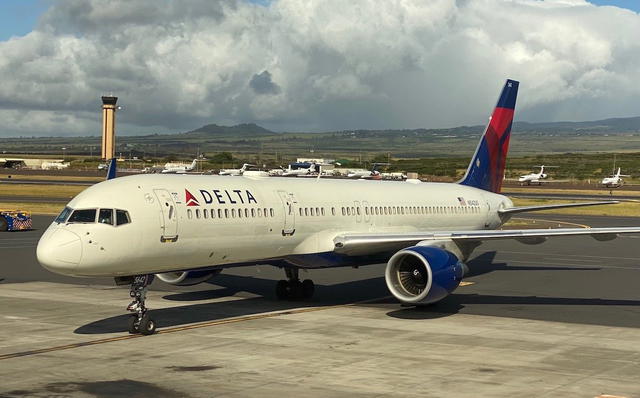
Nowadays it’s a different story. Airline loyalty programs seemingly reinvent themselves annually, and I don’t really get how the average (or even engaged) consumer is supposed to make sense of things anymore. For example, yesterday major changes were announced to the American AAdvantage program.

American announced that in 2023, it will be launching the Loyalty Point Rewards program. That replaces the Loyalty Choice Rewards program that’s active in 2022. And that already replaced the Elite Choice Rewards program that was active in 2021. Is it really necessary to reinvent this program year after year?

Perhaps in a vacuum and in front of a spreadsheet, reinventing a loyalty program every year makes sense. But in the real world, among consumers who don’t live and breath a loyalty program, I’d say it’s a different story.

I was recently on an American Airlines flight, and seated in front of me in first class were two frequent flyers who were both excited to share with one another how much they fly, and how much they know about AAdvantage. They must have talked about the program for an hour. Except probably 10 minutes into the discussion, it became totally apparent that neither of them actually understood the new Loyalty points system that kicked in as of 2022.

It would be one thing if that were the extent of the changes, but now they have a bunch of new changes to learn about.

It’s funny, because when airlines send emails to members about loyalty program changes, the buzzword “simplified” is almost always used. But you know what’s simple? Not having to learn a new program every year…

This all confuses me. I tend to think that if you have a product you’re trying to sell to someone, the most important thing is to make sure that they understand what they’re “buying.” We see customer service surveys go out all the time. I’d love to see airlines send out pop quizzes about the program, so they can get a sense of how much most members do (or don’t) understand about the programs they’re participating in.
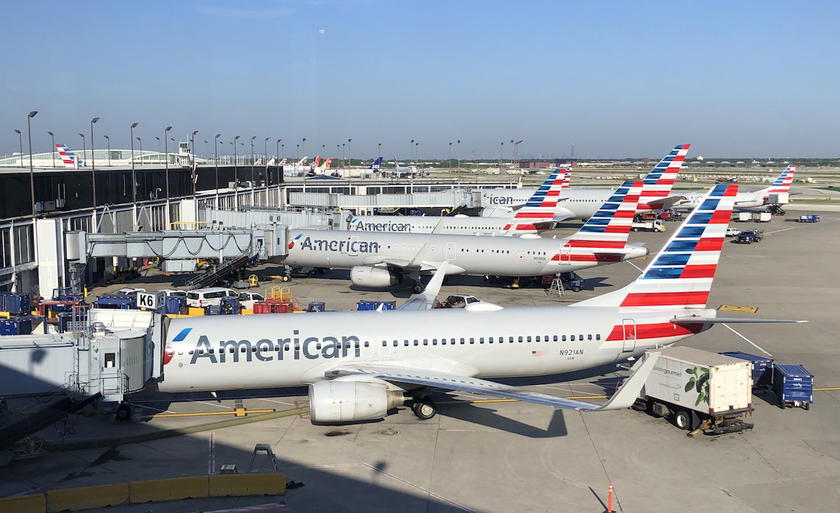
Do most consumers even understand airline loyalty programs?

There are a couple of other considerations

With the above out of the way, let me make a couple more points.

First of all, as you can see, I claimed that constant loyalty program changes erode loyalty. It’s important to acknowledge that loyalty isn’t really the objective with these programs anymore. In the United States, airlines barely make money flying passengers, but rather they make most of their profits from loyalty programs, and in particular their credit card agreements.

So for example, I think American’s new Loyalty Points system is brilliant from the carrier’s perspective, since it incentivizes the behavior that’s most profitable to the airline (which typically isn’t actually flying passengers, but rather spending on credit cards).

Next, I think in corporate America in general (and in particular in the airline industry), the phrase “correlation does not imply causation” is kind of important. Loyalty programs are wildly profitable for airlines, and you have a lot of people working there “doing things.” People can always some up with metrics by which they can show that what they’re doing is successful in some ways.

So while some changes have no doubt made loyalty programs more profitable, I’d argue that a vast majority of changes don’t move the needle all that much, other than confusing members. And I’d also argue that if a program needs to be changed significantly every year, then it’s probably not very well thought out.
Loyalty programs are wildly profitable for airlines

Bottom line

So many airline loyalty programs are being radically transformed every year, which causes confusion and frustration among members. In the past, airline loyalty programs were sometimes hard to understand, but at least they wouldn’t be changed annually.

Nowadays it seems like airlines want to reinvent their program year after year. You can no longer look at the value proposition of a program, say “this is the airline I want to be loyalty to,” and then expect the core value proposition to remain unchanged for years. Rather loyalty seems to be on the table for a year at a time…

Anyone else frustrated by the sheer number of loyalty program changes we’ve seen since 2016(ish)?

Conversations (106)
The comments on this page have not been provided, reviewed, approved or otherwise endorsed by any advertiser, and it is not an advertiser's responsibility to ensure posts and/or questions are answered.
Comment as a member

Membership is free and takes no more information than commenting as a guest. Earn status points for good contributions, and see fewer ads as your status grows.

Type your response here.

If you'd like to participate in the discussion, please adhere to our commenting guidelines. Anyone can comment, and your email address will not be published. Register to save your unique username and earn special OMAAT reputation perks!

  1. Loading comments…
Recent Comments
The latest from the OMAAT community.

The comments on this page have not been provided, reviewed, approved or otherwise endorsed by any advertiser, and it is not an advertiser's responsibility to ensure posts and/or questions are answered.

Mike Guest

Very Frustrated! I've been a loyal United Customer for over 33 years. In fact as I boarded my United flight yesterday when I scanned my boarding pass the gate agent smiled and said "Happy Anniversary and Thank You for your continued loyalty to United and Mileage Plus" it was My 33rd year anniversary enrolled in MP. United use to go decades without making changes in MP not the case anymore and how quickly the airlines have forgotten about the pandemic and how no one was flying. It's sad really as loyalty use to mean something now it's short term gains for greater profits that eventually catch up to companies that think this way. Really who's contributed more to the bottom line, a one time first class passenger or someone who's been loyal and also who's been Premier to United for 32 of my 33 loyal years? Think about that United as you and all airlines push us to the limit with yearly changes. I read we would all be smart to abandon the loyalty programs and fly based in service and price. If that was the case many airlines would be in trouble.

0
‼ 0
Samuel Guest

Yes, I am not flying that much (certainly not since the pandemic hit) and the constant devaluations make me seriously reconsider my loyalty. What good is it to pay more for a flight to earn some miles and save for a free flight in the future, whereas I can get the savings immediate if I fly with Ryanair or another lowcost carrier. I can get a priority pass if I want lounge access or even pay per visit. Business class intra-Europe is not great seatwise so I might simply fly economy and eat in the lounge.

1
‼ 0
DanNJ Guest

Been lifetime Plat on AA, and almost that on UA, and no longer really fly either of them. At this point, all our travel is done on whoever has the lowest fare and most reasonable departure/arrival times. I no longer care about the large US network carriers and haven't in many years. As a former addict, most people who are addicted to "loyalty" programs are either forced into the addiction by their company's travel departments deals with the larger carriers, or because they naively believe the junk they read on frequent flyer program websites (kinda like this one, and I do like this one!). Of course the carriers "devalue" these programs. With trillions of "miles/points" on members accounts that aren't claimed, and a need to squeeze every drop of revenue from every single seat on every single flight, giving stuff away for free is just dumb. What started out as an honorable and interesting idea turned into a stupid and vapid scheme to convince people they could get free glamorous travel to Paris for buying underwear and bacon. Joined AA Aadvantage in 1982, probably one of the first members, and it every year for the past 15 years there's hysterical headlines claiming "Devaluations coming" and idiotic posts of "we're going to sue"... uh hu, sure. For the past 6-7 years, we've only flown Low cost carriers, both in the US and globally, and candidly, I can't tell the difference. A chair screwed into an aluminum tube at 500 MPH... they're all about the same.

1
‼ 0
Tom Guest

I never understood why airlines based elite status on miles flown instead of spend. But now they also should know that I’m not loyal to any of them either. The miles are a scam. I just choose the cheapest fare, at the most convenient time. Flying today is just like taking a quick bus, but sometimes with free drinks and mediocre food.

0
‼ 0
Mike Guest

Lucky is spot on. Loyalty is not why airlines have these programs (it is the revenue generated through partners) so judging them as the Frequent Flyer programs of the 80s is pointless. I was flying an airline I don't fly often last week, on a plane that had no first or business class. I would say that 75% of passengers were in the priority boarding line. As we all know, lounges are now significantly more crowded. This demonstrates that unlike some other commentators argue - getting status *somehow* has become super easy.

1
‼ 0

Save posts to read later

Saving posts is a member feature. Become an OMAAT member to build a reading list you can come back to from any device.

Become a member
Meet Ben Schlappig, OMAAT Founder
5,883,136 Miles Traveled

43,914,800 Words Written

47,187 Posts Published

Keep Exploring OMAAT