
It goes without saying that a lot about the passenger experience when traveling by air has changed over the decades, both for better and worse. I think perhaps one of the most fascinating transformations we’ve seen over the years involves airport lounges, and how their purpose has completely flipped.
I’d like to talk about that in a bit more detail in this post, and share my approach to using lounges. Let me emphasize that there are of course all kinds of lounges out there, from international first class lounges, to international business class lounges, to Priority Pass, membership, and credit card lounges. This post is primarily about lounges that fall into that last category, in terms of being pretty widely accessible.
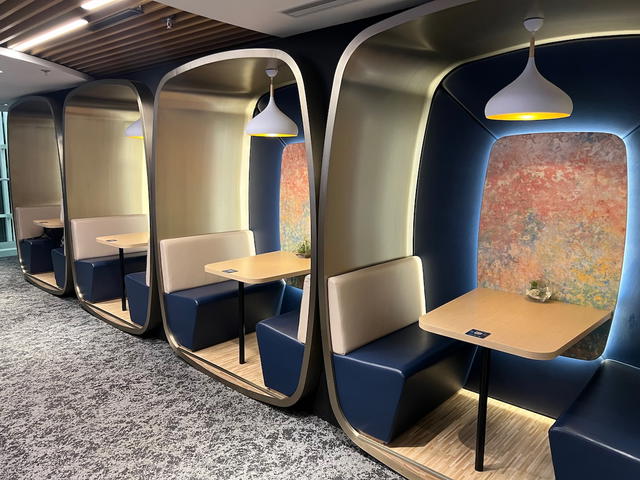
The purpose of airport lounges has shifted massively
Look, I’m not trying to sound like some boomer talking about how things were in “the good old days” (nothing against boomers… hi, dad!), but I think it’s interesting to compare how things were 15-20 years ago, to how they are today.
Back in the day, airport lounges — even the most basic ones — were primarily about escaping the hustle and bustle of the terminal, and having a quiet place from which to work, with free Wi-Fi and easy access to charging ports. At the time, free Wi-Fi and charging ports in terminals were incredibly rare. The food in most standard domestic lounges sucked — it was typically cubed cheese, snack mix, and not a whole lot else.
It also goes without saying that lounges were mostly very poorly monetized. Airport real estate is incredibly expensive, and lounges were primarily a cost center for their operators, as part of an overall value proposition for travelers.
Fast forward to today, and look at the state of lounges in the United States. Lounges have much better food than they used to, and they also have much better amenities than they used to. Also, exponentially more people have access to the lounges than they used to. They’re actually pretty nice destinations in airports.

The catch is that they’ve completely lost their initial purpose — they’re no longer a place you go to escape the crowds, and quite to the contrary, they’re often the most crowded place in a terminal. In many lounges you’ll find every single seat occupied, and even a very long waitlist to get in.
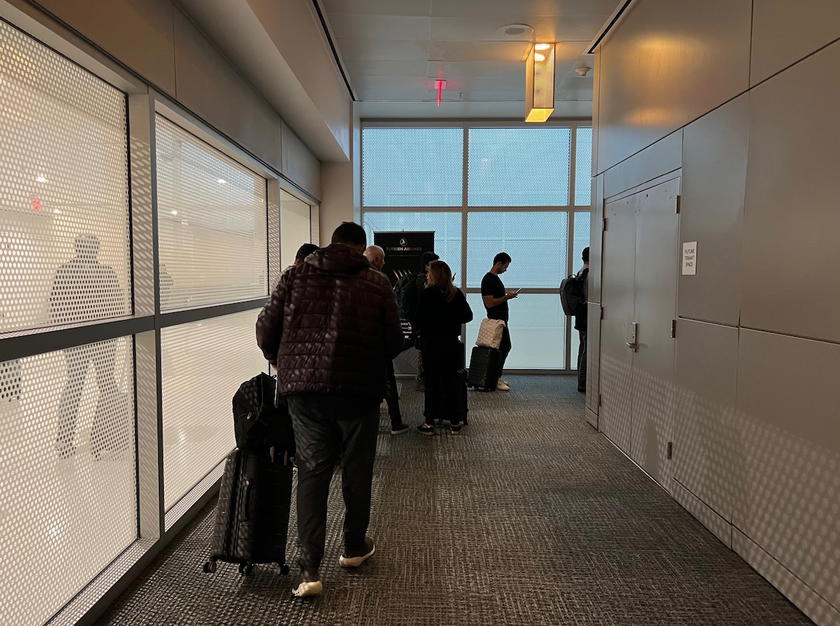
Obviously this is great for monetization, since lounge operators maximize their return by having the lounges utilized as much as possible, so that the cost can be divided by the highest number of people possible. Ironically, we’ve also seen terminals largely get much nicer over the years. It’s nowadays common to see free Wi-Fi and charging ports throughout terminals, and it’s usually not too hard to just find a quiet place to sit, with more peace than you’d find in a lounge.
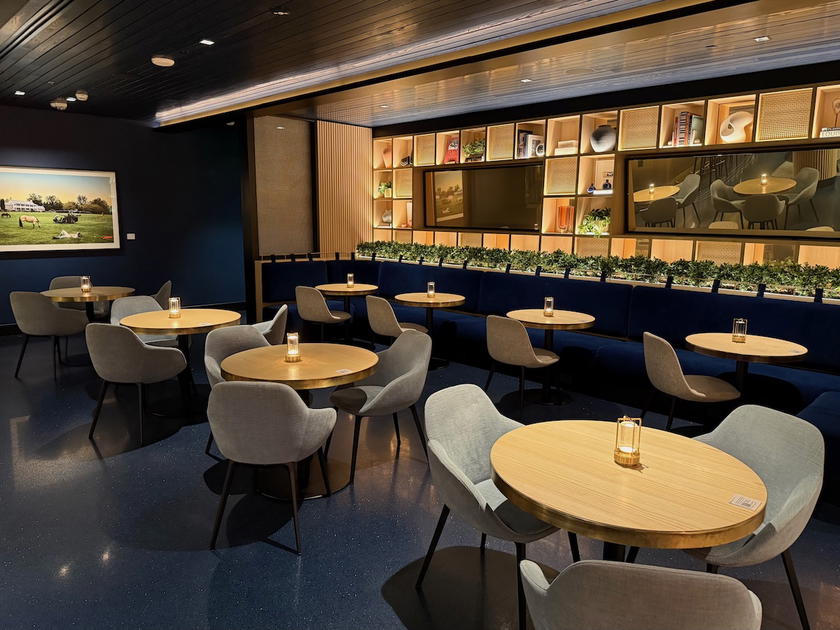
What’s your approach to using airport lounges?
Back in the day, if I had lounge access, my obvious move was always to use the lounge if I had time. I mean, that seems like a pretty obvious move, right? After all, you get access to something “premium,” so you want to make the most of it. Most people with TSA PreCheck don’t say “meh, you know, I think I’ll skip that today and go through the regular line.”
At the same time, I think one has to step back and look at things objectively. At times it almost feels like people use lounges religiously in order to justify the annual fees on their credit cards, and so they can talk about how they’re eating for “free.”
You’ll often see people on social media essentially call airport lounges upper middle class airport cafeterias, and that’s probably not actually too far off in terms of how they’re practically used… and there’s nothing wrong with that!
Personally, for places with consistently crowded lounges, my approach to lounge use is pretty straightforward:
- I’ll visit the lounge if I want to eat or drink something (though I’m usually not very hungry at airports, and I’m also not looking to guzzle alcohol)
- Then when I’m done, I’ll typically just head toward my gate, and stop at any gate area that looks relatively empty, and sit there until close to boarding time
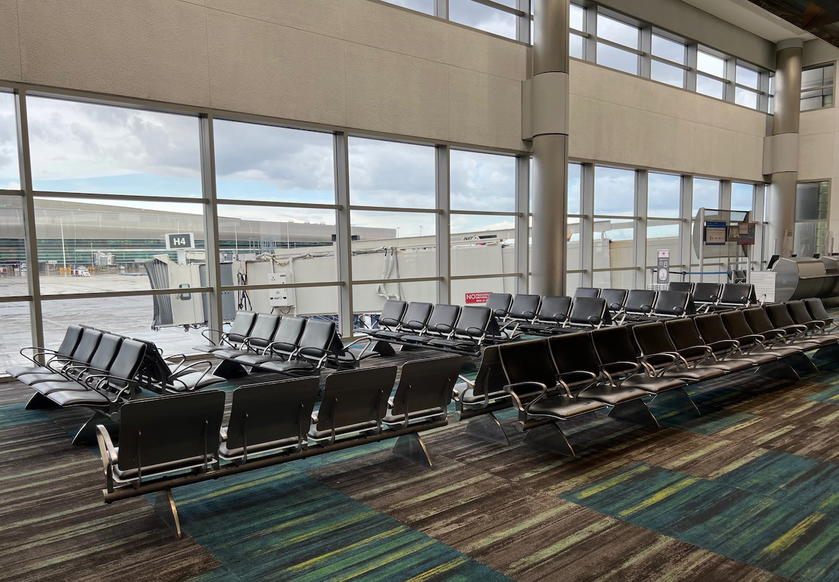
Honestly, this is one of the reasons I really love grab & go lounges, where you can pick up something to take with you. To me that’s the ideal setup, since it serves the purpose I’m actually looking for from lounges — if a lounge is going to be crowded, I’d rather just be able to grab what I’d like, and head somewhere quiet.
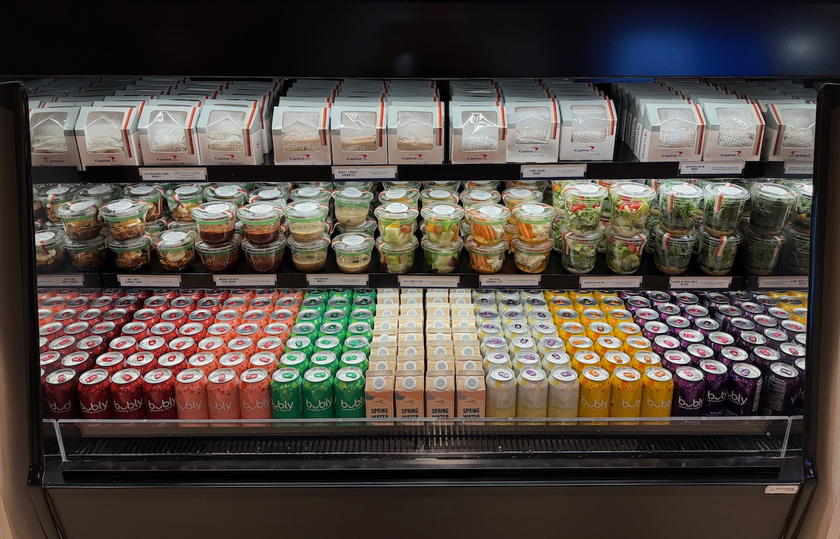
As someone who loves coffee, it’s why I also appreciate when lounges have great coffee to go. It’s typically the item I most want to consume at airports, and the wait for a cup of coffee at an airport can often be quite long early in the morning.

The lounge crowding issue nowadays is only made worse by the number of people who are watching videos and making calls with no headphones in lounges.
Bottom line
The whole concept of airport lounges has changed massively over the years. Monetization of lounges has largely gotten better, as they’ve become a key component of the credit card race that we’re seeing between airlines and card issuers.
That’s a double edged sword. On the one hand, lounges have become higher quality, on average. On the other hand, demand for them has also increased massively.
For the most part, lounges are no longer a place you go to escape the bustle of the terminal, and to use free Wi-Fi and charge your electronics. Now they’re a place you go to eat, drink, and wait in line.
The way I’ve used lounges has definitely evolved over the years, and it’s one of the reasons I appreciate the grab & go concept that we’re increasingly seeing. Unless I’m hungry or thirsty, I prefer just finding a quiet gate area.
What do you make of how airport lounges have evolved, and has your approach to using them changed?


Membership is free and takes no more information than commenting as a guest. Earn status points for good contributions, and see fewer ads as your status grows.