

In recent times, I’ve been writing a series about some of the world’s popular luxury hotel groups, both big and small.
Some time back, I wrote a post about the Ritz-Carlton brand, posing the question of whether it’s the pinnacle of hospitality, or a brand full of generic luxury factories. In this post, I’d like to take a look at what’s perhaps regarded as Marriott’s other top “mainstream” brand, which is St. Regis.
It’s a brand that I feel has changed quite a bit over the years, and I can’t help but be less excited about it than in the past. The brand still has many great hotels, but not with the level of consistency we saw in the past, in my opinion. Let’s start with a bit of background, and then I’ll share my take.
Basics & background of the St. Regis brand
Nowadays the St. Regis brand is owned by Marriott, and it has just over 60 properties across the globe. The history of what ultimately became St. Regis dates back over 120 years, though the brand has really only become mainstream in the past 30 years.
St. Regis was founded in 1904, when John Jacob Astor built the St. Regis New York, as a sister property to the original Waldorf-Astoria New York, which he partly owned (this is different from the current Waldorf Astoria, which was only built in 1931). The John Jacob Astor name should sound familiar for any frequent St. Regis guest, given that some suite categories are named after him.
Not a whole lot of growth happened with the brand for many decades. In 1966, Sheraton purchased the property, and after an extensive renovation in 1991, the hotel became the flagship for the company, and was branded as the ITT Sheraton Luxury Collection.
Things really got interesting in 1997, when Starwood acquired the Sheraton brand from ITT. In 1998, Starwood decided to formally launch the St. Regis brand, with the rebranding of the the former Ritz-Carlton Aspen as the St. Regis Aspen. Then in 1999, Starwood rebranded the Carlton Hotel in Washington DC as the St. Regis Washington DC.
That’s how the modern day brand was born, and from there, the brand continued to grow. Then in 2016, Marriott acquired Starwood, and with that, the St. Regis brand. Given the size of Marriott’s portfolio, it’s of course not surprising to have overlapping brands, but it’s funny that St. Regis and Ritz-Carlton were initially supposed to be direct competitors, but now belong to the same group (which isn’t to say that individual hotels don’t compete with one another).
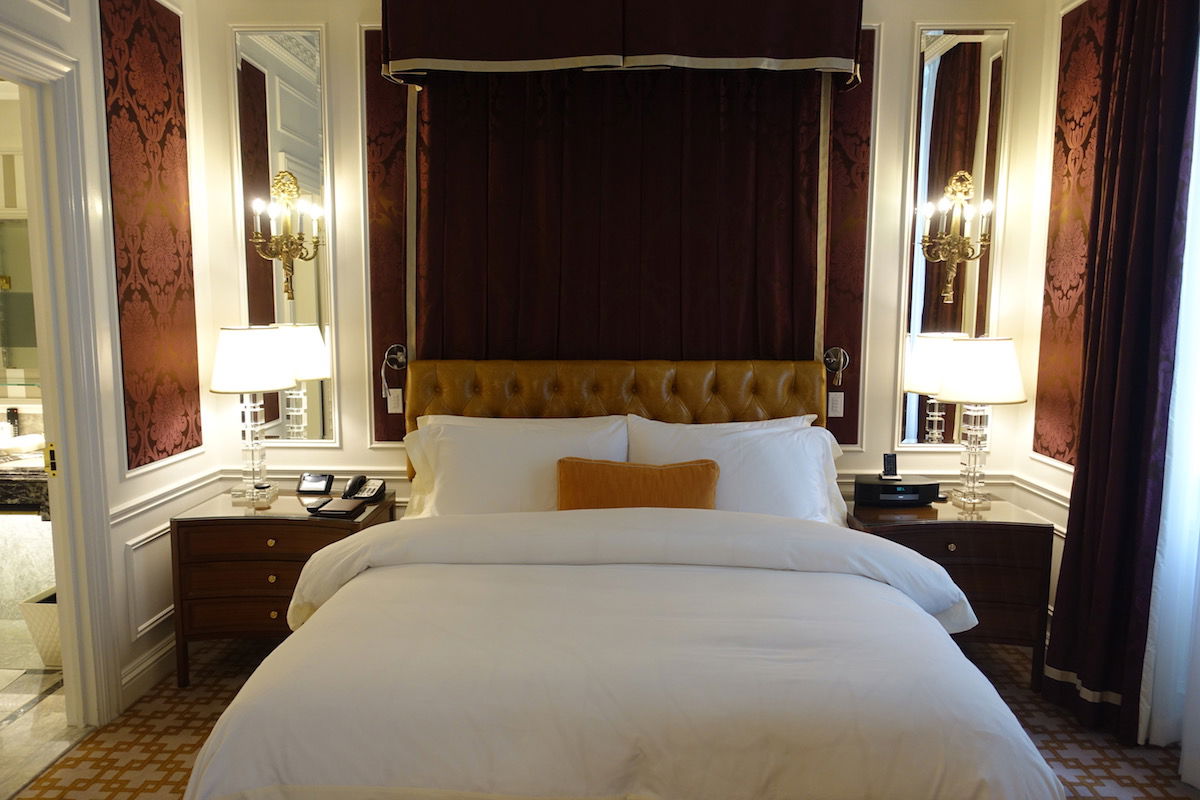
St. Regis used to be my favorite Marriott Bonvoy brand
Going back 10-15 years, St. Regis was probably my favorite major hotel brand, especially in the Starwood days, and even in the early days of Marriott having acquired the brand:
- St. Regis used to be a brand with a lot of “flagship” properties, which is to say that when a St. Regis was built, it was generally very high quality, had an ideal location, a consistent design concept, etc.
- It felt like St. Regis properties consistently had excellent service, and wouldn’t cut corners in any major ways
- I’ve always appreciated that St. Regis is a brand that fully participates in Marriott Bonvoy, so Bonvoy Platinum members can receive complimentary breakfast and other perks, while brands like Ritz-Carlton skimp on that
St. Regis properties just consistently delivered. When you think of the portfolio 15(ish) years ago, which included properties in Aspen, Bal Harbour, Bali, Bora Bora, Florence, New York, Punta Mita, Rome, San Francisco, it was really a very high quality collection of hotels.
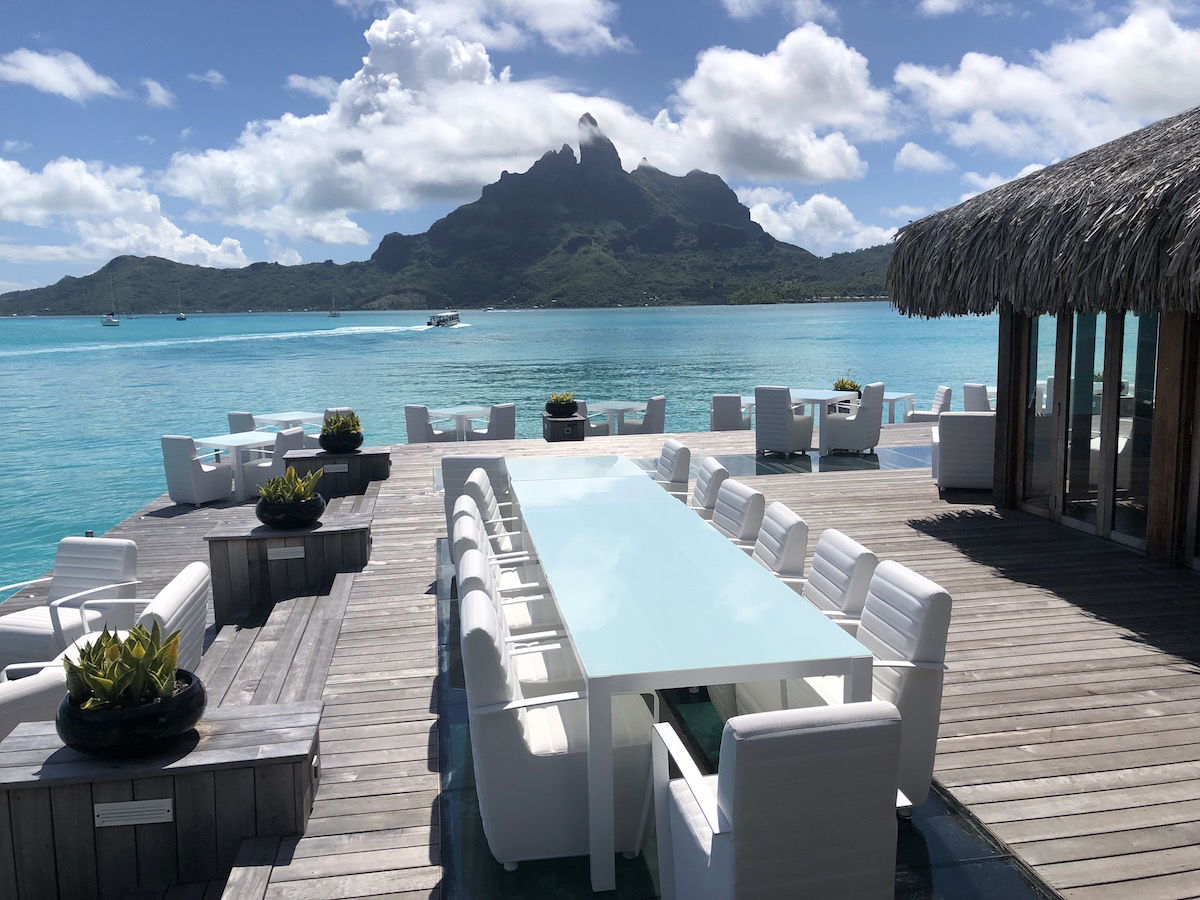
The St. Regis brand has really been watered down over the years
I have a harder time getting excited about the St. Regis brand than in the past, and I think that probably comes down to a few primary factors (and I’m curious how others feel).
The obvious factor is what I like to call the Marriott effect. We’ve increasingly seen over the years that Marriott isn’t really in the hospitality business, but instead, is in the room count and hotel owner relationship business. Admittedly that’s technically the case for all hotel management and franchise companies, but you definitely feel it more with Marriott than with others, and it’s especially evident with luxury brands.
This is true in terms of delivery of elite benefits being much less consistent than in the past (like the St. Regis Macao just refusing to give elite members breakfast, and Marriott doing nothing about it), to just generally less consistent and personalized service (I used to love the butler service coffee feature, but nowadays I feel like the benefit comes with more terms & conditions than a sweepstakes, with little consistency between properties).
It also increasingly feels like Marriott isn’t actually holding hotel owners to any standards in terms of design, location, or vibe, when it comes to what can be a St. Regis. It’s pretty wild to me that St. Regis is increasingly becoming a conversion brand, where existing hotels with totally different designs can now become St. Regis properties.
Heck, we’re even seeing Marriott now create the St. Regis Estates brand, because… well, who really knows, but we have reason to be suspicious about the motive.
It just feels like the St. Regis brand is losing steam quite a bit. Yes, new hotels are still opening, but very few of them strike me as global “flagship” properties. The new, purpose-built St. Regis properties are mostly in what I’d consider to be secondary markets or non-ideal locations, while the more globally “mainstream” properties seem to be conversions of existing hotels, which just don’t otherwise fit the St. Regis vibe.
Again, I’m not trying to say St. Regis is dead as a brand, or anything. Instead, I’m just saying that I think at this point you have to deliberately choose whether you want to stay at each individual St. Regis, rather than it being a brand where you can just think “oh, this will be among the best in the city.”
Aren’t all luxury brands being enshittified, though?
Admittedly many people would likely point out that the general enshittification of chain hotels is widespread. I’d say that’s largely true, and I get it — the hotel giants all want to grow at any cost, and appealing to investors of newly built hotels is difficult. So getting a conversion and lowering standards as needed is the next best thing, and their only option, they feel like.
I’d say if you look at the major hotel groups with points programs, there’s probably one luxury brand that’s most trending upward, and that’s Waldorf Astoria. Waldorf Astoria really is on an incredible streak in terms of winning contracts for very lucrative, flagship properties. That’s not to say that all new Waldorf Astoria properties are incredible, but I’d say it’s probably the mainstream luxury points brand portfolio that’s building the most impressive portfolio at the moment.
Am I the only one who feels that way? If others agree, I can’t help but wonder what Waldorf Astoria and Hilton are doing right, that competitors are missing…
Bottom line
St. Regis continues to be one of the better major hotel groups out there with a points program, and in particular, in the Marriott Bonvoy portfolio (given that most elite perks are honored at St. Regis properties).
However, it does feel like general standards (service, property design, etc.) have been compromised over the years. While that’s true of most major hotel groups nowadays, it seems to be especially common with St. Regis nowadays.
I still very much enjoy the St. Regis brand, and stay at the hotels when I can. However, I do a lot more research on each individual St. Regis before deciding to book it, because I think consistency has decreased hugely, and the brand as such can no longer be relied on to delivery a consistent standard.
Where do you stand on the current state of the St. Regis brand?




Recently stayed at the St. Regis Bermuda and came away underwhelmed. It was nice to be right on the beach, but the resort itself was just ok, spread across 2 buildings, we stayed in a room up the hill away from the main building. Everything just seemed very basic and sterile.
I'm disappointed you don't give many specific examples of either the drop in service or hotels you've experienced it at. Can you provide details. My experience at STR has been generally very positive, so I'm curious where and what issues you're seeing
Enshittification is the deliberate, gradual degradation of online platforms, where services first attract users with high quality, then prioritize business customers, and finally maximize profits for themselves at the expense of both.
I am super impressed Ben. Use that thesaurus. It will enrich our language.
IMHO the problem is less St. Regis in particular and more the points-based loyalty ecosystem in general. The big hotel chains have cut service standards - or more accurately let their hotel owners cut standards - because they know they can get away with it. Loyalists come back for more beatings.
At this point I struggle to see the value of Bonvoy etc. You people put up with a lot of crap for free breakfast and an occasional room upgrade...
I've moved away from overly loyalty focused bookings these days, so in any city, I would do my due diligence comparing hotels - even within the luxury category. As for Marriott, it's my least favorite of the "big 3" chain hotel brands, but also within Hyatt and Hilton, knowing the actual property helps a lot. A Grand Hyatt can be fantastic in one city and weak in another one.
I do agree that Hilton probably...
I've moved away from overly loyalty focused bookings these days, so in any city, I would do my due diligence comparing hotels - even within the luxury category. As for Marriott, it's my least favorite of the "big 3" chain hotel brands, but also within Hyatt and Hilton, knowing the actual property helps a lot. A Grand Hyatt can be fantastic in one city and weak in another one.
I do agree that Hilton probably offers the best consistency in the luxury segment across properties (especially with WA, but also with Conrad), but I'm not sure if it matters. I go to specific Park Hyatts or Grand Hyatts because I know them, and know that I like them. If I travel for work and have to go to the lower to mid-range properties, it anyway doesn't matter much, and I usually prioritize location over most of the rest.
Starwood really excelled at building hotel brands. Like, beyond the points program being good and all of that, their competitive differentiation really was about some of the great brands they built in that portfolio.
Westin was a great brand for its position in the market, W as well (at the time). St Regis was a great brand too and part of building and maintaining a great brand is ensuring there's a cohesive and well...
Starwood really excelled at building hotel brands. Like, beyond the points program being good and all of that, their competitive differentiation really was about some of the great brands they built in that portfolio.
Westin was a great brand for its position in the market, W as well (at the time). St Regis was a great brand too and part of building and maintaining a great brand is ensuring there's a cohesive and well maintained identity. They used to really nail that with the Sabrage ceremony, signature bloody mary's, butler service, and great recognition of elite SPG members. And when you have a great identity, it's also a rallying point for staff.
Marriott fundamentally does not understand brand maintenance and they outsource building new brands (for example, Edition was developed by Ian Shrager for Marriott). They also do not care about brand maintenance and as long as their financial performance is good enough, the potential upside they could have achieved from better maintaining brands won't matter to them or their board.
That's all very good and fine. But Starwoods lacked in the the key aspect of "making a profitable return to the shareholders". Seemingly people were not willing to pay for the good experiences that Starwoods had to offer.
You can have as good a product as you would like. But you also need to have the ability to sell that with a decent profitability. Or you'll end up being the small partner in a merger.
Actually Starwood was profitable, just not enough profitable for the Street.
Institutional investors thought Starwood was too good to its guests.
So you all know the rest of that history.
@CPH-Flyer Correct - and I'm not defending that aspect at all. I am simply commenting on the lost aspect of Brand building and Brand maintenance. As a casual armchair observer to the industry, I don't need to anchor just on the shareholder return aspect of the business. It matters insomuch as it drives the inevitable outcomes of these businesses, but it doesn't matter to me personally in my day-to-day hotel experience and is not a...
@CPH-Flyer Correct - and I'm not defending that aspect at all. I am simply commenting on the lost aspect of Brand building and Brand maintenance. As a casual armchair observer to the industry, I don't need to anchor just on the shareholder return aspect of the business. It matters insomuch as it drives the inevitable outcomes of these businesses, but it doesn't matter to me personally in my day-to-day hotel experience and is not a tolerable excuse for poor experiences.
I don't lose sleep over it though - ultimately we all have the ability to vote with our dollars and stay where we feel a hotel is most aligned to our personal preferences.
Marriott's impact on their overall portfolio is such that my default posture is actually to not book a Marriott if there are other good and viable options, but I will still stay at them when it makes sense and there are plenty of good hotels under the portfolio. Ironically as a Lifetime Platinum, I feel like I am treated with better perks and 'loyalty' recognition at Four Seasons than I am at Marriott's.
In some cities it's my favourite place to stay. For example Kuwait City became amazing even though it's part of the boring Sheraton building but the rooms are gorgeous and the staff so welcoming and friendly. Another St. Regis that I really like is the one in Dubai on the Palm Island. Yes, there are many great hotels in Dubai and the building is a bit boring plus the lobby small. But it has so...
In some cities it's my favourite place to stay. For example Kuwait City became amazing even though it's part of the boring Sheraton building but the rooms are gorgeous and the staff so welcoming and friendly. Another St. Regis that I really like is the one in Dubai on the Palm Island. Yes, there are many great hotels in Dubai and the building is a bit boring plus the lobby small. But it has so many comfortable parts like breakfast on the terrace next to the pool, of course beautiful large rooms and on the first floor the prayer area is definitely one of the best I ever saw. Then in Amman both, St. Regis and the Ritz-Carlton are the best places to stay of all the 5 Star properties (maybe together with FS) but ofc not the same level as in the Gulf. There is a relatively new St. Regis in Oman that looks beautiful but I haven't experienced it yet. And of course both St. Regis in Qatar are top notch. The one on the beach features one of the best Kids Club experiences that are really rare. Favourite one of all above: Kuwait City because the pastry chef sends every day a new little delicacy. :)
I think most your comments could apply to any brand part of the big hotel groups. As far as St Regis I agree I do appreciate as an elite member that I can get the breakfast and other perks. This said, I think like every brand or hotel it depends on the specific property. I generally have had better experiences outside the US and Europe particularly in the Middle East and Asia.
Fun fact - St. Regis is not a saint recognized by the Catholic Church.
It's not a Marriott problem, it's a HOSPITALITY problem. Hospitality is dead in the US because the standard has disappeared and the motivation to even be good is zero.
Yes, St. Regis is on a clear downward trajectory after the Marriott acquisition. Of the recent properties, St. Regis Bermuda is embarrassingly poor, St. Regis Chicago looks like a nice Westin and St. Regis Downtown Dubai is a Renaissance conversion. Ultimately it will end up exactly the same as Ritz-Carlton.
From the post:
" I’m just saying that I think at this point you have to deliberately choose whether you want to stay at each individual St. Regis"
This sums up the entire Bonvoy loyalty program.
One has to select the right individual Bonvoy hotels to have a properly delivered stay experience. There are many excellent Bonvoy hotels, St. Regis included. Unfortunately, there are too many hotels that don't play by Bonvoy's rules,...
From the post:
" I’m just saying that I think at this point you have to deliberately choose whether you want to stay at each individual St. Regis"
This sums up the entire Bonvoy loyalty program.
One has to select the right individual Bonvoy hotels to have a properly delivered stay experience. There are many excellent Bonvoy hotels, St. Regis included. Unfortunately, there are too many hotels that don't play by Bonvoy's rules, select St. Regis included. To get the most out of the Bonvoy loyalty program, one must be selective about which hotels are honor-roll worthy in delivering service and benefits. One must also avoid the hotels that don't play by the rules. If only there were a website or forum that had a list of Bonvoy properties that don't play by the rules...
I can see that St. Regis as a brand though is losing it's luster, despite some excellent remaining properties.
It's about time that there is a class action lawsuit to Marriott Bonvoy program to not delivering on marketed promises for the elite programs and NOT interveinig and enforcing elite amenities.
What is more egregious for the Mariott brand is the lack of enforcement standards for each category of hotels, particularly the condition of the hotels
Absolutely a Grand idea.
at this point, the opportunity cost of acquiring enough HHonors or Bonvoy points for a meaningful stay at a nice property is prohibitive, and WoH is rapidly careening in that direction too - i've shifted my loyalty and earning strategy to airlines only, and i'm now booking my stays with boutique competitors to the major brands going forward
Stayed at the St. Regis Chicago recently. Both restaurants are very good but the location is not really convenient. Also, the finishes in the room are a bit cheap. Chrome-looking hand held shower that’s actually plastic for example. I chuckled at the Westin comment. It’s not the FS or even a Park Hyatt. My rule of thumb seems to be the more expensive the rate, the less they offer like say free coffee in the...
Stayed at the St. Regis Chicago recently. Both restaurants are very good but the location is not really convenient. Also, the finishes in the room are a bit cheap. Chrome-looking hand held shower that’s actually plastic for example. I chuckled at the Westin comment. It’s not the FS or even a Park Hyatt. My rule of thumb seems to be the more expensive the rate, the less they offer like say free coffee in the AM, how much does that cost? They did have Nespresso in the room to their credit but didn’t want to wake up my family and nothing until 7AM.
St. Regis was the best Bonvoy brand, but then, predictably, Marriott ruined it by allowing conversion properties into the brand, opening hotels in markets that likely can’t support it (Sarasota, for example), and cheapening the design and decor standards at new or newly renovated properties. Have you seen the latest designs and decor? The rooms look like a Westin.
I've stayed at only one St. Regis (Abu Dhabi) earlier this year, and I thought the experience was good (it was an Amex FHR stay which I'm sure helped). I'm planning to stay at Hong Kong in September (that one will be using free night certs + points), and I'm hopeful Asian hospitality will make it a good experience.
I have stayed at 2 WAs (Edinburgh before it converted, and Dubai) and I agree the...
I've stayed at only one St. Regis (Abu Dhabi) earlier this year, and I thought the experience was good (it was an Amex FHR stay which I'm sure helped). I'm planning to stay at Hong Kong in September (that one will be using free night certs + points), and I'm hopeful Asian hospitality will make it a good experience.
I have stayed at 2 WAs (Edinburgh before it converted, and Dubai) and I agree the experience has been better. Will be doing an overnight in New York (another free night cert) and I'm hopeful for a good experience there.
I would argue that among chain hotels, Raffles and a few of the other Accor brands are on the up and up. Especially Raffles.
Shhhh! The last thing we need is Americans finding-out about Accor!
After staying at so many Four Seasons in the past few years of course you don't love St Regis anymore
I believe that Kempinski have said they're moving away from the asset-light approach and looking to build and operate more of their hotels. I suspect that the 1000-property GHA isn't 'mainstream' enough for this blog though as there's no co-branded US credit card product!
Raffles Jakarta is nothing special (very noisy rooms) and the Hotel Vier Jahreszeiten in Hamburg (another Accor property) is *severely* overrated. Yes, just 2 cases, but as it was my money I wasted there I will not try another Accor "Luxury" hotel.
Inconsistency is the name of the game with Accor. I've stayed at Ibis Styles hotels which are better than Novotels, they have brands like Grand Mercure and Mövenpick which have quite a few really underrated properties going for a lot less money than the US chain equivalents, but equally you can pay quite a lot for a rather pedestrian Mondrian or a tiny room in an otherwise tasteful MGallery.
I prefer St. Regis over Ritz-Carlton, namely because St. Regis actually provides complimentary breakfast for Platinum elite and above, whereas RC usually doesn't. Also, sabering.
Unless you stay at the St. Regis Macao
My first stay at a St Regis was in the early 90’s at their flagship property in NY at 55th & 5th. Amazing stay. Since then I’ve had many stays in their properties in the US, Europe and Asia. Some things are still great, but there has been a decline.
I still think Ritz Carlton’s decline is much worse though. I now tend to shift my stays to Four Seasons, or a local non-chain luxury hotel. Fewer disappointments and more nice surprises.
fully agree with you. St Regis marginally better than Ritz Carlton. And am also moving away from POINTS to QUALITY: Four Seasons, Rocco Forte, maybe Rosewood...
I have only stayed in one Four Seasons, the Sydney Four Seasons. I knew going in that it was not likely to be one of their flagship properties. But I have to say, after that stay I am very certain that I will be continue to back to the Sheraton Hyde Park.
Completely agree on shifting stays towards quality. We typically go to Four Seasons as well as Rosewood when available now and have had wonderful stays for the most part. Four Seasons has their own misses (we did the Four Seasons Kyoto and Park Hyatt Kyoto and the Park Hyatt was far better) but overall solid and far more memorable on average than St Regis these days.
What is it Hilton is doing? Rather than allowing the properties to get away with not following the elite benefits, they just officially have very few elite benefits, and devalue the points beyond reason. The T&Cs basically have no rights of late check out, and suite uogrades can be flaunted fully within the rules.
As the footprint of luxury hotels grow, it gets more and more difficult to find prime locations. The new Raffles in...
What is it Hilton is doing? Rather than allowing the properties to get away with not following the elite benefits, they just officially have very few elite benefits, and devalue the points beyond reason. The T&Cs basically have no rights of late check out, and suite uogrades can be flaunted fully within the rules.
As the footprint of luxury hotels grow, it gets more and more difficult to find prime locations. The new Raffles in Tokyo will be at Hamamatsucho Station, and look at where the Fairmont popped up in Tokyo. There is just not a ever growing supply of aspirational and amazing locations. The Waldorf Osaka? You can't really claim that is in a top notch location. It is a convenient location, but that is really about it. The Park Hyatt Kuala Lumpur does not even get that under the belt, it is not even a convenient location for anything.
As for St Regis, I have only stayed at New York, Maldives, Bangkok, Osaka, Hong Kong and Singapore. So my base is a bit limited. But I can't say I have had any disappointments on any off them. Though Osaka did seem a bit more standard up scale hotel than the rest.
Stayed at 2 or 3 before blacklisting Marriott. Over-hyped brand, on par with Westin. Not impressed.
Teehee. I knew you'd have something spicy for us!
Hard post to read but totally fair. Very very sad.
I love the St. Regis brand and find most of the properties to be great. In the US, St. Regis Bal Harbour is my favorite beach resort of any brand. Others like the St. Regis Rome and even newer properties like the St. Regis Cap Cana Resort are still great. I'm going to agree to disagree here. Marriott has done a lot to destroy what was loved with SPG, but making the St. Regis brand...
I love the St. Regis brand and find most of the properties to be great. In the US, St. Regis Bal Harbour is my favorite beach resort of any brand. Others like the St. Regis Rome and even newer properties like the St. Regis Cap Cana Resort are still great. I'm going to agree to disagree here. Marriott has done a lot to destroy what was loved with SPG, but making the St. Regis brand to maintain some benefits has been great. I have been upgraded to suites that would have cost thousands of dollars and that in and of itself is worth it. I never liked the butler service or used it for anything, so that was never of interest to me.
Upgraded using NUAs or based on status? If status, what level? I will be staying at a STR in a few weeks and wondering what to do to get a better room. Thx
Most surprising is that they haven’t eliminated the breakfast benefit to align with RC. That’s a cost center!
Basically nothing good left from Starwood or SPG at this point.
Agreed. As soon as they axe that complimentary breakfast, it's toast. Or, technically, no toast.
@UA Maybe Ben’s post about the manager’s comment that the St. Regis Macao not offering breakfast to platinum and above elite members anymore and how they are the first of the trial run is the truth but Marriott just does not want to acknowledge it.