
A couple of weeks ago, James wrote about how Emirates is reducing some flights due to a pilot shortage. In the past we’ve seen Emirates sometimes store planes briefly due to decreased seasonal demand. While parking planes isn’t cheap, it’s certainly more expensive to fly them at a significant loss, so it’s the best option in those cases.
Emirates’ unprecedented pilot shortage
Emirates is currently dealing with an issue in unprecedented numbers. Specifically, Emirates pilots are quitting to go work elsewhere. The airline has always had some level of turnover, but they’ve never had anything to this degree.
Emirates’ president said that the airline is “a tad short on pilots,” which is perhaps the understatement of the year.
How bad is Emirates’ pilot shortage? Media reports suggest that Emirates will be parking 46 planes over the coming months:
- Emirates will park 11 Boeing 777s and 1 Airbus A380 this month
- Emirates will park 14 Boeing 777s and six Airbus A380s in May
- Emirates will park 11 Boeing 777s and three Airbus A380s in June
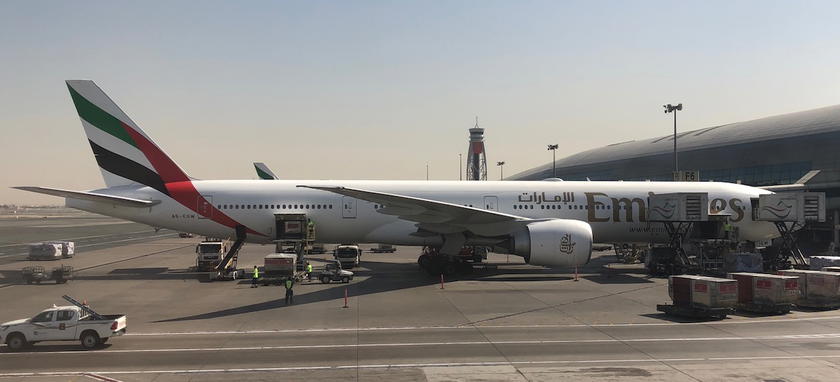
Altogether that represents 36 Boeing 777s and 10 Airbus A380s, which is about 18% of Emirates’ fleet (specifically 25% of their 777 fleet and about 10% of their A380 fleet).
While it’s possible that Emirates may have otherwise stored a few of these planes, the numbers in which they’re storing these planes is unprecedented. Emirates is flying these planes to Dubai World Central Airport (since there’s no room at Dubai International), so by June that airport should look like an Emirates parking lot.
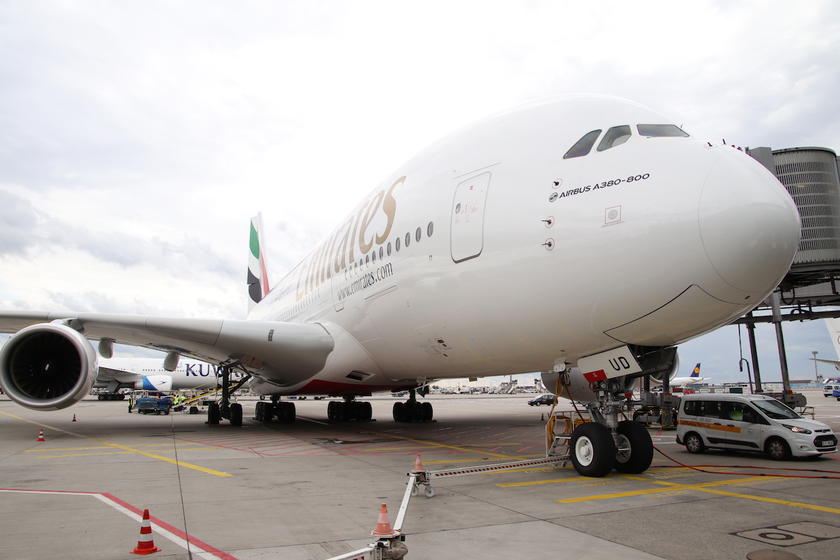
Some suggest that a fairly new widebody costs roughly a million dollars per month between leasing and financing costs, as well as maintenance contracts and insurance. If that’s the case, storing 46 planes would be a loss of $46 million per month, or over $500 million per year (though presumably they wouldn’t be parked for that long).
Why are Emirates pilots leaving?
In the past, the contracts that Emirates offered were extremely competitive:
- The salary is mostly tax free
- Emirates covers housing and lots of other expenses for pilots
- The pay rates themselves are quite good
- You get to fly some cool planes as well; if I were a pilot I’d much rather fly an A380 or 777 than a regional jet
Of course there are downsides as well. Emirates pilots work a lot of hours, and work some crazy hours (no matter how hard you try to adjust, I imagine working a 3AM flight never gets easy). You also have to live in Dubai with no option to commute — personally that’s something I wouldn’t mind, though I realize other people would far prefer a commuter contract, where they work two weeks on and then two weeks off, or something.
So why are pilots suddenly leaving? Because there’s now a worldwide pilot shortage. 10 years ago pilots couldn’t find jobs at major carriers and pay had been cut significantly. Now pilot pay is as good as it has ever been, and Emirates hasn’t kept up. So either pilots are moving back home to find jobs there that pay comparably, or pilots are moving to other countries where airlines are offering incredible contracts. For example, Chinese airlines are known for their extremely lucrative contracts, with many pilots at Chinese airlines apparently earning $300,000+ per year, with the ability to commute.
Bottom line
We’ve seen Emirates park some planes before, but have never seen them park 45+ planes at a time, as far as I know. This isn’t just an adjustment for seasonal demand, but clearly reflects their severe pilot shortage.
While I know Emirates has some pilots in training right now, it sure doesn’t sound to me like this shortage will figure itself out in the next few months, because pilots are still leaving in droves. While Emirates pilots obviously aren’t unionized, it sounds to me like there might need to be some negotiating when it comes to their contracts. What was once an industry leading benefits package is no longer the case, and things are only getting worse.
I also don’t want to say that we should be worried as passengers, but ideally you want to fly with an airline that has experienced pilots with lots of hours. Emirates simply isn’t able to maintain that type of talent pool with what they’re offering right now.
Emirates’ president makes it sound like this problem will be solved in the coming months, though it doesn’t look like that’s happening. This will be an interesting situation to follow as we move into the summer.


Membership is free and takes no more information than commenting as a guest. Earn status points for good contributions, and see fewer ads as your status grows.