There is one decision that separates people who get real value from their credit cards from those who leave money on the table every year: earning transferable points instead of airline miles or hotel points. It sounds like a small distinction, but it is not. Flexible points give you options. Airline miles and hotel points lock you into one program, one redemption calendar, and one partner network. Transferable points let you move your currency to wherever the best redemption lives at the moment you need it.
The five major flexible points programs in the US are American Express Membership Rewards, Chase Ultimate Rewards, Citi ThankYou Points, Capital One Miles, and Bilt Rewards. Each has its own card portfolio, its own transfer partner lineup, and its own sweet spots. Some overlap significantly in partners; others offer access to programs nobody else touches. The right program for you depends on how you spend, what you value in travel, and in some cases, whether you pay rent or a mortgage.
In this post I walk through the best card or card combination for each of the five ecosystems, explain what makes each program worth engaging with, and give you a framework for deciding which one or two programs deserve the center of your credit card strategy.
Compare rewards credit cards

Chase Sapphire Reserve®
Earn 100,000 bonus points
- 4x points on flights and hotels booked direct
- 3x points on Dining
- $300 Annual Travel Credit
Earn 8x points on all purchases through Chase Travel℠, including The Edit℠ and 4x points on flights and hotels booked direct. Plus, earn 3x points on dining worldwide & 1x points on all other purchases
- Earn 100,000 bonus points after you spend $6,000 on purchases in the first 3 months from account opening.
- Get $3,000 in annual value with Sapphire Reserve.
- Earn 8x points on all purchases through Chase Travel℠, including The Edit℠ and 4x points on flights and hotels booked direct. Plus, earn 3x points on dining worldwide & 1x points on all other purchases
- $300 annual travel credit as reimbursement for travel purchases charged to your card each account anniversary year.
- Access over 1,300 airport lounges worldwide with a complimentary Priority Pass™ Select membership, plus every Chase Sapphire Lounge® by The Club with two guests. Plus, up to $120 towards Global Entry, NEXUS, or TSA PreCheck® every 4 years
- Get up to $150 in statement credits every six months for a maximum of $300 annually for dining at restaurants that are part of Sapphire Reserve Exclusive Tables.
- Count on Trip Cancellation/Interruption Insurance, Auto Rental Coverage, Lost Luggage Insurance, no foreign transaction fees, and more.
- Get complimentary subscriptions to Apple TV and Apple Music for a minimum of one year when activated by June 22, 2027, a value of $288 annually.
- Member FDIC
Earn 100,000 bonus points after you spend $6,000 on purchases in the first 3 months from account opening.

Chase Sapphire Preferred® Card
Earn 75,000 bonus points
- 5x total points on travel purchased through Chase Travel℠
- 3x points on dining
- 2x points on travel purchases
- 5x on travel purchased through Chase Travel℠
- 3x on dining
- 3x on vacation homes
- 3x on gas & EV charging
- 3x on top streaming services
- 3x on online groceries (excluding Walmart, Target, and wholesale clubs)
- 2x on all other travel purchases
- 1x on all other purchases
- Earn 75,000 bonus points after you spend $5,000 on purchases in the first 3 months from account opening.
- Enjoy benefits such as 5x on travel purchased through Chase Travel℠, 3x on dining, 3x on vacation homes, 3x on gas & EV charging, 3x on top streaming services and online groceries (excluding Walmart, Target, and wholesale clubs), 2x on all other travel purchases, 1x on all other purchases
- Earn up to $100 in statement credits each account anniversary year for hotel stays through Chase Travel
- Count on Trip Cancellation/Interruption Insurance, Auto Rental Collision Damage Waiver, Emergency Evacuation and Transportation and more
- Get a year of complimentary Apple TV when activated by December 31, 2026 - a value of $156.
- Complimentary DashPass which unlocks $0 delivery fees & lower service fees for 12 months when you activate by 12/31/27. Plus, a $10 promo each month on non-restaurant orders.
- Receive one statement credit of up to $120 every four years as reimbursement for the application fee charged to your card for a Global Entry, TSA Precheck® or NEXUS application.
- Transfer points to leading airline and hotel loyalty programs
- Member FDIC
Earn 75,000 bonus points after you spend $5,000 on purchases in the first 3 months from account opening.

Capital One Venture X Rewards Credit Card
Earn 75,000 bonus miles
- Earn 2x miles per dollar on every purchase
- No Foreign Transaction Fees
- 10,000 bonus miles every account anniversary
Earn unlimited 10X miles on hotels and rental cars booked through Capital One Travel and 5X miles on flights and vacation rentals booked through Capital One Travel
Earn unlimited 2X miles on all other purchases
- Earn 75,000 bonus miles when you spend $4,000 on purchases in the first 3 months from account opening, equal to $750 in travel
- Receive a $300 annual credit for bookings through Capital One Travel, where you'll get Capital One's best prices on thousands of trip options
- Get 10,000 bonus miles (equal to $100 towards travel) every year, starting on your first anniversary
- Earn unlimited 10X miles on hotels and rental cars booked through Capital One Travel and 5X miles on flights and vacation rentals booked through Capital One Travel
- Earn unlimited 2X miles on all other purchases
- Enjoy access to 1,300+ lounges worldwide, including Capital One Lounge and Landing locations and participating Priority Pass™ lounges, after enrollment
- Use your Venture X miles to easily cover travel expenses, including flights, hotels, rental cars and more-you can even transfer your miles to your choice of 15+ travel loyalty programs
- Enjoy a $100 experience credit and other premium benefits with every hotel and vacation rental booked from the Premier Collection
- Receive up to a $120 credit for Global Entry or TSA PreCheck®
- Top rated mobile app
Earn 75,000 bonus miles when you spend $4,000 on purchases in the first 3 months from account opening, equal to $750 in travel

Citi Strata Premier® Card
Earn 60,000 bonus ThankYou® Points after qualifying purchases
- Earn 3x Points on Airfare
- Earn 3x Points on Hotels
- Earn 3x Points at Restaurants
Earn 10 Points per $1 spent on Hotels, Car Rentals, and Attractions booked on CitiTravel.com.
Earn 3 Points per $1 on Air Travel and Other Hotel Purchases, at Restaurants, Supermarkets, Gas and EV Charging Stations.
Earn 1 Point per $1 spent on all other purchases.
- Earn 60,000 bonus ThankYou® Points after spending $4,000 in the first 3 months of account opening, redeemable for $600 in gift cards or travel rewards at thankyou.com.
- Earn 10 Points per $1 spent on Hotels, Car Rentals, and Attractions booked on CitiTravel.com.
- Earn 3 Points per $1 on Air Travel and Other Hotel Purchases, at Restaurants, Supermarkets, Gas and EV Charging Stations.
- Earn 1 Point per $1 spent on all other purchases
- $100 Annual Hotel Benefit: Once per calendar year, enjoy $100 off a single hotel stay of $500 or more (excluding taxes and fees) when booked through CitiTravel.com. Benefit applied instantly at time of booking.
- No expiration and no limit to the amount of points you can earn with this card
- No Foreign Transaction Fees on purchases
Earn 60,000 bonus ThankYou® Points after spending $4,000 in the first 3 months of account opening, redeemable for $600 in gift cards or travel rewards at thankyou.com.
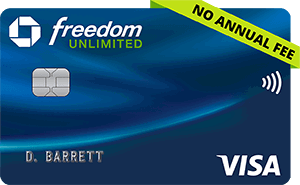
Chase Freedom Unlimited®
Earn a $200 Bonus
- Earn 3% Cash Back on Dining
- Earn 3% Cash Back at Drugstores
- Earn 1.5% Cash Back On All Other Purchases
Enjoy 5% cash back on travel purchased through Chase Travel℠, our premier rewards program that lets you redeem rewards for cash back, travel, gift cards and more; 3% cash back on drugstore purchases and dining at restaurants, including takeout and eligible delivery service, and 1.5% on all other purchases
Learn more from these OMAAT posts:
- Earn a $200 Bonus after you spend $500 on purchases in your first 3 months from account opening
- Enjoy 5% cash back on travel purchased through Chase Travel℠, our premier rewards program that lets you redeem rewards for cash back, travel, gift cards and more; 3% cash back on drugstore purchases and dining at restaurants, including takeout and eligible delivery service, and 1.5% on all other purchases.
- No minimum to redeem for cash back. You can use points to redeem for cash through an account statement credit or an electronic deposit into an eligible Chase account located in the United States!
- Enjoy 0% Intro APR for 15 months from account opening on purchases and balance transfers, then a variable APR of 18.24% - 27.74%.
- No annual fee - You won't have to pay an annual fee for all the great features that come with your Freedom Unlimited® card
- Keep tabs on your credit health, Chase Credit Journey helps you monitor your credit with free access to your latest score, alerts, and more.
- Member FDIC
Earn a $200 Bonus after you spend $500 on purchases in your first 3 months from account opening
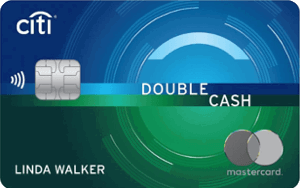
Citi Double Cash® Card
Earn $200 after qualifying purchases
- Earn 1% cash back when you make a purchase, earn 1% cash back when you pay for that purchase
1% cash back when you make a purchase
1% cash back when you pay for that purchase
Learn more from these OMAAT posts:
- Earn $200 cash back after you spend $1,500 on purchases in the first 6 months of account opening. This bonus offer will be fulfilled as 20,000 ThankYou® Points, which can be redeemed for $200 cash back.
- Earn 2% on every purchase with unlimited 1% cash back when you buy, plus an additional 1% as you pay for those purchases. To earn cash back, pay at least the minimum due on time. Plus, earn 5% total cash back on hotel, car rentals and attractions booked with Citi Travel.
- Balance Transfer Only Offer: 0% intro APR on Balance Transfers for 18 months. After that, the variable APR will be 18.49% - 28.74%, based on your creditworthiness.
- Balance Transfers do not earn cash back. Intro APR does not apply to purchases.
- If you transfer a balance, interest will be charged on your purchases unless you pay your entire balance (including balance transfers) by the due date each month.
- There is an intro balance transfer fee of 3% of each transfer (minimum $5) completed within the first 4 months of account opening. After that, your fee will be 5% of each transfer (minimum $5).
Earn $200 cash back after you spend $1,500 on purchases in the first 6 months of account opening. This bonus offer will be fulfilled as 20,000 ThankYou® Points, which can be redeemed for $200 cash back.

Bilt Palladium Card
50,000 Bilt Points + Gold Status offer
- 2X points on everyday purchases
- Earn up to 1.25X points on rent and mortgage payments
- $400 Bilt Travel Hotel credit
Earn up to 1.25X points on rent and mortgage payments with no transaction fee, and 2X points on everyday spend.
Learn more from these OMAAT posts:
- Earn up to 1.25X points on rent and mortgage payments with no transaction fee.
- 2X points on everyday spend
- $400 Bilt Travel Hotel credit. Applied twice a year, as $200 statement credits, for qualifying Bilt Travel Portal hotel bookings.
- $200 Bilt Cash (awarded annually). At the end of each calendar year, any Bilt Cash balance over $100 will expire.
- Welcome bonus (subject to approval): 50,000 Bilt Points + Gold Status after spending $4,000 on everyday purchases in the first 90 days + $300 of Bilt Cash.
- Priority Pass ($469/year value). See Guide to Benefits.
- Bilt Point redemptions include airlines, hotels, future rent and mortgage payments, Lyft rides, statement credits, student loan balances, a down payment on a home, and more.
- Earn additional points through Bilt Neighborhood Benefits™ when you use your card at Bilt's network of 50,000+ merchant partners.
Welcome bonus (subject to approval): 50,000 Bilt Points + Gold Status after spending $4,000 on everyday purchases in the first 90 days + $300 of Bilt Cash. Up to $100 of Bilt Cash earned rolls over to the next year.

Capital One Savor Cash Rewards Credit Card
$200 cash bonus
- Earn 3% cash back on dining
- Earn 3% cash back on groceries
- No Foreign Transaction Fee
Earn unlimited 3% cash back at grocery stores (excluding superstores like Walmart® and Target®), on dining, entertainment and popular streaming services, plus 1% on all other purchases
Earn 8% cash back on Capital One Entertainment purchases
Earn unlimited 5% cash back on hotels, vacation rentals and rental cars booked through Capital One Travel
- Earn a one-time $200 cash bonus once you spend $500 on purchases within the first 3 months from account opening
- $0 annual fee and no foreign transaction fees
- Earn unlimited 3% cash back at grocery stores (excluding superstores like Walmart® and Target®), on dining, entertainment and popular streaming services, plus 1% on all other purchases
- Earn 8% cash back on Capital One Entertainment purchases
- Earn unlimited 5% cash back on hotels, vacation rentals and rental cars booked through Capital One Travel
- No rotating categories or sign-ups needed to earn cash rewards; plus cash back won't expire for the life of the account and there's no limit to how much you can earn
- 0% intro APR on purchases and balance transfers for 12 months; 18.74% - 28.74% variable APR after that; balance transfer fee applies
- Top rated mobile app
Earn a one-time $200 cash bonus once you spend $500 on purchases within the first 3 months from account opening
Rewards credit cards overview
Before getting into the full lineup, here’s the quick comparison:
| Card | Role | Annual fee | Rewards rate | Welcome bonus | Notable perks |
|---|---|---|---|---|---|
| Citi ThankYou Points | |||||
| Citi Strata Premier® Card | Primary | $95 | 3x on dining, groceries, gas stations, air travel, and hotels | 60,000 points after $4,000 in three months Worth $1,020 at 1.7 cents per point | Annual $100 off a single hotel stay of $500 or more, excluding taxes and fees, booked with Citi Travel®, and no foreign transaction fees |
| Citi Double Cash® Card | Support | $0 | 2x on all purchases, earned as 1x when you buy and 1x when you pay | 20,000 ThankYou points after spending $1,500 within the first six months | Points are worth 1 cent each in isolation but become fully transferable when paired with the Strata Premier, and the card works as a 2% cash back card on its own |
| Chase Ultimate Rewards | |||||
| Chase Sapphire Preferred® Card | Primary | $95 | 5x on Chase Travel℠ bookings; 3x on dining, streaming, gas and EV charging, select vacation rentals, and online groceries; 2x on all other travel; 1x on everything else | 75,000 points after $5,000 in three months Worth $1,275 at 1.7 cents per point | $100 annual hotel credit, free authorized users, primary rental car coverage, and comprehensive trip protection |
| Chase Freedom Unlimited® | Support | $0 | 5x with Chase Travel℠; 3x on dining and drugstores; 1.5x on all other purchases | Earn $200 cash back after spending $500 within the first 3 months. | Points pool into the Sapphire Preferred account and become fully transferable, pushing the effective return on everyday spending to 2.55 cents per dollar |
| American Express Membership Rewards | |||||
| American Express® Gold Card | Best overall | (Rates & Fees). | 4x at U.S. supermarkets on up to $25,000 per year, then 1x; 4x at restaurants worldwide on up to $50,000 per year, then 1x; 3x on flights booked directly with airlines or through Amex Travel; 1x everywhere else | As high as 100,000 points after $6,000 in the first six months Welcome offers vary and you may not be eligible for an offer | Up to $120 in annual dining credits at select partners and up to $120 in annual Uber Cash Enrollment required |
| Bilt Rewards | |||||
| Bilt Palladium Card | Best overall | $495 (Rates & Fees) | 2x on all eligible purchases, plus the choice to earn 4% back in Bilt Cash Tax payments are excluded from earning points | 50,000 points and Bilt Gold status after $4,000 in 90 days, plus $300 in Bilt Cash on approval The 50,000 points are worth $850 at 1.7 cents per point | $200 in Bilt Cash deposited annually, up to $400 in Bilt travel portal hotel credits, and a Priority Pass membership with up to two guests You can only hold one Bilt credit card at a time |
| Capital One Miles | |||||
| Capital One Venture X Rewards Credit Card | Primary | $395 | 10x on hotels and rental cars booked through Capital One Travel; 5x on flights booked through Capital One Travel; 2x on all other purchases | 75,000 miles after $4,000 in three months Worth $1,275 at 1.7 cents per mile | $300 annual travel credit for Capital One Travel bookings, 10,000 bonus miles on each account anniversary, a Priority Pass membership with unlimited guests, and Capital One Lounge access |
| Capital One Savor Cash Rewards Credit Card | Support | $0 | 3x on dining, grocery stores, popular streaming services, and entertainment. 1x back on other eligible purchases | $200 cash back after spending $500 on purchases within the first three months from account opening | Miles transfer to the same Capital One partners as the Venture X when both cards are in the same account, and this is the only no annual fee companion in the roundup that adds a category bonus rather than a flat rate |
Best rewards credit cards by program
Citi ThankYou Points
Citi ThankYou is the most underrated of the five flexible points programs. Its card portfolio is compact but highly functional, its $95 annual fee hub card has the broadest bonus category set of any mid-range card in this roundup, and it is the only major flexible program that transfers directly to American AAdvantage, making it the default choice for anyone who wants to build AA miles without relying solely on a co-branded card.
ThankYou points transfer to 19 partners at 1:1, with one important caveat: you must hold a premium hub card (Strata Premier or Strata Elite) to transfer to partners. Points on the no-annual-fee companion cards are worth only 1 cent each without a hub card in the account. Key partners include AAdvantage, Aeroplan, Flying Blue, Turkish Miles&Smiles, Singapore KrisFlyer, Emirates Skywards, and Avianca LifeMiles. Turkish Miles&Smiles is a notable sweet spot, in some cases offering Star Alliance redemptions at rates significantly below what Aeroplan or United charge.
Best Overall: Citi Strata Premier® Card
The Citi Strata Premier earns 3x ThankYou Points on dining, groceries, gas stations, air travel, and hotels. Five categories at 3x on a single $95 annual fee card is simply unmatched at this price point. The welcome bonus is 60,000 ThankYou Points after $4,000 in spending within three months, worth $1,020 at my valuation of 1.7 cents per point. The card also includes an annual $100 off a single hotel stay of $500 or more, excluding taxes and fees, when booked with Citi Travel®, and has no foreign transaction fees.
The Strata Premier’s breadth of bonus categories means most people will find themselves earning 3x on a majority of their everyday spending with a single card. For someone who does not want to manage multiple cards but still wants strong flexible points earning across groceries, dining, and travel, this is the most efficient single-card solution in any program.
Verdict: The broadest bonus category set of any $95 card in this roundup. Ideal for someone who wants strong earning across multiple categories without card complexity.
Link: Learn more about the Citi Strata Premier® Card
Best Companion: Citi Double Cash® Card
The Citi Double Cash earns 2x ThankYou Points on all purchases (1x when you buy, 1x when you pay), with no annual fee. Points on the Double Cash are worth 1 cent each in isolation but become fully transferable when paired with the Strata Premier. The 2x flat rate on all spending makes it the strongest no-annual-fee companion in the Citi ecosystem, covering everything outside the Strata Premier’s 3x categories at twice the base rate. The Double Cash also serves as a strong standalone cash back card at 2% back if you ever want to downgrade or close the hub card.
Two-card strategy: Strata Premier for dining, groceries, gas, airfare, and hotels. Double Cash for everything else. Total annual fee: $95.
Link: Learn more about the Citi Double Cash® Card
Chase Ultimate Rewards
Chase Ultimate Rewards is the most well-rounded flexible points program in the US. It has the best card portfolio at the $95 annual fee level, the most valuable hotel transfer partner in the business (World of Hyatt), and a no-annual-fee companion card structure that significantly amplifies earning without additional annual fees. For someone building their first serious points strategy, Chase is the most defensible starting point.
The program transfers to multiple partners at 1:1, including Aeroplan, United MileagePlus, Singapore KrisFlyer, Virgin Atlantic, British Airways Avios, Iberia Avios, Flying Blue, Southwest Rapid Rewards, and three hotel programs. The Southwest Companion Pass is a unique domestic travel opportunity available through this program, and World of Hyatt access makes Chase the default recommendation for anyone who wants to use points for luxury hotel stays.
Best Overall: Chase Sapphire Preferred® Card
The Chase Sapphire Preferred earns 5x on Chase Travel℠ bookings, 3x on dining, streaming, gas & EV charging, select vacation rentals (through Airbnb, VRBO, and more), and online groceries, 2x on all other travel, and 1x on everything else. The current welcome bonus is 75,000 Ultimate Rewards points after $5,000 in spending within three months, worth $1,275 at my valuation of 1.7 cents per point. The card includes a $100 annual hotel credit, free authorized users, primary rental car coverage, and comprehensive trip protection.
Verdict: The best $95 travel card on the market and the ideal hub for a Chase Ultimate Rewards strategy.
Link: Learn more about the Chase Sapphire Preferred® Card
Best Companion: Chase Freedom Unlimited®
The Chase Freedom Unlimited earns 5x with Chase Travel℠, 3x on dining and drugstores, and 1.5x on all other purchases. Paired with the Sapphire Preferred, the Freedom Unlimited’s points pool into the Preferred account and become fully transferable to Chase’s 14 partners. The 1.5x flat rate on non-bonused spending closes the gap that the Sapphire Preferred’s 1x base rate leaves open, pushing the effective return on everyday spending to 2.55 cents per dollar at my valuation. The card has no annual fee and requires no maintenance. This is the cleanest two-card combination in any flexible points ecosystem.
Two-card strategy: Sapphire Preferred for dining, travel, streaming, and online groceries. Freedom Unlimited for everything else. Total annual fee: $95.
Link: Learn more about the Chase Freedom Unlimited®
American Express Membership Rewards
American Express Membership Rewards has the largest transfer partner network of any program, and includes access to programs unavailable elsewhere, most notably ANA Mileage Club (an Amex exclusive) and Delta SkyMiles. The program’s personal card lineup is anchored by the American Express® Gold Card, which has the strongest grocery and dining earn rates of any card in this roundup. For heavy restaurant and supermarket spenders, no other program comes close to what Amex delivers.
Amex transfers to airline and hotel partners, including Delta, Aeroplan, Flying Blue, Singapore KrisFlyer, Emirates Skywards, British Airways Avios, Avianca LifeMiles, and ANA. The key insight for Amex strategy is to treat it as an airline-transfer program: hotel transfer partners like Hilton and Marriott deliver poor value relative to transferring to airline partners instead. The exception is if you are topping up a specific award.
Best Overall: American Express® Gold Card
The Amex Gold earns 4x Membership Rewards points at U.S. supermarkets (up to $25,000 per year, then 1x) and 4x at restaurants worldwide (up to $50,000 per year, then 1x), plus 3x on flights booked directly with airlines or through Amex Travel, and 1x everywhere else. At my valuation of 1.7 cents per Amex point, the 4x earn on dining and groceries represents a 6.8% return, the highest of any card in this roundup on those two categories combined. The card comes with additional perks that require enrollment: up to $120 in annual dining credits at select partners and up to $120 in annual Uber Cash, bringing the effective cost of the annual fee down significantly for cardholders who use both.
The welcome bonus varies but is as high as 100,000 Membership Rewards points after spending $6,000 within the first six months. Welcome offers vary and you may not be eligible for an offer. The Amex Gold is the card I recommend for anyone whose spending is concentrated in dining and groceries and who wants to build a Membership Rewards balance efficiently.
Verdict: The best card for dining and grocery spend in any program. If you eat at restaurants and shop at supermarkets, no card earns faster.
Link: Learn more about the American Express® Gold Card
Bilt Rewards
Bilt Rewards occupies a unique position in this roundup. It is the only program built around earning points on housing payments, which for most people represents their single largest monthly expense and one that has historically earned nothing. If you pay rent or a mortgage, Bilt is the only way to earn transferable points on those payments, and that alone makes the program worth serious consideration regardless of what other cards you hold.
Beyond housing, Bilt has a genuinely strong transfer partner lineup with 20 partners at 1:1, two of which are unique in the flexible points world: Alaska Airlines Mileage Plan and World of Hyatt. Alaska is not accessible through any other major transferable points currency. Hyatt is accessible through Chase, meaning Bilt and Chase share that partner, but holding both programs gives you two streams of Hyatt-transferable points. For anyone targeting Hyatt award nights, that redundancy is valuable.
Best Overall: Bilt Palladium Card
The Bilt Palladium earns 2x Bilt Rewards points on all eligible purchases plus you can choose to earn 4% back in Bilt Cash (Up to $100 of Bilt Cash earned rolls over to the next year), a separate currency that powers the housing rewards system. The welcome bonus is 50,000 Bilt points and Bilt Gold status after $4,000 in spending within 90 days, plus $300 in Bilt Cash on approval. At 1.7 cents per Bilt point, those 50,000 points are worth $850, which more than covers the first year’s annual fee before counting the Bilt Cash. Ongoing benefits include $200 in Bilt Cash deposited annually, up to $400 in Bilt travel portal hotel credits, and a Priority Pass membership with up to two guests.
The Bilt Cash mechanics are what make the housing earn possible. Every $30 in Bilt Cash unlocks 1x points on up to 1,000 dollars of housing spending. Spending $15,000 per year on the card could generate $600 in Bilt Cash, enough to earn points on $20,000 in housing payments. Bilt Cash can also be redeemed to unlock an extra 1x points on up to $5,000 of spending per activation, up to five times per year, at a cost of $200 per activation, effectively pushing the card’s earn rate to 3x on up to $25,000 in spending annually.
Unlike every other program in this roundup, Bilt cards are mutually exclusive: you can only hold one Bilt credit card at a time. The Palladium is the only card in the portfolio with a points welcome bonus, and its 2x flat earn rate plus the Bilt Cash accelerator makes it the clear choice for anyone who wants to engage seriously with the program.
One important limitation: tax payments are excluded from earning points, an unusual carve-out not matched by any other issuer in this roundup. Route those payments to a different card.
Verdict: Essential for anyone who pays rent or a mortgage and wants to earn transferable points on those payments. The Alaska Airlines and World of Hyatt partnerships add unique value that no other program delivers in the same combination. Treat it as a complement to Chase or Amex, not a replacement.
Link: Apply for a Bilt credit card (Rates & Fees)
Capital One Miles
Capital One Miles is the simplest of the five flexible points programs to execute well. The flagship Venture X earns a flat 2x on all purchases with no category complexity, and the program covers all three major airline alliances with 20 transfer partners. For travelers who want strong flexible points earning without tracking bonus categories across multiple cards, Capital One is the most accessible path to a competitive transferable points strategy.
Capital One transfers to 17 airline and 3 hotel partners, including Aeroplan, Flying Blue, Emirates Skywards, Singapore KrisFlyer, Turkish Miles&Smiles, Avianca LifeMiles, British Airways Avios, and TAP Miles&Go. Notably, most transfers post instantly, which is a meaningful operational advantage when you need miles quickly. The program lacks a hotel partner with the redemption quality of Hyatt, and JetBlue, Accor, and EVA Air transfer at less than 1:1, so partner selection matters.
Best Overall: Capital One Venture X Rewards Credit Card
The Capital One Venture X earns 10x on hotels and rental cars booked through Capital One Travel, 5x on flights booked through Capital One Travel, and 2x on all other purchases. The welcome bonus is 75,000 miles after $4,000 in spending within three months, worth $1,275 at my valuation. The card’s $300 annual travel credit applies to bookings through Capital One Travel and effectively reduces the out-of-pocket annual fee to $95. On top of that, the card deposits 10,000 bonus miles on each account anniversary, worth $170 at my valuation, bringing the net cost a great value for anyone who uses both benefits.
The Venture X also includes Priority Pass membership with unlimited guests and access to Capital One Lounges, which are genuinely impressive facilities at their current locations. For a premium card with real lounge access, the Venture X’s effective net cost after the travel credit and anniversary bonus is the best in the market.
Verdict: The best value premium flexible points card when the travel credit and anniversary bonus are used. The flat 2x on all spending makes the earning structure simpler than any other premium card in this roundup.
Link: Learn more about the Capital One Venture X Rewards Credit Card
Best Companion: Capital One Savor Cash Rewards Credit Card
The Capital One Savor earns 3x on dining, grocery stores, and entertainment with no annual fee, and those miles transfer to the same Capital One partners as the Venture X when both cards are in the same account. Pairing the Savor with the Venture X captures 3x on dining and groceries versus the Venture X’s base 2x, adding meaningful incremental earn on two of the heaviest spending categories for most households. The Savor is the only no-annual-fee companion card in this roundup that adds a category bonus rather than just a flat-rate alternative.
Two-card strategy: Venture X for travel, portal bookings, and all non-bonused spending. Savor for dining, groceries, and entertainment. Total combined annual fee: $395.
Link: Learn more about the Capital One Savor Cash Rewards Credit Card
Can you earn points in multiple ecosystems?
Yes, and most serious points collectors do. The key is to be intentional about which programs you engage with and why, rather than spreading points thin across every program. Here are the combinations that make the most strategic sense.
Chase + Amex: The most popular pairing
Chase credit cards and Amex cards together cover an enormous range of redemption options. Chase brings World of Hyatt, Southwest, United, and Aeroplan. Amex brings ANA, Virgin Atlantic, Emirates, and Avianca. The two programs share several partners, including Aeroplan, Flying Blue, and British Airways Avios, meaning you can pool toward common redemptions from two directions. A common build is Amex Gold for dining and groceries, with the Sapphire Preferred or Chase Sapphire Reserve® as the Chase premium card, and Freedom Unlimited for Chase’s non-bonused earning. This three-card setup covers virtually every spending category reasonably well.
Chase + Bilt: Best for renters
For anyone paying rent, the combination of Chase and Bilt cards is particularly compelling. The Sapphire Preferred or Reserve handles travel, dining, gas, and streaming at strong earn rates, while the Bilt Palladium captures housing payments and flat-rate non-bonused spending at 2x. Both programs transfer to World of Hyatt, giving you two streams of Hyatt-transferable points simultaneously. Bilt’s exclusive Alaska Airlines access adds a partner not available through Chase. The Freedom Unlimited fills in any remaining non-bonused personal spending gaps. This combination is especially powerful for someone in a high-rent market.
Chase + Citi: Best for AAdvantage access
For travelers who want both American AAdvantage miles and the broader Chase partner lineup, holding the Citi Strata Premier alongside a Chase Sapphire card is the most efficient approach. AAdvantage is not accessible through Chase or Amex, and the Citi rewards cards offer the only path to transfer there directly. The Strata Premier’s 3x on dining, groceries, gas, airfare, and hotels complements rather than duplicates the Sapphire Preferred’s category set. Citi Double Cash covers non-bonused spending at 2x once paired with the Strata Premier.
Knowing when one program is enough
Not everyone needs two or three programs. If your travel is primarily domestic on Southwest and stays are at Hyatt, Chase alone covers everything you need. If you fly mostly on one Star Alliance carrier and want the simplest possible strategy, Amex or Capital One with Aeroplan access may be sufficient. The goal is not to collect every program but to have enough flexibility to reach the redemptions you actually want. Start with one program, learn it well, and add a second only when you have a specific redemption gap you want to fill.
Why flexible points beat loyalty programs
When most people first start thinking about credit card rewards, they gravitate toward co-branded airline or hotel cards. The branding is familiar, the earn structure seems simple, and the idea of earning Delta miles with every Delta purchase feels intuitive. But for most travelers, co-branded cards are not the optimal strategy. Here is why flexible points win.
Optionality is the most valuable feature in loyalty programs
Airline programs change their redemption charts with little notice. Availability opens and closes unpredictably. When you accumulate 100,000 Delta SkyMiles, those miles can only ever become Delta flights or Delta partner flights. If Delta raises its award prices, devalues its chart, or simply does not have availability for the route you want, your options are limited. When you accumulate 100,000 Chase Ultimate Rewards points, those points can become United miles, Hyatt nights, Aeroplan miles, British Airways Avios, Virgin Atlantic miles, or a dozen other things. The flexibility is a hedge against devaluation and a path to better redemptions.
Transfer bonuses amplify value when you need it
Every major flexible points program runs periodic transfer bonuses to select partners, often at 25% to 40% on top of the standard 1:1 ratio. Chase, Amex, Capital One, Citi, and Bilt all offer these periodically. Transferring 50,000 points during a 30% bonus to a partner gets you 65,000 miles. A co-branded card earns miles at a fixed rate with no mechanism to amplify value after the fact. Flexible points give you that lever.
The best redemptions span multiple programs
The single best use of points for a trip to the Maldives might be World of Hyatt for the hotel and Virgin Atlantic Flying Club for the business class flight. Those two partners are not in the same ecosystem. But Chase transfers to both, meaning a single Chase balance can fund the whole trip. If you had been accumulating Delta miles and Hilton points in co-branded cards instead, neither redemption would be available to you. Flexible points let you reach the best redemption for every leg of every trip.
Flexible points tend to earn faster
The best flexible points cards offer 2x, 3x, and even 4x or 5x on spending categories that most people use heavily: dining, groceries, travel, streaming, gas. Co-branded airline cards typically offer 2x or 3x on their own airline and 1x everywhere else. On the spending you do every day at a grocery store or restaurant, a flexible points card almost always earns more than a co-branded card. That gap compounds over time into a meaningfully larger points balance.
How to choose the right rewards ecosystem
The right flexible points program for you is not necessarily the one with the most transfer partners or the highest earn rates in isolation. It is the one whose partner lineup most closely matches the travel you actually want to do, paired with a card whose bonus categories align with how you actually spend. Here are the key questions to ask.
What is your primary travel goal?
If you want luxury hotel stays, Chase Ultimate Rewards is the clearest answer because of its unique access to World of Hyatt, the most valuable hotel currency for aspirational redemptions. If you want Star Alliance premium cabin flights, both Chase (via Aeroplan and United) and Amex (via Aeroplan and ANA) are strong. If you want to fly Delta, Citi ThankYou is the only major flexible program that transfers to SkyMiles directly. If you want maximum flexibility across all three alliances with a simple earn structure, Capital One Miles covers all three alliances with 20 partners. If you pay rent and want to earn points on housing, Bilt is a category unto itself.
How do you spend?
The Amex Gold is the strongest single card for grocery and dining spend at 4x each. The Chase Sapphire Preferred covers dining, gas, streaming, online groceries, and travel in one card at strong rates. The Citi Strata Premier earns 3x on dining, groceries, gas, airfare, and hotels simultaneously, the broadest bonus category set at the $95 fee level. Capital One’s Venture X earns a flat 2x on everything, ideal for a simple strategy with diverse or unpredictable spending. Bilt earns 2x on everything on the Palladium, and adds housing payments on top. Knowing where you spend most tells you which card earns fastest.
How many cards are you willing to manage?
Every ecosystem in this post has a single card that works well on its own, and a two-card combination that significantly accelerates earning. If you want one card and nothing else, Capital One Venture X at flat 2x is the simplest strong option. If you are willing to add one companion card, Chase’s Sapphire Preferred plus Freedom Unlimited is the most powerful personal combination at the $95 fee level. The right answer depends on how much optimization you want to do.
Should you pick one ecosystem or combine?
Most serious points collectors engage with two or three programs simultaneously, not because diversification is inherently good, but because different programs offer unique access to different partners. Chase and Amex overlap heavily in partner airlines, but Chase has Hyatt and Southwest while Amex has ANA and Delta via Virgin Atlantic. Citi is the only program with direct SkyMiles access. Bilt alone has Alaska Airlines and Hyatt outside of Chase. A two-program strategy built around Chase and Amex, or Chase and Bilt, covers an enormous range of redemption options. A three-program strategy that adds Citi for Delta access covers virtually every meaningful redemption.
Things to consider
Transferable points require some knowledge to maximize
The highest-value uses of flexible points, such as Hyatt luxury hotel redemptions or ANA first class via Virgin Atlantic, require understanding how partner programs price their awards. You do not need to be an expert to get good value, but earning 1.5 to 2 cents per point reliably requires at least a basic familiarity with which partners offer the best rates for your preferred destinations. If you want completely hands-off rewards, a flat-rate cash back card is simpler. If you are willing to put in modest effort, the upside from flexible points dwarfs what cash back can deliver.
Welcome bonuses are the fastest path to a meaningful balance
Welcome bonuses can fund years of travel redemptions before category earning even becomes a major factor. Prioritize cards with the strongest welcome bonuses relative to the spending threshold, and time your applications around large planned expenses to meet those thresholds efficiently.
Points balances can lose value without warning
Every loyalty program reserves the right to devalue its award chart without notice. Airlines have done this repeatedly in recent years, and hotel programs have followed. The best defense against devaluation is to earn and redeem at a reasonable pace rather than hoarding points indefinitely. A balance of 100,000 to 300,000 points in two or three programs is a strong position. Accumulating millions of miles in a single program over years without redeeming is a concentration risk.
Annual fees require honest math
Annual fees can quickly add up. Every premium card in this post can be justified mathematically when all credits and benefits are used, but that math only holds if you actually use those benefits. Some credits are straightforward, while others require active enrollment and specific spending. Be honest about which benefits you will realistically use before committing to a high annual fee card.
Bottom line
Flexible points are the most powerful tool available in credit card rewards, and the five programs in this roundup represent the best of what is available in the US market today. Each has a distinct identity: Chase for the best overall portfolio and Hyatt access, Amex for the broadest partner network and the strongest dining and grocery earn, Citi for AAdvantage access and the most versatile $95 card, Capital One for simplicity and broad alliance coverage, and Bilt for the unique ability to earn points on housing.
The right starting point for most people is the Chase Sapphire Preferred paired with the Chase Freedom Unlimited. That combination covers dining, travel, streaming, online groceries, and all other spending at competitive rates, unlocks World of Hyatt and other valuable transfer partners, at a reasonable annual fee. From there, add the Amex Gold if dining and grocery earning is a priority. Add the Citi Strata Premier if you want AAdvantage access. Add the Bilt Palladium if you pay rent. Consider a small business card if you’re eligible.
None of these programs require perfection to deliver value. Earning 60,000 to 100,000 transferable points per year from a well-chosen card or two, and then transferring those points to the right partner for the trip you actually want to take, is a straightforward strategy that will consistently outperform cash back, airline miles, or hotel points in almost any scenario. Pick a program, learn it, and start building.
Rewards credit card FAQs
The following links will direct you to the rates and fees for mentioned American Express Cards. These include: American Express® Gold Card (Rates & Fees).



Membership is free and takes no more information than commenting as a guest. Earn status points for good contributions, and see fewer ads as your status grows.
There are currently no responses to this story.
Be the first to respond.