United Airlines Staff Told To Report Hidden City Ticketing

United has just sent out a memo to employees telling them to report customers who they think are taking advantage of hidden city ticketing, which is a practice to get lower airfare.

What is hidden city ticketing?

Airline pricing can be incredibly complex, and often consumers can’t make sense of it. That’s because airlines price airfare not based on the cost of providing it, but rather based on what they think consumers are willing to pay.
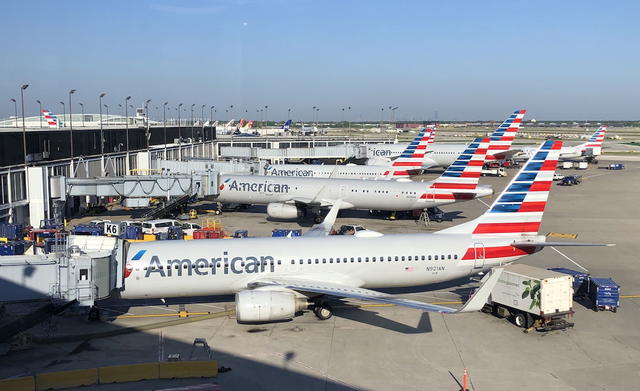
That’s why a longer flight may be significantly less expensive than a shorter flight, and why a connecting itinerary may be significantly cheaper than a nonstop itinerary.

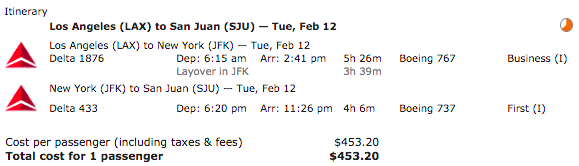
Just to give an example, take the below itinerary from Los Angeles to New York to San Juan, which is ~$450 one-way in business class.
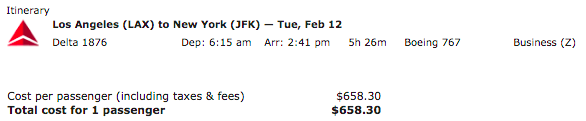
Meanwhile if you booked just that same Los Angeles to New York flight, you’d pay $200+ more.
This leads to a practice known as hidden city ticketing. Some people may book that itinerary to San Juan, but actually get off the plane in New York.

Now, there are some things to be aware of:

  • For most airlines this violates the contract of carriage, though it isn’t illegal
  • There are some risks associated with this in the event of irregular operations, if you’re checking a bag, etc.; you can read more about that here

United tells employees to crack down on this practice

In the past United has tried to sue a website that helps people find hidden city ticketing opportunities, but they weren’t successful.

Meanwhile there are situations where United has gone after people who have repeatedly engaged in this practice, though that has happened on a corporate level.

Well, now United is engaging their frontline employees in the war against throwaway ticketing. Brian Sumers writes about a memo that was sent out to employees. A United spokesperson says that this was sent out “to provide a reminder to our employees about how to address issues that arise when customers purchase hidden-city tickets and travel with checked baggage.”

The memo states, in part:

“This practice can potentially offer discounts on airfare and [is] not aligned with United’s contract of carriage. As the practice grows, we need to ensure that we’re both supporting our customers and properly enforcing the contract of carriage rules and United policies.”

United does note that not everyone getting off early on an itinerary is intentionally engaging in hidden city ticketing. There could be situations where passengers have to cut their trip short due to a medical situation, or due to irregular operations. So United tells their employees to “ask questions and understand the customer’s situation.”

So, what should employees do if they suspect someone is engaging in this practice?

“Our priority is to safely get our customers and their baggage to their final destinations, so always try to understand the customer’s situation and avoid confrontation when handling hidden city ticketing instances. Corporate security is better positioned to follow up on the situation and taking appropriate action to ensure customers are following contract of carriage rules and United policies.”
Bottom line

When I first heard this I was a bit perplexed. I feel like most United gate agents struggle enough to perform their basic job duties, let alone to act as some sort of Ben Gurion Airport style security force against hidden city ticketing.

However, this actually isn’t totally irrational. It seems like this is mostly targeted at people who (stupidly) decide to check bags with throwaway ticketing, which can be costly and time consuming for the airline. In those situations it’s smart for United agents to at least note down their concerns. Whether or not that actually happens remains to be seen, though.

But for those engaging in throwaway ticketing without checking bags, it doesn’t seem like there will really be any context in which frontline employees can get involved.

Conversations (59)
The comments on this page have not been provided, reviewed, approved or otherwise endorsed by any advertiser, and it is not an advertiser's responsibility to ensure posts and/or questions are answered.
Comment as a member

Membership is free and takes no more information than commenting as a guest. Earn status points for good contributions, and see fewer ads as your status grows.

Type your response here.

If you'd like to participate in the discussion, please adhere to our commenting guidelines. Anyone can comment, and your email address will not be published. Register to save your unique username and earn special OMAAT reputation perks!

  1. Loading comments…
Recent Comments
The latest from the OMAAT community.

The comments on this page have not been provided, reviewed, approved or otherwise endorsed by any advertiser, and it is not an advertiser's responsibility to ensure posts and/or questions are answered.

Drew Guest

Fares on highly competitive routes are largely priced by supply and demand. On non-competitive routes, it’s a seller’s market: prices set by monopolistic or duopolistic behavior. Hate airlines as much as you will, but their pricing behavior is logical if not exactly “fair” to consumers. For those of you suggesting pricing by distance, good luck with that: one seat x costs per seat mile = expensive JFK-LAX ticket. For those of you who say I’ll do as I please and it’s not the airline’s business, actually it is: by purchasing a ticket both you and the airline enter into a contract. Laws and regulations exist in theory to protect both parties who’ve voluntarily entered into a contract. The airline simply sees the other party in the contract as having failed to fulfill your part of the contract to fly the itinerary as purchased, barring of course weather or mechanical issue, and thus no longer believes itself compel to fulfill its side of the contract, ie, cancels the remaining segments. This is not to defend, but to explain airline behavior, especially in a low margin business. Full disclosure: I work for a competitor of United’s and similar guidance was given to our airport customer service agents regarding hidden city ticketing. If, after having a discussion with the passenger, it is believed fraud is involved, then document the record and send it on to fraud department. Most often there is a perfectly legitimate reason for a passenger to not board the next flight. As with any other type of intentional deceit though, it is often discovered in the most unlikely ways. Some can and do get away from fraud large and small. After decades in the business, the stuff I’ve seen a few people try to get away cannot be made up!

0
‼ 0
Rong Guest

If airlines are using dynamic pricing to utilize their income, passengers have every right to exploit this loophole to save some money from this greedy pricing scheme.

0
‼ 0
dogtags40 Guest

While living in Munich, I booked and paid for a rental car for a visit in Atlanta. The package included insurance. When I picked up the car, I was told that the package rate did not apply because I'm American. I pointed out that I was an official resident of Germany. However, because the credit card I used to prepay was for a US address, they would not honor the insurance package, offered only to non-US customers. Pleas to management had no effect.

0
‼ 0
Michael Guest

Just buy all your tickets with a point of sale in Italy, then you are protected against any post fare difference calculation. The supreme court there has ruled that you are allowed to skip as many segments as you wish, airlines are not allowed to cancel any following segments or ask for any payment. Easiest way to buy something in Italy? Just use expedia.it

0
‼ 0
Nightliner Member

@brent: I disagree on that comparison. It's like a theatre selling you a play with or without a snack before, and sometimes, the snack plus ticket deal is cheaper - they then impose a rule that if you don't eat the snack, you lose your right to the seat.

0
‼ 0

Save posts to read later

Saving posts is a member feature. Become an OMAAT member to build a reading list you can come back to from any device.

Become a member
Meet Ben Schlappig, OMAAT Founder
5,883,136 Miles Traveled

43,914,800 Words Written

47,187 Posts Published