United Airlines Backtracks On Flight Cancelations

It’s shocking how quickly things are changing in the industry, and just how often airlines are changing their minds, as the situation continues to evolve.

Just over 24 hours ago United Airlines announced that they would cancel 95% of international flights, including all long haul international flights. That meant the 5% of international flights remaining were ones to Mexico, some flights from Guam, etc.
Well, United has now partially backtracked on that decision.

United Airlines maintaining some international flying

United Airlines is backtracking, and now has decided to keep some international long haul routes. The airline states that travel demand continues to drop, but that they know some people around the globe are displaced and still need to get home.

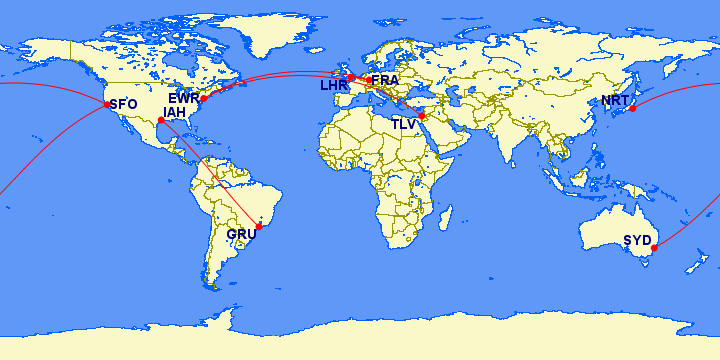
United Airlines is now reducing their April and May international schedule by 90% (rather than 95%), and will continue daily operations to and from the following six destinations in Asia, Australia, Europe, Latin America, and the Middle East:

  • Newark/New York – Frankfurt (Flights 960/961)
  • Newark/New York – London (Flights 16/17)
  • Newark/New York – Tel Aviv (Flights 90/91)
  • Houston – Sao Paulo (Flights 62/63)
  • San Francisco – Tokyo-Narita (Flights 837/838)
  • San Francisco – Sydney (Flights 863/870)
On top of that, United is temporarily reinstating the following flights through March 27, 2020, to help people get home:

  • Newark/New York – Amsterdam (Flights 70/71)
  • Newark/New York – Munich (Flights 30/31)
  • Newark/New York – Brussels (Flights 999/998)
  • Washington-Dulles – London (Flights 918/919)
  • San Francisco – Frankfurt (Flights 58/59)
  • Newark/New York – Sao Paulo (Flights 149/148)

Then the following flight is being maintained through March 29, 2020:

  • San Francisco – Seoul (Flights 893/892)
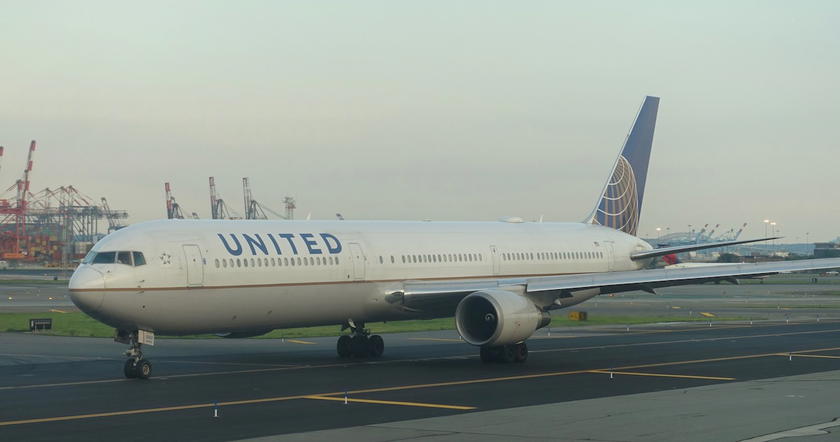
United is maintaining quite a bit of capacity in the coming days

What we should make of this

United Airlines has some of the brightest people working in network planning, so I think this situation really puts into perspective the struggle airlines are having right now.

Obviously demand is way down and airlines are losing billions of dollars as a result, but clearly there’s a real struggle in deciding how much it makes sense to scale down operations.

Just look at this situation — Friday evening United decided to cut all long haul international flights, and 24 hours later United reinstated flights to many parts of the world.

Network planning people are used to analyzing data for making these decisions, but this is so unprecedented that it almost seems like they’re just throwing darts at the wall and seeing what sticks:

  • We don’t know if government restrictions will get even worse
  • We don’t know how long this current situation will last
  • We don’t know the long-term economic impacts of all of this
  • We don’t know how much aid airlines will be getting, and what exactly that will be contingent upon
  • Even if there is demand for a particular flight, the process of rebooking existing travel is a massive hurdle, given how hard it is to get through to airlines on the phone

I imagine for many airlines numbers are currently being crunched on the economics of continuing to operate a “skeleton” schedule, rather than just shutting down altogether for a few weeks and seeing how the situation evolves.
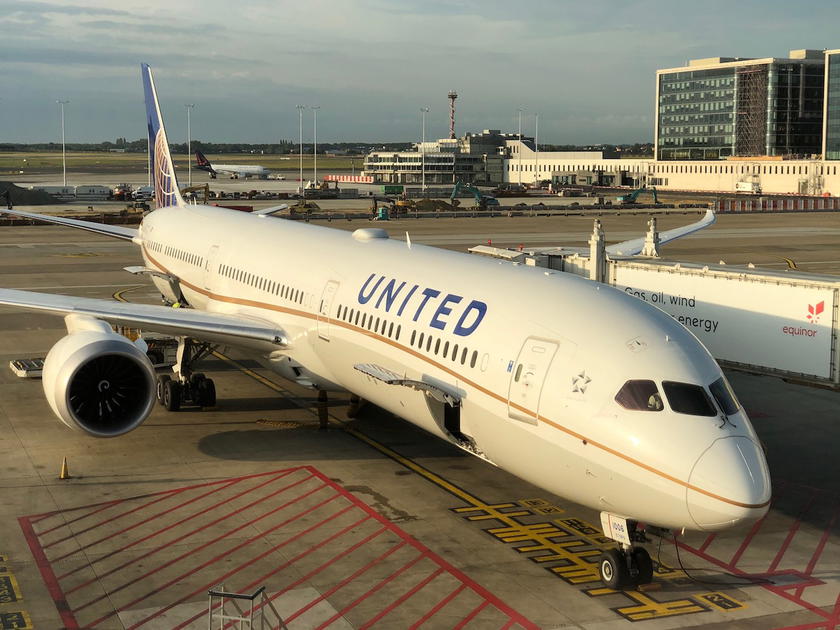
Clearly airlines are struggling to strike the right balance

Bottom line

A couple of days ago United took the most drastic stance of any US global airline by deciding to end long haul international flying for a couple of months. Just 24 hours later they reversed that decision, and plan to maintain daily flights to six long haul international destinations. That’s quite a reversal, if you ask me.

I’d be curious to know what exactly prompted United to change their mind on this, though I doubt we’ll ever find out…

What do you make of United’s schedule change reversal?

Conversations (32)
The comments on this page have not been provided, reviewed, approved or otherwise endorsed by any advertiser, and it is not an advertiser's responsibility to ensure posts and/or questions are answered.
Comment as a member

Membership is free and takes no more information than commenting as a guest. Earn status points for good contributions, and see fewer ads as your status grows.

Type your response here.

If you'd like to participate in the discussion, please adhere to our commenting guidelines. Anyone can comment, and your email address will not be published. Register to save your unique username and earn special OMAAT reputation perks!

  1. Loading comments…
Recent Comments
The latest from the OMAAT community.

The comments on this page have not been provided, reviewed, approved or otherwise endorsed by any advertiser, and it is not an advertiser's responsibility to ensure posts and/or questions are answered.

Ivanna Neuhaus Guest

@Janet, bless your little heart, I’m so glad you learned a basic concept about stock valuations, what any astute 14 year old might know. What a pity you didn’t learn basic math or logic: the reason the big 3 have asked for a no-strings bailout worth more than their market cap is simple. They’ve priced repeated bailouts into their projected operations, and therefore into their corporate valuations. This is the second time I’ve mentioned this. I realize it takes analytical skills that go beyond those you’ve demonstrated, but I’ll just lay it out there, just in case a better “Janet” wants to think about that. Despite your crocodile tears, the fact is that the unions agree with me: bailing out the buying 3 is a fools’ errand and contrary to the interests of their members. Agreements should take an equity stake and prohibit investor or executive bailouts. Your bizarre take on this situation not only marks you as a Trumpanzee, it also marks you as as a union busting, CEO backing stool pigeon. Sorry to blow your cover. I’ve provided numerous references to what is criminal about the US carriers: their mistreatment of their employees, their malfeasance with regard to pensions and their fraudulent intent with regard to Treasury funds. What a pity you don’t understand any but the most rudimentary legal concepts, but the burden of bringing you up to speed is not mine. Now that the bailout is failing and the unions are cheering, I suspect we will here a different version of “Janet”, one that doesn’t make the idiotic arguments about Americans wishing appalling service on themselves (after all, what volition do consumers have in an oligopoly?). Instead, we’re likely to hear more about the broader “ecosystem “ of travel since defending UA or AA is now beyond the pale. “Think of the jobs” Janet will sob. But why do the unions reject Janet’s view? Because their members do not benefit from bailouts of investors and executives. Good luck “Janet”. Maybe your next posts will be a tad more believable than your last few.

0
‼ 0
Janet Gold

@Ivanna, A lesson in stock market 101. The market cap of a company is typically a reflection of the future earnings of a company. As those prospects have dimmed considerably, the market caps have declined sharply, It has nothing to do with how much might be needed to keep the airlines flying (once flying is allowed again). The funding requests of the airlines has nothing to do with the market caps. The challenge for any airline is that there are high capital costs. As a result the operating leverage is severe. It is also a barrier to entry for any new operator looking to get started in the industry. As a result, it is more sensible for the benefit of the flying public to find a way to maintain the current airlines as ongoing enterprises. I have no problem with them being pushed into bankruptcy as part of the process as happened with GM during the GFC, but it is better that the 3 existing airlines continue, as we will immediately pay much higher fares if even one of them stops operating. I don't disagree that share buybacks were a less than good use of profits when times were good but unfortunately we have had a President who encourages this behavior. (It is worth noting that GM has rebuffed pressure to buy back shares since they were rescued in the GFC - full credit to Mary Barra for prudent management. Perhaps you call that a "criminal" bailout (please research the meaning of criminal - clearly you don't understand it) - but the US government made money from it and jobs were saved.) But rooting for the disappearance of the current airlines is a recipe for much higher costs for everyone who wants to fly. Everyone who complains about the deterioration in service at US airlines has only themselves to blame. The rise of low cost carriers has led to a race to the bottom in service. Prices go down and service suffers. Americans have voted for low prices over service. You still have not explained what is criminal? You clearly have no evidence of criminal behavior. I am not a fan of share buybacks, and you are right - often senior management compensation is tied to the share price - but this is all driven by what shareholders vote for. It is not criminal. So I don't have a problem if shareholders lose out from any support to the industry, but as a frequent flier, I would prefer that competition remain (though I personally would be happy to pay for better service; I avoid the LCCs).

0
‼ 0
Ivanna Neuhaus Guest

For someone claiming expertise in economics, Janet goes to great lengths to show complete ignorance of the aviation sector and of basic math. Some remedial math for Janet: The total market cap of the big three is LESS THAN the bailout they’re asking for. What does that mean? That they’ve included government bailouts as part of their long term business strategy. Rubes who buy their “give us the money or we’ll fire these workers” nonsense are supporting this socialize-the-costs, privatize-the-profits approach to big business. It’s a criminal model in which they hold their employees hostage while the US Treasury pays a ransom every few years. I’m sorry if people like Janet don’t see the bigger picture or understand the role they play in propping up this crooked system. It’s annoying to have to explain it to those who claim to have expertise. For comparison, public transit systems in this country employ roughly the same number of people as the airlines and have experienced a drop in revenue roughly similar to airlines. Yet they’re asking for only $13 billion. Why? Because their funding model doesn’t presuppose using 95% of free cash flow to compensate investors or asking for periodic bailouts. @Janet, please tell us why the big three spent 95% of their free cash flow on stock buybacks? Tell us how this isn’t part of executive compensation and then tell us why we shouldn’t just think of you as yet another ignorant rube with her pompons in the air, cheering on another criminal bailout.

0
‼ 0
UA-NYC Diamond

I wouldn't call them "criminal" by any means - but AA and UA in particular have strove over the past decade to make their base level product worse year over year over year (int'l business class excepted). DL has actually tried to improve it a bit at least. What other industries, if any, are comparable to this? Who else is continually seeking to make a worse experience for its consumers all in the name of endless higher profits? A classic example of the downfall of industry consolidation.

0
‼ 0
Janet Gold

@Ivanna, Further you have not provided a shred of proof as to why you classify the airlines - or even UA - as a criminal enterprise. Literally you offer nothing but BS! I don't even know what you mean when you suggest I have crocodile tears. Please take a course in economics and revert. Or offer concrete numbers on the excessive executive compensation and proof of criminality. I can't believe you can even write this with a straight face. The airlines are no saints, but few companies are. They are driven by a desire to generate profits for shareholders over the interest of consumers. Until the US government changes the rules of engagement, profit will continue to drive corporate decision making. And based on the comments that would prefer to throw the industry into turmoil than ensure a smooth emergence of the economy from this devastating Pandemic, you are not alone in wanting to throw the economy under the bus and let consumers suffer.

0
‼ 0

Save posts to read later

Saving posts is a member feature. Become an OMAAT member to build a reading list you can come back to from any device.

Become a member
Meet Ben Schlappig, OMAAT Founder
5,883,136 Miles Traveled

43,914,800 Words Written

47,187 Posts Published