


For the next segment of my trip to Japan via Mongolia, I flew ZIPAIR’s Boeing 787-8 full flat business class on the 1hr45min flight from Seoul Incheon (ICN) to Tokyo Narita (NRT). For those not familiar, ZIPAIR is Japan Airlines’ low cost carrier that launched in 2020, and the airline offers a fascinating passenger experience.
In particular, the airline has what’s possibly the world’s most basic business class, with reverse herringbone seats that don’t have personal televisions, and don’t include any additional services. You’re literally just paying for the seat. Let me clarify that while I’m referring to this product as business class (because that’s the seat being offered), ZIPAIR doesn’t market it this way — the airline simply refers to it as “Full Flat.”
As I’ll explain below, flying with ZIPAIR is such an unusual experience compared to flying with virtually any other airline, and I enjoyed experiencing the product on a short flight. I’d say flying in ZIPAIR’s premium seating could represent a great value, especially for long haul travel, where a flat bed can make a huge difference. However, given that I have access to miles & points, I’m not sure I’ll necessarily be flying with ZIPAIR again.
How I booked my ZIPAIR ticket
The ZIPAIR experience is unique from when you book your ticket. I was booking a one-way itinerary on the following flight:
1/29 ZG42 Seoul to Tokyo departing 1:10PM arriving 3:30PM
I could either pay $177.75 for a standard economy seat, or $216.47 for a reverse herringbone seat. An extra ~$39 for a seat like this is an absolute steal, eh?
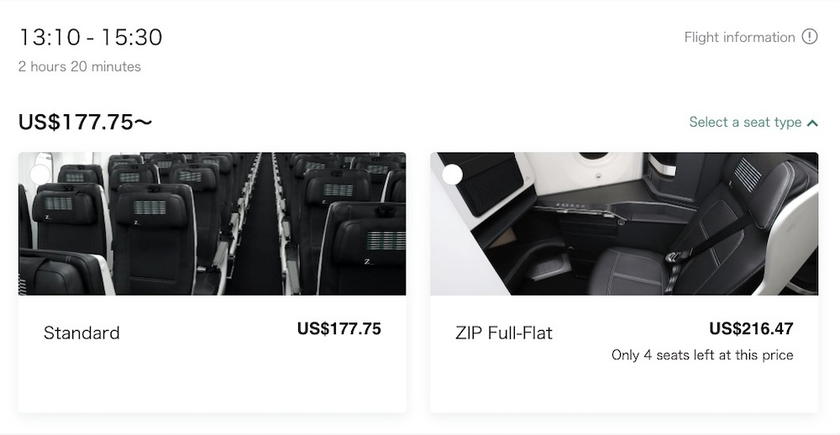
That ~$39 covers just the seat, and nothing else. So if you want anything else, from a full size carry-on to a checked bag, you’ll need to pay for it. For this flight, there were a couple of different bundles that could be booked:
- The “value” bundle offered an advance seat assignment plus a checked bag
- The “premium” bundle offered an advance seat assignment, an in-flight meal, a checked bag, and a carry-on
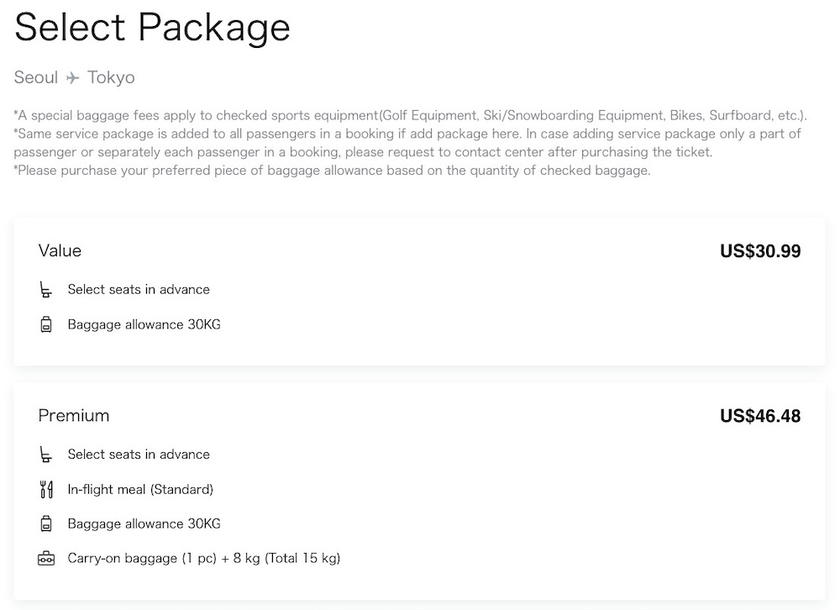
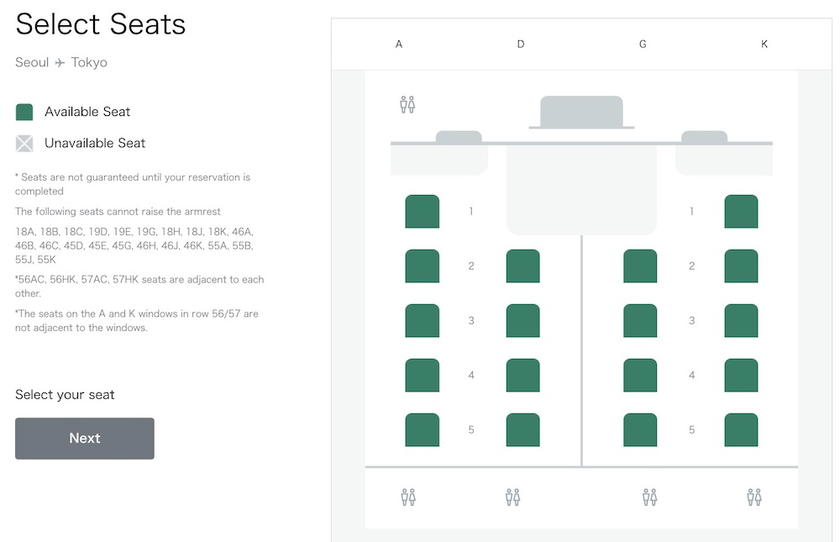
Since I had a carry-on bag and wanted to select my seat, I chose the “premium” option, which was a better value than paying for those products individually (even though I didn’t need a checked bag). I was surprised to find that when I booked my ticket (a couple of weeks in advance), no seats were assigned yet in the full flat section.
During the booking process, you can also already reserve all kinds of extras, including food, drinks, an airport express service feature, an amenity set, cookies, and all kinds of other things.

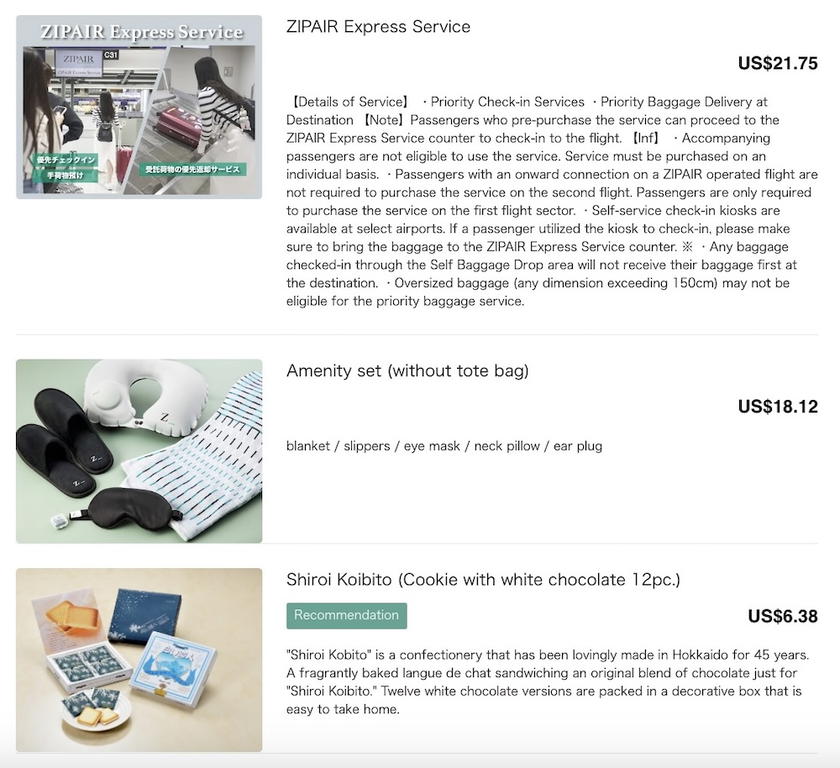
In total, my ticket cost me $311.17. But that’s because I included just about everything, down to the amenity set, a meal, a drink, and even cookies. Since I was reviewing the experience, I wanted to go all out.
ZIPAIR full flat business class check-in & boarding
I had spent the night at the Incheon Airport Transit Hotel, so I never actually ended up making it to ZIPAIR’s check-in counter. That ended up being… a slight adventure.
Japan is so funny when it comes to technology — the country is simultaneously cutting edge, but also loves fax machines. Unfortunately ZIPAIR is more in the fax machine era than anything else. So here’s the reality of ZIPAIR’s online check-in situation:
- ZIPAIR is still only progressively rolling out online check-in on all flights, so not all routes are eligible for online check-in; you can find the latest information here
- If your route is eligible for online check-in, the only way to access the check-in portal is via the invitation that you’re emailed exactly 24 hours out, and you can’t access it directly from ZIPAIR’s website
- In that email it states that “if your passport information is not registered, an error screen will be displayed when you access the URL,” and you’re told that “if you wish to register your passport information, please contact our contact center with a copy of your passport attached”
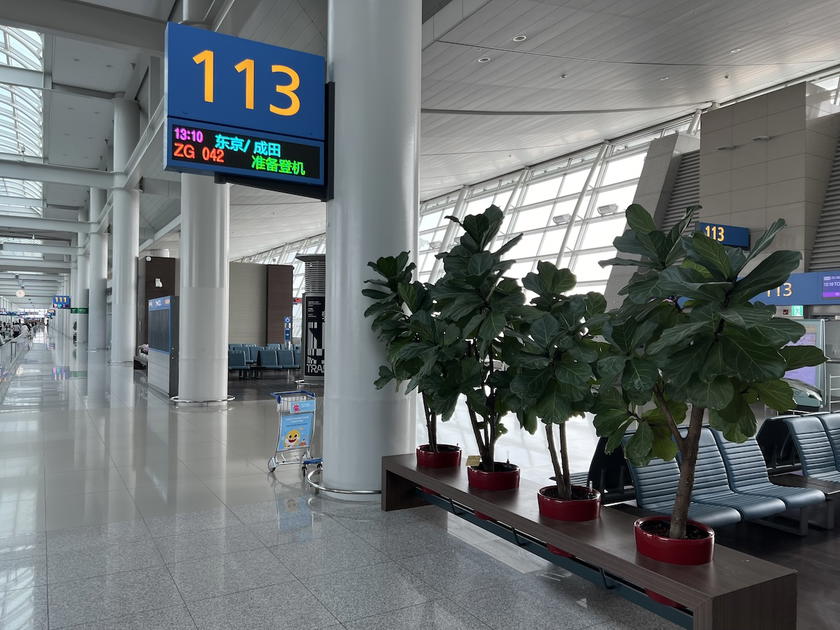
Fortunately my online check-in worked out okay, and I headed straight to gate 113 at Incheon, where my flight would be departing from.
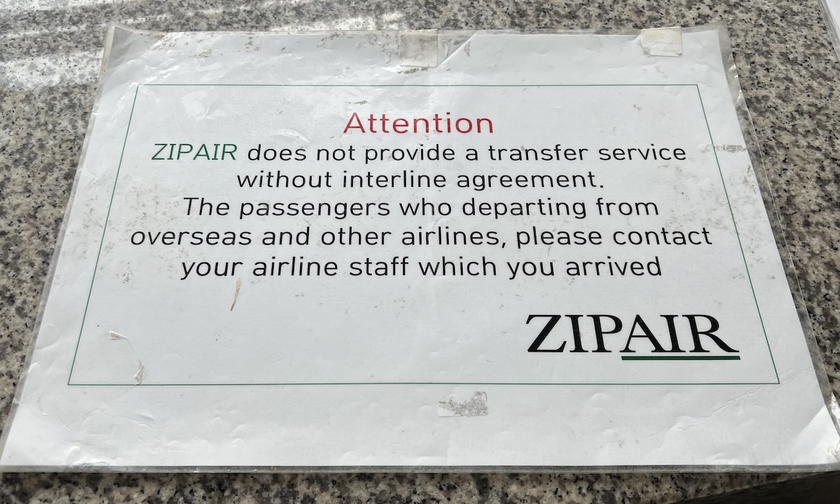
When I arrived at the gate, I showed the gate agent my passport and boarding pass to make sure everything was okay. She looked shocked that I had checked in online, and immediately pulled out the below paper about how ZIPAIR doesn’t provide transfer service without an interline agreement. This doesn’t just apply to checking bags through, but as she explained to me, she couldn’t even print a boarding pass for me.
So she got on the phone and called someone, and that was quite a production. Eventually she told me that everything was okay, so I walked around for a bit. Five minutes later I had a call on my cell phone from a manager, who asked me to return to the gate, as they needed information on where I was arriving from. At one point there must have been six gate agents huddled around the gate looking at my reservation. I was just so confused by what was going on, and why this was such a confusing concept to them.
But anyway, if you’re flying with ZIPAIR, be warned that online check-in might not be possible at all, and even if it is, it might not be simple.
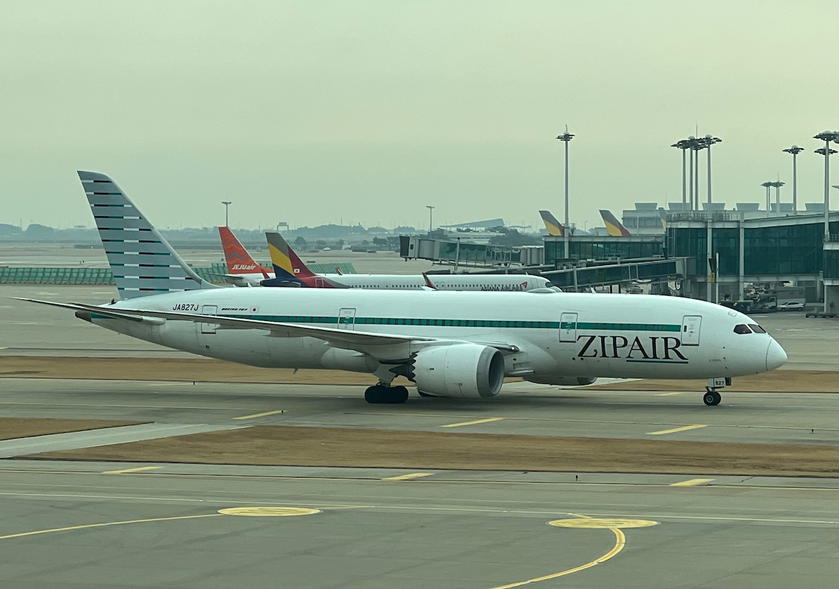
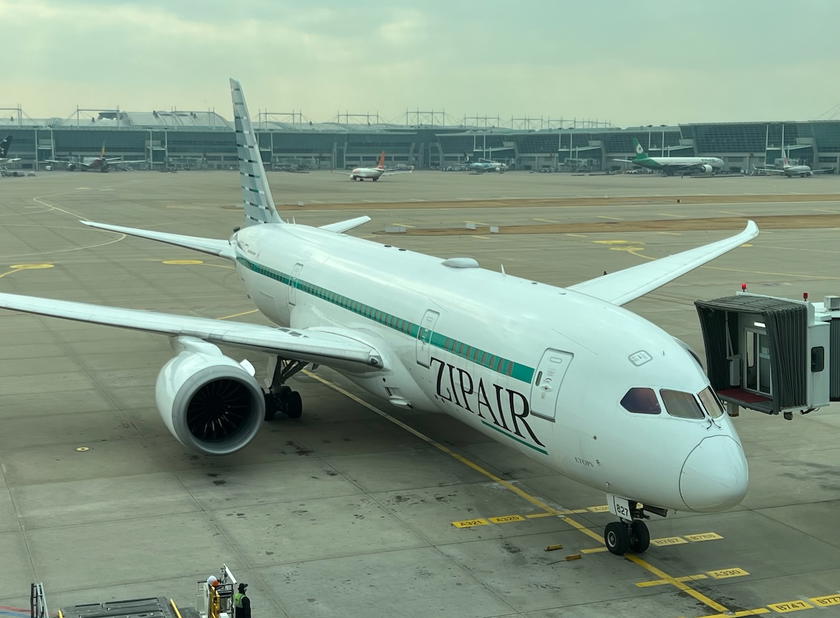
Since I was at the gate plenty early, I got to see the ZIPAIR plane as it pulled into the gate upon arrival. My flight was operated by an 11-year-old 787-8 with the registration code JA827J (ZIPAIR primarily uses former Japan Airlines 787s). Gosh, ZIPAIR’s livery isn’t much to get excited about, eh?
Boarding was scheduled for 12:40PM, 30 minutes before departure. I was pleasantly surprised that ZIPAIR offers priority boarding to those in the full flat seats, since that’s the only way in which the soft product is differentiated. Those in rows one through five, as well as families with small children, could board first. Then boarding started from back to front.
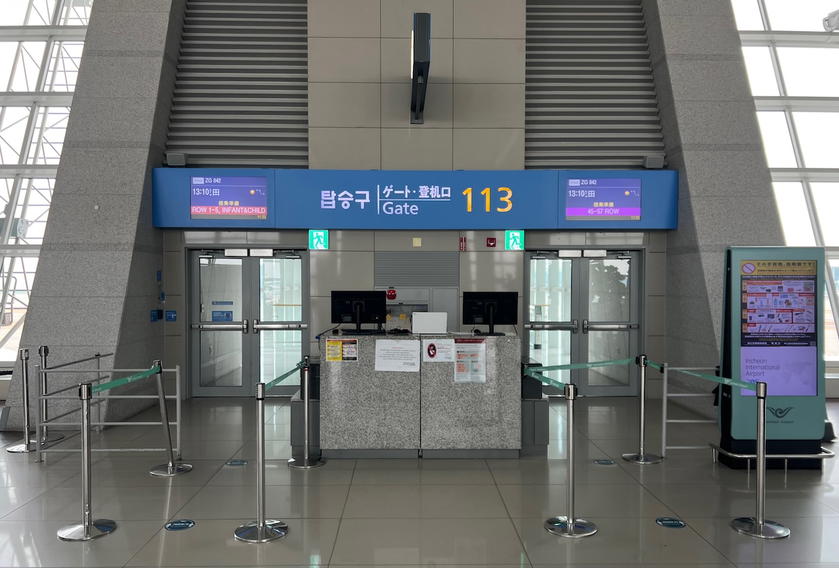
As you’d expect, boarding started right on time. I couldn’t help but notice how ZIPAIR had nine gate agents for this flight — that’s not exactly low cost! In the US, you might see two gate agents for a plane of this size.
ZIPAIR 787 full flat business class cabin & seats
ZIPAIR’s full flat seats taken up the entire space between doors one and two on the Boeing 787-8. The cabin consists of a total of 18 seats, spread across five rows, in a 1-2-1 configuration (the first row doesn’t have a pair of seats in the center). These are reverse herringbone seats produced by JAMCO.
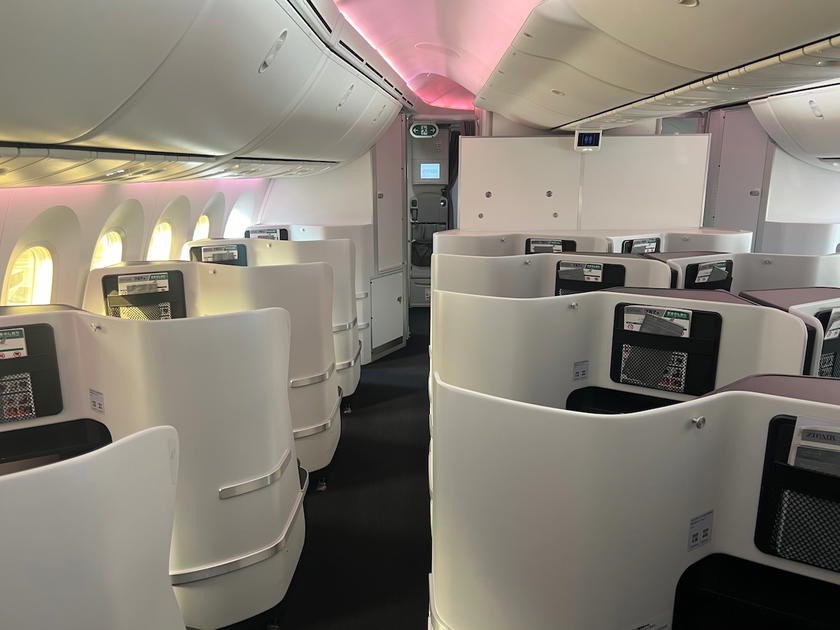
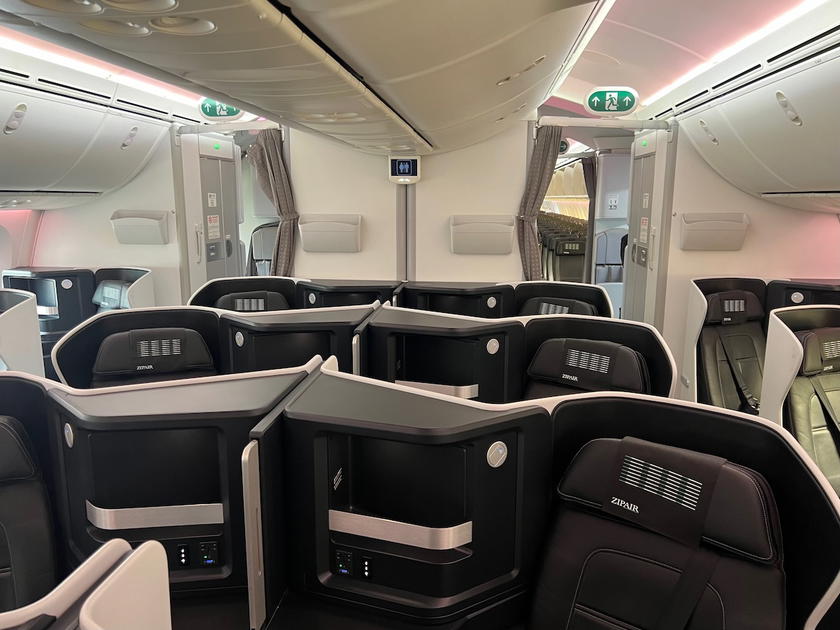
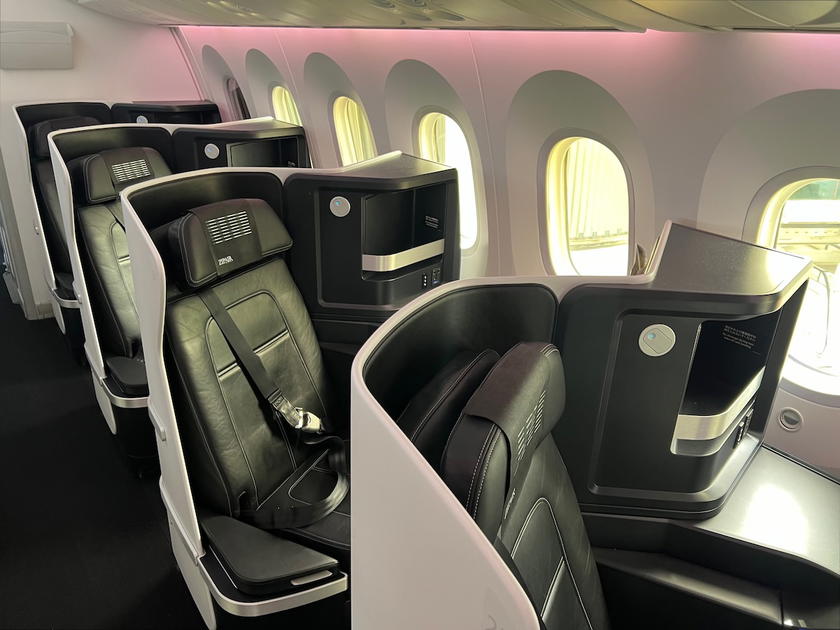
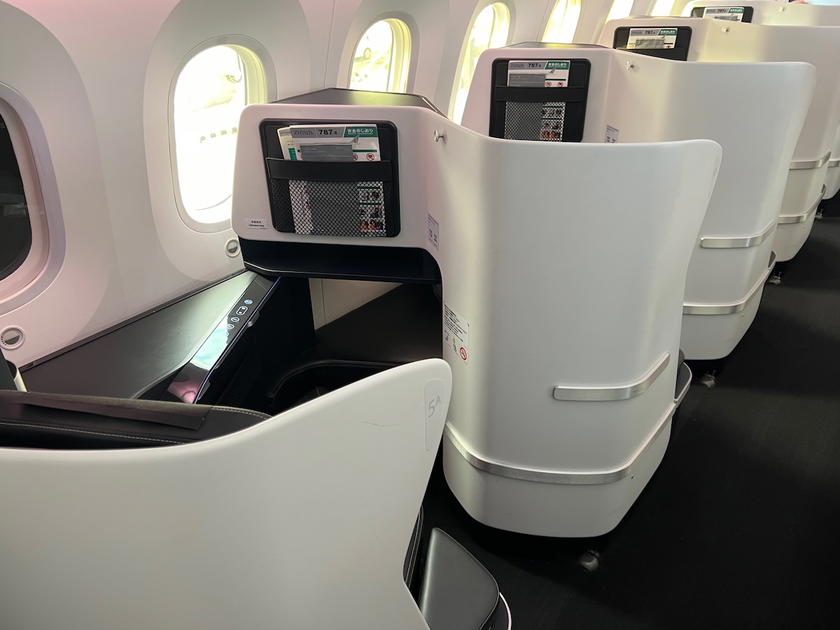
If you’re traveling with someone, you might prefer the pairs of center seats. Do note that these still offer quite a bit of privacy, so you’ll have to lean forward to talk to the person across from you. Furthermore, if you’re not traveling with the person across from you, there’s a little privacy shield you can extend.
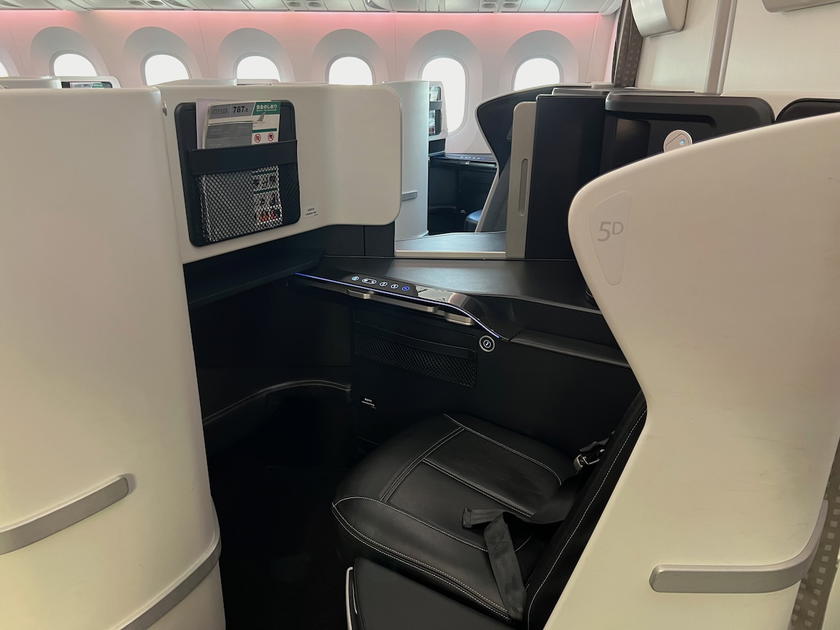
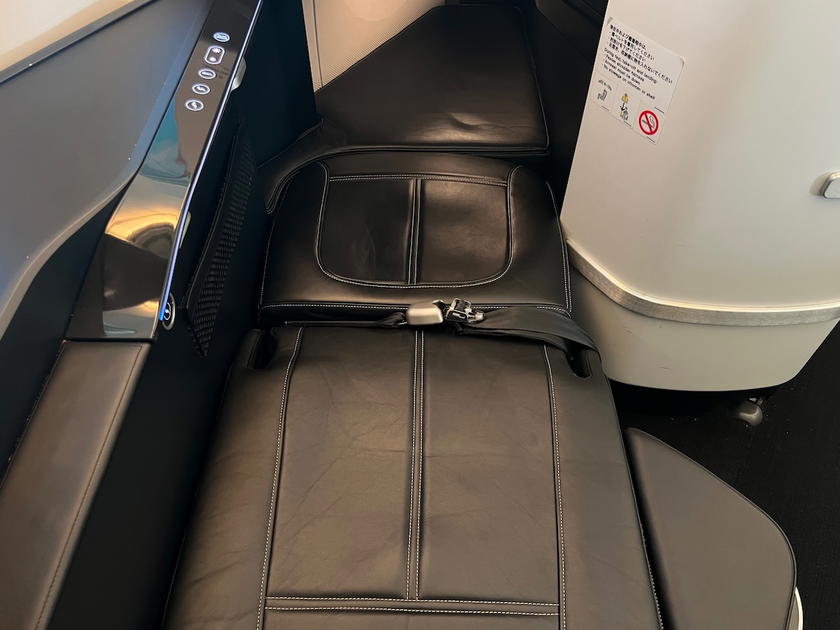
I assigned myself seat 5A, the window seat on the left side in the last row. These are pretty standard reverse herringbone seats — they’re not the most cutting edge out there, but given the value, I’d say it’s an awesome product.
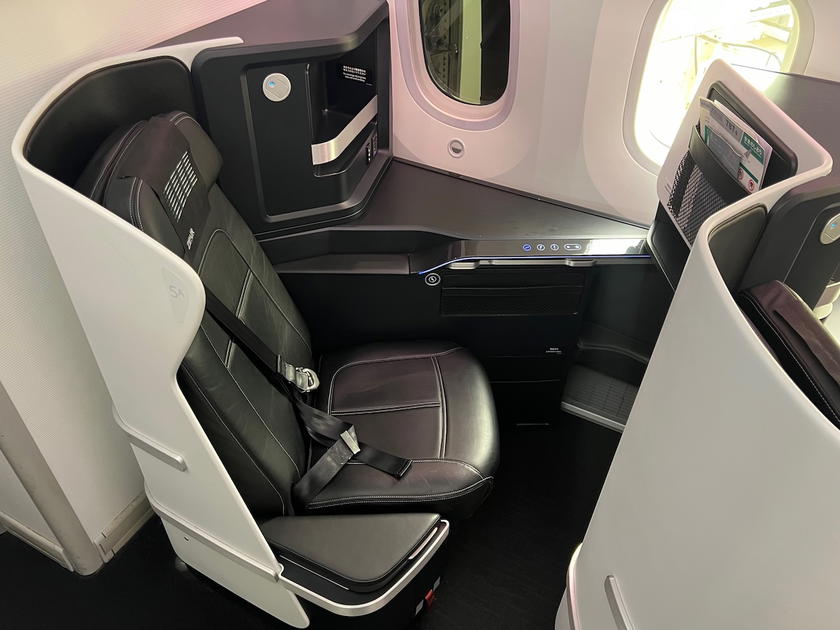
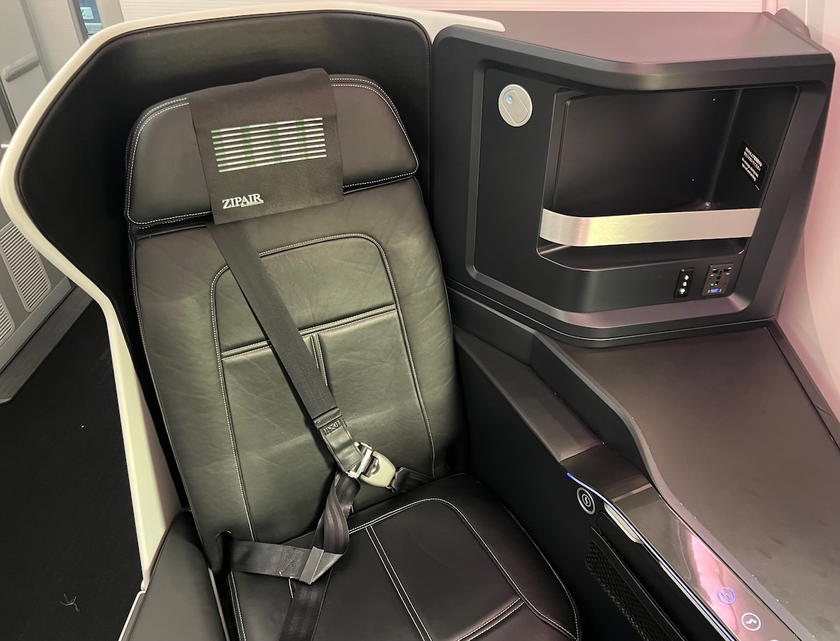
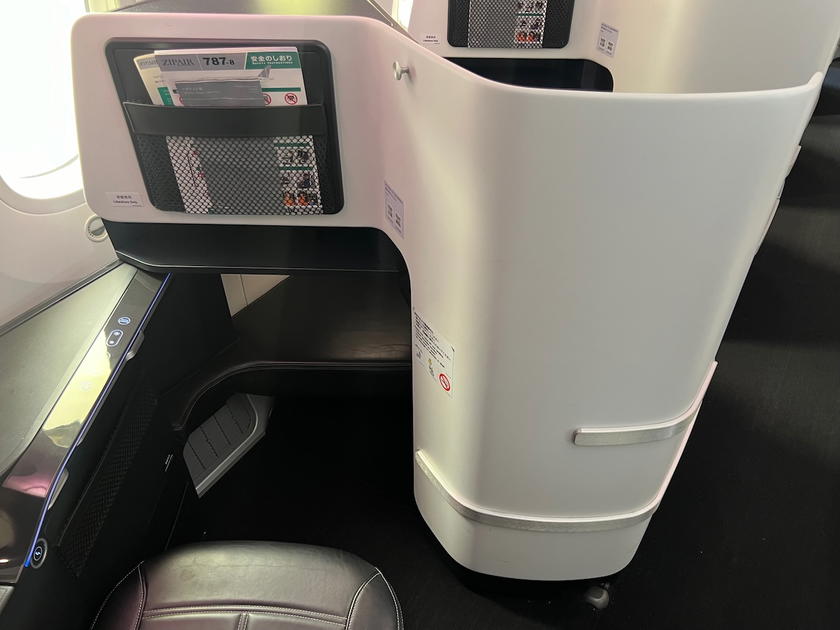
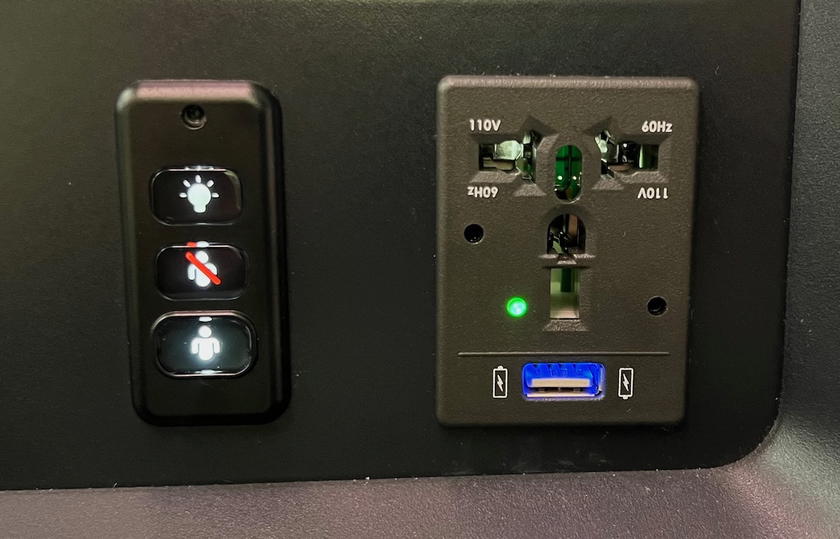
As far as seat features go, to the side of the seat there’s an exposed storage area, along with an AC and USB-A power outlet.

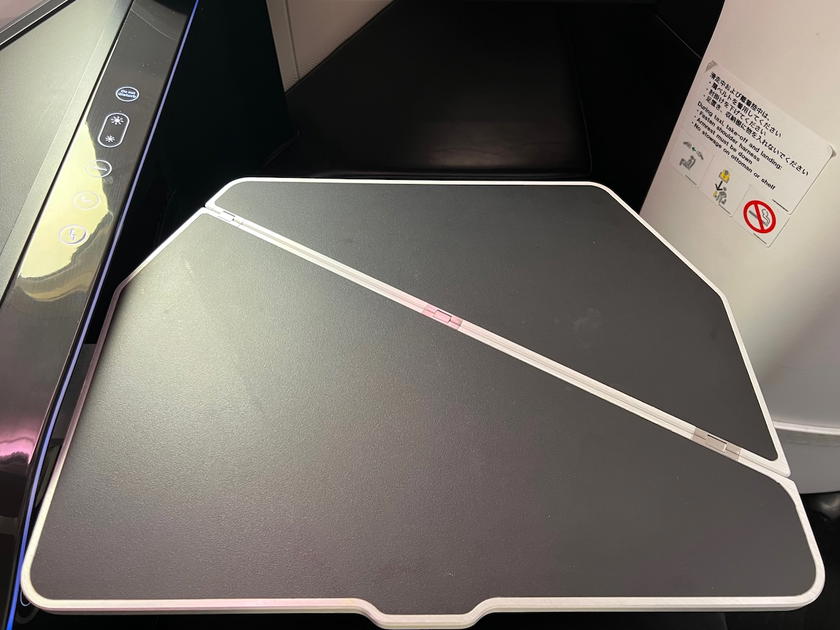
The tray table extends from the console to the side of the seat, and can be flipped over in half.
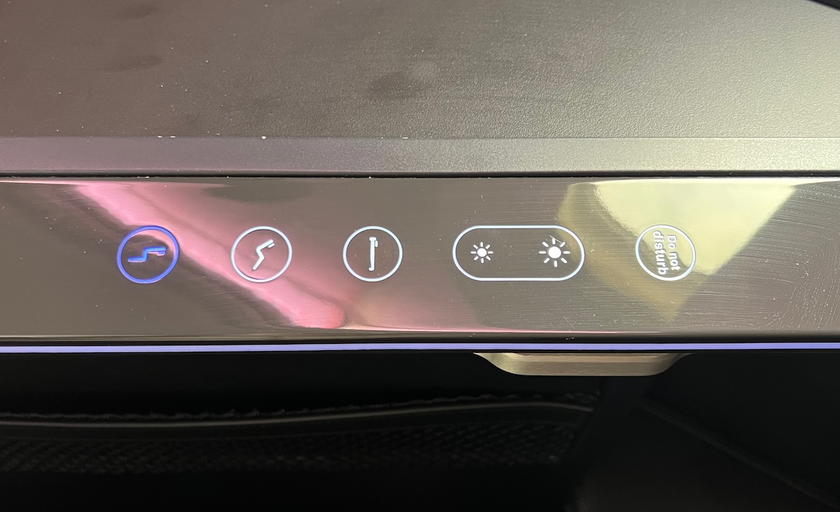
You can adjust the seat positions via a panel to the side of the seat, with three simple recline options.
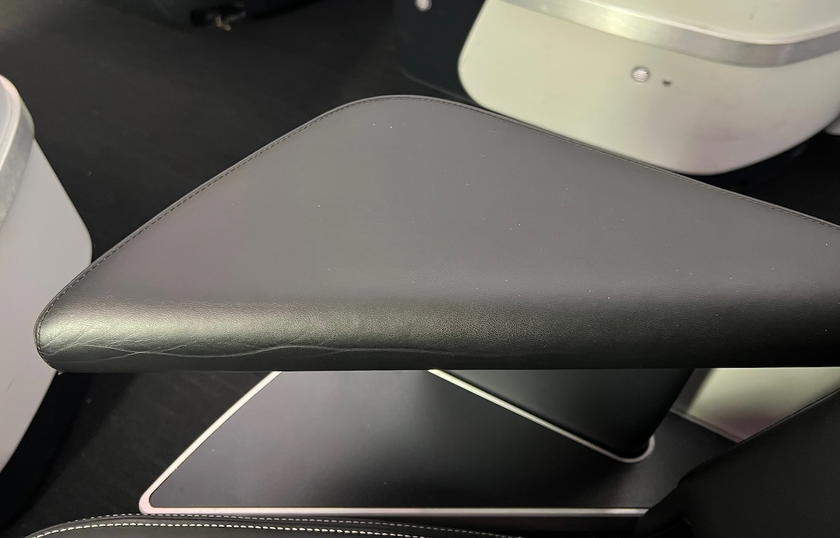
The aisle-side armrest can be raised or lowered, depending on whether you want a place to rest your arm, or prefer a more spacious sleeping surface.
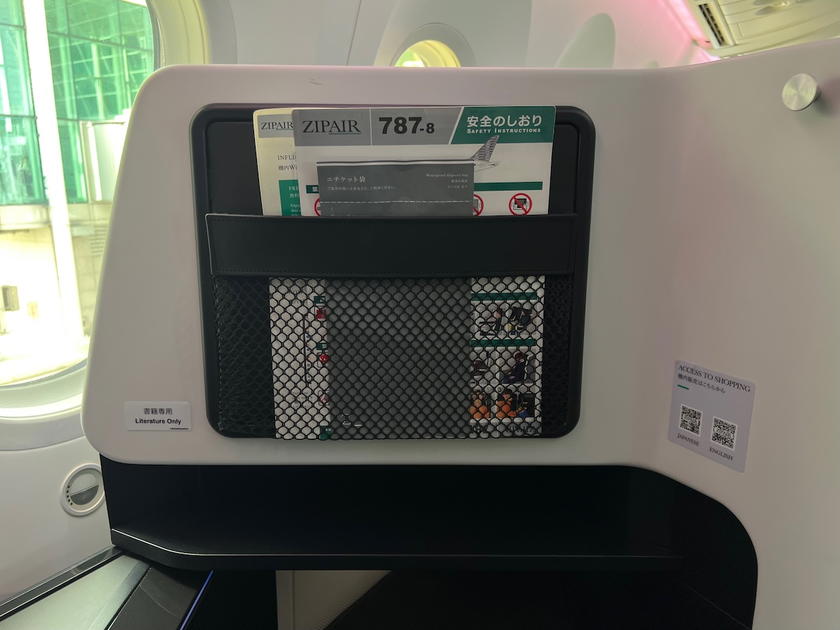
Without a doubt the strangest aspect of ZIPAIR’s full flat seats is that there’s no seat back television. The airline only has streaming entertainment and Wi-Fi, so I believe this is the world’s first reverse herringbone seat without an entertainment screen. The airline instead put the literature pocket in place of the screen, so you get to look at the safety card and an air sickness bag the entire flight.
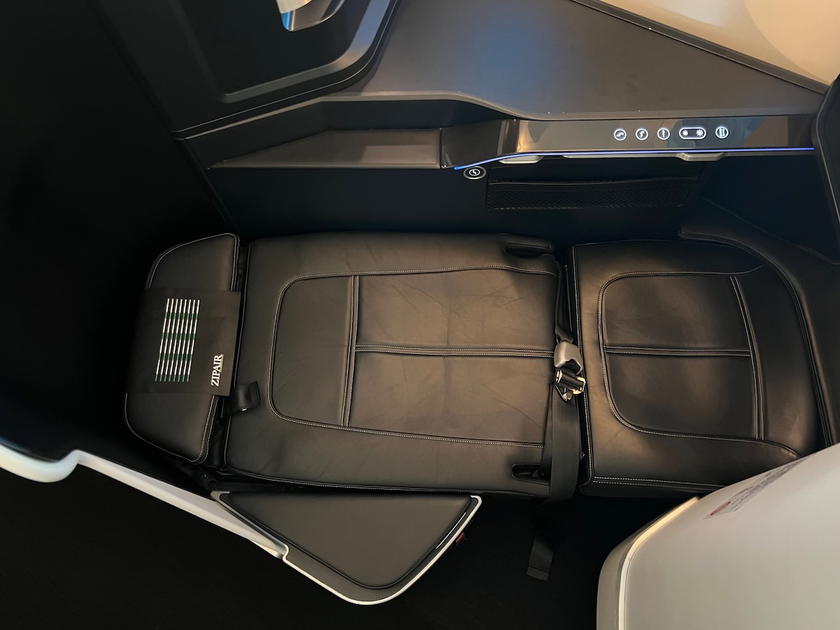
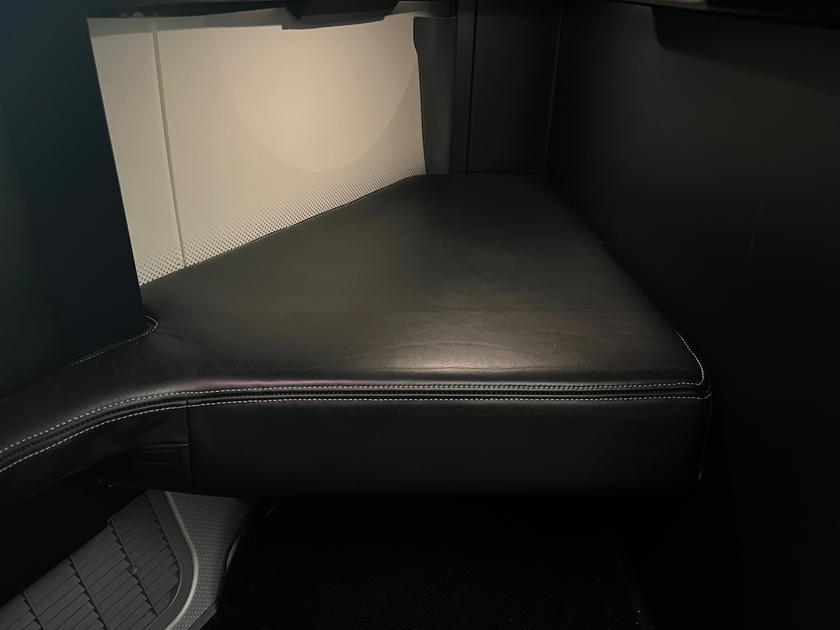
This flight was of course too short to sleep, but I did briefly recline the seat to test out the comfort. I found it to be quite comfortable, and also found the footwell to be a good size.
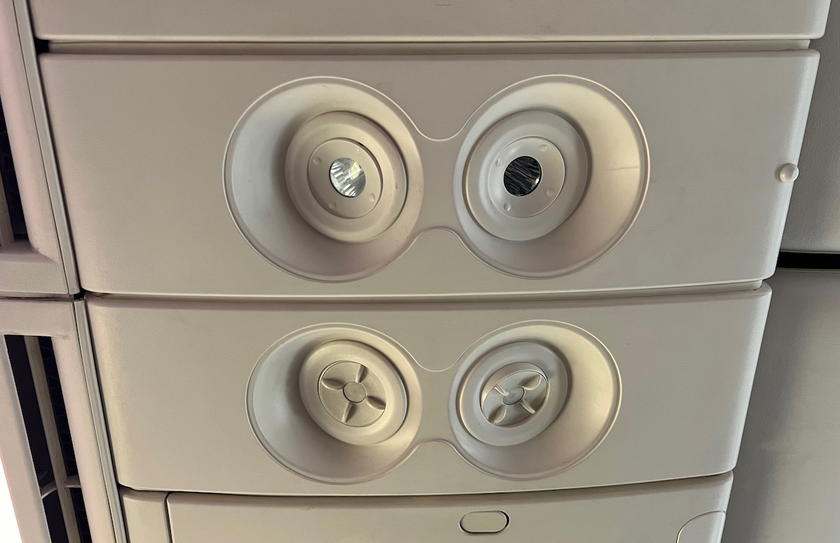
I was pleased to see that the cabin has individual air nozzles, which you won’t often find on a Japanese airline, so that’s pretty cool
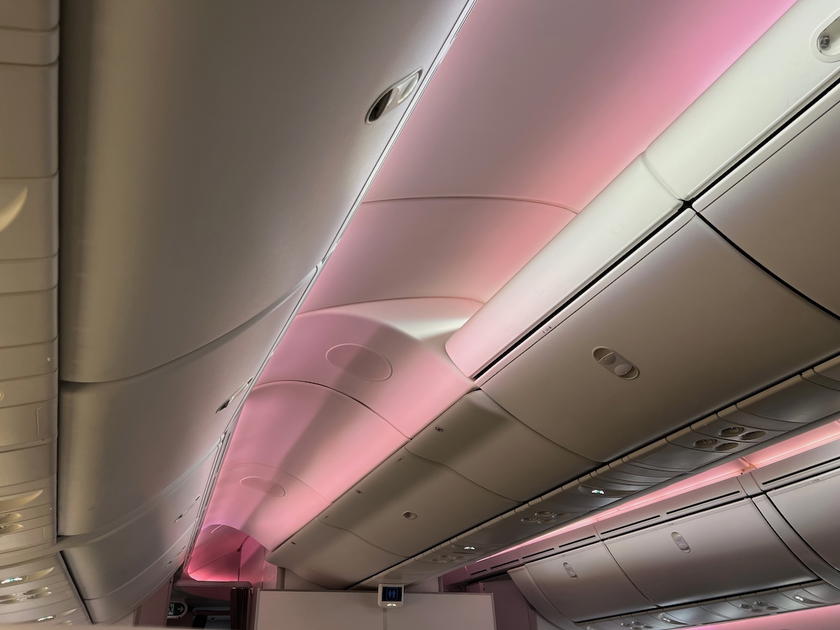
The plane also had colorful mood lighting, which is pretty standard on 787s nowadays.
ZIPAIR 787 Wi-Fi & entertainment
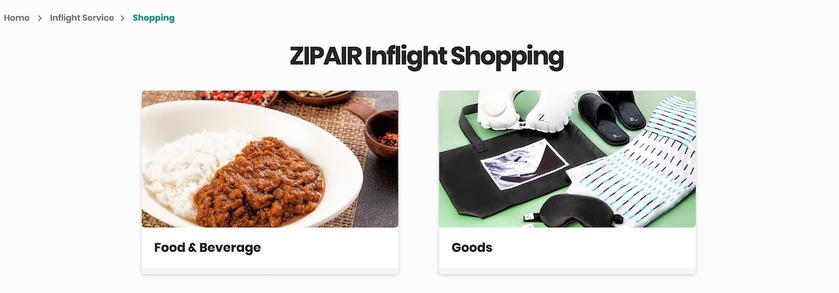
ZIPAIR has no seat back televisions, but instead has streaming entertainment and Wi-Fi. Using this is basically essential. as it’s not just about staying entertained. Rather, all food and beverage purchases, as well as all inflight shopping, needs to be done through the portal. There’s a brochure in the literature pocket explaining the inflight Wi-Fi.
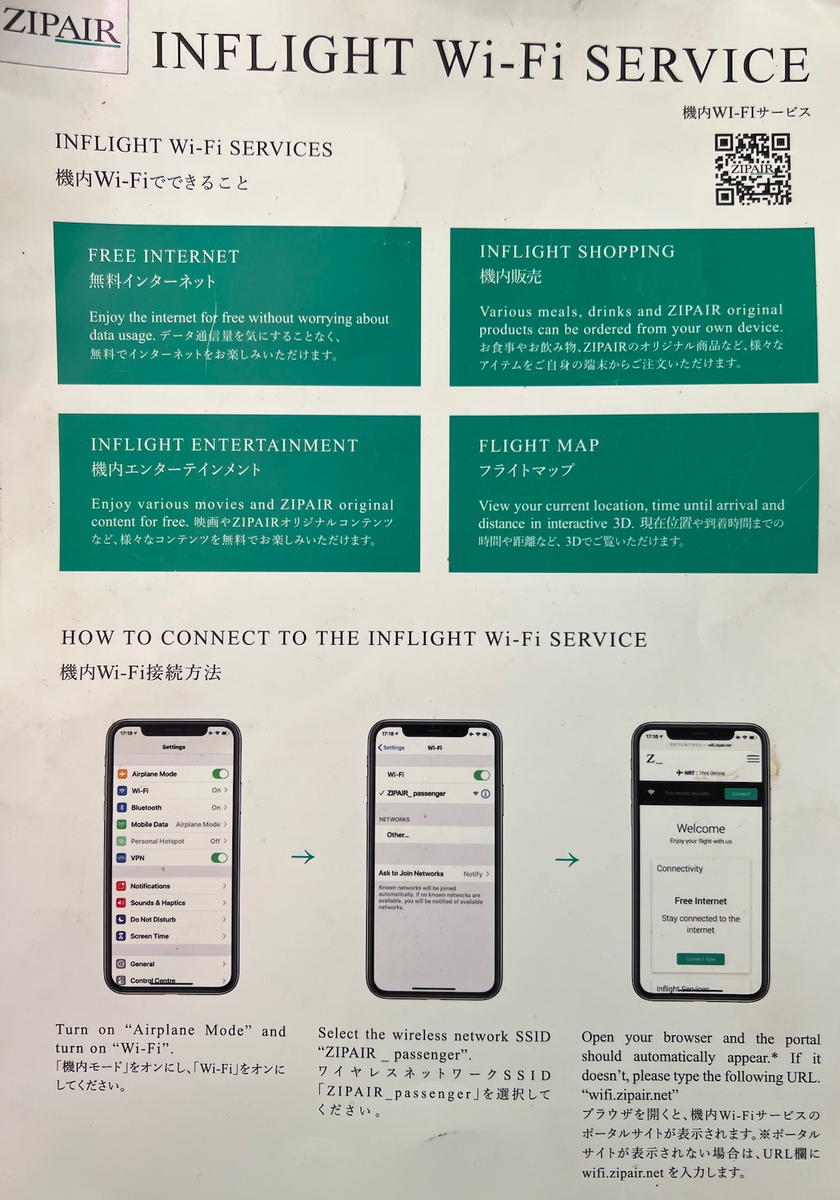
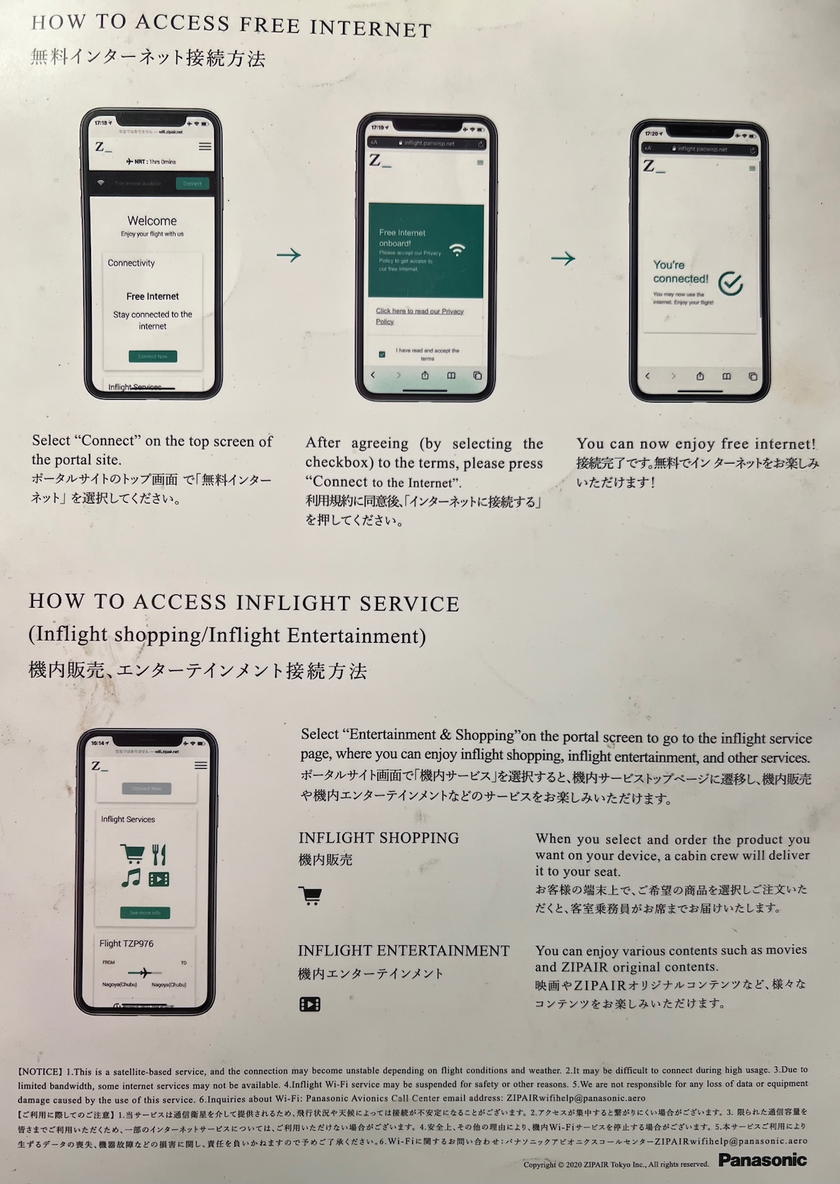
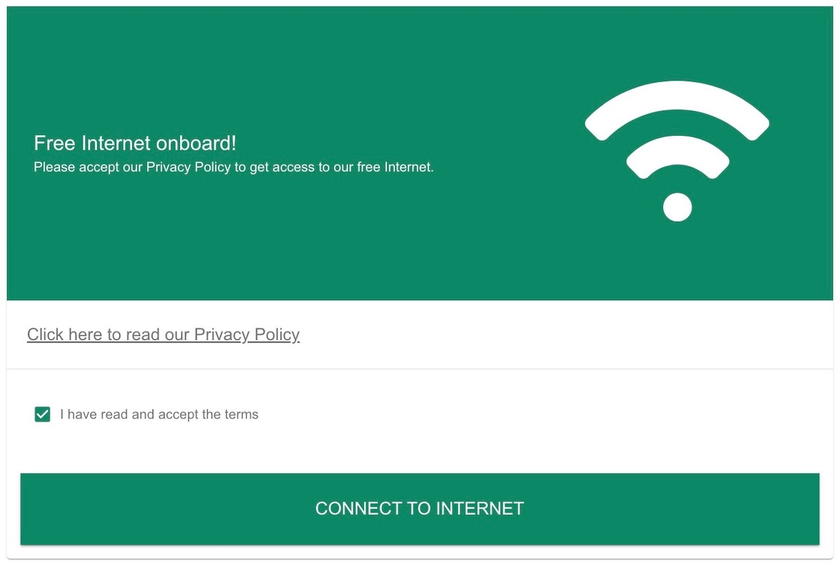
ZIPAIR has unlimited free Wi-Fi with no data caps, and it’s easy to connect to the system.

There’s no need to log-in, but rather you just have to agree to the terms, so you can connect as many devices as you’d like. Wi-Fi is provided by Panasonic, and I found the speeds to be quite good. It’s funny how an ultra low cost carrier can offer this, while many full service airlines charge for it in business class.
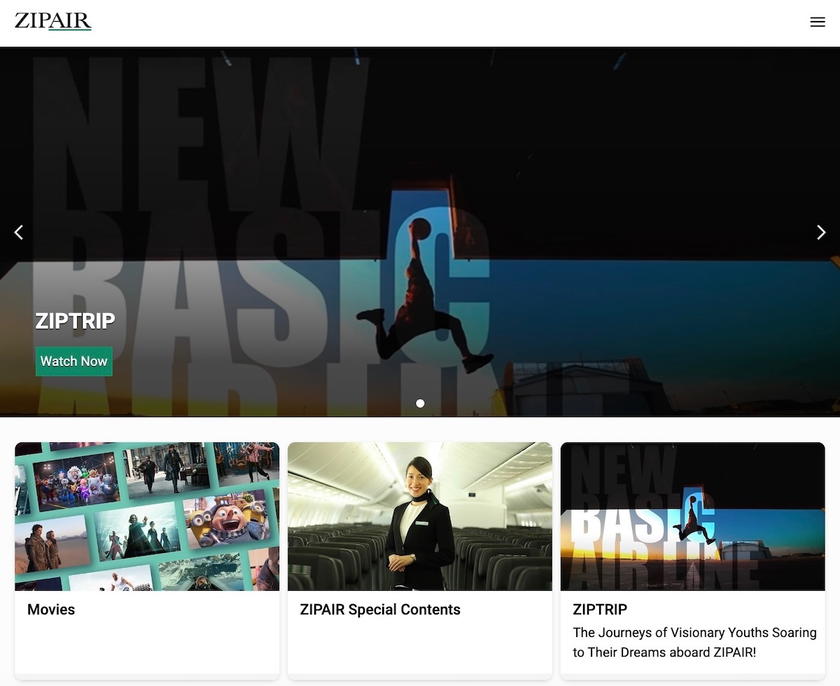
Beyond the Wi-Fi, there’s also a selection of streaming entertainment, though it’s very limited. There were a total of 10 movies, plus 15 “programs,” which were all very short. I’d definitely recommend bringing your own entertainment on ZIPAIR, or otherwise plan on using the Wi-Fi to stay entertained.
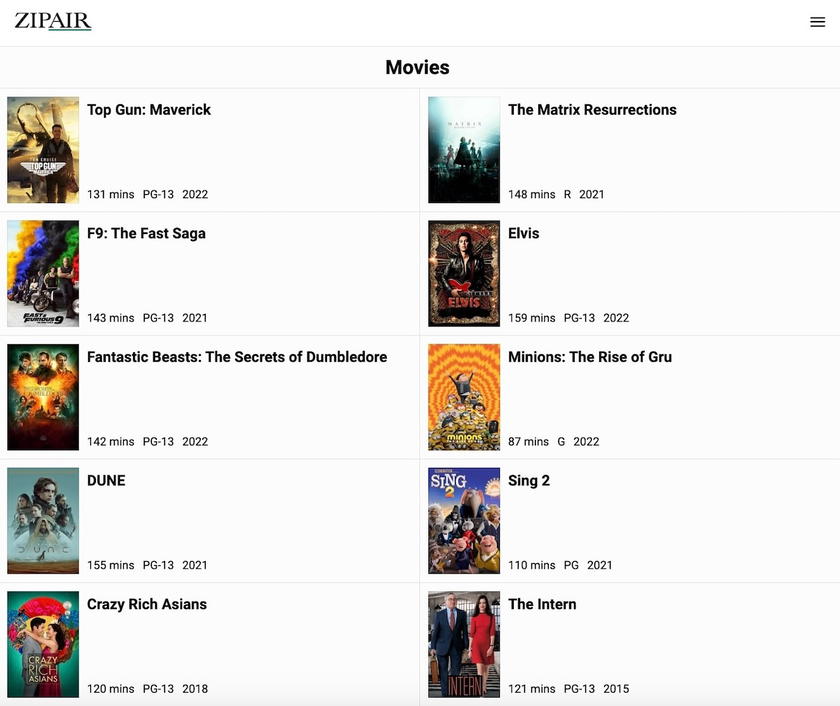
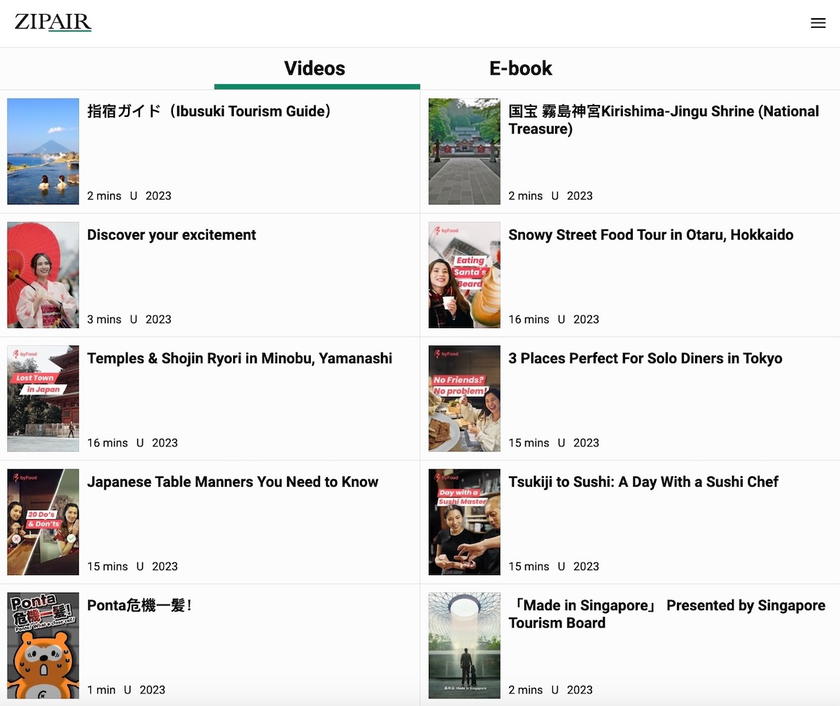
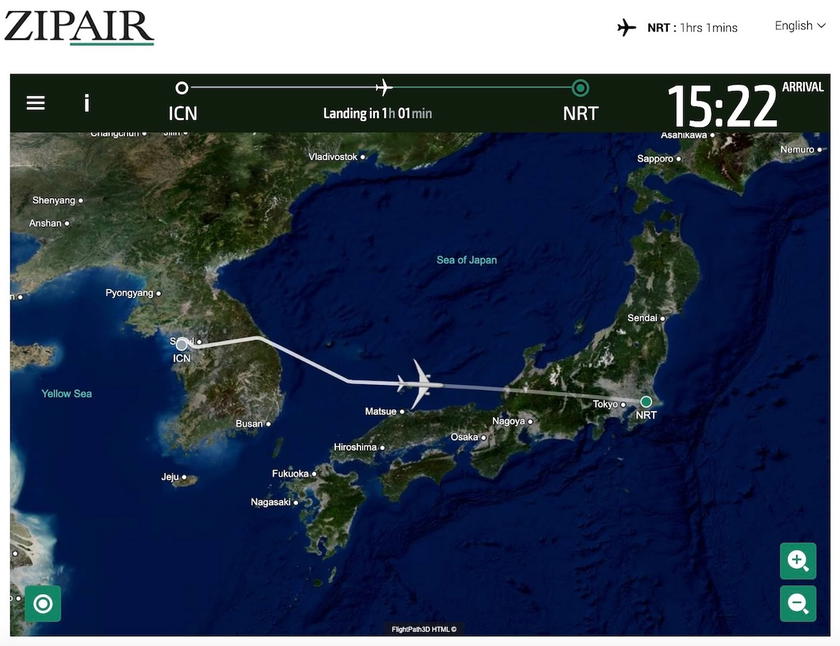
The streaming entertainment also contained a map feature, which I enjoyed keeping an eye on.
I’ll talk more about food and beverages, as well as shopping, a little bit later.
ZIPAIR 787 departure from Seoul Incheon
The boarding process was quite efficient. It was especially quiet in the forward cabin, since there were only two other people seated there, while the rest of the plane seemed to be quite full. I guess ZIPAIR has a pretty cost conscious customer base (not surprisingly), since I think on other airlines a lot of people would spring for an upgrade at the low prices being charged.
During boarding, I enjoyed listening to the boarding music… sort of. ZIPAIR has its own dedicated boarding music track, which is kind of cool, though it’s only a 75-second song that loops. You’d think they’d make the track slightly longer.
I’ve gotta say, while the crew was as friendly as you’d expect for a Japanese airline, the vibe was very different than what I was used to. On other airlines, flight attendants are largely there to provide service, while on ZIPAIR they really felt more like “safety professionals.” They kind of just stood there looking at everyone. My first interaction with a crew member was when a few minutes after I got to my seat, a flight attendant asked me to fasten my seatbelt (well before the departure time).
Also, I’m not sure if the lead flight attendant was being shadowed by another flight attendant, or what, but there was one flight attendant who would just walk two steps behind her the whole flight, and repeat whatever she did.
At 1:05PM the main cabin door was closed. A minute later, the crew performed a manual safety demonstration, with an audio track playing in the background. Even once the safety demonstration wrapped up, we still didn’t depart.
At 1:20PM, the lead flight attendant announced that we were delayed by an additional five minutes due to congestion at the airport. Interestingly the pilot didn’t make any announcement to passengers during this flight. I’m not sure if that’s just the standard procedure at ZIPAIR, or if it was just this crew.
At 1:25PM we finally began our pushback.
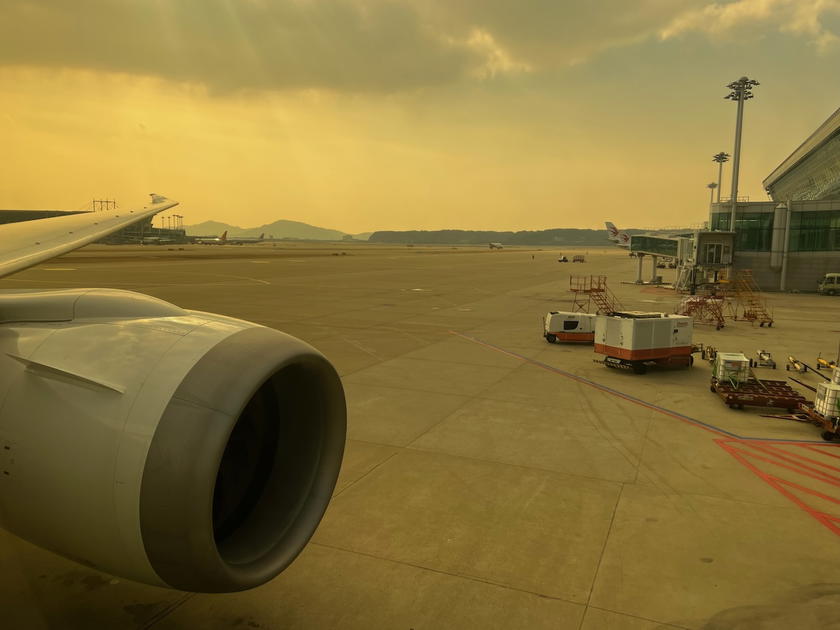
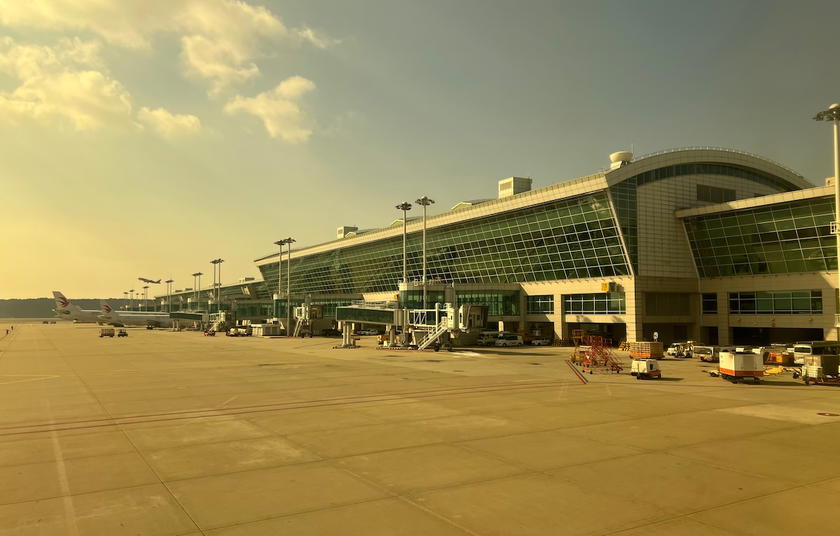
Within five minutes we had our engines started, and began our taxi. It was a very short trip to runway 33L, where we were cleared for takeoff at 1:35PM.
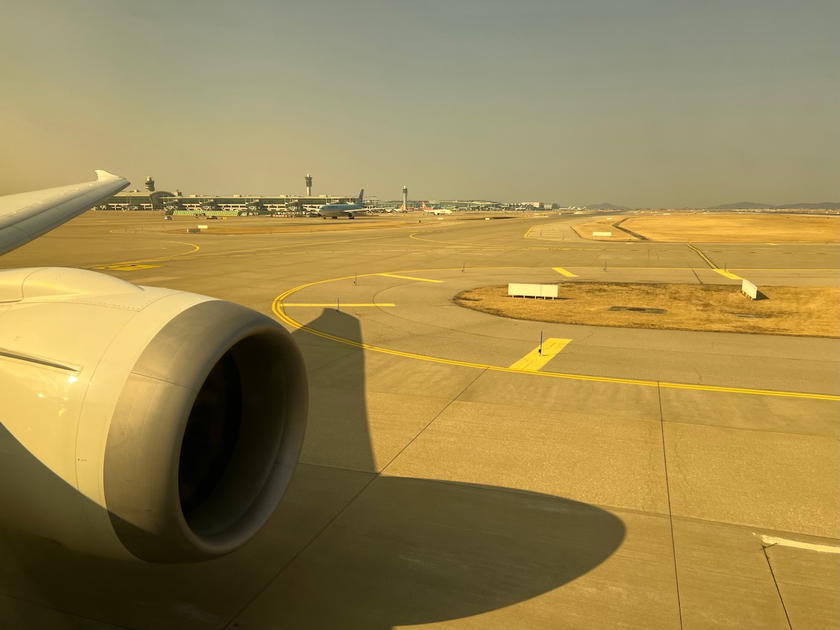
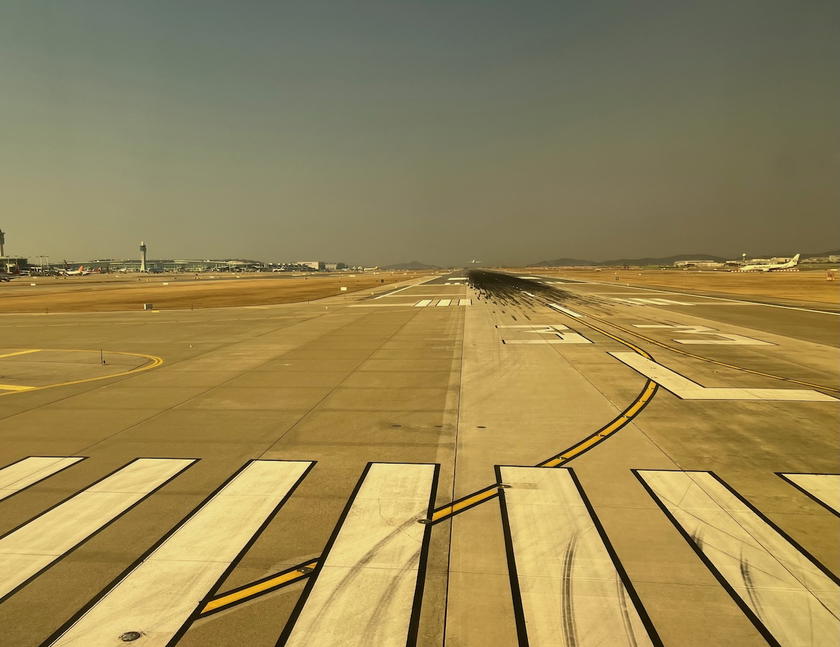
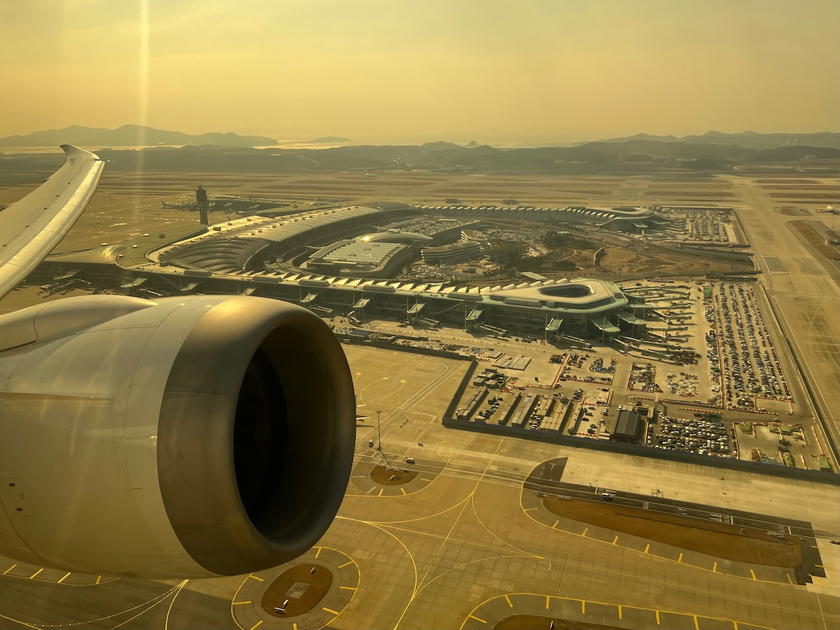
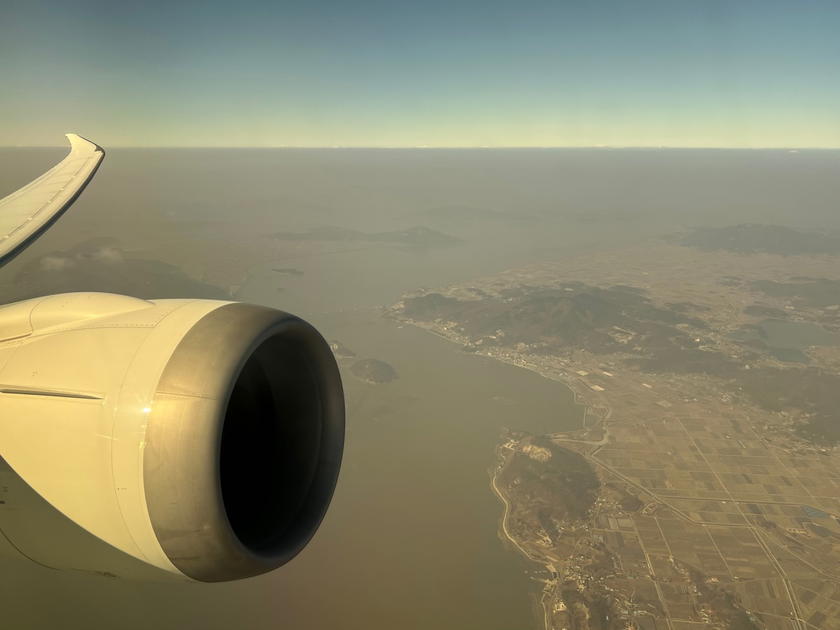
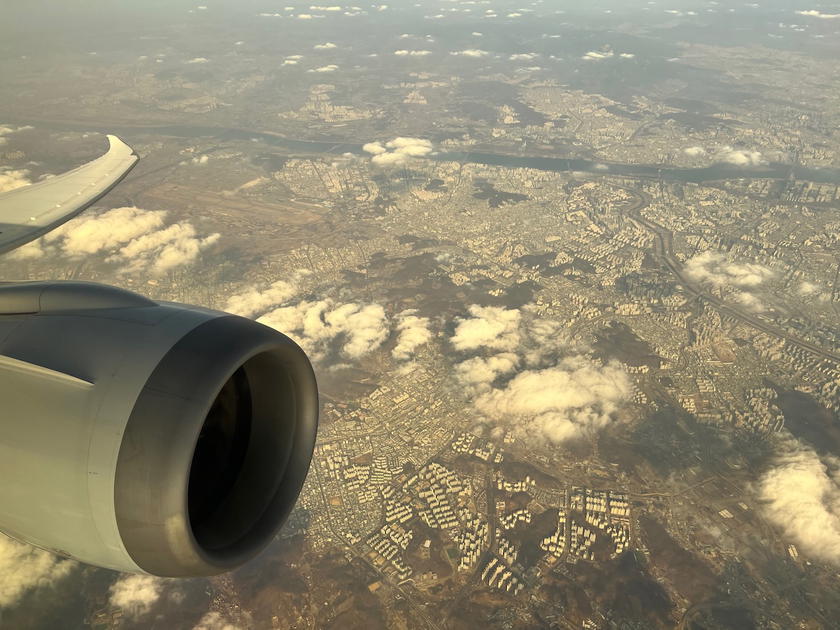
We had gorgeous views on the climb out, and the seatbelt sign was turned off about 10 minute after takeoff.
ZIPAIR food, drinks, and service
Inflight service on ZIPAIR was unlike anything I’ve experienced on other airlines. On virtually every airline that I’ve flown (whether a low cost carrier or full service), a cart is rolled down the aisle with food and drinks. On ZIPAIR it’s a totally different story — there is no complimentary service, and everything has to be purchased via the Wi-Fi portal.
Then the crew simply delivers things to each passenger as they order them, so it’s not a front-to-back service, or anything. This worked great on my flight, though I’ve also heard that on some ZIPAIR flights the Wi-Fi doesn’t work for extended periods of time, so you can’t make purchases during that period. Very strange.
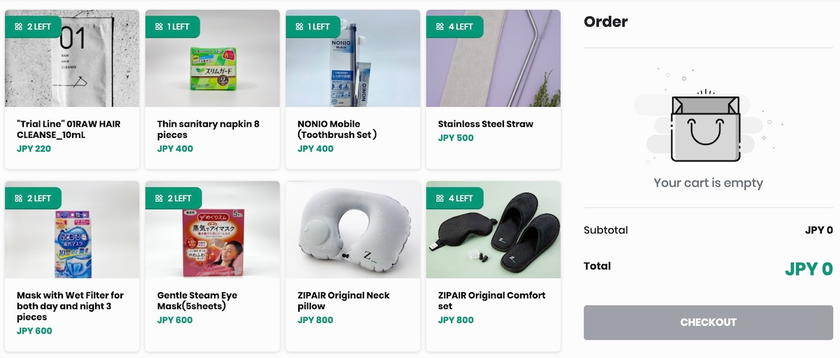
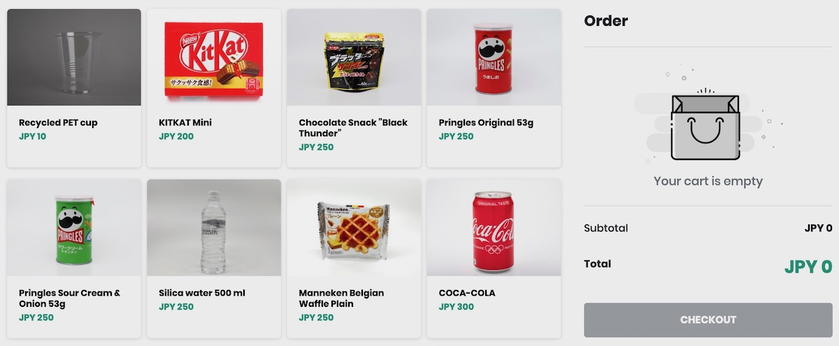
Below is part of the inflight shopping portal, where you can purchase everything from food, to drinks, to amenities, to gifts.
About 15 minutes after takeoff, the crew appeared at my seat with a box containing the meal that I had ordered. I ordered the sukeroku sushi set, which cost ~$10, and came with a bottle of water. Not only was the box sealed, but all the individual food items were in saran wrap.
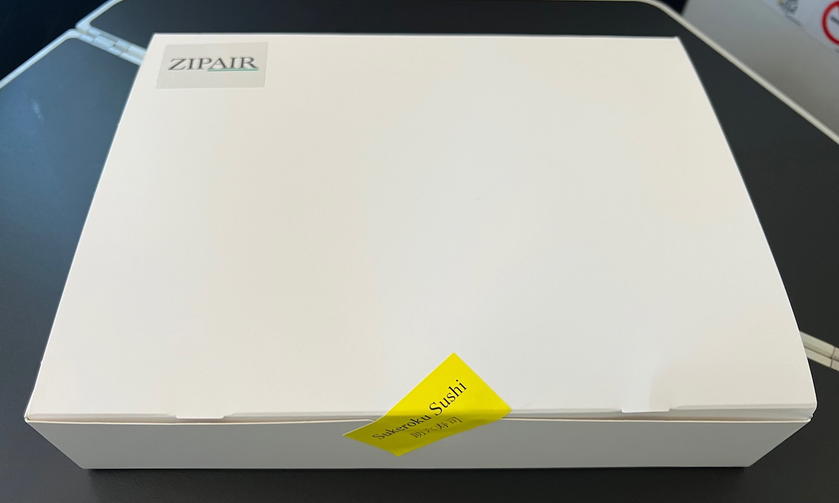

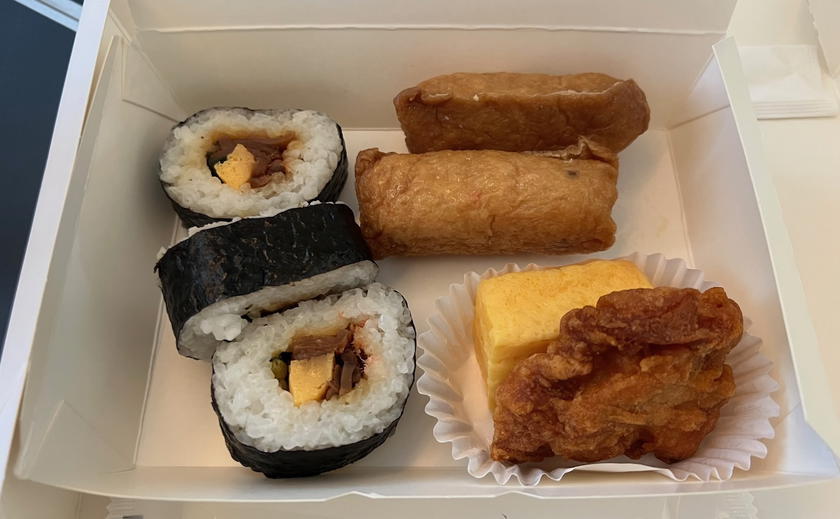
The food was decent enough — it wasn’t amazing, but was edible. ZIPAIR does have a more extensive meal service on long haul flights, so I thought this was an acceptable selection for such a short flight.
I had also pre-ordered a Coke Zero, which cost ~$3. It didn’t come with a cup or ice, but rather I was just brought the can.

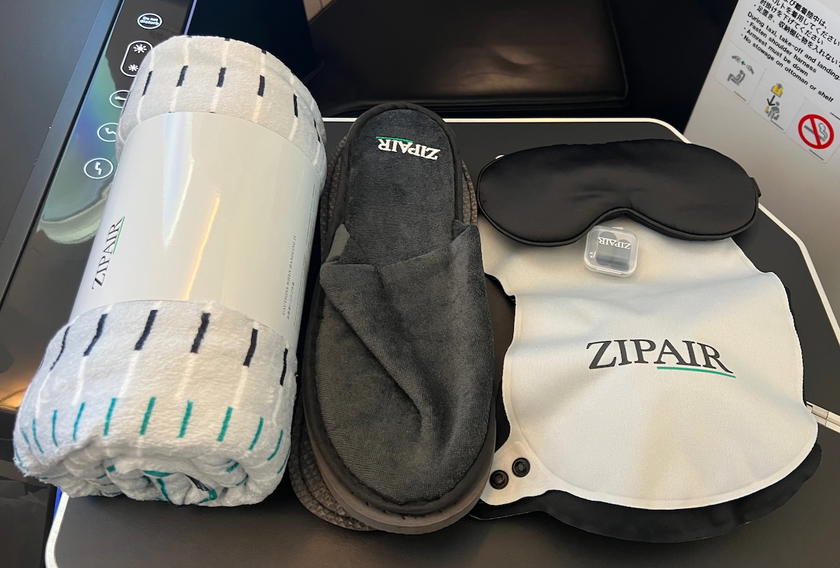
Five minutes later, the crew presented me with a plastic ZIPAIR bag, containing the amenity set I had ordered, which cost ~$18.
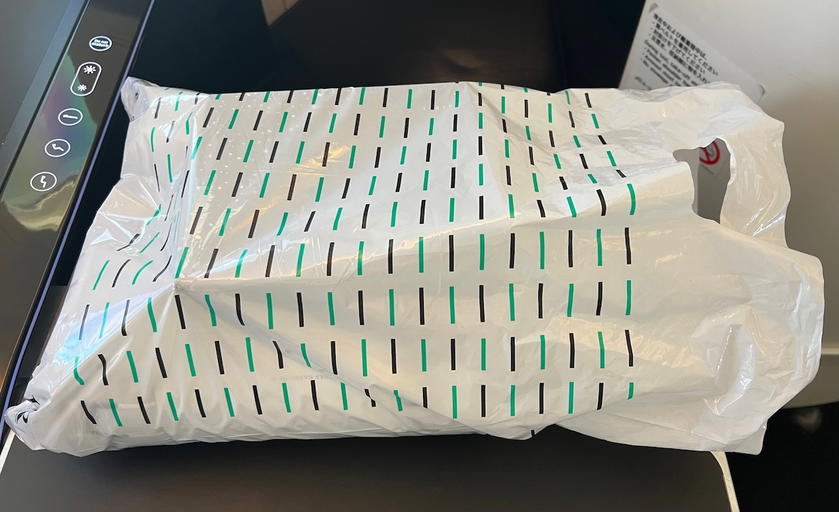
This set consisted of a blanket, slippers, eye mask, inflatable neck pillow, and ear plugs. While this wasn’t needed for such a short flight, I was curious what the selection was like, so I’m happy I picked this up.
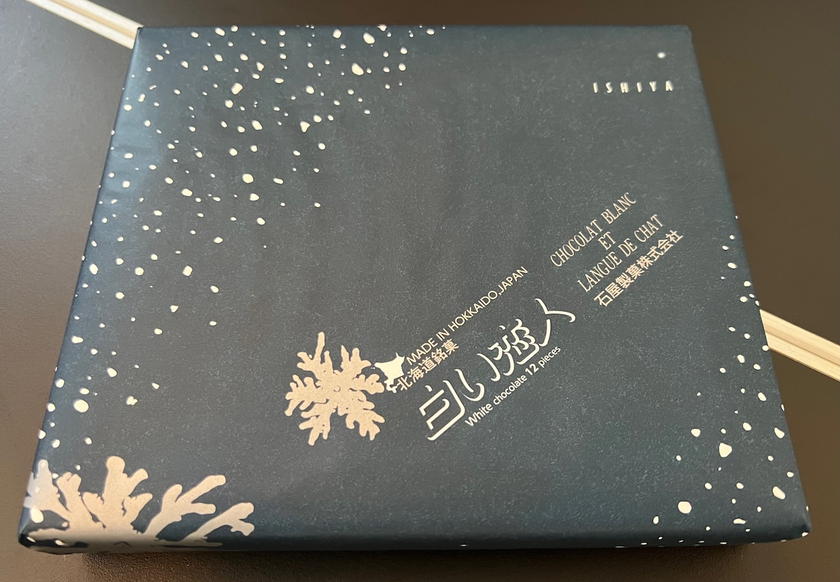
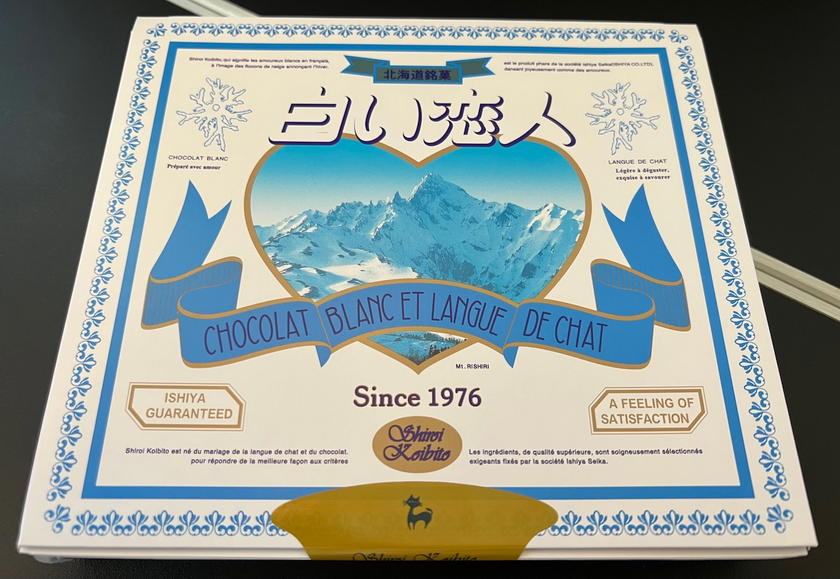
I had also pre-ordered a box of white chocolate cookies for ~$6, which made a good gift for back home. This was delivered about 10 minutes after the amenity set.
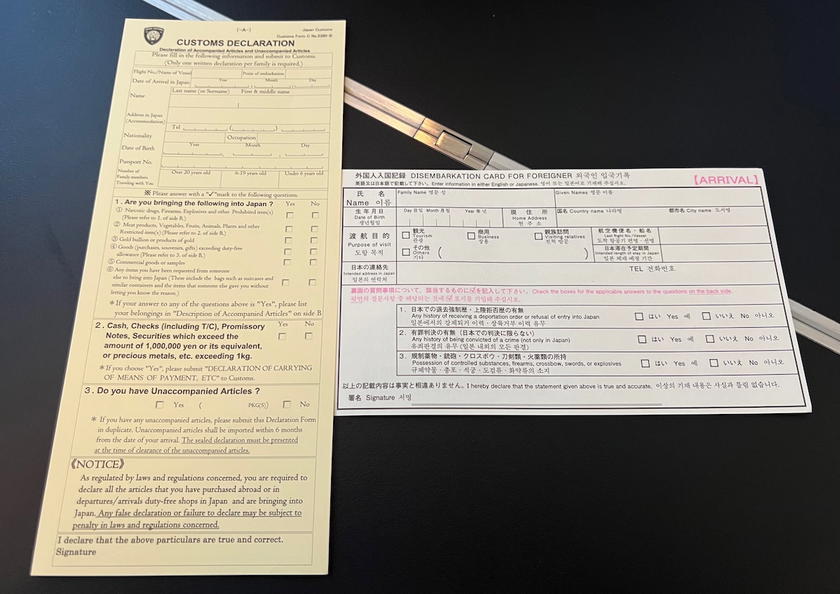
At roughly the halfway point of the flight, the immigration and customs cards for Japan were distributed — these were complimentary. 😉
Anyway, this truly is a unique service flow, as I never once saw a cart in the aisle, and the crew also never tried to sell me anything.
ZIPAIR 787 lavatories
ZIPAIR’s 787s have a total of seven lavatories — there’s one by the cockpit, four by the second set of doors, and two by the rear set of doors. There’s no curtain between the full flat seats and the rest of the cabin, so passengers throughout the aircraft can use any of the lavatories.
However, I got the sense that the forward lavatory was reserved for the crew, as they instructed me to use the one behind the cabin, even though I saw the forward one was unoccupied.
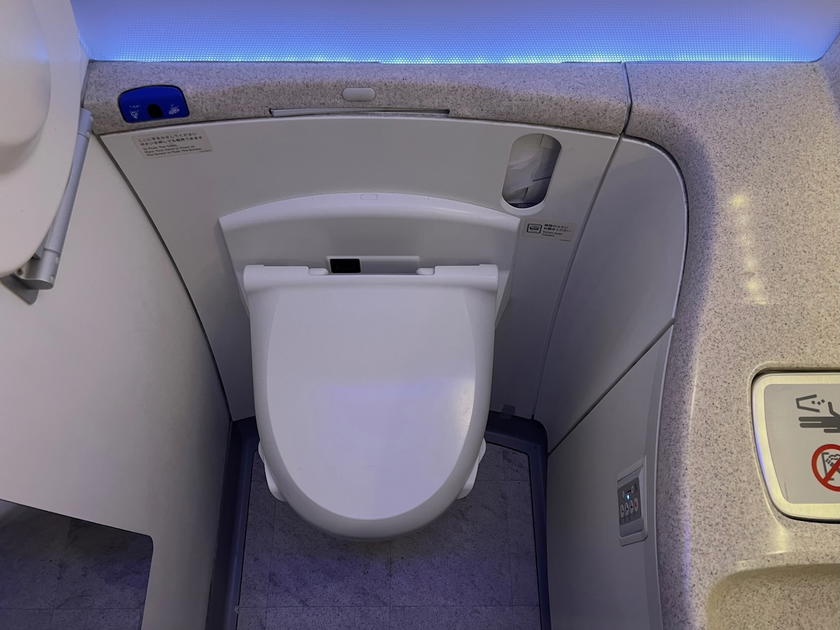
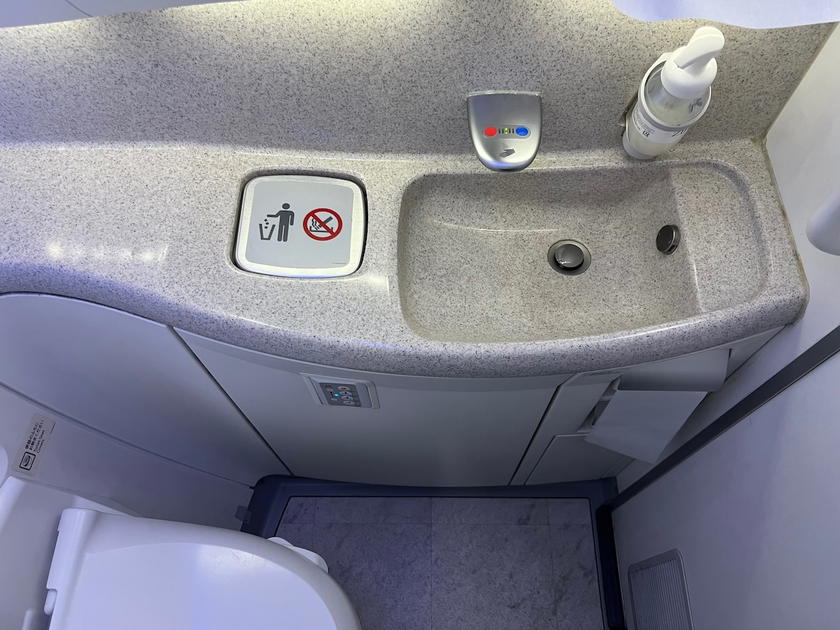
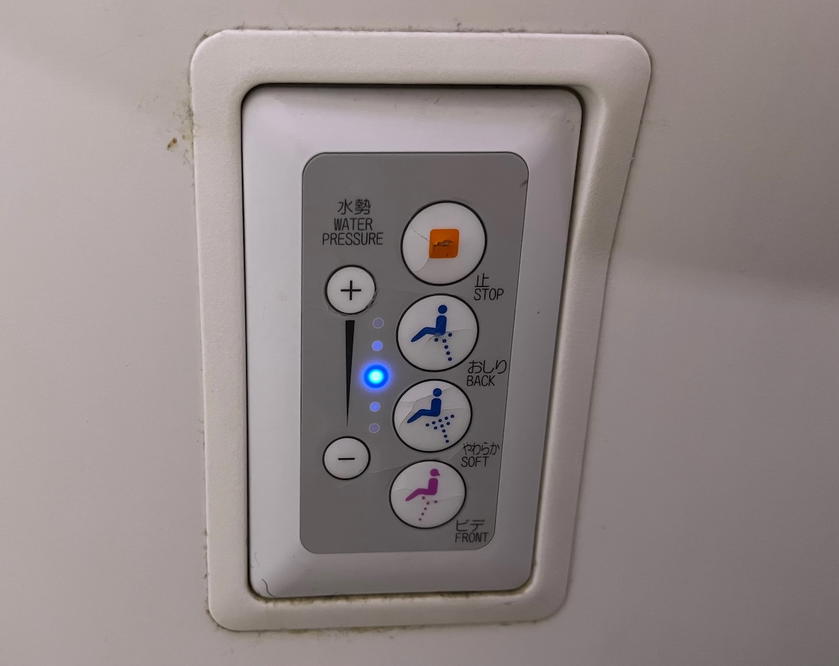
The jet’s lavatories are totally standard Boeing 787 Dreamliner ones, with the only notable feature being a bidet in some of the lavatories.
ZIPAIR 787 arrival at Tokyo Narita
About 45 minutes before landing, we were treated to a beautiful view of Mount Fuji in the distance, which the lead flight attendant kindly pointed out over the PA.
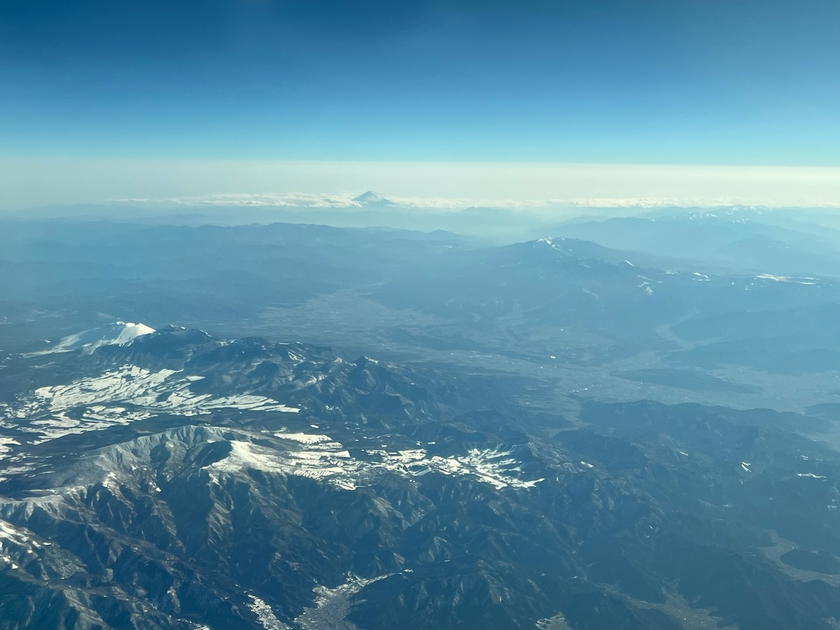
Even without looking so far in the distance, the views were pretty awesome. Around this time we started our descent.
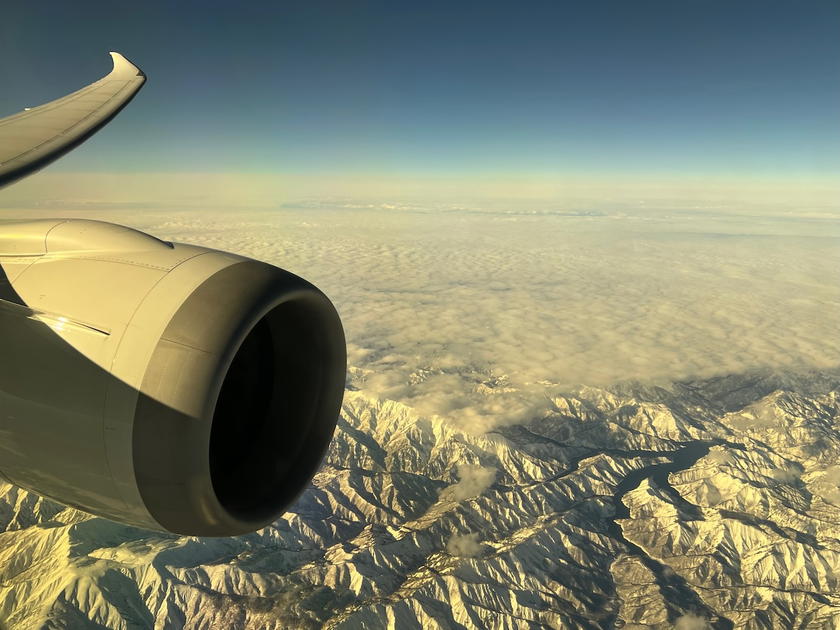
At 3PM, one of the pilots announced that flight attendants should prepare for landing, which was the only announcement from the flight deck. At that point the seatbelt sign was turned on.
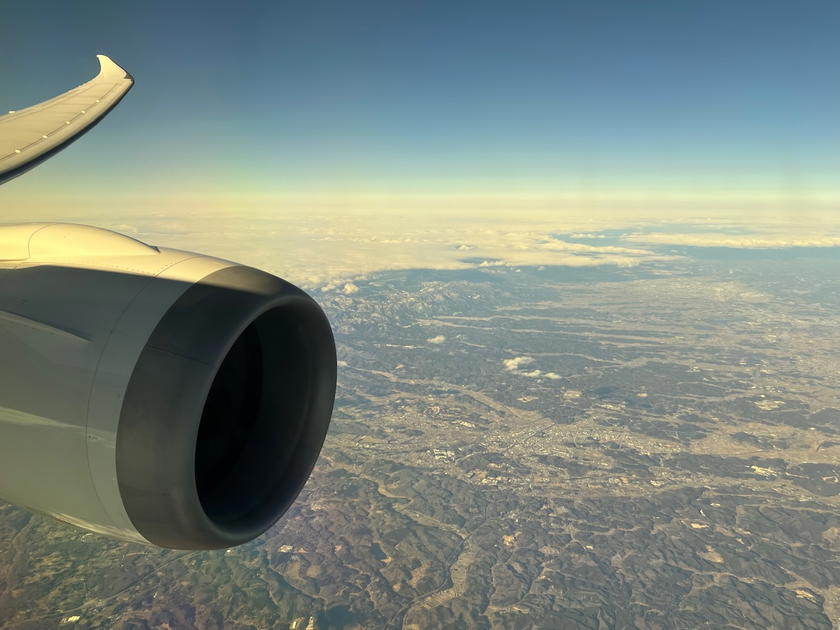
We flew out over the water, and then had some pretty views as we started our final approach to Narita.
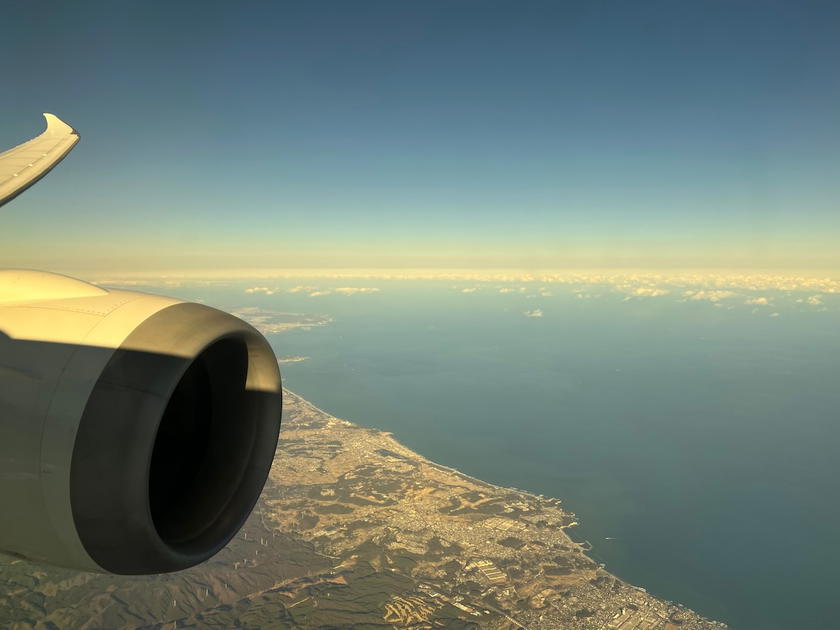
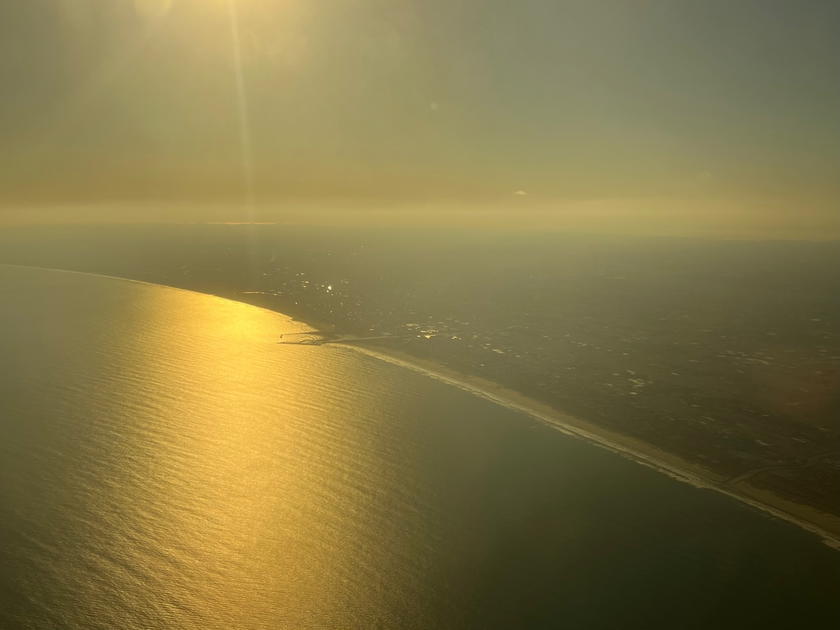
We touched down at Narita Airport at 3:20PM. Unfortunately we landed on runway 34R, which might as well be at Haneda Airport, based on how far from the terminal it is.
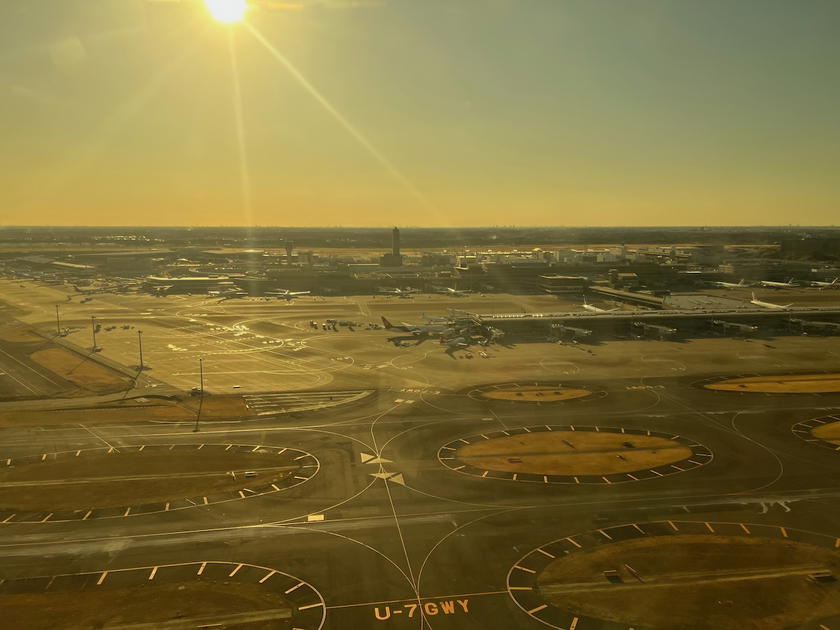
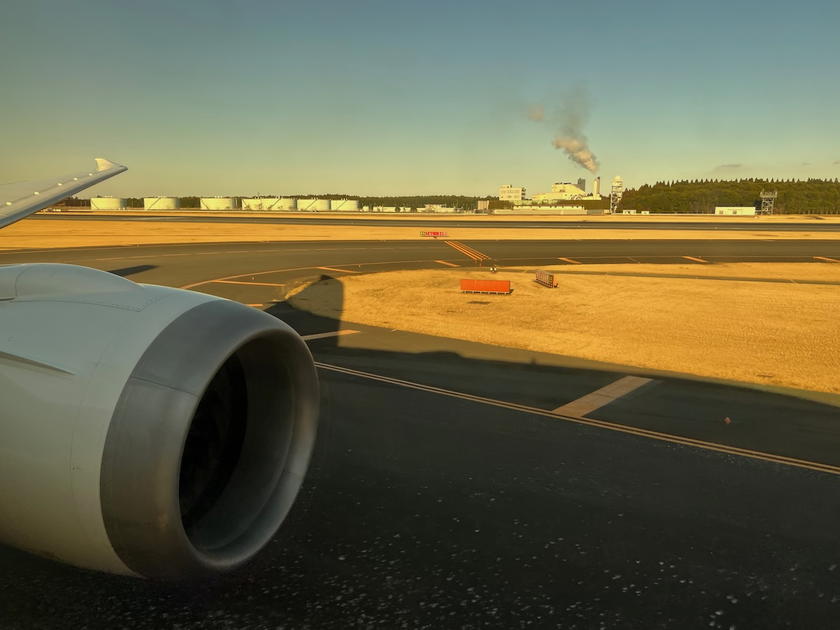
How far is runway 34R from the terminal? Well, about 15 minutes into our taxi, another ZIPAIR 787 arriving from Honolulu landed on runway 34L (much closer to the terminal), and it cut us on the taxiway.
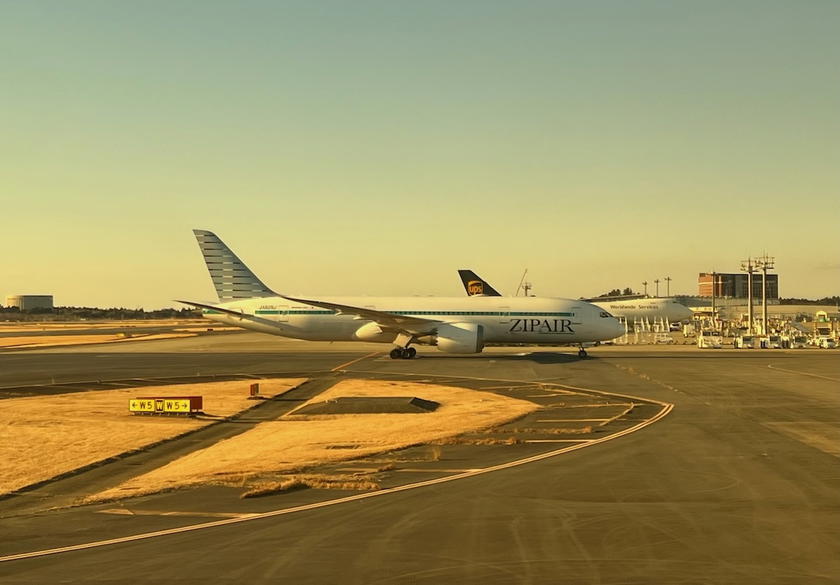
About 20 minutes after we started our taxi, we came to a stop. At this point the flight attendant announced that our gate was occupied, and that we’d have to wait. Of course this is Japan, so they don’t give you any sort of an estimate of how long it will be, unless they can accurately say when something will happen.
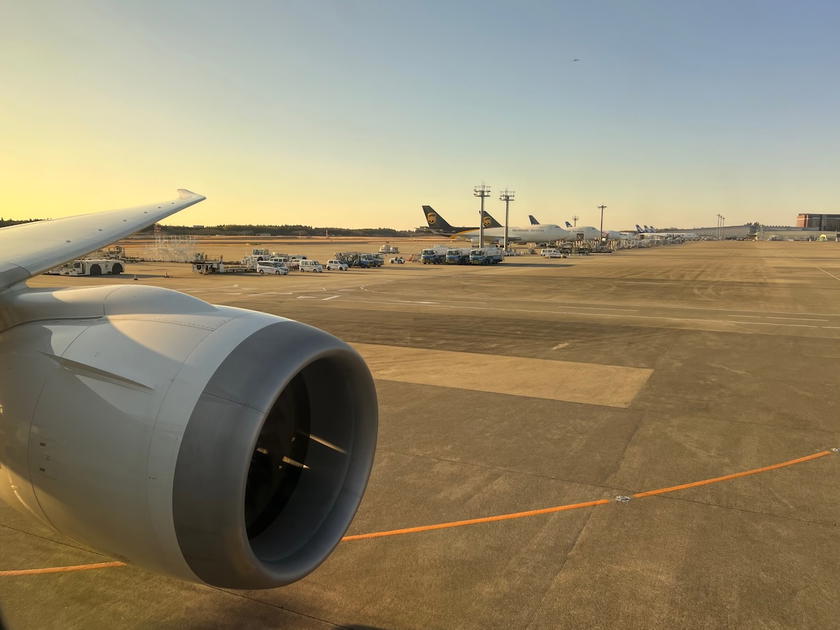
After about 20 minutes we were finally cleared into our gate, where we pulled in at 4PM, around 30 minutes after our scheduled arrival time. On the plus side, immigration was quick, and I then took the bus from Narita Airport to Haneda Airport.
Bottom line
I’m delighted I had the chance to finally fly ZIPAIR’s intriguing flat bed product, though I’m still not sure what exactly to make of it.
I was impressed by ZIPAIR’s free Wi-Fi, and I thought the upcharge for a reverse herringbone seat was a steal. That being said, ZIPAIR is as basic as it gets when it comes to inflight service, with everything costing extra. I also found the service flow to be unlike anything I’ve experienced before, for better or worse.
I wouldn’t hesitate recommending ZIPAIR’s full flat product to someone who doesn’t have miles & points, but who values comfort. Personally, I have a strong preference for flying a full service airline, given that Asia has some of the world’s best carriers.
What’s your take on ZIPAIR’s 787 business class?


Membership is free and takes no more information than commenting as a guest. Earn status points for good contributions, and see fewer ads as your status grows.