
Saudi Arabia is in the process of launching an ambitious new airline, which is expected to launch operations in the coming year, and then grow at a very fast pace. While I’ve covered a lot of the individual announcements from Riyadh Air in recent times, in this post I wanted to take a big picture look at what we can expect from the airline, and everything we know as of now.
What to expect from airline startup Riyadh Air
Riyadh Air is the name of Saudi Arabia’s new national airline, owned by the country’s Public Investment Fund. As it’s described, the airline is intended to usher in a new era for travel and aviation in Saudi Arabia, and provide tourists from around the globe the opportunity to visit Saudi Arabia’s cultural and natural attractions.

The airline is expected to add $20 billion of non-oil GDP growth, and create more than 200,000 direct and indirect jobs.
Riyadh Air is run by Tony Douglas
Riyadh Air’s CEO is Tony Douglas, the former CEO of Etihad Airways. Douglas is an interesting choice, because at Etihad he was focused on shrinking the airline into profitability, after the previous CEO lit billions of dollars on fire.
It’s going to be interesting to see how he does balancing Saudi Arabia’s ambitious goals for the airline with creating a company that’s sustainable. I have a lot of respect for him, and am excited to see the direction he leads the company once it actually launches. It’s certainly not an easy time to lead an airline that’s trying to grow at a fast pace, given industry constraints.
Riyadh Air’s management team goes way beyond Douglas, though. The airline has hired so many well respected executives and managers from other airlines (Peter Bellew, Vincent Coste, Adam Boukadida, etc.), so the airline has built quite the team in Riyadh.
Riyadh Air will launch operations in 2025
Riyadh Air plans to launch operations in 2025, though we don’t know more beyond that as of now. Going back a year, the plan was for the airline to launch in the first half of 2025, though I suspect that’s no longer realistic, given all the industry constraints.
Not only is Riyadh Air relying on the Boeing 787 to launch operations, but so many cabin products nowadays are dealing with supply chain constraints. The airline is actively working toward getting its air operator’s certificate (AOC), but that’s hardly the biggest challenge the company faces with launching operations.
Riyadh Air will fly Boeing 787s & Airbus A321neos
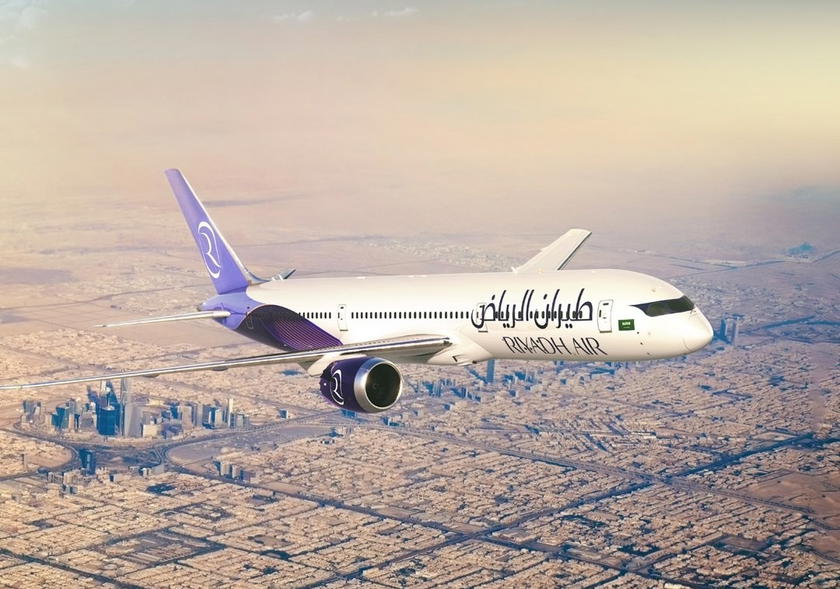
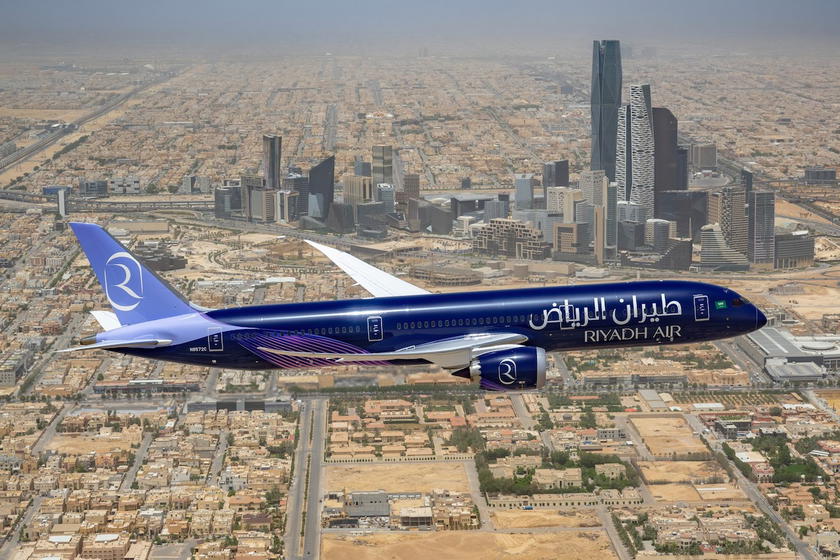
So far Riyadh Air has placed two aircraft orders. In 2023, the airline placed an order for up to 72 Boeing 787-9s, including a firm order for 39 jets, and options for a further 33 jets. This will be the carrier’s primary wide body aircraft, and the Dreamliners will be delivered starting in 2025.
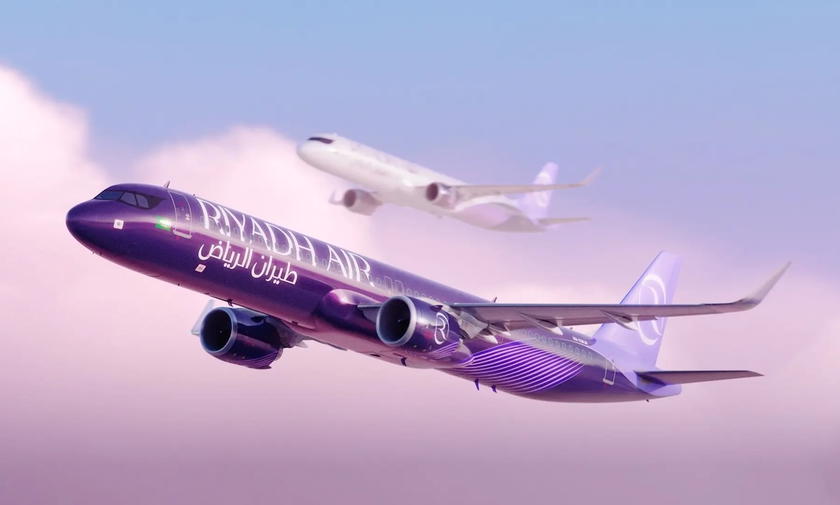
Now in 2024, the airline placed an order for 60 Airbus A321neos, which will be the carrier’s primary narrow body aircraft. The first aircraft is expected to be delivered in the second half of 2026.
As you can tell, Riyadh Air now has a total of up to 132 aircraft on order. However, Riyadh Air hopes to grow its fleet to 200 aircraft by 2030, so we can expect another order soon. It remains to be seen whether that’s for wide body or narrow body jets, and if it’s for more of the existing models, or different aircraft.
Riyadh Air is planning a pretty bold livery. As a matter of fact, the airline is planning two liveries, which will be used on an ongoing basis. I can’t think of another airline that has two liveries, so that’s unique (some airlines have some minor variations with each plane, like Frontier and JetBlue, but nothing like this).
Riyadh Air will be based in Riyadh, serve 100 destinations
Riyadh Air isn’t hoping to be some small, boutique airline. Rather, the airline is hoping to grow massively, and to serve 100 destinations globally by 2030, which is some very fast growth.
Riyadh Air will be based at Riyadh Airport. Historically Saudia has been Saudi Arabia’s national airline, and the company has had operations out of both Riyadh and Jeddah. So with the forming of Riyadh Air, I’d expect the airline to focus almost exclusively on Riyadh, while Saudia increasingly focuses on Jeddah.
What’s interesting is that Douglas claims that the airline isn’t primarily targeting connecting passengers (as the other Gulf carriers do), but rather is targeting those traveling to and from Riyadh, as he feels the city doesn’t currently have enough connectivity. He points out that the Saudi Arabia is the biggest economy in the Gulf, and the country is the second fastest growing in the world. That’s a major difference compared to airlines like Emirates and Qatar Airways, where a vast majority of passengers are connecting.
As part of this massive growth plan, Saudi Arabia plans to build a new mega-airport in Riyadh, which will be known as King Salman International Airport. The airport will stretch over 57 square kilometers (22 square miles), and will be able to accommodate 120 million travelers annually by 2030, and up to 185 million travelers annually by 2050.
Riyadh Air will have three cabins, no first class
While we don’t have any exact details as of now, the plan is for Riyadh Air to offer three classes of service onboard its flight. The airline will offer business class, premium economy, and economy, but won’t have first class.
Exact details of the product remain to be seen, but I’d expect that the carrier’s hard product will be really competitive. While I think it’s likely a bit of a stretch, here’s what Douglas has claimed:
- “Our business — I’d like to think you will conclude — is better than just about anyone’s first class out there”
- “When you see our premium economy, I’d like to think most of you will conclude that’s better than just about anyone’s business class that you’ll see out there”
- “Most importantly, when you see our economy, I think you’ll probably conclude that’s better than just about anyone’s premium economy out there”
Riyadh Air uniforms will be “fashion”
Riyadh Air very much wants to be cool, and as part of that, the airline has already unveiled its fashionable employee uniforms. These are certainly some of the more progressive uniforms out there, so I’m curious to see what they look like on airport runways, rather than just on fashion runways.
Riyadh Air plans robust airline partnerships
Typically airlines launch operations and then form airline partnerships. Riyadh Air is taking the opposite approach, and that’s probably pretty smart, and reflects that the company has a smart management team.
Delta and Riyadh Air have already announced plans to form a partnership, including considering a joint venture. Delta plans to fly to Riyadh as well. Among the “big three” US carriers, Delta is currently the weakest in the Middle East in terms of partnerships, so this should eventually be a pretty good collaboration.
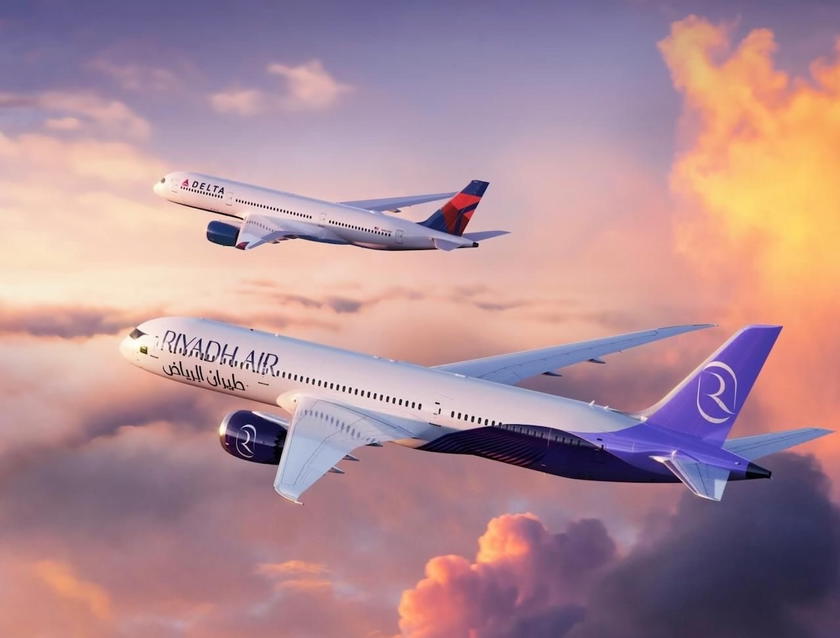
Riyadh Air also plans to partner with Virgin Atlantic, as Virgin Atlantic will also launch flights to Riyadh. Since Delta owns a 49% stake in Virgin Atlantic, I imagine that’s no coincidence.
Riyadh Air will have a digitally-native ethos
Saudi Arabia has a population that’s both incredibly young and online. Riyadh Air executives have long touted how they have an amazing opportunity to build an airline from scratch. One thing that has been emphasized is how Riyadh Air will have a digitally-native ethos.
We know that airlines have long collected a lot of data from customers, though they’ve struggled to figure out what exactly to do with that. Riyadh Air is promising an attention to detail and level of customization that we’ve never before seen at an airline.
I’m very curious to see what this looks like in practice. At the end of the day, it’s up to frontline employees to deliver on whatever management is promising.
My take on Riyadh Air’s lofty goals
There’s a lot about Riyadh Air that I understand and that makes sense, and then there are other areas where I’m more skeptical. So let me address a few of those points.
First of all, Riyadh Air is unique among Gulf carriers in stating that it primarily intends to focus on traffic to and from its hub, rather than acting as a major connecting carrier. Riyadh Air claims the local community currently doesn’t have enough air service, which I find to be interesting.
I don’t have much data on traffic numbers between Saudi Arabia and most global destinations, but one would think that if there were this massive, unserved demand, we’d see more service there from other carriers. I know on some level Riyadh Air is also an investment in the future growth of Saudi Arabia, so perhaps this reflects where the country sees traffic numbers going, rather than where they are right now.
Riyadh Air is also a big investment into Saudi Vision 2030, whereby the country hopes to massively grow both its tourism and trade numbers by the end of the decade. We see Saudi Arabia investing an unprecedented amount into tourism, but it remains to be seen how that plays out.
If you ask me, the biggest challenge that Riyadh Air faces with this ambition is convincing non-Muslims that they’d want to travel to or through Saudi Arabia. For that matter, that’s the biggest challenge that Saudi Arabia faces with its ambitious tourism goals.
The perception of Saudi Arabia is very different than the perception of the UAE, for example, where a lot of people are very happy to vacation. If Saudi Arabia hopes to see widespread tourism, the country needs to relax restrictions, including around alcohol, clothing, conduct, etc.
Places like the UAE have shown that you can have laws based on Islam while still attracting tourists from all over the globe. That’s not to say that I agree with all of the UAE’s laws (of course), but it’s objectively a place that many feel comfortable traveling to, with fairly few problems. Saudi Arabia doesn’t have the same reputation, at least as of now.
One thing is for sure — Riyadh Air has a very smart management team, and they’ve been given a clear mandate for what they should build, and I think they’ll do a good job following through on that. To me, the bigger question is if Saudi Arabia remains committed to its current ambitions, or if we could see those evolve over time.
Bottom line
Riyadh Air is Saudi Arabia’s new national airline. The country has ambitious plans for this airline, which is expected to launch operations in 2025. Riyadh Air will fly Boeing 787s and Airbus A321neos, and hopes to have 200 aircraft by 2030. The airline has already formed some partnerships, including with Delta and Virgin Atlantic.
I’m curious to see how this project evolves, as it’s one of the most robust and well funded airline startups we’ve seen in a long time.
What do you make of Riyadh Air?


Membership is free and takes no more information than commenting as a guest. Earn status points for good contributions, and see fewer ads as your status grows.