
My goodness, the number of near disasters we’ve seen in the airline industry lately is troubling. We’ve seen some recent ground incidents in the United States (between an American 777 and Delta 737 at JFK, and between a Southwest 737 and FedEx 767 at AUS), and here’s an incident that happened shortly after takeoff in Qatar.
Qatar Airways 787 enters steep descent after takeoff
The Aviation Herald has the story of what happened to Qatar Airways flight QR161 from Doha (DOH) to Copenhagen (CPH) on January 10, 2023 (we’re only finding out about this now, because the pilots never reported the incident). The flight was operated by a Boeing 787-8 with the registration code A7-BCO.
The Dreamliner departed runway 16L around 2AM local time, and started its standard climb, making a left turn to the east. The plane climbed to 1,850 feet, but then started losing altitude. We’re not just talking about a few feet, but rather the plane started a steep descent, and lost 1,000 feet of altitude within 24 seconds, bringing it down to only 850 feet.
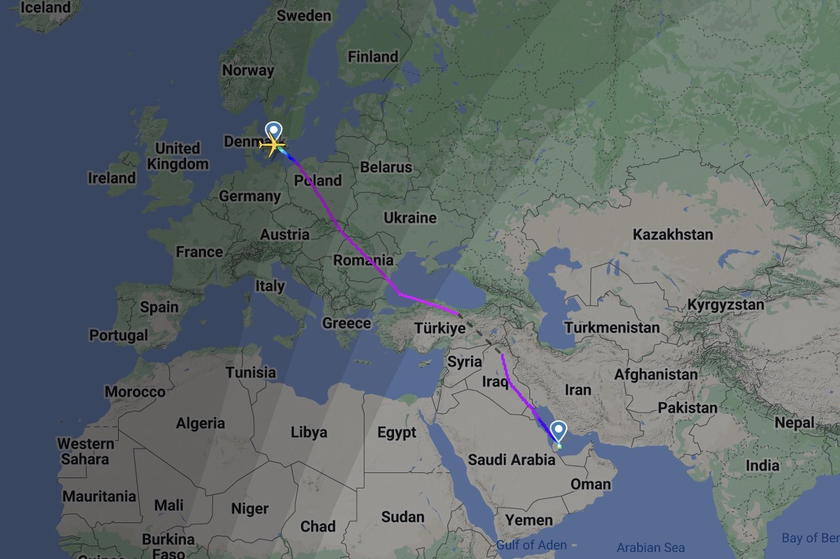
The pilots ended up recovering the aircraft, and continued the flight to Copenhagen. The plane landed there without incident 6hr2min after departing Doha. If you want to see all this data for yourself, just take a look at the Flightradar24 tracking for this flight.
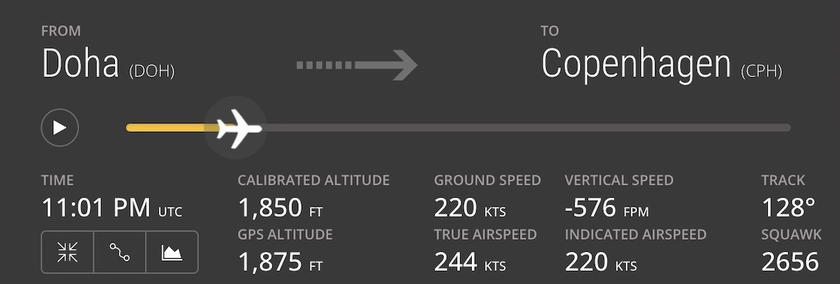
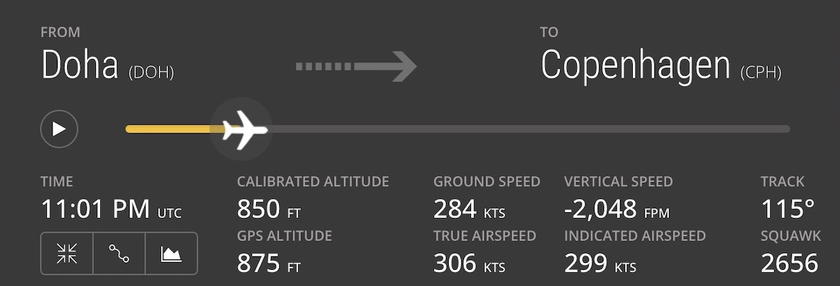
So, why would the plane lose 1,000 feet of altitude during such a critical phase of flight, when the weather conditions were perfectly good? The Aviation Herald reports that the first officer was the pilot flying, and while climbing through 1,600 feet, the pilots were cleared to fly toward the next waypoint (essentially an imaginary point in the sky used for navigation).
The first officer was flying the aircraft manually and without flight director indications, and lost situational awareness, sending the aircraft into a 3,000 foot per minute descent. The descent was so steep that the sink rate exceeded the flap speed limits, as the plane was flying over 300 knots true airspeed at that point.
The captain then took control of the aircraft, and managed to recover it at an altitude of 850 feet. Keep in mind at a descent rate of 3,000 feet per minute (and the rate usually increases quickly if you’re sinking), that 787 was less than 20 seconds from having a very different ending.
This incident is really concerning
For every catastrophe there are many near catastrophes, and this was definitely one of those.
A Boeing 787 pilot shouldn’t be losing situational awareness while manually flying a jet out of a hub airport in nice weather conditions. Period. Yet somehow the plane got into a situation where it was within seconds from ending up in the Gulf.
The most disturbing part of this incident is that it wasn’t reported at the time, and it’s only coming out now, nearly a month later. I mean, I guess I’m not surprised — I can’t imagine the pilot would have had a job after an investigation was performed, especially in the Gulf region, where you don’t have unions.
I feel really bad for pilots in the Gulf, as they work some brutal shifts. No matter how much you program your body, performing such high pressure and critical tasks at 2AM isn’t easy.
But the way that aviation becomes safer is by reporting incidents, to be sure they can be avoided in the future. Therefore not reporting something like this is reckless, even if it comes at the expense of your job.
Bottom line
A few weeks back, a Qatar Airways Boeing 787 lost 1,000 feet of altitude shortly after takeoff from Doha. The first officer was allegedly manually flying the plane, and lost situational awareness, causing him to put the plane into a steep dive. Given the sink rate, the plane was within seconds of plunging into the Gulf. Fortunately the captain took control of the jet and managed to recover it.
What do you make of this Qatar Airways 787 incident?


Membership is free and takes no more information than commenting as a guest. Earn status points for good contributions, and see fewer ads as your status grows.