
KLM Royal Dutch Airlines has revealed the details of a new initiative it has implemented that significantly reduces food waste. I’m sure many people will find the concept behind this to be quite interesting.
KLM wasting less food by predicting loads
KLM is using a new program that better enables the airline to determine how many booked passengers will actually board a flight. In other words, the airline is predicting the number of people who will no show or misconnect on their itinerary, which is on average anywhere from 3-5% of booked passengers.

By doing this, the airline claims that this is leading to a 63% reduction in food waste, with an average of 2.5 fewer meals being thrown away per flight (representing 1.3 kilograms in weight). On an annual basis, this amounts to savings of more than 100,000 kilograms of meals.
The airline is making these predictions based on a new program named TRAYS, developed specifically for KLM’s catering activities. The system uses historical data to predict the number of passengers onboard, including in each individual cabin. Then the carrier’s catering system receives a forecast of the number of travelers who are expected to be onboard, all the way from 17 days until 20 minutes before the flight departs.
So this system not only impacts the number of meals that are prepared in the catering facility, but then also impacts the number of meals that are actually loaded, to prevent a surplus of meals. So at KLM’s facility in Amsterdam, I imagine that at the last minute some meals may be taken off the catering cart for a particular flight, based on these predictions.
Airlines have long adjusted catering based on the number of passengers booked on a flight, but it’s rarer to see a prediction of no shows factored into this calculation.
Here’s how KLM CEO Marjan Rintel describes this initiative:
“Investments in digital technology are a priority for KLM. The application of artificial intelligence contributes enormously to improving our flight operations and making them more sustainable. Combatting food waste is a good example of this, resulting in tens of thousands fewer meals being wasted on our flights each year.”
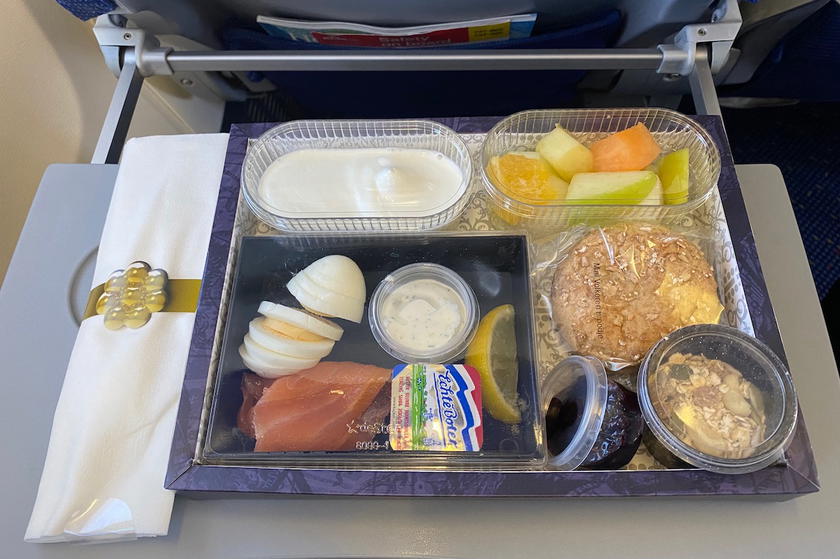
My take on KLM’s food waste initiative
First of all, let me acknowledge that while this is of course technically artificial intelligence, it seems that just about everything is being marketed that way nowadays. I mean, this is a similar concept to the technology that airlines have been using for decades when deciding how much to oversell flights, but it’s only in recent years that we’re referring to any computer system as artificial intelligence. That’s neither here nor there, though…
Reducing food waste is of course in everyone’s best interest — wasted food serves no one, a lighter plane reduces fuel burn, and it also saves the airline money.
However, I think it’s also important to acknowledge the potential downside of catering fewer meals. Many airlines intentionally cater too many meals, so that more people can get their first choice of meals, in case someone isn’t happy with their meal, etc. When you try to cater to be exact, it’s common that you won’t get your first choice, since preferences aren’t consistent across flights. Admittedly this can largely be counteracted by allowing customers to pre-order meals.
I’m also curious how often this system leads to situations where someone ends up without a meal, due to a shortage. Is this system exclusively using historical data, or is this literally about an inbound flight being delayed to the point that it’s guaranteed people will misconnect, and then the catering is updated accordingly?
Bottom line
KLM is reducing food waste by predicting the number of booked passengers who won’t make a flight. The airline claims that this new technology is resulting in an average of 2.5 fewer wasted meals per flight than before. While reducing waste is a good thing, fewer extra meals also means worse odds of getting your first choice.
What do you make of KLM’s initiative to reduce food waste?


Membership is free and takes no more information than commenting as a guest. Earn status points for good contributions, and see fewer ads as your status grows.