
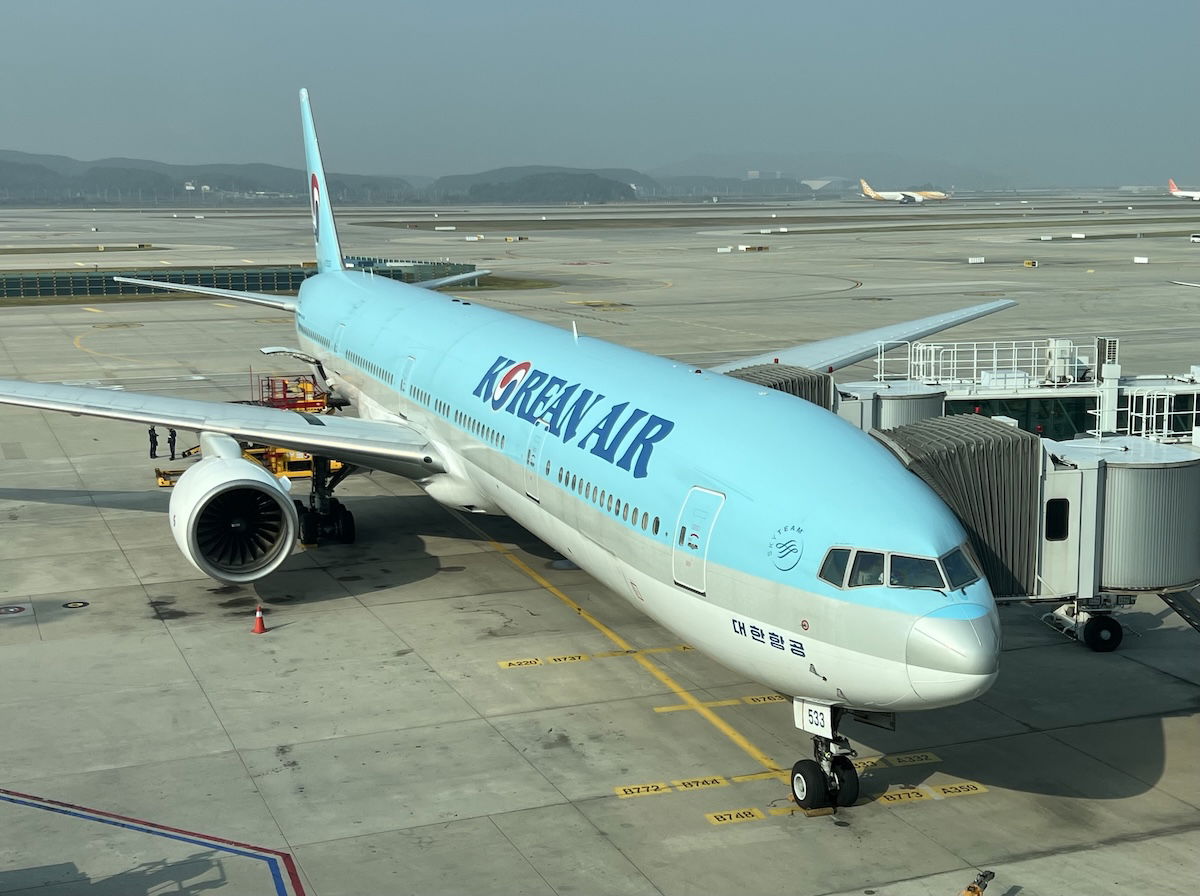
Japan Airlines has just acquired a stake in Korean Air’s parent company, Hanjin KAL, and it’s expected to lead to an expanded strategic partnership.
This is rather unusual on the surface, since Korean Air is in SkyTeam, and has a joint venture with Delta, while Japan Airlines is in oneworld, and has a joint venture with American. What’s really going on here, and is there an ulterior motive?!
Japan Airlines reveals surprise investment in Korean Air
It’s an interesting time for aviation in South Korea, given that Korean Air and Asiana have merged, and the two airlines will shortly be operating under one brand. Delta has already invested in Korean Air’s parent company, which seems logical enough, given the close commercial cooperation between the airlines.
But now we can add another airline to the list, as Japan Airlines has also purchased an undisclosed stake in the South Korean flag carrier. The view is that Japan Airlines is coming in as a white knight for Hanjin KAL Chairman Cho Won-tae, whose control is under threat from the company’s second largest shareholder, Hoban Group.
More specifically, the company’s second largest shareholder is currently within 1% of having the same size stake as the largest shareholder, and the Korean Development Bank could soon sell its 10%+ stake. So the concern is that a big fight could be triggered between the two largest shareholders, though both Delta and Japan Airlines are expected to side with the Chairman.
The thing that many people forget is that even though Korean Air and Japan Airlines are rivals, they have cooperated for decades, specifically in the form of a codeshare agreement between South Korea and Japan. That’s a high demand market, but there’s also value to coordination there, given limited slots at Tokyo Haneda (HND), plus the overall traffic flow into Tokyo Narita (NRT).
The plan is for the two airlines to work even more closely together, and enter a strategic partnership, which would be a bilateral alliance that goes beyond their participation in their respective global alliances. This will initially include closer cooperation in their core passenger and cargo businesses. The companies will also form a task force to pursue new business opportunities, with options for cooperation with maintenance, sustainable aviation fuel, urban air mobility, and more.
What should we make of this surprise airline investment?
I must say, on the surface this deal strikes me as a bit unusual. This is Japan Airlines’ first investment in a foreign airline, and it’s not like you actually need to invest in an airline in order to cooperate with them. Japanese business culture is also rather transparent and “by the book,” so this isn’t like United CEO Scott Kirby trying to play some sort of strategic game to trick regulators (or… whatever he’s doing, who knows).
Presumably this is a fairly small investment (in terms of percentage ownership), so it’s not like Japan Airlines will get much say in Korean Air’s day-to-day operations. So is Japan Airlines investing in Korean Air because it thinks it’ll get a great direct return on that investment, or is this a situation of helping out Korean Air’s Chairman, and hoping this results in equally favorable treatment in return?
We know that the partnership between Japan and South Korea will be expanded, but what could we realistically see beyond that? I don’t expect we’re going to see anything too radical here:
- There’s no way that Korean Air and Japan Airlines would be allowed to join the same transpacific joint venture, so I don’t think this is some grand strategy to get Japan Airlines to leave oneworld and join Korean Air and Delta’s business instead
- That being said, I can see how this bilateral agreement could give Japan Airlines an edge over competitor All Nippon Airways in terms of regional service and passenger flows
- Belonging to an alliance or joint venture isn’t the same as full-on airline monogamy, so there’s no reason we couldn’t see widespread non-joint venture reciprocity between the airlines when it comes to earning and redeeming points, earning status rewards, etc.
- I think the interesting question will be if Delta gets in on this in any way, by association; after all, Delta is soon returning to Tokyo Narita, so could we see something beyond an interline agreement between Delta and Japan Airlines?
Anyway, I’m not expecting anything here that will rock the boat too much, and I suspect this will mostly impact travel between Japan and South Korea. However, who really knows, the airline industry does sometimes throw us curveballs…
Bottom line
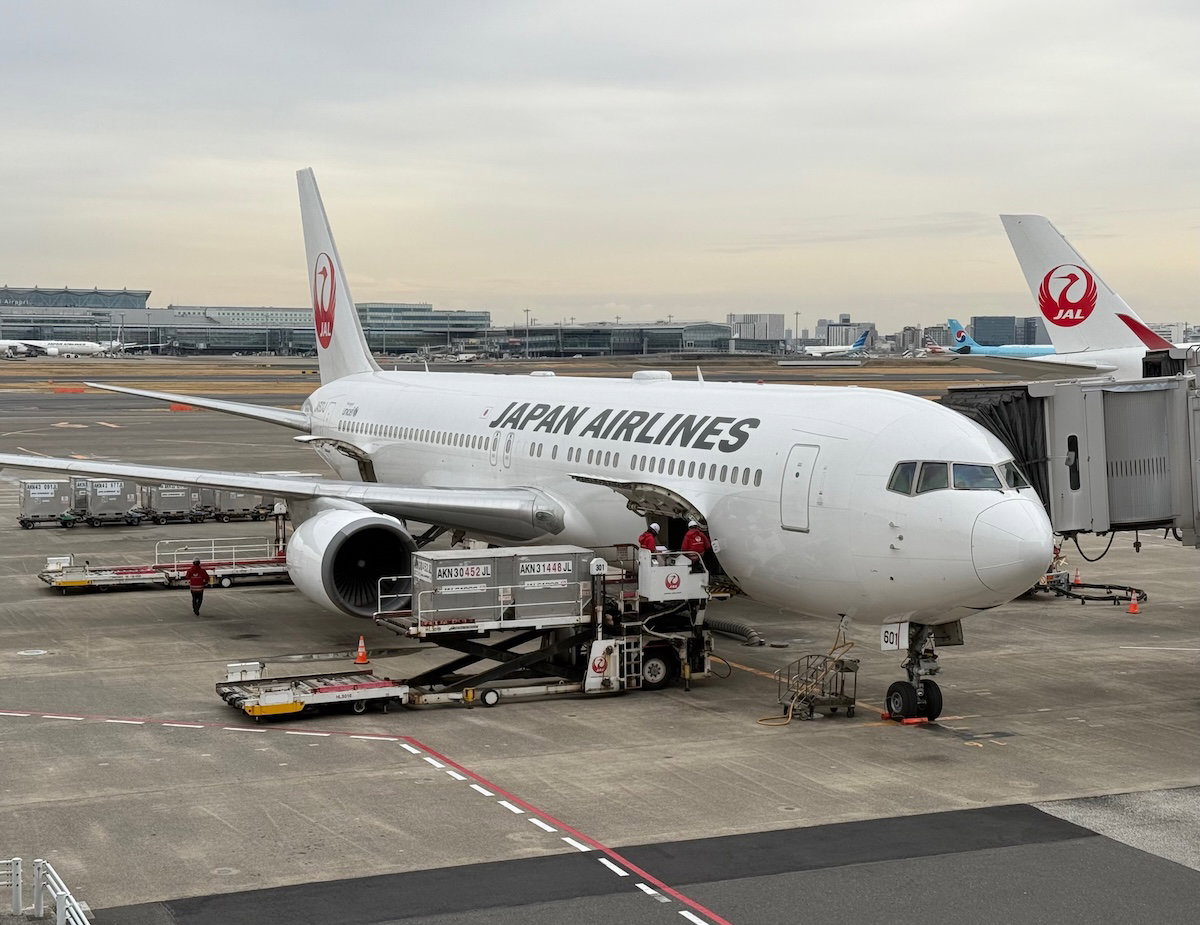
Japan Airlines has invested in Korean Air, which is the first foreign airline that the company has taken a stake in. On the surface, it’s odd to see the Japanese oneworld carrier invest in the South Korean SkyTeam carrier, given how they compete. However, the airlines do also cooperate for flights between the two countries. That doesn’t necessarily explain why one needs to take a stake in the other, though.
The airlines claim they’re now working on finding more ways to cooperate, so let’s see how this all evolves…
What do you make of this Japan Airlines and Korean Air situation?




Big mistake because of language and cultural differences . Mergers ought to be of like entities . Cannot have cats and parakeets together , for example .
I think it's hilarious you dare to talk about that. Your English is terrible with poor grammar and bizarre punctuation use. Be better.
Good to see your in-depth analysis of the situation there, Alert, which is considerably more detailed than the analysis from the team at JAL and their external advisors. Well done.
I’m not completely convinced keeping cats and parakeets together is the same thing here.
"Big mistake because of language and cultural differences . Mergers ought to be of like entities . Cannot have cats and parakeets together"
I'm sorry, but this is one of the most nonsensical posts I've ever seen on this site, and that's saying a lot.
Agree. A few too many nonsensical posts here. Stick to the reviews and the like. I've asked on occasion of he's run an airline at any time. Wouldn't you say Delta investing in LATAM would raise language and cultural differences?
PS and why would anyone want a cat anyway? Or was the real line of "throwing a cat among the pigeons" misquoted?
Did you even read the article before you commented? Lmao…
(Wait, aren’t we supposed to only read the headlines then vomit hot-takes on here? Yowzers…)
Could also be a way of Korean/Hanjin ponying up a bit extra cash, since Delta has decided that it no longer wants to be as wholly reliant on Korean Air for all of its Asian traffic that's not going to Tokyo or Shanghai.
Just an additional potential detail.
I wonder whether JAL really benefits from the JV with AA, an airline with barely any presence in the Far East.
Using another example, AFKL cooperate closely with Gol in terms of codeshares, interline tickets etc to secure feed from/to all over Brazil, but they don't need a transatlantic JV with an airline that barely flies to Europe.
I am hopeful that AS can get into the oneworld TPAC JV with AA and JAL. AS already flies to ICN and NRT from SEA and there likely will be more TPAC flights to come. AS/HA has a larger portfolio out of HNL, including PPT, KIX, HND, and SYD. So, adding AS to the JV might be of value to JAL.
No doubt that is the plan- for AS to join all of AA’s joint ventures as it builds out the network.
I think they want to control more of the regional feed for Japan and regional Korean traffic.
I dont think alliances will be changed....i actually see korean going to OW really.....i think DL may lose on this one. But if JAL isnt getting much recognition from AA and other OW partners...i can see them going to Skyteam here.
Very, very unlikely that KAL would go to Oneworld. Delta owns a stake in it. And their trans-Pac JV is very important to KAL's revenue stream. There is nearly no chance that regulators would approve a trans-Pac JV that included both KE and JAL.
Especially with MU not getting much feed from Delta in the post-pandemic era, KE is getting a ton of feed to destinations across East Asia and the Pacific from Delta. No...
Very, very unlikely that KAL would go to Oneworld. Delta owns a stake in it. And their trans-Pac JV is very important to KAL's revenue stream. There is nearly no chance that regulators would approve a trans-Pac JV that included both KE and JAL.
Especially with MU not getting much feed from Delta in the post-pandemic era, KE is getting a ton of feed to destinations across East Asia and the Pacific from Delta. No way they would throw that away and Delta's shares would certainly be voting against it, too, as Delta needs that connectivity through ICN especially after closing down their NRT hub and connections through PVG on MU largely drying up following the crackdown on Hong Kong and then the pandemic soon after. China-U.S. travel is still much less now than back in 2017-2018. That pretty much leaves ICN as the only place for Delta to connect passengers across East Asia and the Pacific region.
Agreed. I would add that there just doesn't seem to be much love between DL and KE, despite what looks like close cooperation on the surface. (I have heard lots of anecdotes from DL Diamond Medallion members that they get very few benefits when flying KE and I am guessing it's the same issue for KE elites flying DL.)
Whatever their relationship with DL, KE are rather deeply embedded in SkyTeam as they work closely with AFKL, VS, and CI and had even been trying to purchase CSA (RIP!) a few years ago. I'm not really familiar with the quality of their relationships with the Chinese members of the alliance, but I don't think it would make sense for them to risk any China feed by switching alliances (and it's not like CX are keen on collaborating with other regional players).
This partnership's just for flights between Japan and South Korea.
HND-GMP is the only Japan-South Korea route both JAL and ANA fly, and they don't fly their metal to any other route.
JAL has codeshares with KAL on HND-GMP only, but ANA has with almost all the South Korea-Japan flgihts operated by OZ. They literally relied on the codeshares.
When the merger between KE and OZ is finalized this December, OZ code...
This partnership's just for flights between Japan and South Korea.
HND-GMP is the only Japan-South Korea route both JAL and ANA fly, and they don't fly their metal to any other route.
JAL has codeshares with KAL on HND-GMP only, but ANA has with almost all the South Korea-Japan flgihts operated by OZ. They literally relied on the codeshares.
When the merger between KE and OZ is finalized this December, OZ code will be permanently gone, and so will be the codeshares ANA have with OZ.
JAL is trying to benefit from the merger by codesharing with KE on all the Japan-South Korea flights which ANA cannot do anymore.
And JAL buying shares of KE is to help the president. Hoban Group, a South Korean construction company have been buying massive shares of KE with a potential hostile M&A. Hoban now owns 20.15% stake of Hanjin Kal, the parent company of Korean Air, and the president Walter Cho owns 20.57% which is only 0.42%p larger.
Without the support of JAL, Walter Cho may lose control of Korean Air, hence the investment.
It is akin to Armenia and Azerbaijan , France and Germany , India and Pakistan , all playing cards together .
What? Apart from dumb politicians, generally every day Japanese and Koreans don't hate each other.
@Explorer--I am not sure you are correct about that. Japan occupied Korea for a long time, starting well before WWII.
@Alert--I don't think France and Germany belong in your list of examples. They cooperate on many fronts and have done so for years. They are even partner nations in Airbus.
@Steve_from_Seattle, I'm Korean and I see Korea-Japan like somewhere between Ireland-UK and France-Germany.
The Japanese occupation was cruel, but they did help the economic growth of South Korea after the war. Samsung, Hyundai, LG, etc. all learned from Japanese companies and had partnerships with them.
Japanese historical revisionism is obnoxious and we have a territorial dispute with Japan, but so do a lot of neighboring contries.
Over 9 million S. Koreans visited Japan,...
@Steve_from_Seattle, I'm Korean and I see Korea-Japan like somewhere between Ireland-UK and France-Germany.
The Japanese occupation was cruel, but they did help the economic growth of South Korea after the war. Samsung, Hyundai, LG, etc. all learned from Japanese companies and had partnerships with them.
Japanese historical revisionism is obnoxious and we have a territorial dispute with Japan, but so do a lot of neighboring contries.
Over 9 million S. Koreans visited Japan, and 4 million Japanese visited South Korea last year. ICN-NRT and ICN-KIX are one of the busiest international flight routes in the world. Japan is the most popular destination for Koreans, and vice versa. We're very close both culturally and economically.
S_Lee--thanks for that post. It informs this conversation a lot. I hear you about historical revisionism but you are correct that the relationship is much more complex than that.
A couple of weeks ago, I had dinner with some friends, one of whom is from Japan. She happened to mention that her mother won't buy any Korean products, agricultural or manufactured. I think that conversation was still on my mind as I wrote my comment.
Steve_from_Seattle, yeah, it can be different for older people. But it's the younger generation who will lead the relationship between the two countries, and the statistics show how close they are.
Steve - So if they "dine for years" , do the French savor English food ?
@Alert--that is a very fair comment. FYI, I edited that typo but not quickly enough to escape your notice of it!
In my experience, the French savor food from all over the world --except English food! The English definitely enjoy French food, particularly in London, where it can be very good. English food has improved a lot all over the country since I first started visiting but I still don't understand the appeal of mushy peas! :-)
Interesting in that the Koreans hate the Japanese. I wonder how they feel about this.
I think allowing Asiana and Korean to merge was a total failure in policy, but that ship sailed.
On the business side. JAL switching to Sky Team would be significant. What a boost to Delta trying to compete with United on trans pacific routes.
What about the possibility of Korean's switching to oneworld as opposed to JAL's switching to SjyTeam? Both ideas seem equally nuts to me but KE already cooperates with another oneworld carrier, Alaska Airlines. Crazier things have happened.
I gave you a helpful vote because I completely agree about the Asiana-Korean merger.
It's not gonna happen. KE will remain in Skyteam, and JL will in Oneworld.
@BjornFree, most of us Koreans don't hate the Japanese. What we hate is the historical revisionism of Japan, but we love the rest.
It's just like French people hating German neo-Nazis, not all the Germans.
I wish that JAL could bring KAL's inflight standards up to their level. To me, KAL is mostly a last choice option over the Pacific.
Flying between HND and GMP in Y a couple of years ago, I found the KE hard and soft products to be MUCH better than JL, especially the food and IFE. JL offered a dry tuna sandwich in a paper bag, KE offered a proper meal with silverware...
ANA is 0-2 here.
Asiana dropped out of Star, and JAL snagged a part in the only major Korean airline.
ANA should rush into Starlux partial ownership/JV before they end up in One World and JAL wins again.
AFKL still have an investment in JAL, going back before JL was in oneworld. It's why there's still a Flying Blue partnership with JL.
Looking forward to more flights between Fukuoka and Busan… IYKYK.
@1990_, Oh behave! 😜
@rickyc66 Yeah, baby, yeah! (Also... throw me a frickin' bone here!)
Delta at least used to have an interline agreement with ANA. I'm not sure if that's still around or not, though. I do remember seeing itineraries available to book on Delta's website that included ANA segments, though. That was probably a year or two before the pandemic, though.
Does it allow One World to plead to Cathay Pacific that they allow Starlux in ?
This makes sense to me. There is always strong demand for flights between Japan and Korea, and this strengthens coverage for routes outside of the usual Tokyo-Seoul.
I don't see why this is so peculiar. Alliances are the most visible (and probably useful) form cooperation to the consumer, which is why there is always way too much emphasis on alliances.
The reality though is that in the industry, there are many other forms of cooperation, with a JV being the closest one, as this essentially allows legal price fixing and revenue sharing mechanisms.
In principle, you can form a joint venture with...
I don't see why this is so peculiar. Alliances are the most visible (and probably useful) form cooperation to the consumer, which is why there is always way too much emphasis on alliances.
The reality though is that in the industry, there are many other forms of cooperation, with a JV being the closest one, as this essentially allows legal price fixing and revenue sharing mechanisms.
In principle, you can form a joint venture with anyone, as long as regulators agree, i.e., if you can get antitrust immunity. For this to happen, you usually just have to prove the benefit that it has to the customer. Therefore, airlines look way beyond alliances, which are very limiting in their nature and often involve a substantial amount of politics. I would go as far as saying that alliances are losing relevance in current market structures.
Korean airlines is a founding member of Skyteam. They are doing extremely well. Japan airlines is likely to join the Skyteam partnership. My strong opinion.
Crispin Fernandes
New York
I’m not sure where all the speculation of alliances switching is coming from. JL acquired a very small stake in KE (<5% according to news reports), and JL also codeshares extensively with partners in other alliances (e.g., AF, GA, CI, WS, etc.). And as other commenters have noted, there are plenty of other business factors that may be involved, including coordinating limited slots at HND & GMP, and to outcompete NH (who is about to...
I’m not sure where all the speculation of alliances switching is coming from. JL acquired a very small stake in KE (<5% according to news reports), and JL also codeshares extensively with partners in other alliances (e.g., AF, GA, CI, WS, etc.). And as other commenters have noted, there are plenty of other business factors that may be involved, including coordinating limited slots at HND & GMP, and to outcompete NH (who is about to lose OZ as a codeshare partner).