
Hello from New Chitose Airport (CTS), in Japan, as I continue my review trip to South Korea and Japan. Sadly I’m only here briefly, but I’ll be returning this winter, to go to Niseko. Okay, first question — aside from the airport name, do I say I’m in Chitose, or Sapporo, or Hokkaido, or…? Lots of options, it seems.
Anyway, following my Korean Air Boeing 787-10 flight across the Pacific, I just flew Korean Air’s Airbus A321neo business class, on the 2hr10min flight from Seoul Incheon (ICN).
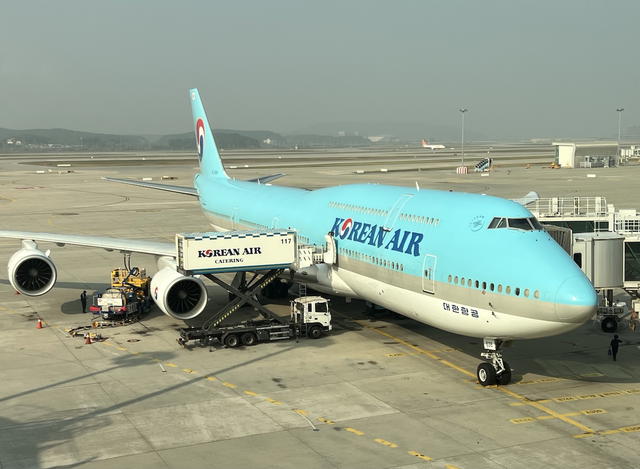
I was looking forward to this flight, as the A321neo is Korean Air’s first narrow body jet to have flat beds, and it’s a fairly new addition to the fleet. So while I could have flown on a wide body jet, I instead decided to give this a try.
The flight was pretty good, all things considered. I mean, it certainly blows away anything you’d get in the United States, though that’s not saying a whole lot. The seats were comfortable, the entertainment and Wi-Fi were pretty good, and the crew was friendly. That being said, there are a few areas where Korean Air doesn’t match its rivals in the region.
With that in mind, I wanted to share some initial thoughts on the experience, and then soon I’ll have a full trip report.
Korean Air’s A321neo business class cabin is cozy
Korean Air’s A321neo business class cabin consists of eight seats, spread across two rows, in a 2-2 configuration. The airline offers Collins Aerospace Diamond seats, which are some comfortable yet dense flat bed seats that are perfect for these kinds of jets. Color scheme aside, this is basically identical to Starlux’s A321neo business class cabin.
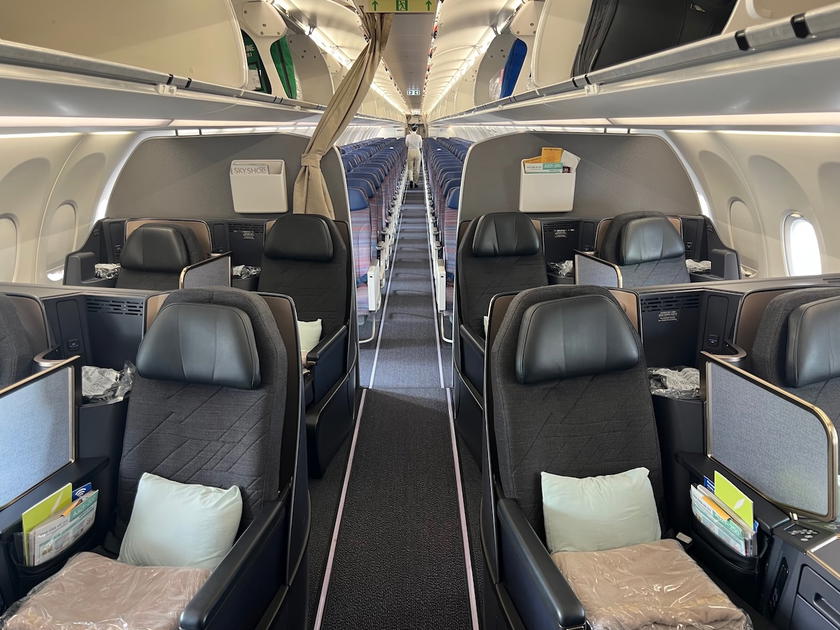
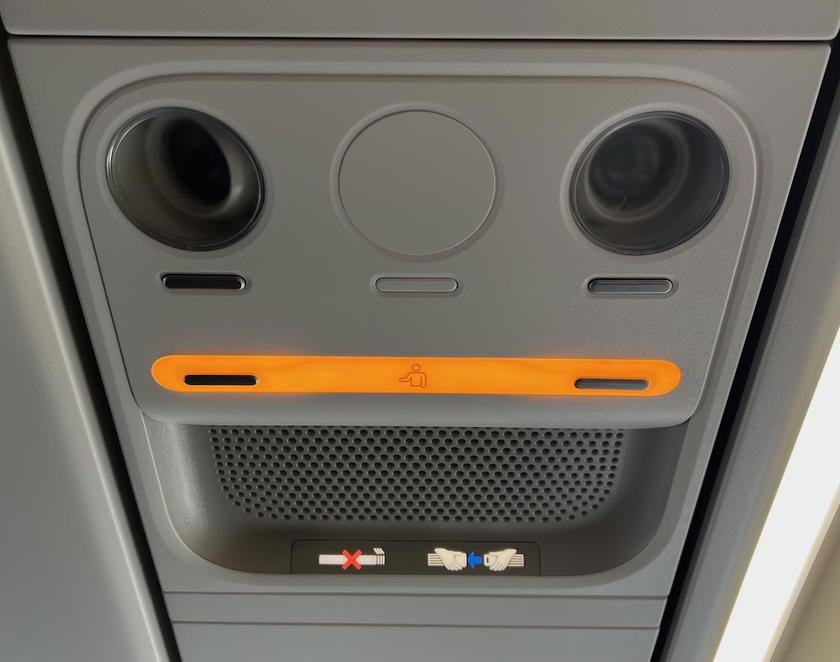
I appreciated the large partition between seats, which is something that I wish we also saw on Copa’s 737 MAXs. The seat had all the latest technology, from wireless charging, to bluetooth audio, to a 17″ high definition personal monitor, to AC, USB-A, and USB-C power outlets (though the USB-C outlet was 15W, rather than 60W on the 787).
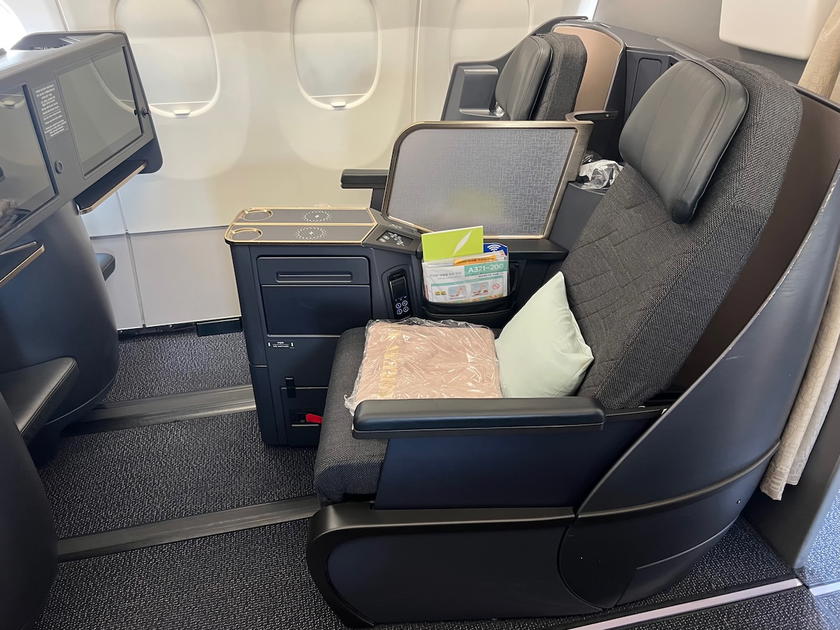
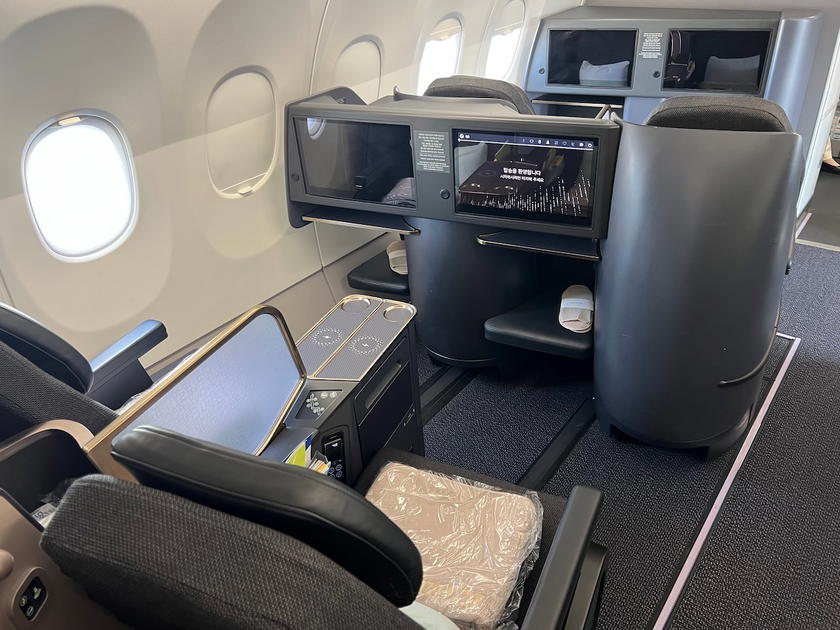
What I appreciated less was the lack of individual air nozzles, as the cabin was kept quite warm.
Ultimately these seats don’t compare favorably to what you’ll find on most Korean Air wide body aircraft. However, they’re way better than what you’ll find on other Korean Air narrow body aircraft, which feature recliner seats, similar to what you might find in domestic first class within the United States.
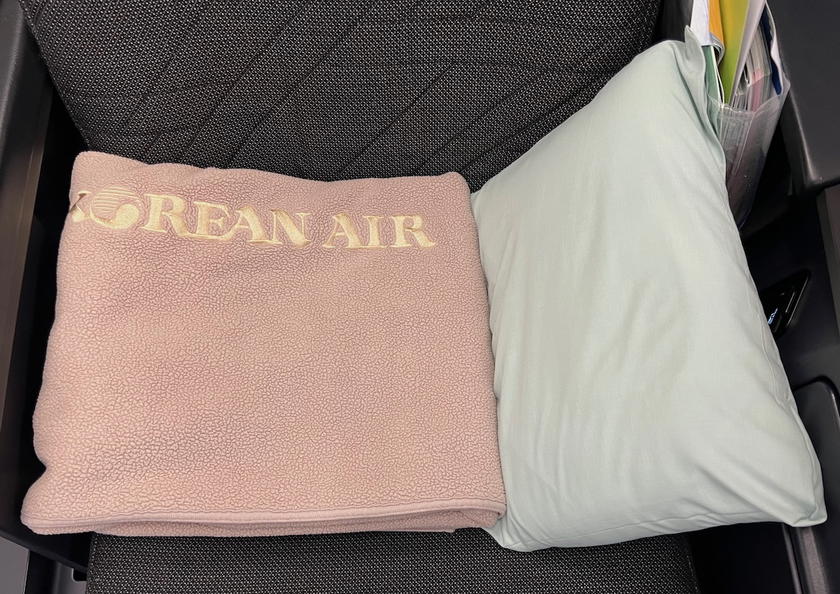
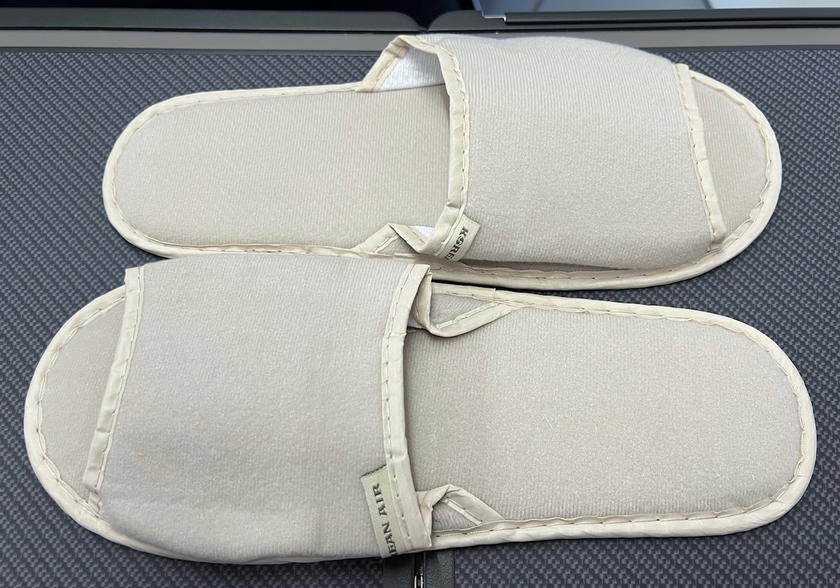
There were also some amenities to help get more comfortable, like a pillow, blanket, and slippers.
Korean Air’s A321neo entertainment & Wi-Fi are competitive
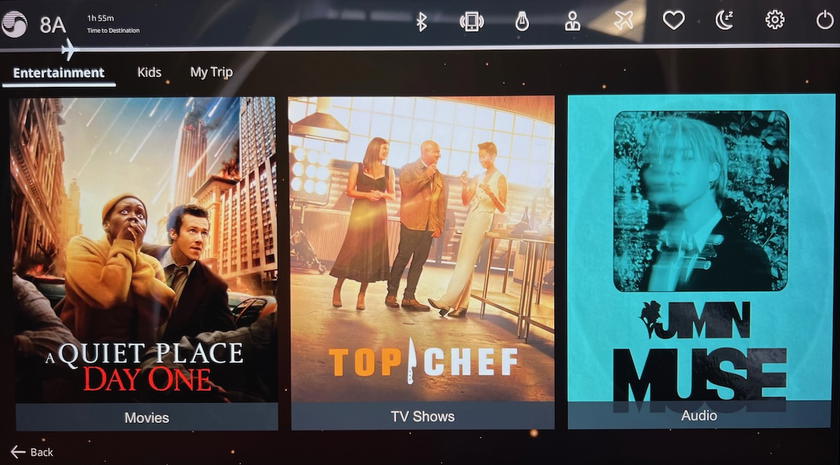
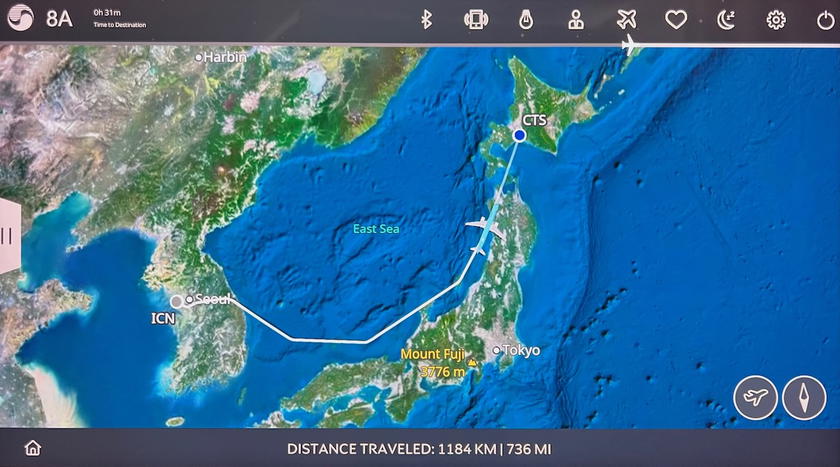
Korean Air has greatly improved its entertainment selection over time. Not only is the monitor high definition and is there bluetooth audio, but the selection is quite good as well. No, it’s not to the level of Emirates ICE, but there’s a respectable selection of movies, TV shows, and audio, in addition to the map feature.
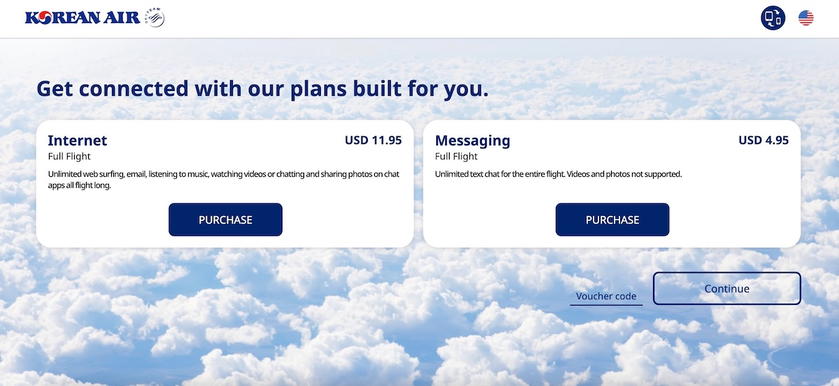
Korean Air is finally introducing Viasat Wi-Fi on its aircraft, with the A321neo being equipped with the service. Unlimited data for the entire flight cost $11.95. Unlike on the long haul flight, the speeds were actually not bad this time around, but they should be even better in the future, when Viasat installs a new satellite over the Pacific.
Korean Air’s business class food & drinks are okay
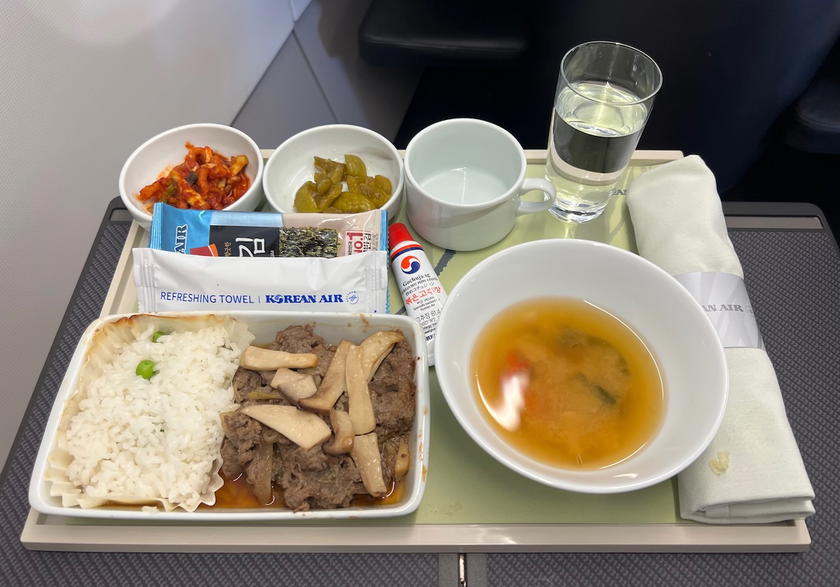
On this flight, there was the choice of a western or Korean business class meal. I selected the Korean option, which was bulgogi with mushrooms served with rice and steamed vegetables.
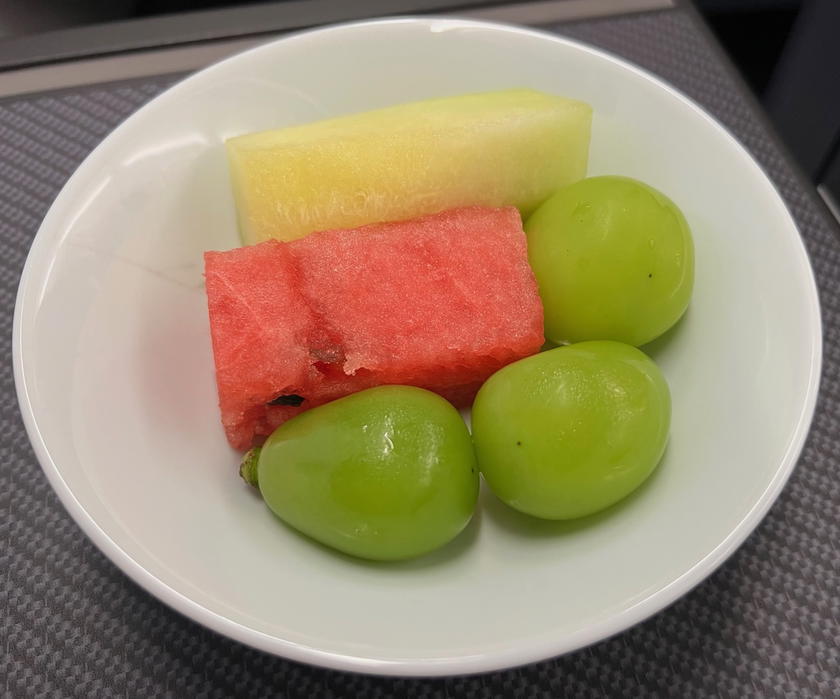
Then for dessert, there was some fresh fruit. While probably good for my waistline, it’s interesting how anti-dessert Korean Air seems to be. For example, in the Korean Air Lounge, there wasn’t a single dessert-style item at the buffet, and on this flight, fruit was the only dessert option. That’s not a problem, but just interesting…
Now, I have a couple more thoughts. First of all, Korean Air’s short haul alcohol selection is super cheap. There was no champagne on the menu, and there was one white wine and one red wine. The white wine was Maison Castel Grande Reserve Chardonnay, which sounds super fancy, but retails for under $8 per 750ml bottle. But then it’s also served in a small screw top bottle, like you’d maybe get in economy on an airline.

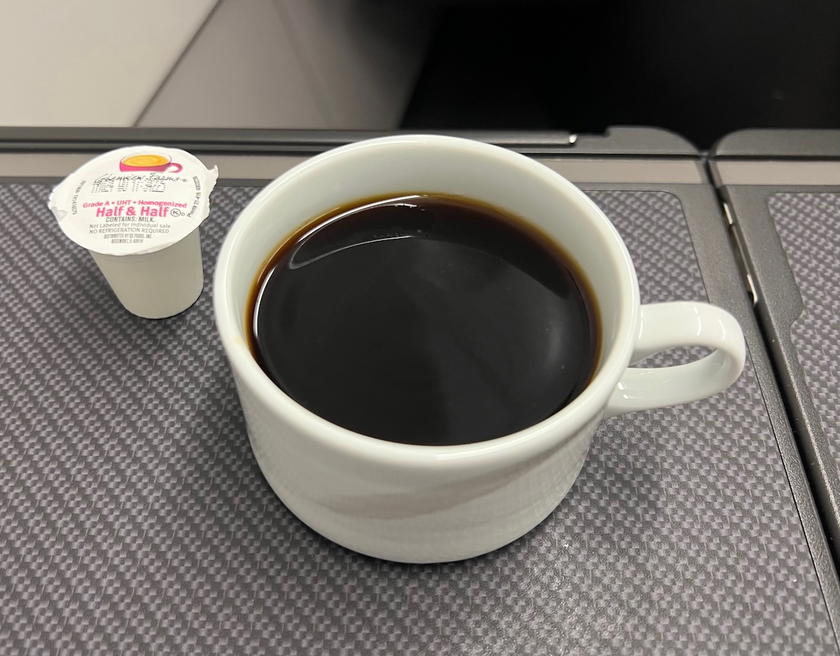
Next, while the flight attendant was very friendly, once again, Korean Air just has such bizarre assembly line-style service, which seems to just not be very intuitive. For example, the coffee cup is already placed on your tray when you’re brought the meal, and then halfway through the meal (while there was still a lot of food, and I had a full glass of wine), the flight attendant asked if I wanted some coffee.
I’m not trying to make a big deal of that, but rather I think it just sums up why Korean Air service is such a miss. The service isn’t based around anticipating what passengers might need at a particular point, but rather it’s just like checking boxes off a checklist. It’s a contrast to so many other airlines in the region.
I’d understand that if we were talking about a 45-minute intra-Europe flight with a huge business class cabin. But there were only eight passengers, and there were 90 minutes remaining in the flight, so there was no rush.
Bottom line
Korean Air’s A321neo business class is a solid experience, especially on a roughly two hour flight. The cabin is pretty, the entertainment and Wi-Fi are good, and Korean Air crews are friendly.
That being said, I walked away from my short haul flight with the same impression I had on my long haul flight. Korean Air isn’t quite in the top tier of Asian carriers. There’s just something missing with the soft product, which prevents the airline from being in the same league as Asia’s top carriers.
To provide a direct comparison, check out my recent Starlux A330neo business class flight that was of a similar length, also to Japan. Just compare the soft product, from the far superior meal, to the Taittinger champagne, to two red and two white options, to unique cocktail creations, to cappuccinos and iced coffees. It’s just in a totally different league.
What do you make of Korean Air’s A321neo business class?


Membership is free and takes no more information than commenting as a guest. Earn status points for good contributions, and see fewer ads as your status grows.