In November 2020, plans were announced for a massive airline merger in South Korea, as Korean Air announced plans to acquire Asiana Airlines. That deal finally closed in December 2024, and obviously has major implications for aviation in the region.
However, in the nearly 18 months since the merger, the two airlines have continued to largely operate independently, for all practical purposes. We’ve known that wouldn’t be the case forever, and we now have details about the timeline.
In this post:
Asiana brand will disappear on December 17, 2026
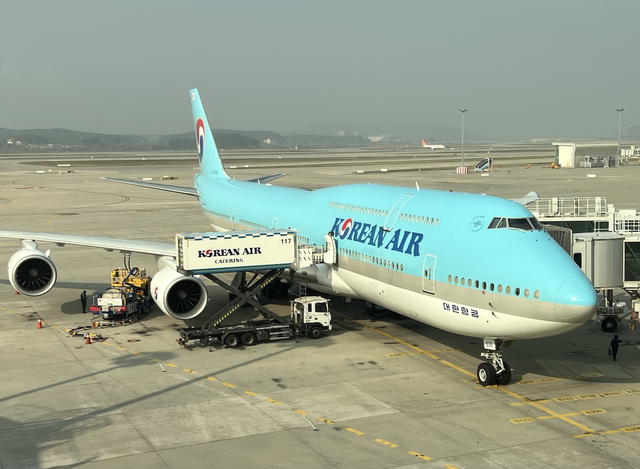
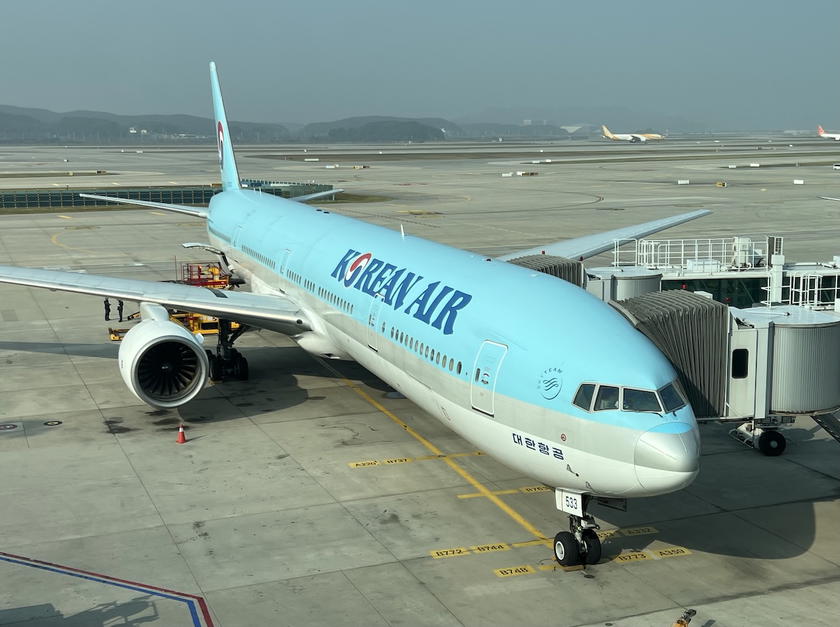
Korean Air and Asiana plan to integrate their operations as of December 17, 2026, nearly six years after the acquisition was first announced. So while details are now being worked out as to exactly how this will work, you can expect that all Asiana flights will receive Korean Air branding, and therefore, Asiana will no longer be part of Star Alliance, or have its own loyalty program (so it’ll join SkyTeam, and belong to Korean Air SkyPass).
Of course the branding will change across the board to match Korean Air (from aircraft liveries, to check-in counters), and the formerly separate airlines will also coordinate their scheduling, centralize fleet planning, etc.
This has been one of the most complicated and drawn out airline mergers that we’ve ever seen, in terms of the amount of regulatory scrutiny the deal has received. That’s understandable, I suppose, given that going from two major international carriers in a country to just one has major implications for consumers.
I’m curious to see how the integration plays out
This merger has been a massive headache, in terms of how long it has taken, plus the complexity. For the most part, the implications are obvious. If you liked the Asiana brand and its participation in Star Alliance, you probably won’t be happy. If you prefer the Korean Air brand and its participation in SkyTeam, you’ll probably be happy.
Competitively, the biggest implications are for the South Korea market, and the country going from two flag carriers to one. In fairness, lots of concessions had to be made, and we are seeing increased competition from other airlines in the country, like T’way Air (soon to be known as Trinity Airways).
Interestingly, Asiana didn’t have much in the way of joint ventures with foreign airlines, so it always felt a bit like a second class Star Alliance member, along with carriers like LOT Polish Airlines.
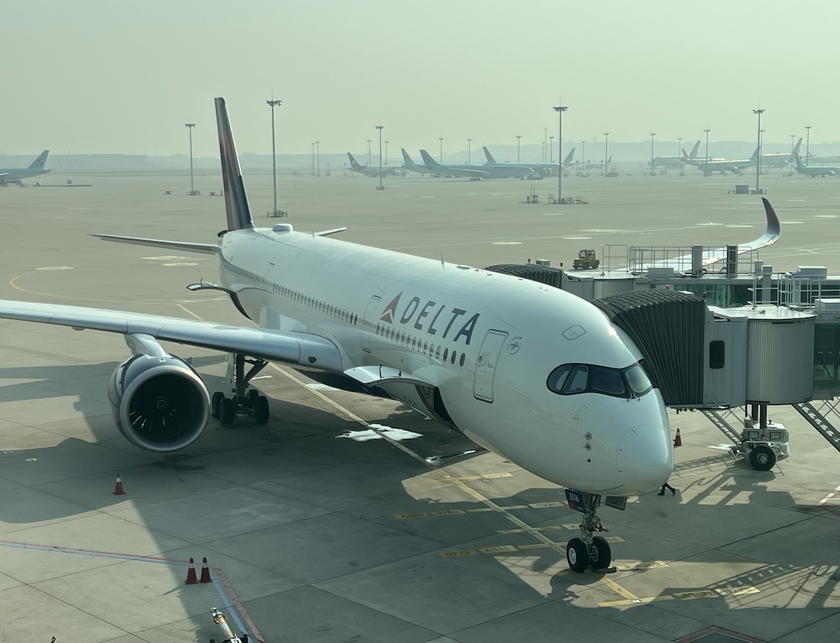
Meanwhile — not to sound like a certain someone — but the most positive implications here are probably for Delta. Korean Air’s biggest joint venture is with Delta, and former Asiana flights will soon operate as part of the Delta and Korean Air joint venture, expanding the joint venture’s market share across the Pacific.
With a joint venture, airlines can coordinate fares and schedules, and share revenue. Now, the only thing I’d note is that at some point the joint venture gets pretty unexciting, since some people actually want to fly nonstop to their destination in Asia, rather than having everything route through Seoul Incheon (ICN).
To Delta’s credit, the airline is working on expanding its transpacific network, with new routes to destinations like Hong Kong (HKG), and eventually Manila (MNL) and Singapore (SIN), maybe. The airline still has a ways to go before it can compete with United in terms of the breadth of its Asia network (note that I’m not talking about RASM, or about the A350-1000).
Bottom line
The branding integration between Asiana Airlines and Korean Air is expected to happen as of December 17, 2026, so that’s the date as of which the Asiana brand will cease to exist, the airline will leave Star Alliance, etc. This sure has been drawn out, as that’s around six years after the merger was first announced. Some of the exact details still need to be ironed out, so we should learn more in the coming months.
What do you make of Asiana finally being integrated into Korean Air?
Will Asiana Club miles convert 1:1 to Skypass?
I miss the old brown livery.
And as someone who has been on here for more than a decade, I still remember Asiana 214 which was discussed on here along with Ben's flights in Smartium J and First.
I never got the chance to fly Asiana (almost, but CX was the better deal at the time and have been with them since). I hope I didn't miss out on anything good!
In the same...
I miss the old brown livery.
And as someone who has been on here for more than a decade, I still remember Asiana 214 which was discussed on here along with Ben's flights in Smartium J and First.
I never got the chance to fly Asiana (almost, but CX was the better deal at the time and have been with them since). I hope I didn't miss out on anything good!
In the same vein as Korean, whatever happened to Premium Economy and 10-abreast in Economy? It seems like they just stopped retrofitting their aircraft all of a sudden; I know there was backlash and regulatory issues, but that's all I know.
I miss Asiana Air. Their service was good, even in Economy. Asiana had consistent award availability in Y and J. With Korean Air, award availability is sparse, especially in J.
This been gonna happen for so long now that I'm just gonna say "I'll believe it when I see it"... That said, I'll definitely miss flying in Smartium™ Class :) as well as another TPAC Star Alliance option.
I’ll miss Asiana. Second tier or not, it was nice having another *alliance airline in that part of the world.
And while it was never the best or top Asian airline, it was consistantly solid with a dependable product (usually a solid B, occassionally a B+ for me).
I agree. And they usually had very attractive fares. I miss when they flew to ORD and competed with KE and Chinese carriers.
While subjective, many have found Asiana to be better than ANA and EVA back when the airline was in its prime days (until mid-2010s). ANA and Singapore Airlines once even sent their employees to Asiana to learn from their service standards.
South Korea can’t keep 2 international legacy airlines profitable, but Taiwan have 3 competing. South Korea has even more population than Taiwan.
On the other hand, Korea has half a dozen independent LCCs and hybrid airlines, while Taiwan has one (fully owned by CI, who ensures that it doesn’t compete with their mainline offerings). So pretty different market dynamics.
Out of context but one blogger posted that SQ reported massive profit while experiencing a huge loss in Air India investment. Can you elaborate further as I am still waiting for how big a loss of such investment will be? Three decades ago, Singapore government never signed up for any deal that incurred a loss, especially in that magnitude. Lee Kwan Yew would never committed to such an atrocious investment.
The real benefit of the KE-OZ merger is that the KE-DL JV will be the only Asian hub that will be able to extend TPAC service to non-hub cities that have wanted TPAC service but will never get it as part of AA or UA's Japan-based JVs.
ICN not only serves a local market larger than NRT but it is a far larger global hub than either Tokyo airport or any other Asia hub and...
The real benefit of the KE-OZ merger is that the KE-DL JV will be the only Asian hub that will be able to extend TPAC service to non-hub cities that have wanted TPAC service but will never get it as part of AA or UA's Japan-based JVs.
ICN not only serves a local market larger than NRT but it is a far larger global hub than either Tokyo airport or any other Asia hub and will only grow as KE and OZ remove duplicated flights and add new ones.
Cities like BNA, AUS, IND and other non-hub cities will get service to Asia even if less than daily.
@ Tim Dunn -- Sorry, you're passing off as fact that BNA, AUS, and IND, will get service to ICN. Is there an announcement I missed? You're saying "will," not "may."
@Tim ... pax will prefer to go to NRT , rather than ICN , because pax desire civility , and cannot accept daughters of owners arguing about nuts .
Ben, I agree that BNA and IND don't make sense, but AUS does. There's a rumor in Korea that either KE or DL will launch ICN-AUS because Samsung has a semiconductor factory in Austin. It's like what PHX is for Taiwanese airlines.
@ S_LEE -- Yeah, I'm sure AUS will happen, but passing off IND and BNA service as fact is absurd.
Lucky, in terms of sheer passenger volume, isn’t HND currently busier than ICN?
It is right there with the supposed "facts" you have about how much DL will lose because of having "slow speed" WiFI.
Tokyo won't work to serve secondary non-hub cities because HND capacity is highly restricted and it pulls off nearly all of the high value US to Tokyo traffic.
NRT only works for large markets that are full of connections; AA, JL, UA and NH wouldn't operate US-NRT services except for that is the...
It is right there with the supposed "facts" you have about how much DL will lose because of having "slow speed" WiFI.
Tokyo won't work to serve secondary non-hub cities because HND capacity is highly restricted and it pulls off nearly all of the high value US to Tokyo traffic.
NRT only works for large markets that are full of connections; AA, JL, UA and NH wouldn't operate US-NRT services except for that is the only way they can push connections into Asia.
TPE, ICN and HKG are all one-stop local and connecting airports. Japan blew it with a separate Tokyo airport strategy.
yes, Ben, BNA, AUS, IND and more will get flights to E. Asia and they won't be to Tokyo.
@ Tim Dunn -- Could you please cite your sources? You are saying what "will" happen. Regarding my take on Delta's Wi-Fi situation, I wrote how I "think" it's a major mistake.
Do you not recognize the difference between making a factual claim and sharing an opinion?
as soon as you cite your sources for the "facts" you make about how DL will lose to UA because of WiFi.
are your statements about DL's supposed WiFi disadvantage a fact or opinion?
Feel free to update your article about WiFi to repeatedly state that you really have no data but your OPINIONS are that DL will be at a disadvantage - despite the fact that you can't offer a shred of evidence to...
as soon as you cite your sources for the "facts" you make about how DL will lose to UA because of WiFi.
are your statements about DL's supposed WiFi disadvantage a fact or opinion?
Feel free to update your article about WiFi to repeatedly state that you really have no data but your OPINIONS are that DL will be at a disadvantage - despite the fact that you can't offer a shred of evidence to back up any statement about the impact positive or negative about having WiFi, let alone having faster WiFI.
and BNA is willing to pay for TPAC service - and they will get it.
it isn't an opinion that it will be ICN that will allow secondary, non hub cities to gain service to E. Asia.
Whether you understand the reasons why or not is immaterial to the discussion.
DL/KE have an advantage which no other JV or carrier can duplicate in its ability to increase the number of cities with TPAC service.
Just.
You.
Wait.
and.
See.
@ Tim Dunn -- "Feel free to update your article about WiFi to repeatedly state that you really have no data but your OPINIONS are that DL will be at a disadvantage - despite the fact that you can't offer a shred of evidence to back up any statement about the impact positive or negative about having WiFi, let alone having faster WiFI."
In the section where I shared that I think it will put...
@ Tim Dunn -- "Feel free to update your article about WiFi to repeatedly state that you really have no data but your OPINIONS are that DL will be at a disadvantage - despite the fact that you can't offer a shred of evidence to back up any statement about the impact positive or negative about having WiFi, let alone having faster WiFI."
In the section where I shared that I think it will put Delta at a disadvantage, I said "I think" four times. How many times do you think I should state that I'm sharing my opinion, and not passing that off as fact? And why does that same standard not apply to you?
put it in the title and quit pushing it 16 million times if it is just an opinion.
It is, in fact, not supported in the least by facts.
I'll ask you just as I have asked other people.
How much revenue did UA lose by not having high speed free WiFI for 5 YEARS after DL started high speed Free WiFI?
How much is UA losing now since T Mobile has pulled...
put it in the title and quit pushing it 16 million times if it is just an opinion.
It is, in fact, not supported in the least by facts.
I'll ask you just as I have asked other people.
How much revenue did UA lose by not having high speed free WiFI for 5 YEARS after DL started high speed Free WiFI?
How much is UA losing now since T Mobile has pulled the plug and almost 1000 UA mainline aircraft have no Starlink?
what are the revenue data YOU cite to make even an opinion that DL will suffer by only offering SLOW speed WiFi when you can't tell us the disadvantage that AA and UA had to DL for years?
@ Tim Dunn -- "put it in the title and quit pushing it 16 million times if it is just an opinion."
Here's the title:
"The Silly Reason Delta Passed On Starlink Wi-Fi: A Strategic Blunder?"
Do you notice how there's a question mark there? That question mark indicates that it's a... question. I promise this isn't so complicated.
or you could remove the bias and say
Who outsmarted who: DL and Amazon or Starlink?
You and your boarding area pals ran with and repeated this story without the most basic questioning including that the only comments to this effect came from Starlink related execs?
Did that remotely cross your mind as being a reason why it just might not be accurate?
and as noted above, neither you or anyone else can...
or you could remove the bias and say
Who outsmarted who: DL and Amazon or Starlink?
You and your boarding area pals ran with and repeated this story without the most basic questioning including that the only comments to this effect came from Starlink related execs?
Did that remotely cross your mind as being a reason why it just might not be accurate?
and as noted above, neither you or anyone else can put data behind the benefit or costs of no WiFi vs. high speed WiFi, let alone between Viasat/Hughes high speed WiFi vs. Starlink.
Don't you think you have a duty to at least ask the question if there is really data to support your statements?
Dim Tunn,
Have you even flown DL across the Pacific? Do you know what Delta's wifi coverage map even looks like? They don't have ANY Asia service. Once you get to Alaska or past Hawaii good luck! Compare that to United current map pre-starlink. Delta isn't losing TPAC to United because of slow wifi, it's losing because of NO WIFI.
UA is the new premier US carrier, one that both business travelers and regular...
Dim Tunn,
Have you even flown DL across the Pacific? Do you know what Delta's wifi coverage map even looks like? They don't have ANY Asia service. Once you get to Alaska or past Hawaii good luck! Compare that to United current map pre-starlink. Delta isn't losing TPAC to United because of slow wifi, it's losing because of NO WIFI.
UA is the new premier US carrier, one that both business travelers and regular folk want to travel on. BTW $500m>$300m TPAC for UA vs DL ;)
https://www.delta.com/us/en/onboard/inflight-entertainment/onboard-wifi
AUS delta and Korean have been talking about starting that one to icn. BNA I think would be more likely to get Tokyo before Seoul if it ever gets an Asia flight. IND doubtful considering it isn’t far from ORD, I believe out of all places in the eastern us without Asia service, PHL would be most likely to get Asia flights
again, Tokyo might be a stronger local market but it suffers from the divided Tokyo airport situation.
It doesn't matter if cities in the US want Tokyo service if airlines cannot do it profitably.
HND access is very limited; AS can't even get in there and UA wants to move more service from NRT to HND - specifically IAH. DL probably would drop HNL-HND if it could get JFK or BOS to HND...
again, Tokyo might be a stronger local market but it suffers from the divided Tokyo airport situation.
It doesn't matter if cities in the US want Tokyo service if airlines cannot do it profitably.
HND access is very limited; AS can't even get in there and UA wants to move more service from NRT to HND - specifically IAH. DL probably would drop HNL-HND if it could get JFK or BOS to HND service.
NRT is simply not a viable local market. It exists solely for connections but there are larger hubs than NRT such as ICN, HKG and TPE that better connect the US to deeper in Asia than NRT and also have a local market making flights more profitable.
TPE and HKG are not part of US carrier JVs. ICN and Tokyo are.
If there are secondary, small to non-hub US cities that gain service to E. Asia, it will be to ICN on DL/KE.
as OZ/KE duplicate routes and capacity are eliminated, there will be an opportunity to add new cities in the US to the DL/KE network.
It may be a bit off-topic, but as for the KE-DL JV, I think it's also worth mentioning IRBS(International Remote Baggage Screening) which lets your bags connected automatically even when arriving international in the US.
KE/DL started IRBS on ICN-ATL from last year, and they've expanded it to ICN-MSP and ICN-DTW starting this April.
They also plan to expand it to ICN-SEA/LAX by the end of this year, so almost all the connecting...
It may be a bit off-topic, but as for the KE-DL JV, I think it's also worth mentioning IRBS(International Remote Baggage Screening) which lets your bags connected automatically even when arriving international in the US.
KE/DL started IRBS on ICN-ATL from last year, and they've expanded it to ICN-MSP and ICN-DTW starting this April.
They also plan to expand it to ICN-SEA/LAX by the end of this year, so almost all the connecting hubs of DL will have it.
ICN may not be a fantastic airport, but if you're traveling to/from a city where there's no direct flight at all, IRBS can make your life easier. This is a competitive advantage that no one else can have in US-Asia market.
AA has it on SYD-LAX and LHR-DFW, and so does UA on SYD-SFO, however, none of them has it from ICN because the IRBS system there is limited to T2, basically a Skyteam terminal. I wish they establish IRBS also from NRT/HND, but it's just a wish..
“(note that I’m not talking about RASM, or about the A350-1000)”
LOL. He will still mention it anyway don’t worry
And, if not… how about CASM, load factor, etc…
I have very fond memories of flying Asiana on the B747-400 Combi all the way from JFK to ICN to MNL when I was younger. Y class started in the second section so you had a clear view of the engines which was such a treat. Then this transitioned to the A380 with a fairly large Y cabin on the upper deck which I also loved. I’m sad to see them go away but at least Korean Air is still a good brand and I can still order bibimbap!
Well said. I’ve mostly flown with KE from JFK-ICN on their 748, which is a treat if upstairs or in the nose! I could go for some bibimbap, extra gochujang! Yum!
Yes, me too. Flew my one and only first class RT flight from JFK to ICN and back on Asiana. Also had several business class redemptions from JFK to Australia via ICN and also to Vietnam on the upper deck of a 747.
Please do not go down to one flight to SFO...
Even if it doesn't I bet that Asiana fare jumps up $800 to the Korean air fare for arbitrary reasons
