
Loyalty programs are big businesses, and they can be lucrative both for travel brands and consumers. As you might expect, this also means that the loyalty industry has quite a bit of fraud from many parties. This is definitely more rampant and organized in some markets than others.
Roughly a year ago, we learned how some Hyatt affiliated properties in China were running a scam in order to sell elite status and points, and it has backfired for program members who took advantage of it. Some more details have recently emerged about how exactly this scam worked, as lawsuits have been filed over this.
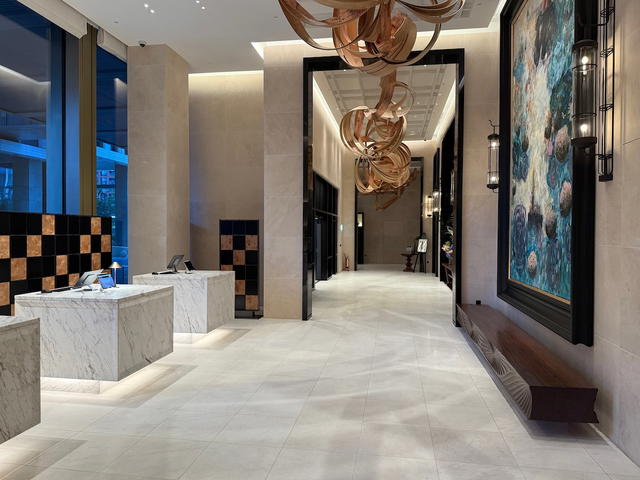
I’d like to share the details, as I understand them. It raises an interesting question about who should be held more responsible — the hotels or the program members?
Hyatt UrCove properties sell status without staying
UrCove is one of Hyatt’s newer brands that’s specific to the China market, and it’s a joint venture with China’s Homeinns Hotel Group. It launched in 2020, and due to it being a joint venture, oversight of these properties was a bit more limited than with other brands.
It seems that several UrCove properties (particularly in Chengdu and Hangzhou) got a bit “entrepreneurial,” and found a creative way to generate some “bookings.” The hotels sold packages to consumers that awarded points and elite qualifying nights, without guests actually staying, to give members a good value opportunity to earn status. The hotels even provided official invoices for these “stays.”
The hotels would reportedly promote these opportunities on some social media networks. The cost for earning World of Hyatt Globalist status was reportedly around 6,000 to 7,000 RMB, or under $1,000. So that’s a cost of well under $20 per elite night.
While there’s nothing wrong with “mattress running” (where you actually stay at a hotel in order to qualify for elite status), this was different:
- You’re only supposed to actually be credited for a stay if you stay (or at least check-in), as phantom stays aren’t supposed to be allowed
- With the individual hotels selling elite nights for very cheap, Hyatt was of course still on the hook for fulfilling many of the benefits, and the economics didn’t make sense
Keep in mind that Hyatt has the Milestone Rewards program, so many awards are transferable. So it’s my understanding that many people were then in turn selling those rewards online to recoup the cost, ranging from Guest of Honor awards, to suite night awards, to club access awards. With how transferable they are, it’s not surprising that fraud is an issue.
If the hotels had done this on a small scale, everyone would’ve probably gotten away with this. I remember back in Hyatt’s Faster Free Nights days, there were some people who knew the sales manager at their local Hyatt Place, and they’d negotiate a cheap rate, and that sales manager would allow “phantom” stays, and manually check them in. I didn’t do this, for the record, since I was happy just staying at my local Grand Hyatt, which was cheap.
It wasn’t within the spirit of the program, but we’re talking about a few people doing it at a particular hotel, so it flew under the radar.
But the issue here was the scale. Some UrCove properties had more “phantom” guests than real guests, and some properties reportedly claimed to have exponentially more guests on any given night than rooms. Obviously that’s an issue. For some UrCove properties, this was a much needed business boom, given how slow travel demand has been in China coming out of the pandemic.
It’s my understanding that a minimum of around 1,700 accounts were flagged for this fraud. World of Hyatt ended up banning all these members, including revoking their status and taking away any points and certificates earned.
As you’d expect, the narrative from many people involved in this scam has been very different, with them claiming they did nothing wrong, they didn’t know they were violating the rules, etc.

Should hotels or members be held liable for this fraud?
We’ve recently seen several lawsuits filed in China regarding this scam, since members feel like they shouldn’t be the ones who are being punished for what happened. Obviously Hyatt takes major issue with what happened, and it’s important that Hyatt does enforce rules.
It’s not just Hyatt that suffers financially when stuff like this happens, but “legitimate” members suffer as well, in terms of overcrowded club lounges, lack of available suites for upgrades, etc.
The question is, should the individual hotels be held responsible, or the World of Hyatt members?
- Obviously the individual hotels were violating their agreement with Hyatt, and were also encouraging World of Hyatt members to violate the program terms & conditions
- Ultimately these UrCove properties are managed independently as part of a joint venture, but at the same time, understandably most members probably assumed that if a hotel is marketing these deals, then it must at least be semi-legitimate
If you ask me, both parties should be held responsible. Personally, I think the hotels as such should be held most responsible. These properties were acting as Hyatt affiliates, and you’d think they’d have a much higher burden to act ethically and within the spirit of what Hyatt intends, compared to any individual member.
So I find it a bit troubling that most of these UrCove properties are still part of Hyatt. Perhaps they’ve been fined or punished in some way internally, but Hyatt hasn’t taken drastic action in terms of removing the hotels from the system, etc.
When it comes to the liability for individual members, I can see both sides here. Yes, they were violating the terms & conditions, but who actually reads those full terms from any program? I have to imagine that a large percentage of people who participated in this “opportunity” knew exactly what they were doing, but felt they were shielded, since they were interacting with a Hyatt affiliated property.
I also suspect that many people had no clue they were breaking the rules — they probably had a friend say “hey, you can pay X amount, and you’ll get Globalist status, which gets you X perks.” Now, perhaps there was an element of willful ignorance there, but I’m sure many people were brought into this without being warned of the risks.
So my sympathy for individual members is fairly limited, though I do still believe that the hotels should be held more liable than the members. Furthermore, hopefully Hyatt implements some technology so that scams like this are caught earlier on next time. For example, if a hotel consistently has over 100% occupancy, maybe that should be a clue that something is a bit off…
Bottom line
For a few years, some UrCove properties in China had a pretty profitable side hustle, at Hyatt’s expense. The hotels sold packages for a certain number of elite nights and points, and would then do “ghost” check-ins, while billing a low rate. Some hotels did so much of this that they had well over 100% occupancy, with a majority of stays being “virtual.”
When Hyatt caught on, nearly 2,000 members were banned from World of Hyatt. As you’d expect, this hasn’t been without controversy, since many members feel that since Hyatt properties were selling these packages in an official capacity, members shouldn’t individually be held liable.
What do you make of this Hyatt fraud situation in China?


Membership is free and takes no more information than commenting as a guest. Earn status points for good contributions, and see fewer ads as your status grows.