
This weekend Marriott’s peak and off-peak award pricing went live. This is no surprise, as we’ve known for several weeks that this was coming.
What Is Marriott’s Peak And Off-Peak Award Pricing?
Historically when redeeming points for a hotel, the cost has been based on the category of hotel you’re staying at.

With peak and off-peak pricing, a further element is being added to this. Not only will the cost be determined by the category of the hotel, but there will also be different pricing for peak, standard, and off-peak periods.
Here’s the new award chart, for context:

As you can see, with these changes the cost of free night awards ranges anywhere from 5,000 points per night to 100,000 points per night.
This new pricing will apply at all Marriott Bonvoy properties. Standard rates will be offered a majority of the time, and then peak and off-peak dates will be equally distributed.
How To Search Peak And Off-Peak Pricing
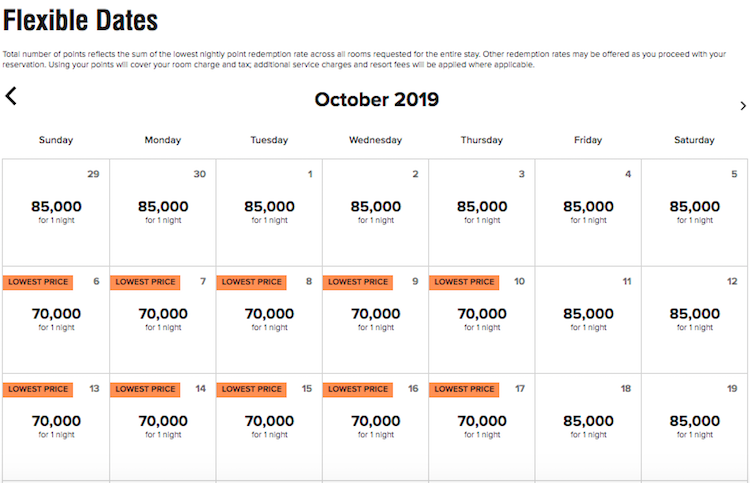
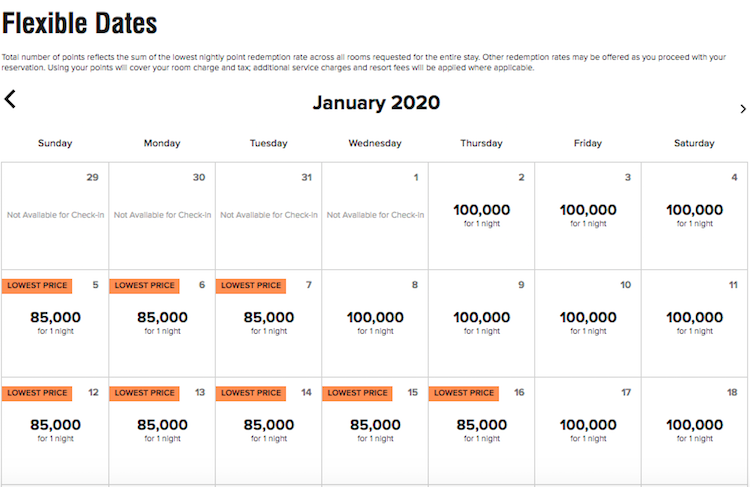
If you want to easily browse dates to see whether pricing is peak, standard, or off-peak, just do a flexible date search while using points, and you’ll see the pricing. For example, here’s a look at pricing at the W Aspen across all three pricing ranges, with costs ranging from 70,000 points per night to 100,000 points per night:
For existing bookings, note that:
- Reservations made prior to September 14, 2019, will be honored at the standard redemption rates
- If you want to change or modify a reservation after that date, the new pricing will apply
Marriott notes that we may find off-peak award pricing in the following markets:
- Hawaii: October through mid-December (2019) and late September through October (2020) depending on market
- California Wine Country: Mid-November (2019) through April (2020)
- New York: January through February (2020)
- Orlando: beginning in May with the greatest concentration in August and September (2020)
- Washington DC: Late November (2019) through February (2020)
- Cape Town: May through August (2020)
- Dubai: May through September (2020)
- European destinations primary November (2019) through March (2020)
- Maldives: May through June and end of August through early October (2020)
- Bora Bora: January through March (2020)
- Bali: November through mid-December (2019), mid-January through March (2020)
- Phuket: May through June (2020)
- Koh Samui: October through mid-December (2019) and September through October (2020)
- Costa Rica: October (2019) and August through October (2020)
- Macau: March through June (2020)
Why Marriott’s New Pricing Isn’t What I Expected
Marriott’s new peak and off-peak award pricing doesn’t at all work how I was expecting. That’s probably on me for making assumptions, so I’m not saying Marriott was trying to deceive us, or anything. Rather I think this new system lacks transparency. The system is very similar to airlines switching to dynamic award pricing.
How I Was Expecting Marriott Award Pricing To Work
My assumption was that Marriott would work with hotels to determine what dates have peak, standard, and off-peak pricing. I assumed this would be based on projected and historical demand, including pricing and occupancy.
In other words, a particular day would have peak pricing regardless of whether you book a day in advance or 50 weeks in advance, assuming there’s award availability. Certain dates are peak, certain dates are standard, and certain dates are off-peak.
That’s not how it works though.
How Marriott’s New Award Pricing Actually Works
To me Marriott’s new pricing isn’t really peak or off-peak pricing, but rather it’s full-on dynamic award pricing. Marriott notes that:
- Pricing may vary by day of week
- Award rates will be updated monthly to reflect market conditions
What this means is that Marriott doesn’t actually have peak and off-peak dates, but rather the pricing for a particular date can change monthly. Presumably pricing would change based on factors like projected occupancy.
On the one hand this could be good news. It could mean that you book a standard or peak award 50 weeks out, but closer to the arrival date they realize the hotel isn’t likely to be full, and therefore it may have off-peak pricing.
But I also really don’t like this system, mainly because it provides very little transparency. Marriott promises that there will be an equal distribution between peak and off-peak dates, though with pricing changing on a monthly basis, there’s literally no way to verify this.
This is truly dynamic award pricing, rather than seasonal or peak date pricing where there’s a clear chart showing which dates price at which levels. This could mean that if you book way in advance the pricing will be standard, but then closer to the arrival date as the hotel fills up the pricing starts to be at the peak level.
I asked a Marriott spokesperson about the dynamic aspect of this, and he gave the following example:
For example, if a planned event were to be canceled in a location, it would impact and lessen market demand and that would have to be taken into account.
I also raised the point of how members don’t really have a way to verify the equal distribution of peak and off-peak pricing, to which he responded with this:
Our commitment is have an fairly equal distribution across of peak and off peak rates portfolio wide.
Bottom Line
Marriott’s new peak and off-peak pricing is now in effect, and it’s not exactly what I was expecting. With this new pricing it’s not that certain dates are peak and certain dates are off-peak at a particular property, but rather the pricing will be dynamic, and on a monthly basis we could see a particular night go from off-peak to peak, from standard to off-peak, etc.
Make no mistake, this is dynamic pricing, rather than a clearly published peak and off-peak calendar.
What do you make of Marriott’s new award pricing system?




Membership is free and takes no more information than commenting as a guest. Earn status points for good contributions, and see fewer ads as your status grows.