
Roughly a week ago, a FlyDubai Boeing 737 crashed in Russia, killing all 62 passengers and crew onboard. The flight from Dubai encountered bad weather on approach in Rostov-on-Don, causing the plane to circle for a couple of hours. During the plane’s second approach the plane lost speed, eventually causing it to crash.
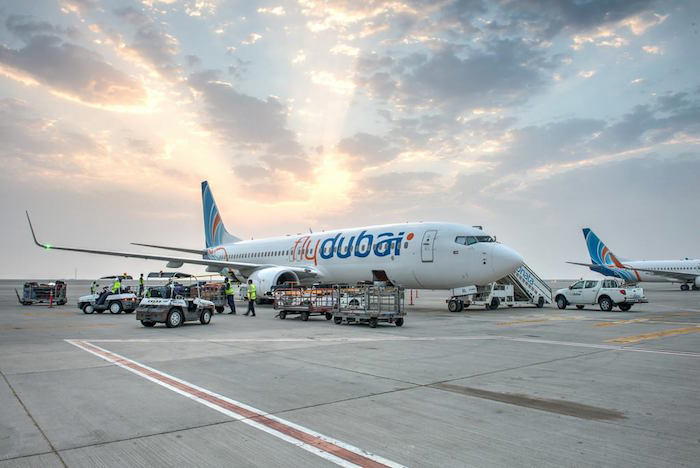
While the crash investigation is ongoing, a series of whistleblowers have emerged to share (what they consider to be) the reality of working for FlyDubai. The issues boil down to three main areas:
- The pilots are overworked, with too many changes between daytime flying and nighttime flying, which causes fatigue and bad sleeping patterns; the first officer on the FlyDubai flight which crashed had only one day off in the past 11 days, and was switching between daytime and nighttime flying
- The chief pilot at FlyDubai is apparently a tyrant, and has created a culture where diversions or bringing forward problems are frowned down upon
- While other countries have regulatory authorities which are independent of the airlines, in the UAE the government owns the airlines and also runs the UAE General Civil Aviation Authority; so perhaps there is a bit of a conflict of interest when the country owns both the airlines and runs the aviation authority which is intended to regulate them (though that’s nothing new)
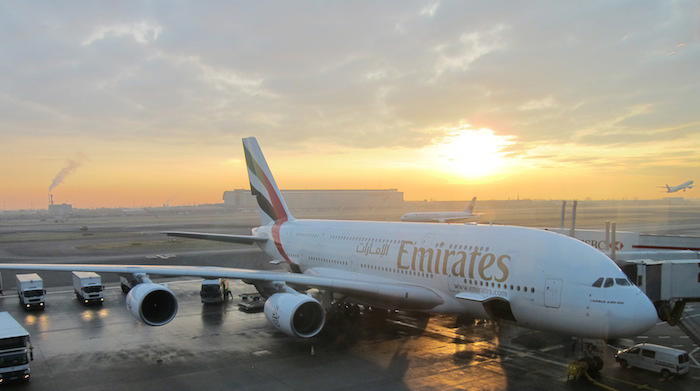
Well, this story is now extending beyond FlyDubai, as Emirates pilots are coming forward with similar allegations. RT has an exclusive with several Emirates pilots sharing their thoughts:
One former Emirates pilot told RT that the number one issue to investigate is the airline’s problem with fatigue, as seven pilots at Emirates are forced to do the same amount of work as 10 or 11 pilots at any European airline.
Meanwhile, another pilot still working at Emirates said that the number of pilots at the airline has been dwindling. “They are not able to employ enough pilots to make up for the losses… So what is happening is that pilots are working harder, harder and harder. It is becoming worse,” he described.
A third pilot, who said that he had experienced intimidation for filing a report over a potentially dangerous situation that needed to be fixed, as well as for taking a sick leave because of the emotional pressure he was subject to at the airline, elaborated on what he sees as an employment crisis at the company that is impacting the remaining pilots.
Then there’s discussion of how canceling a trip due to fatigue is frowned down upon, which leads to pilots instead calling in sick, given that calling in sick isn’t recorded with the UAE GCAA:
Emirates reportedly uses the threat of an internal investigation, which involves endless additional examinations for depression and other illnesses not related to fatigue, to keep their pilots from reporting their exhaustion.
“They will investigate you for depression, for alcohol abuse and various other things. So, most pilots do not call in fatigued even though they are fatigued.”
The pilot noted that calling in sick is easier because it will not show up on a pilot’s record with the UAE General Civil Aviation Authority (GCAA).
“I know from facts that most pilots will not call in fatigued for fear of retribution, they just call in sick,” he said. “Sick is just sick … you can disappear, you do not have to give a reason for two days.”
While these are all just individual reports, the big picture issue here is the lack of any higher authorities that problems can be reported to — the CEO of Emirates is also the head of the GCAA, which presents a clear conflict of interest:
Pilots have no higher authority to complain to and any reports that do get out are usually quickly “covered up,” according to the former pilot, who stressed that such misconduct would be impossible with European or US airlines, where independent aviation watchdogs monitor procedures.
The pilot currently employed by Emirates explained that the aviation authority is controlled by the same people who are in charge of the airline. Specifically, he pointed out that the GCAA is chaired by the same person who is the CEO of Emirates airline & Group – Sheikh Ahmed Bin Saeed Al Maktoum.
Bottom line
Independent of the FlyDubai incident, we’ve long known that corners are being cut in the Middle East. That’s nothing new. A countless number of people have died in the region (especially construction workers) due to a lack of proper safety procedures. At the same time, these airlines are the lifeblood for the region.
There’s a difference between doing the right thing because it’s the right thing, and doing the right thing because it makes sense financially. You’d certainly think doing anything which compromises the safety of these huge Gulf carriers would be avoided, given the ramifications of it.
While we don’t know the truth behind the statements from the Emirates (and FlyDubai) pilots who came forward, I think it’s safe to say that the lack of an independent authority to regulate the airlines is worrisome. When the head of the country’s aviation administration is also the CEO of the country’s largest airlines, there’s not really an independent authority to which problems can be reported.
Then again, that’s largely the basis of business in the Middle East, so I guess that shouldn’t come as a surprise.
Do these allegations change your perception of the Gulf carriers, or your willingness to fly with them?


Membership is free and takes no more information than commenting as a guest. Earn status points for good contributions, and see fewer ads as your status grows.