
Hello from Tokyo, as I continue my review trip to South Korea and Japan. I just flew Japan Airlines’ Airbus A350-900 first class, on the short 85-minute domestic flight from New Chitose Airport (CTS) to Tokyo Haneda Airport (HND).
I was actually booked in business class (well, Class J, as it’s called), but I upgraded to first class for 8,000 JPY (~53 USD). Japan Airlines offers amazing value upgrades for cash on the day of departure for domestic flights, which I’ll talk more about in a separate post.
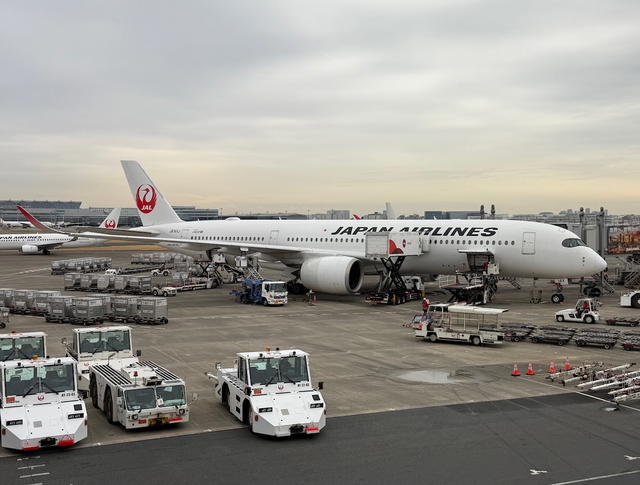
I absolutely adored this flight. Heck, maybe I’m too enthusiastic, but I almost enjoyed this more than a long haul first class flight. From Japan Airlines’ adorable Diamond Premier Lounge Sapporo, to the friendly and attentive crew, to a top notch soft product, to maybe drinking a little too much champagne and sake while watching the tail camera on a stormy evening, this experience was just flawless.
In this post I wanted to share some initial thoughts, and then soon I’ll have a full trip report.
Japan Airlines’ fascinating domestic A350-900 fleet
Japan Airlines has a dedicated fleet of domestic aircraft. These planes aren’t necessarily smaller than the international aircraft, but rather are just configured more densely, given that they operate short flights in busy markets. Japan Airlines’ “flagship” domestic aircraft is the Airbus A350-900, featuring 369 seats.
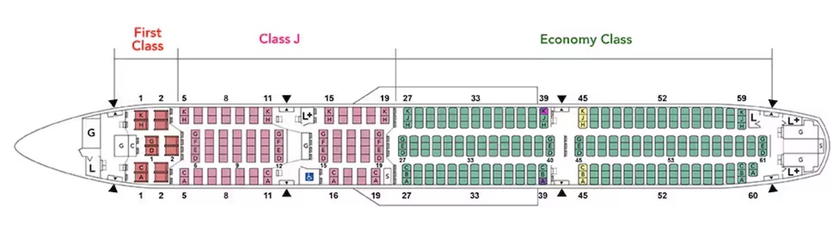
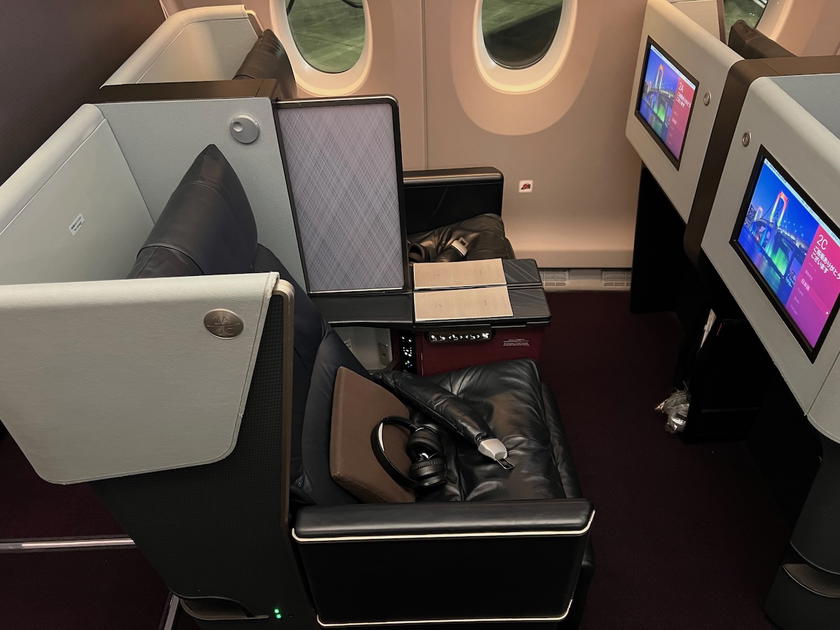
There are 12 first class seats, in a 2-2-2 configuration. This is the only cabin featuring a truly differentiated soft product, with attentive service, meals, alcohol, lounge access, etc. More on that in a bit.
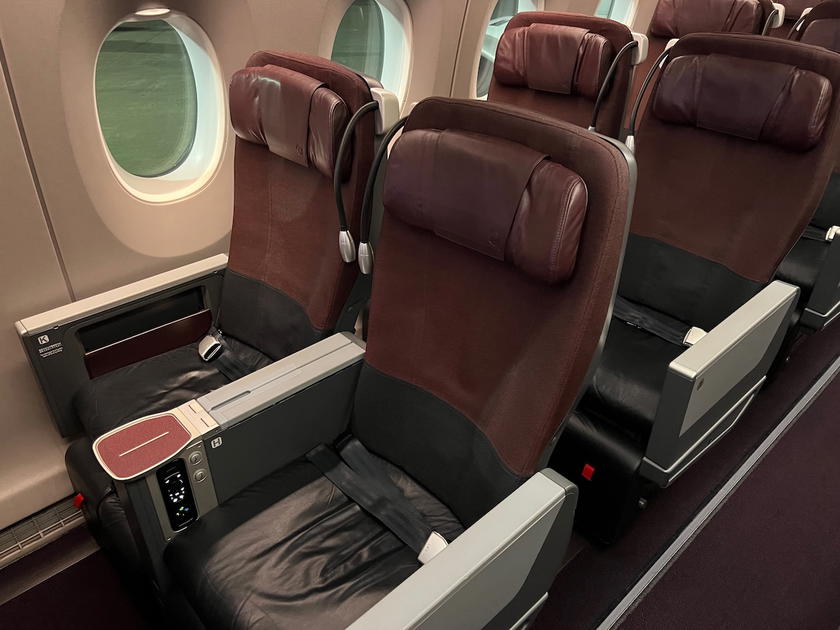
Then there are 94 “Class J” seats. While “J” ordinarily stands for business class, note that this isn’t actually business class. They’re comparable to premium economy seats on long haul flights, but don’t have any enhanced services. So it’s like a more spacious economy cabin (which is why the airline is careful to not market it as business class).
Then there are 263 economy class seats, in a 3-3-3 configuration, which are exactly as you’d expect.
I think another thing worth emphasizing right away is how reasonably priced the more premium cabins are. For example, on the Sapporo to Tokyo route, you’ll find that economy starts at $96, Class J starts at $111, and first class starts at $178. Like, those are surprisingly reasonable premiums for a better experience, no?
Just to put the cabin density into perspective, Japan Airlines’ flagship long haul aircraft is the Airbus A350-1000 (where you’ll find the carrier’s amazing long haul first class). That plane is significantly larger, and features just 239 seats (it’s the least dense A350-1000 in service).
Japan Airlines’ A350-900 first class cabin is unique & cool
As a passenger experience and product geek, I love trying new products where I don’t really know what to expect, and this definitely fit into this category. OMG, Japan Airlines’ A350-900 first class is kind of amazingly cool, I must say.
It honestly feels like the perfect setup when you consider this plane operates flights that are anywhere between 30 and 90 minutes, on average. The 12 seats are spread across two rows, featuring around 53″ of pitch and around 20″ of width.
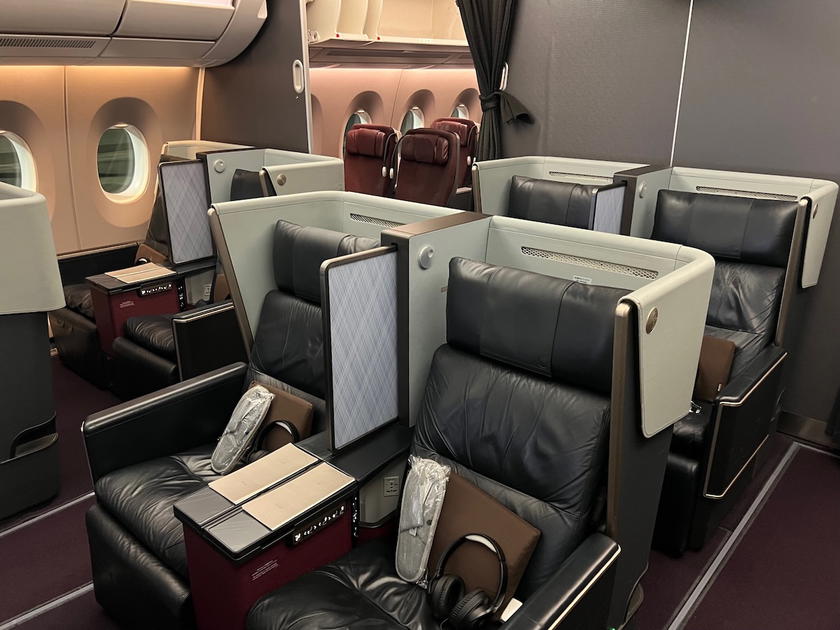
Two things stood out to me most about the product. First of all, the seat padding is unlike anything I’ve experienced on an airline before. These are the most well padded seats in service, and I could’ve sat in them for a long haul flight without being uncomfortable.
I also appreciated the option of either enjoying the flight with a companion or having privacy, thanks to a pretty substantial privacy shield.
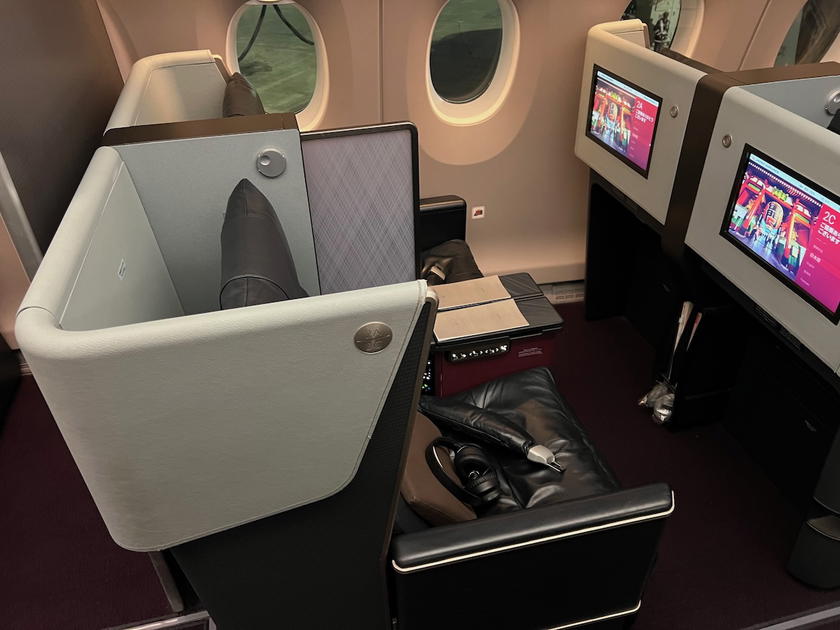
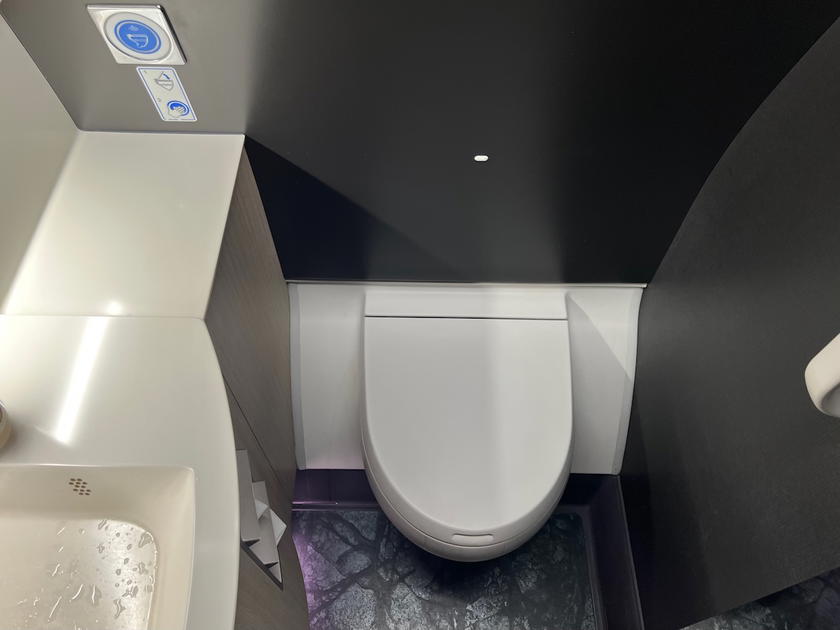
Another nice thing about being in a small cabin is having a dedicated, clean bathroom. Admittedly bathrooms are cleaner in Japan than most other places in general, but the first class bathroom was pristine, down to the toilet paper being folded into perfect triangles.
Japan Airlines’ A350-900s have free Wi-Fi, seat back entertainment
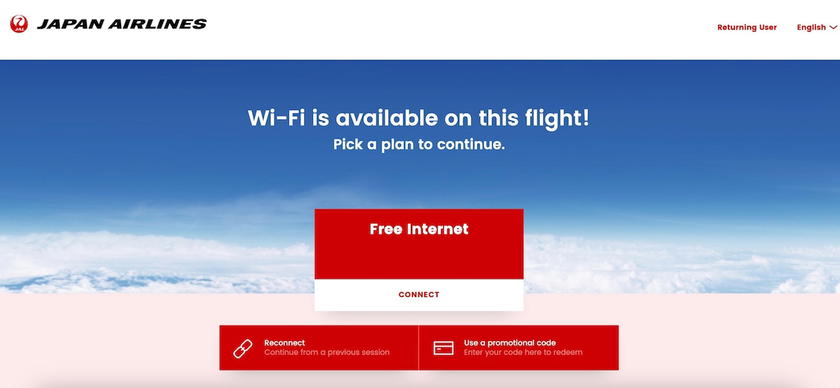
Japan Airlines offers free Wi-Fi for all passengers on domestic A350 flights. It’s easy to connect on as many devices as you’d like with the push of a button, and I found speeds to be quite good.
There’s also seat back entertainment throughout the plane. The entertainment selection isn’t that exciting, with the exception of the map feature and tail camera, which are always my preferred inflight entertainment anyway.

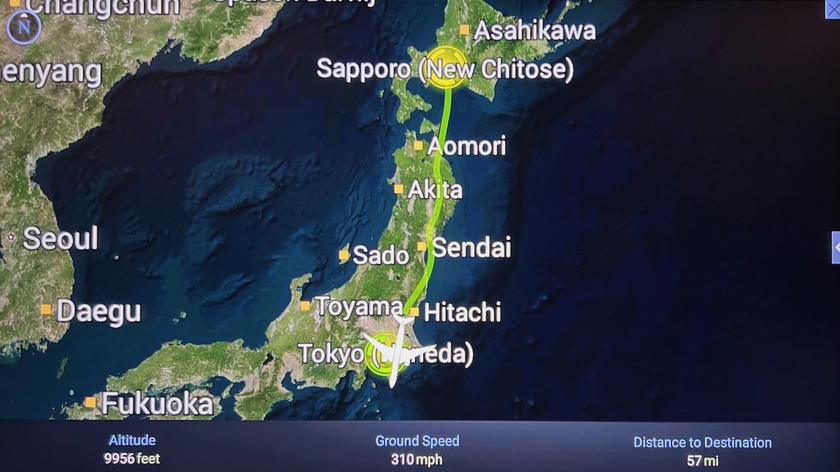

That tail camera never gets old…
Japan Airlines’ domestic first class soft product is pure perfection
I found Japan Airlines’ first class soft product to be phenomenal, even though I didn’t fully eat the meal.
For one, Japan Airlines’ domestic first class staffing is amazing. For the 12 first class seats there are two flight attendants, plus the cabin chief. Working my aisle was Kikuchi, and she shouldn’t have been lovelier — she was friendly, attentive, and fun. Her and the cabin chief, Arai, came around to each passenger during boarding to introduce themselves, and they worked every second of the flight that they could.
Japan Airlines has impressive amenities in first class, from pillows and blankets, to slippers, to menus.
There’s not a choice of meals, but rather the selection rotates every so often. On this flight, a western(ish) meal was served. This consisted of two mini-appetizers of a barley and seafood salad plus a vegetable salad, a main course of pork saltimbocca, a bread roll, and a dessert of coffee panna cotta.
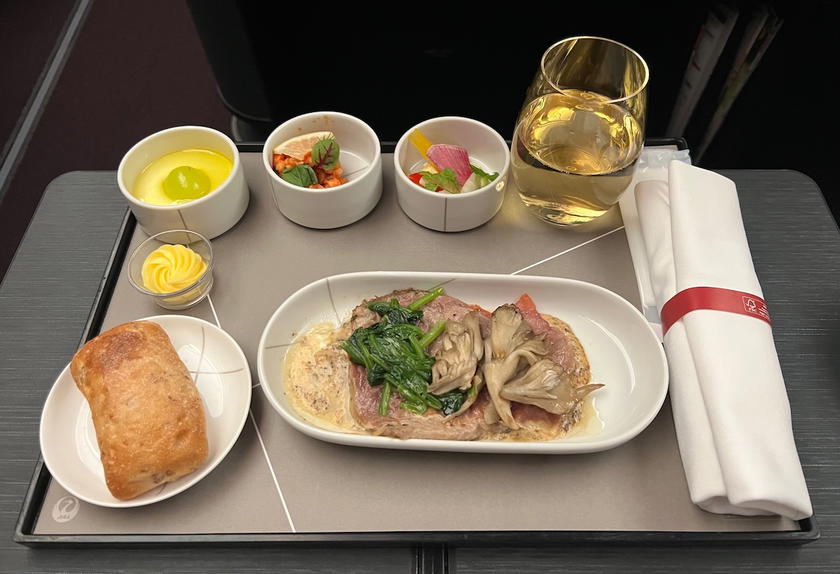
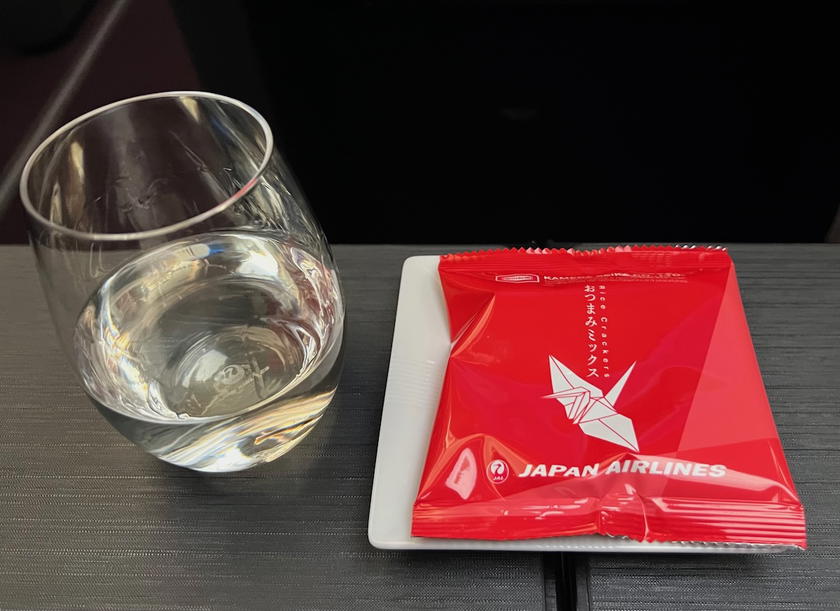
I don’t eat pork, so I decided to primarily enjoy a liquid meal. 😉 I had some champagne with the meal — the airline serves Pannier Brut. However, after the meal, I decided to switch to some tasty sake. I was brought some snacks to go along with that.
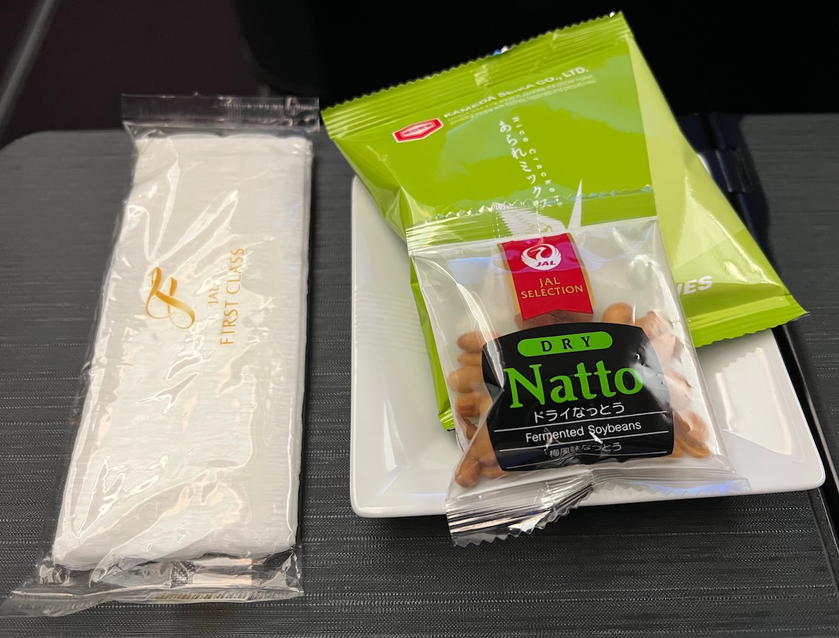
When I finished that round of snacks (due to not having really eaten the meal), Kikuchi proactively brought me another round of snacks, a bit different this time around.
The crew had to prepare the cabin for landing early due to turbulence. I had just finished my glass of sake, though a moment before having to sit down, Kikuchi stopped by my seat to apologize for having to suspend the service, and handed me a plastic cup of sake, saying “maybe you can enjoy this until we land.”
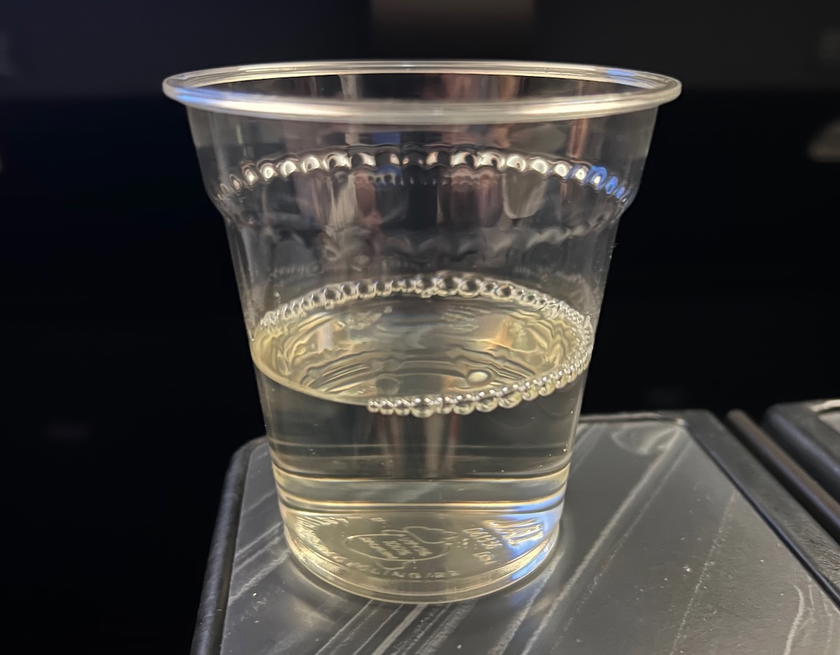
Honestly, the anticipatory and attentive level of service was such a contrast to my two Korean Air flights I had just gotten off of (on the 787-10 and A321neo), which probably made me enjoy the whole Japan Airlines experience even more.
Bottom line
My Japan Airlines domestic A350-900 first class flight was exceptional. This product is so reasonably priced (under $200 one-way, or you can upgrade for a little over $50), and you get a super cozy and unique cabin, incredibly attentive service, solid food and drinks, free Wi-Fi, an A350 with a tail camera, lounge access, etc.
Every time I go to Japan — whether to actually visit the country, or just passing through on a Japanese airline — I fall more in love. Japan Airlines is a stellar carrier, and is quickly becoming one of my favorite in the world.
That actually brings me to another topic that I should probably address in a separate post — I’ve long been indifferent as to whether All Nippon Airways or Japan Airlines were better, and I think I’m starting to develop a preference.
Anyone else enjoy Japan Airlines’ domestic first class as much as I do?


Membership is free and takes no more information than commenting as a guest. Earn status points for good contributions, and see fewer ads as your status grows.