

Delta’s suite of co-branded Amex cards — and for that matter, the SkyMiles program at large — can be rather polarizing. The cards are incredibly popular with consumers. That’s because people mostly enjoy flying Delta, even if the SkyMiles program doesn’t offer much in the way of outsized value for your miles. For some people, Delta’s Amex cards are super worthwhile, while for others, there are much better options.
The “worth it” question on Delta credit cards is more complicated than for most card families, because there are seven of them — four personal (Blue, Gold, Platinum, Reserve) and three business (Gold, Platinum, Reserve) — and the right answer depends almost entirely on how often you fly Delta and which perks you’d actually use.
For a comprehensive look at the full lineup with details on every card, see the best credit cards for Delta SkyMiles guide. This post is the practical complement to that piece: rather than walking through every card, it’s the decision framework I’d use to choose one — or to conclude that no Delta card is the right call for you.
I don’t want to bury the lede, so let me say this upfront — while I fly Delta quite a bit (and typically enjoy my experiences), I don’t currently have a Delta credit card, and I’m also not a Delta SkyMiles loyalist. That comes down to a few factors:
- For SkyTeam loyalty and crediting flights, I have Air France-KLM Flying Blue Platinum status, as that’s my preferred SkyTeam Elite Plus status
- I live in Miami, which is an American hub, so for me the convenience of that is worth something, compared to having to connect on Delta to most destinations
- I just don’t generally value airline elite status much, given how hard upgrades are to come by nowadays
So this is an area where we’re all different, and everyone should decide for themselves based on where they live, their travel patterns, their approach to credit card spending, and more.
Link: Learn more about the Delta Reserve, Delta Platinum, Delta Gold, or Delta Blue American Express cards
Should you even get a Delta credit card?
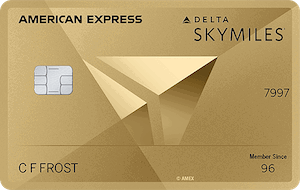
There are four personal Delta credit cards to choose from — the Delta SkyMiles® Reserve American Express Card, Delta SkyMiles® Platinum American Express Card, Delta SkyMiles Gold American Express Card, and Delta SkyMiles® Blue American Express Card.
Before getting into which Delta card is right, here’s the question worth asking first: does it make sense to get any Delta card at all? The welcome offers on these cards can be great, so given the high floor value of Delta’s miles, there’s definitely merit to picking up the cards for the bonus miles they’re offering.
However, in the long run, for many people the honest answer is no, Delta credit cards may not be worth it — and the best alternative may be to earn Amex Membership Rewards points through a more rewarding card and transfer them to Delta when you actually need SkyMiles (if you want to use the points in that way at all — personally I’d rather use those points in other ways, but my point is simply to say that SkyMiles can be accrued more efficiently, if earning elite status isn’t a consideration).
Amex Membership Rewards points transfer to Delta SkyMiles at a 1:1 ratio. That means every Membership Rewards point earned on a card like the Amex Gold or Amex Platinum can become a mile in the SkyMiles currency, if desired, and those cards earn at materially higher rates on everyday spending than any Delta co-branded card does outside of Delta purchases. For someone who flies Delta occasionally but doesn’t need lounge access, a free checked bag, or Medallion status, an Amex Membership Rewards card is almost always the better choice.
A Delta co-branded card is the right call in a narrower set of situations:
- You fly Delta frequently enough to value perks like a free checked bag, priority boarding, and/or lounge access on a regular basis
- You’re actively chasing Delta Medallion elite status, or trying to maintain it through credit card spending
- You’d realistically use the annual companion certificate (the Platinum and Reserve both include one)
- You want to earn the welcome offer, with the understanding that the bonus is a one-time event (more on the once-in-a-lifetime rule below)
If none of those apply to you, the rest of this post probably isn’t relevant — pick up something like the Amex Gold instead, and transfer to Delta when you need to. If at least one applies, read on.

Three things to know before you choose a Delta card
There are three structural concepts to understand about the Delta Amex lineup, before getting into detailed individual card benefits.
MQDs are the key variable for Delta status, and the cards earn them differently
Delta SkyMiles Medallion elite status is earned exclusively based on how many Medallion Qualifying Dollars (MQDs) you accumulate. The Delta Reserve Card earns one MQD per $10 spent, the Delta Platinum Card earns one MQD per $20 spent, and the Delta Gold Card earns no MQDs for spending at all. Furthermore, the Platinum and Reserve products offer a 2,500 MQD annual head start toward status, just for holding the cards.
For context, for 2026, the SkyMiles Medallion elite tier requirements are as follows:
- Delta Silver Medallion elite status requires 5,000 MQDs
- Delta Gold Medallion elite status requires 10,000 MQDs
- Delta Platinum Medallion elite status requires 15,000 MQDs
- Delta Diamond Medallion elite status requires 28,000 MQDs
If status earning through credit card spending is part of your strategy, the Reserve is the most efficient tool by a wide margin — twice the MQD earn rate of the Platinum. If status isn’t a goal, MQDs are a non-factor, and the Gold becomes a legitimate option.
The companion certificate flexibility matters more than the headline suggests
The Delta Platinum Card and Delta Reserve Card both include an annual companion certificate, but they’re not equivalent. The Platinum certificate is valid for main cabin only. The Reserve certificate is valid for main cabin all the way through first class, which can easily be worth $1,000+ if you actually book premium cabin travel with a companion.
For someone who regularly flies in first class domestically, the Reserve certificate is materially more valuable than the Platinum version, and that delta is worth factoring into the annual fee comparison between the two cards.
The once-in-a-lifetime & family rules are important to understand
Big picture, Amex enforces a once-in-a-lifetime rule on Delta co-branded card welcome offers, meaning you can only receive the bonus miles on each card product once. But there’s also a family card rule worth understanding.
For the personal Delta Amex cards, the order in which you pick up these cards matters. Long story short, if you want to pick up multiple of these cards over time, you’ll want to apply for less premium cards first, and then more premium cards. Specifically:
- You’re eligible for Delta Reserve Card welcome offer as long as you haven’t had that exact card before
- You’re eligible for the Delta Platinum Card welcome offer as long as you haven’t had that exact card before, or the Delta Reserve
- You’re eligible for the Delta Gold Card welcome offer as long as you haven’t had that exact card before, or the Delta Reserve or Delta Platinum
- You’re eligible for the Delta Blue Card welcome offer as long as you haven’t had that exact card before, or the Delta Reserve, Delta Platinum, or Delta Gold Card
So as you can see, sequencing matters a lot here, more so than with other cards. Note that even if you’re not eligible for the welcome offer, you can still open the card… you just won’t receive the bonus miles.

Which Delta card is right for you?
How should you decide which Delta card to apply for? Here’s the decision framework I’d use, organized by reader profile rather than by card. Also keep in mind that these cards currently have great welcome offers.
If you fly Delta frequently and are chasing Medallion status: Delta Reserve
The Delta SkyMiles® Reserve American Express Card has a annual fee (Rates & Fees), and it’s the right card for the frequent Delta flyer who wants Sky Club access and is serious about earning Medallion elite status through credit card spending.
The defining benefits of the Delta Reserve Card include the following:
- 15 Delta Sky Club visits per Medallion year for the primary cardmember, with unlimited access unlocking after $75,000 in calendar year spending
- Complimentary Centurion Lounge access when traveling on Delta the same day
- The companion certificate valid for main cabin through first class — the most flexible certificate in the portfolio
- One MQD per $10 spent toward Medallion status — twice the rate of the Platinum, plus the 2,500 MQD head start
- Upgrade priority over same-status members without the card, plus complimentary upgrade eligibility for non-elite cardmembers
- Up to $200 in annual Delta Stays credits, up to $240 in annual Resy credits, up to $120 in annual rideshare credits, and a Global Entry or TSA PreCheck credit (Enrollment is required for select benefits)
The Reserve Card makes sense if you’re already a Delta loyalist and would use the Sky Club access regularly, the premium cabin companion certificate would replace travel you’d otherwise pay cash for, and you’re actively pursuing or maintaining Medallion status.
For the casual Delta flyer, the Platinum Card or Gold Card is typically the better call — the Reserve Card’s value is concentrated in its lounge access and status earning, and those benefits only pay back at higher Delta engagement.
Learn more: Delta SkyMiles® Reserve American Express Card
If you fly Delta regularly and travel with a companion: Delta Platinum
The Delta SkyMiles® Platinum American Express Card has a annual fee (Rates & Fees), and it strikes the best balance of perks, status earning, and annual fee, in the personal Delta lineup. The companion certificate alone can cover the fee for most people who fly with a travel companion even once a year.
Here’s what makes the Delta Platinum Card the right call for many people:
- Annual main cabin companion certificate valid for domestic roundtrip travel and to select Caribbean and Central America destinations
- 3x SkyMiles on Delta and hotels, and 2x miles at restaurants and U.S. supermarkets — the most robust bonus category structure of any personal Delta card
- One MQD per $20 spent toward Medallion status, plus the 2,500 MQD head start
- Two free checked bags for the primary cardmember and up to eight companions, priority boarding, and 20% back on Delta inflight purchases
- $150 annual Delta Stays credit, up to $120 in annual Resy credits, and up to $120 in annual rideshare credits (Enrollment is required for select benefits)
The Platinum Card is the right card if you fly Delta regularly but not enough to justify the Reserve Card’s annual fee, you’d use the companion certificate (which alone often covers the fee), and you’re not specifically pursuing top-tier Medallion or lounge access. For most readers in the “I fly Delta meaningfully but not constantly” middle, this is the answer.
Learn more: Delta SkyMiles® Platinum American Express Card
If you fly Delta occasionally and want basic perks: Delta Gold
The Delta SkyMiles Gold American Express Card has a (Rates & Fees), and it’s the right starting point for the occasional Delta flyer who wants basic travel perks without a significant annual fee commitment.
Here’s what the Delta Gold Card offers:
- 2x SkyMiles on Delta purchases, at restaurants, and at U.S. supermarkets — 1x miles on all other eligible purchases
- A $200 Delta eCredit when you spend $10,000 on the card in a calendar year (effectively a 2% return on that spending, which is worth factoring into the math)
- Two free checked bags for the primary cardmember and up to eight companions, priority boarding, and 20% back on Delta inflight purchases
- Up to $120 in annual rideshare credits (Enrollment is required for select benefits)
- $100 annual Delta Stays credit
- There’s no MQD earning and no companion certificate at this tier
The Gold Card is the right answer if you fly Delta a few times a year, the free checked bag and priority boarding would actually save you money and add value, and you don’t need a companion certificate or status. The lower welcome offer (relative to the Platinum Card and Reserve Card) is the trade-off, but the lower spending requirement and lower annual fee make this the lowest-commitment entry point in the personal Delta lineup. If you find yourself flying Delta more after a year, the Platinum Card is the natural upgrade path.
Learn more: Delta SkyMiles Gold American Express Card
If you want a no annual fee Delta card: Delta Blue (with a caveat)
The Delta SkyMiles® Blue American Express Card is Delta’s no annual fee option (Rates & Fees), with a modest welcome offer of 10,000 SkyMiles after spending $1,000 in six months. It earns 2x miles on Delta purchases and dining, and the card comes with no foreign transaction fees (Rates & Fees) — which is a nice perk that most no annual fee Amex cards still lack.
That said, the Blue Card is hard to recommend as a first choice. Here’s the way I view it: if you’re set on holding a Delta card and refuse to pay an annual fee under any circumstances, the Blue Card is the only Delta option that fits — but you’d almost certainly do better to apply for the Gold Card, take the larger welcome offer and the first-year perks, and then downgrade to the Blue Card after year one if the annual fee doesn’t justify itself. You get a much better welcome offer, you get the better perks for a year, and you end up with the same no annual fee Blue Card account if you choose to downgrade.
Learn more: Delta SkyMiles® Blue American Express Card

The combo that wins for many: Amex MR + Delta co-brand
Here’s the framing the Delta card marketing won’t surface: for the typical Delta flyer who actually wants to maximize SkyMiles, the right answer isn’t a Delta card alone — it’s an Amex Membership Rewards card for everyday spending paired with a Delta co-branded card for the perks.
The math is straightforward. For example, the American Express Platinum Card® earns 5x Membership Rewards points on flights booked directly with airlines or through Amex Travel (up to $500,000 in flight purchases per calendar year, then 1x points). Transferred to Delta at 1:1, that’s effectively 5x SkyMiles on airfare — better than the 3x you’d earn directly on the Delta Platinum or Delta Reserve. The Amex Platinum earns more per dollar on the same purchase.
Similarly, the American Express® Gold Card earns 4x points at restaurants and U.S. supermarkets. Transferred to Delta at a 1:1 ratio, that’s effectively 4x SkyMiles in categories where the Delta Platinum earns only 2x miles and the Delta Gold also earns only 2x miles. The Amex Gold beats the Delta cards on dining and grocery earning by 2x.
If you’re looking at business cards, The Blue Business® Plus Credit Card from American Express earns 2x points on the first $50,000 spent annually, and then 1x points, making it my favorite Amex card for everyday, non-bonused spending.
So why hold a Delta co-branded card at all? For the perks that don’t come with Amex Membership Rewards cards: free checked bags, companion certificates, priority boarding, Sky Club access (on the Delta Reserve, though the Amex Platinum also offers some lounge perks), and MQD earning toward Medallion status. Those aren’t generally included with Membership Rewards points transfers, and they’re the genuine reason to hold a Delta card.
The combo most serious Delta flyers should actually hold:
- A combination of the Amex Platinum, Amex Gold, and/or Amex Blue Business Plus for everyday spending (depending on whether airfare or dining/groceries is the bigger category for you)
- A Delta Reserve or Delta Platinum for the perks you’d actually use — free checked bags, companion certificates, MQDs, and lounge access if applicable
When no Delta card makes sense
In the interest of being thorough, there are real situations where the right answer is to skip Delta cards entirely:
- You don’t live in or fly through a Delta hub. Delta’s network is strongest at ATL, DTW, MSP, SLC, SEA, BOS, LGA, JFK, and LAX. If your home airport is primarily served by American, United, or Southwest, the perks on a Delta card just won’t get exercised enough to justify the fee.
- You don’t care about Medallion status. Without status as a goal, the MQD earning that makes the Reserve and Platinum distinctive becomes irrelevant — and an Amex MR card earns more SkyMiles per dollar through transfers anyway.
- You wouldn’t realistically use the companion certificate. The certificate is the perk that most often single-handedly justifies the annual fee on the Platinum or Reserve. If you don’t travel with a companion at least once a year on a route the certificate covers, the math gets considerably harder.
- You don’t fly enough to value lounge access. Sky Club access is the Reserve’s defining benefit. If you fly Delta a few times a year, the access doesn’t justify the gap between the Reserve and Platinum fees.
Personally, I live in Miami, which is a major American hub. American’s network out of MIA works for most of my travel out of my home airport, which is why I don’t bother with being loyal to Delta. I do fly Delta with some frequency, though, and in those situations, I just book the ticket in the cabin that I want to fly, if the value is there.
For that matter, I also don’t value Delta SkyMiles that much on the redemption front, at least compared to the other currencies I can earn. For example, I’d much rather earn American AAdvantage miles than Delta SkyMiles, purely in terms of the way that those currencies can be redeemed.
That being said, I must say, I am often tempted to apply for a Delta credit card. Specifically, I do think I could make the Delta Reserve Card work thanks to the companion certificate alone, given that I book Delta first class tickets with some frequency.

Bottom line
The “worth it” question on Delta cards is really four questions, depending on who’s asking:
- For the frequent Delta flyer chasing status: the Delta Reserve Card is the obvious pick — lounge access, a premium cabin companion certificate, and the fastest MQD earning rate in the portfolio
- For the regular Delta flyer with a travel companion: the Delta Platinum Card strikes the best balance — the companion certificate alone usually covers the fee
- For the occasional Delta flyer: the Delta Gold Card is the lowest-commitment entry point — apply, take the welcome offer, decide after year one whether to keep, upgrade, or downgrade
- For the no annual fee purist: don’t waste your time on the Delta Blue Card welcome offer — apply for the Delta Gold Card, take the larger offer, and downgrade to the Delta Blue Card after a year if you don’t find the fee worth it
And for many readers — possibly most — the answer is that an Amex Membership Rewards card paired strategically with one of the Delta cards above (or no Delta card at all) is the more efficient path to building a SkyMiles balance (assuming you want to earn SkyMiles, which again, I don’t personally think is the most valuable currency to earn).
The Delta cards are about the perks, while the Amex Membership Rewards cards are about the points. But even in that situation, I wouldn’t recommend moving Amex points to Delta SkyMiles, as there are so many other great programs for redeeming miles.
Personally, I don’t hold any Delta cards — Miami is American territory, and I just see fairly limited upside with the SkyMiles program, compared to my other options. However, if I lived in Atlanta or Detroit or Minneapolis, the Reserve Card would almost certainly be in my wallet.
For the full comparison of every Delta card including the business cards, see the best credit cards for Delta SkyMiles guide.


Which Delta card do you carry, if any, and how has it actually performed for your travel patterns?
The following links will direct you to the rates and fees for mentioned American Express Cards. These include: Delta SkyMiles® Blue American Express Card (Rates & Fees), Delta SkyMiles® Gold American Express Card (Rates & Fees), Delta SkyMiles® Reserve American Express Card (Rates & Fees), and Delta SkyMiles® Platinum American Express Card (Rates & Fees).




Where is Tim Dunn's AI advise on this topic? He must have burned through his AI tokens yesterday dealing with the other depressing Delta news.
Perhaps it's me, but Delta miles are by far the hardest miles I have collected to use. It is so hard to find even halfway decent deals. I can book flights with flying blue miles or others far easier and cheaper than with Delta. Once I get ride of them I won't be trying to get more.
Delta has so badly screwed up my new Amex card. There was not supposed to be a fee for one year. They charged me a fee. I have been unable to get it removed for three months. They charged me interest even though I was not carrying a balance. I have no idea if or when these issues will be resolved. I have been an Amex card member since 1978 and have had a Platinum...
Delta has so badly screwed up my new Amex card. There was not supposed to be a fee for one year. They charged me a fee. I have been unable to get it removed for three months. They charged me interest even though I was not carrying a balance. I have no idea if or when these issues will be resolved. I have been an Amex card member since 1978 and have had a Platinum card for at least 20 years. I will be cancelling the Delta card as soon as they fix their mistakes. What a botch!!!.
The family rules run in parallel for personal and business, right? I have Gold and Plat business (opened in that order), and Gold personal. So I'd still be eligible for Plat personal right?
Yes, for a 2-Diamond household, you should have 8 of these -- 2 each of Reserve, Reserve Business, Platinum and Platinum Business. Worth the $2,000 per year, although the annual fees have risen enough to make this questionable.
Gene, so, you literally start each year as Gold Medallion, right? ($2500 MQD “Head-Start” 4x)
No, we start every year as Platinums for Life. Diamond within a few years. Once lifetime Diamond is attained, I expect to continue holding 2 Rederve cards.
Lucky I'm surprised you haven't picked up the AMEX Delta Gold for the 15%off in order to review D1 product and routes once in a while.
$2500 MQD Head-start on Platinum, Reserve is nice; if you have all four (personal, business), you earn automatic Gold Medallion, no?
Companion Certificates, though expanded through N. America, are sorta hard to come by for First (with Reserve), and often odd times, routes. Can still be worthwhile.
SkyPesos (devaluations) are the real shame. Hard to get J to Europe for under 400K/way. Sure, the 15% Reserve discount helps a little.
The rideshare, Resy credits...
$2500 MQD Head-start on Platinum, Reserve is nice; if you have all four (personal, business), you earn automatic Gold Medallion, no?
Companion Certificates, though expanded through N. America, are sorta hard to come by for First (with Reserve), and often odd times, routes. Can still be worthwhile.
SkyPesos (devaluations) are the real shame. Hard to get J to Europe for under 400K/way. Sure, the 15% Reserve discount helps a little.
The rideshare, Resy credits are not ‘fun,’ because you have to use ‘em or lose ‘em. I rethink renewing each year, especially ever since they got rid of the MQD waiver ($25K spend used to be a fast-track to Platinum if you had enough MQMs, though that’s all gone.)
Everyone is waiting for you to end your life.
Dear John: Keep Yourself Safe!
Wow, you are an asshole!
Just to be clear, the a*hole comment was directed at John. You should not make such comments as the one you made towards 1990 towards others. Period.
@Gene, agreed. No matter how big a pest, attention whore, or clownboat someone (or some bot) is, that kind of comment isn't necessary. Ignore it and move on.
Now, on the topic: I'm a DL Diamond (2024 MQM conversion) through this year, holding both the Delta Amex Reserve and Delta Amex Platinum cards. Since 2025 I've mostly flown UA and Star, with the occasional SkyTeam AF/KL trip. I'm keeping both cards to coast to SkyMiles...
@Gene, agreed. No matter how big a pest, attention whore, or clownboat someone (or some bot) is, that kind of comment isn't necessary. Ignore it and move on.
Now, on the topic: I'm a DL Diamond (2024 MQM conversion) through this year, holding both the Delta Amex Reserve and Delta Amex Platinum cards. Since 2025 I've mostly flown UA and Star, with the occasional SkyTeam AF/KL trip. I'm keeping both cards to coast to SkyMiles Silver without flying in 2027, then I'll decide on downgrading at the end of 2027. Honestly, I haven't missed the "Delta experience" or the overcrowded Sky Clubs. I can usually get a cheaper paid domestic FC fare on UA for my travel needs.
1969, I, too, was a Delta Diamond for a year via the 2024 MQM conversion. Was nice while it lasted! Hope you got to use your GUCs for something special! (Burned mine on D1 LAX-SYD.) Just a lowly Platinum these days, and probably won't be more than Gold next year. All good. Make the most of it while you can!
I don't take it personally, Gene. You and anyone is welcome to insult me anytime (I enjoy the engagement). However, I would never advise doing as John did above to anyone else though. Deplorable.
None of you are million milers?
What a pity in disguise.
My rollover MQM got me Diamond for few more years. But my GUC are almost useless now after GUC not clear even on paid PS because D1 is full due to incompetent DL delays cancelation and rebooking others into my flight.
Regardless of what Timmy believes. DL reliability is crashing down in the last 2 years.
The solution is simple .. no wait lists, ever.
I’m actually quite close to my first million. Sorry to hear about GUCs not clearing. (I know I’d be pissed if rebooked last-minute due to Delta, losing D1. Yikes!) I have noticed a more difficult time finding availability even for RUCs on premium routes like JFK-SFO/LAX this year. *sigh*
Ben, I think this article should mention the Delta TakeOff 15 (15% discount redeeming skymiles). If someone redeems ~100k skymiles per year then the ~15k miles saved from the TakeOff 15 should cover the annual fee of the gold card.
I have had all three cards and now have the Gold which I think offers the best value. The $100 hotel credit is super easy to use, no minimum nights, no being part of any "hotel collection" required, no silly requirement of $50 credit in the first Jan-June $50 July-Dec; simply the whole credit at any hotel booked on Delta. The $120 rideshare credit is as good as cash. I use it for UberEats. Order...
I have had all three cards and now have the Gold which I think offers the best value. The $100 hotel credit is super easy to use, no minimum nights, no being part of any "hotel collection" required, no silly requirement of $50 credit in the first Jan-June $50 July-Dec; simply the whole credit at any hotel booked on Delta. The $120 rideshare credit is as good as cash. I use it for UberEats. Order on the app, charge to the card, and pick up my steak bowl at the Chipotle near my apartment. Right there you got your annual fee covered and then some. Then the 15% off delta awards which is just icing on the cake.
Are you sure you can use the rideshare credits for Uber Eats? For my card, it only works when I take Uber or Lyft rides.
I was wondering that too. IIRC, Dans Deals said the rideshare credit could be successfully hacked for Uber Eats on United, but not on Delta.