
I’m not meaning to be controversial here, but I’m genuinely curious if there’s something I’m missing…
Airlines still collect contact tracing for US-bound flights
In 2021, the Centers for Disease Control and Prevention (CDC) introduced a requirement for international travelers on flights to the United States to provide contact tracing information prior to travel.

Specifically, within 72 hours of departure, and prior to being able to check-in, passengers have to provide their contact information for where they’ll be in the United States upon arrival, including an address, phone number, etc.
Airlines need to keep this information on file for 30 days, and transmit the information to the CDC upon request. As it’s described, “the purpose of collecting this information is to identify and locate passengers who may have been exposed to a person with a communicable disease for public health follow-up.”
At the start of the pandemic, I could see the value in this, in theory. I mean, the US was never exactly great about contact tracing (to put it mildly), but coronavirus was treated as a public health emergency, so it wasn’t unreasonable to think that information could be helpful.
However, it has now been well over four years since the pandemic started, and coronavirus is no longer being treated as an emergency in the country. I mean, federal funding for coronavirus vaccines and tests has largely ended. Yet every single time someone flies to the United States, they need to provide this contact tracing information.
I don’t want to suggest that filling out this contact tracing thing is the most complicated thing in the world — it’s not, and it takes maybe a minute. But when you think of how many tens of millions of travelers enter the United States by air every year, that translates to a lot of wasted time.
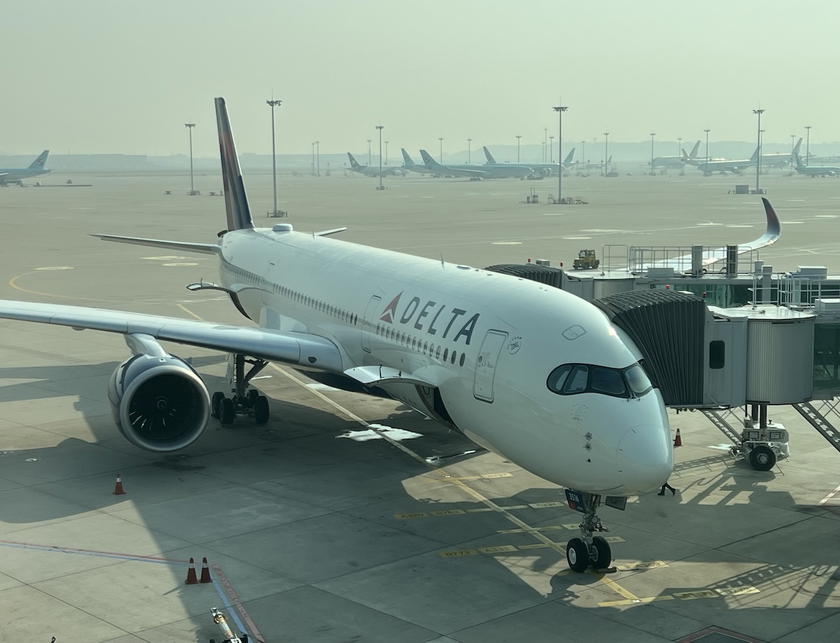
Is this policy intentionally still in place?
To me this raises the question of whether the CDC has this policy in place because it actively thinks there’s value in this, or just because someone forgot to reverse this policy?
- Is the logic that in the event that another major pandemic emerges, at least the CDC will already be requesting information?
- The US did a lousy job doing contact tracing the first time around, so why would it be different the next time around?
- The countries that actually did contact tracing well during the pandemic don’t have such contact tracing requirements anymore, so does the CDC think those countries are doing things wrong and the US is doing things right?
Is there something I’m missing? Let me emphasize that I’m asking this question as someone who still often masks while flying, and who has his fair share of “microchips.” 😉 So I’m not coming at this with any anti-CDC bias, but rather I’m just coming at this in terms of what I view as common sense.
If I had to guess, on some level I think this is one of those policies that remains in please due to how risk averse people are, and the “better safe than sorry” philosophy. No one is ever going to get yelled at because they kept such a requirement in place, while you don’t want to be the person who eliminates this, only to think it’s valuable information to have in the future.

Bottom line
The CDC continues to require that airlines request contact tracing information from US-bound air travelers within 72 hours of travel. I just can’t make sense of this anymore. If I’m missing something, I’d love to be educated. If I’m not missing anything, then view this as a gentle nudge for the CDC to maybe reconsider this policy.
What’s your take on the CDC’s contact tracing requirement for international flights? Anything I’m missing?


Membership is free and takes no more information than commenting as a guest. Earn status points for good contributions, and see fewer ads as your status grows.