
In 2021, we saw two new low cost carriers launch service in the United States — I’m talking about Breeze Airways and Avelo Airlines. Breeze Airways was founded by serial airline entrepreneur David Neeleman (the same guy behind JetBlue), while Avelo Airlines was founded by Andrew Levy, a former Allegiant and United executive.
While neither airline is publicly traded, even privately owned airlines have to submit a Form 41 Financial Schedule with the US Department of Transportation (DOT), which has all kinds of fascinating details. Among those details are operating revenue and expenses, so you can get a sense of how an airline is doing.
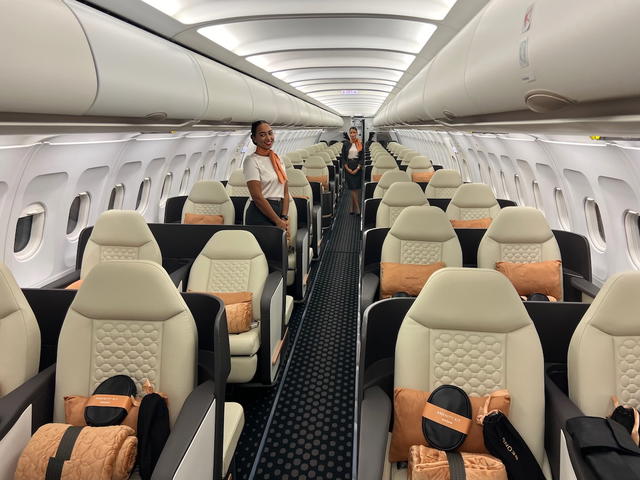
I recently wrote about how Breeze has been losing money since it launched. In 2022 and 2023, the airline lost nearly $300 million, on just over $500 million in revenue. Nonetheless, executives at the airline insist that the company will be profitable in 2024.
I thought it would be worth taking an updated look at Avelo’s financial performance, as things are looking much better there.
Avelo Airlines is starting to break even
Unlike Breeze Airways, Avelo Airlines is actually more or less breaking even at this point, and the outlook for the company looks positive. The website enilria.com has a detailed look at Avelo’s financials over the past seven reported quarters, from Q2 2022 through Q4 2023:
| Quarter | Revenue | Expenses | Profit (Loss) | Margin |
| Q2 2022 | $51,432,000 | $73,352,310 | ($24,920,310) | -48% |
| Q3 2022 | $87,132,470 | $110,231,540 | ($23,099,070) | -27% |
| Q4 2022 | $99,924,640 | $110,231,500 | ($10,306,860) | -10% |
| Q1 2023 | $58,486,710 | $68,251,970 | ($9,765,260) | -17% |
| Q2 2023 | $64,197,940 | $66,275,380 | ($2,077,440) | -3% |
| Q3 2023 | $63,152,630 | $72,788,290 | ($9,635,660) | -15% |
| Q4 2023 | $80,458,900 | $80,492,640 | ($33,740) | 0% |
Admittedly it takes some time for an airline to establish itself, and it’s expected that an airline will lose money for some amount of time after launch. While I wouldn’t say Avelo is a profitable, smashing success just yet, there’s a night and day difference between the financials at Avelo and Breeze, at least based on what we know.
Frankly if it weren’t for the big increase in labor costs between the time the airline launched and now, Avelo would probably be turning significant profits.
Breeze has lost nearly $300 million on over $500 million in revenue, while Avelo has lost around $80 million on over $500 million in revenue. That’s a major difference, and more importantly, Avelo is now at the point where it’s breaking even, outperforming many of the established low cost carriers in the United States.
Honestly, it’s not a great time to be an low cost carrier, as we’ve heard from executives at airlines like Frontier, Spirit, etc. The challenge for low cost carriers is that they don’t have the same loyalty program revenue potential as the major global airlines, and they also can’t capitalize on the huge demand for long haul travel, which is where we’ve seen the most increase in demand.
As a result, I’m seriously impressed by Avelo’s results. I mean, I still don’t think that starting a low cost carrier is a great use of money, but if you’re going to do it, Avelo seems like the best case scenario.
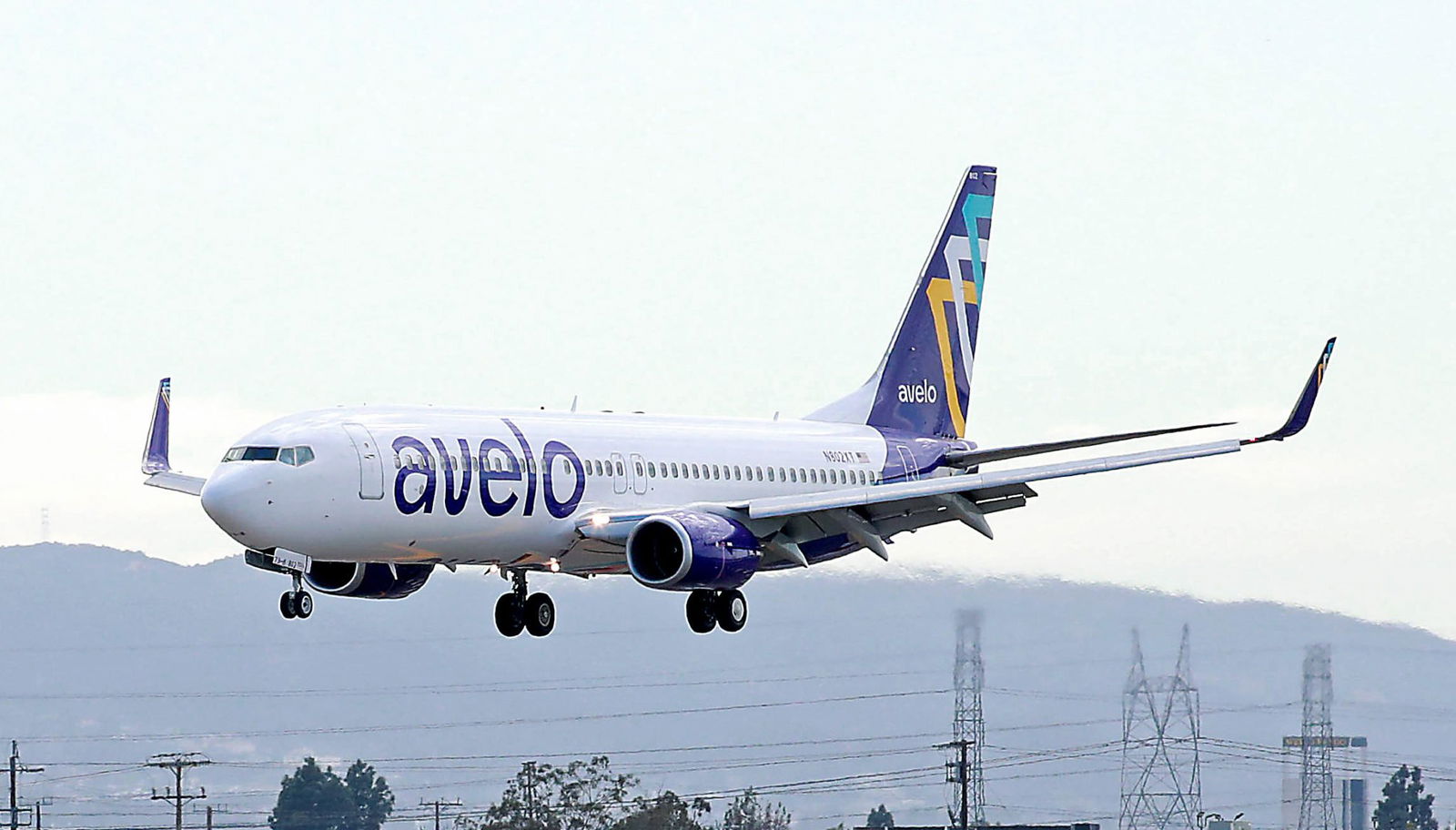
Why is Avelo doing so much better than Breeze?
What is Avelo Airlines doing right that Breeze isn’t? Well, Avelo’s founder was an executive at Allegiant, and I think he has done a much better job adopting that business model than Breeze has. Allegiant has been the most consistently profitable low cost carrier, and the airline really does sort of operate in its own world, with no direct competition.
With that in mind, I think there are a couple of things that are contributing to Avelo doing much better than Breeze.
For one, Breeze picked up new, fuel efficient Airbus A220s. Meanwhile Avelo acquired used Boeing 737s. While the A220 is a lovely plane to fly as a passenger, I imagine Avelo acquired planes for much less, and therefore has a huge cost advantage. Furthermore, the 737 has a significantly higher capacity than the A220, so also has a lot more revenue potential.
I think the other thing that Avelo has done well is carving out its own niche. Breeze has primarily tried to operate in underserved markets at major airports, but there’s still quite a bit of competition there. Furthermore, it’s easy for competing airlines to respond, by matching the service. Meanwhile Avelo has done a better job of serving markets other airlines didn’t bother with, and then adding lots of service there.
For example, the carrier has become a known airline in Burbank, and has even brought commercial service back to New Haven. This is very similar to the strategy that you’ll see at Allegiant (okay, Allegiant takes it a step further, with routes like Flint to Punta Gorda).
It seems like Avelo should be able to turn a profit in 2024, assuming nothing catastrophic happens. That’s a major accomplishment, when you consider the state of other primarily domestic US airlines.
The carrier’s route network is also nicely diversified in terms of seasonality. The airline has traffic in California, the Northeast, and Florida, which have you covered for most of the year.
Bottom line
Avelo Airlines launched service in the spring of 2021, around the same time as Breeze Airways. While Breeze has had a nearly $300 million operating loss on over $500 million of revenue, Avelo has had a roughly $80 million operating loss on over $500 million of revenue. Most importantly, Avelo basically broke even in Q4 2023, so will hopefully turn a profit in 2024.
As you can tell, Avelo is doing much better than Breeze. Frankly, given the huge increase in labor costs since launch, plus the way that budget leisure demand has shifted, Avelo is almost doing better than you’d expect. I’m curious to see how these two airlines continue to evolve…
What do you make of Avelo’s financials, and the carrier’s prospects of becoming meaningfully profitable? Why do you think Avelo is doing so much better than Breeze?


Membership is free and takes no more information than commenting as a guest. Earn status points for good contributions, and see fewer ads as your status grows.