Uh Oh: Emirates Cutting Pilot Staffing On Some Longhaul Flights Due To Pilot Shortage

Emirates has a pilot shortage at the moment, which is causing the airline to park planes at Dubai World Central and also to cut routes. Emirates pilots are leaving the airline to work at other airlines (especially in China) that offer more attractive compensation packages. There’s a global pilot shortage at the moment, and other airlines offer more pay and allow commuter contracts, while Emirates requires all of their pilots to live in Dubai.

Emirates claims they have quite a few cadet pilots in the pipeline and that this pilot shortage will be solved within a few months, though it sure seems to me like that’s not the case. Unless they change something, they’re going to keep losing pilots. Rather than trying to make things better for pilots, Emirates has just done something that has really ticked off a lot of pilots.
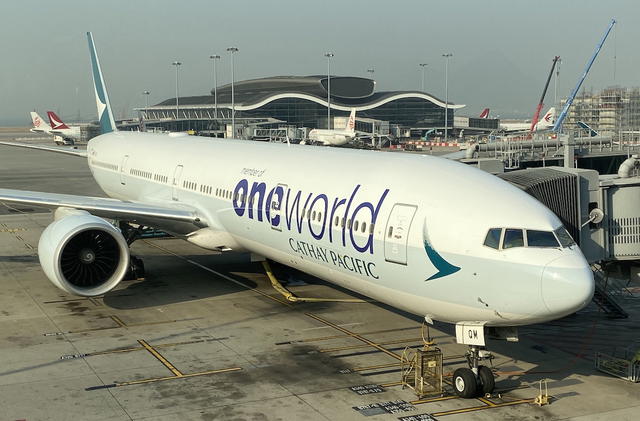
Emirates is reducing staffing (and thereby rest) for pilots on some ultra longhaul flights. As reported by pilots on PPRuNe, as of July 1, 2018, Emirates is reducing the pilot staffing on select ultra longhaul flights from four pilots to three pilots. Specifically, flights between Dubai and Boston, New York, Sydney, Melbourne, Rio de Janeiro, and Sao Paulo, will go from having four pilots to having three pilots.

The exact regulations regarding pilot rest vary by country. For example, at US airlines, flights between 8 and 12 hours require three pilots, while flights of over 12 hours require four pilots. This allows pilots to get rest during the flight, to ensure they’re well rested and alert. Other countries (not the US) allow “controlled rest,” which means that when two people are in the cockpit, one of them is allowed to doze off.

Regulations in the UAE aren’t as strict, so what Emirates is doing doesn’t violate government regulations, but when the government also owns the airline, that’s not terribly surprising.

Some pilots are in disbelief at this move. Emirates pilots already consistently report fatigue issues, given how many hours they fly, their short layovers, and the fact that they often have flights departing in the middle of the night. For example, Dubai to New York is blocked at 14 hours, so pilots could have to work that flight in the middle of the night, then have only a 24 hour layover in New York (where they’re spending a lot of time in traffic), and then have to fly back, all with reduced rest nowadays. Previously each pilot may have gotten six hours of rest on the flight, while that’s now reduced to four hours (or less).

I don’t want to say that I find this to be alarming, though I do generally find this trend at Emirates to be concerning. An airline’s primary responsibility is to transport passengers safely, and it sure doesn’t seem to me like Emirates is adopting “best practices” here. Airlines should do everything they can to be sure their pilots are experienced and well rested. Not only will their pilots be even more fatigued, but the general trend of putting brand new cadets in the cockpit of widebody jets while more senior pilots leave is problematic.

It’s time Emirates either improve pilot pay or conditions (like allowing pilots to be based in London or New York, for example, where they have several daily flights), or else this problem will only get worse.

Are you concerned about Emirates reducing pilot staffing on ultra longhaul flights?

Conversations (63)
The comments on this page have not been provided, reviewed, approved or otherwise endorsed by any advertiser, and it is not an advertiser's responsibility to ensure posts and/or questions are answered.
Comment as a member

Membership is free and takes no more information than commenting as a guest. Earn status points for good contributions, and see fewer ads as your status grows.

Type your response here.

If you'd like to participate in the discussion, please adhere to our commenting guidelines. Anyone can comment, and your email address will not be published. Register to save your unique username and earn special OMAAT reputation perks!

  1. Loading comments…
Recent Comments
The latest from the OMAAT community.

The comments on this page have not been provided, reviewed, approved or otherwise endorsed by any advertiser, and it is not an advertiser's responsibility to ensure posts and/or questions are answered.

Jones Guest

Do Emirates Airlines Captains have to pay for the aircraft maintenance before flight and then claim it from the company? Someone told me that he does, is that true?

0
‼ 0
Klaus Guest

Someone tell Sean M that he needs to read FAR 117 again. Or more carefully. Or less wishfully. “Subject Matter expert” eh ? Funny. You cannot have a flight time of 17 hours with a 3 man crew. Those numbers in the table are DUTY HOURS. Not flight time. The maximum flight time is 13 hours for a 3 man crew. Read it again ......... 13 Hours. Most respectable airlines further restrict those times, knowing they they are a maximum, not a goal. Emirates new rules are unsafe. They would also be illegal if carried out by a U.S. FAR 121 airline.

0
‼ 0
JM Guest

@sean I haven’t read the plethora of comments, so I do apologize if this is a repeat. I operated under UAE regs for 10 years for said carrier. I’ve done those sectors as 3 Crew and can tell you it is EXTREMELY FATIGUING. The FDLs are a limit, not a target. Add onto that, EK gets dispensation to operate many sectors outside the FDLs and you have a perfect storm of cumulative fatigue. Of course this is amplified by the 95-105 monthly hours these folks are doing now. Did you know duty starts 60 mins before pushback? Duty ends at brakes set? Add on an industry typical 30-45/30 mins and they are really stretching the rubber band - to a breaking point. This is why so many are leaving, they’re choosing health and safety over money. Others just can’t get past the money, prestige or taking the risk of change. I’m glad I left years ago. I’ve never felt better, am healthier and safer than I had ever been there. Good luck to the pilots. It’s a razor edged life they’re leading now.

0
‼ 0
Airbus Flyer Guest

@Sean I think what you have also forget is that even though something maybe "based" on the CAP371, it doesn't mean it is interpret the same way. For example, I believe (someone please correct me if I am wrong), in UAE, the monthly hourly limits are based on time in seat, whereas in almost every other jurisdiction that uses CAP371, uses the whole flight including rest. That in itself makes a huge difference. Hence Emirates Pilot can do 6-7 ULR flight a month, where some other airlines like BA, Virgin in the UK, or CX or HX in Hong Kong (also uses rules based on CAP371), their pilot can only do 3, maybe 4 ULR route a month. So same rules, different interpretation = significant difference in safety protection. This all comes down the the government, and in this particular case, @Lucky is correct, government is the regulator who also own the airline = NOT the best practice and definitely NOT safe.

0
‼ 0
bob Guest

Sean- There you go cherry picking again, right after you said you shouldn't. The JFK -DXB leg could be legally scheduled to operate with 3 pilots by FAR117. However, no airline in their right mind would. Emirates advertises it as a 12:45 or 12:50 gate to gate timed flight (depending on which one you chose. If you were to try to operate this flight as a US carrier with only 3 pilots and you had either a 10 minute or 15 minute increase in taxi out time at JFK (That only happens about every time there is a cloud in the sky East of the Airfield for Atlantic crossings) then you would be illegal to take off!!!!! So, while legal to schedule, no US carrier would ever consider this, even if their pilot contract allowed it. More importantly, however, is that you completely ignore the DXB-JFK direction. Where do you think the pilots to fly back are going to come from??? In the DXB-JFK direction the flight is timed as 14 hours gate to gate. That is absolutely illegal by FAR 117, regardless of all other rest facility, duty start time, etc considerations. As many others have stated, there can be no question that Emirates is sacrificing safety! If you think it is still "safe enough", then I can't help that. For me, however, I am concerned that this erosion of safety poses a real risk for not just Emirates passengers, but also for those of us in the airspace in which they fly and on the ground over which they fly. For that reason, I believe the FAA should step in and do their job in ensuring that our airspace has one level of safety and forbid any carrier (not just Emirates) that doesn't have any science based rest rules that they are required to adhere to. FAR 117 is the most up to date example of those types of rules (much more so than CAP371) but even you admit, that only the Brits have to comply with those. So, if you want to fly in our airspace, you should have to demonstrate that the rules that you are going to comply with for your crews are supported by modern scientific research methods. If you as an air carrier don't want to spend the money to do that research, you can either comply with FAR 117 or not fly in US airspace.

0
‼ 0

Save posts to read later

Saving posts is a member feature. Become an OMAAT member to build a reading list you can come back to from any device.

Become a member
Meet Ben Schlappig, OMAAT Founder
5,883,136 Miles Traveled

43,914,800 Words Written

47,187 Posts Published