
As most of you know, I was pretty excited about the total solar eclipse on August 21st. Sure I liked the science of it and all, but the travel aspects were equally fascinating to me. It’s just so rare for millions of people all across the country to want to cram themselves into a 70-mile wide path, often in the middle of nowhere.
For those that didn’t live in the path of totality — which is to say most of us — it became a multi-variable optimization problem in terms of finding the closest, cheapest, and most weather-advantaged viewing location.
Anyway, after talking about it so much for the past few weeks, I wanted to share the experience with you guys.
Our original eclipse watching plan
Way back in October 2016, about 10 months before the eclipse, my good friend Dawn posted that the Wyoming State Parks had just started selling their eclipse camping packages and that everyone who was interested should jump on this immediately. She had been planning her eclipse watching trip for about the past 10 years — no exaggeration — and was convinced that Glendo State Park was the place to be given that the centerline of totality passed right through the park.
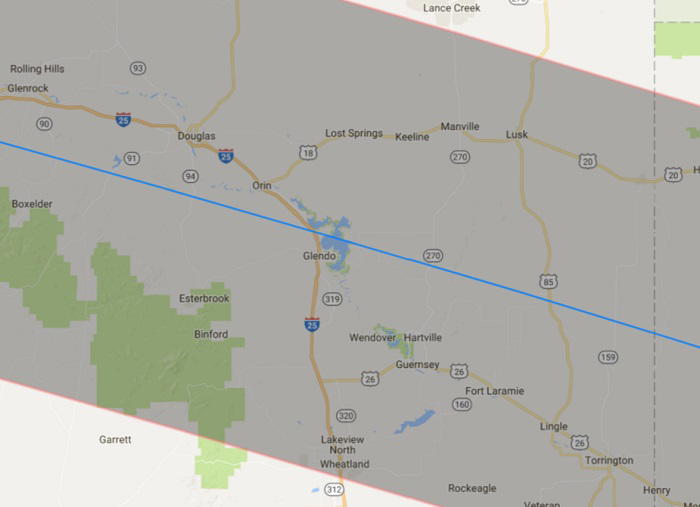
Glendo State Park in Wyoming, on the centerline of the path of totality
My wife and I are well accustomed to the book now, ask questions later mindset, having booked airline mistake fares for over a decade, so we bought a pass.
I thought it was a little expensive at $60 per night with a four night minimum stay required — they usually charge $30 per night, no minimum — but whatever. Little did I know that this would turn out to be a huge bargain.
Our eclipse backup plan
At the same time, I was curious to see what hotels located within the path of totality across Wyoming and Nebraska were charging. A few of them were already sold out , even 10 months in advance, but there were also some really good deals to be had, particularly in Nebraska.
I ended up making refundable reservations at a Wyndham property in Grand Island, Nebraska, for about $150 per night (no minimum). I figured this would give us a backup plan in case the weather forecast for Wyoming didn’t look so great. Grand Island was also on the centerline of the eclipse.
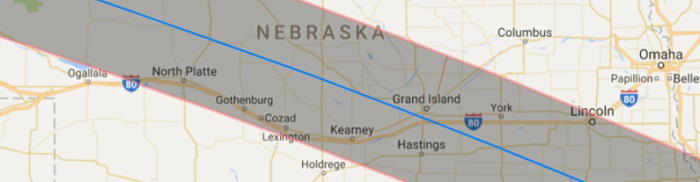
Grand Island, also on the centerline of totality
Diverting to Scottsbluff, Nebraska
We started to get a little nervous about our eclipse plans as the date arrived.
We were really starting to question our sanity at the thought of camping out with three kids six and under for four days. I mean, my wife and I used to head to the backcountry a lot. But in the modern era — that is, since we had kids — I think our record for a single camping excursion is about 18 hours. And more than once, we’ve thrown in the towel and made the drive of shame home at 1 AM.
Add to that the fact that I had been battling a nasty case of bronchitis for a month, and that Wyoming was advising visitors to bring extra gas, toilet paper, and sufficient food to last the weekend, and we decided to explore other options.
The hotel in Grand Island seemed enticing, but it was twice as far away. And the 72-hour weather forecast for the region warned of cloudy conditions. That didn’t seem so good.
I had been watching the hotel market continuously all week, partly out of amusement at what some places were trying to charge — like the Baymont Inn and Suites, Casper, Wyoming, that was bound and determined that they could get $2,000 for a room — and partly because I had a bunch of friends all across the country still looking for options.
Then with about two days to go, I found someone renting their 22-foot camper in Scottsbluff, Nebraska, on Airbnb. Amazingly, they only wanted $100 for the night, or would “park it wherever we wanted for an additional fee.” That seemed like a bargain compared to the profiteering going on across the border in Wyoming where ranchers were demanding $150 to set up a tent in their pasture among the cow patties. Even in Scottsbluff, people were listing rooms at $500 and the option to camp in their backyard — bring your own tent — for $150.
We booked the camper in a heartbeat.
I then posted my Glendo camping permit to Craigslist where I quickly sold it for $500, twice what I paid for it. Maybe I shouldn’t be so critical of all the profiteering afterall….
The drive from Denver to Scottsbluff was incredibly easy. We didn’t experience any unusual traffic at all. In fact, we often didn’t see any cars, period.
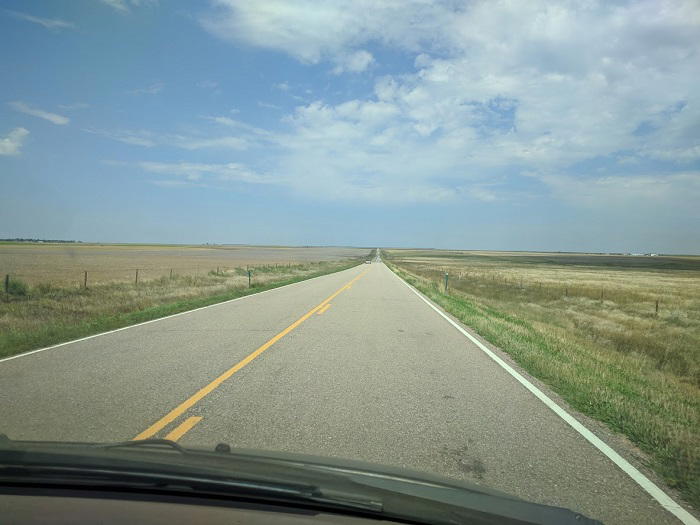
Traffic on the way to the eclipse…
We arrived in Scottsbluff in late afternoon on Sunday, and settled into the camper. Our Airbnb hosts had parked it on the street in front of their house, which was fine, and totally met our goal.
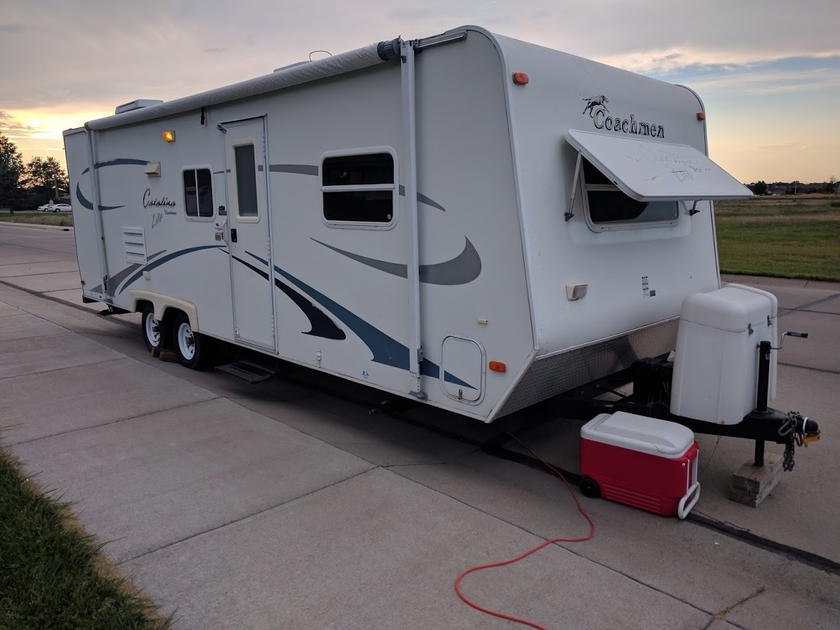
The first time I had booked an Airbnb where the host would transport it to wherever we wanted for an additional fee
That evening, we met a couple who were veteran eclipse chasers from Ohio — this was to be his fourth total solar eclipse, and her second. They had flown from Ohio to Denver, and then driven up to Scottsbluff, for the combination of decent prices and favorable weather.
Suddenly I felt like I knew what I was talking about when I wrote my last minute guide to planning an eclipse watching trip.
We hadn’t yet completely decided where to watch the eclipse. Although we were within the path of totality, Scottsbluff is closer to the edge than the centerline, so we generally thought we’d drive north to get a longer experience. We just weren’t sure how far toward Wyoming we’d need to go in search of better weather. We nominally set our sites on Agate Fossil Beds National Monument, which was just north of the centerline, and very close to the Wyoming border.

Agate, Nebraska, was just north of the centerline of the path of totality
We figured we would be willing to sacrifice a bit of totality to watch the eclipse from a venue that had at least some infrastructure — toilets, food vendors, emergency first responders, etc. — such as Agate National Monument.
In this case, it would be a loss of just six seconds (2:23 vs 2:29).
The morning of the eclipse
We awoke to heavy fog in Scottsbluff.
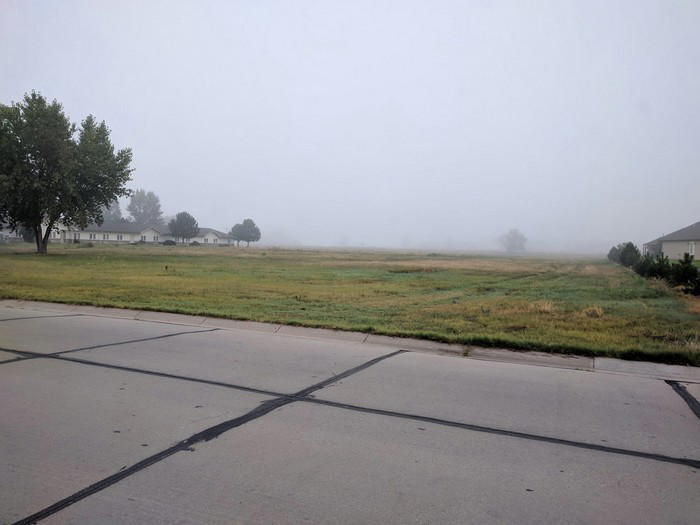
Scottsbluff in the clouds with about 5 hours to go until totality
I quickly texted Dawn over in Glendo to see what their weather was like (great), and started looking at the satellite maps on my phone. These indicated that we were just on the edge of the clouds and that going perhaps five miles west could get us into completely clear skies.
We packed our stuff, piled into the car, and headed to Agate. We were on the road by about 7:45 AM. A quick stop at Taco John’s for some breakfast burritos, and we were ready to roll. There was modest traffic, but not enough yet to have a significant impact on our driving speed.
We figured we’d make the decision in Mitchell as to whether to head north to Agate, or push on toward Wyoming in search of blue sky. And then, just as we left Scottsbluff, the weather completely cleared. Our decision was made.
The drive up to Agate was beautiful.
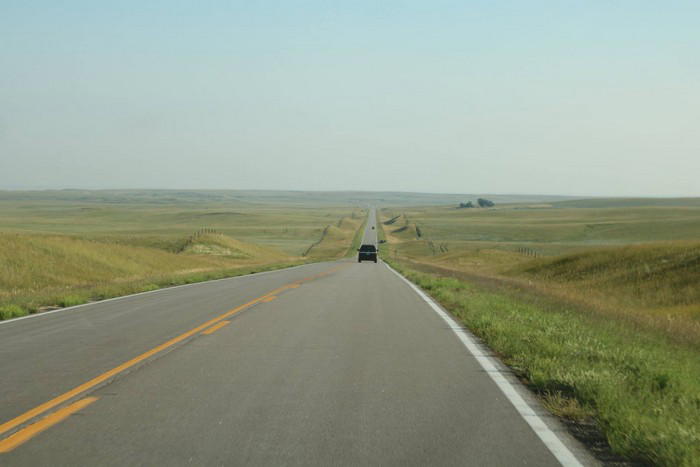
The road to Agate on the morning of the eclipse
As we approached the centerline of totality, we saw more and more people setting up to watch the eclipse.
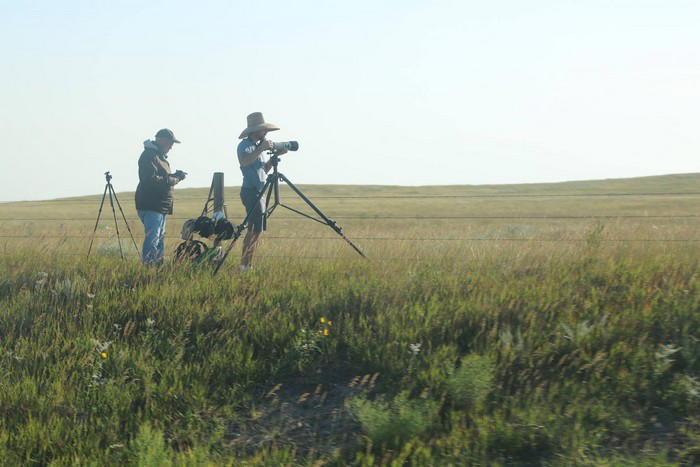
Eclipse watchers setting up along the centerline of totality
It looked like a giant tailgate party. As a science nerd, I was really happy to see so many people turning out to celebrate an astronomical event. It was really really cool.
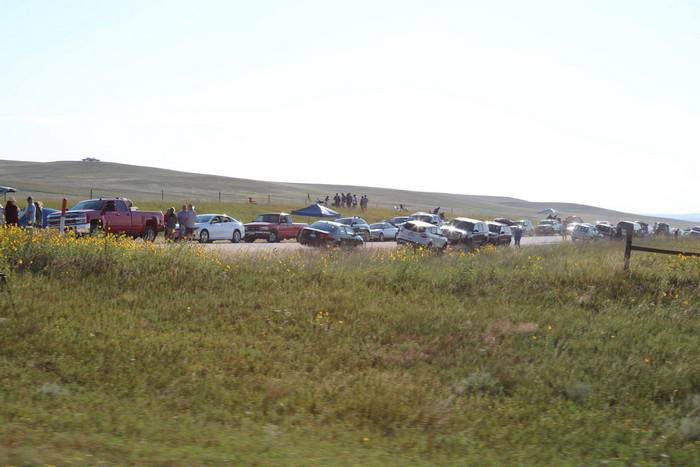
The centerline of totality just south of Agate, Nebraska
We momentarily considered stopping there. But then we remembered we have three little kids, so we pressed on.
Arriving at Agate Fossil Beds National Monument
We arrived at Agate Fossil Beds National Monument around 8:45 AM, about two hours before first contact.
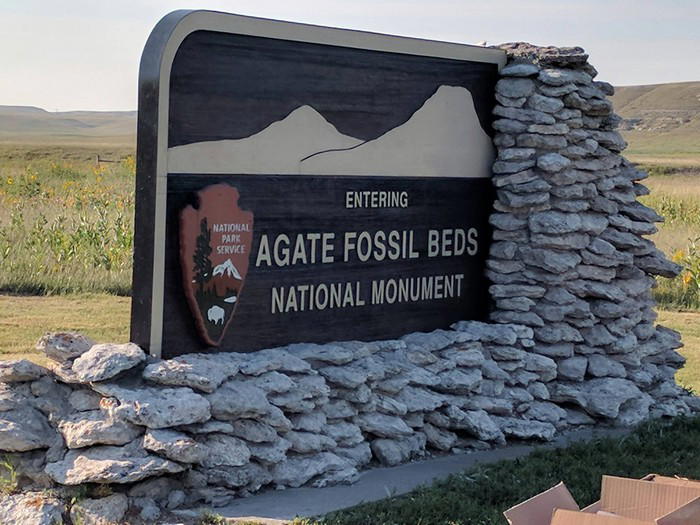
Agate Fossil Beds National Monument
We weren’t the only ones with the idea to go to Agate though as there was a line of cars waiting to get parked.
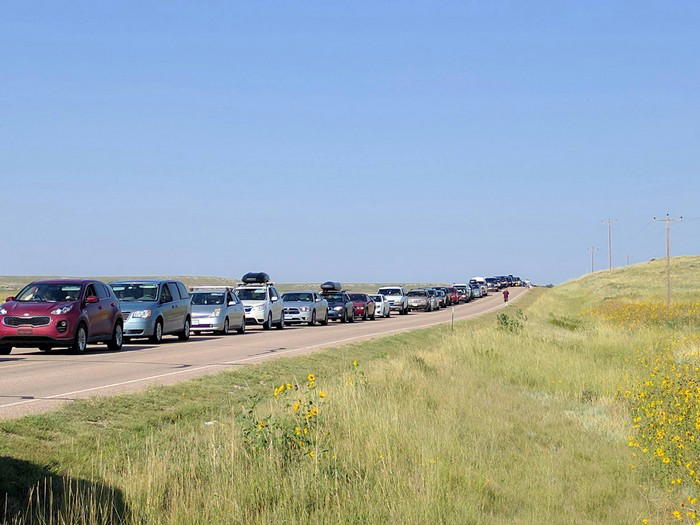
Eclipse goers waiting to park inside Agate National Monument
There was scenery to enjoy while we waited. We knew there was still plenty of time, so no one was getting nervous.
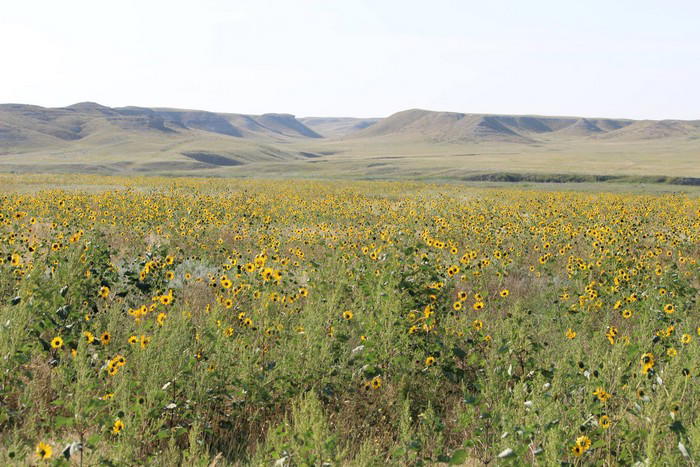
Agate Fossil Beds National Monument
There were four rangers / volunteers handing out information packets at the entrance, and eclipse glasses for those that didn’t have any. We assured him that we had a pack of 20, so he should save them for someone else.
Our hope was to watch the eclipse from the visitor center where there was supposed to be a pregame program with a Native American speaker. But the primary parking lot was already full, so they directed us into overflow parking which turned out to be just a mowed strip sloping up toward one of the bluffs.
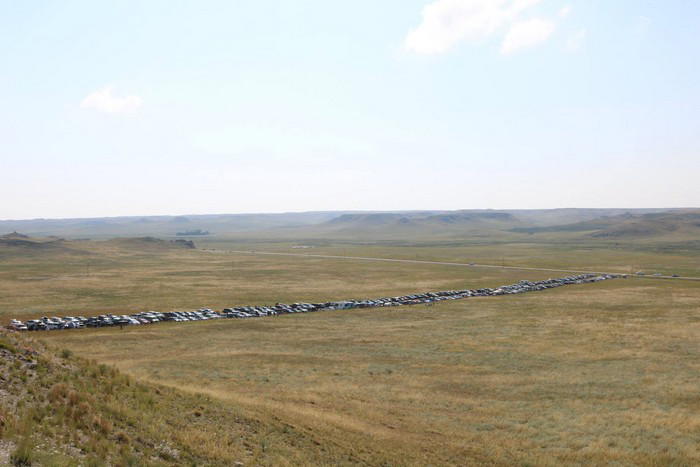
Overlow eclipse parking from the bluffs at Agate Fossil Beds National Monument
We thought about riding the shuttle bus (or walking) the mile or so into the visitor center, but decided that this was actually a pretty nice location to watch the eclipse itself. Plus, it had a few porta-potties, which was one of our original objectives.
Many of the folks that had already arrived were getting out chairs, setting up telescopes, and generally settling in to wait for the eclipse to start. Others were exploring the surrounding bluffs, which actually looked like an awesome place to watch the eclipse. So we packed up our stuff and made the short climb to the top. The climb was pretty easy, though we did have to watch out for cacti.
The 360-degree view from the bluff was stunning. We could see for miles in every direction, with almost no man-made objects in sight.

Panorama from the bluffs of Agate Fossil Beds National Monument
It really gave a primal feel to the event, and made it easy to imagine what it must have looked like when the Native Americans and other early peoples experienced eclipses in this location.
By the time we set up the tent (to give the kids something to play in) and our lawn chairs, first contact was about to begin.
Watching the total solar eclipse from Agate National Monument
We got out eclipse glasses at first contact and explained to the kids how to use them. We had also made two pinhole projectors out of cereal boxes the night before. They weren’t all that well crafted, but the kids got a kick out of using them and it gave them something else to fool around with as we waited nearly an hour for the main event.
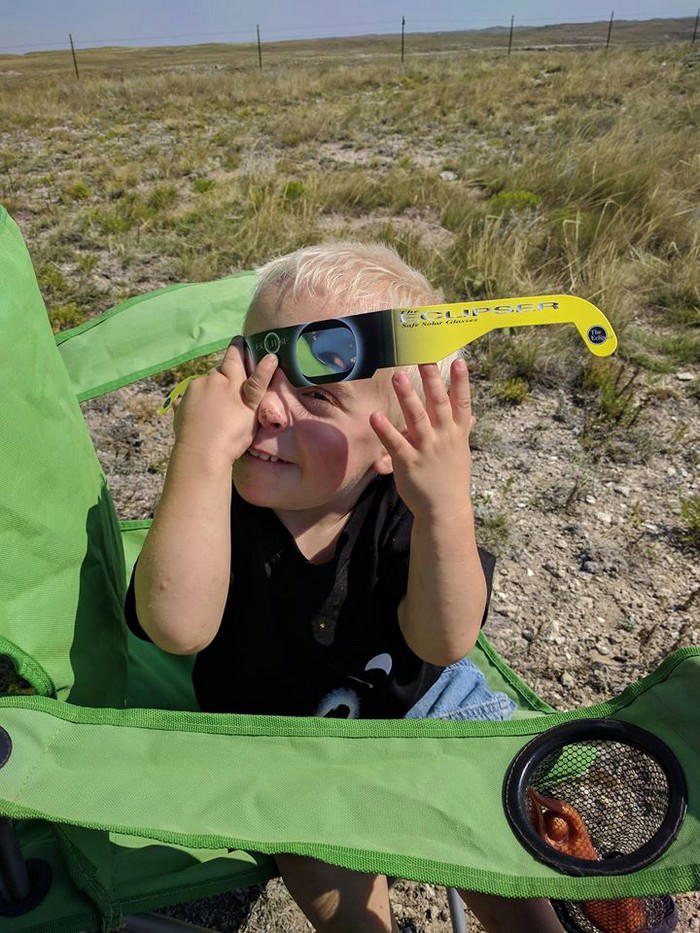
Not quite two, our littlest eclipse watcher wasn’t really sure what to do with his glasses
I had downloaded the Solar Eclipse Timer app for my phone which provided narration, via my portable Bluetooth speaker, throughout the process. And I even remembered to do it before we were outside the realm of cell coverage! That was klutch.
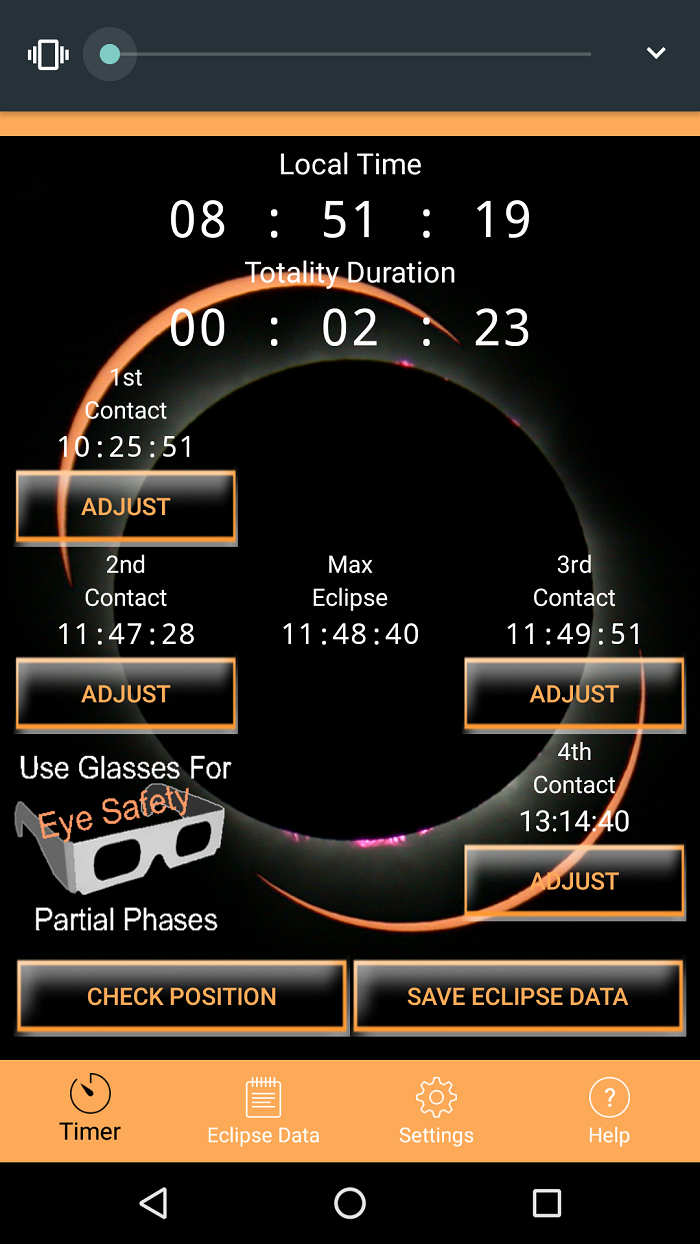
Solar eclipse timer app was key
It was actually really helpful. But there was still plenty of time to kill. So we posed for some pictures to model our eclipse attire. Did I mention we’re a family of nerds?
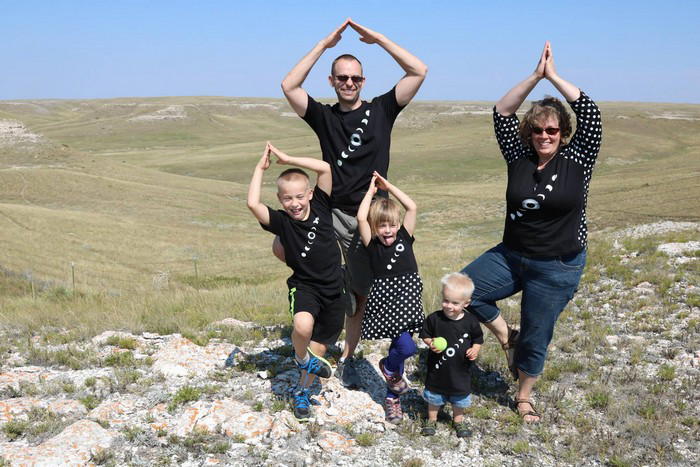
Tree-posing prior to the eclipse on the bluffs of Agate National Monument
The kids would occasionally put on their glasses and check the status of the sun, but were otherwise mostly content to run around with some friends they had met.
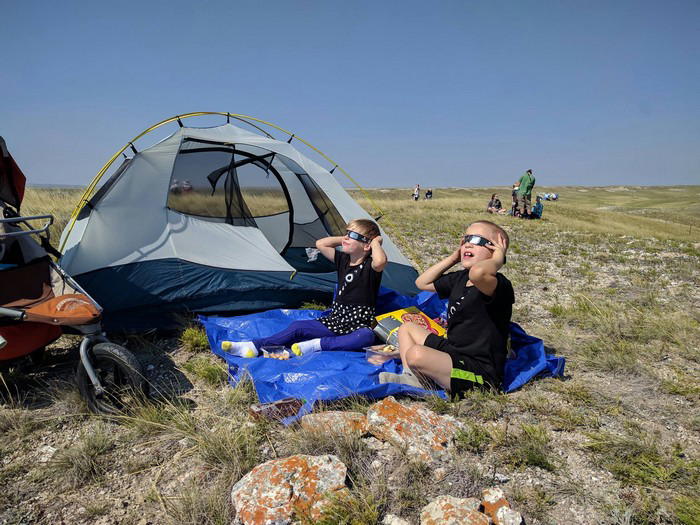
Checking the progress of the eclipse
Finally, about fifteen minutes before second contact, the fun really started to begin. At that point, the sun was sufficiently covered such that it was getting noticeably darker. I had read that you should observe the crispness of your shadow in the moments before totality, as the sun effectively becomes a point source.
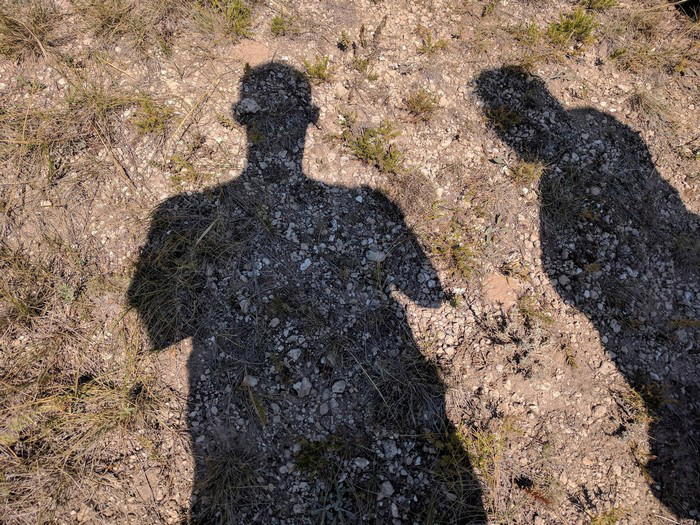
Crisp shadows just before totality
The temperature started to drop, and, perhaps most significantly, the wind died down. It had been ripping much of the morning, threatening to blow our tent back down to the van in the parking area below, but was now mostly calm.
With just a few minutes to go until second contact, I heard the engine of a plane overhead. I looked up to see two private aircraft flying down the centerline, front running the shadow of the sun. I thought that was incredibly cool and momentarily pondered the logistics they must have faced that morning.
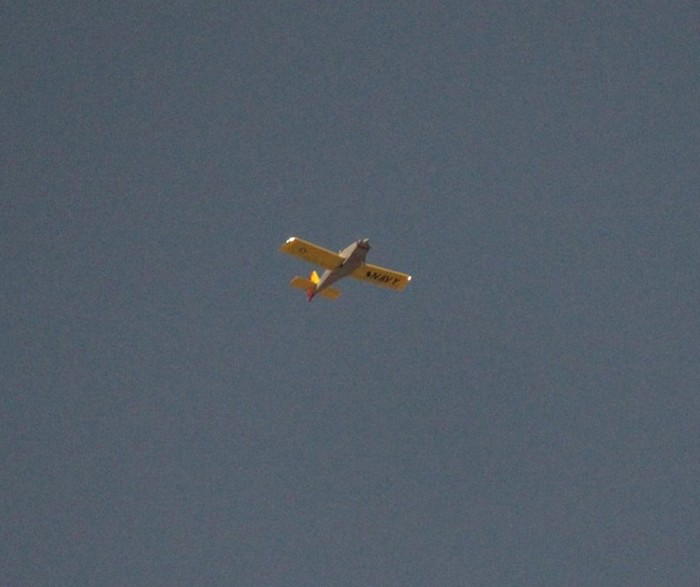
Two planes passed over just before totality, trying to outrun the eclipse. I think they lost.
A few folks were convinced that by looking west — we could see for miles in all directions after all — we would be able to watch the shadow go racing across the prairie at 1,500 miles per hour. I glanced that way and noticed the glint disappearing on some surfaces in the distance. One moment they would be reflecting light, the next, not. But then I looked back so as not to miss Bailey’s Beads and the Diamond Ring, both of which were spectacular.
And then it happened. Totality was upon us.
We took our glasses off, stared at the “black hole” where the sun was supposed to be. And the corona.
It was breathtaking. One of the most beautiful things I had ever seen.
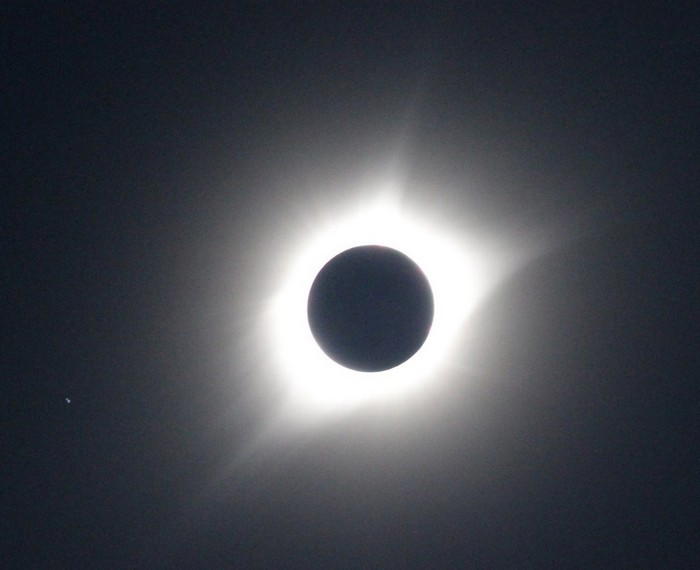
You’ve seen a lot of pictures of the moment of totality. This is my wife’s, shot with our Canon T3i, 50-250 mm lens.
My wife danced around a bit.
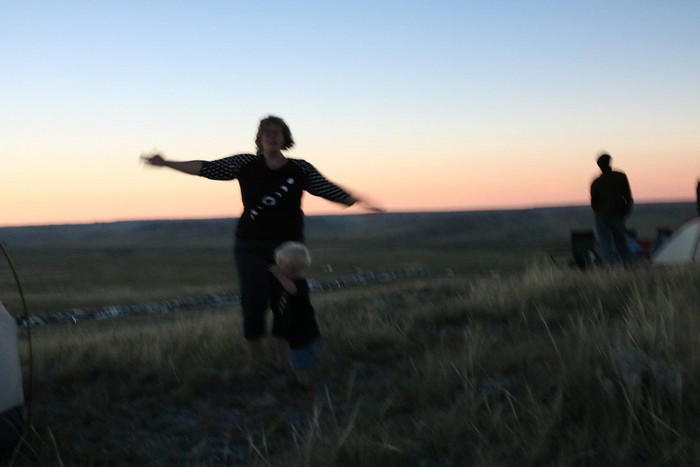
Dancing in the twilight of totality
We took some pictures of the sun. My wife had specifically requested this shot if we had time. I was happy to oblige.
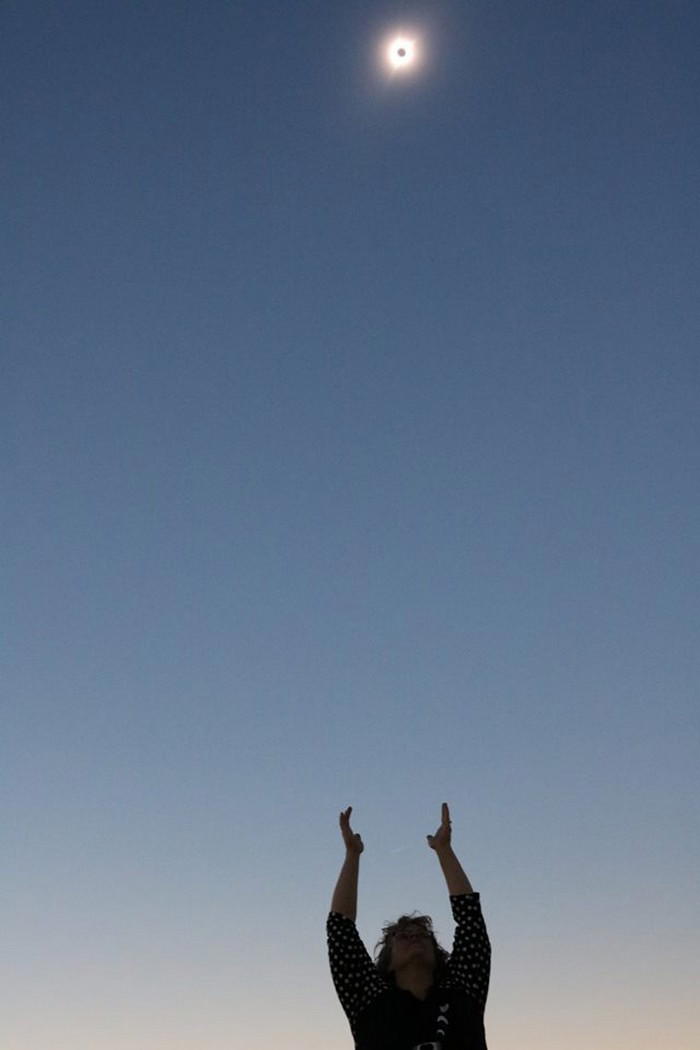
My wife raising her hands to the heavens — the sun and the moon — all at once
And of the 360-degree sunset taking place all around us.
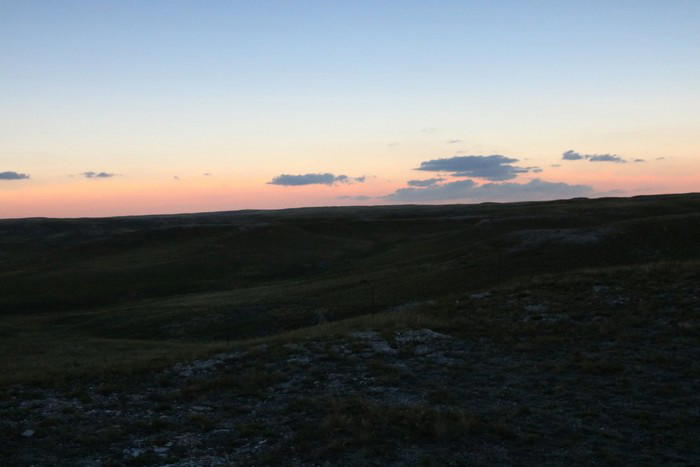
The 360-degree sunset was spectacular from the bluffs of Agate National Monument
Then we stared at where the sun should have been some more.
Much too soon, the voice on my app informed us that totality would be ending in 5… 4… — Glasses on! Glasses on! — 3… 2… 1… totality was now over.
Driving back to Denver after the eclipse
We hung out a bit on the ridge, and then slowly made our way back to the van in the parking area below. Everyone was still in a festive mood, having just witnessed one of the most spectacular events mother nature has to offer. We decided to let the crazies get started for home. I setup the grill and started making lunch.
Since our original plan had been to watch from the visitor center, we decided to head down that way. It was still really busy, but the park staff and volunteers were doing an incredible job at keeping things orderly. Everyone was being courteous.
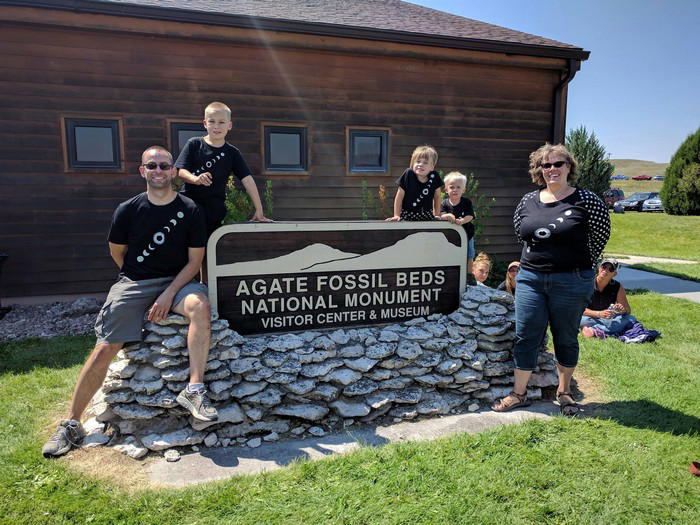
Agate Fossil Beds National Monument Visit Center and Musuem
The visitor center was still packed. But they had commemorative eclipse pins and junior ranger badges for the kids which was awesome.
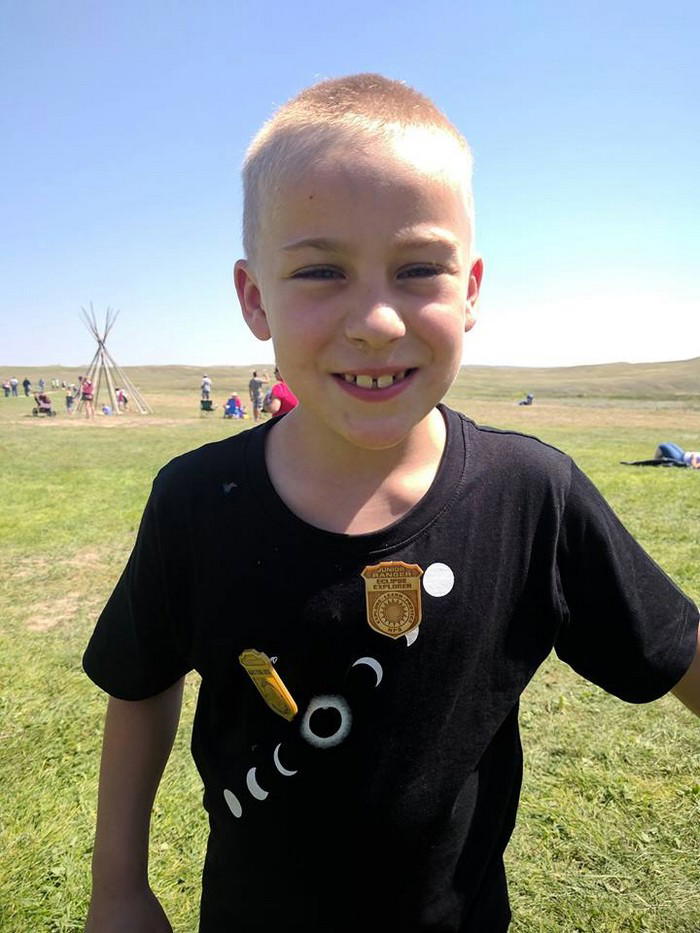
My son showing off his commerative eclipse and junior ranger pins
And a special national parks passport stamp for the eclipse.
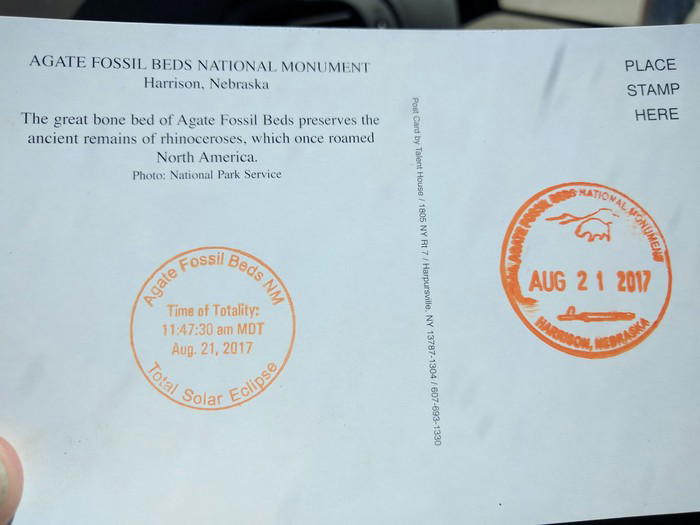
Commemorative parks passport stamp for the eclipse
From there we decided to drive out the east entrance of Agate Fossil Beds National Monument. That promised us something like 30-40 miles on a gravel road, but there was absolutely no one going that way. It was a beautiful drive, and we really didn’t see any other cars until we got back to Scottsbluff.
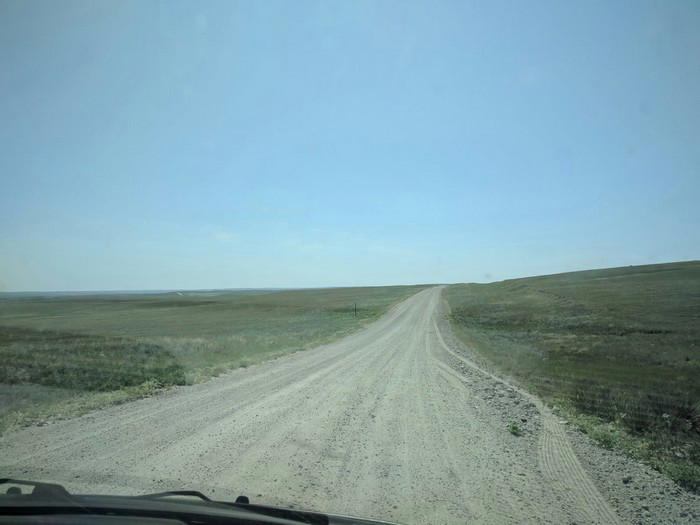
When faced with a choice, choose the road less traveled.
We paused for a bit in Scottsbluff for the kids to run around and to plan our drive back to Denver. Google and Waze both wanted us to angle over to Cheyenne and then take I-25 down to Denver. But there are times in this world where you just have to tell Google “hell no” and do what you think is right. So we continued south toward Kimball, Nebraska, then down across Pawnee National Grassland before meeting up with I-76 in Fort Morgan, Colorado. While there was definitely heavy traffic — including a couple brief slowdowns — we were able to drive 50-60 mph most of the time.

Eclipse traffic passing through Pawnee National Grasslands on the way back to Denver
By the time we reached I-76 in Fort Morgan, the only noticeable impact was a longer than usual line at McDonald’s. Otherwise, it was smooth sailing all the way to Denver. It ultimately took us about 5.5 hours (including our stops for dinner, gas, and one minor miscalculation that took us down a dead end county road) to drive what Google says should usually take 3.5 hours. In other words, not much more than we would usually expect it to take for our family of five!
Our friends over in Glendo didn’t have it so easy, however. We would occasionally see group texts from them lamenting the fact that it had taken them three hours just to get on I-25, which was itself mostly a parking lot. In the end, it seemed that most of those folks spent 9-10 hours on a drive that should have taken 3-4 hours. Many of them didn’t get home until almost midnight or later.
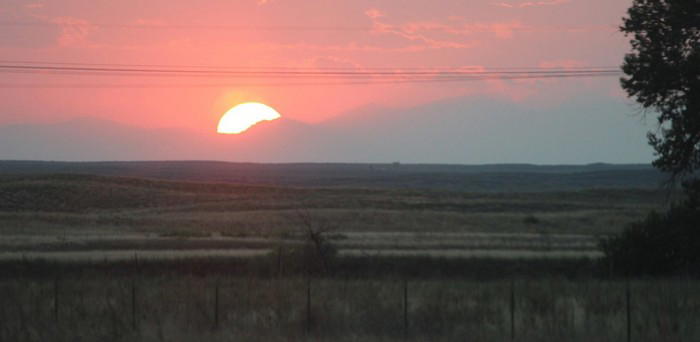
The sun put on an encore presentation that evening as it set over the Rockies
Bottom line
My family had an incredible time at the Great North American Solar Eclipse of 2017. I’m so glad we made the effort to go, as it really was a bucket-list type of event. Our decision to watch it from the Nebraska panhandle worked out perfectly.
I didn’t really plan it that way, but the unspoiled natural landscape of the Agate region made the eclipse all the more spectacular in much the same way that that the proper stemware accentuates the flavor of a fine wine. It wasn’t hard to put ourselves in the shoes (or moccasins) of our ancestors and imagine the awe and terror of watching the sun get devoured by the moon, only to reemerge a few moments later signifying that perhaps the world would continue to exist for yet another day.
What was your experience watching the Great Solar Eclipse of 2017?


Membership is free and takes no more information than commenting as a guest. Earn status points for good contributions, and see fewer ads as your status grows.