
In September I wrote about the Qatar Airways accident (at least that’s how the FAA categorized it) at Miami Airport. During this incident, a Qatar Airways 777-300ER bound for Doha didn’t take off on time and struck some of the landing lights on the far end of the runway.
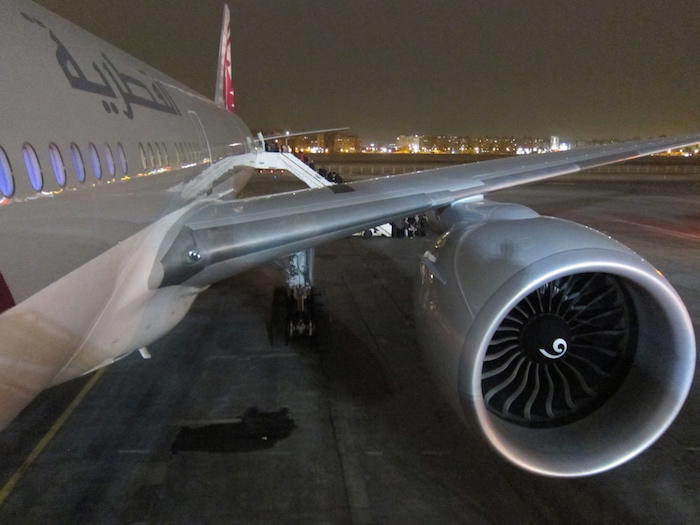
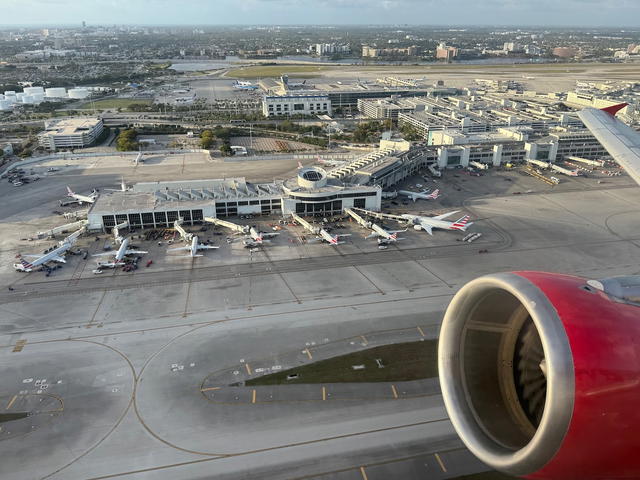
This caused substantial damage (including a 46cm tear in the fuselage and 90 dents and scratches), though as it turns out the pilots didn’t realize they had struck anything, so they continued flying to Doha. It’s extremely fortunate that the plane landed without incident, as things could have ended much worse.
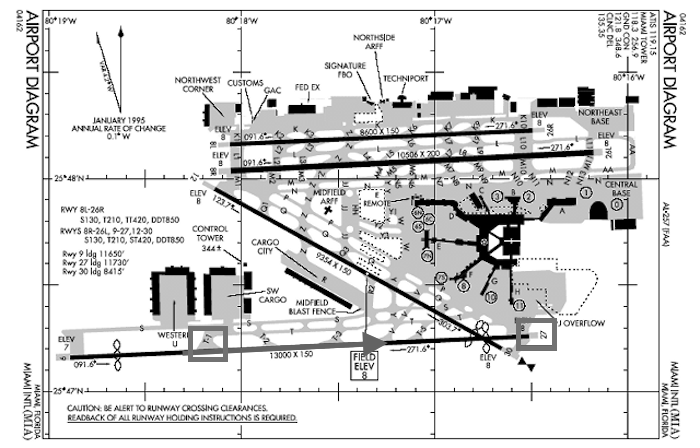
It was quickly revealed that the Qatar Airways pilots made a midfield takeoff, whereby they took off from intersection “T1,” instead of the end of the runway. If you look at the bottom of the diagram below, you’ll see the airport’s south runway, which they took off on. They were taking off into the east, and the first grey box is where they started their takeoff roll (instead of the end of the runway), and then the second grey box is where they ended up hitting the runway lights.
While we knew that almost immediately, the big question was why the pilots of a fully loaded 777 decided to do a midfield takeoff?
We now have our answer, as the Qatari Civil Aviation Administration has filed their preliminary findings. And it reads sort of like a script for “Air Crash Investigation” based on the amount of pilot error involved.
As mentioned above, the airplane entered the runway at intersection T1, which meant the runway was ~4,500 feet shorter than the full length. As a result the plane ended up striking the approach light system on the other end of the runway, located ~200 feet past the end of the runway.
But how did it happen? Via Doha News:
According to the report, a shared name – T1 – for the runway intersection and a completely separate reference in the crew’s pre-flight data is at the heart of the incident.
It stated the Qatar Airways flight crew had decided that it would be safe to take off from Intersection T1 on Miami’s Runway 09 because they had become confused by another mention of “T1” in the data given to them before the flight.
This reference, “Runway 09#T1,” actually referred to a temporary performance advisory for the runway, but not to the intersection in question, and the repeated use of “T1” was a coincidence.
The crew had seen this advisory while calculating the runway length required for takeoff, a calculation made using the plane’s onboard computers.
The report noted that during this calculation, the crew “understood” that they must use the full length of the runway, and that they had read information that said that intersection departures were not permissible.
However, as the aircraft was taxiing, the captain apparently decided that the aircraft could depart from the intersection, rather than from the beginning of the runway.
He then asked the first officer (FO) to advise Air Traffic Control of this decision. The report stated that the FO “glanced at his notes” and saw he had written “09/(T1)#” which he said made him believe that this was an acceptable line-up point for take-off.
Wow! Even worse is that there were four pilots in the cockpit — a captain, a first officer, and then a relief captain, and a relief first officer, and they communicated so poorly that this was still able to happen:
The report stated that these two pilots questioned the captain’s decision to take off from the intersection, as it appeared to be different from what they had been briefed on before the flight.
The captain apparently “made a hand gesture” in reply, “and said something which he thought was seeking reassurance from the crew that everything was OK.”
The flight’s first officer replied that he was happy with the decision, the report stated.
Meanwhile, the relief crew misunderstood the captain’s response, thinking that he had just said that he was happy with the decision and that he had most likely recalculated the flight data, so they didn’t press the matter further.
How bad was the damage they discovered upon landing in Doha?
Upon landing, an inspection revealed a 46cm tear in the fuselage behind the rear cargo door.
Data taken from the flight recorders shows that this tear forced the aircraft to compensate (successfully) to prevent a loss of cabin pressure during the flight.
There were also 90 dents and scratches across an 18 square meter area of the plane’s undercarriage, and some damage to a metal guard on the left landing gear.
Bottom line
Something tells me these pilots faced serious disciplinary action, as they should. The fact that they had four pilots in the cockpit yet something like this still happened is quite disturbing.
The worst part is that this mistake should have been incredibly obvious to all the pilots. They were briefed on doing a full length takeoff. Besides, at how many airports does a fully loaded 777 about to embark on a ~13 hour flight do a midfield takeoff? Especially when the midfield takeoff starts ~4,000 feet down the runway?
You know what’s probably the most disturbing part of this incident, though? The airline’s CEO doesn’t think the incident was a big deal.
Apparently Qatar Airways’ CEO, Akbar Al Baker, was asked about the incident at this morning’s press conference in New York. His response? “Such kinds of incidents happen quite often.”
https://twitter.com/AirlineFlyer/status/674629846799093760
It’s not very reassuring to know he doesn’t take the incident very seriously…


Membership is free and takes no more information than commenting as a guest. Earn status points for good contributions, and see fewer ads as your status grows.