
United Airlines has just banned travelers from using “AI Agents” to book or service tickets (thanks to TravelinWilly for flagging this). That’s an interesting stance for United, easily the country’s most tech savvy airline, to take. So what’s actually going on here?
United updates contract of carriage to ban use of AI bots
United Airlines has today updated its contract of carriage, which are the terms that passengers have to agree to when they book a ticket. In the section about prohibited practices at the airline, the carrier added the following:
The use of AI Agents to make, modify or service a Ticket, and/or to purchase any service or product.
The “AI Agents” term is defined by United as follows:
AI Agent means any software or service, including but not limited to an AI assistant, AI agent or AI-enabled browser that takes autonomous or semi-autonomous action, whether or not Passenger or another individual supervises or approves its actions, to discover, search for, book, purchase, ticket, service or manage any product or service offered by or through United, including flights, seats, upgrades, ancillary products and partner products, on behalf of or at the instruction of Passenger or other individual. AI Agents include but are not limited to: (i) AI assistants built into social media, messaging, search or other consumer platforms; (ii) AI-enabled browsers and standalone AI agents; and (iii) any third-party AI assistant that accesses United through a tool, application or connection provided by a travel agency or other intermediary.
United even put out a press release about this change, claiming that it’s making the change to “protect” customers. Here’s part of the explanation:
Sharing account credentials with personal, third-party, AI assistants can expose sensitive information, and actions taken by these tools may result in unintended purchases, account changes, or use of MileagePlus miles. Plus, these automated AI actions have the potential to violate FAA and DOT regulations – as an example, flight check-in requires human acknowledgment that bags do not contain banned substances like explosives.
United claims it’s taking steps to restrict this kind of access, both directly within its digital platforms, and indirectly via travel agencies and aggregators, to prohibit use by unauthorized, third party personal AI agents or assistants.
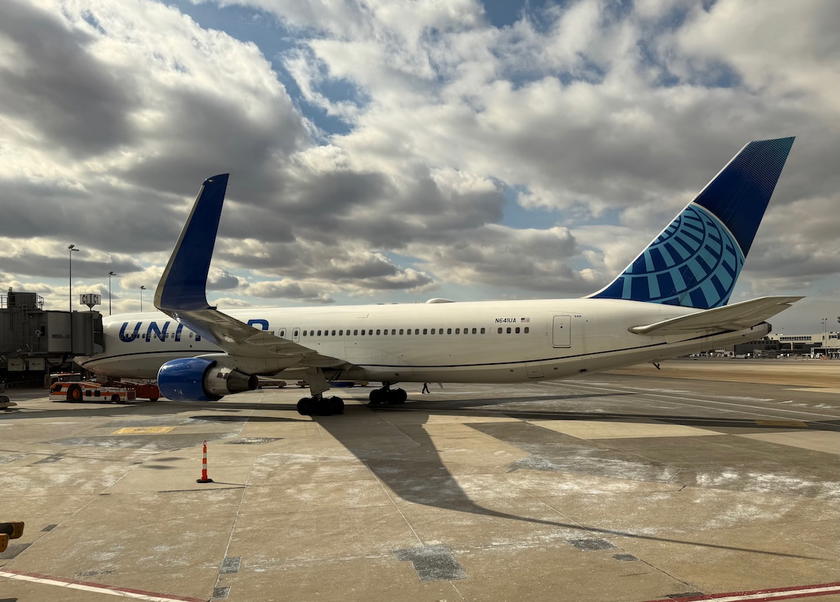
What’s United’s real motive with this AI bot ban?
It goes without saying that use of AI is becoming exponentially more popular in recent times, and is a force to be reckoned with. It’s anyone’s guess just how far it goes, in terms of how much the average person uses it in their everyday life.
There are certainly aspects of AI that are incredibly annoying, whether you look at it as an individual or a business. Admittedly I’m biased, but I’m so tired of feeling like half of what I’m reading online (whether on social media or websites) is written by a computer and not a human. It even extends to things like TripAdvisor reviews.
It’s also frustrating how many people write 30 paragraph emails nowadays, which are clearly 90% AI. I don’t really understand how that makes anyone’s life better. As far as I’m concerned, just give me the bullet points you fed your AI buddy, and we’ll all be better off for it. Anyway, rant over, back to United…
I suspect United’s real motive here is that it doesn’t want AI automatically being able to track and reprice flights (and then issue vouchers for passengers), or being able to too closely compare overall value on different airlines. For that matter, it probably just doesn’t want a third party getting that much data on the airline, not to mention that all of this can take a considerable toll on servers, if this scales.
But here’s what I find most interesting — the way this rule is written strikes me as being incredibly broad, no? Not to repeat the quote again, but this is the part I’m referencing, in particular:
AI Agent means any software or service, including but not limited to an AI assistant, AI agent or AI-enabled browser that takes autonomous or semi-autonomous action, whether or not Passenger or another individual supervises or approves its actions, to discover, search for, book, purchase, ticket, service or manage any product or service offered by or through United, including flights, seats, upgrades, ancillary products and partner products, on behalf of or at the instruction of Passenger or other individual.
Any software that automatically “discovers” or searches for any product or service offered by United would include all award search tools (along with all kinds of other businesses), no? Is that actually the intent here, or does United just plan to selectively enforce rules? We did see Air Canada engage in a battle over this a few years back, so is United planning something similar?
Bottom line
United Airlines has today updated its rules to ban “AI Agents,” and the airline even put out a press release about it. The company claims it’s making this change to protect customers and their accounts, as AI bots could have unintended consequences.
Many people are understandably skeptical of that explanation, as I imagine the airline also wants to ban these kinds of things to help people reprice tickets, get better fares, etc. For that matter, based on how broadly the definition is written, it seems that even things like award search engines would be banned.
What do you make of United’s AI ban?


Membership is free and takes no more information than commenting as a guest. Earn status points for good contributions, and see fewer ads as your status grows.